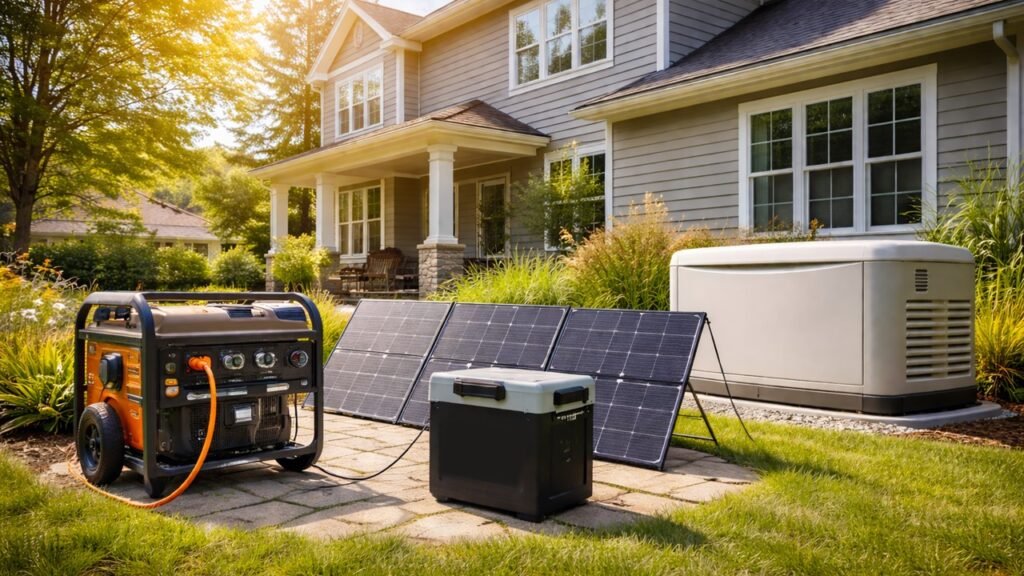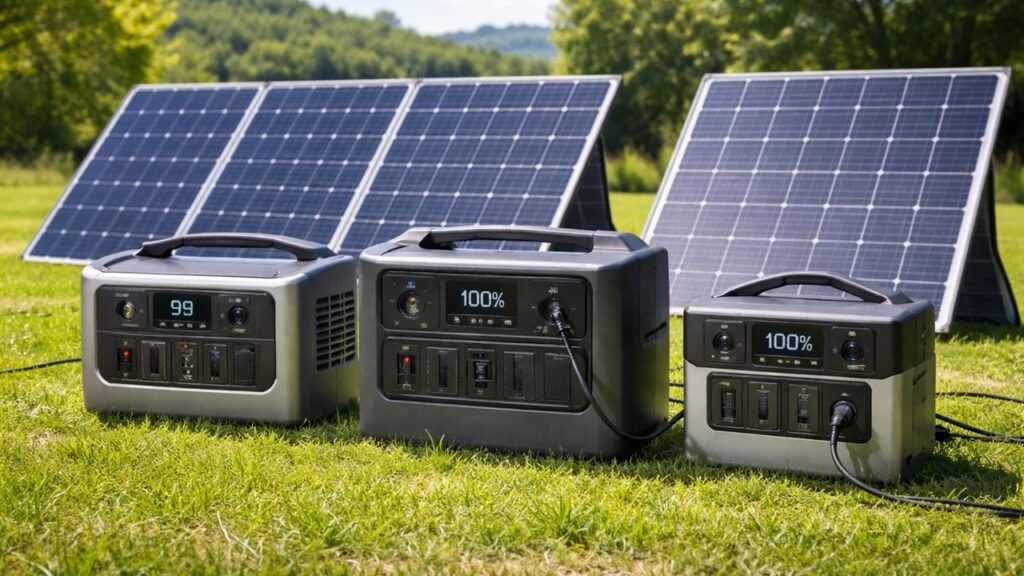
If you are looking for the best solar generators for home backup, you want reliable power when unexpected outages leave your home in the dark. The right solar generator can keep your refrigerator, lights, Wi-Fi, and other essentials running without fuel or exhaust.
If you want a well-rounded option, the Jackery HomePower 3600 Plus is worth considering, while the BLUETTI Solar Generator Elite 400 makes more sense for longer battery runtime. Need to power heavier appliances? The Jackery HomePower 3000 and EF ECOFLOW DELTA Pro 3 are strong contenders. And if portability matters most, you’ll appreciate the lighter Anker SOLIX C2000 Gen 2.
After testing these top solar generators for home backup, we’ve compared their power output, battery runtime, solar charging, and real-world limitations. Here’s what we found to help you choose the right one for your home.
We’re reader-supported. When you buy through links on our site, we may earn an affiliate commission. As an Amazon Associate, we earn from qualifying purchases at no extra cost to you.
Best Solar Generators for Home Backup: Our Top Picks
- Best Overall: Jackery HomePower 3600 Plus
- Best Long-Runtime Value: BLUETTI Solar Generator Elite 400
- Best for Household Essentials: Jackery HomePower 3000
- Best Expandable Value: ABOK Ark3600 Portable Power Station
- Best Compact High-Output Option: BLUETTI Elite 200 V2 Solar Generator
- Best Dual-Voltage Option: EF ECOFLOW DELTA Pro 3
- Best High-Power Option: Jackery Solar Generator 5000 Plus
- Best Fast-Charging Option: EF ECOFLOW DELTA 3 MAX
- Best Lightweight Backup Option: Anker SOLIX C2000 Gen 2
- Best for Home Circuit Backup: OUPES Guardian 6000 V2
- Best High-Capacity Backup: ABOK Ark7200 Portable Power Station
- Best Compact 240V Option: BLUETTI Apex 300 Solar Generator
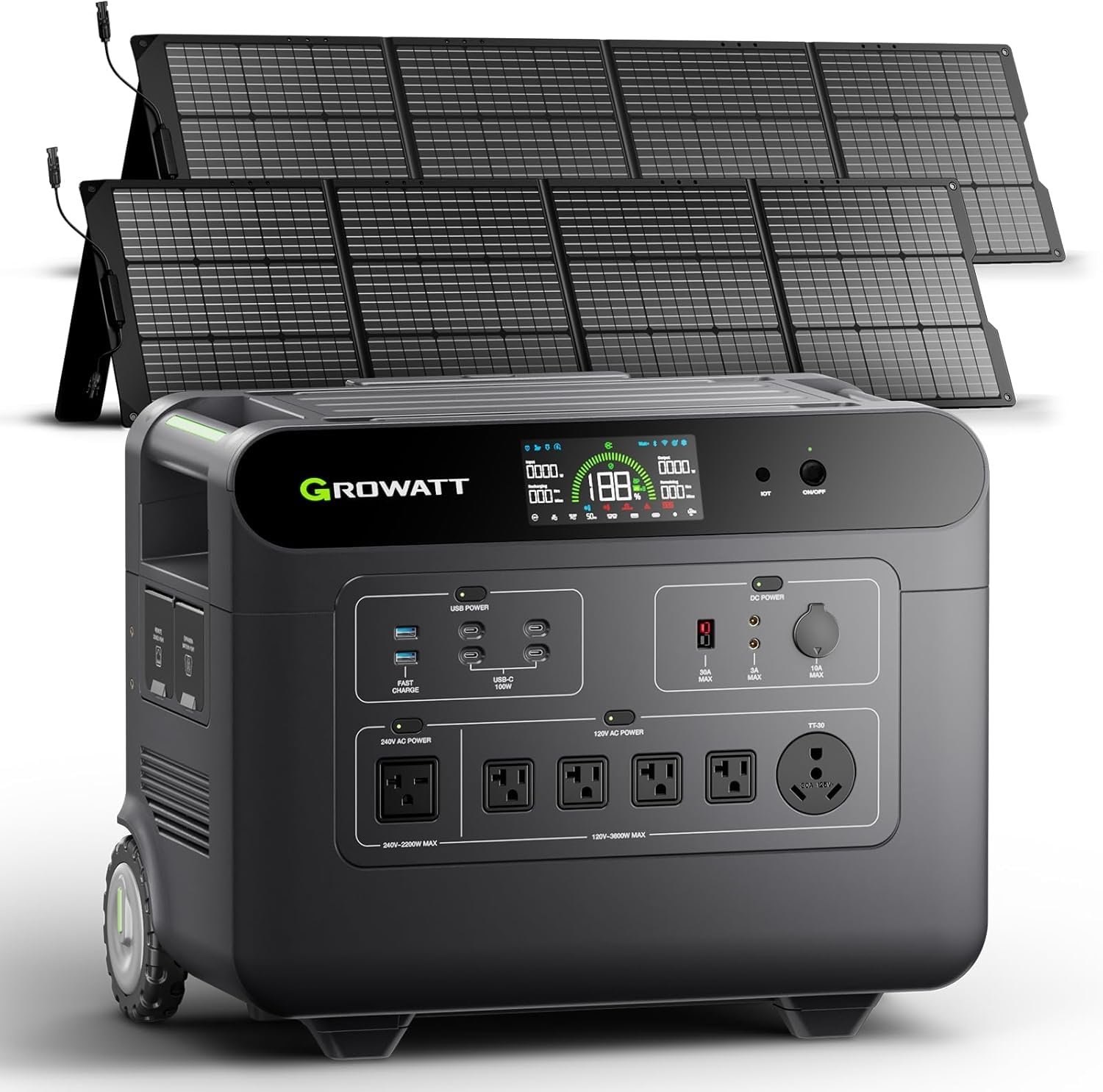
- Best for Cold-Weather Backup: GROWATT HELIOS 3600
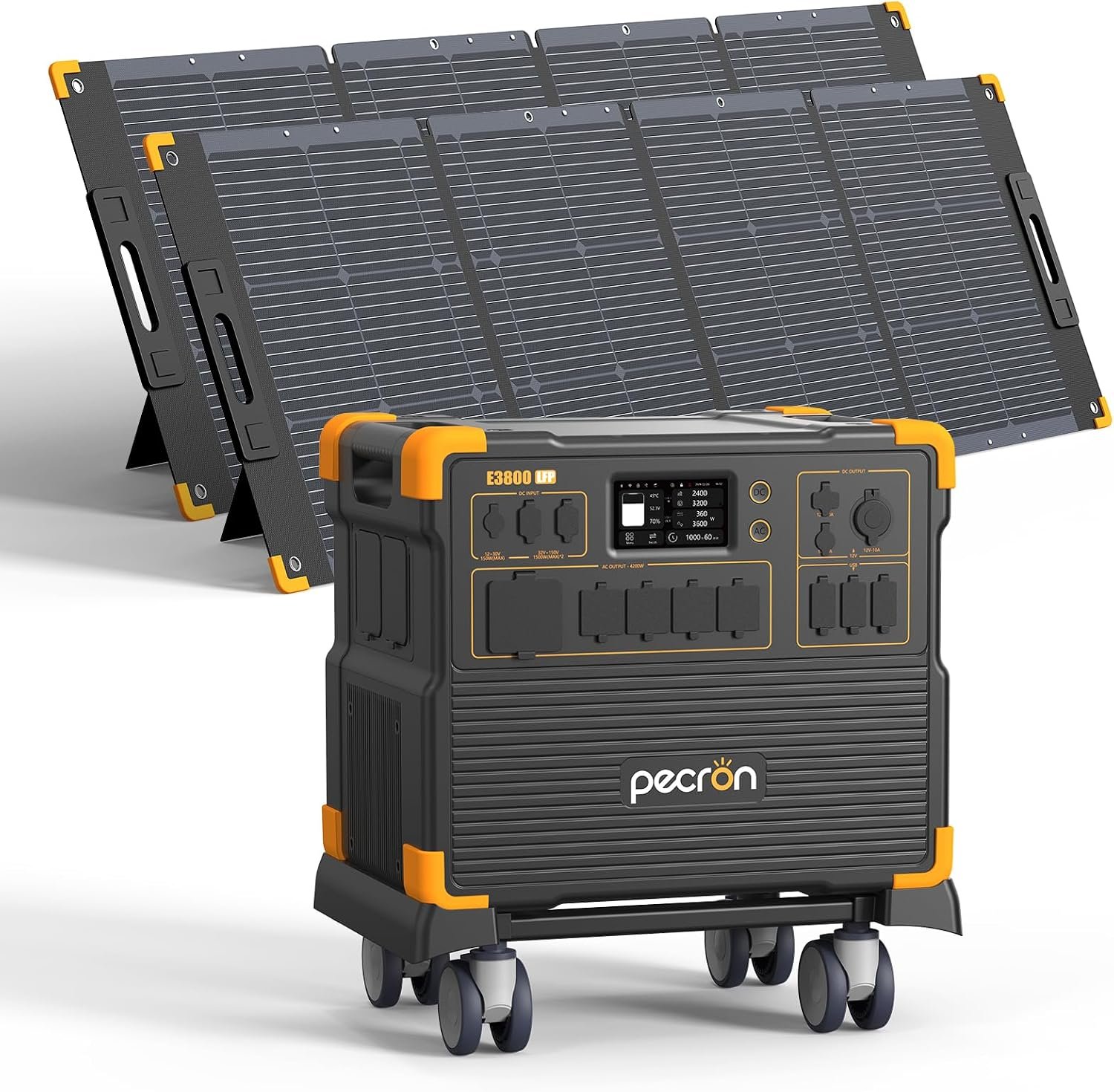
- Best High-Output Value: PECRON Portable Power Station E3800 LFP
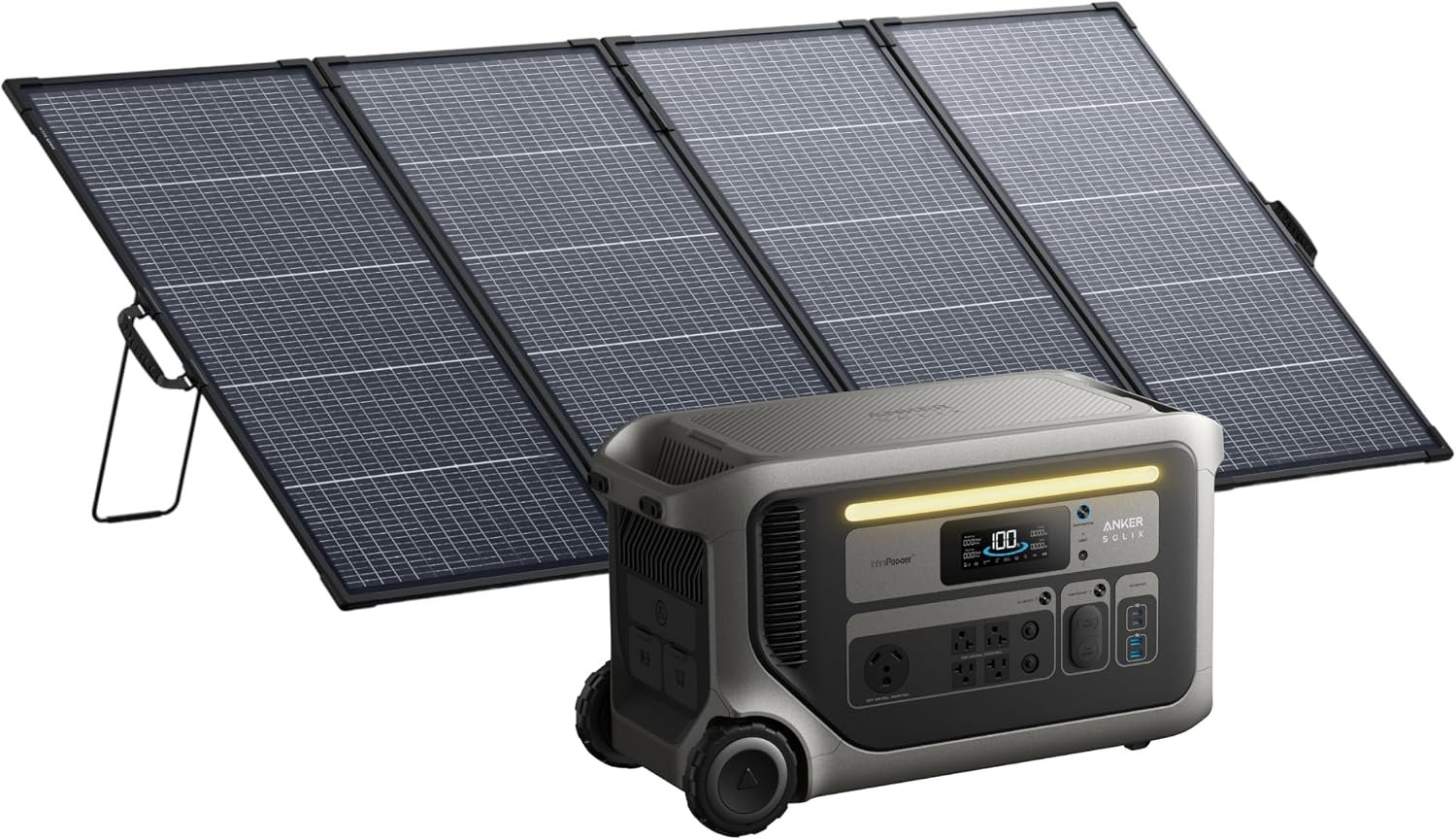
- Best for Hybrid Recharging: Anker SOLIX F3000
1. Best Overall: Jackery HomePower 3600 Plus
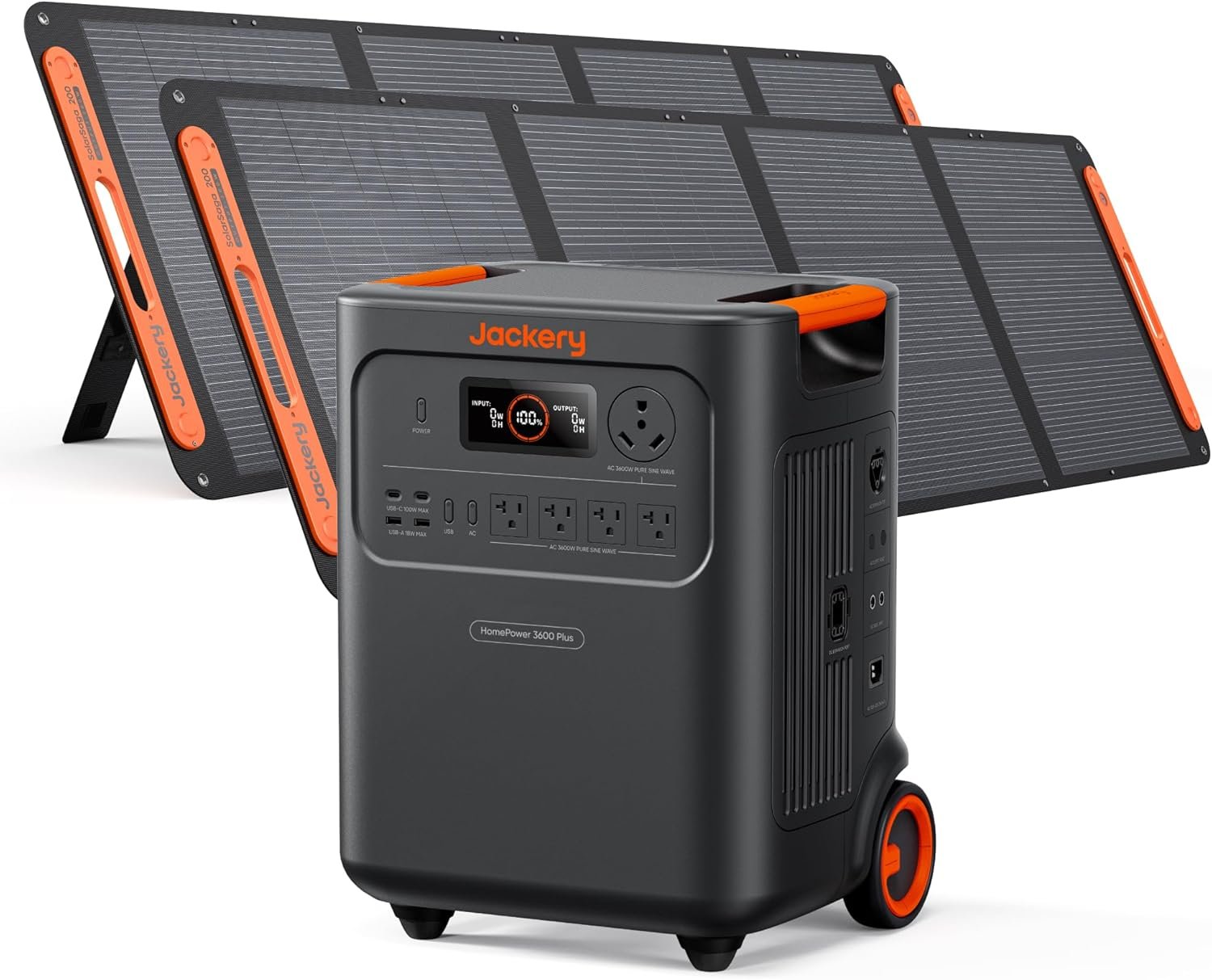
Key Details:
- 3,584Wh LiFePO4 battery with 3,600W continuous AC output
- 7,200W surge power for demanding appliance startup loads
- Expandable battery capacity up to approximately 21.5kWh
- Includes 2×200W solar panels with 1,000W maximum solar input
- 6,000 rated battery cycles and 77.2-pound wheeled design
When you’re looking for the best solar generators for home backup, the Jackery HomePower 3600 Plus is an excellent place to start. Its 3,600W output can handle refrigerators, freezers, sump pumps, lights, and other household essentials during unexpected blackouts. The 3,584Wh LiFePO4 battery also provides substantial stored energy without the noise or exhaust of a gasoline generator.
For longer power outages, expandable battery storage makes a real difference. The Jackery HomePower 3600 Plus starts with enough capacity for essential backup, but compatible expansion batteries can increase storage to approximately 21.5kWh. We particularly like this flexibility because you can begin with a smaller setup and add more capacity as your household needs change.
Solar charging is another reason this home backup power station deserves attention. The package includes two 200W panels, allowing you to recharge during daylight when utility power isn’t available. It also supports up to 1,000W solar input with compatible panels, while a standard AC recharge takes approximately 2.5 hours under favorable conditions.
As a portable solar generator for household emergencies, its wheeled design and straightforward controls make everyday use convenient. You can connect appliances directly or use compatible home transfer equipment installed by a qualified electrician. However, 240V output requires two units operating together. If you’re prioritizing reliability, battery longevity, and future expansion, this is a well-rounded choice.
Pros:
- Strong 3,600W output handles multiple household essentials
- Expandable LiFePO4 battery supports extended power outages
- Flexible AC and solar charging improves emergency preparedness
- Wheeled design makes moving the unit more convenient
Cons:
- Requires two compatible units for 240V output
- Included 400W panels recharge the large battery relatively slowly
2. Best Long-Runtime Value: BLUETTI Solar Generator Elite 400
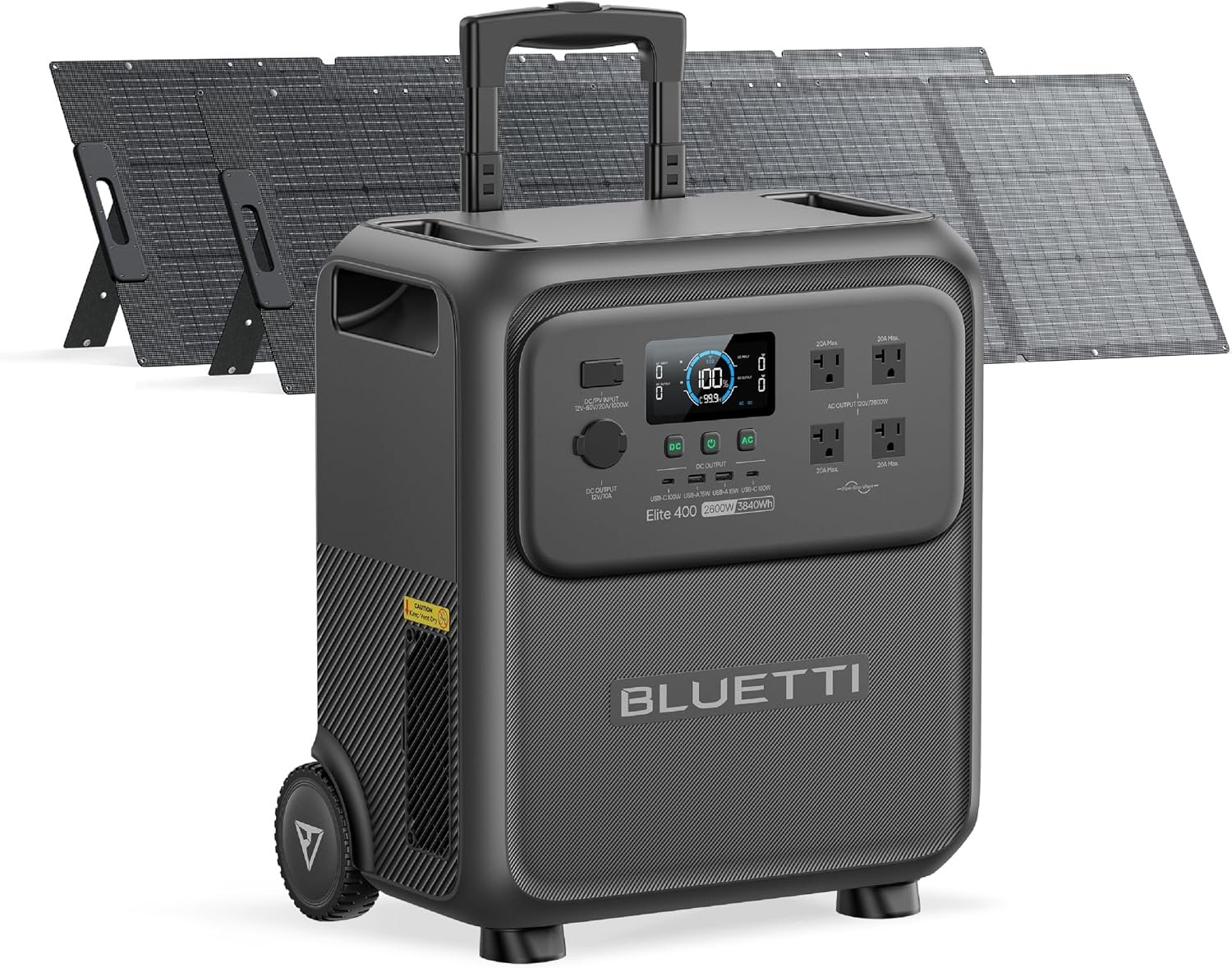
Key Details:
- 3,840Wh LiFePO4 battery with 3,000+ rated charging cycles
- 2,600W continuous AC output with 5,200W surge capacity
- Includes 2×200W solar panels with 1,000W maximum solar input
- 15ms UPS switching for compatible household electronics
- 86-pound construction with integrated wheels and trolley handle
If your priority is keeping essential appliances running longer, the BLUETTI Elite 400 is worth considering. This solar generator for home backup combines a substantial 3,840Wh battery with 2,600W continuous output. That’s useful for refrigerators, freezers, fans, lighting, and internet equipment when a storm or grid failure interrupts your electricity supply.
Battery runtime is where the BLUETTI Elite 400 becomes particularly appealing. Instead of focusing only on high wattage, it provides generous stored energy for everyday household loads. We also like its 15ms UPS switching, which helps compatible computers and networking equipment remain operational when electricity suddenly disappears. The rolling trolley makes its 86-pound body easier to move, too.
For solar-powered emergency backup, the included 400W panel setup gives you a way to replenish energy without relying entirely on the grid. However, charging a nearly 4kWh battery from these panels takes considerable daylight. The station supports up to 1,000W solar input, so adding compatible panels is worth considering if longer blackouts are common.
As an indoor battery backup generator, this model offers quiet operation, app monitoring, and enough outlets for several essential devices. Its 3,900W Power Lifting mode can also support certain resistive appliances, although normal output remains 2,600W. If you value longer essential-appliance runtime more than extreme power output, this is a sensible option.
Pros:
- Large 3,840Wh battery supports longer essential backup
- Wheeled trolley simplifies movement between rooms
- UPS functionality helps maintain compatible connected electronics
- Multiple charging methods offer useful emergency flexibility
Cons:
- Battery capacity cannot be expanded with extra packs
- Continuous 2,600W output limits simultaneous heavy appliances
3. Best for Household Essentials: Jackery HomePower 3000
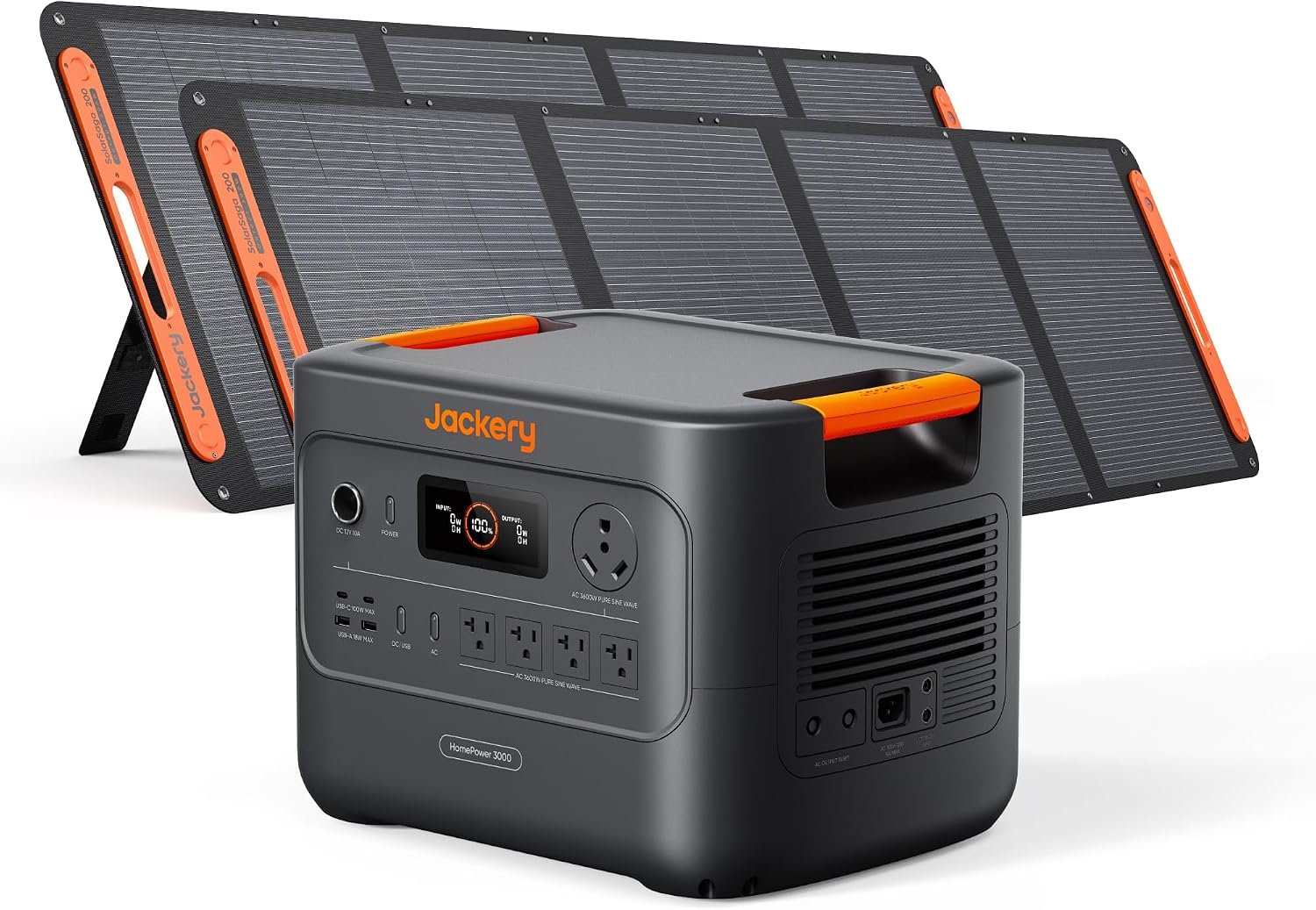
Key Details:
- 3,072Wh LiFePO4 battery with 4,000 rated charging cycles
- 3,600W continuous AC output with 7,200W surge capacity
- Includes 2×200W SolarSaga panels with 1,000W maximum solar input
- Approximately 2.2-hour AC recharge and ≤20ms UPS switching
- 59.5-pound design with TT-30 outlet and dual 100W USB-C ports
Not every blackout requires a massive whole-home backup system. The Jackery HomePower 3000 is a practical solar generator for homeowners who mainly want to keep the refrigerator cold, lights working, and internet connected. Its 3,600W output handles many common 120V appliances, while the 3,072Wh LiFePO4 battery provides useful energy for shorter emergencies.
For home office backup, the Jackery HomePower 3000 has another helpful advantage. Its ≤20ms UPS switching can support compatible routers, computers, and security equipment during sudden interruptions. We also like its approximately 2.2-hour AC charging time. If electricity returns briefly between outages, getting the battery recharged won’t require an entire afternoon.
Solar panel charging gives this portable power station more flexibility during extended blackouts. The included two 200W SolarSaga panels can replenish energy when sunlight is available. Under favorable conditions, Jackery estimates around nine hours to reach 80% using this configuration. Its LiFePO4 battery is also rated for 4,000 cycles to at least 70% capacity.
For everyday emergency power, you’ll appreciate the manageable 59.5-pound body and convenient USB charging ports. It’s easier to reposition than many larger battery backup systems, although it isn’t designed to support an entire house. If your main concern is protecting essential appliances and staying connected during outages, this model offers a practical balance.
Pros:
- Powerful 3,600W output supports demanding 120V appliances
- Fast AC charging reduces downtime between outages
- UPS functionality supports compatible home office equipment
- Relatively manageable weight improves indoor portability
Cons:
- Battery drains quickly under sustained high-wattage loads
- Does not provide native 240V output for larger home circuits
4. Best Expandable Value: ABOK Ark3600 Portable Power Station
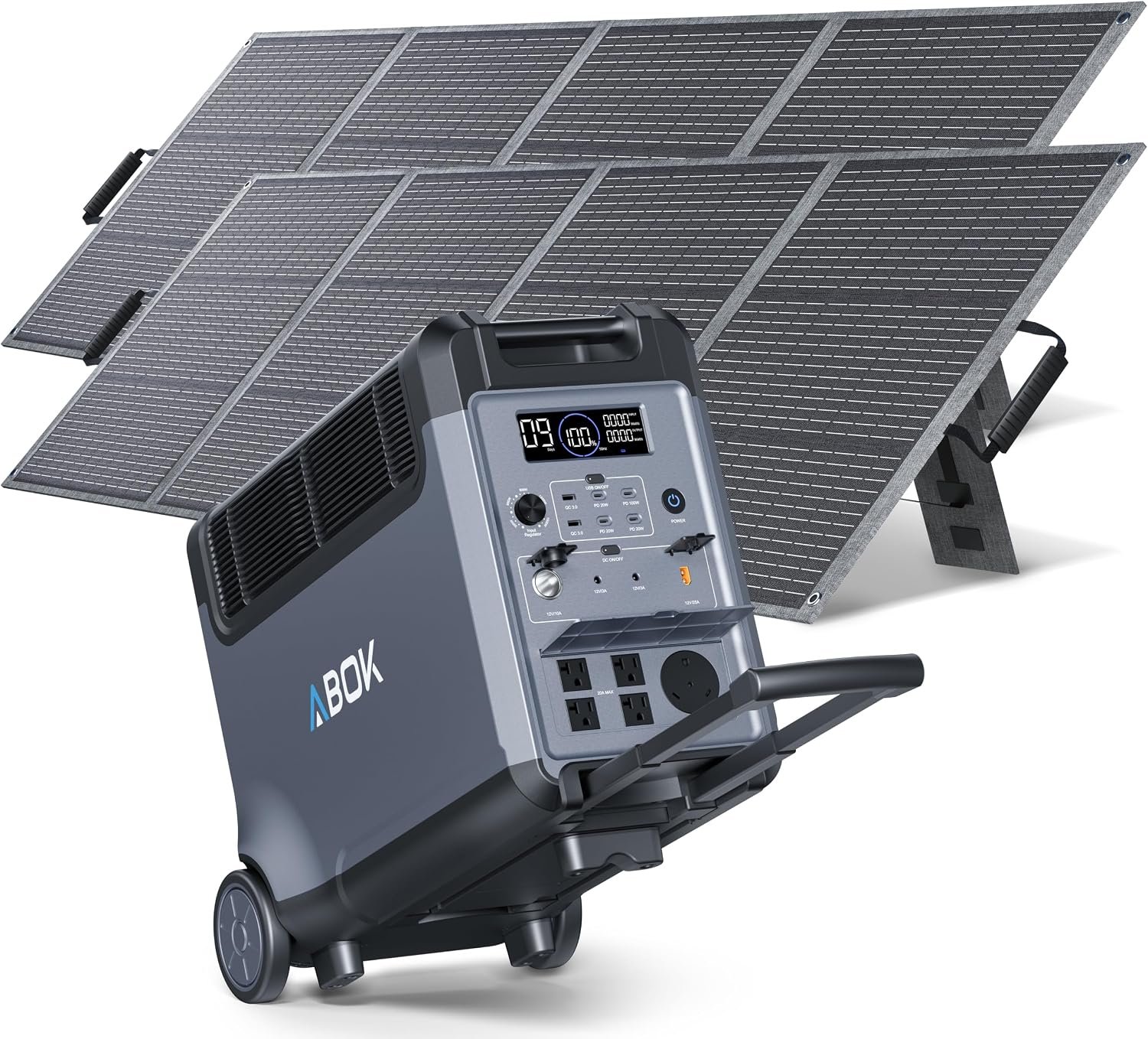
Key Details:
- 3,840Wh LiFePO4 battery expandable to 11,520Wh
- 3,600W continuous AC output with 7,200W peak capacity
- Includes 2×200W solar panels with 2,000W maximum solar input
- Up to 3,500W combined AC and solar charging
- 15 output ports, Bluetooth monitoring, and 4,000+ rated cycles
Buying a solar generator for home backup can be tricky when you don’t know how much battery storage you’ll eventually need. The ABOK Ark3600 gives you room to grow. Starting with a 3,840Wh LiFePO4 battery and 3,600W continuous output, it can power refrigerators, freezers, microwaves, lighting, and several smaller household devices during an outage.
Expandable home battery backup is the biggest reason to consider the ABOK Ark3600. You can connect compatible extra batteries to increase capacity to 11,520Wh, making longer emergency coverage possible. We also like its 15 output ports because you can connect multiple devices without constantly swapping plugs. Just keep the combined appliance load within the inverter’s rating.
For faster solar recharging, this power station supports up to 2,000W of compatible panel input. The included 400W panels provide a starting setup, while additional panels can reduce charging time significantly. Under ideal conditions, ABOK advertises approximately 1.2-hour full charging using combined AC and solar input, rather than the bundled panels alone.
As an expandable portable power station, the Ark3600 also offers app monitoring, adjustable AC charging, and a telescoping handle with wheels. We like these practical touches, especially when preparing for storms. The main drawback is its approximately 92-pound weight. If you have a suitable storage area and want a larger backup system later, it offers plenty of flexibility.
Pros:
- Expandable battery storage reaches 11,520Wh
- Strong 3,600W inverter powers multiple home essentials
- High solar input supports faster charging with added panels
- Multiple outlets and app controls simplify power management
Cons:
- Heavy construction makes lifting and carrying inconvenient
- Extra batteries increase the complete backup system cost
5. Best Compact High-Output Option: BLUETTI Elite 200 V2 Solar Generator
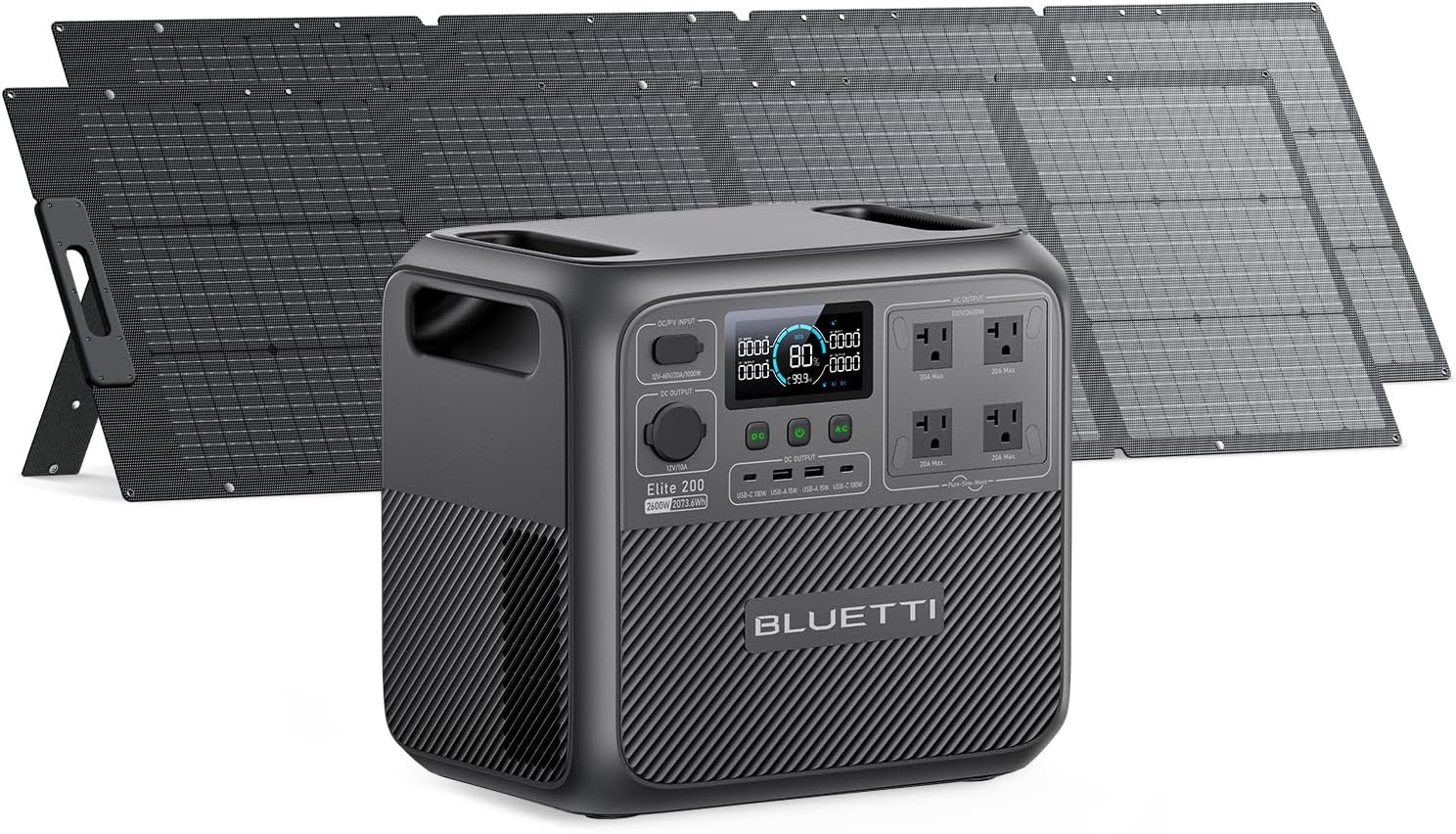
Key Details:
- 2,073.6Wh LiFePO4 battery with 6,000+ rated cycles
- 2,600W continuous AC output with 3,900W Power Lifting mode
- Includes 2×200W solar panels with 1,000W maximum solar input
- ≤15ms UPS switching with Wi-Fi and Bluetooth monitoring
- 53.4-pound compact design with 5-year warranty
If you need a compact solar generator for home backup, the BLUETTI Elite 200 V2 is a good match for smaller households. Its 2,600W continuous output can run refrigerators, fans, lights, laptops, and other essential 120V appliances during shorter outages. You get useful emergency power without finding space for a much larger battery system.
For long-term backup reliability, the BLUETTI Elite 200 V2 has an impressive advantage. Its LiFePO4 battery is rated for more than 6,000 cycles before reaching 80% of its original capacity. We also like its low standby consumption, which helps conserve energy when smaller appliances cycle on and off throughout the day.
Solar charging adds another useful layer of emergency preparedness. The included two 200W panels let you replenish energy during sunny weather, while the station supports up to 1,000W solar input with compatible panels. Fast AC charging and ≤15ms UPS switching are also convenient when you’re protecting home office electronics or preparing for an approaching storm.
For portable household battery backup, the 53.4-pound weight is relatively manageable, and the compact design fits easily into smaller spaces. Its Power Lifting mode can accommodate certain resistive appliances, but it doesn’t increase the normal 2,600W rating. If you’re mainly preparing for occasional blackouts rather than extended whole-house backup, this is an attractive choice.
Pros:
- Compact design offers strong 2,600W continuous output
- Long-life LiFePO4 battery supports 6,000+ cycles
- Fast charging and UPS switching improve emergency readiness
- Low standby power consumption helps preserve stored energy
Cons:
- Smaller battery limits runtime under heavy appliance loads
- No expansion battery support for future upgrades
6. Best Dual-Voltage Option: EF ECOFLOW DELTA Pro 3
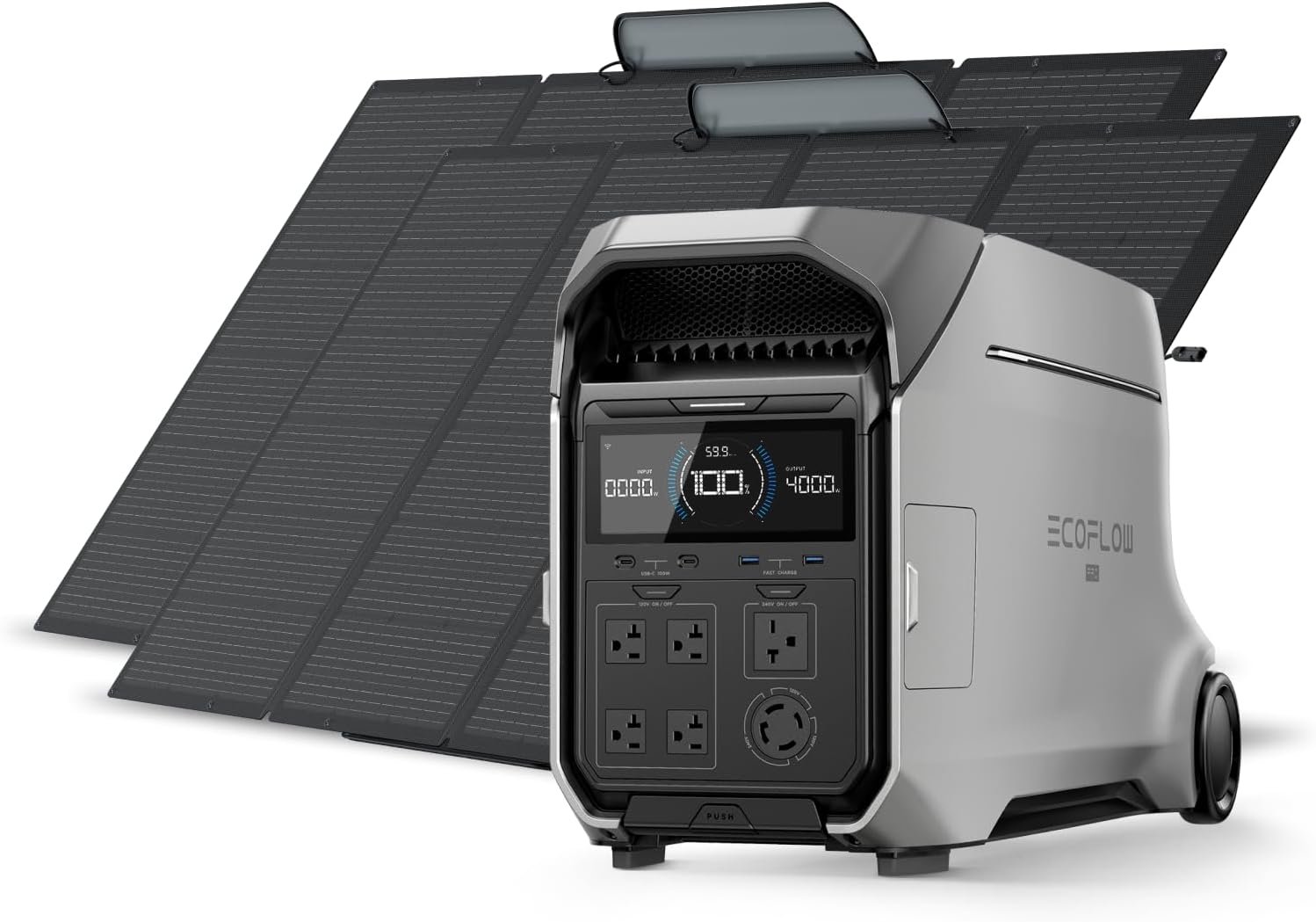
Key Details:
- 4,096Wh LiFePO4 battery expandable to approximately 12kWh per unit
- 4,000W continuous AC output with 8,000W surge capacity
- Built-in 120V/240V output for compatible household appliances
- Includes 2×400W panels with 2,600W maximum solar input
- 10ms UPS switching, 4,000 rated cycles, and 5-year warranty
If your home backup solar generator needs to run more than a few small appliances, the EcoFlow DELTA Pro 3 deserves attention. Its 4,000W continuous output and built-in 120V/240V support can handle refrigerators, sump pumps, and compatible higher-voltage household equipment. That’s particularly helpful when you want emergency power for selected home circuits rather than just extension cords.
For extended battery backup, the EcoFlow DELTA Pro 3 offers room to expand. Its 4,096Wh LiFePO4 battery can grow to approximately 12kWh per unit with compatible expansion batteries. We like having that option because you can begin with essential loads, then add more stored energy if your household needs longer backup coverage.
Solar-powered home backup becomes more useful when you can replenish energy quickly. This package includes two 400W panels, and the station supports up to 2,600W solar input with additional compatible panels. You also have several other charging options, including AC and generator charging. Its 10ms UPS switching is another welcome feature for compatible home-office electronics.
For a larger portable power station, the quiet operation and app monitoring are particularly appealing. You can check battery levels and manage settings without standing next to the unit. However, its approximately 115-pound weight makes moving it upstairs difficult. If you want native 240V capability and expandable backup storage, this is a versatile choice.
Pros:
- Native 120V/240V output supports more household equipment
- Expandable battery storage provides longer emergency coverage
- High solar input enables faster daytime recharging
- Smart monitoring and UPS functionality improve convenience
Cons:
- Heavy construction limits portability between floors
- Base battery requires careful management with demanding loads
7. Best High-Power Option: Jackery Solar Generator 5000 Plus
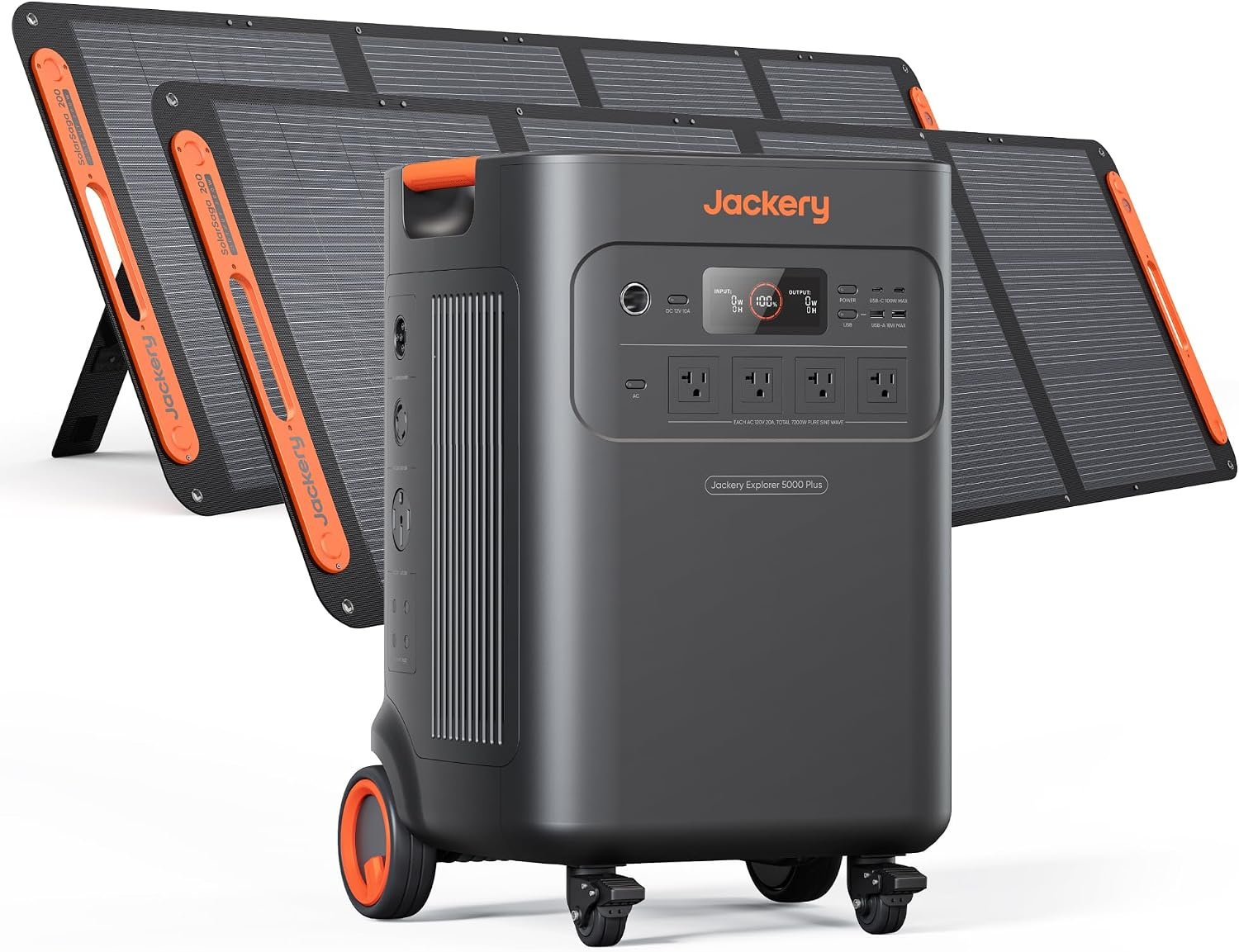
Key Details:
- 5,040Wh LiFePO4 battery with 7,200W continuous AC output
- 14,400W surge capacity with native 120V/240V support
- Expandable system capacity up to approximately 60kWh
- Includes 2×200W panels with up to 4,000W high-voltage solar input
- Compatible with Jackery 60A Smart Transfer Switch
When you need a powerful solar generator for whole-home backup, ordinary 2,000W models may not be enough. The Jackery Solar Generator 5000 Plus takes a different approach with its 7,200W continuous output. It can support multiple household appliances, including compatible well pumps, kitchen equipment, and larger 240V loads, as long as their starting and running requirements fit.
For homeowners planning a complete backup system, the Jackery Solar Generator 5000 Plus offers impressive expansion potential. Its 5,040Wh LiFePO4 battery can become part of a system reaching approximately 60kWh. We also like the optional 60A Smart Transfer Switch, which allows selected circuits to receive electricity through a professionally installed home backup connection.
Solar recharging is another strong advantage, especially with its high-voltage input supporting up to 4,000W. With an appropriately sized panel array, you can replenish the battery much faster during daylight. However, the included two 200W panels provide relatively modest solar capacity for such a large system. Additional compatible panels are worth considering for long outages.
As a high-output home battery backup generator, this model is better suited to a dedicated garage or utility space than frequent transportation. It weighs approximately 134.5 pounds, although built-in wheels help with positioning. If you’re trying to power larger household loads without operating a conventional fuel generator, its powerful inverter and expansion options are compelling.
Pros:
- Powerful 7,200W output supports demanding household appliances
- Native 240V capability accommodates compatible home circuits
- Large expansion potential suits extended power outages
- Smart transfer switch compatibility simplifies circuit management
Cons:
- Included solar panels are modest for the 5kWh battery
- Large, heavy design requires suitable storage space
8. Best Fast-Charging Option: EF ECOFLOW DELTA 3 MAX
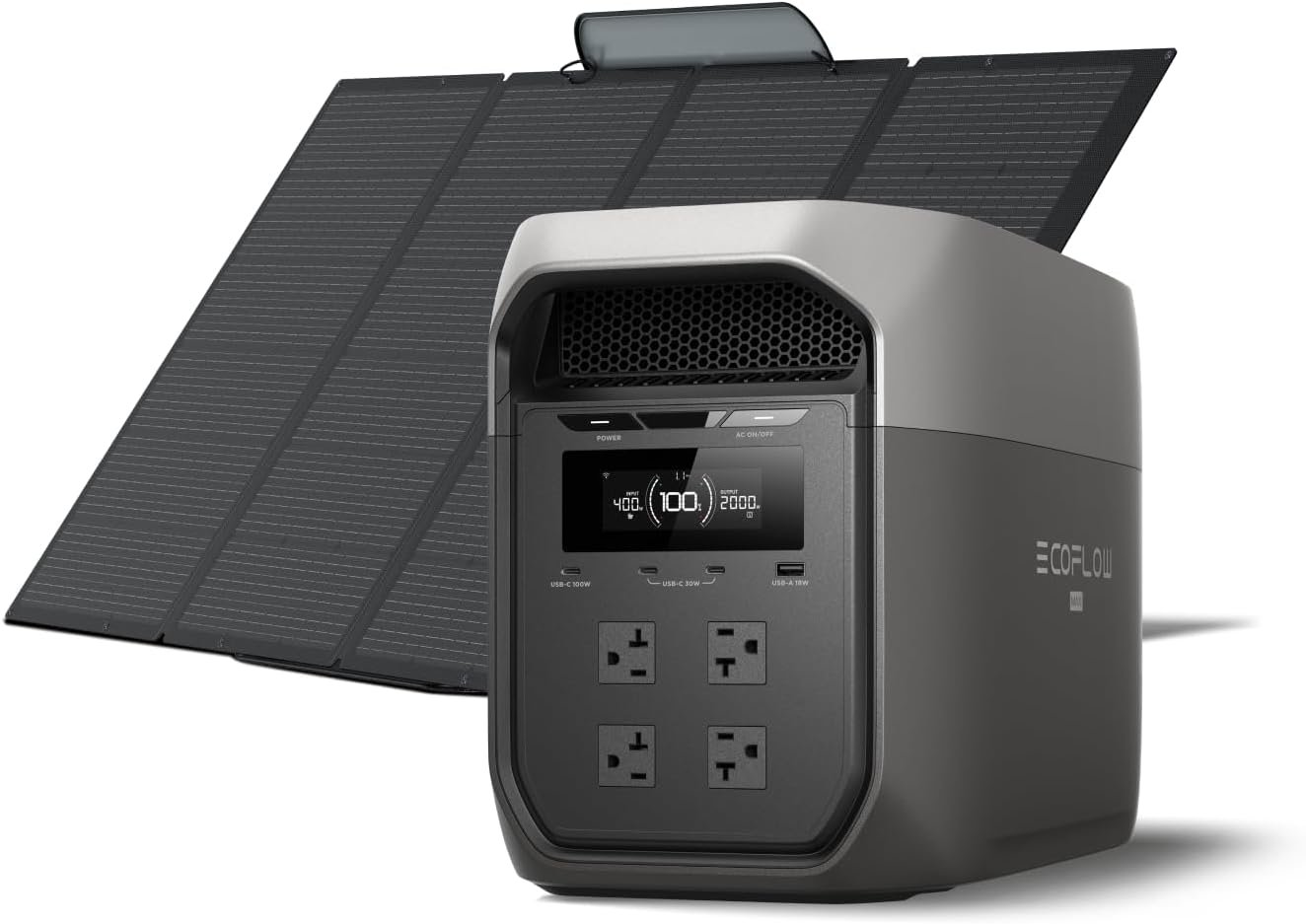
Key Details:
- 2,048Wh LiFePO4 battery with 2,400W continuous AC output
- 4,800W surge capacity with 3,400W X-Boost appliance support
- Includes one 400W solar panel with 500W maximum solar input
- Approximately 68-minute AC recharge to 80% under ideal conditions
- Under 10ms UPS switching and approximately 45-pound weight
You don’t always get much warning before a power outage, so a fast-charging solar generator for home backup can be particularly useful. The EcoFlow DELTA 3 Max combines a 2,048Wh LiFePO4 battery with 2,400W continuous output. That’s enough for many essential 120V appliances, including refrigerators, fans, lights, and internet equipment.
Fast AC charging is what makes the EcoFlow DELTA 3 Max especially appealing. It can reach approximately 80% battery capacity in 68 minutes under favorable conditions. We like that convenience when electricity returns briefly between outages. Its X-Boost mode also supports certain appliances rated up to 3,400W, although normal output remains 2,400W.
For solar emergency backup, the included 400W panel gives you another charging option when utility electricity isn’t available. The system also provides smartphone monitoring, quiet operation at lighter loads, and under 10ms UPS switching. Those features are helpful if you rely on computers, routers, or security equipment throughout the day.
As a lightweight portable power station, its approximately 45-pound design makes moving it around the house relatively easy. You can store it in a closet and bring it out when needed. However, its 500W solar input ceiling limits larger panel upgrades, and the standard model doesn’t support expansion batteries. For shorter outages and quick recharging, it fits nicely.
Pros:
- Rapid AC charging improves emergency readiness
- Compact design provides capable 2,400W continuous output
- Quiet operation makes indoor backup more comfortable
- Fast UPS switching supports compatible electronic devices
Cons:
- Maximum 500W solar input limits charging upgrades
- Standard model lacks additional battery expansion support
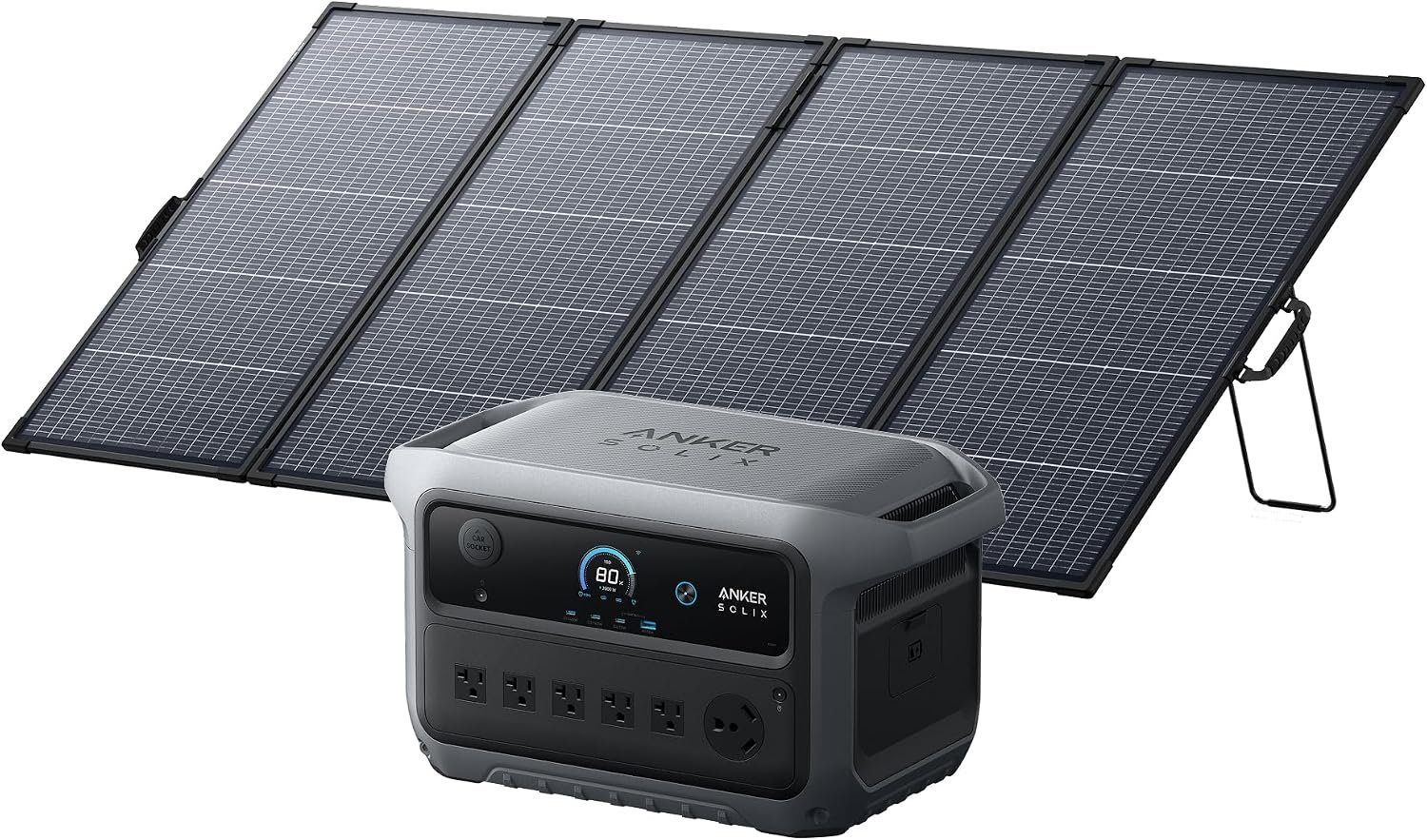
9. Best Lightweight Backup Option: Anker SOLIX C2000 Gen 2
Key Details:
- 2,048Wh LiFePO4 battery with 2,400W continuous AC output
- 4,000W peak power and 4,000 rated battery cycles
- Expandable to 4,096Wh with a compatible expansion battery
- Includes 400W bifacial panel with 800W maximum solar input
- Approximately 41.7-pound body and 9W idle power consumption
If you want portable solar power for home emergencies without handling a huge battery, the Anker SOLIX C2000 Gen 2 makes sense. Its 2,048Wh LiFePO4 battery and 2,400W inverter can support refrigerators, fans, lights, and everyday electronics. It’s particularly appealing when keeping essential appliances running matters more than powering every circuit in the house.
For refrigerator backup during outages, the Anker SOLIX C2000 Gen 2 has another advantage: low idle consumption. Its approximately 9W standby draw helps reduce wasted energy between appliance cycles. Anker advertises up to 32 hours of refrigerator runtime under specific test conditions. Actual results will depend on your refrigerator’s energy consumption and other connected devices.
Solar charging is equally practical with the included 400W bifacial panel. Its dual-sided design can capture additional reflected sunlight under suitable conditions, helping improve energy collection. We also like that you can increase total storage to 4,096Wh with a compatible expansion battery. That gives you more flexibility when preparing for longer interruptions.
As a compact battery backup for home essentials, the 41.7-pound power station is relatively easy to move and store. You also get fast charging, a 10ms UPS function, and convenient device connections. However, its 120V output won’t directly supply 240V appliances. If you want efficient refrigerator backup with the option to expand later, it’s worth considering.
Pros:
- Low idle draw helps conserve stored battery energy
- Lightweight construction simplifies indoor transportation
- Expandable capacity provides additional backup runtime
- Bifacial solar panel offers flexible renewable charging
Cons:
- Cannot directly supply 240V household equipment
- Expansion battery must be purchased separately
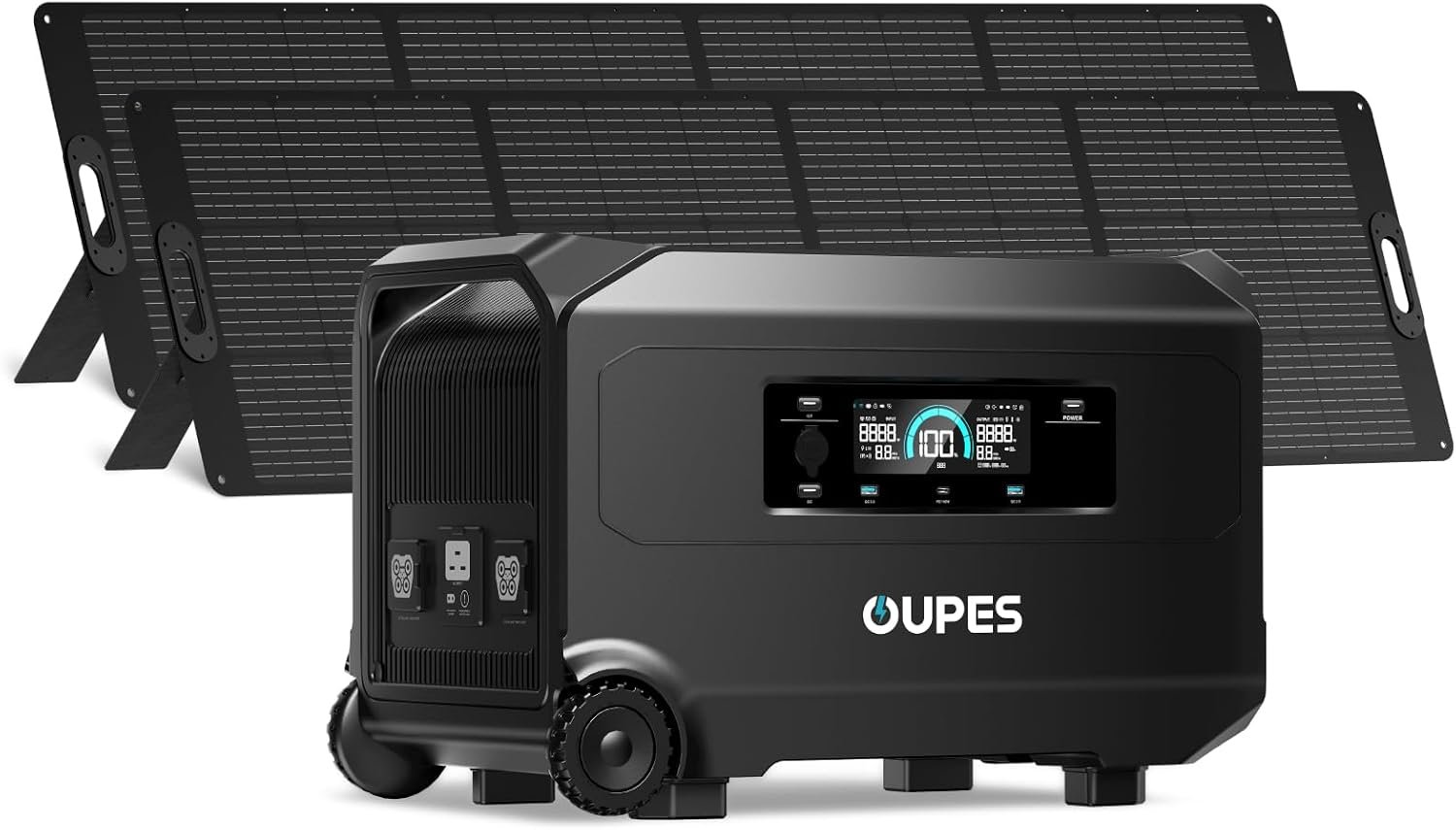
10. Best for Home Circuit Backup: OUPES Guardian 6000 V2
Key Details:
- 4,608Wh LiFePO4 battery expandable to approximately 41.4kWh
- 6,000W rated 240V output and 3,600W rated 120V output
- Includes 2×240W solar panels with dual high-capacity solar inputs
- Under 20ms EPS switching with 2,400W backup transfer limit
- 30A/50A outlets, smart app monitoring, and integrated wheels
Running extension cords across the living room isn’t an ideal home backup solution. The OUPES Guardian 6000 V2 offers a more practical approach with 120V/240V output and connections suitable for compatible household backup equipment. Its 6,000W rated 240V output can support selected larger appliances, including compatible pumps and other essential electrical loads.
For home electrical panel backup, the OUPES Guardian 6000 V2 includes 30A and 50A connection options. With an appropriately rated transfer switch and professionally installed inlet, you can supply selected household circuits more conveniently. We like this approach because it keeps your emergency power setup organized and reduces reliance on extension cords running between rooms.
Expandable battery storage is another major advantage. The Guardian 6000 V2 starts with 4,608Wh of LiFePO4 capacity but can reach approximately 41.4kWh with compatible G5 batteries. The included 480W solar panels provide basic renewable recharging, while its dual solar inputs support a much larger compatible panel array for faster daytime recovery.
For serious residential backup power, app monitoring and built-in wheels make the system easier to manage. One detail worth checking is that the 120V output is rated at 3,600W, while its automatic EPS transfer mode has a separate 2,400W limit. If you want an expandable solar generator designed around household circuit connections, this model offers considerable flexibility.
Pros:
- Dual-voltage output supports diverse home backup needs
- 30A and 50A connections offer flexible circuit integration
- Large battery expansion potential suits extended outages
- High solar input supports larger renewable charging systems
Cons:
- Automatic EPS backup has a lower output limit
- Home circuit integration adds electrical installation costs
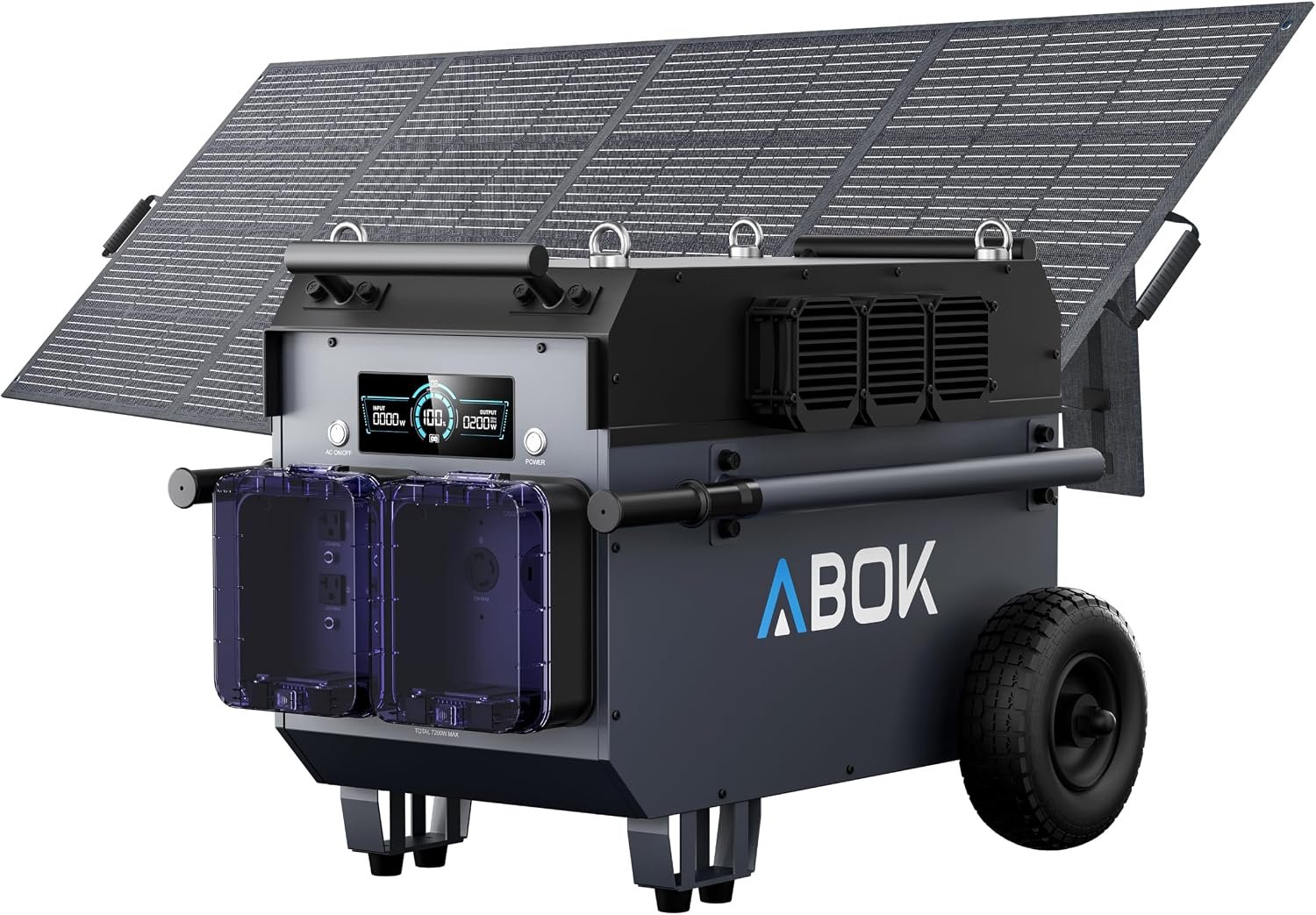
11. Best High-Capacity Backup: ABOK Ark7200 Portable Power Station
Key Details:
- 9,792Wh LiFePO4 battery expandable to 29,376Wh
- 7,200W continuous output at 240V and 3,600W at 120V
- Includes one 400W solar panel with up to 3,700W combined PV input
- Supports up to 5,000W AC charging through a compatible 240V connection
- Smart app monitoring, heavy-duty construction, and battery expansion support
If your area experiences multi-day blackouts, a high-capacity solar generator for home backup can make life much easier. The ABOK Ark7200 Plus starts with a massive 9,792Wh LiFePO4 battery, giving you significantly more stored energy than smaller portable models. It can support refrigerators, freezers, lighting, fans, and other household essentials for extended periods when loads are managed carefully.
For whole-home battery backup planning, the ABOK Ark7200 Plus also offers powerful dual-voltage output. It delivers up to 7,200W at 240V or 3,600W at 120V, accommodating different household electrical requirements. We particularly like its expansion capability, which allows compatible additional batteries to increase total storage to 29,376Wh for longer emergencies.
Solar recharging becomes especially important when you’re dealing with several days without utility electricity. This system supports separate high-voltage and low-voltage solar inputs, with up to 3,700W combined capacity. However, its included 400W panel is only a starting point. You’ll need considerably more solar capacity if you want to replenish such a large battery quickly.
As a high-capacity home backup power station, this model is better suited to a dedicated garage or utility area than frequent transportation. It weighs approximately 287 pounds, so moving it requires planning. You also need a suitable electrical connection to access its fastest AC charging. If extended battery runtime is your biggest priority, its substantial storage capacity makes it worth considering.
Pros:
- Massive 9,792Wh battery supports longer emergency backup
- Powerful 240V output accommodates demanding appliances
- Expandable storage reaches 29,376Wh for extended outages
- High solar input supports larger renewable charging arrays
Cons:
- Extremely heavy construction significantly limits portability
- Included 400W panel provides slow charging for the large battery
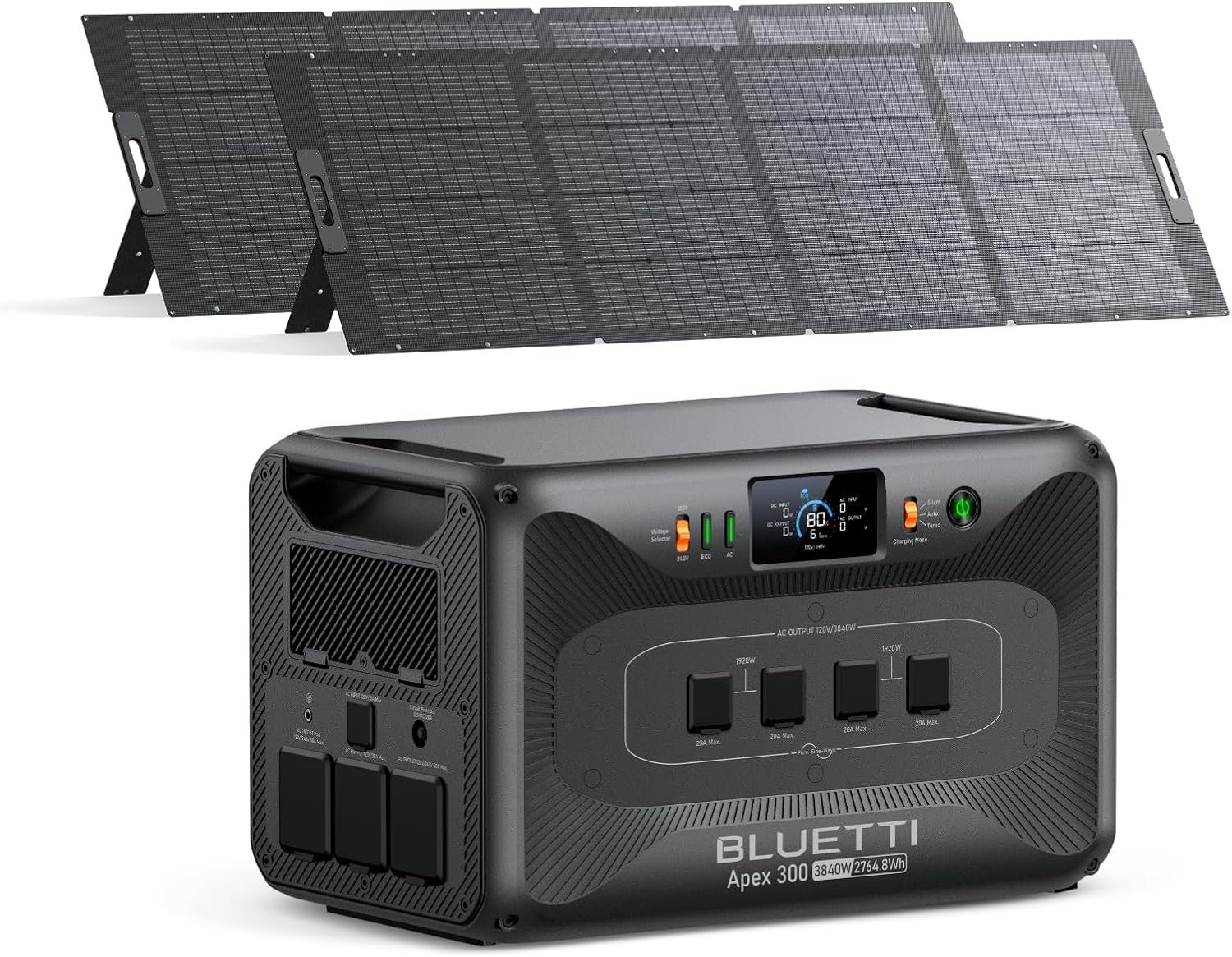
12. Best Compact 240V Option: BLUETTI Apex 300 Solar Generator
Key Details:
- 2,764.8Wh LiFePO4 battery with 6,000+ rated cycles
- 3,840W continuous output with 7,680W surge capacity
- Simultaneous 120V/240V output for compatible home appliances
- Includes 2×350W panels with 2,400W maximum solar input
- Expandable battery system with UPS functionality and app monitoring
Finding a compact solar generator for home backup that can handle 240V appliances isn’t always easy. The BLUETTI Apex 300 addresses that problem with 3,840W continuous output and simultaneous 120V/240V capability. That makes it useful for refrigerators, kitchen appliances, compatible water pumps, and other household equipment during an unexpected blackout.
Expandable solar battery backup is another reason the BLUETTI Apex 300 deserves attention. Its 2,764.8Wh LiFePO4 battery provides a useful starting point, while compatible expansion batteries allow significantly larger configurations. We like this flexibility because you can begin with essential circuits and add storage later without changing the main power station.
For emergency solar charging, the included two 350W panels provide 700W of rated generating capacity. The station also supports up to 2,400W solar input with a larger compatible setup, giving you room to improve charging performance. Its 7,680W Power Lifting mode can operate certain resistive appliances, although normal continuous output remains 3,840W.
As a portable dual-voltage power station, the Apex 300 offers an appealing combination of inverter power and manageable size. At approximately 84 pounds, it’s considerably easier to position than many large home battery systems. However, the starting battery capacity is relatively modest for sustained high-power operation. If you want native 240V support without immediately buying a massive setup, it’s a compelling option.
Pros:
- Native 120V/240V output supports diverse household appliances
- Powerful 3,840W inverter handles demanding essential loads
- Expandable battery system provides future upgrade flexibility
- High solar input improves daytime recharging options
Cons:
- Base battery offers limited runtime at high continuous loads
- Larger configurations require additional compatible accessories
13. Best for Cold-Weather Backup: GROWATT HELIOS 3600
Key Details:
- 3,686.4Wh LiFePO4 battery with 3,600W continuous output
- Expandable battery system supporting larger 240V configurations
- Includes 2×200W solar panels with 2,000W maximum solar input
- 15ms EPS switching and cold-start support down to -22°F
- 4,000+ battery cycles with smart energy management
Winter power outages create a different challenge, especially when you’re trying to keep essential household equipment running. The GROWATT HELIOS 3600 is a practical solar generator for home backup with a 3,686.4Wh LiFePO4 battery and 3,600W continuous output. It can support refrigerators, freezers, lights, internet equipment, and other compatible appliances when utility electricity becomes unavailable.
For cold-weather emergency backup, the GROWATT HELIOS 3600 offers an interesting advantage. Its cold-start system can warm the battery from temperatures as low as -22°F when suitable AC or solar input is connected. We like this feature for winter preparedness, although it doesn’t mean the battery can charge normally at extremely low temperatures without warming first.
Solar charging adds flexibility when storms interrupt utility service for longer periods. The included two 200W panels provide a convenient starting setup, while the station supports up to 2,000W solar input with compatible panels. You can also add expansion batteries or connect two units for a higher-output split-phase home backup configuration.
For managing household battery backup, its Wi-Fi and Bluetooth connectivity make tracking consumption convenient. We also appreciate the time-of-use charging and solar-priority settings, particularly for homeowners who want more control over their electricity usage. However, larger 240V home backup configurations require additional equipment, and the unit weighs approximately 99 pounds. For winter preparedness and expandable storage, it’s worth a closer look.
Pros:
- Cold-start system adds flexibility during winter outages
- Strong 3,600W inverter supports essential household appliances
- Expandable storage accommodates longer emergency power needs
- Smart charging settings offer useful energy management
Cons:
- Extreme cold startup requires suitable external charging input
- Larger split-phase configurations need additional equipment
14. Best High-Output Value: PECRON Portable Power Station E3800 LFP
Key Details:
- 3,840Wh LiFePO4 battery with 3,500+ rated cycles
- 4,200W continuous pure sine wave AC output
- Expandable battery capacity up to 26,880Wh per unit
- Includes 2×200W solar panels with 3,000W maximum solar input
- 14 output ports, 8–20ms UPS switching, and app monitoring
If you want a powerful solar generator for home backup without starting with an oversized battery system, the PECRON E3800 LFP is worth considering. Its 4,200W continuous output can run refrigerators, freezers, microwaves, fans, and several other 120V household appliances. The 3,840Wh LiFePO4 battery also provides substantial stored energy for emergency situations.
For expandable home backup power, the PECRON E3800 LFP offers impressive flexibility. You can increase its battery storage to 26,880Wh using compatible expansion batteries, which is useful when preparing for longer outages. We also like its 14 output ports, allowing you to connect several household devices without constantly switching between available outlets.
Solar recharging is another area where this portable power station stands out. It supports up to 3,000W solar input through dual charging connections, considerably more than many models with similar battery capacity. You also get fast AC charging, with approximately 1.4-hour full charging available through a suitable 30A connection. The included 400W panels recharge much more slowly.
As a high-output emergency battery generator, the E3800 LFP is practical for homeowners who prioritize appliance power and expansion options. Its touchscreen display and app controls make energy monitoring straightforward. However, the approximately 87-pound unit is fairly heavy, and 240V backup requires two compatible units with a separate connection box. For powerful 120V home essentials, it’s an attractive alternative.
Pros:
- Strong 4,200W output handles demanding 120V appliances
- Expandable battery storage supports longer power interruptions
- High solar input provides flexible recharging options
- Multiple outlets and touchscreen controls improve usability
Cons:
- Fastest AC charging requires a suitable 30A connection
- 240V backup needs two units and additional connection equipment
15. Best for Hybrid Recharging: Anker SOLIX F3000
Key Details:
- 3,072Wh LiFePO4 battery with 3,600W continuous AC output
- Expandable battery system supporting up to 24kWh configurations
- Includes 400W bifacial panel with 2,400W maximum solar input
- Supports 3,600W pass-through charging for connected appliances
- Approximately 91.5-pound design with wheels and smart app monitoring
When cloudy weather follows a major storm, relying entirely on solar charging can become frustrating. That’s where the Anker SOLIX F3000 offers an advantage for home backup power. Its 3,072Wh LiFePO4 battery and 3,600W continuous output can handle refrigerators, freezers, lighting, routers, and other household essentials while providing several ways to recharge.
For extended power outages, the Anker SOLIX F3000 supports generator-assisted charging while continuing to power connected appliances. We particularly like this flexibility because you can replenish battery energy even when sunlight is limited. However, any gasoline generator used for charging must remain outdoors, away from windows, doors, and ventilation openings.
Solar-powered battery backup is another strong point here. The included 400W bifacial panel provides renewable energy during daylight, while the station supports up to 2,400W solar input with additional compatible panels. You can also expand its LiFePO4 battery capacity for longer backup runtime. Its low idle consumption helps preserve energy when you’re powering smaller appliances.
As a portable home backup power station, the F3000 offers a useful combination of output, expandable storage, and flexible charging. Built-in wheels and app monitoring make managing the system more convenient. However, the approximately 91.5-pound weight isn’t ideal for stairs, and native 240V backup requires a compatible two-unit setup. If you want multiple dependable ways to recharge during long blackouts, it’s a strong choice.
Pros:
- Generator-assisted pass-through charging supports longer outages
- Strong 3,600W output powers essential household appliances
- Expandable LiFePO4 storage offers flexible backup duration
- High solar input and smart monitoring improve energy management
Cons:
- Large, heavy design limits frequent transportation
- 240V operation requires two compatible units and connection equipment
What Size Solar Generator Do You Need for Home Backup?
The right solar generator size depends on your appliances, daily electricity use, and expected outage duration. Battery capacity (Wh) determines runtime, while output wattage (W) determines which appliances you can run.
- 1,000Wh–2,000Wh: Suitable for lights, Wi-Fi routers, fans, laptops, and basic essentials.
- 2,000Wh–4,000Wh: Ideal for refrigerators, freezers, small appliances, and short home outages.
- 4,000Wh–6,000Wh: Better for multiple household appliances and extended essential backup.
- 6,000Wh and Above: Suitable for longer outages and higher-demand loads with compatible inverter output.
For most homeowners, a 3,000Wh–5,000Wh solar generator is a practical starting point for essential backup. Choose a larger or expandable system if you need longer runtime or plan to power demanding appliances.
What Can a Solar Generator Run During a Power Outage?
A home backup solar generator can run everything from Wi-Fi routers to refrigerators and certain air conditioners. What actually works depends on the generator’s continuous output, startup capacity, and voltage.
Here’s a quick look at common household appliances.
| Appliance | Typical Running Watts | What to Consider |
| Refrigerator | 100 to 250W | Compressor startup surge |
| Chest Freezer | 80 to 200W | Compressor cycling |
| Wi-Fi Router | 10 to 20W | Low continuous consumption |
| LED Lights | 30 to 100W | Depends on number of bulbs |
| Window AC | 500 to 1,500W | High startup demand |
| Sump Pump | 500 to 1,200W | Motor starting surge |
| Well Pump | 700 to 2,000W | Often requires 240V |
| Central AC | 2,000 to 5,000W+ | High startup watts and often 240V |
These are approximate running-power ranges, not guaranteed appliance ratings. Actual wattage and daily energy use vary by model, efficiency, and operating conditions.
If you want to run several appliances together, add their simultaneous running watts and allow extra capacity for motor startup. Also check whether your generator provides the correct voltage. A powerful 120V station cannot directly operate a 240V appliance.
How Long Can a Solar Generator Power Your Home?
A solar generator can power essential household loads for several hours or multiple days, depending on battery capacity and energy consumption. The easiest way to estimate runtime is to calculate how much electricity your appliances use daily.
Running Essential Appliances for 24 Hours
Let’s say you want to keep four essential loads running during an outage.
| Appliance | Daily Energy Use |
| Refrigerator | 1,200Wh |
| Wi-Fi Router (15W for 24 hours) | 360Wh |
| LED Lights (60W for 5 hours) | 300Wh |
| Fan (40W for 8 hours) | 320Wh |
| Total Daily Usage | 2,180Wh |
Assuming 85% usable AC energy after losses, you’ll need approximately 2,565Wh of rated battery capacity for one day.
That makes a 3,000Wh class solar generator a reasonable starting point for this example, provided the inverter can handle appliance startup loads.
Planning Backup Power for 48 to 72 Hours
If outages regularly last two or three days, you’ll need more battery storage or a dependable recharging method.
Using the same 2,180Wh daily appliance load, approximately 5.1kWh of rated battery capacity would cover 48 hours. For 72 hours, you’d need around 7.7kWh.
These are estimates without solar recharging. Real runtime can change with appliance cycling, battery condition, temperature, and inverter efficiency.
How Solar Recharging Extends Battery Runtime
Solar panels can extend backup runtime by replenishing energy while your appliances are running. This becomes especially valuable during multi-day power outages.
For example, a 400W solar array producing 1,200Wh per sunny day could replace part of your daily energy usage. A larger compatible panel setup may cover more of your needs, reducing how quickly the battery runs down.
How Many Solar Panels Do You Need for Home Backup?
The number of solar panels you need depends on daily electricity consumption, panel wattage, sunlight availability, and your power station’s solar input limit.
Solar Panel Wattage and Charging Time
A larger solar array generally recharges a battery faster, provided the power station can accept the additional input.
Here’s a simple daily solar production estimate using four peak sun hours and an assumed 75% net energy yield.
| Solar Panel Capacity | Estimated Daily Energy |
| 200W | 600Wh |
| 400W | 1,200Wh |
| 800W | 2,400Wh |
| 1,200W | 3,600Wh |
These figures are illustrative. Weather, shading, panel orientation, temperature, and charging losses affect actual production.
Solar Recharging During Cloudy Weather
Solar generators still recharge during cloudy weather, but their charging speed drops because panels receive less sunlight.
If you’re preparing for hurricanes or winter storms, don’t depend on perfect weather. A larger battery, additional solar panels, or another compatible charging source can provide more flexibility.
Solar Panel Compatibility and Input Limits
Before buying extra panels, check the generator’s maximum solar wattage, input voltage, current limits, and connector requirements.
For example, a power station accepting only 500W of solar input cannot use the full output of a 1,200W array. Matching the panels to your specific model is more important than simply buying more wattage.
120V vs. 240V Solar Generators for Home Backup
A 120V solar generator is suitable for common household essentials like refrigerators, lights, televisions, routers, and smaller kitchen appliances. For many homeowners, that’s enough to get through a typical outage.
A 240V solar generator supports additional equipment such as certain well pumps, electric dryers, and central air conditioning systems. However, these appliances often need substantial starting power, so voltage compatibility alone isn’t enough.
If you want to supply 240V household circuits, look for a model with native split-phase output or a manufacturer-approved multi-unit configuration. The EcoFlow DELTA Pro 3 and Jackery Solar Generator 5000 Plus support native 120V/240V operation, while some smaller models require additional units.
For essential appliance backup, 120V is often sufficient. For larger home electrical loads, 240V capability gives you more options.
How Much Does a Complete Home Backup Solar Generator System Cost?
A home backup solar generator system can cost from a few hundred dollars for basic portable backup to several thousand dollars for larger expandable systems.
The total depends on battery capacity, inverter output, solar panels, expansion batteries, and whether you need professional electrical installation.
Power Station Only vs. Solar Generator Bundle
A power station includes the battery, inverter, and charging electronics. A solar generator bundle adds compatible solar panels.
Among the 15 selected models in this guide, the listed bundle prices range from $1,399 to $5,399. These are reference prices and may change.
If you don’t already own compatible panels, a bundle can be more convenient. However, compare the included panel wattage rather than assuming every package provides enough solar power for extended outages.
Additional Batteries, Panels, and Installation Costs
The initial purchase isn’t always the final expense. You may need expansion batteries, additional solar panels, charging cables, transfer equipment, or professional installation.
For example, buying a 3kWh power station doesn’t automatically give you a 10kWh home backup system. Extra battery storage can significantly increase the total investment.
Before ordering, calculate the complete cost of the backup setup you actually need.
How to Choose the Best Solar Generator for Home Backup
Choosing the right home backup solar generator becomes easier when you focus on practical specifications rather than marketing claims.
Battery Capacity and Continuous Power
Battery capacity determines how much energy the generator stores. Continuous output determines how many appliances it can run simultaneously.
If you’re powering refrigerators, pumps, or air conditioners, check their startup watts too. A generator with a large battery can still overload if its inverter output is too low.
LiFePO4 Battery Lifespan and Warranty
LiFePO4 batteries are popular in modern portable power stations because they offer long cycle life and good thermal stability.
Look for the manufacturer’s cycle rating, remaining-capacity percentage, warranty coverage, and available service support. A 4,000-cycle rating means little without knowing the capacity-retention conditions.
Solar Input and Fast Charging
Fast charging matters when the grid returns briefly or when sunlight is limited.
Compare maximum solar input with the wattage of the panels actually included. Also check AC charging time, supported generator charging, and whether simultaneous AC and solar charging is available.
Expandability and Home Backup Compatibility
An expandable solar generator lets you add battery storage later instead of replacing the entire system.
If you plan to power household circuits, confirm 120V/240V availability, supported connection accessories, and whether expansion requires additional equipment.
UPS Functionality, Safety, and Portability
A UPS function can help compatible electronics stay powered during outages, but transfer times vary. Some sensitive equipment may require a dedicated UPS.
Also consider battery safety certifications, ventilation requirements, weight, wheels, and storage space. A 90-pound power station may be movable, but it isn’t something everyone can carry upstairs.
Solar Generator vs. Gas Generator for Home Backup
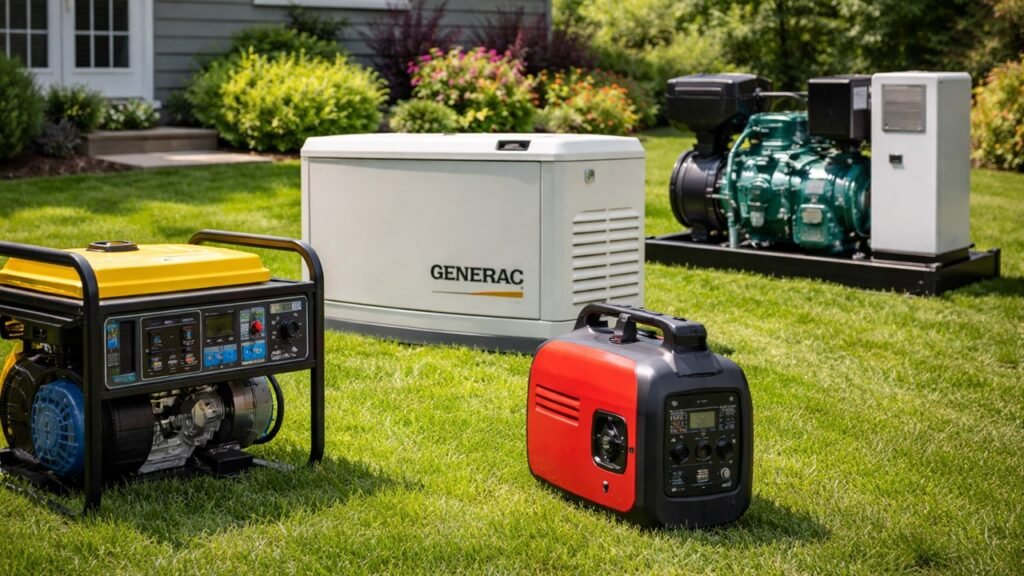
Solar generators provide quiet, fuel-free electricity from stored battery energy. Gas generators produce electricity by burning fuel and can continue running as long as fuel and maintenance needs are met.
| Feature | Solar Generator | Gas Generator |
| Power Source | Rechargeable battery | Gasoline or other fuel |
| Indoor Operation | Yes, with proper ventilation and placement | No |
| Noise | Usually quieter | Usually louder |
| Runtime | Limited by stored energy and recharging | Limited by fuel supply |
| Maintenance | Generally lower | Engine maintenance required |
| Recharging or Refueling | AC, solar, or compatible sources | Add fuel |
| Upfront Cost | Often higher for large storage | Often lower for comparable output |
If you want quiet backup power for refrigerators, lights, and electronics, a solar generator is appealing. It also avoids engine exhaust and fuel storage.
However, for continuous high-wattage loads during lengthy outages, a gas generator may be more practical when fuel is available. The right choice depends on your appliances, outage duration, and charging or refueling options.
Solar Generator vs. Whole-Home Battery Backup
A portable solar generator is a good choice when you want flexible backup power without committing to a permanent installation. You can use it for emergencies, move it between locations, and expand certain models over time.
A whole-home battery system is usually better when you want automatic backup, permanent integration with rooftop solar, and power for multiple household circuits. It generally requires professional installation and a larger upfront investment.
If your goal is keeping a refrigerator, lights, and internet running, a portable solar generator may be enough. If you want central AC, major appliances, and automatic whole-home backup, a permanently installed battery system deserves consideration.
Common Mistakes to Avoid When Buying a Home Backup Solar Generator
Even a powerful solar generator can disappoint if it doesn’t match your household’s actual electricity needs. Here are some common mistakes worth avoiding.
- Confusing Surge and Continuous Watts: Always size appliances using continuous output and allow extra capacity for startup loads.
- Ignoring Battery Runtime: A 3,000Wh battery doesn’t provide 3,000Wh of usable AC electricity after losses.
- Overlooking 240V Requirements: Check whether pumps, central AC, or other major appliances need 240V power.
- Assuming Panels Are Included: Some packages contain only the power station, while others include limited solar wattage.
- Ignoring Total Setup Costs: Expansion batteries, solar panels, and transfer switches can increase the complete system cost.
Final Words
Choosing the right solar generator comes down to how much backup power you need and which appliances matter most during an outage.
The Jackery HomePower 3600 Plus is our overall pick for homeowners wanting a balanced combination of power output, expandable LiFePO4 storage, and convenient charging. It makes sense for refrigerators, pumps, and everyday essential loads.
If battery runtime and value are your priorities, the BLUETTI Solar Generator Elite 400 offers generous 3,840Wh storage for essential household appliances. For larger home backup needs, the Jackery HomePower 3000 provides powerful 7,200W output, native 240V support, and extensive battery expansion.
Whichever model you choose, focus on usable battery capacity, continuous wattage, solar recharging, and electrical compatibility. The right home backup solar generator should match your actual electricity needs, not simply have the largest numbers on its specification sheet.
Related FAQs
Can You Use a Solar Generator Indoors During a Power Outage?
Yes. Battery-powered solar generators don’t produce combustion exhaust, making them suitable for indoor use when operated according to manufacturer instructions. Keep ventilation openings clear and place solar panels outdoors.
Do Solar Generators Work Without Solar Panels?
Yes. Most portable solar generators can recharge through an AC wall outlet, and some support car or fuel-generator charging. Solar panels are optional unless you need sunlight-based recharging during an outage.
Can a Solar Generator Run a Gas Furnace?
Yes, if the generator supports the furnace blower’s running and startup watts. The furnace also needs electricity for controls and ignition. Hardwired furnaces require a compatible, safely installed electrical connection.
Can You Use a Solar Generator While It Is Charging?
Many modern power stations support pass-through charging, allowing appliances to run while the battery recharges. However, output limits and operating modes vary. Check your model’s instructions before relying on this feature.
Will a Solar Generator Automatically Turn On During an Outage?
Some models provide UPS or EPS functionality that switches connected equipment to battery power automatically. However, this doesn’t necessarily mean the generator can automatically power your entire house.
Can You Connect Rooftop Solar Panels to a Portable Solar Generator?
Sometimes, but only when the panels’ electrical specifications match the generator’s solar input requirements. Existing rooftop systems may require compatible equipment or reconfiguration by a qualified installer.
Can a Solar Generator Power Medical Equipment Overnight?
Some models can, provided they support the device’s electrical requirements and have sufficient battery capacity. For life-sustaining equipment, use manufacturer-approved backup arrangements and an additional emergency power plan.
How Often Should You Recharge a Stored Solar Generator?
Follow the manufacturer’s storage recommendations. Many models require periodic battery checks and recharging during long storage periods. Avoid leaving the battery fully depleted for months.
Is a 3,000Wh Solar Generator Enough for Home Backup?
A 3,000Wh solar generator can support essential appliances for a limited period. With an assumed 85% usable AC energy, it provides roughly 2,550Wh for connected loads. Runtime depends on your household’s actual consumption.
Can a Solar Generator Run an Air Conditioner All Night?
It depends on the AC’s energy consumption and the battery size. A small window unit may work with a sufficiently large battery, while central AC generally needs much more storage, higher output, and appropriate 240V support.

Robert Caldwell writes in-depth guides and reviews focused on generators, backup power systems, and portable energy equipment. His work is grounded in hands-on testing, covering fuel types, runtime performance, noise levels, and real-world reliability. He helps homeowners, RV owners, and outdoor users choose dependable power solutions with confidence. Every article emphasizes clear explanations, safe operation, and long-term value.