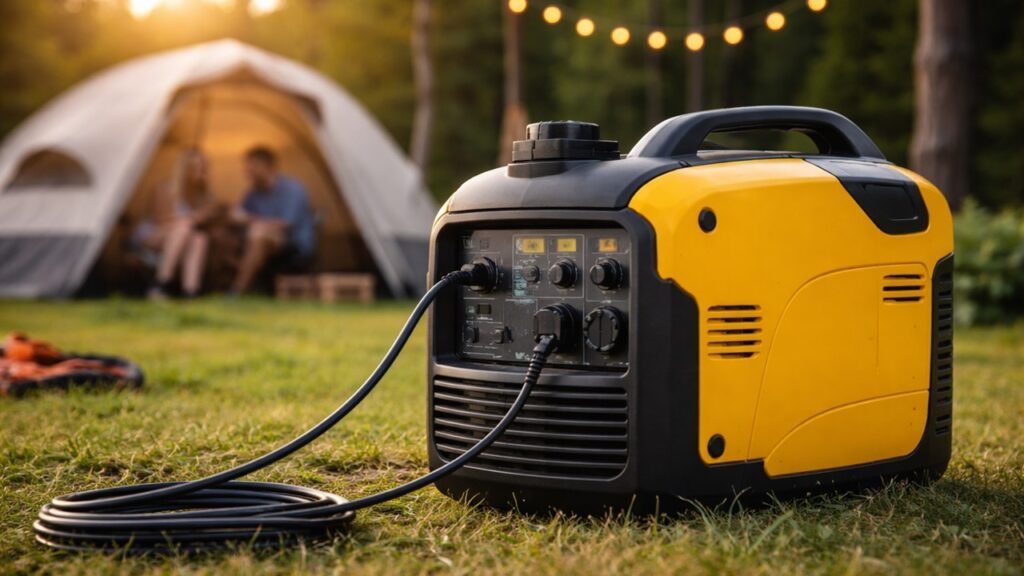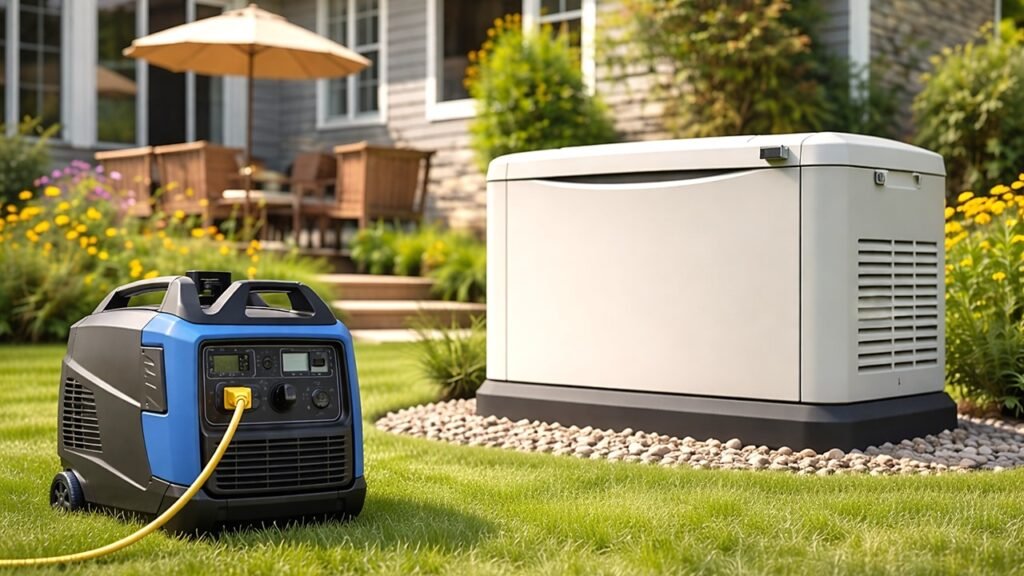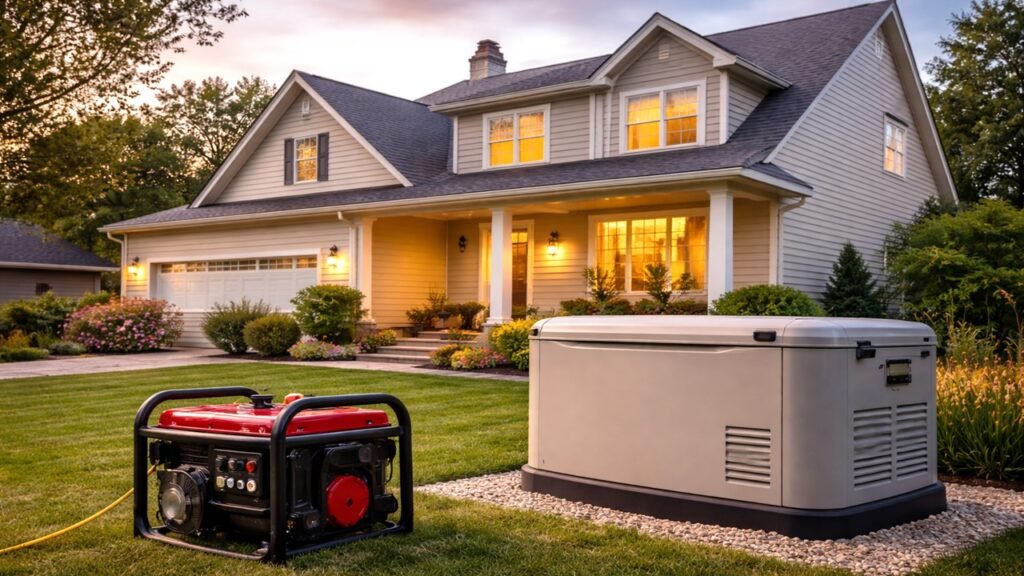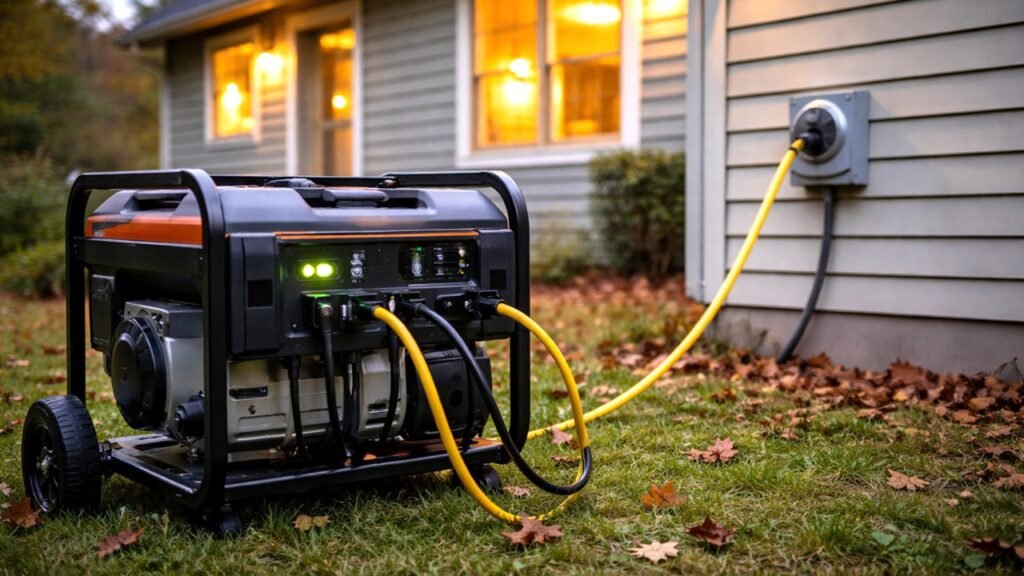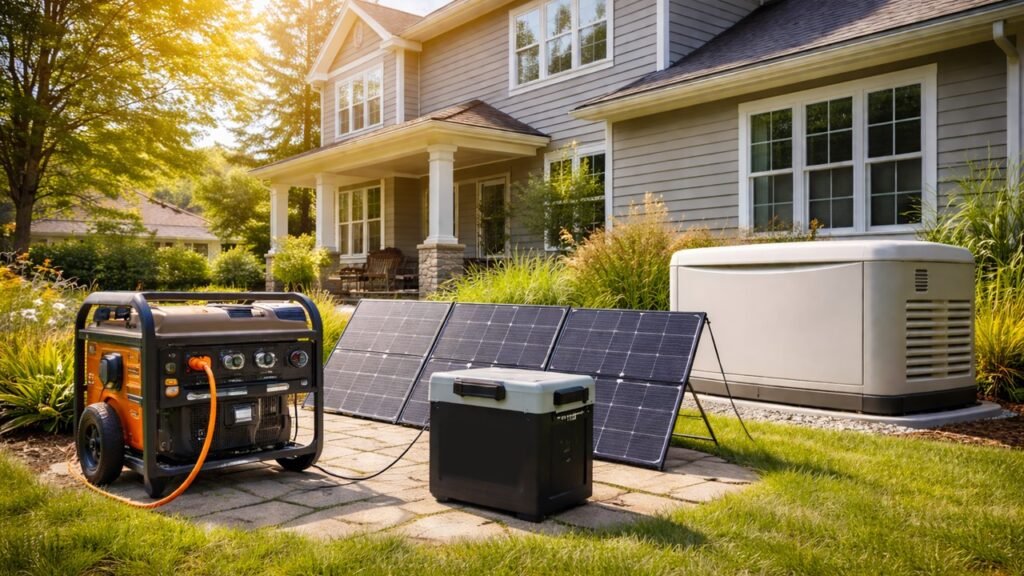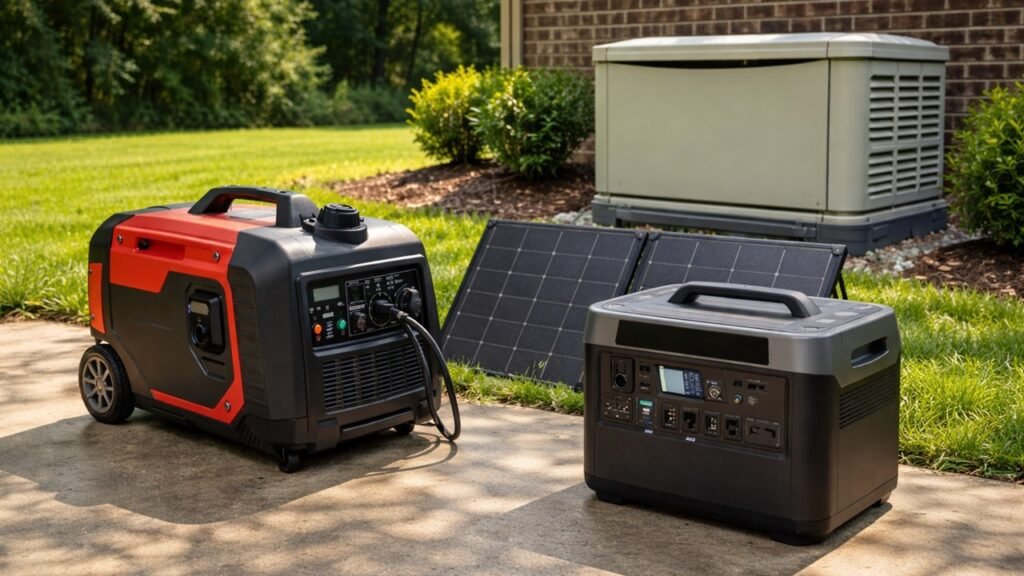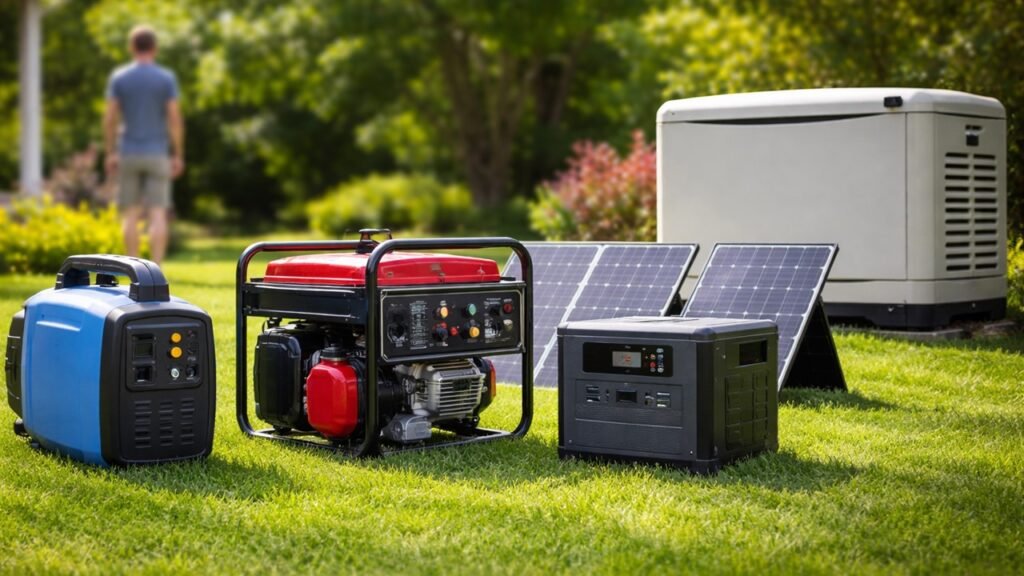
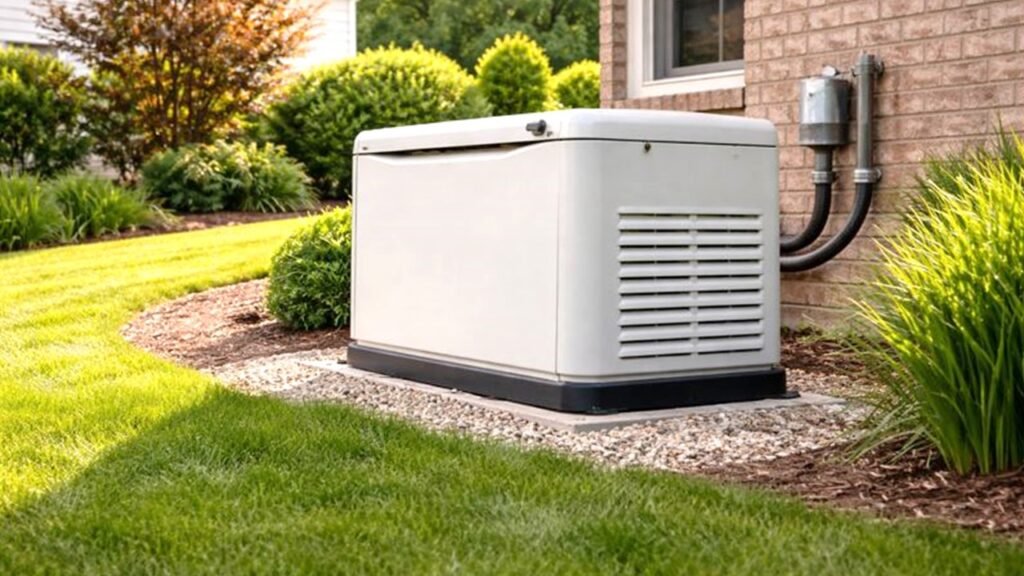
Generator placement for safety is about preventing carbon monoxide exposure, fire hazards, and electrical accidents before they happen. A generator must be placed outdoors, far from openings, and on a stable surface so it can run safely without putting people or property at risk.
Key Summary
- Generator placement prevents carbon monoxide poisoning by keeping exhaust gases away from living spaces and air intakes.
- Outdoor placement reduces safety risks because open airflow disperses carbon monoxide and heat effectively.
- Distance from the home protects occupants by limiting the chance of exhaust entering through windows, doors, or vents.
- Stable, non-combustible surfaces improve generator safety by preventing tipping, fuel spills, and fire hazards.
- Proper placement combined with alarms and safe wiring improves overall protection for people, property, and utility workers.
Generator Placement Safety at a Glance
This quick-reference table summarizes where you should place a generator for safety, including distance rules, surface requirements, and locations to avoid. It is designed for fast scanning during outages or setup, so you can confirm safe placement in seconds.
| Safety Factor | Safe Recommendation | Why It Matters |
| Location | Outdoors only | Prevents carbon monoxide buildup indoors |
| Distance from home | At least 20 feet | Reduces risk of exhaust entering living spaces |
| Distance from windows and doors | As far as possible | Openings allow carbon monoxide to enter |
| Exhaust direction | Pointed away from the house | Prevents fumes from drifting back |
| Surface type | Flat, stable, non-combustible | Prevents tipping, fuel spills, and fire risk |
| Clearance around generator | 3 to 5 feet on all sides | Allows cooling and safe airflow |
| Use in garage or shed | Never | Traps carbon monoxide even if doors are open |
| Use in rain or snow | Only with generator-rated canopy | Protects unit without trapping exhaust |
| Flood-prone areas | Elevated on a raised pad | Prevents water damage and shock hazards |
| CO alarms in home | Installed on every level | Alerts occupants to dangerous gas levels |
The Biggest Risk to Design Around Is Carbon Monoxide
Carbon monoxide poisoning is the leading cause of generator-related deaths. Gas, propane, and diesel generators all produce carbon monoxide as a byproduct of combustion. Carbon monoxide is invisible, odorless, and can become deadly within minutes.
Carbon monoxide enters homes through doors, windows, vents, crawl spaces, and HVAC intakes. Even generators running outside can push exhaust indoors if they are too close or positioned incorrectly. Opening windows or garage doors does not prevent carbon monoxide buildup.
Safety agencies such as the Centers for Disease Control and Prevention and the Consumer Product Safety Commission consistently report that improper generator placement is a primary factor in fatal incidents. Safe placement is the most effective way to eliminate this risk.
Safe Placement Rules for Portable Generators
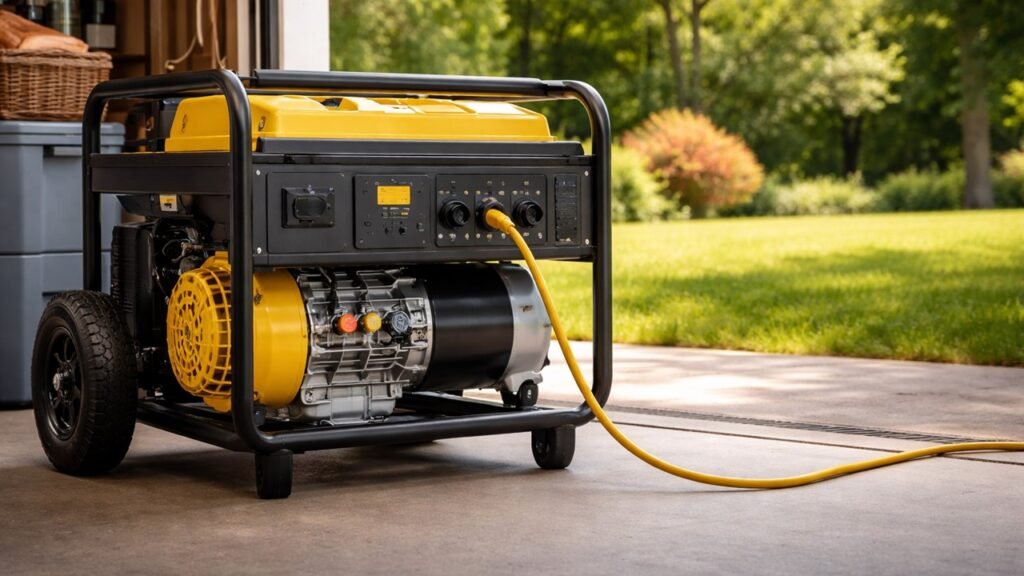
Portable generator safety depends on distance, airflow, surface stability, and exhaust control. These rules apply during power outages, storms, and emergency use when people are most likely to take shortcuts.
The goal is simple. Keep exhaust fumes away from living spaces, keep the generator stable and dry, and allow enough airflow so heat and gases can dissipate safely.
Outdoors Only Means Outdoors Only
Portable generators must be operated outdoors at all times. Indoor or semi-enclosed spaces trap carbon monoxide and increase exposure risk.
A generator should never be run in a garage, basement, crawl space, shed, porch, or carport. These spaces restrict airflow and allow exhaust gases to accumulate rapidly, even if doors or windows are open.
Minimum Distance From Your Home
A portable generator should be placed at least 20 feet away from the home. Distance reduces the chance that carbon monoxide will re-enter the building.
This distance should be increased if wind pushes exhaust toward the house or if the generator manual specifies a greater clearance. Safety improves as distance increases, especially in calm or enclosed yard layouts.
Keep It Away From Openings and Air Intakes
Generators must be positioned away from any opening that can pull air into the home.
This includes windows, exterior doors, attic vents, crawl space vents, soffit vents, dryer vents, bathroom fans, and HVAC air intakes. Carbon monoxide follows airflow paths, not just straight lines.
Exhaust Direction Matters More Than People Think
Generator exhaust should always point away from the home and nearby structures. Exhaust aimed toward walls, fences, or corners can bounce and concentrate fumes instead of dispersing them.
Wind direction changes throughout the day. Placement should account for shifting airflow, not just where the generator sits when first started.
Pick a Stable, Fire-Safe Surface
A generator must sit on a flat, level, non-combustible surface. Stability prevents tipping, fuel spills, and vibration-related damage.
Concrete pads, paving stones, and compacted gravel provide safe support. Grass, loose soil, and sloped ground increase fire and tipping risk, especially during rain or extended run times.
Clearance for Cooling and Safe Access
Generators require open space to cool properly and to operate without overheating.
At least 3 to 5 feet of clearance should be maintained on all sides and above the unit, unless the manufacturer specifies otherwise. Clear space also allows safe refueling, oil checks, and emergency shutdown without contact with hot components.
Safe Placement Rules for Standby Generators
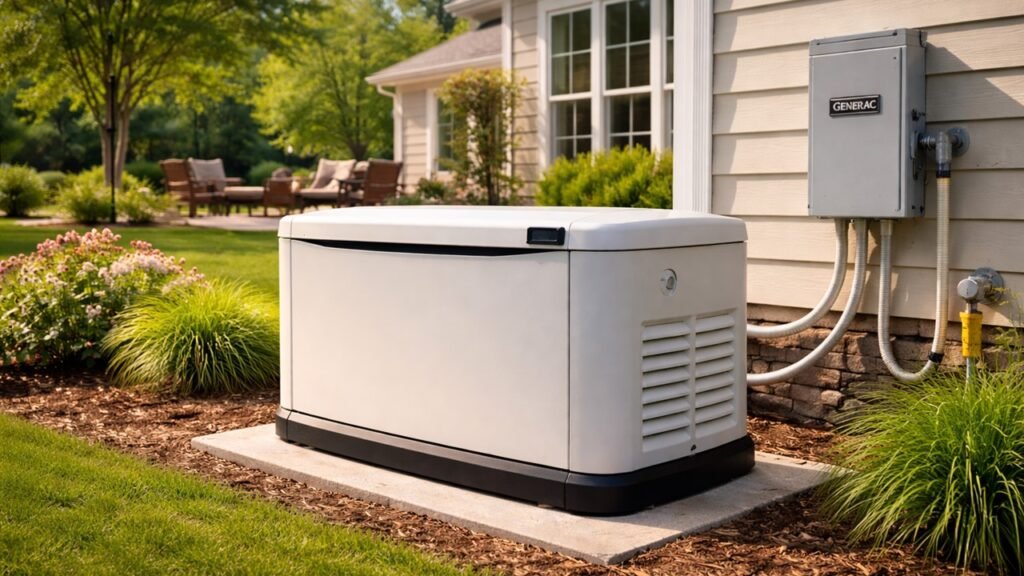
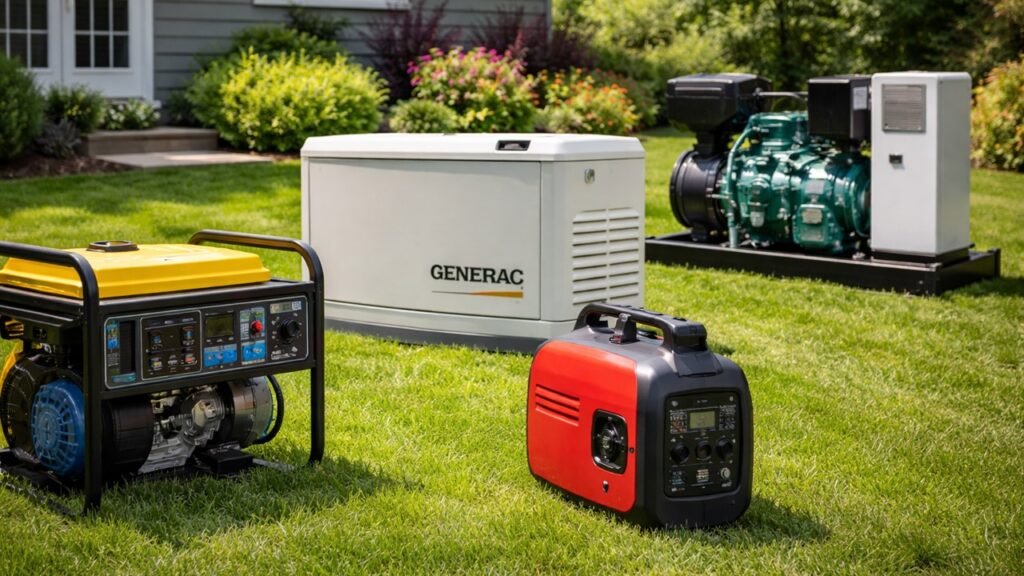
Standby generator placement is governed by manufacturer specifications, electrical codes, and fire safety standards. Unlike portable generators, standby units are permanently installed and must meet strict clearance and service access requirements.
Safe placement ensures proper exhaust dispersal, cooling airflow, technician access, and long-term reliability. Incorrect placement can violate local codes, void warranties, and create carbon monoxide or fire hazards.
Typical Setbacks and Clearances
Standby generator clearance requirements vary by model, size, and fuel type, but the principles remain consistent. Distance protects the home from exhaust fumes, heat buildup, and ignition risks.
Most manufacturers require a minimum setback from windows, doors, vents, and air intakes. Clearance from walls, fences, and property lines is also required to allow airflow and safe operation. These distances are not optional and must follow the installation manual exactly.
Local authorities often adopt standards aligned with guidance from organizations such as the National Fire Protection Association. Local building departments may impose additional setbacks beyond manufacturer minimums, especially in dense residential areas.
Service Access and Maintenance Space
Standby generators require regular servicing, including oil changes, battery replacement, and system testing. Adequate service access is a safety requirement, not just a convenience.
Installers must leave clear working space around the service side of the unit so technicians can safely open panels and perform maintenance. Blocking access with walls, shrubs, or enclosures increases service risk and may prevent emergency repairs during outages.
Proper spacing also improves ventilation, which helps control operating temperatures and extends engine life.
Placement Planning Factors Homeowners Forget
Homeowners often focus on distance from the house but overlook environmental and practical factors. Noise direction matters, especially near bedrooms or neighboring homes. Snow drift zones, roof runoff, and flood-prone yard sections can interfere with operation if ignored.
Placement should also consider future landscaping, fencing, or additions that could restrict airflow. A generator that meets clearance rules today must still meet them years later as the property changes.
Weather, Rain, Snow, and Flooding
Generators must stay dry without trapping heat or exhaust gases.
Weather protection improves reliability, but improper covering or elevation can create serious safety hazards.
Keeping the Generator Dry Without Trapping Exhaust
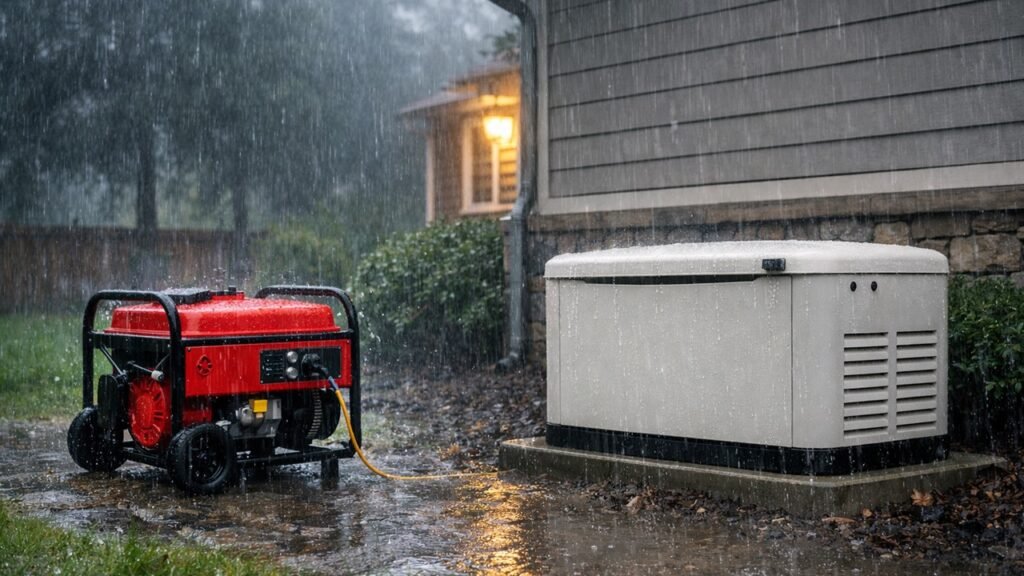
Generators are designed for outdoor use, but they are not waterproof. Rain and snow can damage electrical components and outlets if water is allowed to pool or drip into the unit.
Weather protection must shield the top of the generator while leaving all sides open for airflow. Fully enclosing a generator or covering it tightly traps heat and exhaust, increasing fire and carbon monoxide risk.
Manufacturer-approved enclosures for standby units are engineered to manage airflow while protecting internal components. Improvised structures that restrict ventilation should never be used.
Flood Zones and Heavy Rain Strategies
Flooding introduces electrical shock risk and mechanical failure. In flood-prone areas, standby generators should be installed on raised pads or platforms designed to exceed expected water levels.
Water exposure can damage control boards, corrode wiring, and cause short circuits. Elevation reduces these risks and helps ensure the generator remains operational during storms when power loss is most likely.
Drainage planning matters. Avoid low spots where water collects, and ensure runoff from roofs or hard surfaces does not flow toward the generator.
Electrical Safety: Placement Is Only Half the Job
Correct generator placement does not eliminate electrical hazards.
How power enters the home determines whether the system is safe for occupants, utility workers, and the electrical grid.
Never Backfeed Your Home
Backfeeding occurs when generator power is fed directly into a home’s wiring without isolation from the utility grid. This practice is extremely dangerous and illegal in many areas.
Backfeeding can energize utility lines outside the home, creating lethal shock risks for linemen. It can also overload circuits, bypass breaker protection, and cause fires inside the electrical panel.
Safety agencies including the Consumer Product Safety Commission repeatedly warn that backfeeding is a leading cause of generator-related injuries and deaths.
Safer Ways to Power Your Home
The safest way to connect a generator to a home is through a professionally installed transfer switch or interlock device. These systems isolate generator power from the utility supply and prevent dangerous feedback.
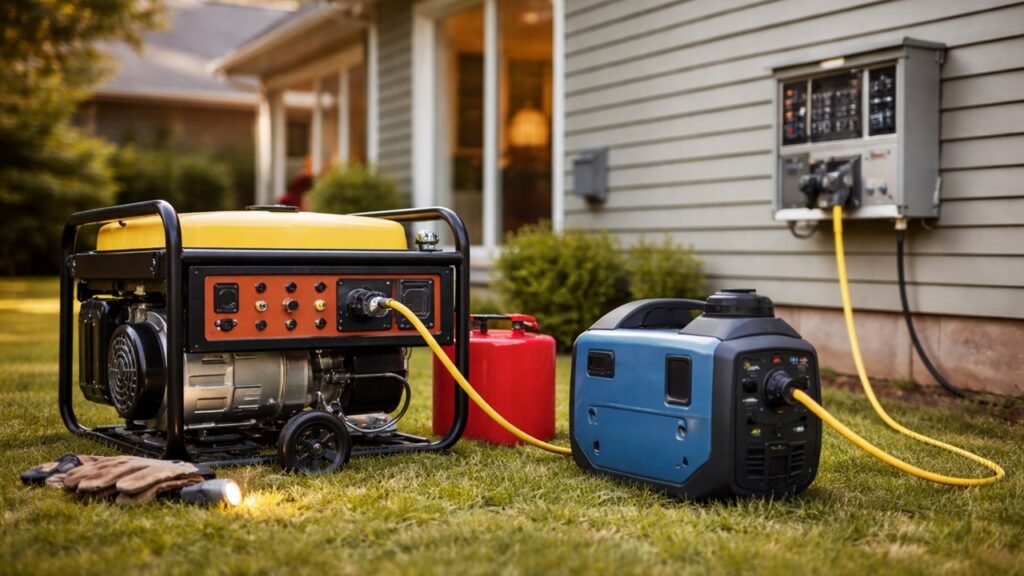
Portable generators can also safely power appliances using heavy-duty, outdoor-rated extension cords connected directly to the generator outlets. Cords must be sized correctly for the electrical load and kept dry and undamaged.
Electrical safety depends on separation, grounding, and load control. Placement creates distance from hazards, but proper electrical connection prevents them altogether.
Fire Safety and Fueling Rules at the Placement Site
Fire risk increases when generators are placed near heat-sensitive materials or fueled incorrectly. Hot exhaust components, spilled fuel, and poor ventilation can ignite fires within seconds, especially during extended outages.
Safe generator placement must include fire separation, controlled fueling, and awareness of heat zones around the engine and exhaust system.
Fire and fueling safety rules at the placement site:
- Keep the generator away from dry grass, leaves, wood chips, mulch, and flammable debris.
- Maintain clear space around the exhaust and muffler, which become extremely hot during operation.
- Always shut the generator off before refueling.
- Allow the generator to cool for several minutes before adding fuel.
- Store gasoline, propane, or diesel in approved containers away from the generator and living areas.
- Never refuel near open flames, grills, cigarettes, or sparks.
- Do not operate the generator near propane tanks, fire pits, or outdoor heaters.
Carbon Monoxide Alarm Setup Inside the Home
Carbon monoxide alarms provide a critical second layer of protection if exhaust gases enter the home. Generator placement reduces risk, but alarms alert occupants when carbon monoxide levels become dangerous.
Health and safety agencies such as the Centers for Disease Control and Prevention and the Consumer Product Safety Commission consistently recommend carbon monoxide alarms whenever fuel-burning equipment is used.
Carbon monoxide alarm setup guidelines:
- Install carbon monoxide alarms on every level of the home.
- Place alarms outside sleeping areas so they are audible at night.
- Use battery-powered models or units with battery backup during outages.
- Test alarms monthly and before storm season.
- Replace batteries and expired units according to the manufacturer’s schedule.
- Never ignore an alarm. Move outside immediately if it sounds.
Common Mistakes That Cause Accidents
Most generator accidents happen when users rush setup or assume short-term use is safe. Small placement mistakes can lead to carbon monoxide exposure, fires, or electrocution.
Understanding these common errors helps prevent injuries, fatalities, and property damage during power outages.
Common generator placement and use mistakes:
- Running a generator in a garage, even with the door open.
- Placing the generator under a porch, carport, or near the house for convenience.
- Positioning the exhaust toward windows, doors, or vents.
- Covering the generator with a tarp that traps heat and exhaust.
- Refueling while the generator is hot or running.
- Using improper extension cords or damaged cables.
- Backfeeding the home without a transfer switch or interlock device.
- Skipping carbon monoxide alarms because the generator is outdoors.
Final Words
Where should you place a generator for safety comes down to one core rule: keep people away from exhaust, heat, and electrical hazards. Proper placement outdoors, at a safe distance from the home, and away from openings dramatically reduces the risk of carbon monoxide poisoning, fires, and accidents.
Safe generator use is not about convenience. It is about airflow, distance, surface stability, and exhaust direction working together. Even a high-quality generator becomes dangerous if it is placed too close to windows, run on unstable ground, or fueled carelessly.
When placement rules are combined with carbon monoxide alarms, proper electrical connections, and fire-safe fueling habits, a generator becomes a reliable backup instead of a hidden threat. Safety starts before you ever pull the start cord.
Related FAQs
Where should you place a generator for safety at home?
A generator should be placed outdoors, at least 20 feet away from the home, and far from windows, doors, and vents.
Can you run a generator in a garage with the door open?
No. Running a generator in a garage, even with doors open, can quickly cause deadly carbon monoxide buildup.
How far should a generator be from windows and doors?
A generator should be kept as far as possible from windows, doors, vents, and air intakes to prevent exhaust from entering the home.
Is it safe to run a generator on grass or dirt?
No. Generators should sit on a flat, stable, non-combustible surface like concrete, pavers, or compacted gravel.
Can you use a generator in the rain?
Yes, but only with a generator-rated canopy that protects the top while keeping all sides open for airflow.

Robert Caldwell writes in-depth guides and reviews focused on generators, backup power systems, and portable energy equipment. His work is grounded in hands-on testing, covering fuel types, runtime performance, noise levels, and real-world reliability. He helps homeowners, RV owners, and outdoor users choose dependable power solutions with confidence. Every article emphasizes clear explanations, safe operation, and long-term value.