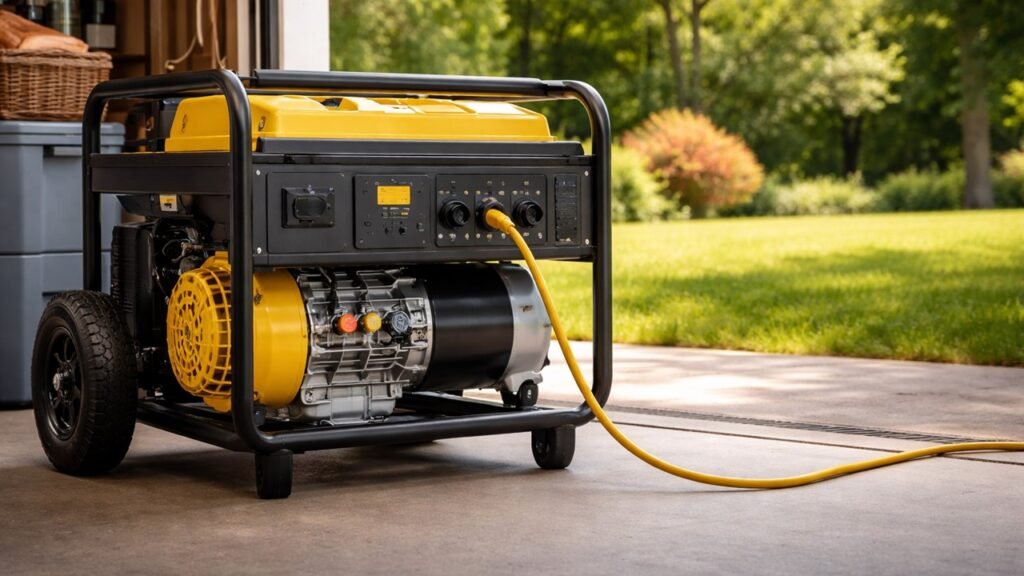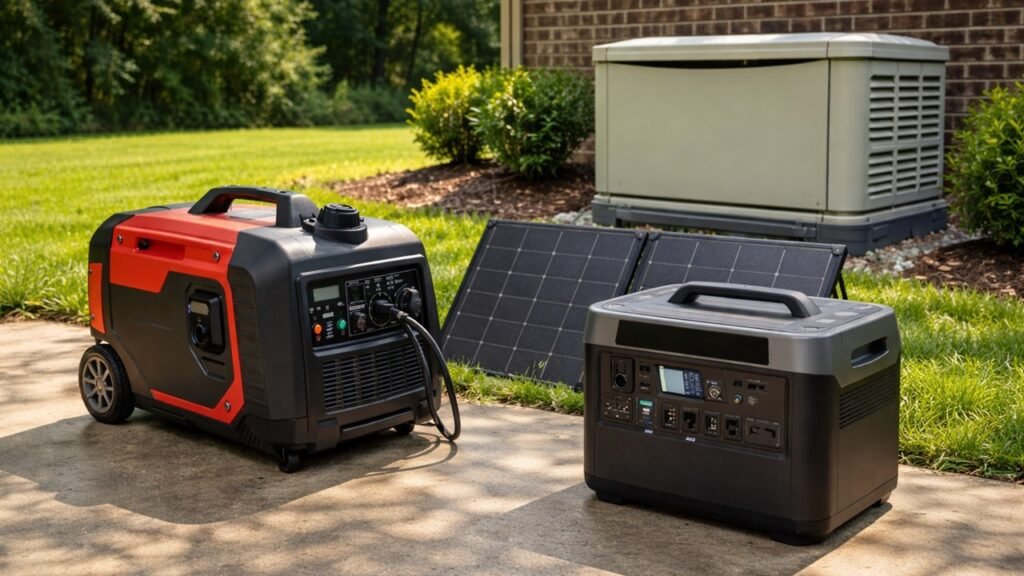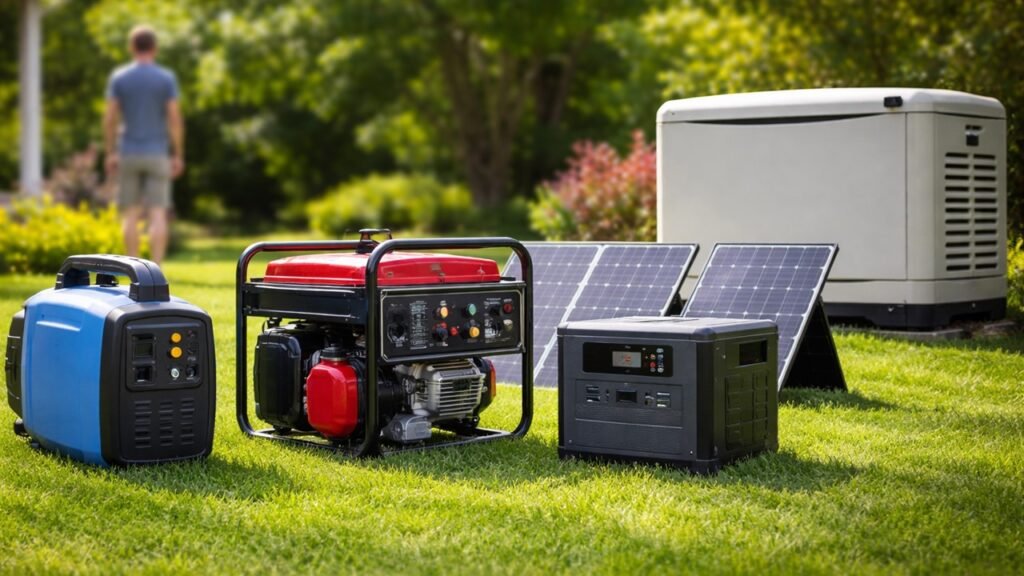
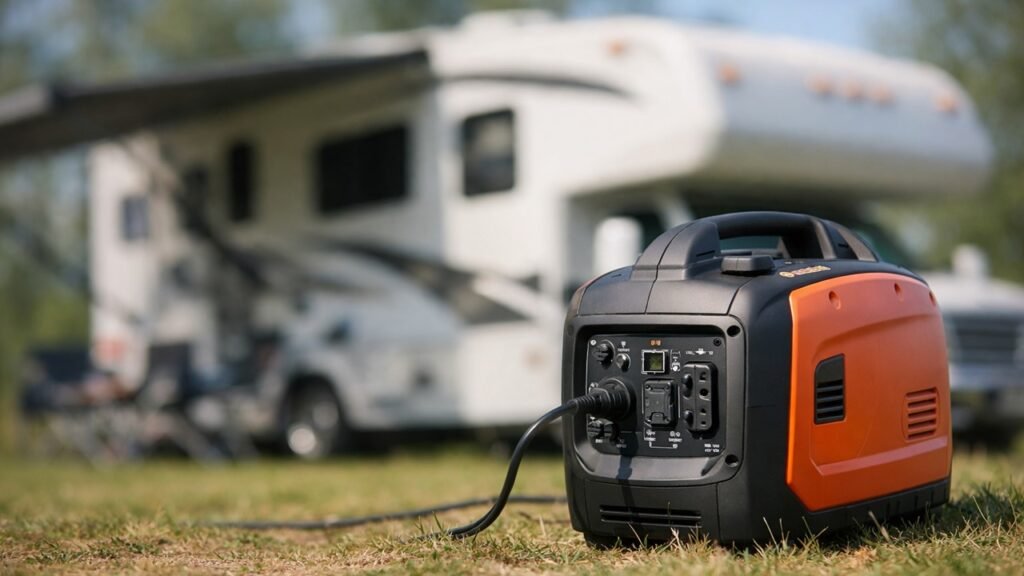
If you are looking for the right size generator for a 30 amp RV, here is the straight answer: most 30 amp RVs need a generator in the 3,000 to 3,500 watt range. That size comfortably runs one air conditioner plus basic appliances without constantly worrying about overloads.
A 30 amp RV is limited to 3,600 watts total, so buying a 5,000 or 7,000 watt generator does not give you more usable power inside the RV. What matters is matching your generator’s running watts and surge capacity to how you actually camp and what you run at the same time.
Key Summary:
- A 30 amp RV provides a maximum of 3,600 watts of power at 120 volts.
- A 3,000 to 3,500 watt generator supports most 30 amp RV setups safely.
- A 2,000 watt generator powers basic essentials but usually cannot run an RV air conditioner.
- A 13,500 BTU RV air conditioner requires up to 3,000 starting watts.
- A generator larger than 3,600 watts does not increase a 30 amp RV’s internal capacity.
How Many Watts Can a 30 Amp RV Handle?
A 30 amp RV can handle a maximum of 3,600 watts at one time. That number comes from a simple formula:
Watts = Volts × Amps
For a 30 amp RV:
120 volts × 30 amps = 3,600 watts
That 3,600 watts is your total ceiling. Every appliance inside the RV pulls from that same pool of power.
For example:
- Air conditioner running at 1,500 watts
- Microwave running at 1,000 watts
- Coffee maker running at 900 watts
1,500 + 1,000 + 900 = 3,400 watts
That is already very close to your 3,600 watt limit. If the AC compressor kicks on again and briefly pulls 2,800 watts for startup, you can trip the breaker instantly.
In real life, it is smart to treat 3,200 to 3,400 watts as your comfortable working limit. That gives you breathing room for voltage drops and startup surges.
Running Watts vs Starting Watts (Why Generators Trip)
Running watts are what an appliance needs to keep working. Starting watts are the short burst of extra power needed to get motors going.
Most generator shutdowns happen because of starting watts, not because you miscalculated the normal running load. Air conditioners are the biggest culprit. They may run at 1,400 to 1,600 watts, but they can spike close to 3,000 watts for a split second when the compressor starts.
Here are the appliances that most often cause overload trips:
- RV air conditioner compressor
- Refrigerator in electric mode
- Microwave at startup
- Water pump motor
- Hair dryer on high
If two high-draw appliances start at the same time, your generator or RV breaker can trip even though your total running watts look fine on paper.
30 Amp RV Appliance Wattage Chart
A 30 amp RV can run quite a bit of equipment, but only if you manage what is running together. Below is a practical reference chart based on typical manufacturer ratings.
| Appliance | Running Watts | Starting Watts |
| 13,500 BTU RV Air Conditioner | 1,300 to 1,600W | 2,500 to 3,000W |
| Microwave | 900 to 1,200W | Minimal surge |
| Coffee Maker | 800 to 1,200W | Minimal surge |
| Electric Water Heater | 1,000 to 1,500W | Minimal surge |
| RV Refrigerator (electric mode) | 200 to 400W | 600 to 800W |
| Hair Dryer | 1,200 to 1,800W | No major surge |
| LED Lighting (entire RV) | 50 to 200W | No surge |
| RV Converter Charger | 300 to 800W | Minor surge |
If you are running one air conditioner and a microwave together, you are already pushing the upper limit. That is why most experienced RV owners land in the 3,000 to 3,500 watt generator range. It gives enough headroom to handle real-world use without constant breaker trips.
Will a 2000 Watt Generator Run a 30 Amp RV?
Yes, but only for light use. A 2,000 watt generator can power basic essentials like LED lights, the battery charger, TV, small kitchen appliances, and phone chargers. It works well if you are dry camping and keeping power use minimal.
However, a 2,000 watt generator usually cannot run a standard RV air conditioner. Most 13,500 BTU AC units need around 2,500 to 3,000 watts just to start. Even if the running wattage looks manageable, the startup surge will likely overload a 2,000 watt unit.
If you camp in mild weather and do not rely on air conditioning, a 2,000 watt generator can be enough. For hot climates or full comfort use, it is generally too small.
Will a 3500 Watt Generator Run a 30 Amp RV?
Yes. A 3,500 watt generator is the sweet spot for most 30 amp RV owners. It provides enough running power to handle one air conditioner plus a few additional appliances without constantly watching the breaker.
With around 3,000 to 3,500 running watts and higher surge capacity, this size generator can usually start a 13,500 BTU AC unit safely. You still need to manage loads, but it gives you much more flexibility compared to a 2,000 watt model.
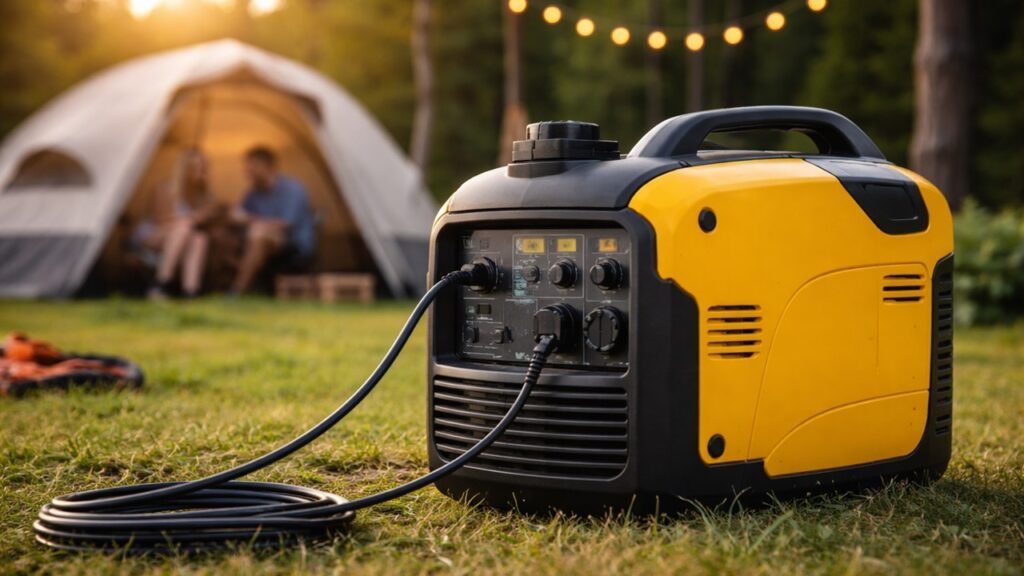
For most camping situations, especially in warm weather, a 3,500 watt inverter generator is the most practical and balanced choice.
What Is the Best Generator Size for 30 Amp RV With Air Conditioner?
If you plan to run an air conditioner regularly, the safest minimum is around 3,000 running watts with strong surge capability. That ensures the AC compressor can start without tripping the generator.
For smoother operation and less stress on the system, 3,500 to 4,000 watts is ideal. That range gives you extra headroom for running the microwave, charging batteries, or using small appliances while the AC cycles on and off.
Can You Plug a 30 Amp RV Into a 50 Amp Generator?
Yes, you can plug a 30 amp RV into a 50 amp generator, but you must use the correct 50 amp to 30 amp adapter. The adapter allows the RV to safely connect without damaging the electrical system.
It is important to understand that your RV is still limited to 30 amps. Even if the generator can produce much more power, the RV will only draw up to its 3,600 watt maximum.
Keep these points in mind:
- You must use a proper 50 amp to 30 amp adapter.
- The RV breaker still limits you to 3,600 watts.
- A larger generator does not increase your RV’s internal capacity.
- The extra generator capacity only provides surge stability, not extra usable power.
Conclusion
A 30 amp RV can handle up to 3,600 watts, and most owners find that a 3,000 to 3,500 watt generator offers the best balance of power and flexibility. That size comfortably runs one air conditioner and essential appliances with manageable load control.
A 2,000 watt generator works for light-duty camping without air conditioning, but it is not ideal for full comfort use. If cooling is important, stepping up to at least 3,500 watts makes a noticeable difference in reliability.
The key is not buying the biggest generator available. The key is matching your generator’s running watts and surge capacity to how you actually use your RV. When sized correctly, your generator will run efficiently, avoid overload trips, and keep your camping experience smooth and stress free.
Related FAQs
Is a 4000 watt generator too big for a 30 amp RV?
No, it is not too big. Your RV will still only draw up to 3,600 watts. The extra capacity simply provides better surge handling and stability.
Can a 3000 watt generator run a 30 amp RV air conditioner?
Yes, in many cases it can. However, startup surge may be tight without a soft start device, especially if other appliances are running.
How many watts does a 30 amp RV air conditioner use?
Most 13,500 BTU RV AC units use 1,300 to 1,600 running watts and up to 3,000 watts at startup.
What happens if I overload my 30 amp RV?
The breaker will trip to protect the wiring and appliances. Repeated overloads can stress your electrical system over time.
Is an inverter generator better for a 30 amp RV?
Yes, inverter generators produce cleaner power, run quieter, and are safer for electronics like TVs and laptops.
Can I run everything in my 30 amp RV at once?
No. A 30 amp RV is limited to 3,600 watts total, so you must manage high-draw appliances like AC and microwave carefully.

Robert Caldwell writes in-depth guides and reviews focused on generators, backup power systems, and portable energy equipment. His work is grounded in hands-on testing, covering fuel types, runtime performance, noise levels, and real-world reliability. He helps homeowners, RV owners, and outdoor users choose dependable power solutions with confidence. Every article emphasizes clear explanations, safe operation, and long-term value.