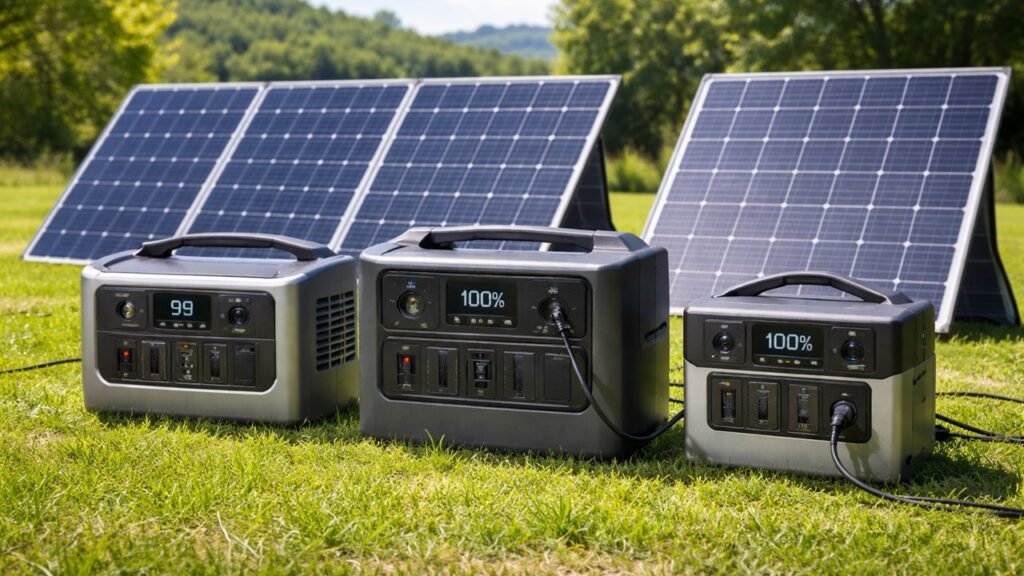
A solar generator is a portable backup power system that runs on sunlight instead of gasoline. It stores energy in a battery and delivers electricity through standard outlets when you need it. If you are looking for quiet, indoor-safe power during outages, camping trips, or RV travel, this type of system offers a clean and low-maintenance alternative to fuel generators.
Unlike traditional generators, there is no engine and no exhaust. The system relies on solar panels, a battery, and an inverter to capture, store, and convert energy into usable household electricity.
Key Summary:
- A solar generator stores electricity in a battery and delivers AC power through a built-in inverter.
- Solar panels recharge a solar generator by converting sunlight into direct current electricity.
- Battery capacity determines runtime, while inverter wattage determines which appliances can run.
- A solar generator operates without fuel and produces zero carbon monoxide emissions.
- A solar generator works best for essential backup power, camping, RV use, and indoor-safe electricity needs.
What Is a Solar Generator?
At its core, a solar generator is a battery power station that can recharge using solar panels. It stores electricity and then converts it into AC power for everyday appliances. No combustion. No fuel tank. No engine noise.
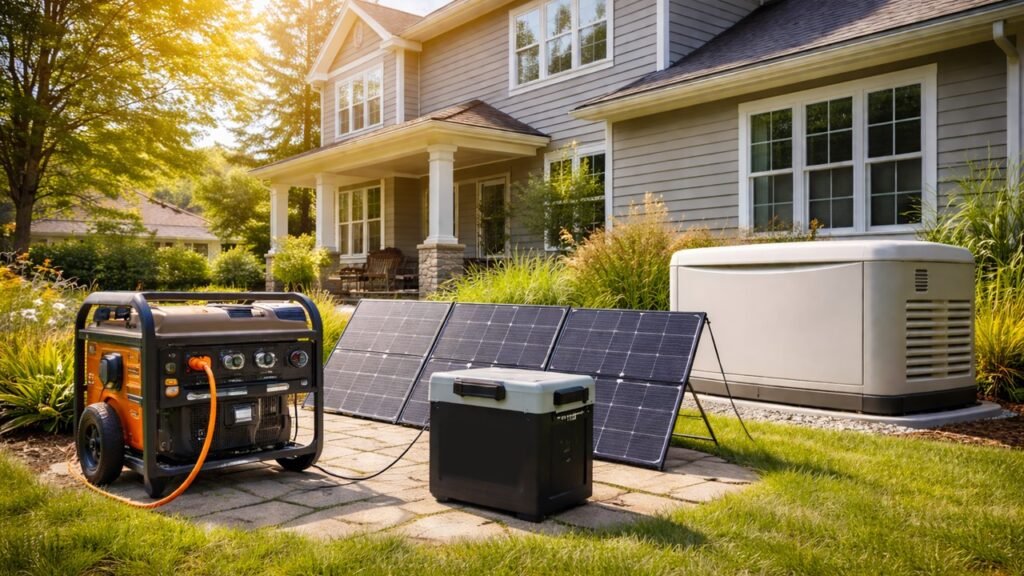
The system typically includes four main parts: solar panels, a charge controller, a battery, and an inverter. Solar panels collect sunlight and turn it into direct current electricity. The battery stores that energy. The inverter converts it into alternating current so you can plug in normal devices like a fridge, TV, or laptop.
In simple terms, the panels collect energy, the battery holds it, and the inverter makes it usable.
How Does a Solar Generator Work?
Sunlight hits the panels, electricity flows into a battery, and the stored energy powers your devices through built-in outlets. That is the full process in one sentence.
Now let’s break it down clearly.
Step 1: Solar Panels Capture Sunlight
Photovoltaic cells inside the panels convert sunlight into direct current electricity. This process is called the photovoltaic effect. It happens instantly when light hits the cells. There are no moving parts and no fuel involved.
Under strong sunlight, modern panels typically convert around 18 to 23 percent of incoming solar energy into usable electricity, according to data from the National Renewable Energy Laboratory.
Step 2: The Charge Controller Manages the Flow
Electricity from the panels does not go straight into the battery without regulation. A charge controller stabilizes voltage and protects the battery from overcharging. Many modern units use MPPT technology, which improves charging efficiency by adjusting to sunlight conditions.
Step 3: The Battery Stores the Energy
Energy is stored in a rechargeable battery, usually lithium-ion or LiFePO4. Battery capacity is measured in watt-hours. For example, a 1,000 Wh battery can run a 100-watt device for about 10 hours under ideal conditions.
LiFePO4 batteries often last over 3,000 charge cycles before noticeable capacity loss, which makes them popular for long-term use.
Step 4: The Inverter Converts Power for Your Appliances
Most household devices use alternating current. The inverter converts stored DC power into AC electricity. High-quality inverters produce stable power that is safe for electronics like laptops and TVs.
What Can a Solar Generator Power?
The short answer: small electronics, essential home devices, and some medium appliances, depending on the size of the unit.
Capacity determines runtime. Inverter rating determines what can run at once.
| Device | Typical Wattage | Suitable for Most Solar Generators? |
| Smartphone | 5 to 20 W | Yes |
| Laptop | 50 to 100 W | Yes |
| WiFi Router | 10 to 20 W | Yes |
| LED Lights | 5 to 15 W | Yes |
| CPAP Machine | 30 to 60 W | Yes |
| Mini Fridge | 50 to 100 W | Yes |
| Full Refrigerator | 150 to 300 W | Mid to large units |
| Microwave | 800 to 1,500 W | High-output units only |
| Window AC | 900 to 1,500 W | Large units only |
| Central AC | 3,000 W or more | Usually no |
If you’re planning for power outages, add up the running watts of the devices you want to use at the same time. That total number determines the inverter size you need. Then look at battery capacity to estimate how long everything will run.
Smaller 300 Wh units work well for phones, lights, and laptops. Mid-size 1,000 to 2,000 Wh models can handle a refrigerator and basic essentials. Larger expandable systems can support more demanding loads for longer periods.
Advantages of a Solar Generator
A solar generator provides clean, quiet, and portable electricity without burning fuel. It delivers stored battery power through standard outlets and can recharge using sunlight, making it ideal for outages, camping, RV use, and indoor backup.
- Silent operation: The system runs without an engine, so it produces no mechanical noise. This makes it suitable for apartments, campsites, and indoor use during outages.
- Indoor safety: The unit produces no carbon monoxide because it does not burn gasoline or diesel. This makes it safe to use inside homes, tents, or RVs when properly ventilated.
- Low maintenance: There are no oil changes, spark plugs, or fuel filters. Basic care usually involves keeping the unit clean and storing the battery properly.
- No fuel dependency: Sunlight acts as the energy source. As long as panels receive light, the battery can recharge without ongoing fuel costs.
- Portability: Most models include built-in handles and compact designs. Smaller units are easy to carry for camping or emergency kits.
- Clean energy: The system produces zero direct emissions during operation, which reduces environmental impact compared to fossil-fuel generators.
Limitations of Solar Generators
A solar generator has limits in output and runtime because it depends on battery capacity and solar input. It cannot continuously produce power the way a fuel generator can.
- Limited runtime: The battery determines how long devices can run. Once depleted, the system must recharge before use continues.
- Slower recharge in poor weather: Cloud cover reduces solar charging speed. Recharging with wall outlets is faster but requires grid access.
- Higher upfront cost: Battery-based systems often cost more initially than small gasoline generators.
- Power output restrictions: Most portable units cannot run central air conditioning or large electric heaters. Inverter size sets the maximum load.
- Battery degradation over time: Rechargeable batteries lose capacity gradually after thousands of cycles, even with proper care.
Are Solar Generators Worth It?
For many households, the answer is yes, especially for short-term outages and portable power needs. A solar generator offers quiet, indoor-safe backup without fuel storage or exhaust risks. That alone makes it appealing for apartments, RV owners, and families concerned about safety.
Value depends on usage. If the goal is to keep lights, a refrigerator, WiFi, and medical devices running during blackouts, a properly sized unit can handle that well. If the goal is to power an entire home with central HVAC for days, a traditional standby generator may be more practical.
In simple terms, this solution works best for essential loads, mobility, and clean energy use. It is less suited for heavy, whole-house electrical demands.
Conclusion
A solar generator stores electricity in a battery and delivers usable AC power through a built-in inverter. Solar panels recharge the battery using sunlight, creating a self-contained backup system.
The system offers major advantages such as silent operation, indoor safety, and minimal maintenance. It eliminates fuel handling and reduces emissions while remaining portable and easy to operate.
Performance ultimately depends on battery capacity and inverter output. When matched correctly to your power needs, a solar generator provides reliable, clean backup power for emergencies, travel, and off-grid use.
Related FAQs
Can a solar generator power a house?
A solar generator can power essential appliances like a fridge, lights, and WiFi. It usually cannot run central air conditioning unless it is a large expandable system.
How long can a solar generator run?
Runtime depends on battery capacity and device wattage. A 1,000 Wh unit can run small essentials for several hours before needing recharge.
Can you use a solar generator indoors?
Yes. A solar generator produces no carbon monoxide because it does not burn fuel, making it safe for indoor use.
Do solar generators work at night?
Yes. Stored battery energy powers devices at night, but solar panels only recharge during daylight.
Is a solar generator better than a gas generator?
A solar generator is quieter and safer indoors. A gas generator provides longer continuous runtime if fuel is available.
How long do solar generators last?
Battery lifespan depends on chemistry. Many LiFePO4 batteries last 3,000 or more charge cycles before noticeable capacity drop.

Robert Caldwell writes in-depth guides and reviews focused on generators, backup power systems, and portable energy equipment. His work is grounded in hands-on testing, covering fuel types, runtime performance, noise levels, and real-world reliability. He helps homeowners, RV owners, and outdoor users choose dependable power solutions with confidence. Every article emphasizes clear explanations, safe operation, and long-term value.