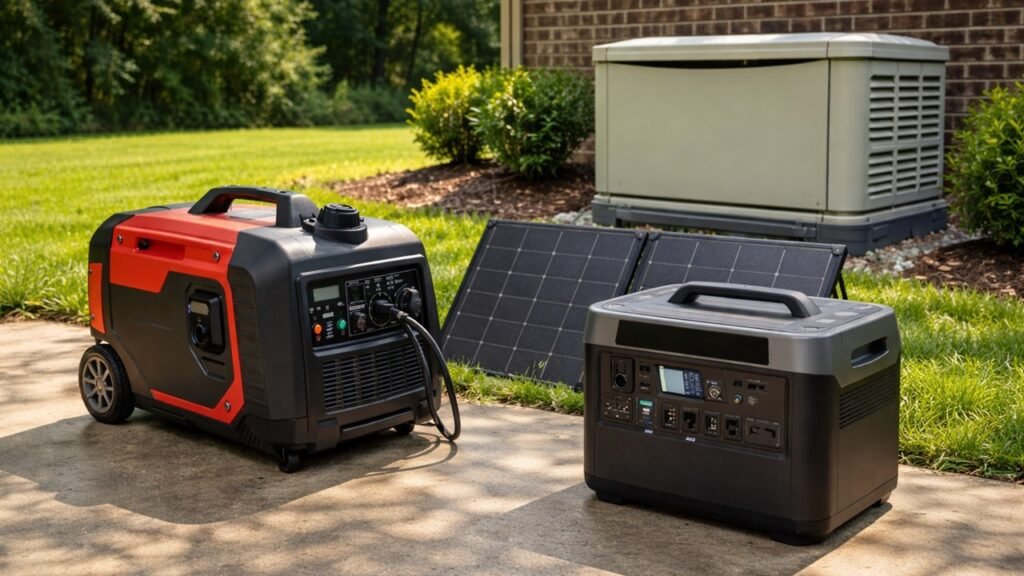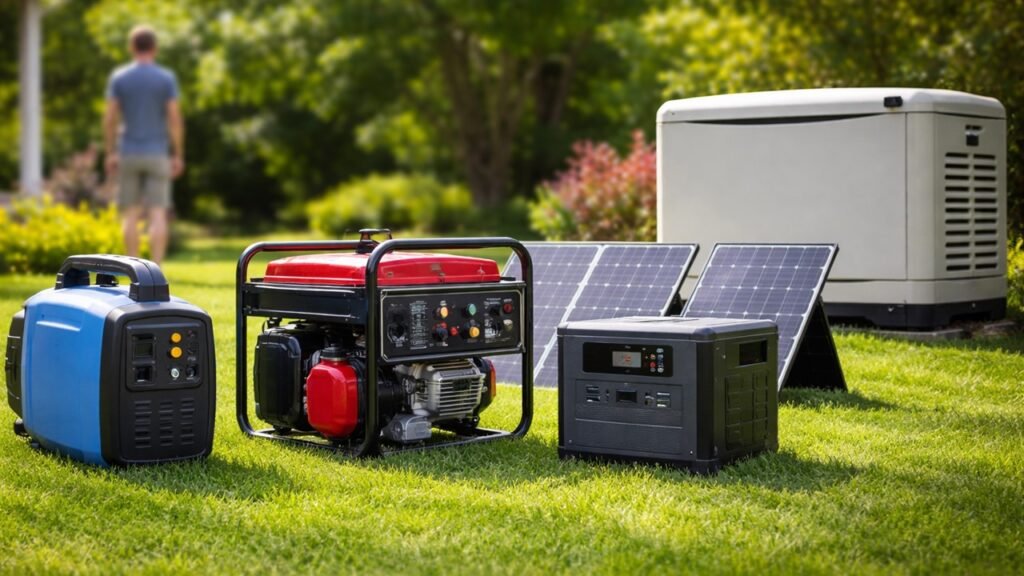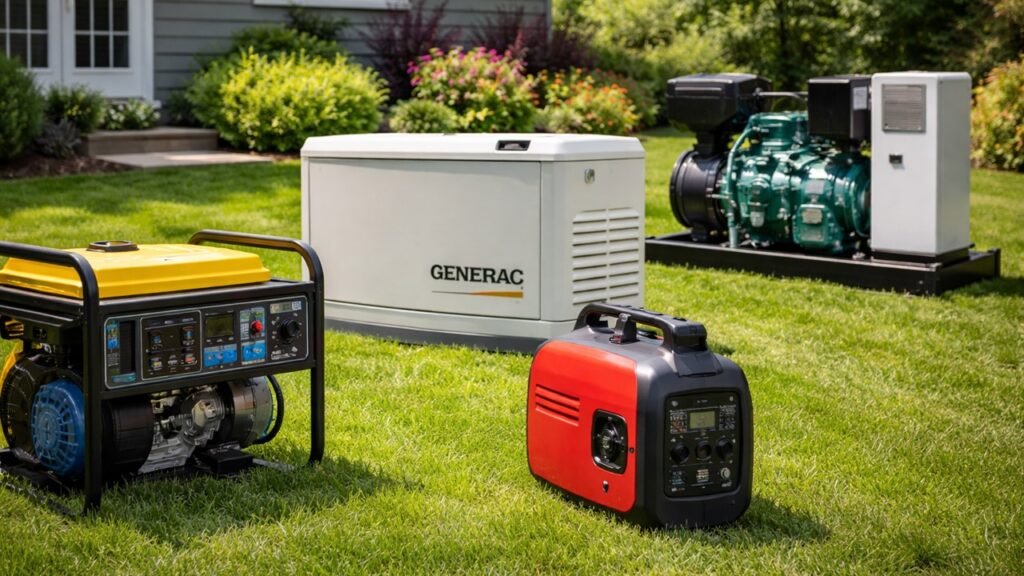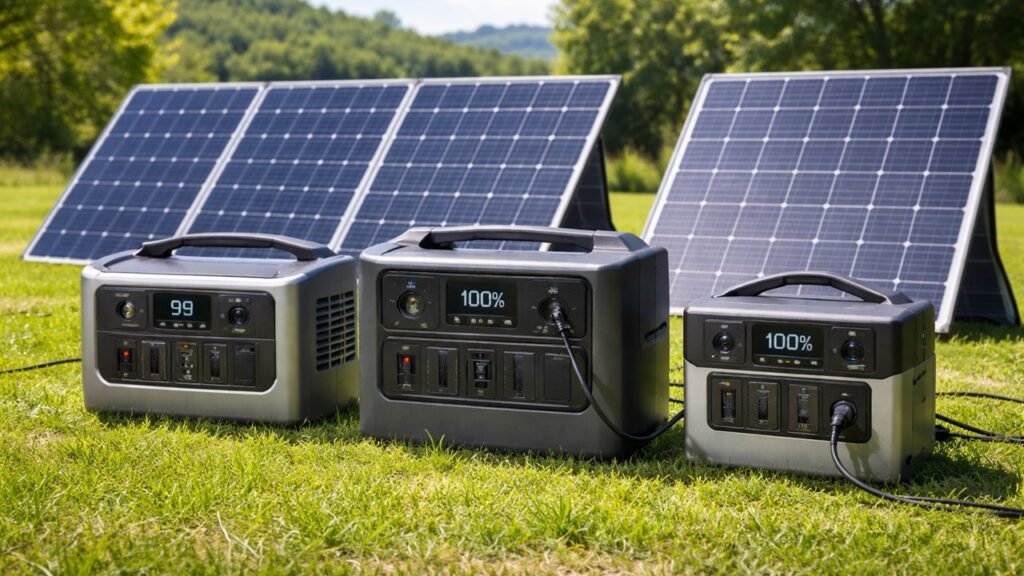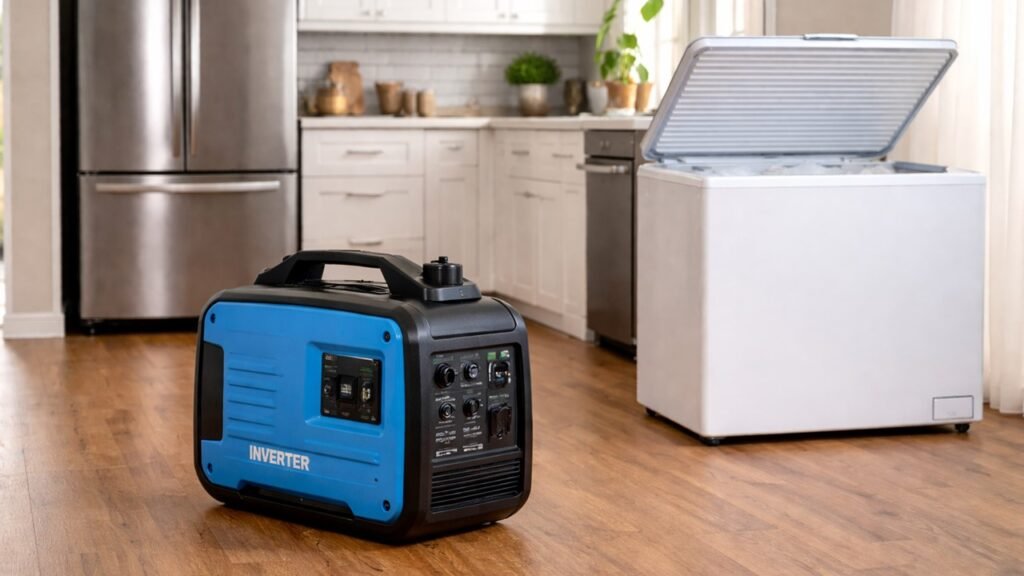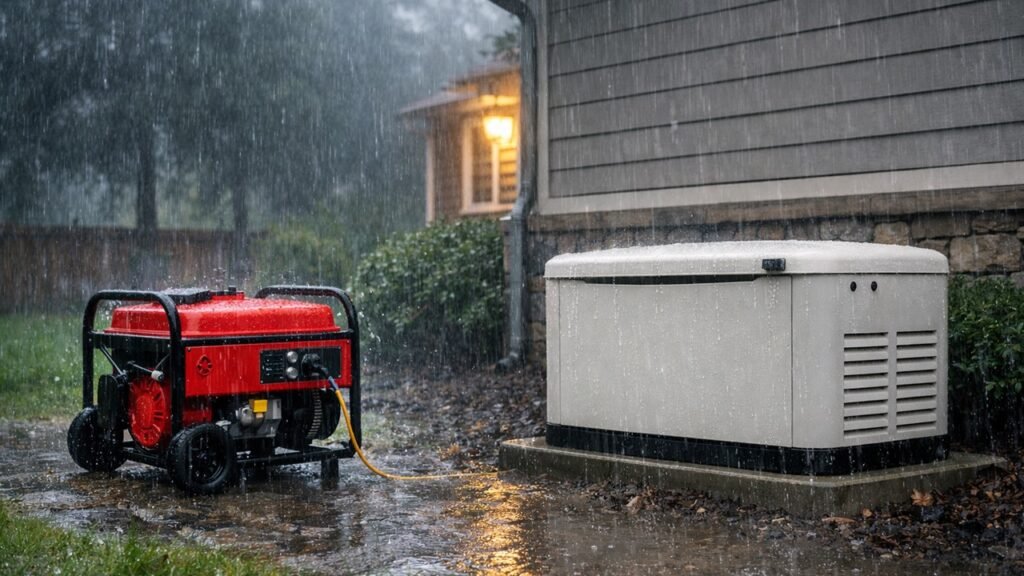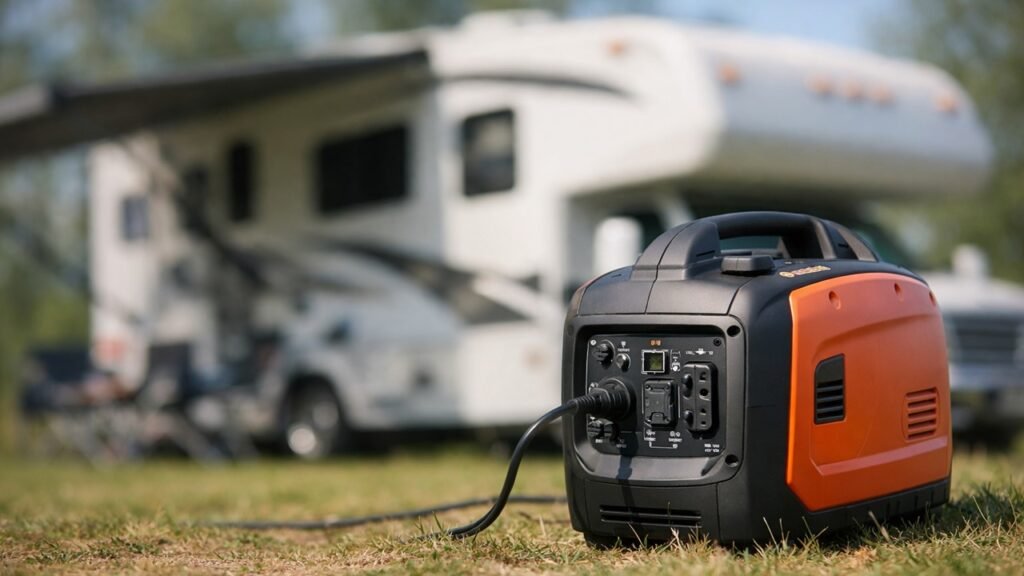
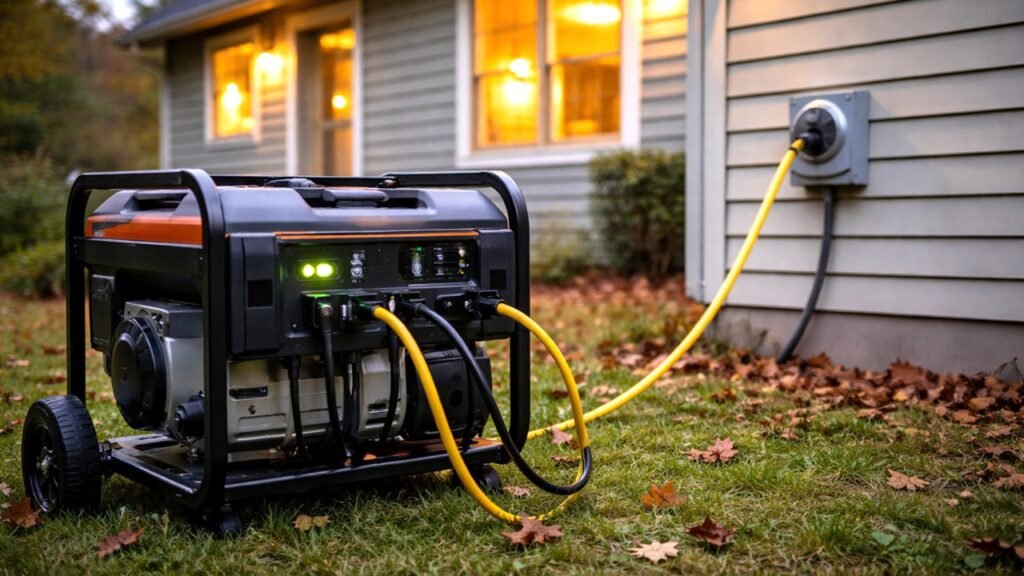
If you are looking for how to hook up a generator to your house, the correct approach depends on your power needs, safety requirements, and local electrical codes. A properly connected generator allows you to run essential appliances during outages while avoiding electrical hazards and equipment damage.
Key Summary
- A generator hookup determines how safely power flows from the generator to your house.
- A transfer switch prevents backfeeding and allows hardwired circuits to operate safely.
- An interlock kit blocks utility and generator power from running at the same time.
- Extension cords power only individual appliances and cannot support hardwired systems.
- Correct load calculations protect appliances and prevent generator overload.
Disclaimer: This guide is for informational purposes only and does not replace professional electrical advice. Generator installations should comply with local codes and be performed or inspected by a licensed electrician.
Step 1: Determine Your Power Needs
Generator size determines how your home can be powered safely during an outage. Calculating power demand first helps you choose the right generator and the correct connection method.
Begin by listing the appliances you want to run at the same time. Focus on essentials such as refrigerators, lights, fans, routers, and medical devices.
Each appliance has two power ratings.
Running watts represent the continuous power required to keep an appliance operating.
Starting watts represent the short surge of power needed when motors or compressors turn on.
Use this formula to estimate generator size:
Total required watts = total running watts + highest starting watt load
Example calculation:
Refrigerator running watts = 700
Refrigerator starting watts = 2200
Lights and electronics = 500
Minimum generator capacity needed:
2200 + 500 = 2700 watts
Homes that use 240-volt appliances such as well pumps, central air conditioners, or electric furnaces require a generator with 240V output and a hardwired connection method.
Step 2: Generator Hookup Methods Explained
There are three safe and commonly used ways to connect a generator to a house. Each option differs in cost, complexity, and level of protection.
Method 1: Extension Cords (Temporary Use Only)
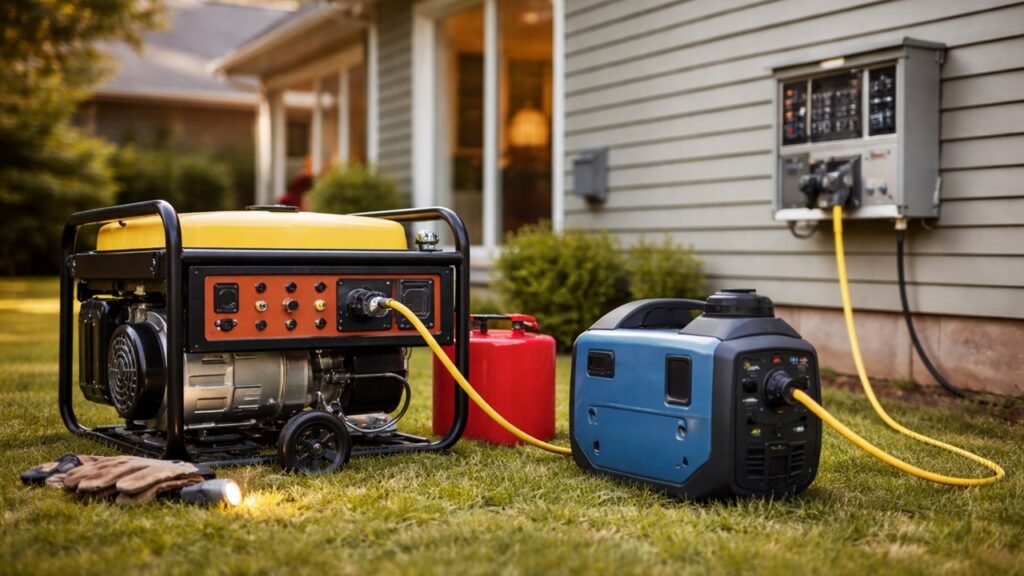
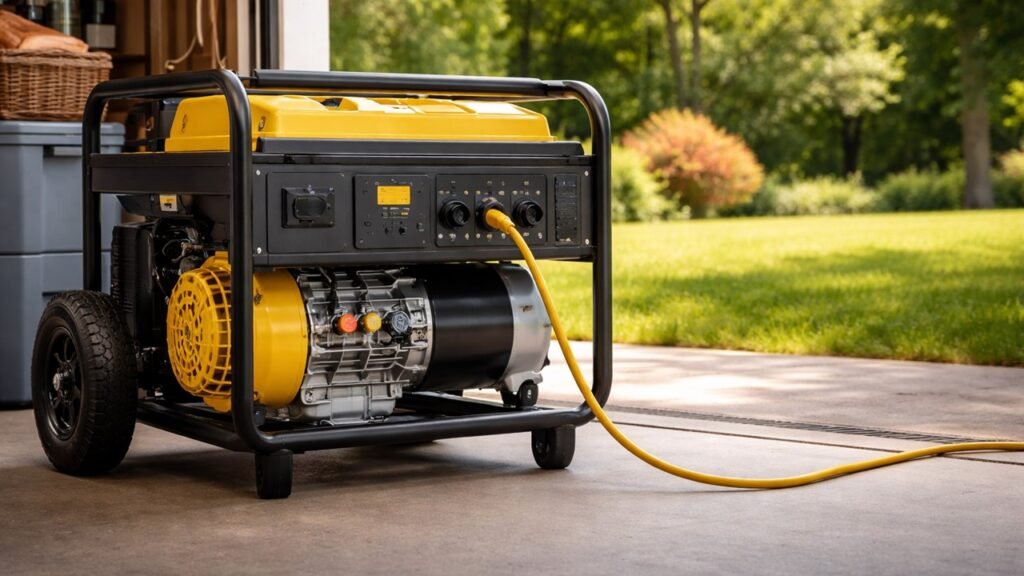
Extension cords allow appliances to plug directly into the generator outlets.
This method works for small portable generators and a limited number of devices.
It cannot power hardwired systems such as furnaces, ceiling lights, or well pumps.
Only heavy-duty outdoor-rated cords should be used, and total load must stay within the generator’s rated capacity.
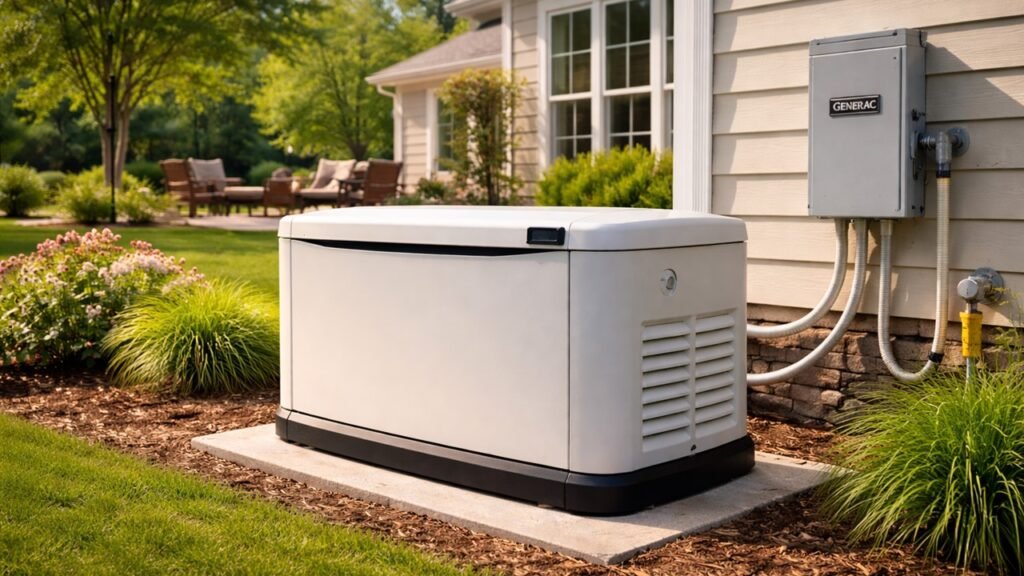
Method 2: Transfer Switch (Recommended and Code-Compliant)
A transfer switch safely separates generator power from the utility grid.
It allows selected household circuits to receive generator power without risking backfeeding.
This method supports hardwired appliances and provides controlled load management.
Transfer switches are available in manual and automatic versions and must be installed by a licensed electrician to meet electrical code requirements.
Method 3: Interlock Kit (Lower-Cost Alternative)
An interlock kit is installed on the main breaker panel.
It physically prevents the generator breaker and utility breaker from being on at the same time.
This setup allows the generator to supply power to any circuit in the panel, but load management is manual.
Interlock kits must match the electrical panel model exactly and may require local inspection or approval.
Generator Connection Methods Comparison Table
| Connection Method | Powers Hardwired Circuits | Code Compliant | Cost Level | Best Use Case |
| Extension cords | No | Yes | Low | Small generators and limited appliances |
| Transfer switch | Yes | Yes | High | Critical circuits and safest operation |
| Interlock kit | Yes | Yes if approved | Medium | Whole-panel access with lower cost |
Step 3: How to Hook Up a Generator Safely (General Process)
Safe generator connection follows a consistent sequence regardless of the hookup method used.
General safety steps include:
- Place the generator outdoors at least 20 feet from doors, windows, and vents
- Turn off the main utility breaker before making any connections
- Connect the generator using rated cords or a dedicated inlet box
- Start the generator and allow voltage to stabilize
- Turn on circuits one at a time to manage electrical load
- Monitor wattage to avoid exceeding generator capacity
Starting appliances gradually reduces voltage drops and protects sensitive electronics.
Critical Safety Rules You Must Follow
If you are connecting a generator to your house, following these safety rules prevents injury, fire hazards, and electrical damage.
- Never backfeed power into your home through a wall outlet because it can energize utility lines and endanger workers.
- Never use a double-male extension cord since exposed prongs can cause electrocution and fires.
- Always operate the generator outdoors because exhaust gases contain deadly carbon monoxide.
- Keep the generator at least 20 feet away from doors, windows, and vents to prevent fumes from entering the home.
- Use only generator-rated cords and connectors to avoid overheating and voltage drop.
- Turn off the main utility breaker before connecting the generator to prevent backfeeding.
- Stay within the generator’s rated wattage to protect appliances and avoid system failure.
Common Generator Hookup Mistakes
These common errors reduce safety and often lead to equipment damage or code violations.
- Plugging a generator into a household outlet causes illegal backfeeding and serious safety risks.
- Running a generator in a garage or enclosed space allows carbon monoxide to accumulate quickly.
- Using thin or indoor extension cords increases overheating and fire risk.
- Powering too many appliances at once overloads the generator and trips breakers.
- Ignoring starting watt requirements causes sudden shutdowns when motors start.
- Skipping permits or inspections can void insurance coverage after damage.
- Failing to test the generator setup before an outage increases mistakes during emergencies.
Conclusion
Hooking up a generator to your house safely starts with understanding your power needs and choosing the right connection method. Whether you use extension cords, a transfer switch, or an interlock kit, the goal is to supply power without risking backfeeding or equipment damage.
Transfer switches remain the safest and most code-compliant option, especially for powering hardwired circuits. Interlock kits offer a more affordable alternative when installed correctly, while extension cords should only be used for limited, temporary loads.
No matter the method, safety rules and local electrical codes should always come first. A properly planned generator hookup protects your home, your appliances, and the people working to restore power during outages.
Related FAQs
Is it legal to hook up a generator to a house?
Yes, it is legal when using approved methods like a transfer switch or an interlock kit that isolates the generator from the utility grid.
Can I plug my generator directly into a wall outlet?
No, plugging a generator into an outlet causes backfeeding and is illegal and extremely dangerous.
Do I need a transfer switch for a portable generator?
A transfer switch is required if you want to power hardwired circuits safely and meet electrical code requirements.
Can a portable generator power an entire house?
Most portable generators cannot power everything at once, but they can run essential circuits if sized and connected properly.
How far should a generator be from the house?
Generators should be placed at least 20 feet away from doors, windows, and vents to reduce carbon monoxide risk.

Robert Caldwell writes in-depth guides and reviews focused on generators, backup power systems, and portable energy equipment. His work is grounded in hands-on testing, covering fuel types, runtime performance, noise levels, and real-world reliability. He helps homeowners, RV owners, and outdoor users choose dependable power solutions with confidence. Every article emphasizes clear explanations, safe operation, and long-term value.