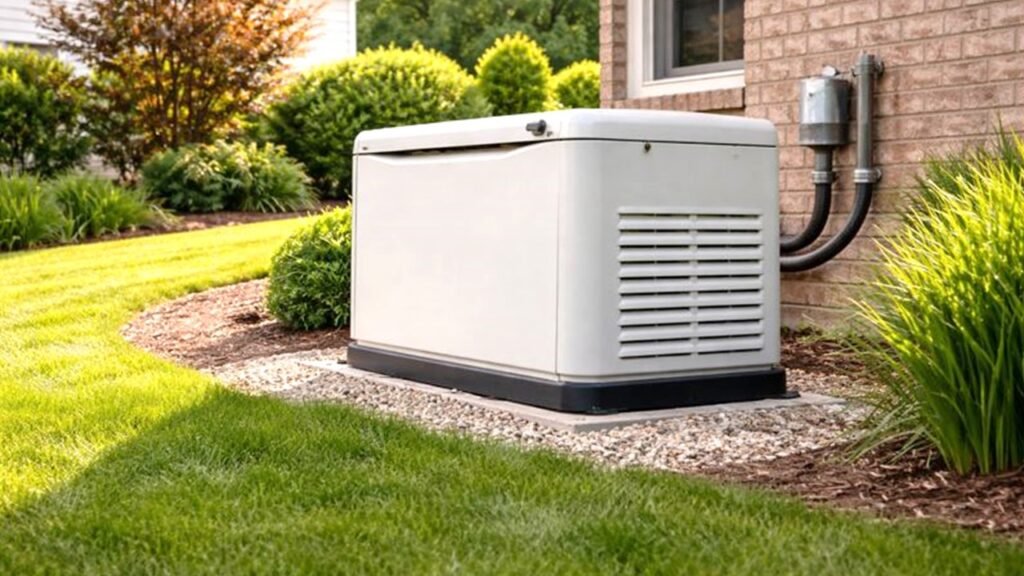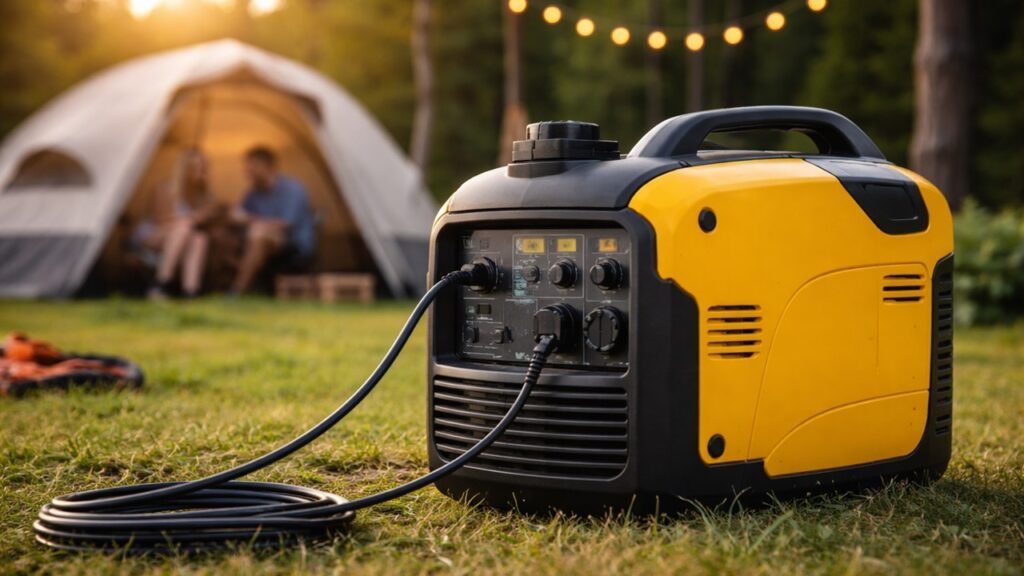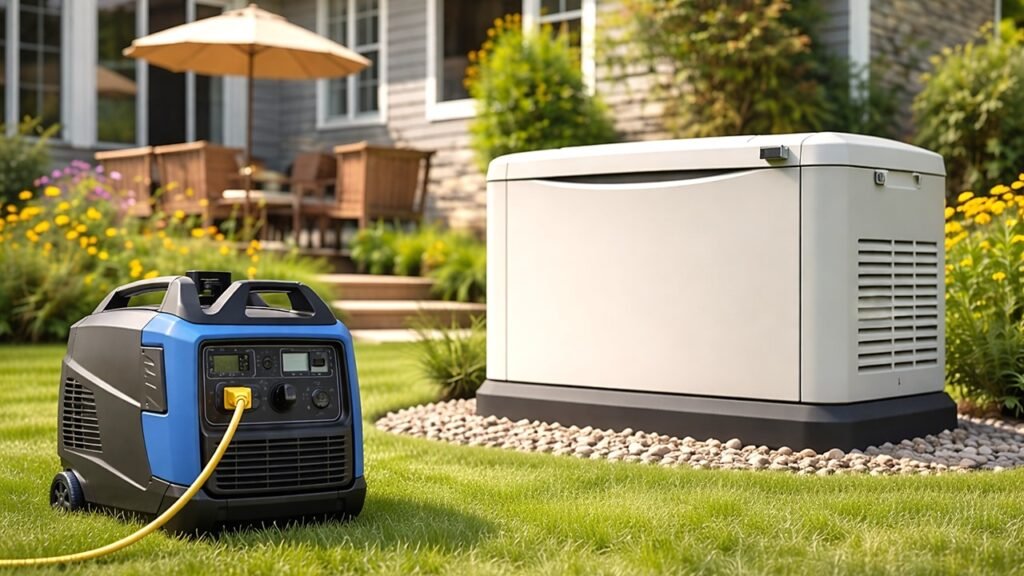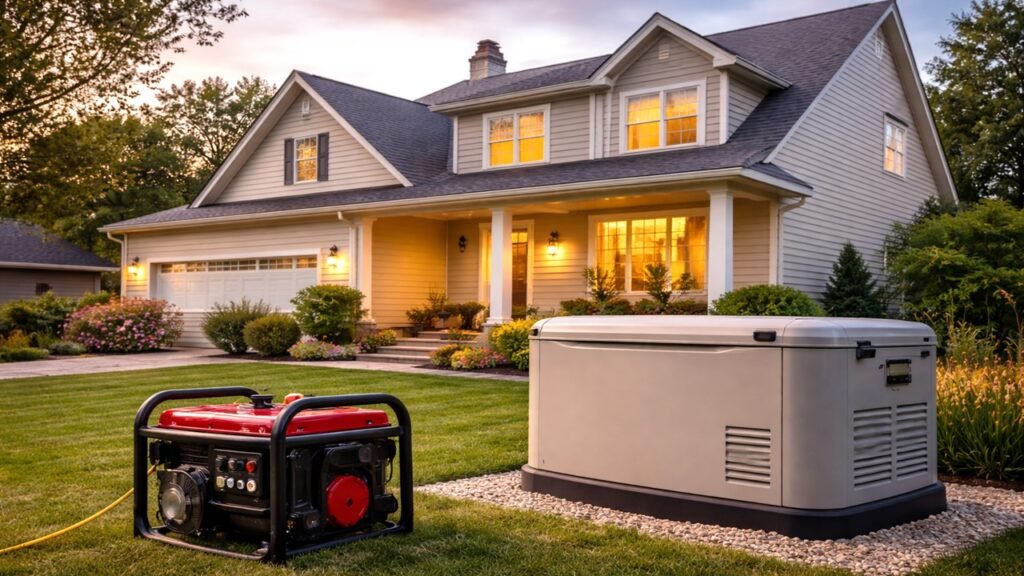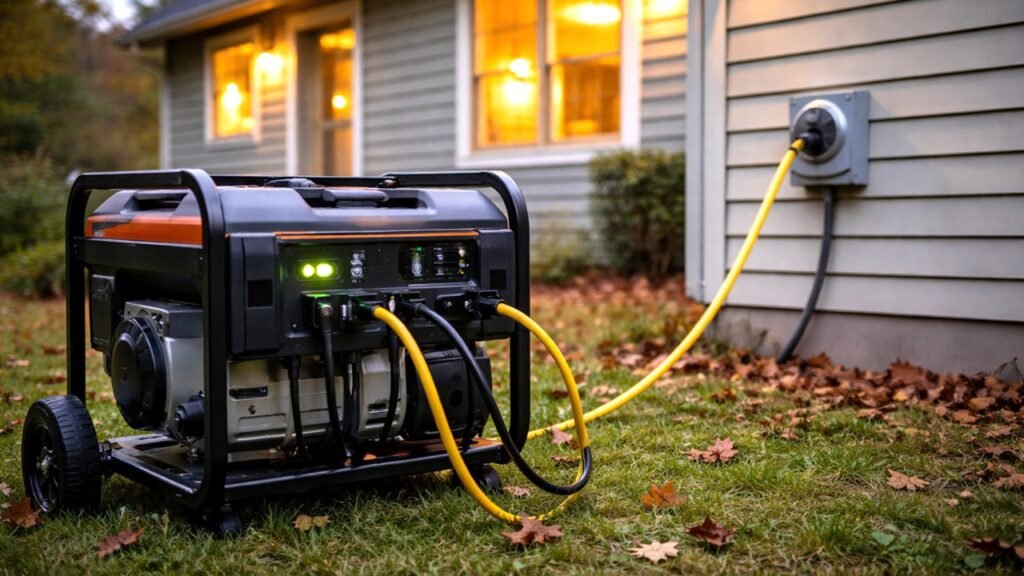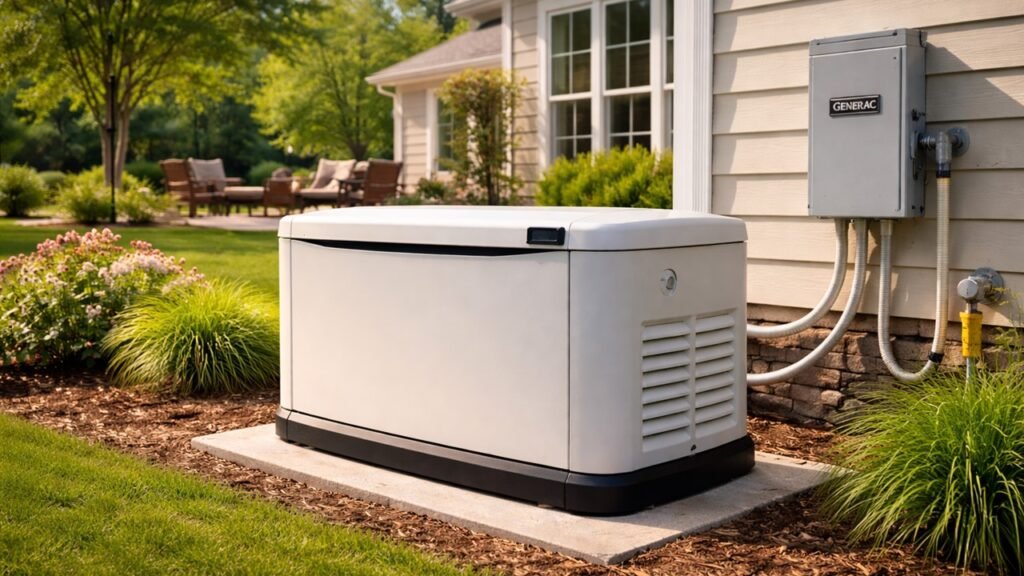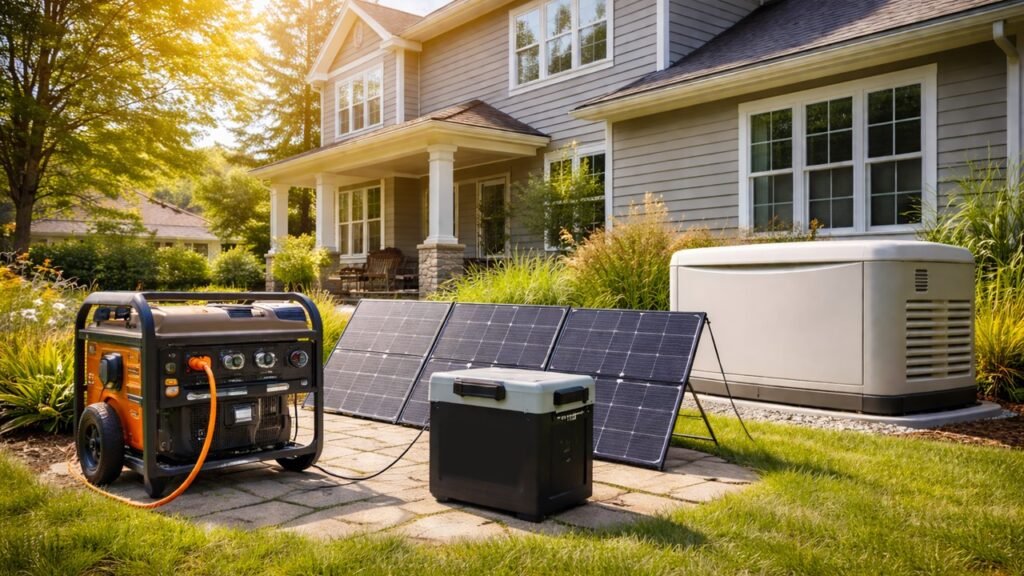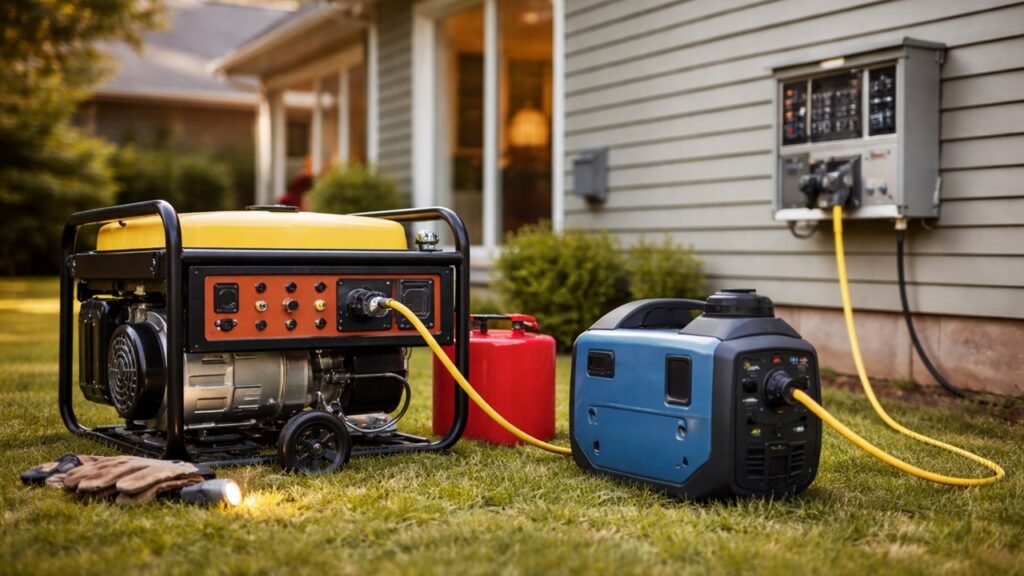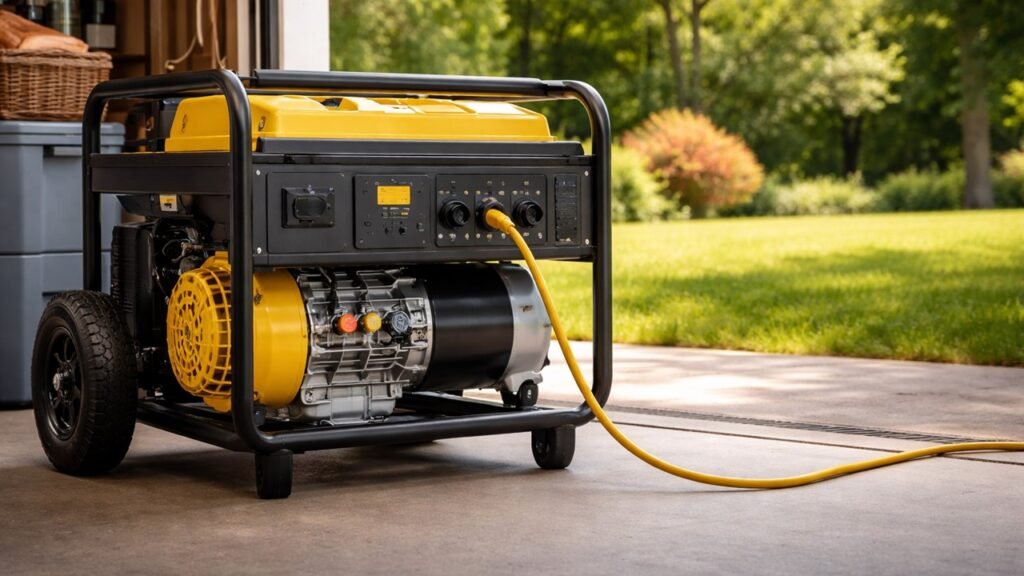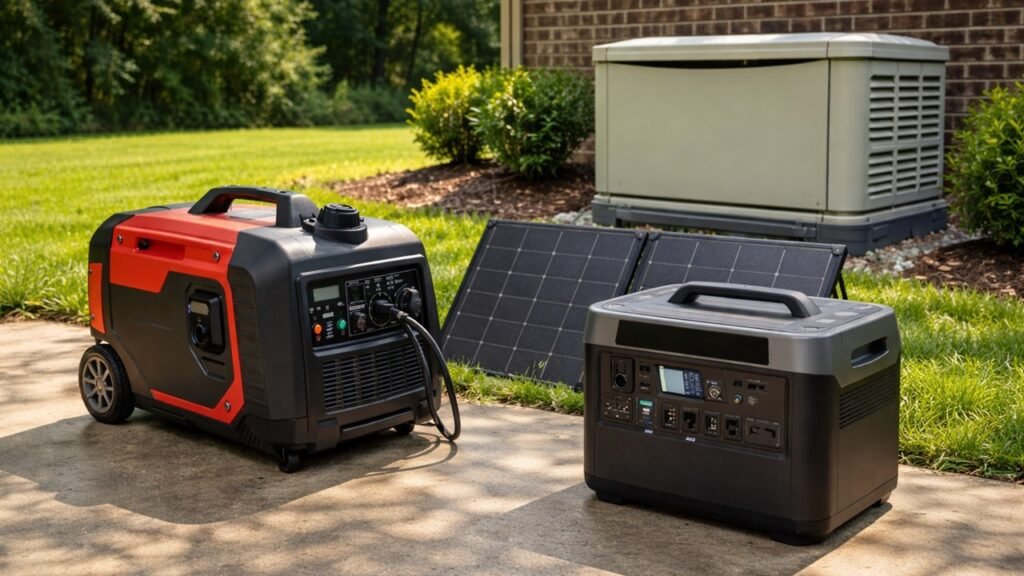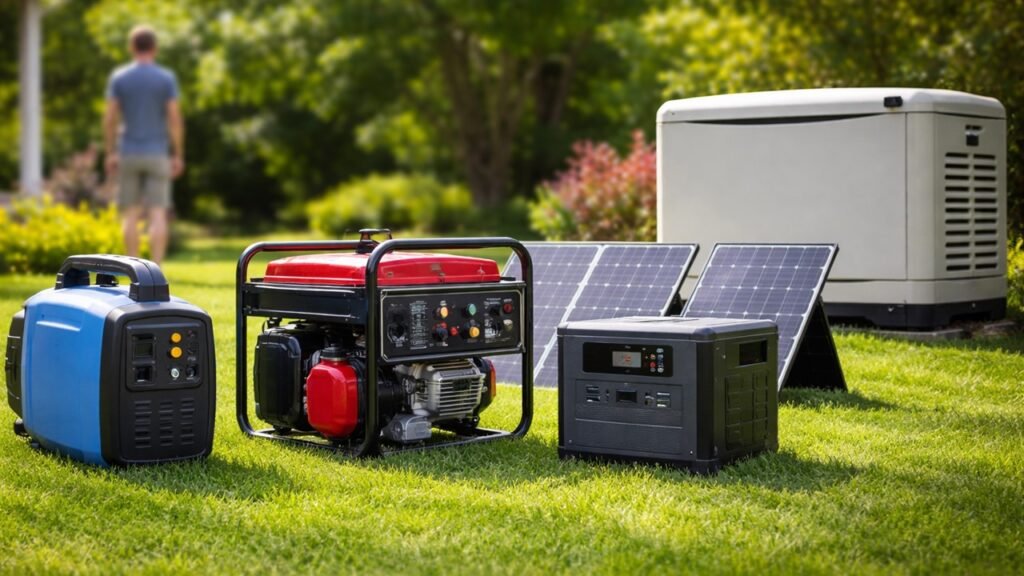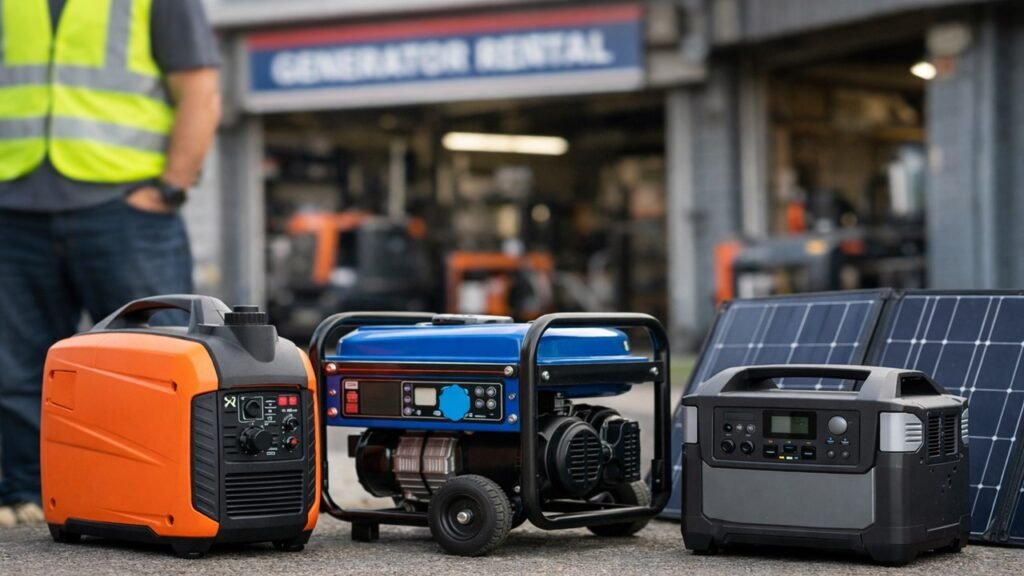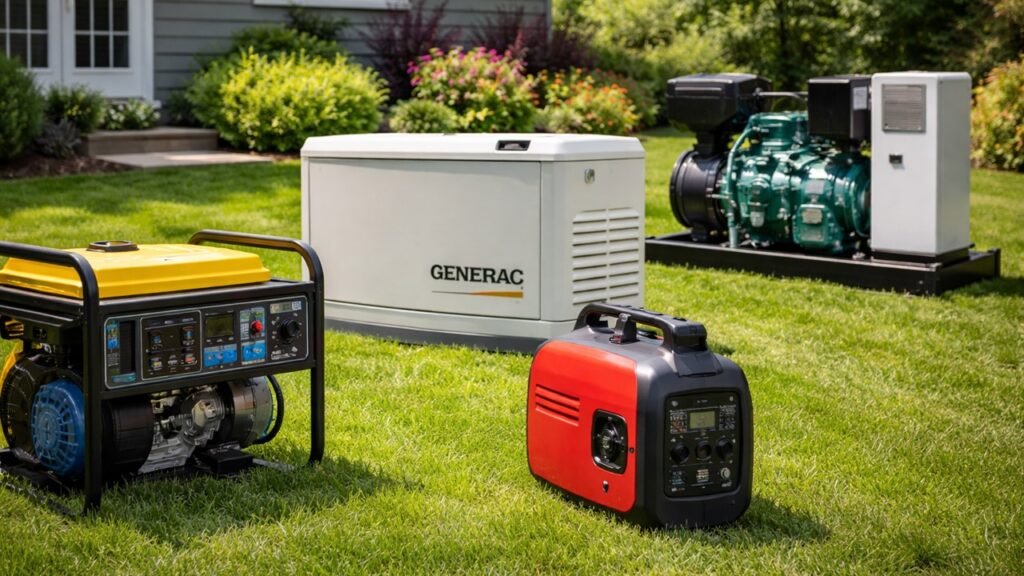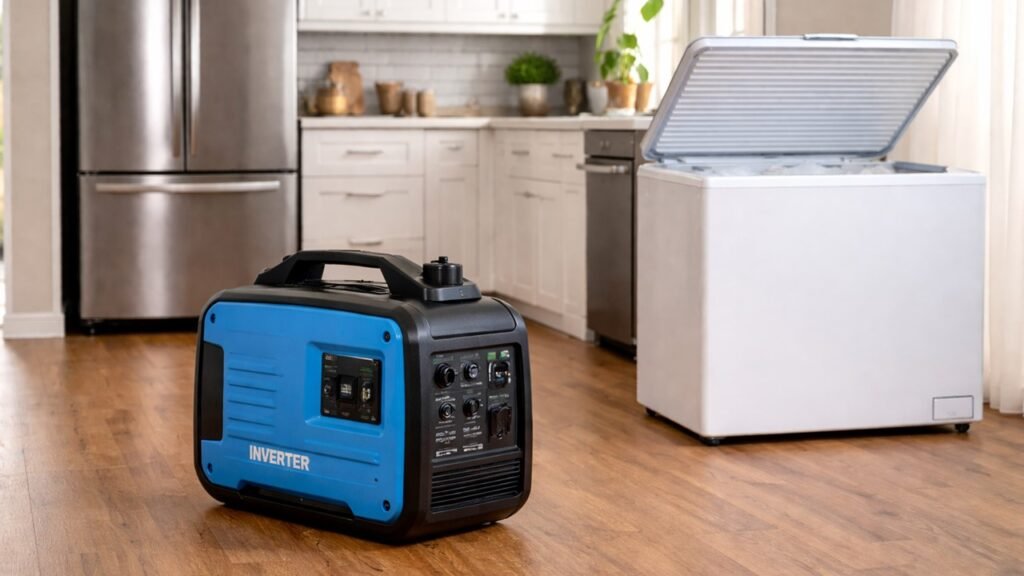
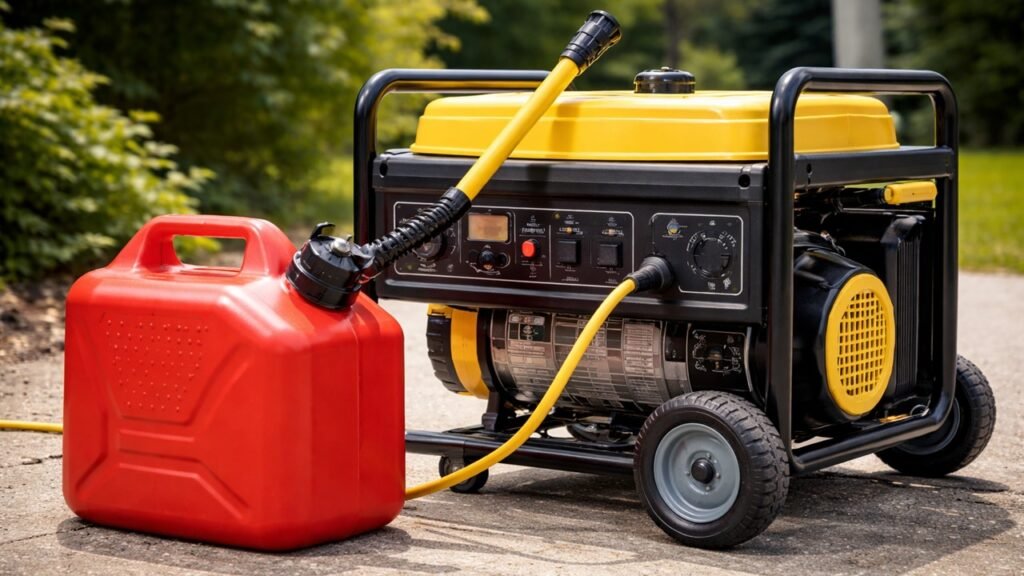
A generator’s gas use depends on two things: its size and how hard you run it. Most small 2000W inverter generators use about 0.1 to 0.2 gallons per hour at light to moderate load. A typical 5000W portable generator usually burns between 0.4 and 0.75 gallons per hour depending on demand.
If you want a quick estimate, assume your generator will run at about 50 percent load during normal home backup use. That gives you a realistic gallons per hour number, which you can multiply by the hours you plan to run each day. Below is a simple chart and an easy way to calculate your own fuel needs.
Key Summary:
- A 2000W inverter generator typically uses about 0.1 to 0.2 gallons of gas per hour at light to moderate load.
- A 5000W portable generator typically burns about 0.4 to 0.75 gallons of gas per hour depending on demand.
- Generator fuel consumption increases as electrical load increases, especially above 50 percent capacity.
- A generator’s daily gas use equals gallons per hour multiplied by total runtime hours.
- Smart load management and regular maintenance reduce fuel consumption and lower daily operating costs.
Quick Fuel Use Chart: Gasoline Generator Estimates
Fuel use increases as load increases. The numbers below reflect common real-world averages based on manufacturer specs from brands like Honda and Generac.
| Generator Size | Type | 25% Load | 50% Load | 100% Load | Typical Tank Size | Typical Runtime at 50% |
| 2000W | Inverter | 0.08 to 0.12 | 0.15 to 0.20 | 0.25 | 0.9 to 1.2 gal | 4 to 6 hrs |
| 3500W | Inverter | 0.15 to 0.20 | 0.25 to 0.35 | 0.45 | 1.5 to 2.5 gal | 5 to 8 hrs |
| 5000W | Open-frame | 0.25 to 0.35 | 0.45 to 0.60 | 0.75 | 4 to 7 gal | 8 to 12 hrs |
| 7500W | Open-frame | 0.35 to 0.50 | 0.60 to 0.80 | 1.00 | 6 to 8 gal | 8 to 11 hrs |
| 10000W | Open-frame | 0.50 to 0.70 | 0.80 to 1.10 | 1.40 | 7 to 10 gal | 7 to 10 hrs |
Inverter generators tend to use less fuel at light loads because they slow the engine down when power demand drops. Open-frame models usually run at a fixed speed, so they burn more gas when lightly loaded.
What Actually Changes Gas Usage
The biggest factor is load. Running at 50 percent capacity can nearly double fuel use compared to running at 25 percent.
Appliances that cycle on and off also affect consumption. Refrigerators, sump pumps, and air conditioners constantly start and stop. Each start pulls extra power, which increases short bursts of fuel burn.
Maintenance matters more than most people realize. A dirty air filter or old spark plug can reduce efficiency and increase gas use. Fresh fuel also burns cleaner and more efficiently than old gasoline.
Weather plays a role too. Very hot or very cold temperatures can make engines work harder. High altitude reduces oxygen, which can increase fuel consumption if the generator is not properly adjusted.
Simple Method to Estimate Your Generator’s Gas Use
You do not need a complicated calculator. You just need your manual and a few basic numbers.
- Check your fuel tank size in gallons.
- Look up the runtime at 25 percent or 50 percent load.
- Divide the tank size by the runtime to get gallons per hour.
- Multiply gallons per hour by the number of hours you expect to run per day.
For example, if your generator has a 5 gallon tank and runs 10 hours at 50 percent load, it uses about 0.5 gallons per hour. If you run it for 12 hours per day, that is about 6 gallons per day.
How Much Gas Does a Generator Use in 24 Hours?
If you run a generator all day, total fuel use depends on your average load and how many hours it actually runs. Most homeowners do not run at full load nonstop. A more realistic estimate assumes 30 to 60 percent load for essential appliances.
| Scenario | Average Load | Generator Size / Type | Estimated gal/hr | Hours / Day | Total gal / Day |
| Essentials only (fridge, lights, WiFi) | 800 to 1200W | 2000W inverter | 0.15 | 24 | 3.6 |
| Essentials + microwave + fans | 1500 to 2500W | 3500W inverter | 0.30 | 24 | 7.2 |
| Partial home (multiple rooms, small AC) | 3000 to 4000W | 5000W open frame | 0.55 | 24 | 13.2 |
| Higher demand (AC + appliances cycling) | 5000 to 7000W | 7500W open frame | 0.75 | 24 | 18.0 |
These numbers assume steady running. If you shut the generator off overnight or rotate loads, daily fuel use drops significantly.
Cost to Run a Gas Generator
Fuel cost is simple math. Once you know gallons per hour, you just multiply by your local gas price.
- Cost per hour = gallons per hour × gas price
- Cost per day = gallons per hour × hours per day × gas price
If gasoline costs $4 per gallon, here is what typical usage looks like.
| Generator Size | Load | gal/hr | Cost per Hour | Cost per 24 Hours |
| 2000W inverter | Light | 0.15 | $0.60 | $14.40 |
| 3500W inverter | Moderate | 0.30 | $1.20 | $28.80 |
| 5000W open frame | Moderate | 0.55 | $2.20 | $52.80 |
| 7500W open frame | Heavy | 0.75 | $3.00 | $72.00 |
Gas price directly determines operating cost. Higher load directly increases daily expense.
Fuel Saving Tips That Make a Noticeable Difference
Small adjustments can reduce fuel burn more than most people expect.
- Run the generator at a steady mid range load instead of constantly jumping between very low and very high demand.
- Use eco mode on inverter generators so the engine slows down when demand drops.
- Stagger high draw appliances like microwaves, pumps, and kettles instead of running them all at once.
- Switch to LED lighting and unplug devices that draw standby power.
- Cycle the generator when possible, especially if you are only powering refrigeration and charging devices.
- Keep maintenance current. Clean air filters, fresh oil, and good spark plugs improve fuel efficiency.
Fuel management is not just about tank size. It is about how smartly you use the power you generate.
Conclusion
Gas usage depends mainly on generator size and load. A small 2000W inverter might use around 0.1 to 0.2 gallons per hour, while a 5000W to 7500W portable unit can burn 0.5 to 0.8 gallons per hour at moderate load.
The most accurate way to plan fuel is to estimate your average running load and multiply gallons per hour by the number of hours you expect to run each day. Running at 50 percent load gives a realistic real-world estimate for most home backup situations.
If you manage your loads carefully, use eco mode when available, and keep your generator maintained, you can noticeably reduce daily fuel consumption and overall operating cost.
Related FAQs
How much gas does a 2000W generator use per hour?
A 2000W inverter generator typically uses about 0.1 to 0.2 gallons per hour at light to moderate load.
How much gas does a 5000W generator use per hour?
A 5000W portable generator usually burns between 0.4 and 0.75 gallons per hour depending on load.
How long will 5 gallons of gas run a generator?
At 0.5 gallons per hour, 5 gallons will last about 10 hours. Runtime increases at lighter loads.
Does running at full load use a lot more gas?
Yes. Fuel consumption rises sharply at 75 to 100 percent load compared to 25 to 50 percent load.
Do inverter generators use less gas?
Yes. Inverter generators adjust engine speed to demand, which improves fuel efficiency at lower loads.
Is it cheaper to cycle a generator instead of running it nonstop?
Often yes. Cycling can reduce total fuel use if you only need intermittent power for refrigeration and charging.

Robert Caldwell writes in-depth guides and reviews focused on generators, backup power systems, and portable energy equipment. His work is grounded in hands-on testing, covering fuel types, runtime performance, noise levels, and real-world reliability. He helps homeowners, RV owners, and outdoor users choose dependable power solutions with confidence. Every article emphasizes clear explanations, safe operation, and long-term value.