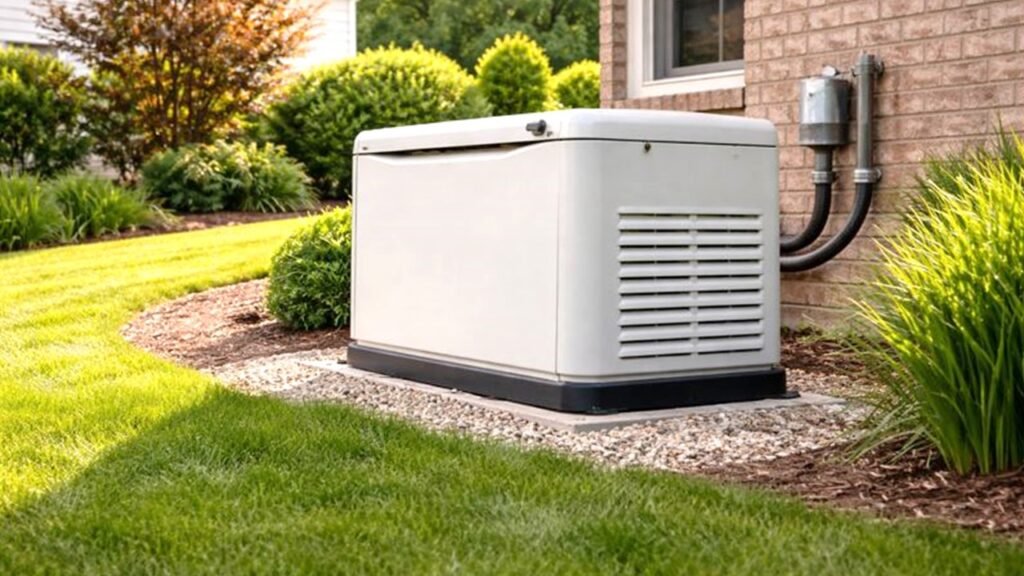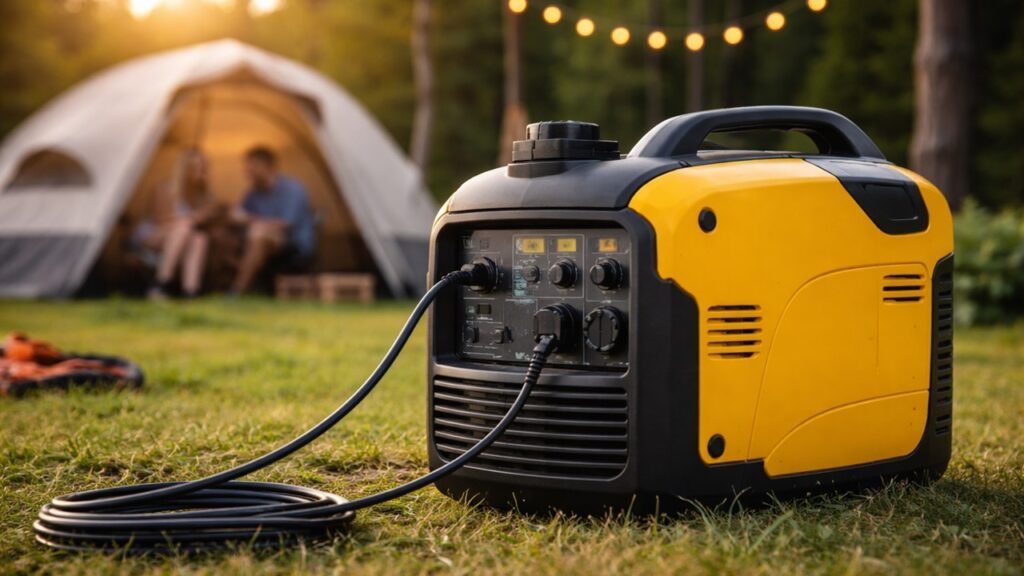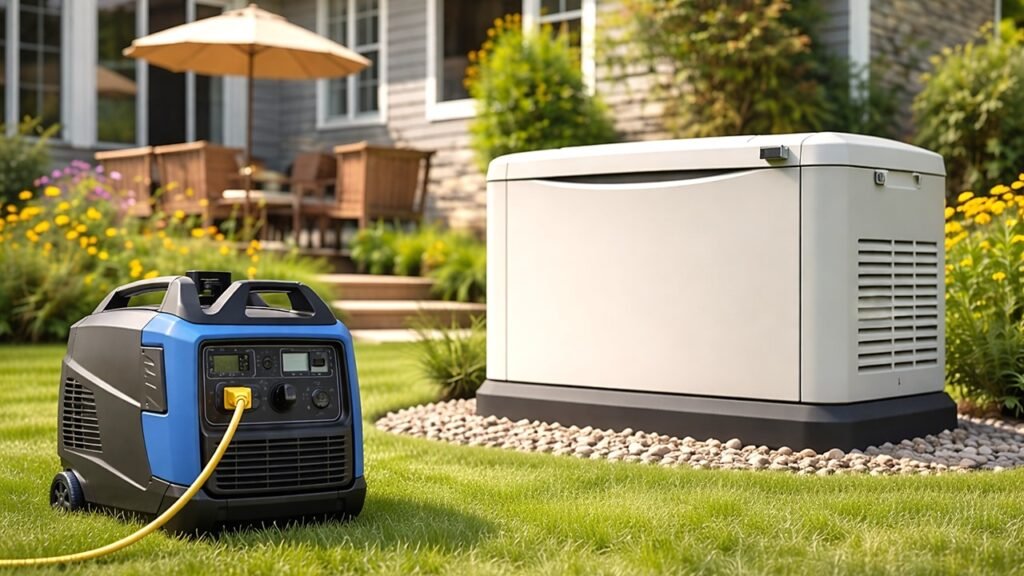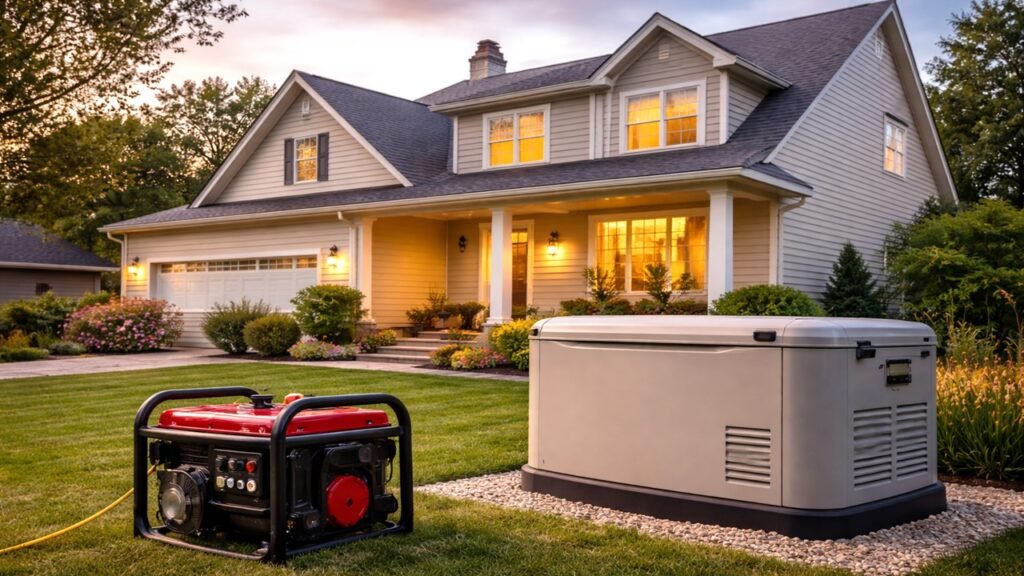
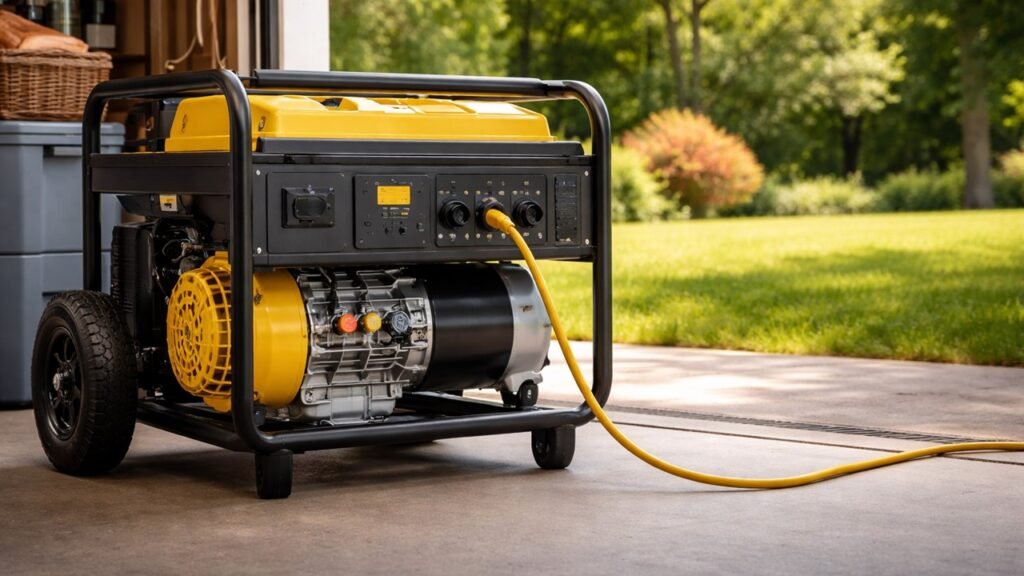
A generator produces electricity by converting mechanical energy into electrical energy through electromagnetic induction. It does not create electricity out of nothing. Instead, it causes existing electric charges inside copper windings to move, and that movement of electrons creates an electric current.
If you’re looking for a clear explanation of how a generator produces electricity, here it is: fuel powers an engine, the engine spins a magnetic field, the magnetic field moves electrons inside copper coils, and that movement becomes usable electrical power.
Key Summary:
- A generator converts mechanical energy into electrical energy through electromagnetic induction.
- Electromagnetic induction occurs when a rotating magnetic field moves across copper windings and induces voltage.
- An engine powers the rotor, and the rotor creates the magnetic field required for electricity generation.
- A voltage regulator stabilizes output and maintains safe voltage levels such as 120V or 240V.
- Most generators produce alternating current, which powers household appliances and electrical systems.
What Is the Basic Working Principle of a Generator?
At its core, a generator works on a simple idea called electromagnetic induction. That might sound technical, but the concept is straightforward. When a magnetic field moves past a wire, it creates voltage in that wire. Voltage makes electrons move. And when electrons move, you get electricity.
Inside a generator, a magnet spins around inside tightly wound copper coils. As that magnetic field keeps moving, the electrons in the copper wire are pushed along. That steady movement of electrons creates alternating current, which is the type of electricity used to run lights, refrigerators, tools, and even entire homes.
This idea goes back to Michael Faraday in the 1800s. He discovered that changing magnetic fields can produce electricity. Spin the magnet faster and you get more voltage. Use a stronger magnetic field and you get more output. Keep everything rotating smoothly and you get a steady flow of power. That simple principle is what makes every generator work.
How Does a Generator Produce Electricity Step by Step?
A generator produces electricity through a chain of energy conversion. Chemical energy in fuel becomes mechanical rotation. Mechanical rotation becomes magnetic motion. Magnetic motion becomes electrical current. Finally, that current is stabilized and delivered safely.
Let’s walk through each stage in detail.
Step 1: How Fuel Powers the Engine
Fuel provides chemical energy. The engine converts chemical energy into mechanical energy.
Gasoline, diesel, propane, or natural gas burns inside the engine. Combustion forces pistons to move. Pistons rotate the crankshaft. The rotating crankshaft produces mechanical motion.
Important facts to understand:
- Combustion transforms fuel into rotational force.
- The engine supplies the mechanical input required for electricity generation.
- Larger engines generally support higher electrical output.
Without mechanical rotation, a generator cannot produce electricity.
Step 2: How the Engine Spins the Rotor
The crankshaft connects directly to the rotor inside the alternator. When the crankshaft turns, the rotor spins.
The rotor contains magnets or electromagnets. As it spins, it produces a rotating magnetic field. The speed of rotation directly affects the voltage and frequency of the output.
Important details:
- The engine transfers motion to the rotor.
- The rotor creates a moving magnetic field.
- Stable rotational speed ensures consistent electrical frequency.
Step 3: How the Rotor and Stator Generate Electricity
The stator surrounds the rotor and contains copper windings. As the rotor spins, its magnetic field moves across those windings.
When the magnetic field changes near the copper wire, electrons inside the wire begin to move. That electron flow becomes alternating current.
According to the U.S. Department of Energy, alternating current is the standard for residential power systems because it is efficient for transmission and compatible with household devices.
What happens during this stage:
- A rotating magnetic field interacts with copper windings.
- Changing magnetic flux induces voltage.
- Induced voltage creates alternating current.
This is the exact moment electricity is produced.
Step 4: How Voltage Is Regulated for Safe Use
The electricity produced inside the alternator is not perfectly stable. Voltage can fluctuate depending on engine speed and load demand.
The voltage regulator monitors output continuously. If voltage drops or rises, the regulator adjusts the excitation current inside the alternator. This keeps output stable at levels such as 120V or 240V.
Why regulation matters:
- Voltage stability protects appliances.
- Load changes affect electrical output.
- Automatic regulation maintains safe operation.
Without voltage control, electronics could be damaged by surges or drops.
Step 5: How Electricity Is Delivered to Your Devices or Home
Once regulated, electricity flows to the generator’s control panel outlets. Devices can plug directly into these outlets.
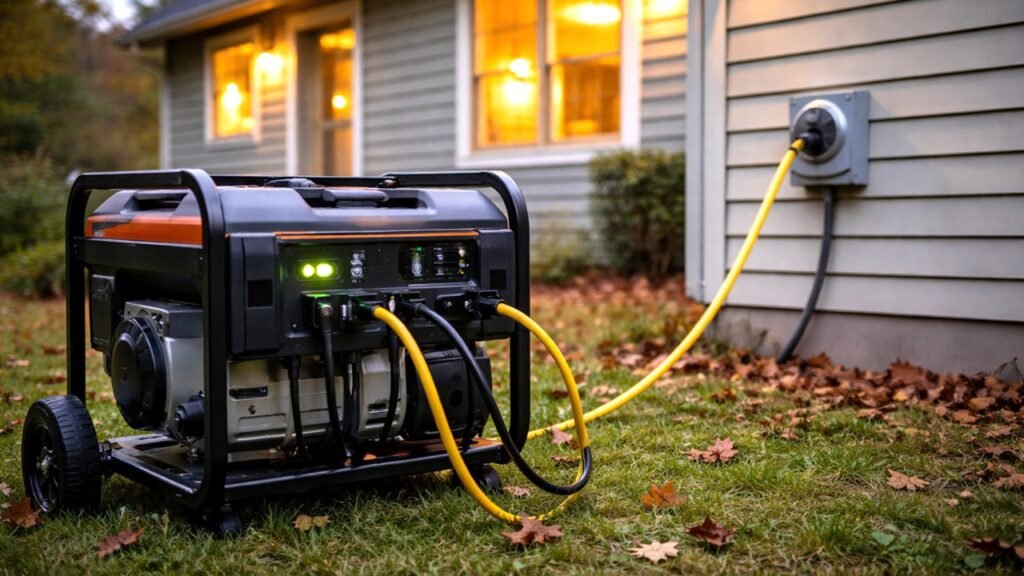
For home backup use, electricity connects through a transfer switch. A transfer switch isolates your home from the utility grid and prevents dangerous backfeed. The National Fire Protection Association recommends transfer switches for safe generator integration.
What this final stage ensures:
- Regulated electricity reaches usable outlets.
- A transfer switch enables safe home connection.
- Proper setup prevents electrical hazards.
What Is Electromagnetic Induction in a Generator?
Electromagnetic induction is the simple science that makes a generator work. In plain terms, when a magnetic field moves near a piece of wire, it creates voltage in that wire. Voltage makes electrons move, and when electrons move, electricity is produced.
Inside a generator, a part called the rotor spins and creates a moving magnetic field. That spinning magnetic field passes by stationary copper windings in the stator. As the magnetic field keeps changing, it pushes electrons through the copper wire. That movement turns mechanical motion into electrical energy you can actually use.
This idea was discovered by Michael Faraday in 1831. He found that changing magnetic fields can generate electricity. So when you burn fuel and spin the engine in a generator, you are really just creating motion inside a magnetic field. That motion is what produces power.
What Are the Main Parts of a Generator and How Do They Work?
A generator works because several key components operate together to convert fuel into usable electrical power. The engine creates mechanical motion. The alternator converts that motion into electricity. The voltage regulator stabilizes the output. Supporting systems such as fuel delivery, cooling, and control panels ensure safe and continuous operation.
Let’s break down each main part in detail.
Engine
The engine provides the mechanical energy required to run the generator. It burns fuel such as gasoline, diesel, propane, or natural gas. Combustion forces pistons to move, which rotates the crankshaft.
The size and design of the engine determine how much electricity the generator can ultimately produce. Larger engines typically support higher wattage output.
Alternator
The alternator is the component that actually produces electricity. It contains two main parts: the rotor and the stator.
The rotor spins and creates a magnetic field. The stator contains copper windings. As the rotor’s magnetic field rotates inside the stator, voltage is induced in the copper windings. This process generates alternating current.
The quality of the alternator affects efficiency, durability, and power stability.
Voltage Regulator
The voltage regulator maintains stable output. Electrical demand changes constantly as appliances turn on and off. These load changes can cause voltage fluctuations.
The regulator monitors output and adjusts the excitation current in the alternator to maintain consistent voltage levels, typically 120V or 240V. Stable voltage protects connected devices from damage.
Fuel System
The fuel system stores and delivers fuel to the engine. It includes the fuel tank, pump, lines, filter, and carburetor or injector.
Reliable fuel delivery ensures smooth engine performance. Interruptions in fuel flow can reduce power output or stop the generator entirely.
Cooling and Exhaust System
The cooling system prevents overheating. Generators produce significant heat during operation. Air cooling or liquid cooling removes excess heat from the engine and alternator.
The exhaust system safely directs combustion gases away from the generator. Proper exhaust ventilation is essential because carbon monoxide is dangerous and can be fatal in enclosed spaces.
Control Panel and Starter System
The control panel allows users to operate the generator safely. It includes outlets, circuit breakers, and monitoring gauges.
The starter system may use a pull cord or an electric start powered by a battery. The battery must remain charged to ensure reliable starting.
What Type of Electricity Does a Generator Produce?
Most generators produce alternating current, commonly known as AC power. Alternating current changes direction periodically and is the standard form of electricity used in homes and businesses. In many countries, generators operate at either 50 Hz or 60 Hz depending on regional electrical standards.
AC power is used because it is efficient for transmission and compatible with household appliances. Refrigerators, air conditioners, lights, and electronics are designed to run on AC voltage.
Some generators also provide direct current, or DC output. DC is typically available through battery charging ports or USB connections. In these cases, internal rectifiers convert AC into DC to power small electronics or charge batteries.
How Is an Inverter Generator Different From a Conventional Generator?
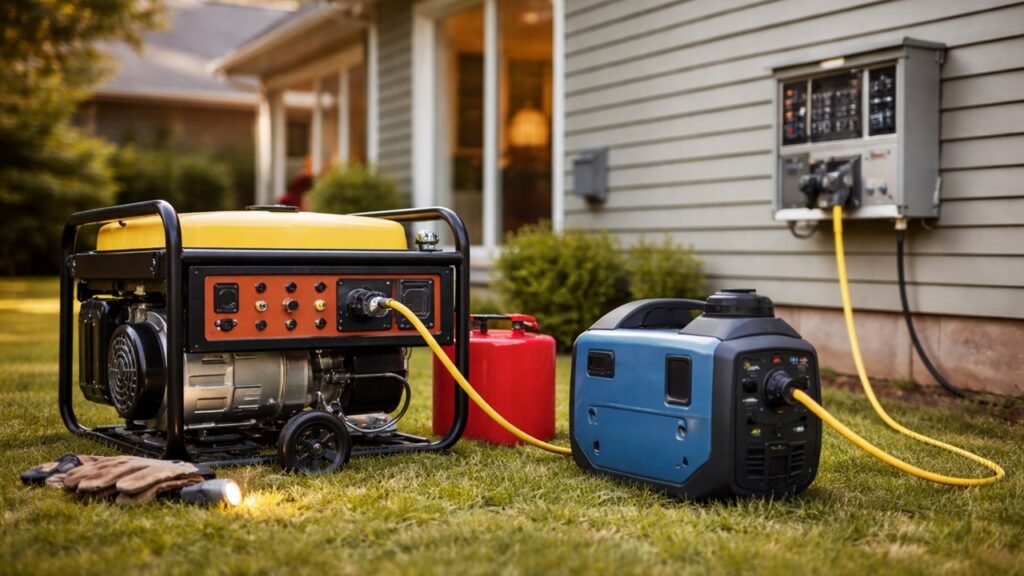
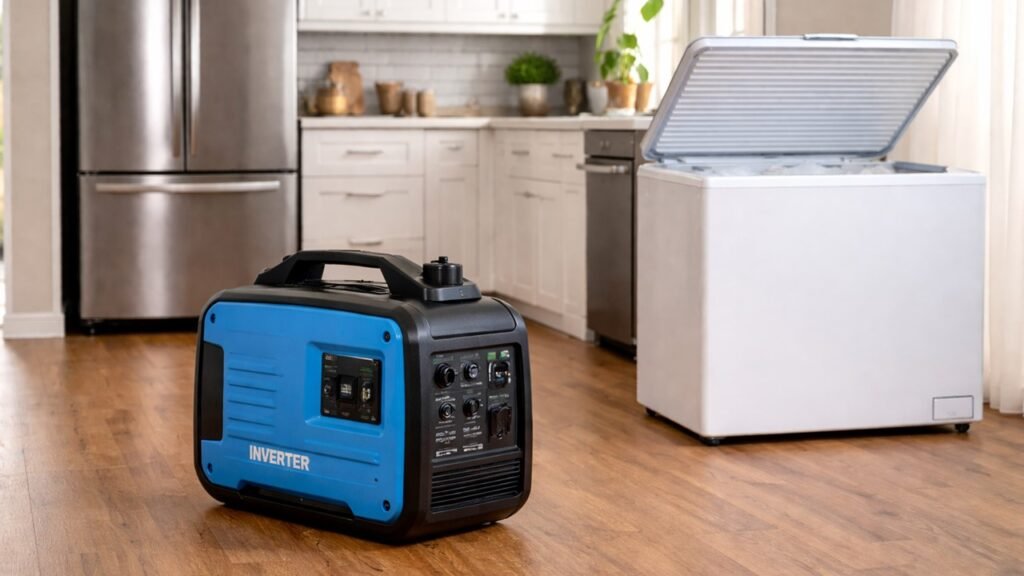
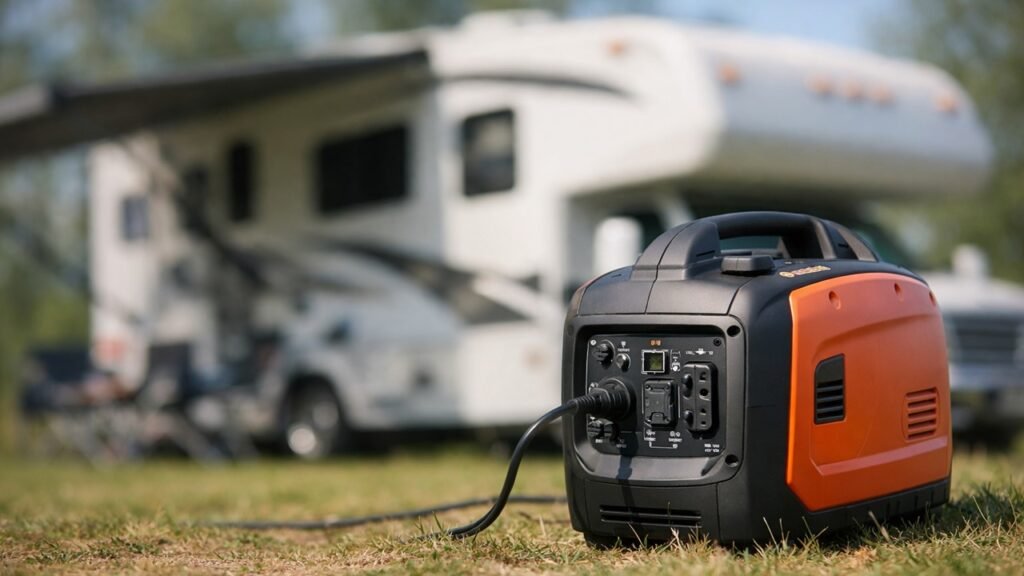
An inverter generator differs from a conventional generator in how it produces and regulates electricity. A conventional generator runs at a constant engine speed and produces standard alternating current directly. An inverter generator adjusts engine speed based on demand and converts power electronically to produce cleaner, more stable electricity that is safer for sensitive electronics.
Here is a clear comparison:
| Feature | Conventional Generator | Inverter Generator |
| Engine Speed | Runs at constant RPM | Adjusts RPM based on load |
| Power Quality | Standard AC output | Clean, stable AC output |
| Fuel Efficiency | Lower at light loads | Higher due to variable speed |
| Noise Level | Louder | Quieter |
| Electronics Safety | May fluctuate | Safer for laptops and TVs |
| Best For | Heavy tools and appliances | Electronics and portable use |
In short, conventional generators are ideal for high-power tools and whole-home backup, while inverter generators are better for fuel efficiency, quiet operation, and sensitive devices.
What Determines How Much Electricity a Generator Can Produce?
A generator’s electrical output depends on engine size, alternator design, and the total load connected to it. Larger engines and higher-quality alternators produce more wattage. Electrical demand also directly affects how much usable power is available at any moment.
Let’s look at the main factors that control output capacity.
Engine Size and Speed
Engine displacement and horsepower directly influence output capacity. A larger engine can generate more mechanical force. More mechanical force allows the alternator to produce higher wattage.
Engine speed also affects frequency. Most generators must maintain a fixed rotational speed to produce stable 50 Hz or 60 Hz power. If RPM drops too low, voltage and frequency may fluctuate.
Alternator Design and Efficiency
The alternator converts mechanical energy into electrical energy. The quality of copper windings, magnetic strength, and internal construction affect efficiency.
A well-designed alternator produces stable voltage with minimal energy loss. More copper windings and stronger magnetic fields typically increase output capacity.
Electrical Load and Appliance Demand
The total connected load determines how much power is being used at any time.
Important factors include:
- Running watts: Power required to keep devices operating
- Starting watts: Extra power needed to start motors
- Surge capacity: Temporary high output ability
- Total combined load: Sum of all connected appliances
If demand exceeds generator capacity, overload protection will activate.
Why Do Generators Need a Voltage Regulator?
Generators need a voltage regulator to maintain stable electrical output. Electrical demand changes constantly as appliances turn on and off. Without regulation, voltage could rise or fall unpredictably.
A voltage regulator monitors output and adjusts the excitation current inside the alternator. This keeps voltage consistent at safe levels such as 120V or 240V. Stable voltage protects appliances from damage caused by spikes or drops.
Voltage regulation is especially important for electronics like televisions, laptops, and medical equipment. Clean and stable power improves safety, extends equipment lifespan, and ensures reliable generator performance.
Final Thoughts
A generator produces electricity by converting fuel into mechanical motion and mechanical motion into electrical energy. The engine creates rotation, the alternator converts that rotation into electric current, and electromagnetic induction makes the entire process possible.
The rotating magnetic field inside the alternator forces electrons to move through copper windings. That electron movement creates alternating current, which is then stabilized by a voltage regulator to ensure safe and consistent output.
If you understand this energy chain: fuel to motion, motion to magnetism, magnetism to electron flow, you understand how a generator produces electricity. Every portable, standby, and inverter generator operates on this same core principle.
Related FAQs
Does a generator create electricity or just move electrons?
A generator does not create electricity from nothing. A generator moves existing electrons through copper windings to create electric current.
Why does a generator need fuel to produce electricity?
Fuel provides chemical energy. The engine converts chemical energy into mechanical rotation, which is required to generate electricity.
What role does the alternator play in electricity generation?
The alternator converts mechanical rotation into electrical energy using electromagnetic induction.
Why is voltage regulation important in a generator?
Voltage regulation keeps electrical output stable and protects appliances from power surges or drops.
Do all generators produce alternating current?
Most generators produce alternating current because household appliances are designed to run on AC power.
How does an inverter generator produce cleaner power?
An inverter generator electronically converts and stabilizes power output, resulting in cleaner and more consistent electricity.

Robert Caldwell writes in-depth guides and reviews focused on generators, backup power systems, and portable energy equipment. His work is grounded in hands-on testing, covering fuel types, runtime performance, noise levels, and real-world reliability. He helps homeowners, RV owners, and outdoor users choose dependable power solutions with confidence. Every article emphasizes clear explanations, safe operation, and long-term value.