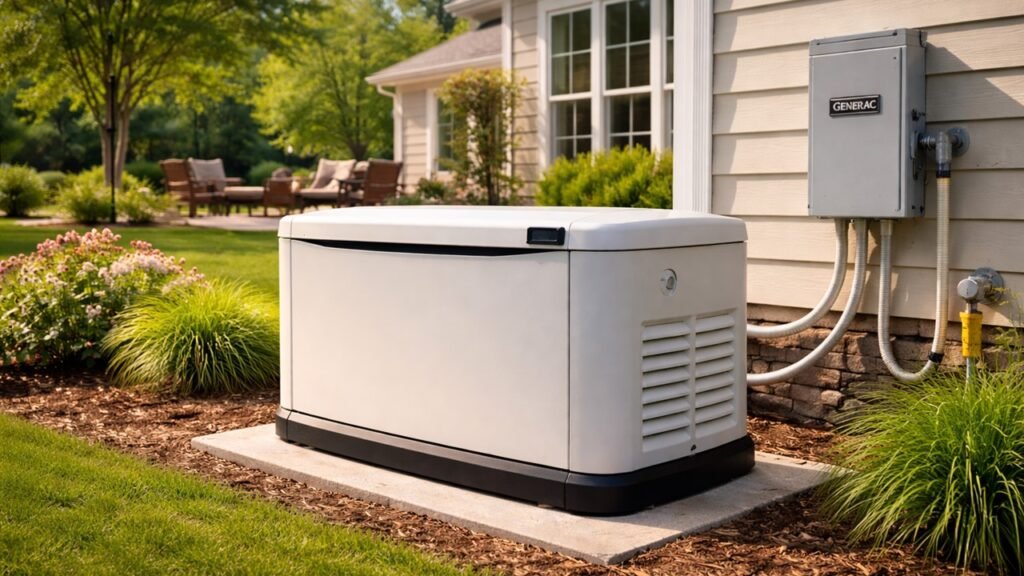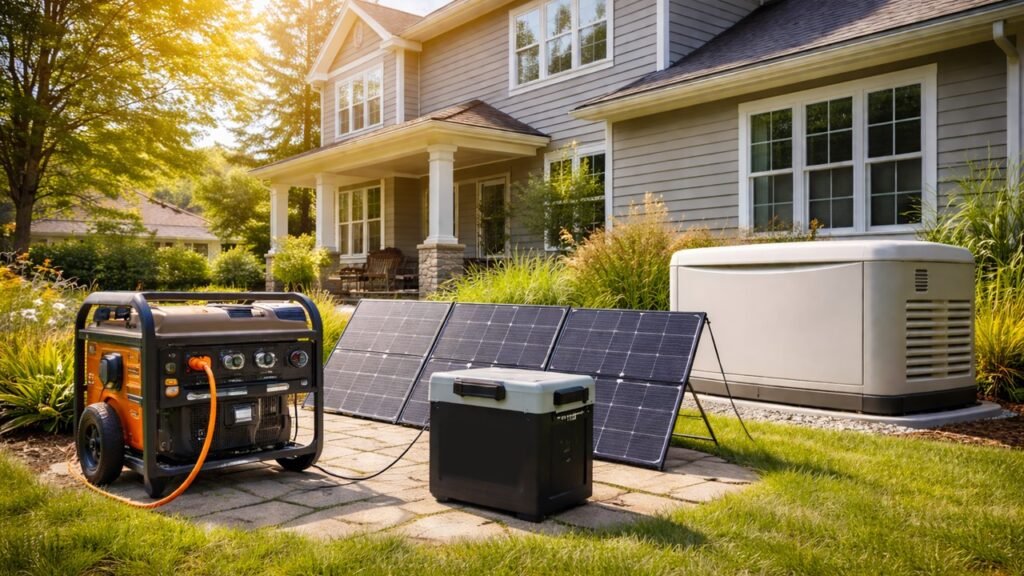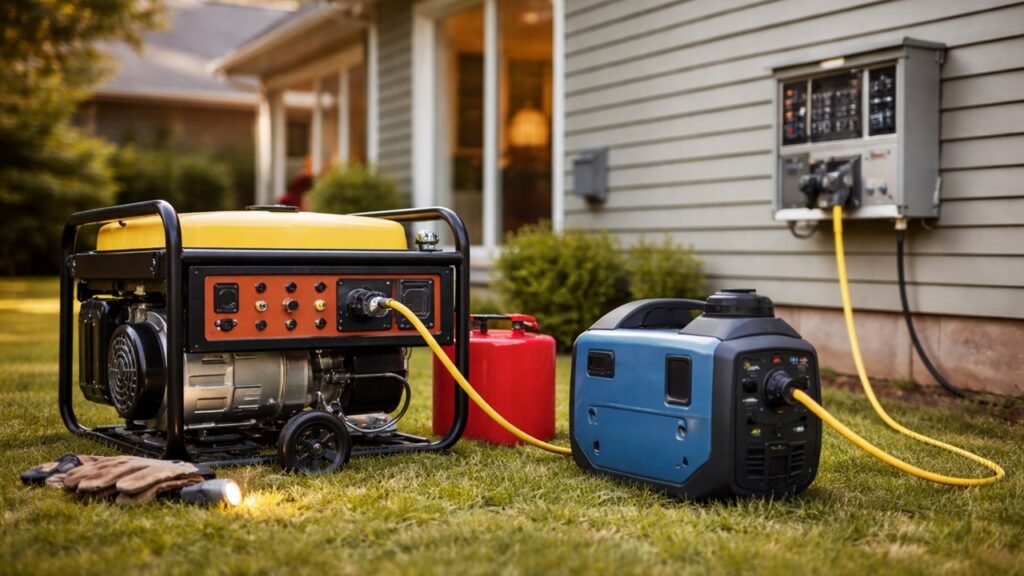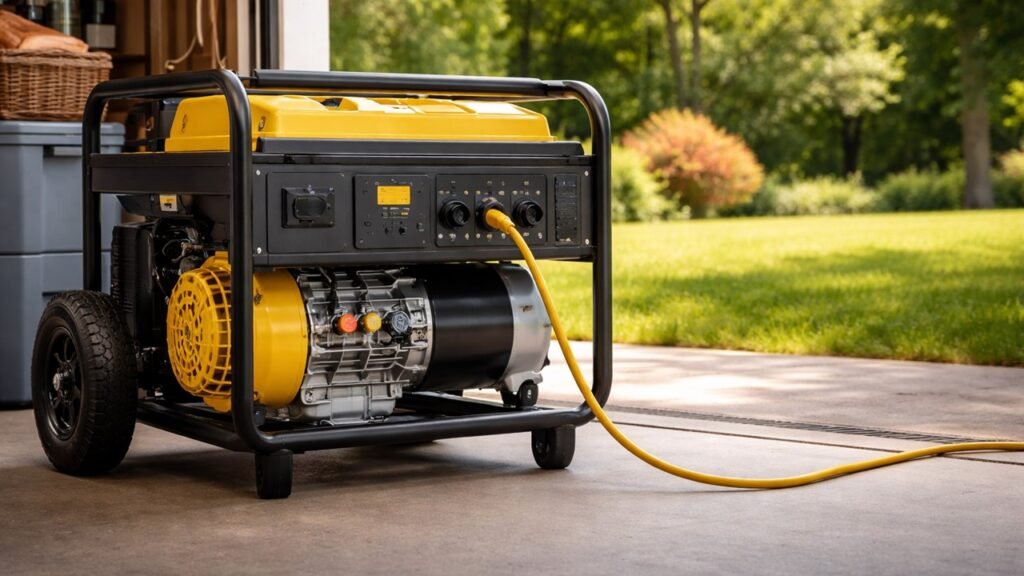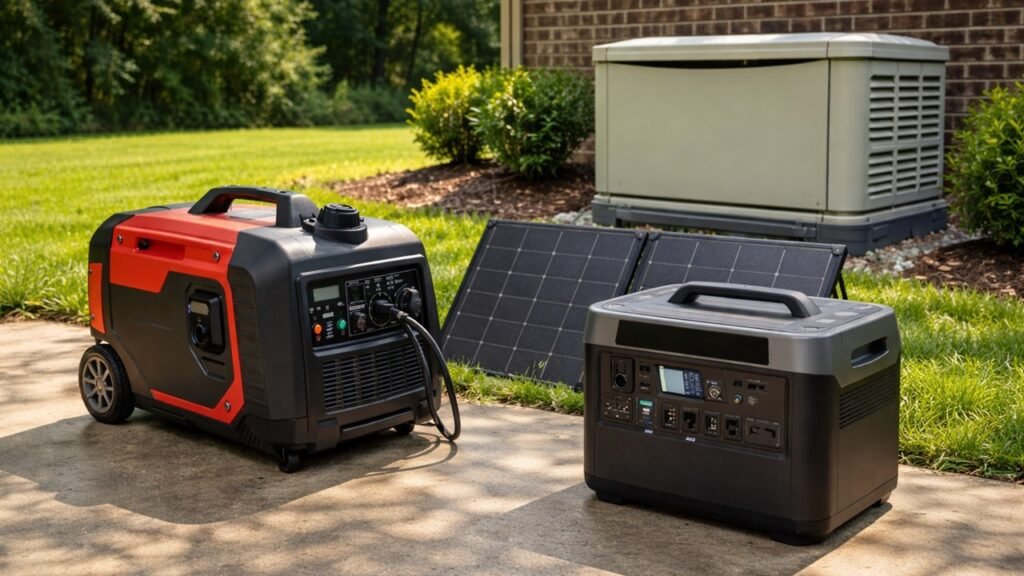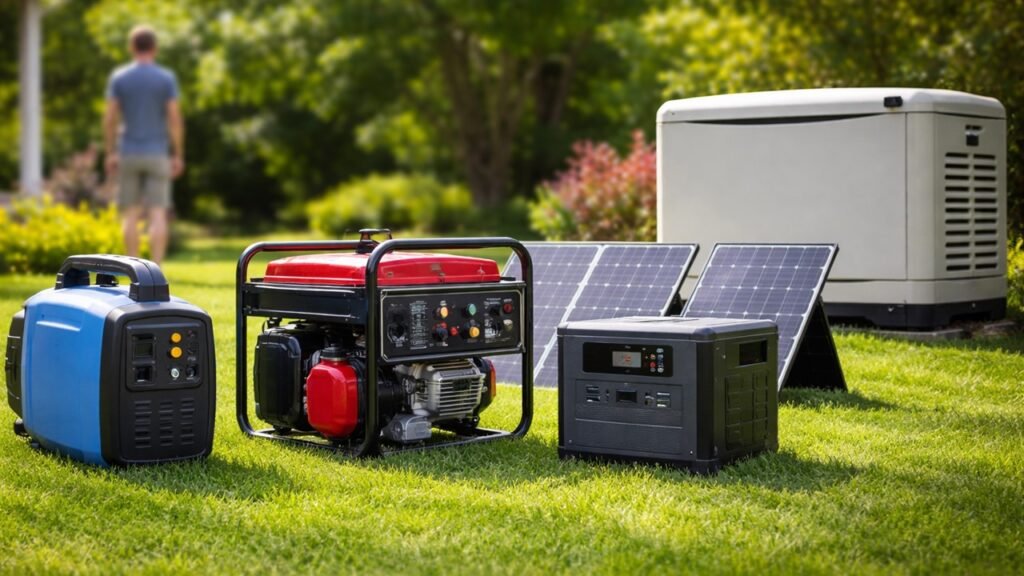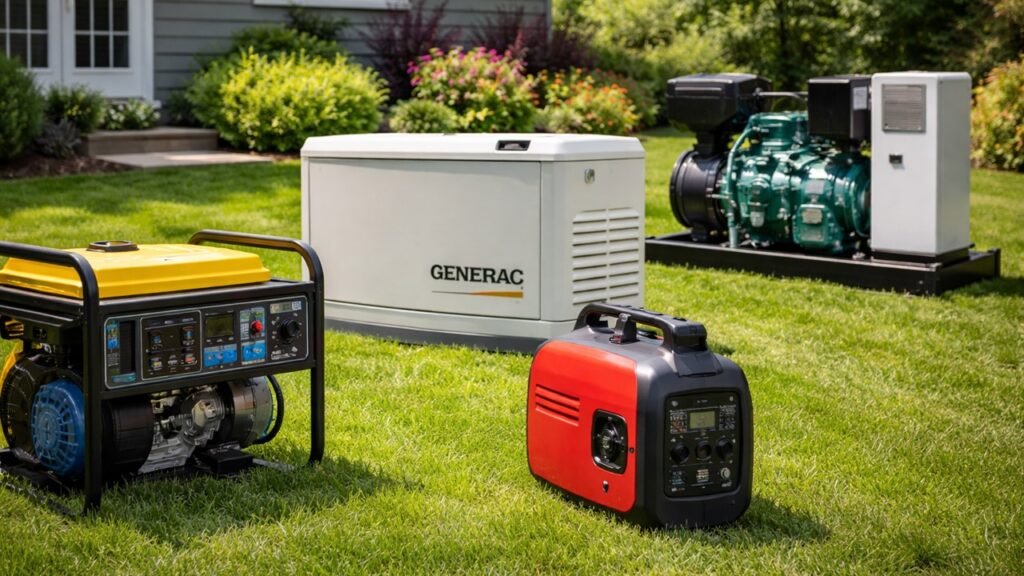
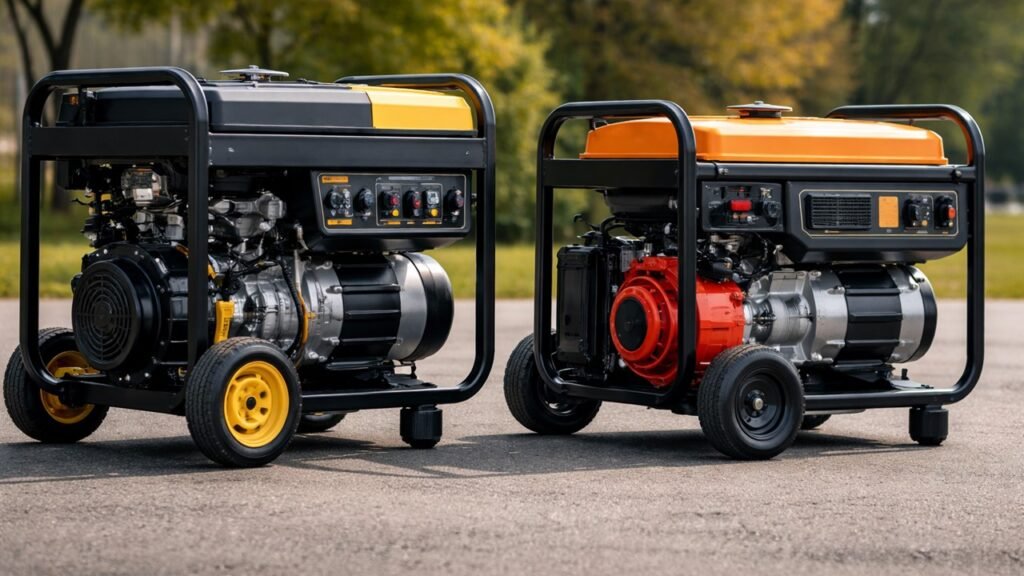
When comparing diesel vs gas generator options, the real difference comes down to how often you plan to use it and how much power you need. Diesel generators are built for longer runtime and heavier loads. Gas generators are more affordable upfront and better suited for occasional use.
If you are looking for a generator for home backup, RV trips, or job site work, the right choice depends on your usage pattern. Someone preparing for long outages or running equipment daily will have very different needs than someone who just wants emergency power a few times a year.
Key Summary:
- Diesel generators deliver higher fuel efficiency than gas generators, especially under heavy or continuous loads.
- Gas generators cost less upfront than diesel generators, making them better for occasional or short-term use.
- Diesel engines last significantly longer than gas engines due to stronger construction and lower operating RPM.
- Gas generators offer better portability than diesel units because they are lighter and more compact.
- Diesel fuel stores longer and is less flammable than gasoline, which improves long-term storage safety.
Diesel vs Gas Generator Quick Comparison
Most people searching for diesel vs gas generator differences want a simple answer. Diesel models last longer and use less fuel. Gas models cost less at the start and are easier to move around.
| Feature | Diesel Generator | Gas Generator |
| Upfront Cost | Higher purchase price | Lower purchase price |
| Fuel Efficiency | Higher | Lower |
| Typical Lifespan | 10,000 to 30,000+ hours | 1,500 to 3,000 hours |
| Maintenance Frequency | Less frequent | More frequent |
| Noise Level | Louder | Generally quieter |
| Best Use Case | Long runtime, heavy loads | Occasional use, portable power |
For short power outages or camping trips, gas usually makes sense. For long-term reliability and serious power demands, diesel often wins.
Core Difference Between Diesel and Gas Generators
The main difference between diesel and gas generators is how the engine burns fuel. Diesel engines rely on compression to ignite fuel. Gas engines use spark plugs to ignite a fuel and air mixture.
That one difference changes everything. Diesel engines are built tougher and typically run at lower speeds, which helps them last longer. Gas engines are simpler and lighter, which makes them easier to transport and cheaper to manufacture.
In practical terms, diesel units feel more industrial. They are made to handle sustained loads. Gas units feel more flexible and convenient, especially for homeowners who only need backup power occasionally.
Fuel Efficiency and Operating Cost
If you care about fuel savings, diesel generators usually have the advantage. Diesel fuel contains more energy per gallon than gasoline, which means a diesel generator can produce more power while using less fuel.
That matters most when you are running the generator for many hours at a time. Over long periods, lower fuel consumption can offset the higher purchase price of a diesel unit.
Fuel Consumption Differences
Diesel generators typically use less fuel under similar loads. They are especially efficient when operating near their rated capacity. Gas generators tend to burn fuel faster, particularly under continuous heavy use.
For someone running a generator every day or during extended outages, that fuel difference adds up quickly.
Long-Term Cost of Ownership
Gas generators are cheaper to buy at the start. That makes them appealing if your budget is tight or if you only plan to use the generator occasionally.
Diesel generators cost more upfront, but they often cost less over time if used frequently. Between better fuel economy and longer engine life, they can be the smarter long-term investment for serious users.
If you only expect to use a generator a few times per year, gas will likely be more economical overall. If you expect regular or heavy use, diesel usually makes more financial sense.
Power Output and Load Handling
Diesel generators generally handle heavier loads more comfortably, while gas generators are better suited for lighter, short-term power needs. If you plan to run large appliances or operate equipment for long periods, diesel usually delivers more stable performance under stress.
The difference becomes clearer when you look at how each engine responds under load.
Heavy Loads and Continuous Use
Diesel generators are built to manage sustained demand. They produce higher torque, which helps when starting equipment like well pumps, air compressors, and HVAC systems. They also maintain output more consistently when running near full capacity for extended hours.
This makes diesel a strong option for whole-house backup, construction sites, and off-grid setups where power demands stay high for long stretches.
Light and Intermittent Use
Gas generators perform well for shorter outages and lighter loads. They are commonly used for refrigerators, lights, small power tools, and RV appliances. For occasional use, they provide enough output without the higher upfront investment of diesel.
If your generator runs a few hours at a time and not every week, gas models typically do the job without unnecessary cost.
Engine Lifespan and Reliability
One of the biggest differences in the diesel vs gas generator debate is engine life. Diesel engines are built heavier and usually run at lower RPM. That reduces wear over time.
Gas engines tend to operate at higher speeds and have more ignition components that can wear out. While they are reliable for moderate use, they are not typically designed for industrial-level runtime.
Here is how they compare in practical terms:
- Diesel generators often last between 10,000 and 30,000 hours with proper maintenance
- Gas generators typically last between 1,500 and 3,000 hours
- Diesel engines run at lower RPM, which reduces internal stress
- Gas engines have spark plugs and carburetors that can fail over time
- Diesel units are better suited for daily or long-duration operation
If long-term durability is your top priority, diesel usually has the advantage.
Maintenance Requirements
Diesel generators generally require less frequent maintenance, but when service is needed, it can be more expensive. Gas generators require more routine attention, especially if used regularly.
The maintenance differences are mainly tied to engine design.
Diesel Generator Maintenance
Diesel engines do not use spark plugs, which eliminates one common wear item. They also avoid carburetor issues that are common in gasoline units. Oil changes and fuel filter replacements are still necessary, but service intervals are typically longer.
Because diesel engines are built heavier, parts often last longer under consistent use.
Gas Generator Maintenance
Gas generators require spark plug replacement and occasional carburetor cleaning, especially if fuel sits in the system for too long. Gasoline can degrade within a few months, which increases the risk of clogging if the unit is not used regularly.
If you plan to store a gas generator for long periods, proper fuel stabilization becomes important to avoid starting problems later.
Noise Level and User Comfort
Noise can be a deciding factor, especially for home backup or camping. Diesel generators tend to be louder and produce a deeper rumble. That sound can carry farther, particularly in quiet neighborhoods.
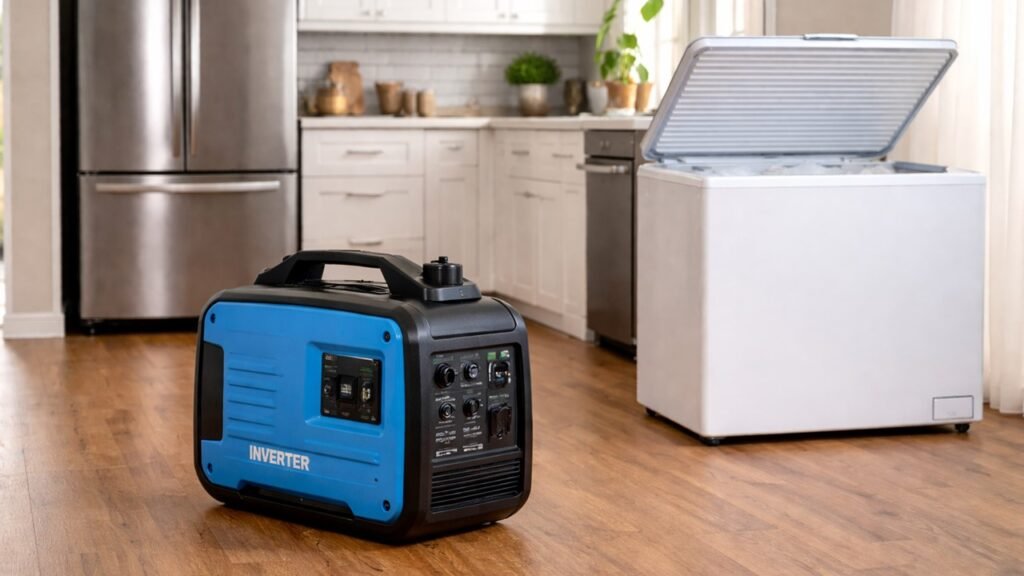
Gas generators are usually quieter, especially smaller portable models. Many inverter-style gas generators operate at noise levels that are more manageable for residential areas and RV parks.
If comfort and neighborhood friendliness matter to you, gas models often feel less intrusive. Diesel units, while powerful, may require additional soundproofing or placement farther from living spaces.
Portability and Storage
Gas generators are generally easier to move and store, while diesel generators are heavier and more suited for fixed installations.
Here is how portability and storage compare:
- Gas generators are lighter and more compact
- Diesel generators are heavier due to stronger engine components
- Gas units are easier to transport for camping and temporary job sites
- Diesel fuel has a longer shelf life than gasoline
- Gasoline typically degrades within three to six months without stabilizer
- Diesel fuel is more stable for long-term storage
If mobility is important, gas usually wins. If long-term fuel storage matters more, diesel has an edge.
Safety and Fuel Storage
Fuel safety is another practical difference. Diesel fuel is less volatile than gasoline, which reduces the risk of accidental ignition during storage and refueling.
Gasoline, on the other hand, produces highly flammable vapors. That does not make it unsafe, but it does require more careful handling and proper storage containers.
When considering safety, keep these points in mind:
- Diesel fuel is less flammable than gasoline
- Gasoline vapors ignite more easily
- Proper ventilation is essential for both types
- Fuel should always be stored in approved containers
- Long-term gasoline storage requires stabilizers
- Diesel storage requires monitoring for contamination or water buildup
Both types can be used safely when handled correctly, but diesel fuel generally presents lower fire risk during storage.
Environmental Impact and Emissions
When comparing diesel vs gas generator emissions, neither option is completely clean, but they differ in how they affect air quality. Diesel engines typically produce more nitrogen oxides and particulate matter. These pollutants are linked to air quality concerns, especially in urban areas. However, modern diesel generators that meet EPA standards are much cleaner than older models.
Gas generators generally produce lower particulate emissions, but they emit higher levels of carbon monoxide. Carbon monoxide is especially dangerous in enclosed or poorly ventilated spaces. That is why both diesel and gas generators must always be operated outdoors and away from windows or vents.
In short, diesel tends to produce more visible emissions under load, while gasoline poses higher carbon monoxide risk in confined areas. Proper ventilation and responsible operation matter more than fuel type when it comes to safety and environmental impact.
Best Use Cases
Choosing between diesel vs gas generator options depends less on brand and more on how you plan to use it. Diesel makes sense for heavy, long-term power needs. Gas makes sense for occasional, lighter-duty use.
Here is where each type performs best.
When a Diesel Generator Makes More Sense
Diesel generators are a strong choice if you:
- Run equipment daily or for extended hours
- Need to power large appliances or multiple heavy loads
- Want long engine life and durability
- Live off-grid or in rural areas with frequent outages
- Prefer better fuel efficiency over time
Diesel is often preferred for whole-house backup, farms, workshops, and construction sites.
When a Gas Generator Is the Better Fit
Gas generators are usually the right option if you:
- Need backup power only during short outages
- Want something portable for camping or RV trips
- Have a tighter budget
- Plan to run only a few essential appliances
For most homeowners who experience occasional outages, a gas generator is often practical and cost-effective.
Diesel vs Gas Generator for Common Scenarios
If you are unsure which one fits your situation, it helps to match the generator type to real-world use cases. The right answer often becomes obvious when you look at your specific scenario.
| Scenario | Better Choice | Reason |
| Whole-house backup during long outages | Diesel | Handles sustained heavy loads and long runtime |
| Short emergency outages | Gas | Lower upfront cost and sufficient for essentials |
| RV camping and travel | Gas | Lighter and easier to transport |
| Construction site or workshop | Diesel | Strong torque and durability |
| Off-grid living | Diesel | Better fuel efficiency and long service life |
Thinking in terms of your daily reality instead of technical specs makes the decision much easier.
Conclusion
When comparing diesel vs gas generator options, the best choice depends on how often you plan to use it and how much power you need. Diesel generators are built for durability, long runtime, and heavy-duty performance. Gas generators are more affordable and easier to move, making them ideal for occasional use.
If you expect frequent outages, plan to run large appliances, or need dependable long-term power, diesel is usually the smarter investment. If your generator will only run a few times a year or for lighter loads, gas will likely meet your needs without the higher upfront cost.
Ultimately, there is no universal winner in the diesel vs gas generator debate. The right generator is the one that matches your usage pattern, budget, and long-term expectations.
Related FAQs
Is a diesel generator better than a gas generator?
A diesel generator is better for long runtime and heavy loads. A gas generator is better for occasional use and lower upfront cost. The right choice depends on how often and how hard you plan to run it.
Which generator lasts longer, diesel or gas?
Diesel generators typically last much longer than gas models. A well-maintained diesel unit can run for tens of thousands of hours, while most gas generators are built for lighter-duty use.
Is diesel more fuel-efficient than gas in generators?
Yes, diesel generators usually produce more power per gallon than gas generators. That makes diesel more cost-effective for frequent or extended operation.
Are diesel generators noisier than gas generators?
In general, diesel generators are louder and produce a deeper engine sound. Gas generators, especially smaller models, are usually quieter and better suited for residential areas.
Which is safer to store, diesel or gasoline?
Diesel fuel is less flammable than gasoline, which makes it safer to store under proper conditions. Gasoline vapors ignite more easily and require extra care during storage.
Is diesel or gas better for home backup?
For short, occasional outages, a gas generator is often enough. For long outages or whole-house backup, diesel usually offers better durability and efficiency.

Robert Caldwell writes in-depth guides and reviews focused on generators, backup power systems, and portable energy equipment. His work is grounded in hands-on testing, covering fuel types, runtime performance, noise levels, and real-world reliability. He helps homeowners, RV owners, and outdoor users choose dependable power solutions with confidence. Every article emphasizes clear explanations, safe operation, and long-term value.