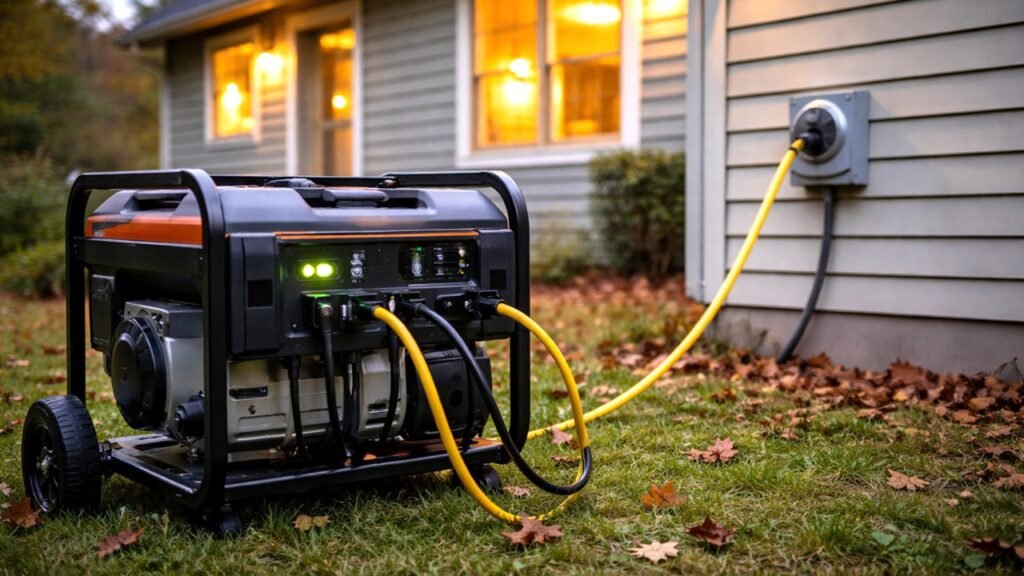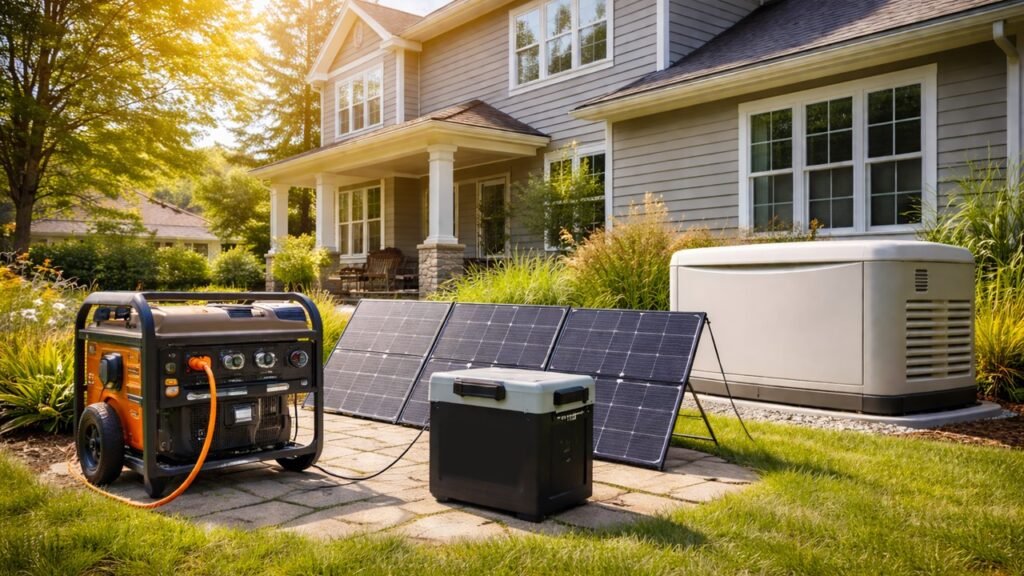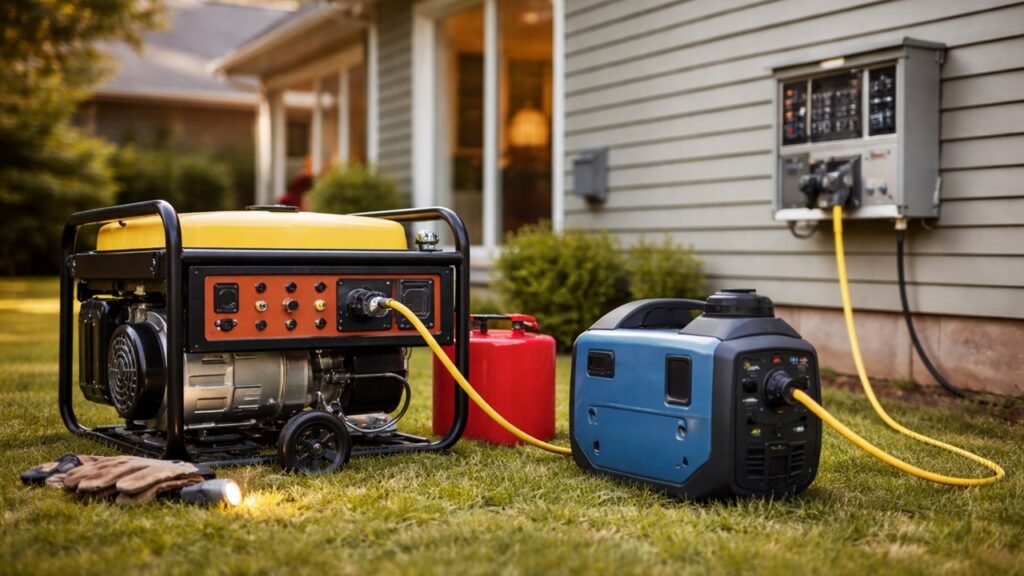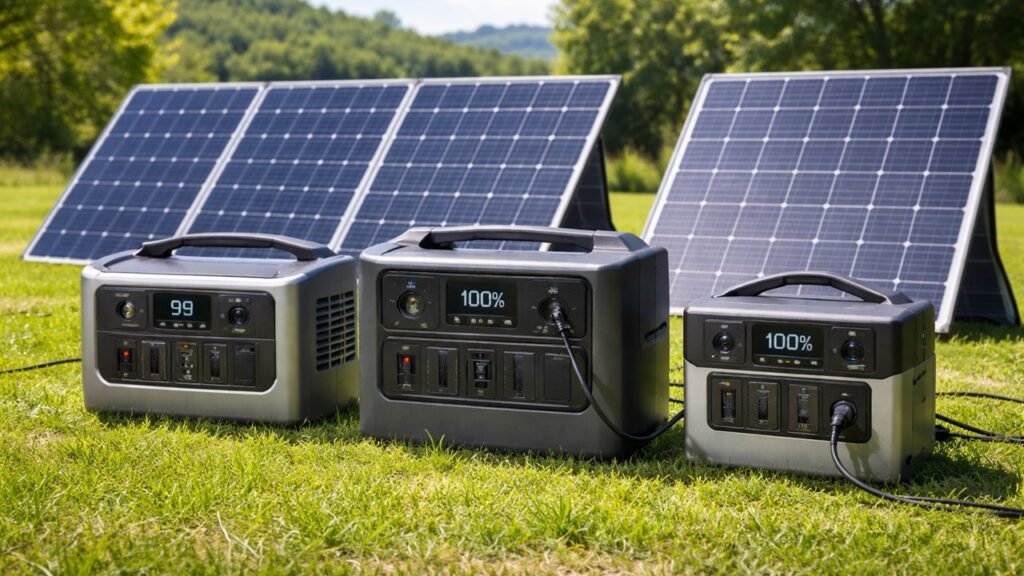
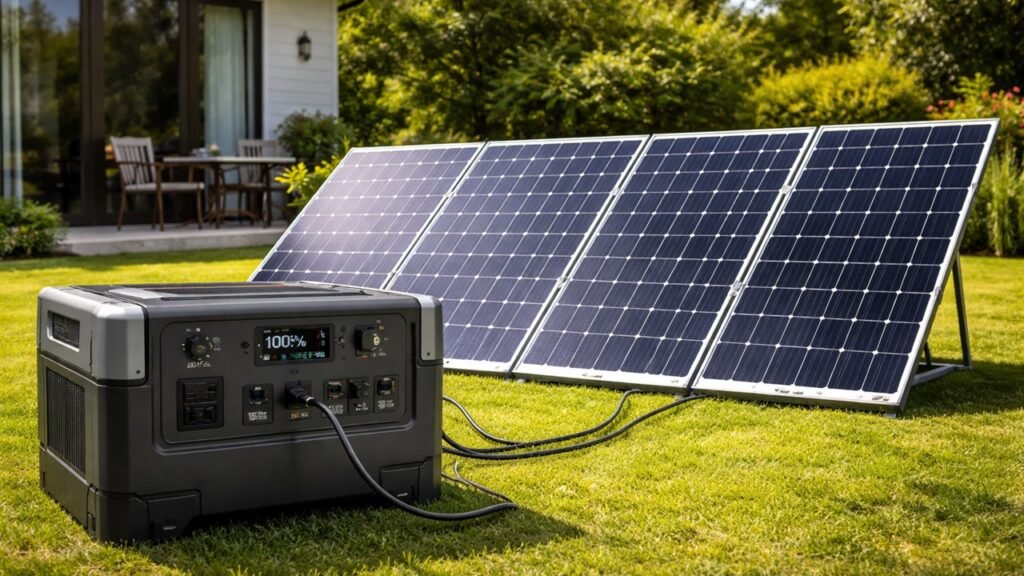
Yes, a solar generator can power a house, but only if the system is sized correctly. A solar generator powers a house when its watt output matches your appliances and its battery capacity covers your daily energy use. Smaller units handle essentials. Larger, expandable systems can support most or all of a home.
If you’re wondering whether a solar generator can truly replace a traditional backup generator, the honest answer is this. It depends on how much electricity your home uses and how much power you expect to run at the same time.
Key Summary:
- A solar generator can power a house when its output watts match the home’s total running load.
- Battery capacity determines how long a solar generator can power household appliances during an outage.
- Most portable solar generators power essential appliances, not full central HVAC systems.
- The average U.S. home uses about 29 to 30 kWh per day according to the U.S. Energy Information Administration.
- Solar panel input determines whether a solar generator can sustain daily household energy consumption.
Can a Solar Generator Power an Entire House?
Yes, a solar generator can power an entire house, but not every solar generator can do it. System size determines capability.
A typical American home uses around 29 to 30 kilowatt-hours of electricity per day according to the U.S. Energy Information Administration. Most portable solar generators store between 2 and 5 kilowatt-hours. That difference explains why many units easily power a refrigerator, lights, WiFi, and small electronics, but struggle with central air conditioning or electric heating.
Here is the practical reality. Small solar generators power essential circuits. Mid-size systems power partial homes. Large modular systems with 20 kilowatt-hours or more of storage and 7,000 watts or higher output can support near whole-house operation.
Solar generator capacity determines what you can run. Battery storage determines how long you can run it. Solar input determines whether you can recharge fast enough to sustain daily use.
What Size Solar Generator Do You Need to Power a House?
The right size solar generator depends on two numbers. Your total running watts and your daily energy use in kilowatt-hours.
Watts determine what you can power at one time. Kilowatt-hours determine how long you can power it.
Step 1. Add Up Your Running Watts
Running watts measure continuous demand. Starting watts measure surge demand when motors first turn on.
For example:
- A refrigerator typically uses 600 to 800 running watts.
- A microwave may use 1,000 watts.
- A central AC unit can require 3,000 to 5,000 running watts and much higher surge watts.
Add the appliances you plan to run at the same time. Your solar generator’s continuous output must exceed that total.
If your appliances require 4,000 watts simultaneously, your generator must provide more than 4,000 watts continuously. If it does not, the system will overload.
Generator output must exceed total running watts.
Step 2. Calculate Your Daily Energy Use
Energy use is measured in kilowatt-hours. You calculate it by multiplying watts by hours used.
For example:
A 700 watt refrigerator running for 10 hours consumes 7 kilowatt-hours.
Do this for each appliance you plan to use. Add the totals together. That number represents your daily consumption.
Battery capacity must exceed daily energy use.
If your home consumes 20 kilowatt-hours per day and your solar generator stores only 5 kilowatt-hours, it will not power your house for long without frequent recharging.
Step 3. Make Sure Solar Panels Can Recharge the System
Solar generators do not create unlimited power. They store energy. Solar panels refill that storage.
Solar panel wattage multiplied by peak sun hours equals daily recharge capacity. According to the National Renewable Energy Laboratory, most U.S. locations average between 4 and 6 peak sun hours per day depending on season and region.
For example:
1,000 watts of panels receiving 5 peak sun hours can generate roughly 5 kilowatt-hours per day under ideal conditions.
Solar panel input must match daily consumption.
If your home uses 20 kilowatt-hours per day but your panels generate only 10, your battery will gradually drain.
If you want a solar generator to power your entire house, three numbers must align clearly:
- Output watts must exceed your simultaneous load.
- Battery kilowatt-hours must cover your daily usage.
- Solar input must replace what you consume.
When those three match your household demand, a solar generator can power a house reliably. When they do not, the system becomes a partial backup solution instead of a full replacement.
How Much Power Does a Typical House Use?
A typical U.S. home uses about 29 to 30 kilowatt-hours of electricity per day according to the U.S. Energy Information Administration. Daily usage varies based on home size, climate, and major appliances like HVAC systems. Smaller homes without electric heating or central air often use far less. Larger homes with electric dryers and air conditioning use significantly more.
| Home Type | Average Daily Usage | What It Means for a Solar Generator |
| Essentials only during outage | 5 to 10 kWh | Most mid-size solar generators can handle this |
| Small to medium home without heavy AC use | 10 to 20 kWh | Requires larger battery capacity and strong solar input |
| Full home with central AC and electric heating | 25 to 35+ kWh | Needs large modular or whole-home system |
Daily energy use determines battery size. Simultaneous appliance use determines required watt output.
What Can a Solar Generator Run in a House?
A solar generator can run many household essentials, but large electric heating and cooling systems require much bigger units. Smaller generators handle refrigerators, lights, and electronics easily. High-demand appliances require more output and more battery storage.
What a solar generator can run depends on two things. Output watts and battery capacity.
Appliances That Most Solar Generators Can Run
Mid-size solar generators in the 2,000 to 3,000 watt range typically power:
- Refrigerator or freezer
- LED lighting
- WiFi router and modem
- Television
- Laptop and phone chargers
- Fans
- Microwave used briefly
These appliances have moderate running watts and manageable surge demands.
Appliances That Require Larger Systems
Bigger appliances increase load quickly. These usually require 4,000 watts or more of continuous output:
- Window air conditioners
- Sump pumps
- Washing machines
- Well pumps
- Multiple kitchen appliances at once
Larger battery storage is also necessary if these appliances run for extended hours.
Appliances That Are Difficult for Most Solar Generators
Heavy electric heating systems push most portable units beyond their limits:
- Central air conditioning
- Electric water heaters
- Electric dryers
- Electric ovens and stoves
- Whole-home HVAC systems
These appliances consume large amounts of continuous power. Whole-home solar battery systems or hybrid setups are typically required to support them.
Can a Solar Generator Run a House During a Power Outage?
Yes, a solar generator can run a house during a power outage. Solar generators operate independently from the electrical grid. Stored battery power allows appliances to keep running even when the grid goes down.
The length of time your home can run depends on battery size and how much electricity you use. If you limit usage to essential appliances, a properly sized system can run for many hours or even multiple days with sufficient solar recharge.
Solar panel input determines whether you can sustain power beyond the first day. If solar input matches daily consumption, the system can continue operating. If not, battery reserves will gradually decline.
Limitations You Should Know Before Buying
Solar generators are reliable and clean, but they are not unlimited power sources. System size, weather conditions, and home energy habits all affect performance.
- High upfront cost compared to small gas generators
- Limited runtime if battery capacity is small
- Solar recharge depends on sunlight availability
- Large whole-home systems require planning and possibly professional installation
- Heavy electric heating and cooling systems may exceed portable unit capacity
- Expansion batteries and additional panels increase total cost
Battery capacity limits runtime. Solar input limits recharge speed. Load management determines overall success.
Final Verdict
A solar generator can power a house, but only when the system matches your home’s energy demand. Output watts determine what appliances can run. Battery capacity determines how long they can run. Solar panel input determines how sustainable the setup is day after day.
Most homeowners use solar generators for essential backup power rather than full whole-house replacement. Refrigerators, lights, electronics, and small appliances are realistic loads. Central air and electric heating usually require much larger systems.
If you size the system correctly and manage energy wisely, a solar generator can provide reliable, quiet backup power. The key is understanding your numbers before you buy.
Related FAQs
Can a solar generator power a house overnight?
Yes, a solar generator can power a house overnight if the battery capacity is large enough to cover your total kilowatt-hour usage during those hours.
Can a solar generator run central air conditioning?
Most portable solar generators cannot run central AC. Large modular systems with high watt output and battery storage are required.
How long will a solar generator run during a blackout?
Runtime depends on battery size and energy use. A 5 kWh battery may last several hours, while a 20 kWh system can last much longer.
Do you need a transfer switch to power your home?
Yes, a transfer switch is recommended if you want to safely connect a solar generator to your home’s electrical panel.
Is a solar generator enough for whole-house backup?
A solar generator can provide whole-house backup only if its output, battery storage, and solar recharge match your home’s demand.
Can you use a solar generator without solar panels?
Yes, you can charge it from a wall outlet. However, solar panels are needed for off-grid or long-term outage use.

Robert Caldwell writes in-depth guides and reviews focused on generators, backup power systems, and portable energy equipment. His work is grounded in hands-on testing, covering fuel types, runtime performance, noise levels, and real-world reliability. He helps homeowners, RV owners, and outdoor users choose dependable power solutions with confidence. Every article emphasizes clear explanations, safe operation, and long-term value.