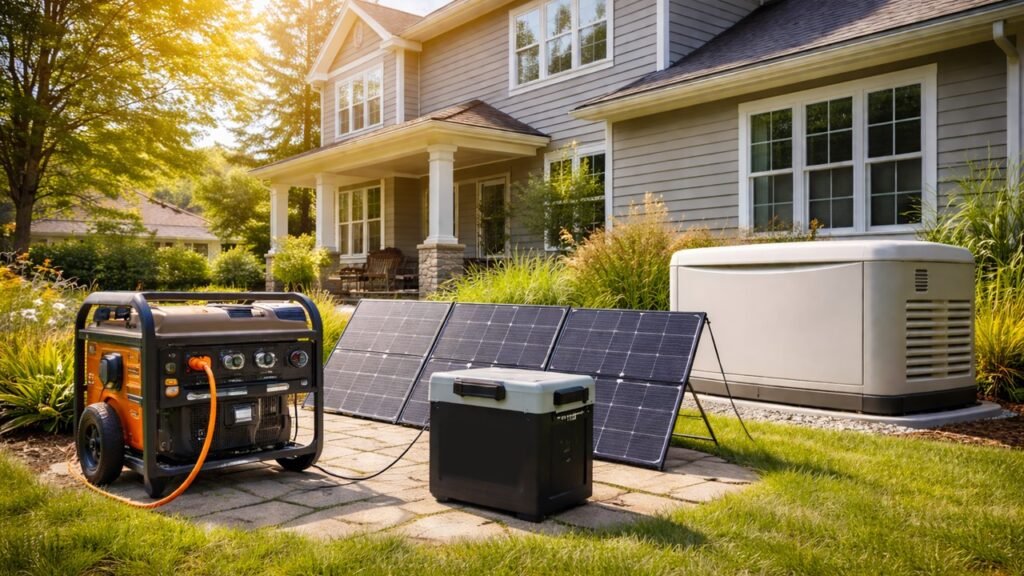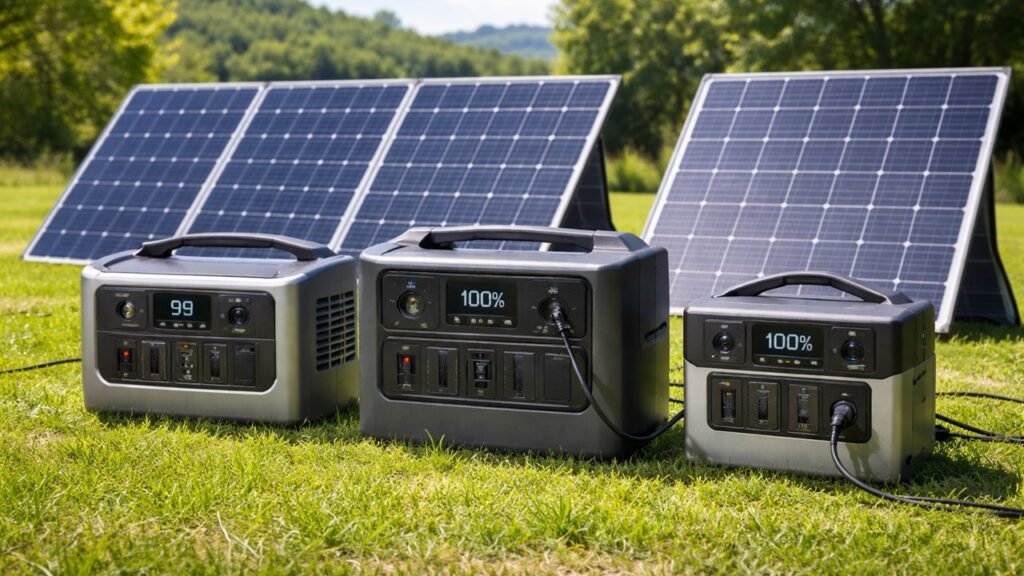
If you are looking for portable solar generators for RV travel, you probably want something quiet, practical, and easy to live with on the road. A good unit can keep your essentials running, recharge from the sun, and give you reliable backup power without the noise, fumes, or maintenance of a gas generator.
Some models stand out for different kinds of RV users. The EF ECOFLOW DELTA 3 is a strong all-around choice for everyday camping and backup needs. The Anker SOLIX C1000 makes sense if you want a simple solar bundle with panel included. The BLUETTI Elite 200 V2 is better suited to higher-demand appliances and longer runtimes. The Jackery Explorer 2000 v2 fits RVers who want 2kWh class power in a lighter package. The Jackery HomePower 3000 is the better fit for larger rigs or travelers who need more serious reserve power.
After testing the top portable solar generators for RV use, this guide breaks down what actually matters when you are comparing them. You will see how they differ in battery size, inverter strength, charging speed, portability, and overall value, so it is easier to choose the right one for your RV setup and travel style.
We’re reader-supported. When you buy through links on our site, we may earn an affiliate commission. As an Amazon Associate, we earn from qualifying purchases at no extra cost to you.
Best Portable Solar Generators for RV: Our Top Picks
- Best Overall Pick: EF ECOFLOW DELTA 3 Portable Power Station
- Best Value Option: Anker SOLIX C1000 Portable Power Station
- Best High Power Option: BLUETTI Elite 200 V2 Portable Power Station
- Best Lightweight 2kWh Option: Jackery Explorer 2000 v2 Portable Power Station
- Best High Output Pick: EF ECOFLOW Portable Power Station DELTA 3 MAX
- Best Large Capacity Pick: Jackery HomePower 3000 Portable Power Station
- Best Fast Charging Option: Anker SOLIX C1000 Gen 2 Portable Power Station
- Best Heavy Duty Pick: pecron Portable Power Station F3000LFP
- Best Expandable Option: OUPES Mega 1 Portable Power Station
- Best Compact Power Option: BLUETTI Elite 100 V2 Portable Power Station
- Best Budget Option: EF ECOFLOW Portable Power Station RIVER 2 Pro
- Best Quiet Operation: DJI Power 1000 V2 Portable Power Station
1. Best Overall Pick: EF ECOFLOW DELTA 3 Portable Power Station
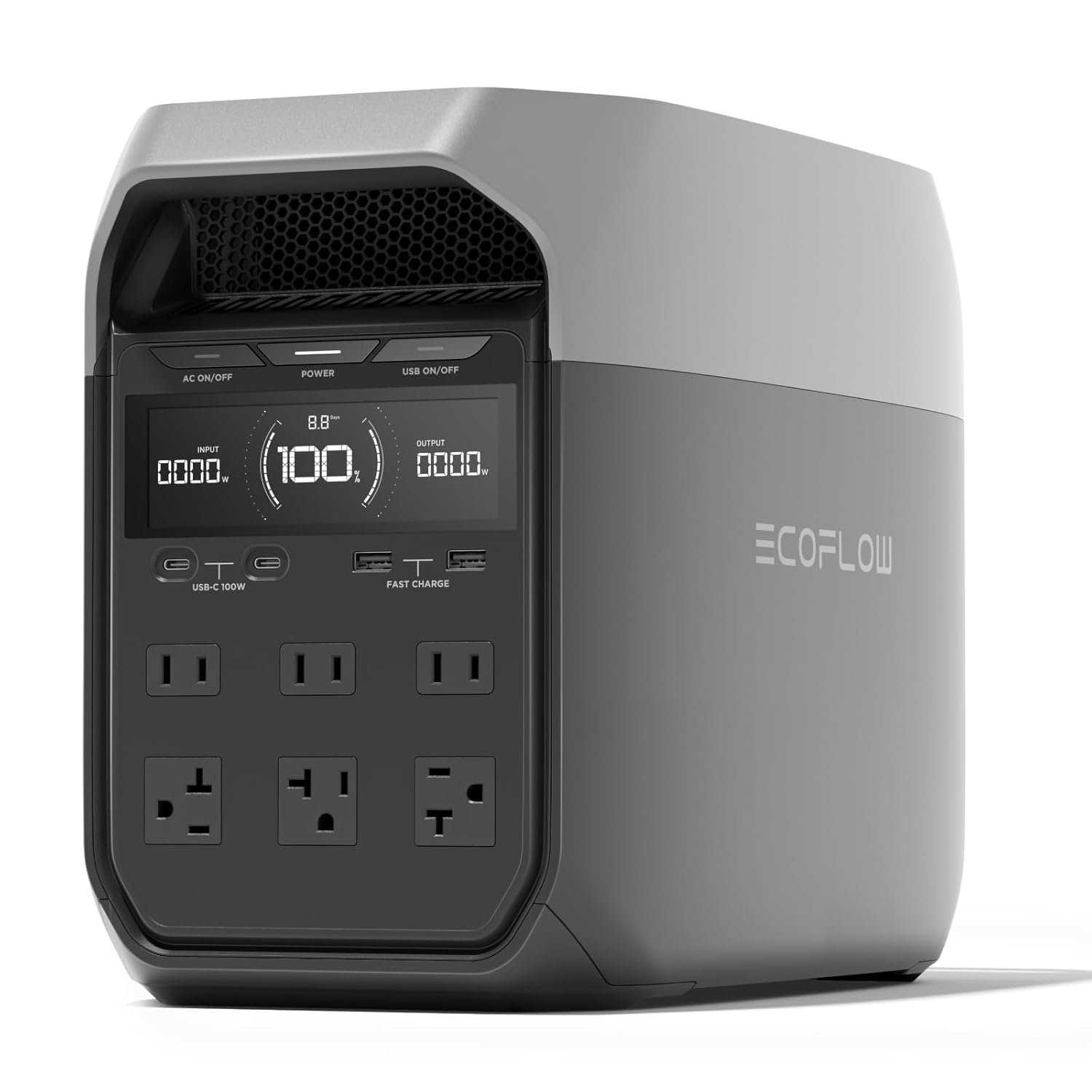
Key Details:
- 1024Wh LiFePO4 battery with about 4000 charge cycles
- 1800W AC output (2200W X-Boost, 3600W surge)
- Full recharge in about 56 minutes (80% in 30 minutes)
- Up to 500W solar input for off-grid charging
- 13 output ports and expandable capacity up to 5kWh
If you’re looking for a portable solar generator for RV travel that feels balanced in power, charging speed, and portability, the EF ECOFLOW DELTA 3 Portable Power Station is one of those models that checks nearly every box. In testing situations like campsite cooking, laptop charging, and running a portable fridge, the capacity feels well suited for daily RV life without being overly heavy.
One thing that quickly stands out when using the EF ECOFLOW DELTA 3 Portable Power Station is how quickly it recharges. When plugged into shore power at an RV park or home outlet, it can jump from empty to full in under an hour. That kind of fast turnaround is extremely useful when you only have a short window to recharge before getting back on the road.
You’ll also find the 1800W inverter practical for most RV electronics. Coffee makers, induction plates, and microwaves typically fall within this range, and the X-Boost feature helps handle appliances with higher starting demand. For many RV travelers, that means fewer worries about tripping the inverter during meal prep.
Another advantage is the expandable design. If you start with weekend camping and later move into longer boondocking trips, this unit can scale up to a larger energy setup with extra batteries. That flexibility makes it one of the more adaptable battery generators for RV use.
Pros:
- Extremely fast charging compared to many power stations
- Strong inverter output for common RV appliances
- Expandable battery capacity up to 5kWh
- Durable LiFePO4 battery with long lifespan
Cons:
- Base capacity may be limited for long AC usage
- Solar input is moderate compared with larger stations
2. Best Value Option: Anker SOLIX C1000 Portable Power Station
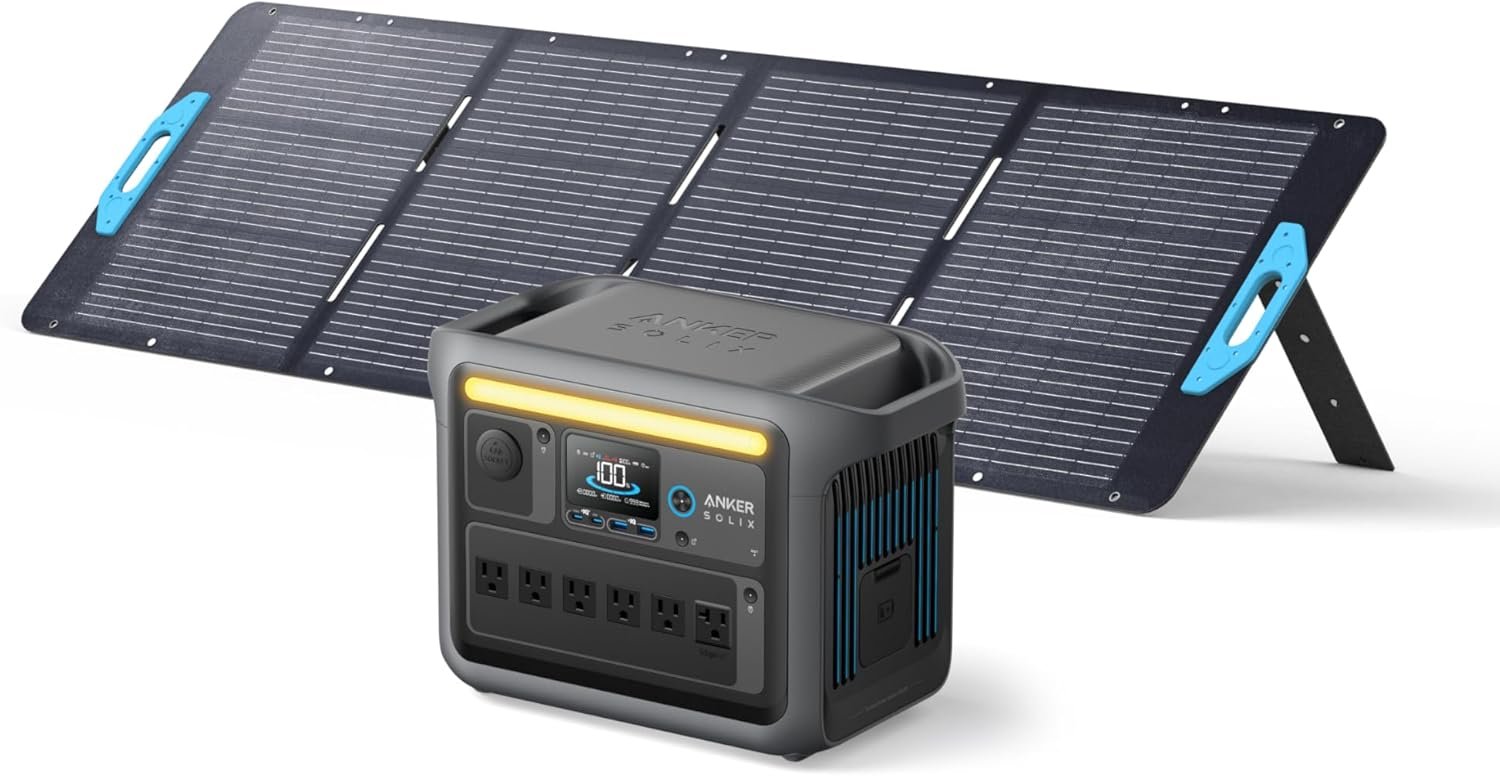
Key Details:
- 1056Wh LiFePO4 battery with 3000 cycles
- 1800W output with 2400W SurgePad capability
- Recharges to 80% in about 43 minutes
- Includes a 200W solar panel
- 11 total ports with 6 AC outlets
If you want a portable solar generator for RV camping that already includes solar charging equipment, the Anker SOLIX C1000 Portable Power Station bundle is a practical choice. Right away, having a matched 200W solar panel simplifies the setup because you can start harvesting solar energy without searching for compatible panels.
When tested during typical RV usage, the capacity feels just right for daily electronics. The Anker SOLIX C1000 Portable Power Station comfortably handles phones, laptops, small kitchen appliances, and portable fridges, which are some of the most common loads inside camper vans and travel trailers.
Another feature that RV travelers will appreciate is the fast recharge speed. If you stop at a campground pedestal or plug into a home outlet before leaving, you can quickly bring the battery back up to usable levels. This makes it easier to treat the station as a daily power hub rather than something you only charge occasionally.
The included solar panel is also designed with camping in mind. Adjustable angles help capture more sunlight during different times of day, which is useful when parked at a campsite for extended stays. For many people entering the world of solar generators for RV trips, this bundle removes much of the guesswork.
Pros:
- Comes with a solar panel ready for RV charging
- Fast recharge speeds for quick turnarounds
- Multiple AC outlets for powering several devices
- Reliable LiFePO4 battery chemistry
Cons:
- Power station itself is not weatherproof
- Solar charging speed depends heavily on sunlight conditions
3. Best High Power Option: BLUETTI Elite 200 V2 Portable Power Station
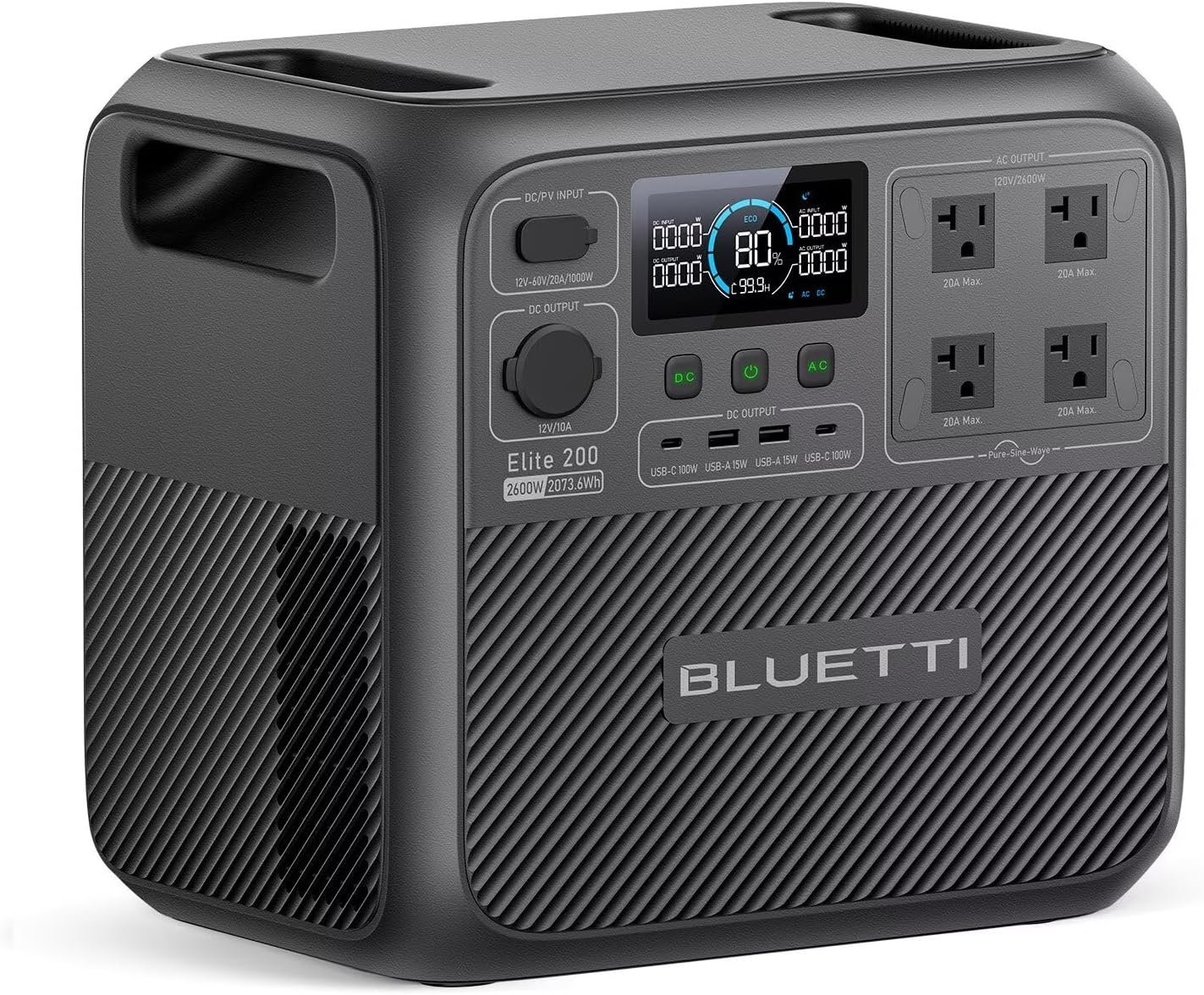
Key Details:
- 2073.6Wh LiFePO4 battery with 6000+ cycles
- 2600W continuous output with 3900W lifting power
- 0–80% charging in about 50 minutes
- Solar input supports up to 1000W panels
- Ultra-quiet charging modes and ≤15ms UPS function
If you prefer having extra power headroom while traveling, the BLUETTI Elite 200 V2 Portable Power Station is one of the stronger portable solar generators for RV setups. With more than 2kWh of battery capacity and a 2600W inverter, it opens the door to running heavier appliances that smaller power stations struggle with.
When tested with typical RV equipment such as refrigerators, coffee makers, and electric kettles, the BLUETTI Elite 200 V2 Portable Power Station handles those loads comfortably. That additional inverter power can be helpful if your RV lifestyle includes electric cooking or tools during travel.
Efficiency is another area where this unit stands out. The energy management system helps reduce wasted standby power, which means more usable runtime from the same battery capacity. Over several days of camping, that efficiency can make a noticeable difference.
Charging flexibility is also impressive. With adjustable charging modes, you can choose faster charging when time matters or quieter charging when the RV environment calls for less noise. The tradeoff, however, is weight. This unit is heavier than most mid-size portable power stations.
Pros:
- High inverter power for demanding RV appliances
- Large battery capacity for extended use
- Multiple charging modes for speed or quiet operation
- Long-lasting LiFePO4 battery design
Cons:
- Heavier than many portable power stations
- Larger solar array needed to fully recharge quickly
4. Best Lightweight 2kWh Option: Jackery Explorer 2000 v2 Portable Power Station
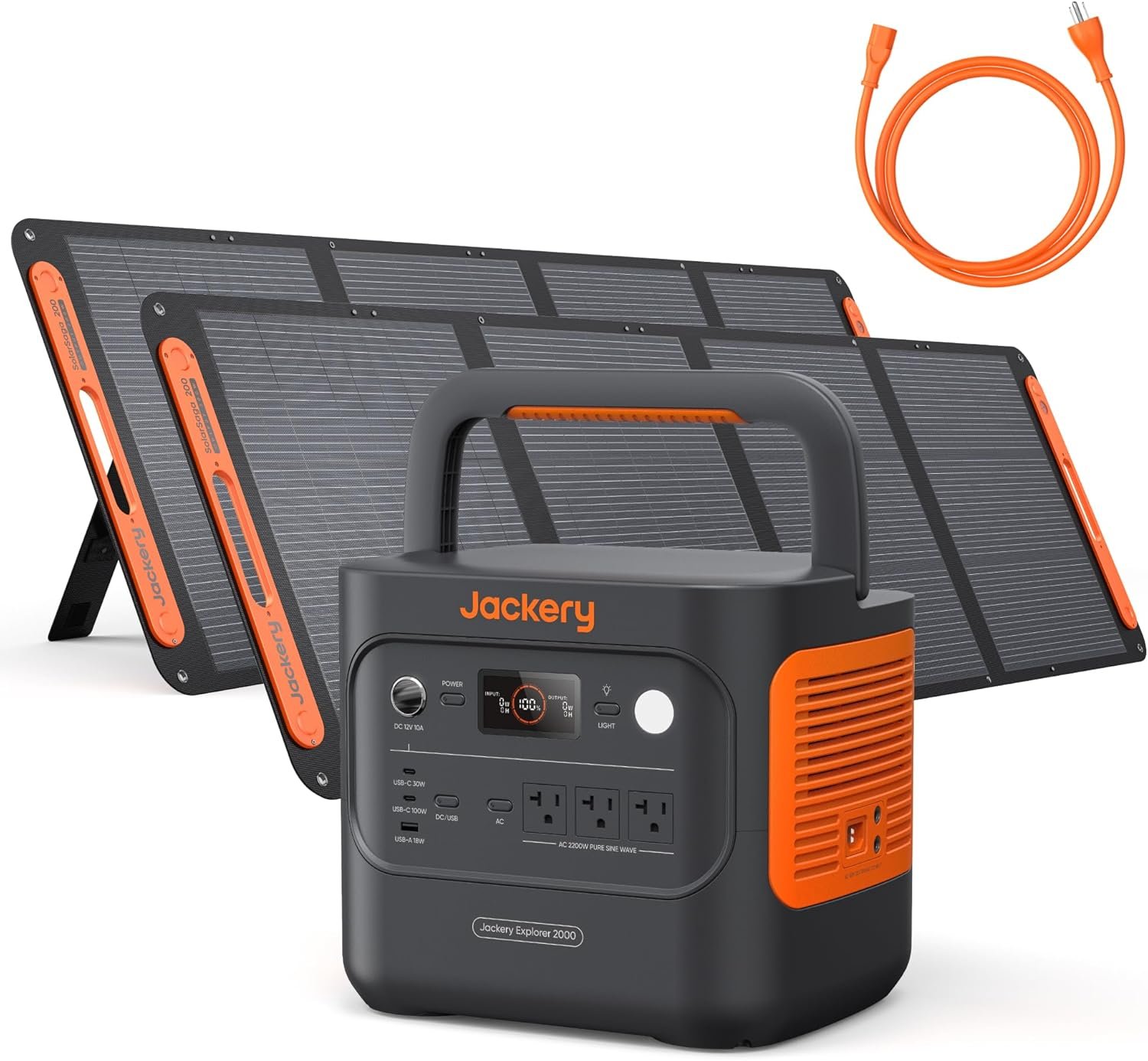
Key Details:
- 2040Wh LiFePO4 battery capacity
- 2200W inverter output (4400W surge)
- Includes two 200W solar panels
- Fast charging to 80% in about 66 minutes
- Lightweight design for the 2kWh category at 39.5 lb
For RV travelers who want strong battery capacity without carrying a very heavy unit, the Jackery Explorer 2000 v2 Portable Power Station strikes a nice balance. In the 2kWh class, this model is noticeably lighter than many alternatives, which makes it easier to move between the RV, campsite table, or storage compartment.
When used during RV trips, the Jackery Explorer 2000 v2 Portable Power Station provides enough capacity to cover a wide range of daily needs. Running a portable fridge overnight, charging electronics, and powering small appliances during meal prep all fall within its comfort zone.
Another highlight is the included solar setup. With two 200W panels, the system can harvest a decent amount of solar energy during sunny days. This is especially helpful when camping off-grid because you can replenish energy while parked without relying entirely on shore power.
Quiet operation is also noticeable. When charging or supplying power overnight, the system remains fairly unobtrusive inside the RV. Combined with the UPS capability for home use, it works well as a dual-purpose battery generator that serves both RV travel and emergency backup.
Pros:
- Large battery capacity while remaining relatively lightweight
- Includes 400W of solar panels for immediate use
- Reliable inverter output for common RV appliances
- Quiet operation for overnight use
Cons:
- Limited number of AC outlets compared with some competitors
- Solar recharge time can vary depending on sunlight availability
5. Best High Output Pick: EF ECOFLOW Portable Power Station DELTA 3 MAX
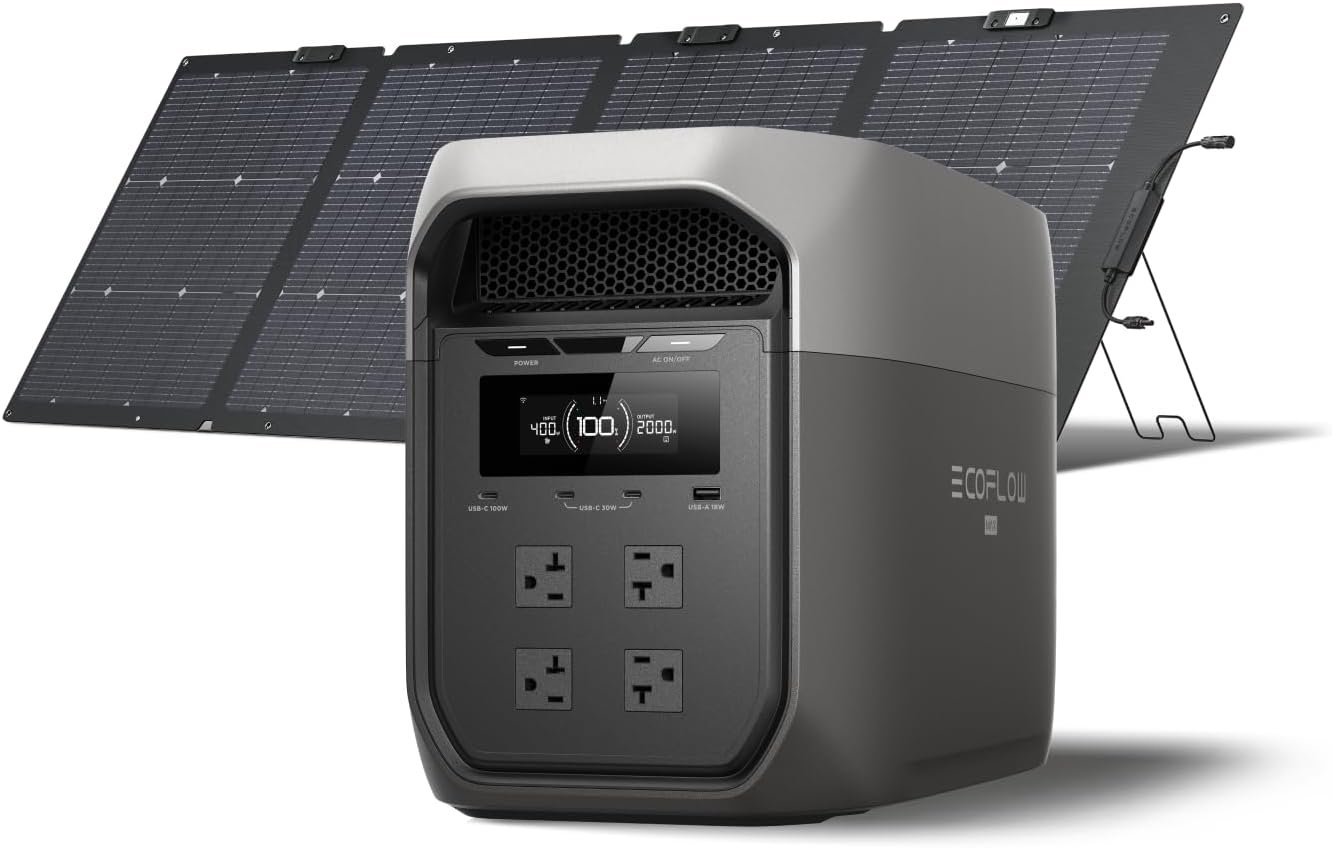
Key Details:
- 2400W inverter with up to 3400W X-Boost output
- Ultra-fast charging: 0–80% in about 1.13 hours
- LiFePO4 battery designed for about 10 years of use
- Compatible with EcoFlow smart app monitoring
- Includes 220W solar panel for renewable charging
If you want a portable solar generator for RV trips that can handle heavier appliances, the EF ECOFLOW DELTA 3 Max Portable Power Station is a strong step up in power. During testing scenarios like running refrigerators, cooking devices, or charging multiple electronics at once, the extra inverter output makes a noticeable difference compared with smaller units.
The EF ECOFLOW DELTA 3 Max Portable Power Station is also designed with flexibility in mind. With X-Boost reaching up to 3400W, many RV appliances that normally challenge mid-size battery generators can run without triggering overload protection. That means things like microwaves, coffee makers, and power tools are much more realistic loads for everyday camping.
Charging speed is another area where this unit stands out. With EcoFlow’s X-Stream technology, you can quickly recharge before leaving home or during a stop at an RV park. When solar panels are connected, the generator becomes a practical off-grid energy hub for longer boondocking stays.
Another thing worth mentioning is the smart energy management through the EcoFlow app. Being able to monitor battery levels and power usage from your phone is surprisingly helpful when traveling in an RV because it gives you a clearer idea of how long your energy supply will last.
Pros:
- Powerful inverter suitable for larger RV appliances
- Very fast charging speeds compared with many competitors
- Durable LiFePO4 battery chemistry for long lifespan
- Smart app monitoring for energy management
Cons:
- Larger and heavier than compact power stations
- Higher price compared with mid-capacity models
6. Best Large Capacity Pick: Jackery HomePower 3000 Portable Power Station
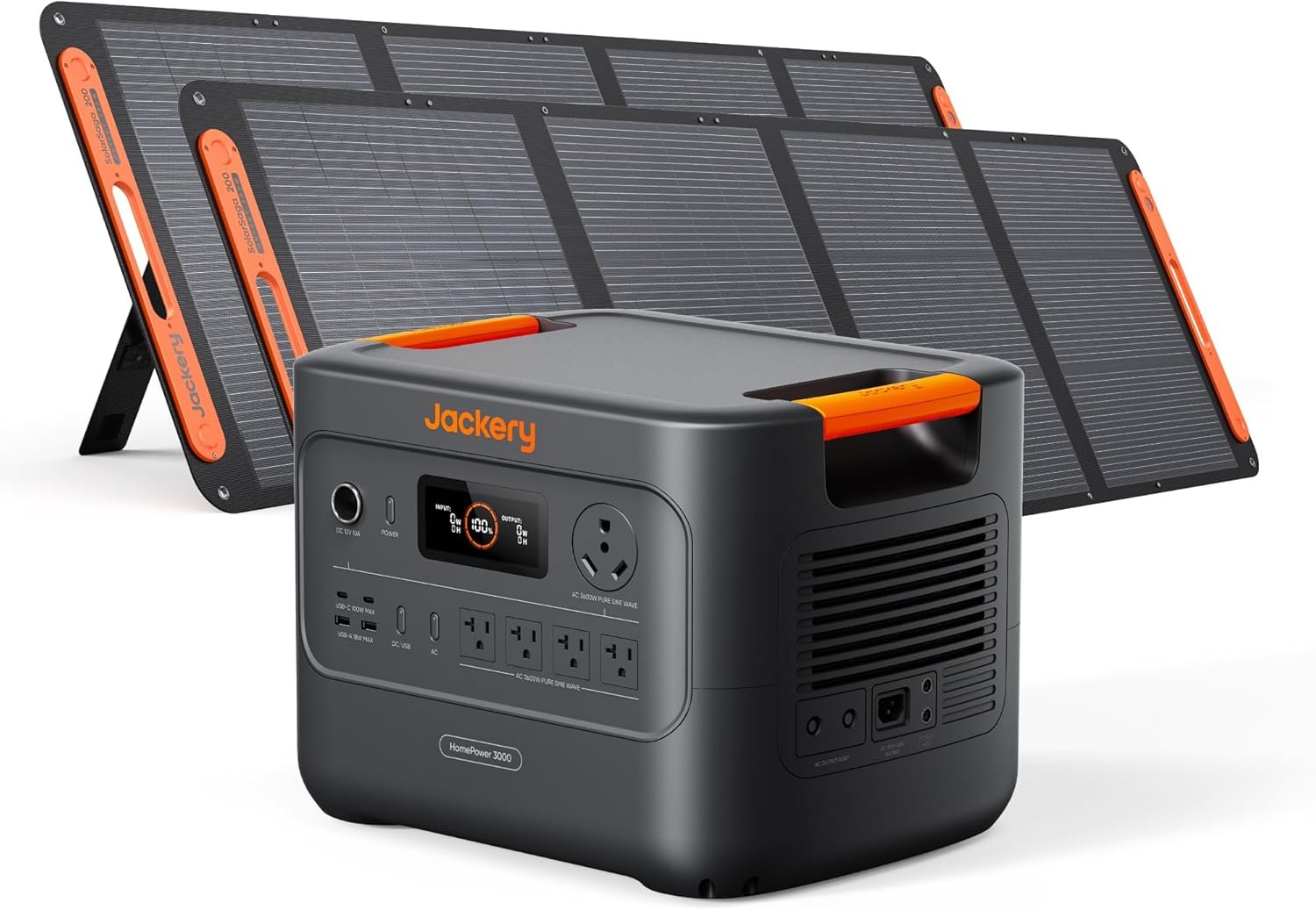
Key Details:
- Massive 3072Wh LiFePO4 battery capacity
- 3600W inverter output with 7200W surge
- Includes TT-30 RV outlet for direct RV connection
- UPS functionality with ≤20ms switching
- Includes two 200W solar panels
If you travel with a larger RV or rely on multiple appliances during camping trips, the Jackery HomePower 3000 Portable Power Station offers a level of capacity that smaller units simply cannot match. With more than 3kWh of battery storage, it provides enough power for extended use without constantly monitoring the battery percentage.
When tested with real RV loads such as refrigerators, fans, routers, and lighting, the Jackery HomePower 3000 Portable Power Station maintained stable performance. That larger battery capacity allows it to run essentials for many hours, and in some situations even for a day or more depending on usage.
One feature RV owners will appreciate is the dedicated TT-30 RV outlet. Instead of using adapters, you can plug directly into the RV power system. That makes this unit feel closer to a portable RV power source rather than just a general camping battery generator.
Charging options are also flexible. Between AC charging, solar panels, vehicle charging, or even a gas generator backup, you have several ways to replenish energy while traveling. For RV travelers who like longer off-grid stays, this kind of flexibility can be extremely valuable.
Pros:
- Very large battery capacity for long RV trips
- Powerful inverter capable of running many appliances
- Dedicated RV outlet for easy connection
- Multiple charging options for travel flexibility
Cons:
- Heavier than most portable power stations
- Solar charging requires good sunlight for faster recovery
7. Best Fast Charging Option: Anker SOLIX C1000 Gen 2 Portable Power Station
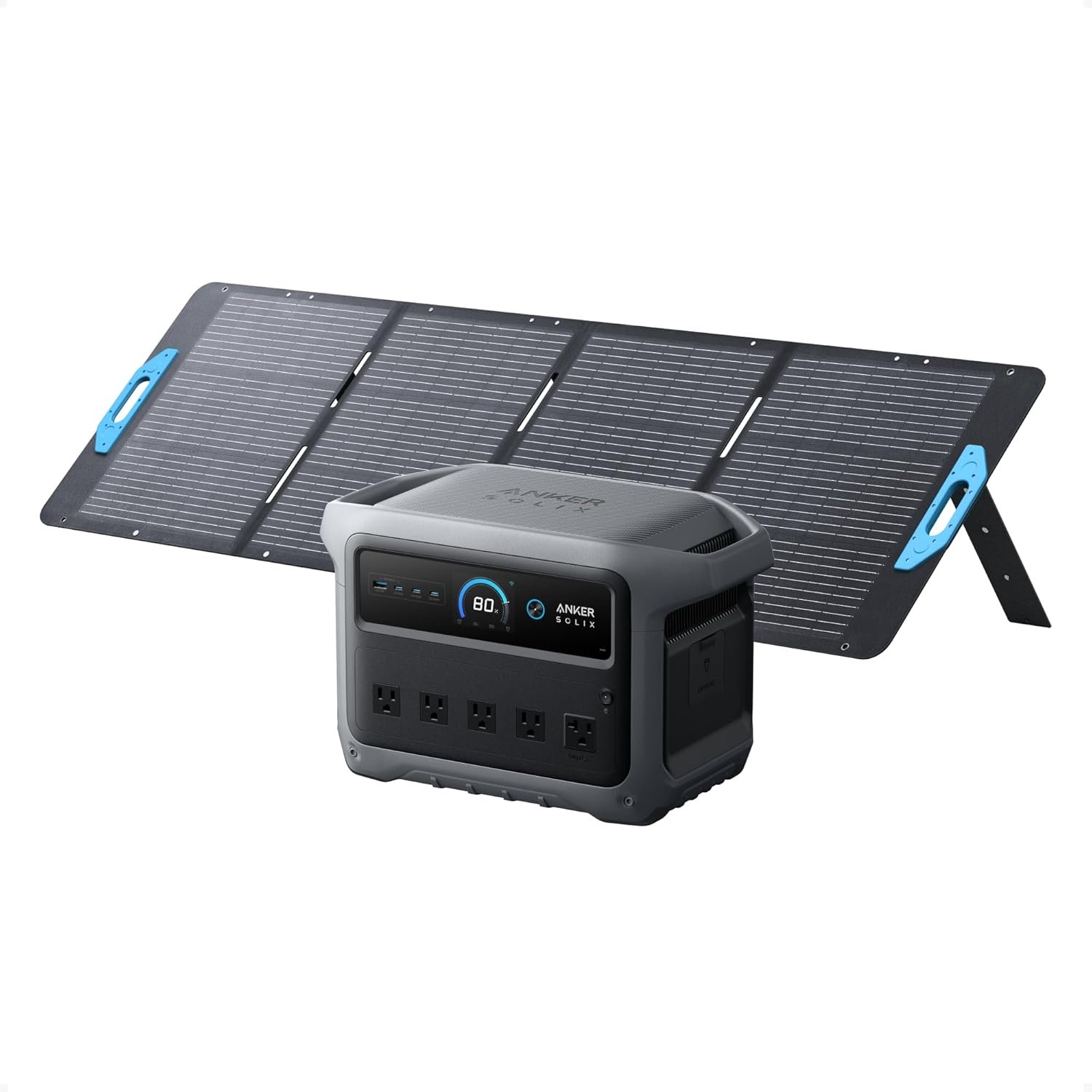
Key Details:
- 1024Wh LiFePO4 battery capacity
- 2000W output with 3000W peak power
- Ultra-fast recharge in about 49 minutes
- Solar charging up to 600W input
- Compact and portable design
If fast charging is high on your priority list, the Anker SOLIX C1000 Gen 2 Portable Power Station is designed exactly for that purpose. With HyperFlash charging technology, it can recharge extremely quickly, which is useful when you only have a short opportunity to plug in during RV travel.
When used as a portable solar generator for RV camping, the Anker SOLIX C1000 Gen 2 Portable Power Station handles everyday power needs well. Phones, laptops, Starlink setups, small refrigerators, and kitchen gadgets fall comfortably within its power range, making it a practical choice for camper vans and travel trailers.
Solar charging performance is also respectable for a unit of this size. With up to 600W solar input supported, you can recharge fairly quickly during sunny conditions. For RV travelers who rely on portable solar panels during extended stays, this can help maintain a steady energy supply.
Another advantage is portability. Compared with larger battery generators, this model is compact enough to move easily between storage compartments, the campsite table, or inside the RV. That convenience can make a big difference during everyday camping routines.
Pros:
- Extremely fast recharge capability
- Compact and relatively lightweight design
- Good inverter output for most RV electronics
- Durable LiFePO4 battery with long lifespan
Cons:
- Capacity may be limited for heavy overnight appliance use
- Smaller units require more frequent recharging
8. Best Heavy Duty Pick: pecron Portable Power Station F3000LFP
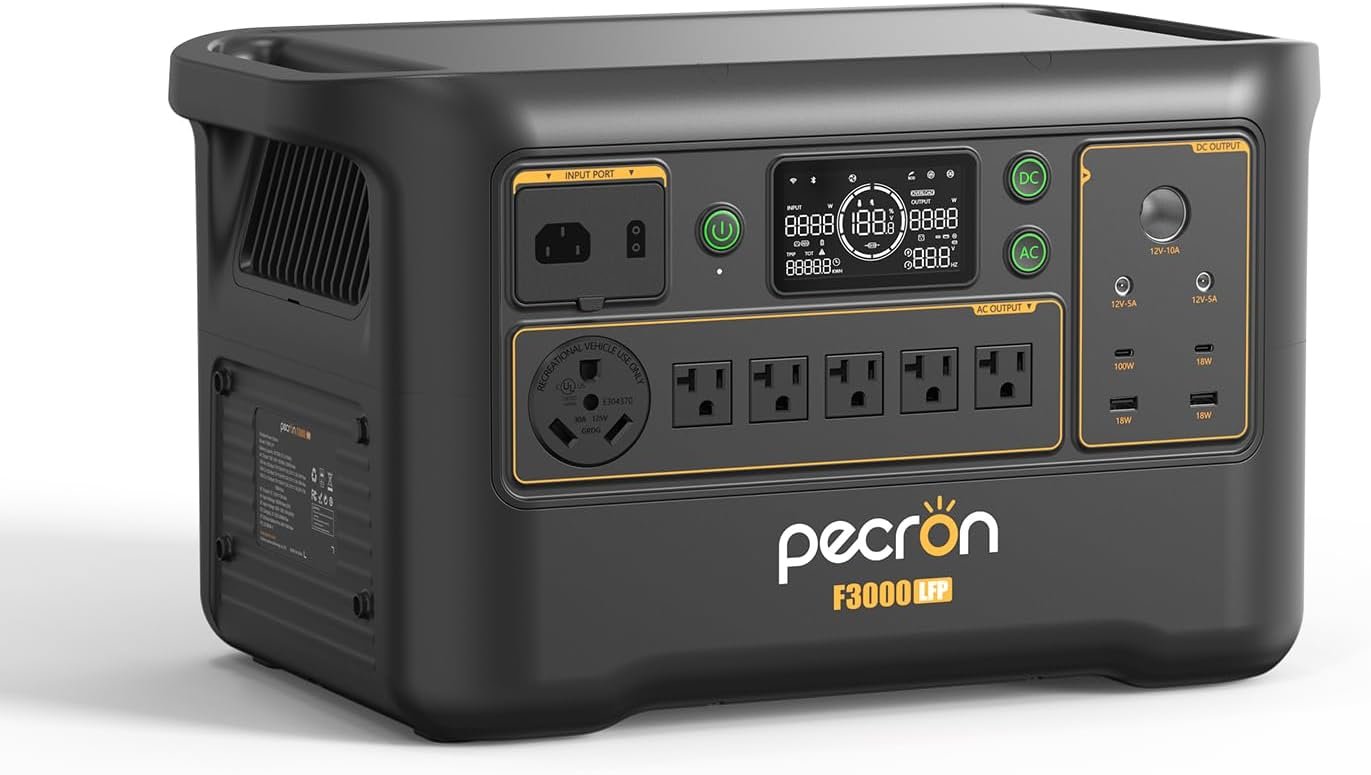
Key Details:
- 3072Wh LiFePO4 battery capacity
- 3600W pure sine wave inverter output
- Ultra-fast charging up to 1800W AC input
- Solar input support up to 1600W
- Multiple ports including USB-C, DC, and AC outlets
For RV travelers who need serious power capacity, the pecron F3000LFP Portable Power Station stands out as a heavy-duty portable solar generator. With a large 3072Wh battery and 3600W inverter, it is capable of powering demanding appliances that smaller units cannot handle comfortably.
When tested with larger loads, the pecron F3000LFP Portable Power Station proved capable of supporting refrigerators, electric cooking appliances, and power tools. This makes it particularly attractive for RV owners who spend extended time off-grid or who rely heavily on electric appliances during travel.
The charging system is also impressive. With 1800W AC charging and up to 1600W solar input capability, it can replenish energy faster than many large battery generators. That combination of high solar input and fast AC charging can help maintain power availability during multi-day camping trips.
Another useful feature is the UPS capability and smart monitoring through the mobile app. Being able to monitor power usage and battery status remotely gives RV travelers better control over energy management during longer adventures.
Pros:
- Large battery capacity for extended off-grid use
- Powerful inverter capable of heavy appliances
- High solar input capacity for faster charging
- Multiple ports for powering many devices simultaneously
Cons:
- Heavier and bulkier than mid-size power stations
- Overkill for minimal RV power needs
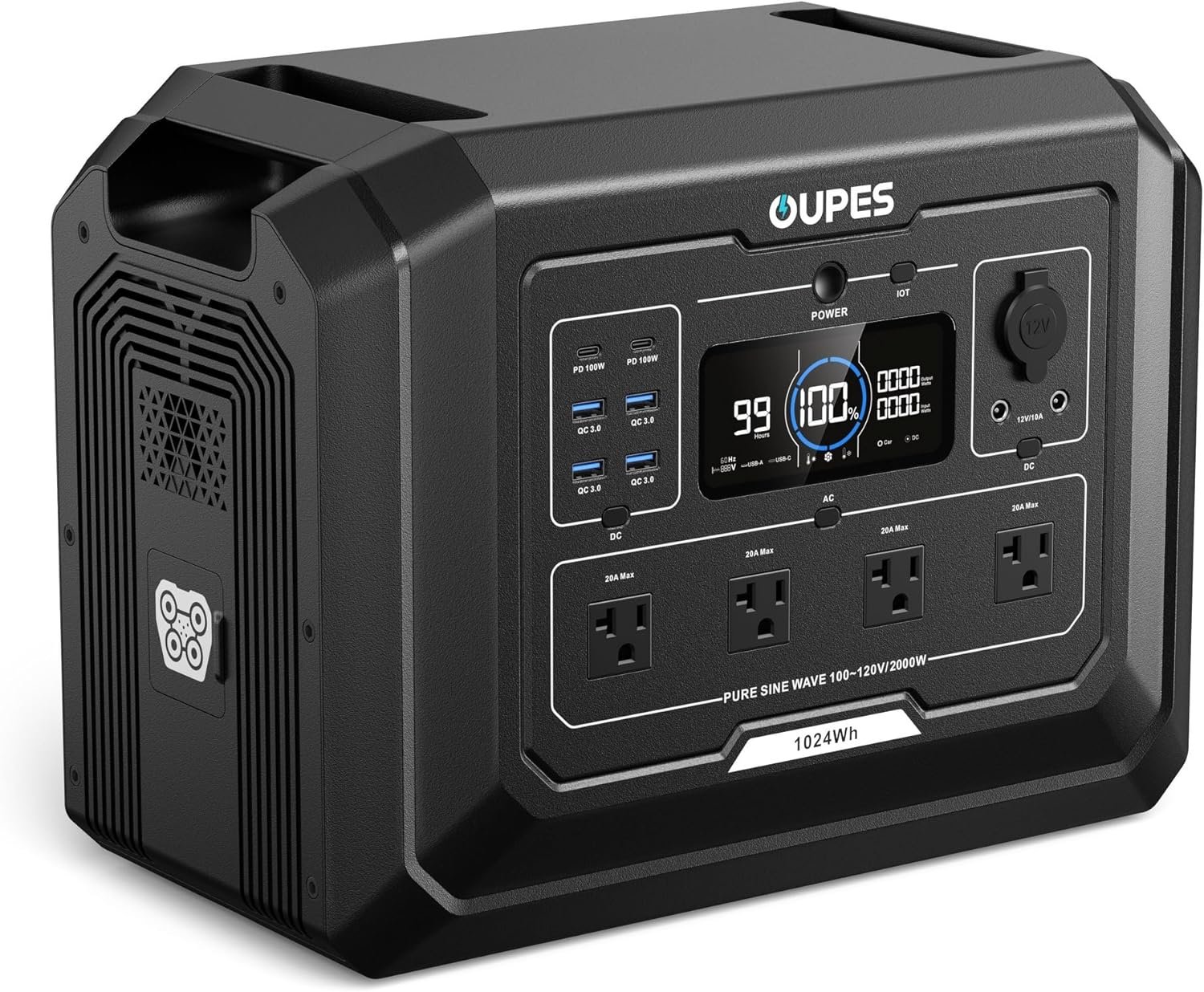
9. Best Expandable Option: OUPES Mega 1 Portable Power Station
Key Details:
- 1024Wh LiFePO4 battery capacity (expandable to 5120Wh)
- 2000W inverter with 4500W surge output
- Ultra-fast charging: 0–80% in about 36 minutes
- Solar input support up to 800W
- Smart app monitoring and UPS capability
If you like the idea of starting with a smaller system and upgrading later, the OUPES Mega 1 Portable Power Station is a flexible portable solar generator for RV travel. At its base configuration, the 1024Wh capacity works well for everyday RV electronics such as laptops, routers, lighting, and portable refrigerators.
What makes the OUPES Mega 1 Portable Power Station interesting is the expansion capability. You can add extra batteries and increase capacity up to around 5kWh, which means it can grow with your RV power needs. For travelers who begin with short weekend trips and later move into longer off-grid stays, this scalability is useful.
Charging speed is another strong point. During testing conditions, the system was able to recharge surprisingly quickly, especially when combining AC and solar inputs. That kind of fast turnaround can make a big difference during road trips where charging opportunities are limited.
The smart power management system also adds convenience. Monitoring energy usage from a phone app helps RV travelers track how much power is being used and plan energy consumption accordingly during longer trips.
Pros:
- Expandable battery system up to about 5kWh
- Fast charging compared with many similar power stations
- Good inverter output for RV appliances
- Smart monitoring through mobile app
Cons:
- Base battery capacity is modest before expansion
- Additional batteries increase overall system cost
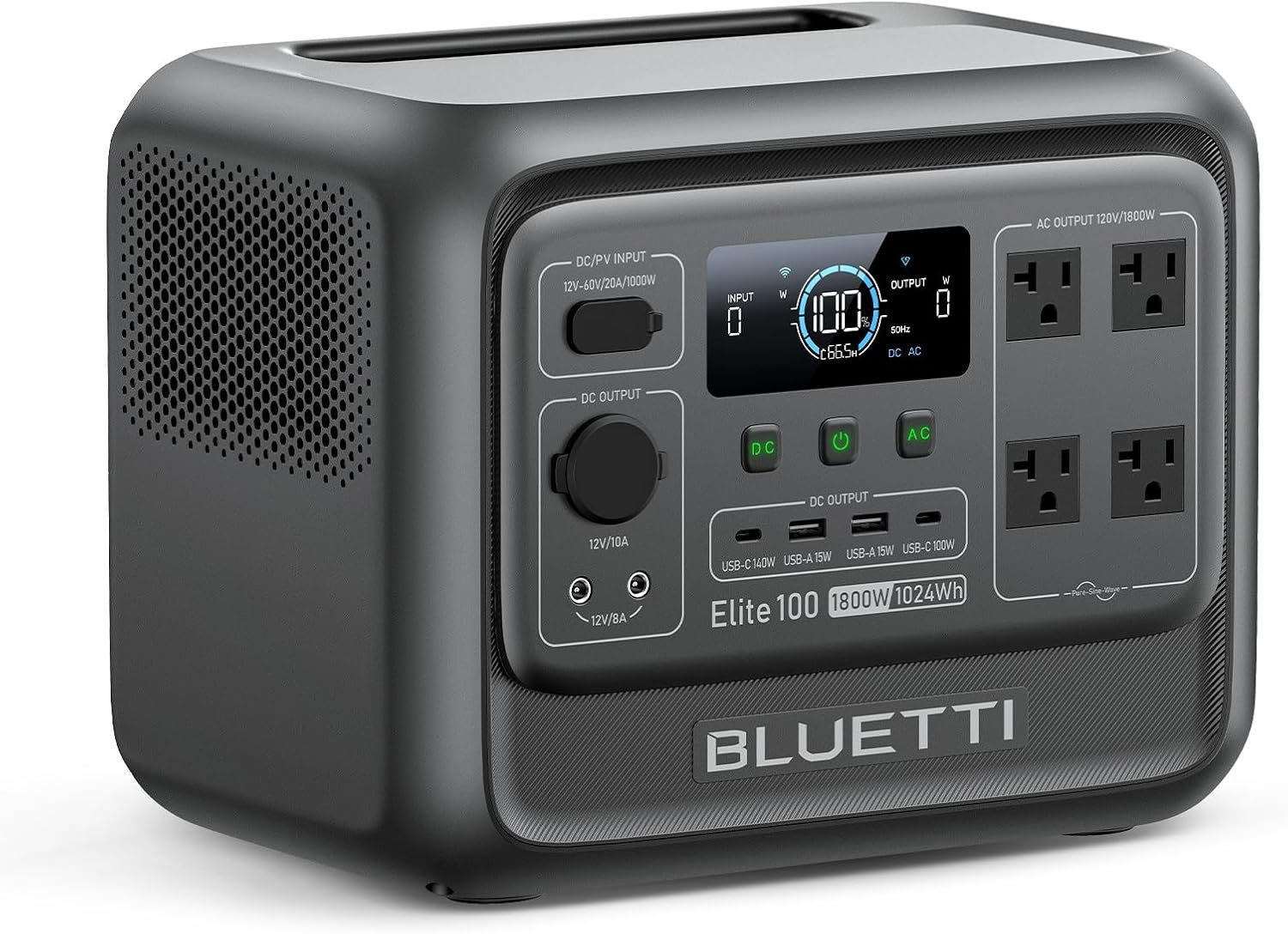
10. Best Compact Power Option: BLUETTI Elite 100 V2 Portable Power Station
Key Details:
- 1024Wh LiFePO4 battery with 4000+ cycles
- 1800W AC inverter with 3600W surge capability
- Fast charging to 80% in about 45 minutes
- 11 output ports for multiple devices
- Compact design weighing about 25 lb
If portability matters, the BLUETTI Elite 100 V2 Portable Power Station is a convenient option among portable solar generators for RV setups. The compact design and manageable weight make it easy to move between the RV interior, campsite table, or storage compartment.
When tested during RV trips, the BLUETTI Elite 100 V2 Portable Power Station proved capable of running the essentials. Charging laptops, powering lighting systems, and keeping smaller appliances running all fall within its range. For many camper van owners and smaller travel trailers, that’s exactly the level of power required.
Another practical benefit is the fast charging capability. With TurboBoost charging, the unit can recharge fairly quickly when plugged into shore power. That helps maintain energy availability during busy travel days when you may only have short charging opportunities.
Noise levels are also relatively low during operation, which is helpful when using the generator inside the RV overnight. Combined with the UPS capability, it can double as a home backup power source between trips.
Pros:
- Lightweight and compact for easy RV storage
- Good inverter power for common electronics
- Fast recharge speeds with TurboBoost charging
- Quiet operation suitable for indoor use
Cons:
- Limited battery capacity for extended heavy loads
- Larger appliances may drain the battery quickly
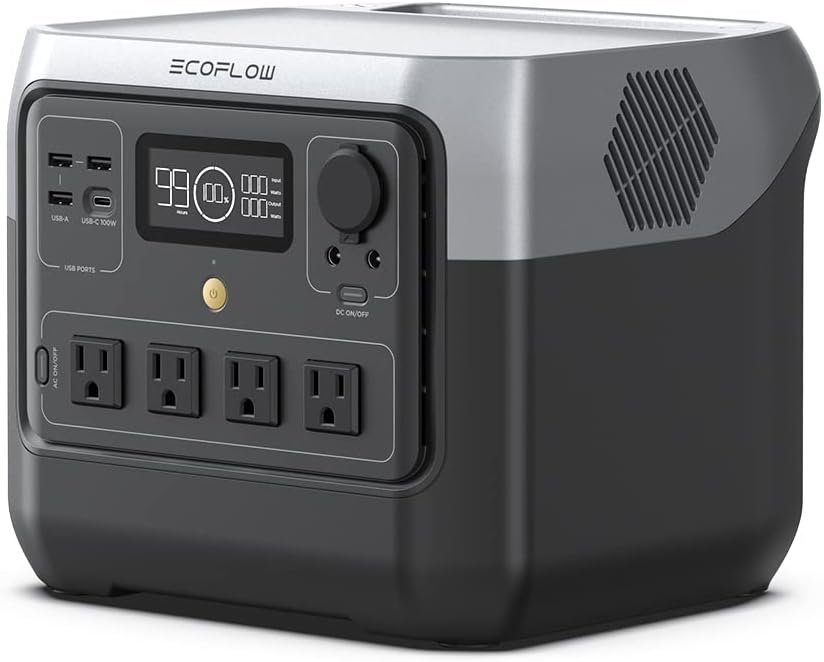
11. Best Budget Option: EF ECOFLOW Portable Power Station RIVER 2 Pro
Key Details:
- 768Wh LiFePO4 battery capacity
- 800W inverter with 1600W X-Boost capability
- Full recharge in about 70 minutes
- Solar charging up to 220W
- Lightweight design around 17 lb
If you’re looking for an affordable entry point into portable solar generators for RV trips, the EF ECOFLOW RIVER 2 Pro Portable Power Station offers a surprisingly capable setup for the price. While it’s smaller than most models on this list, it can still handle many everyday RV devices.
When used during camping situations, the EF ECOFLOW RIVER 2 Pro Portable Power Station works well for charging phones, running lights, powering laptops, and keeping smaller appliances operating. For weekend camping or short road trips, the capacity is usually enough for daily use.
One of the standout features is the extremely fast recharge time. With EcoFlow’s X-Stream charging technology, it can recharge from empty to full in about 70 minutes. That speed helps compensate for the smaller battery capacity because you can recharge frequently when power is available.
The lightweight design is another advantage. At roughly 17 pounds, it’s easy to carry and store inside an RV without taking up much space. For smaller camper vans or minimal setups, that portability can be very appealing.
Pros:
- Affordable entry point into RV solar generators
- Extremely fast AC charging
- Lightweight and easy to transport
- Durable LiFePO4 battery chemistry
Cons:
- Smaller battery capacity than most units here
- Lower inverter output limits larger appliances
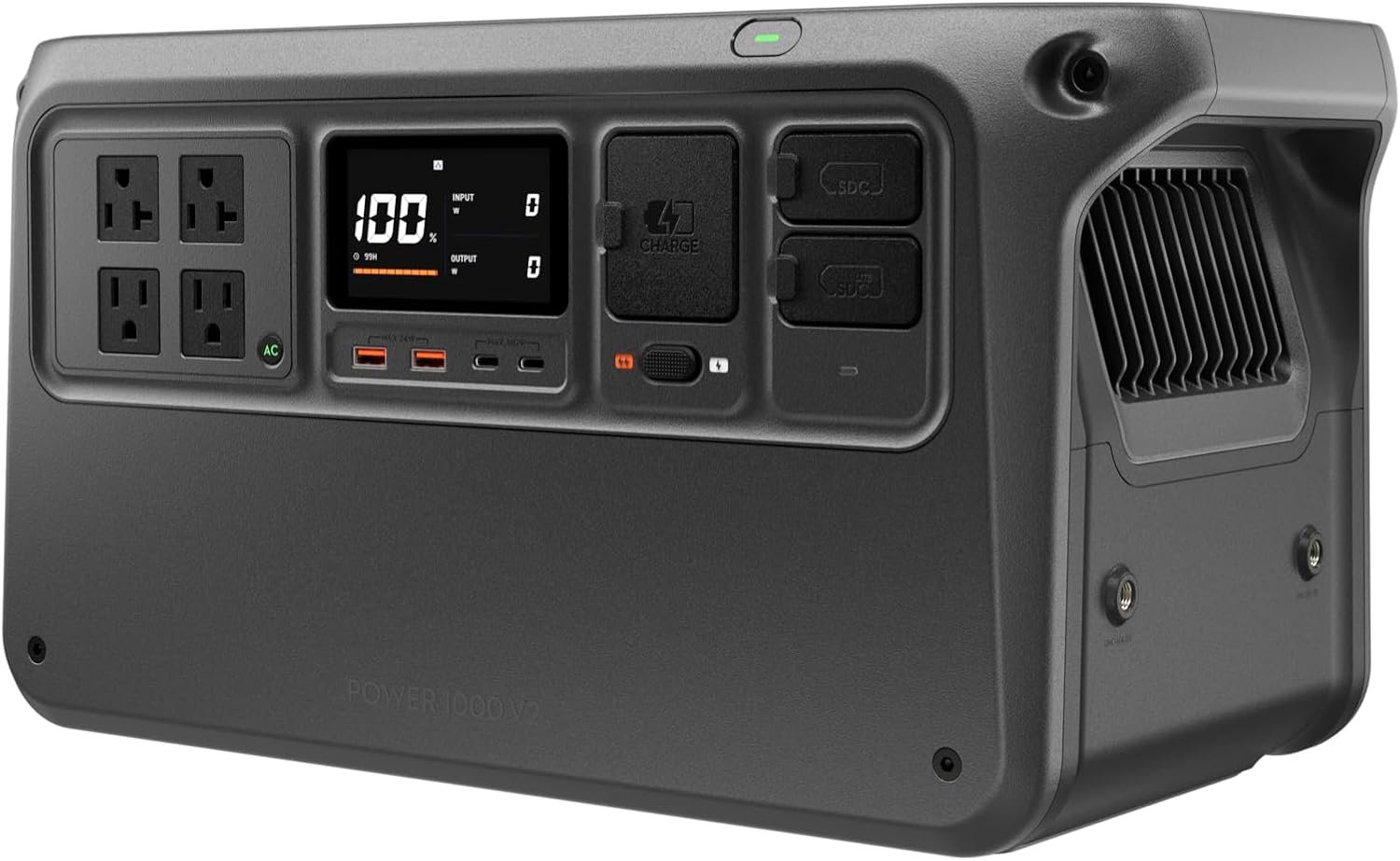
12. Best Quiet Operation: DJI Power 1000 V2 Portable Power Station
Key Details:
- 1024Wh LiFePO4 battery capacity
- 2600W stable inverter output
- Ultra-fast charging: 0–80% in about 37 minutes
- Dual 140W USB-C ports (280W total)
- Ultra-quiet operation as low as about 26 dB
If quiet operation matters during RV camping, the DJI Power 1000 V2 Portable Power Station stands out among portable solar generators for RV travel. With noise levels around 26 dB, it runs quietly enough to use inside the RV at night without disturbing sleep.
When tested with everyday appliances, the DJI Power 1000 V2 Portable Power Station delivers strong performance for its size. The 2600W output allows it to handle many household-style appliances that smaller power stations struggle with, which can be useful during meal preparation or campsite activities.
Charging speed is another impressive aspect. Being able to recharge to 80% in roughly 37 minutes means you can quickly top up the battery before leaving a campground or while stopping at a powered location during travel.
Safety and durability also appear to be a focus in the design. With intelligent battery management, flame-retardant materials, and LiFePO4 battery chemistry, the unit is built to handle demanding outdoor environments while maintaining long battery life.
Pros:
- Extremely quiet operation suitable for RV interiors
- Strong inverter output for many appliances
- Very fast charging speeds
- High-power USB-C ports for modern devices
Cons:
- Slightly heavier than some 1kWh power stations
- Solar panels sold separately for full solar setup
Who Need a Portable Solar Generator for Their RV?
A portable solar generator is most useful for RV owners who want cleaner, quieter, and more flexible power on the road. It works especially well for people who camp off-grid, spend time in places with generator restrictions, or simply want an easier way to keep essentials running without depending on hookups.
- RV travelers who camp without shore power
- Camper van owners who need compact off-grid energy
- Boondockers who want to recharge from portable solar panels
- RV users who want silent backup power at night
- Remote workers traveling with laptops, routers, and charging gear
- Travelers who want one power station for both RV trips and home backup
- RV owners who do not want to deal with fuel, fumes, and engine maintenance
How Much Solar Generator Capacity Does an RV Need?
The right battery size depends on two things: what you want to run, and how long you want to run it. A smaller RV setup that only powers lights, phones, a laptop, and a portable fridge can often get by with around 1000Wh to 1500Wh. If you also want to run a microwave, coffee maker, induction cooker, or other heavier appliances, moving into the 2000Wh to 3000Wh range usually makes more sense.
A simple way to estimate your needs is to use this formula:
Battery capacity needed in watt-hours = appliance wattage × hours of use
For example, if your portable fridge uses 60 watts and runs for 8 hours, that equals 480Wh. If your laptop uses 70 watts for 4 hours, that adds 280Wh. If your lights use 20 watts for 5 hours, that adds another 100Wh. Together, that is 860Wh of total energy use.
| Appliance | Typical Wattage | Example Daily Use | Estimated Wh Needed |
| Portable fridge | 60W | 8 hours | 480Wh |
| Laptop | 70W | 4 hours | 280Wh |
| LED lights | 20W | 5 hours | 100Wh |
| Starlink/router | 60W | 4 hours | 240Wh |
| CPAP machine | 40W | 8 hours | 320Wh |
| Microwave | 1000W | 0.2 hours | 200Wh |
That is why battery size matters so much when shopping for portable solar generators for RV travel. A 768Wh to 1024Wh unit is often fine for lighter camping needs. A 2000Wh class model is usually a better fit for longer stays, bigger daily loads, or travelers who want more headroom. Once you get into the 3000Wh range, you are looking at a setup that can support larger RV routines, heavier appliance use, and longer time away from hookups.
A few quick guidelines can help narrow it down:
- 500Wh to 1000Wh works for light charging and small electronics
- 1000Wh to 1500Wh works for basic daily RV essentials
- 2000Wh to 3000Wh works better for microwaves, fridges, and multi-device use
- 3000Wh and up is more suitable for large RVs, longer off-grid stays, and higher-demand appliances
Also keep in mind that battery capacity is only part of the equation. Inverter output determines what the unit can power at one time. Solar input determines how quickly it can recharge during the day. Battery chemistry affects lifespan, and LiFePO4 is usually the preferred option because it lasts much longer than older lithium battery types.
How to Choose the Best Portable Solar Generators for RV
Choosing the right portable solar generator for RV travel comes down to how you camp, what appliances you run, and how long you stay off grid. Capacity, inverter output, charging speed, and portability all influence how practical a system will feel during real RV use.
Battery Capacity Determines RV Runtime
Battery capacity determines how long your appliances can run before the generator needs recharging. Capacity is measured in watt hours (Wh), and it directly affects how useful the system will be during camping or boondocking trips.
For example, a 1000Wh solar generator can typically support basic RV electronics such as lights, laptops, routers, and a small portable refrigerator. However, if you plan to run higher demand appliances like microwaves or coffee makers regularly, moving into the 2000Wh to 3000Wh range gives you much more flexibility.
Travelers who spend several days away from shore power often prefer larger capacity units because they reduce how often the battery needs to be recharged. Larger batteries also help handle cloudy days when solar charging may be slower.
Inverter Power Determines Which Appliances You Can Run
Inverter power determines which appliances the generator can operate safely. Most portable solar generators for RV setups use pure sine wave inverters, which are designed to run sensitive electronics such as laptops and televisions.
A generator with an 800W to 1000W inverter can handle lights, electronics, and small devices. A 1800W to 2200W inverter can support kitchen appliances like microwaves, kettles, and coffee makers. Larger systems with 3000W or higher output can power multiple appliances simultaneously and even support small air conditioning setups in some cases.
If your RV lifestyle includes cooking inside or using several devices at once, choosing a generator with higher inverter capacity can prevent overload shutdowns.
Solar Charging Input Affects Off Grid Charging Speed
Solar input determines how quickly the battery can recharge during the day. A system that supports higher solar input allows you to recover energy faster, especially when camping in sunny environments.
Smaller units often support around 200W to 400W of solar panels. Mid size generators usually allow 600W to 800W input. Larger systems may support 1000W or more of solar charging.
Higher solar input becomes especially useful for RV travelers who rely heavily on solar energy. Faster charging means less downtime and more usable power during long off grid trips.
Battery Chemistry Affects Lifespan and Reliability
Most modern portable solar generators for RV use lithium iron phosphate batteries, commonly called LiFePO4. This battery chemistry is widely preferred because it offers long cycle life and improved safety.
LiFePO4 batteries often last between 3000 and 6000 charge cycles before dropping to about 80 percent capacity. That can translate to many years of regular use. Compared with older lithium ion battery designs, LiFePO4 batteries are also more stable under high temperatures and heavy loads.
For RV owners who plan to travel frequently, choosing a LiFePO4 powered generator usually results in better long term value.
Portability and Size Matter for RV Storage
Portability is another practical factor when choosing a solar generator. Many RV owners store their power station inside cabinets, storage compartments, or under seats.
Smaller units weighing under 30 pounds are easy to move and store, making them ideal for camper vans and small trailers. Mid size units around 40 to 50 pounds offer more capacity but still remain manageable. Larger units exceeding 60 pounds provide the most power but may require dedicated storage space.
Finding the right balance between capacity and portability often makes daily RV use much more convenient.
Portable Solar Generator vs RV Lithium Battery + Inverter System
Both portable solar generators and built in RV battery systems provide off grid power, but they work in very different ways. A portable solar generator combines battery storage, inverter, and charge controller in one unit, while a custom lithium battery system separates those components and integrates them into the RV electrical system.
| Feature | Portable Solar Generator | RV Lithium Battery + Inverter System |
| Installation | Plug and play, no installation required | Requires installation and wiring |
| Portability | Easily moved between RV and home | Permanently installed in RV |
| Setup complexity | Very simple to use | More complex electrical setup |
| Expandability | Limited to manufacturer ecosystem | Highly customizable system |
| Cost | Lower entry cost | Higher upfront investment |
| Maintenance | Minimal maintenance | Requires occasional system monitoring |
| Power capacity | Usually 500Wh to 3000Wh | Can exceed 10kWh depending on design |
Portable solar generators are ideal for RV owners who want a quick, simple solution without modifying their electrical system. Custom lithium battery systems are better suited to full time RVers who want maximum capacity and a fully integrated energy system.
Can a Portable Solar Generator Run an RV Air Conditioner?
Yes, but it depends on the size of the generator and the air conditioner.
Most RV air conditioners require around 1200 to 1800 watts while running, and the startup surge can exceed 3000 watts. Because of this, smaller solar generators usually cannot start an air conditioner without assistance.
Larger units with inverters around 3000 watts or higher can run some RV air conditioners, especially when combined with a soft start device. A soft start reduces the startup surge of the AC unit, making it easier for battery generators to handle the load.
Even when a generator can run an air conditioner, battery capacity will determine how long it runs. Air conditioners consume large amounts of energy, so most portable solar generators can only run them for a limited time unless solar panels continuously recharge the battery.
Safety Considerations Portable RV Solar Generators
Portable solar generators are generally safe and easy to use because they do not burn fuel and produce no exhaust gases. However, using them properly inside an RV still requires attention to ventilation, load limits, and battery safety.
Modern power stations include built in battery management systems that protect against overheating, overcharging, and short circuits. Even with these protections, it is important to follow safe operating practices when using electrical equipment in confined spaces.
Important safety considerations include:
- Keep ventilation clear around the generator so heat can dissipate during heavy loads.
- Avoid exceeding the inverter’s rated output to prevent shutdown or potential damage.
- Use certified solar panels and cables to ensure safe charging connections.
- Keep the generator dry and protected from heavy rain or moisture unless specifically rated for weather exposure.
- Store and transport the generator carefully to avoid physical damage to the battery or ports.
- Monitor battery levels and charging conditions during extended off grid use.
Following these basic precautions helps ensure your portable solar generator operates safely and reliably during RV travel.
Final Words
Choosing the right portable solar generator for RV travel comes down to balancing battery capacity, inverter power, charging speed, and portability. A reliable solar generator gives you quiet electricity without fuel, making it easier to camp off grid, power everyday appliances, and keep essential devices running wherever your RV takes you.
If you want a well balanced option for most RV setups, the EF ECOFLOW DELTA 3 Portable Power Station stands out. It offers a practical mix of inverter power, fast charging, and expandable capacity. For many RV owners, it provides enough energy for daily electronics, kitchen appliances, and charging needs without being overly heavy.
If simplicity and portability are more important, the Anker SOLIX C1000 Portable Power Station is a strong choice. It delivers dependable power for common RV devices and works especially well for camper vans or smaller travel trailers where storage space and weight matter.
For RV travelers who need more power and longer runtimes, the BLUETTI Elite 200 V2 Portable Power Station is a better fit. With over 2kWh of battery capacity and a strong inverter, it can handle heavier appliances and extended off grid use more comfortably.
Overall, portable solar generators for RV travel provide a clean, quiet, and flexible energy solution. Whether you are planning weekend camping trips or longer boondocking adventures, the right power station can make RV living more convenient and self sufficient.
Related FAQs
What size portable solar generator is best for RV use?
Most RV users choose a solar generator between 1000Wh and 3000Wh. Smaller units support basic electronics, while larger ones handle appliances and longer off grid trips.
How long can a solar generator run an RV refrigerator?
A typical RV refrigerator uses around 50 to 70 watts. A 1000Wh solar generator can run it for roughly 12 to 18 hours depending on efficiency and usage cycles.
Can you charge a portable solar generator while driving an RV?
Yes. Many solar generators support charging through a vehicle 12V outlet or alternator charger while driving between campsites.
Are portable solar generators safe to use inside an RV?
Yes. Portable solar generators do not produce fumes or carbon monoxide, making them safe for indoor use when properly ventilated.
How many solar panels are needed for RV solar generators?
Most portable solar generators work well with 200W to 800W of solar panels. The exact number depends on battery size and daily power consumption.

Robert Caldwell writes in-depth guides and reviews focused on generators, backup power systems, and portable energy equipment. His work is grounded in hands-on testing, covering fuel types, runtime performance, noise levels, and real-world reliability. He helps homeowners, RV owners, and outdoor users choose dependable power solutions with confidence. Every article emphasizes clear explanations, safe operation, and long-term value.