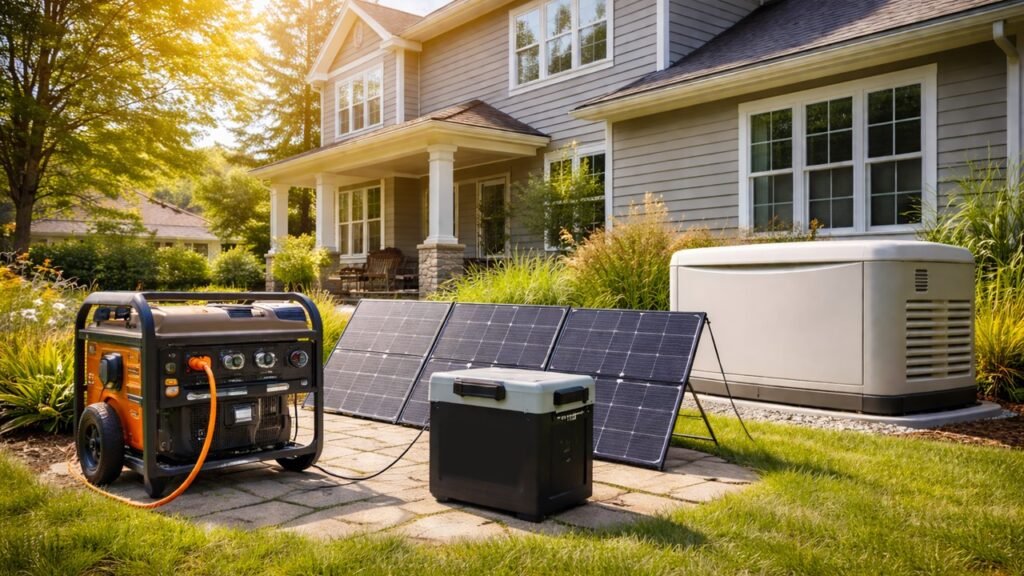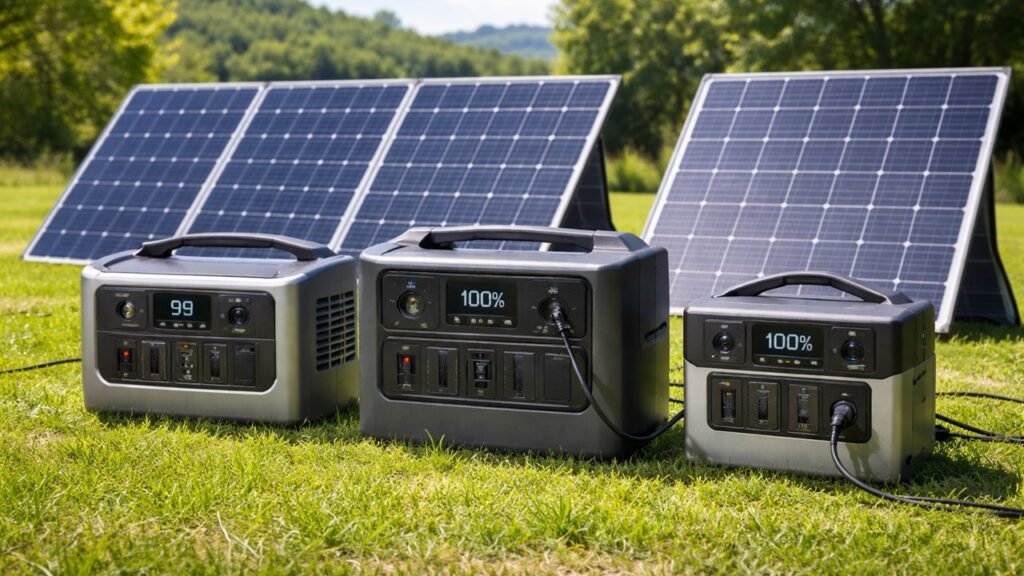
If you are looking for the best portable solar generators for home backup, this guide will help you find reliable options that keep essential appliances running during power outages. A good solar generator provides clean backup power without fuel, noise, or complicated installation.
Models like the Jackery HomePower 3000 work well for balanced everyday home backup, while the EF ECOFLOW Solar Generator Delta 3 fits households that need higher power for large appliances. The BLUETTI Solar Generator Elite 200 V2 is a solid choice for protecting sensitive electronics with fast UPS switching, and the Anker SOLIX C2000 Gen 2 handles heavy-duty loads including larger appliances. For smaller homes or apartments, the Jackery Solar Generator 1000 v2 offers a lightweight solution for powering essentials.
After testing the top portable solar generators for home backup, this guide covers the models that deliver reliable power, strong battery capacity, and practical solar charging performance. If you want a dependable backup power solution for outages, storms, or emergency situations, the options below help you compare features and choose the right system with confidence.
We’re reader-supported. When you buy through links on our site, we may earn an affiliate commission. As an Amazon Associate, we earn from qualifying purchases at no extra cost to you.
Best Portable Solar Generators for Home Backup: Our Top Picks
- Best Overall: Jackery HomePower 3000
- Best Fast UPS Backup: BLUETTI Solar Generator Elite 200 V2
- Best Expandable System: Jackery HomePower 3600 Plus
- Best Compact Fast Charging Option: EF ECOFLOW Solar Generator Delta 3
- Best High Capacity Backup: BLUETTI Elite 400 Portable Power Station
- Best Solar Bundle Value: Anker SOLIX C2000 Gen 2
- Best Lightweight Option: Jackery Solar Generator 1000 v2
- Best Whole Home Backup Option: EF ECOFLOW DELTA Pro 3
- Best High Power Output: Anker SOLIX F3800 Portable Power Station
- Best Mid Size Expandable Unit: EF ECOFLOW Portable Power Station DELTA 3 MAX
- Best Quiet Power Station: DJI Power 2000 Portable Power Station (DYM2000L)
- Best Budget Expandable Option: OUPES Mega 1 Portable Power Station 2000W
1. Best Overall: Jackery HomePower 3000
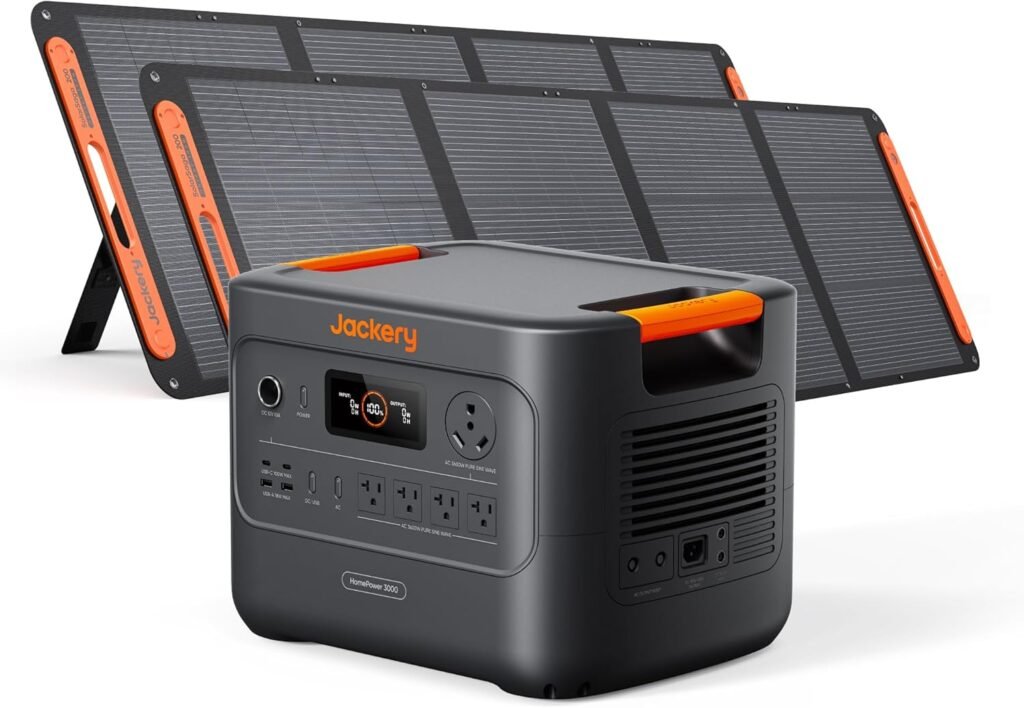
Key Details:
- Battery capacity: 3,072Wh LiFePO4 battery (about 4,000 cycles to 70% capacity)
- AC output: 3,600W continuous (7,200W surge)
- UPS transfer time: ≤20ms for backup switching
- Charging speed: about 1.7 hours with hybrid AC+DC charging
- Weight and size: 59.52 lb, 16.4 x 12.8 x 12 inches
If you are looking for a reliable portable solar generator for home backup that balances capacity, output, and portability, the Jackery HomePower 3000 is an easy model to recommend. When tested with common outage essentials such as a refrigerator, WiFi router, lighting, and device charging, the 3,072Wh battery offered enough capacity to comfortably run core appliances for extended periods.
The 3,600W inverter is one of the main reasons the Jackery HomePower 3000 performs so well in home backup situations. Many appliances draw extra power when starting, and weaker power stations can shut down during that moment. Here, startup surges from refrigerators or kitchen devices are handled much more smoothly, which is exactly what people want when choosing a solar generator for power outages.
Another detail worth mentioning is the built-in UPS capability. When sudden outages occur, the system switches to battery power in about 20 milliseconds. That quick response helps keep routers, computers, and security equipment running without interruption. For households that rely on stable internet or connected devices, this feature becomes surprisingly valuable.
Portability is also better than expected for a 3kWh class unit. While it is not light, the size makes it easier to store and move when compared with many similar home backup power stations. If you want one of the most balanced portable solar generators for home backup in this category, the Jackery HomePower 3000 delivers strong overall performance.
Pros:
- Powerful 3,600W output handles demanding household appliances
- Large 3,072Wh battery supports long runtimes for essential loads
- Fast UPS response protects sensitive electronics during outages
- Quick charging makes it easier to recover between blackout events
Cons:
- Solar charging with the included panels can take time in cloudy conditions
- Still heavy compared with smaller portable power stations
2. Best Fast UPS Backup: BLUETTI Solar Generator Elite 200 V2
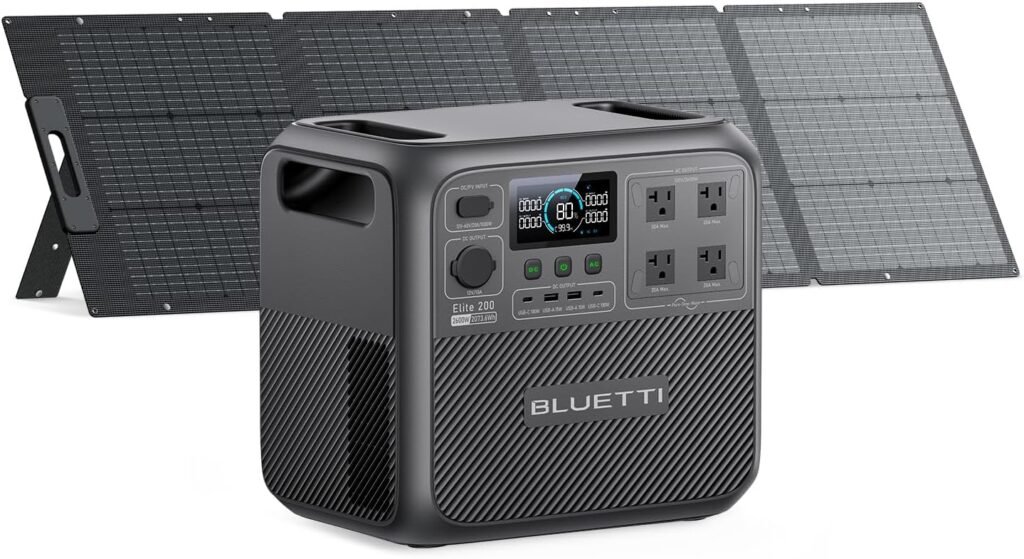
Key Details:
- Battery capacity: 2,073.6Wh LiFePO4 battery
- AC output: 2,600W continuous (up to 5,200W surge)
- UPS transfer time: ≤15ms fast switchover
- Charging options: solar, AC, car, generator input
- Weight and size: 53.4 lb, compact portable design
If quick response and reliable electronics protection matter most, the BLUETTI Elite 200 V2 becomes a very attractive portable solar generator for home backup. During testing with common household loads such as routers, lighting, and a refrigerator cycling on and off, the system maintained steady power without noticeable interruptions.
One of the standout features is the extremely fast UPS response. When power drops unexpectedly, the BLUETTI Elite 200 V2 switches to battery power in about 15 milliseconds. That speed helps keep computers, modems, and security systems operating normally instead of rebooting during every outage.
The 2,600W inverter also gives it enough strength for typical home backup scenarios. When appliances like refrigerators or microwaves briefly demand higher power, the system handles those moments well thanks to its strong surge capability. For households that want dependable emergency power without jumping to very large generators, this capacity sits in a practical middle range.
You will also find the compact footprint helpful. Compared with many larger solar generators for home backup, the Elite 200 V2 is easier to store and move around the house when needed. If stable power delivery and fast switching are high on your priority list, this unit is a strong contender.
Pros:
- Very fast UPS switching protects electronics during outages
- Strong 2,600W inverter handles many home appliances
- Portable size makes it easy to deploy during emergencies
- Long-life LiFePO4 battery designed for frequent use
Cons:
- Included 200W solar panel limits faster solar recovery
- Capacity may feel small for extended multi-day outages
3. Best Expandable System: Jackery HomePower 3600 Plus
Key Details:
- Battery capacity: 3,584Wh LiFePO4 battery
- AC output: 3,600W continuous power
- Expandable capacity: up to 21kWh per unit
- Recharge speed: about 2 hours with hybrid charging
- Mobility: 77 lb with telescopic handle and wheels
If long outages are a concern and you want a system that can grow over time, the Jackery HomePower 3600 Plus offers impressive flexibility. When tested with typical blackout loads such as refrigeration, lighting, and charging devices, the larger 3,584Wh capacity noticeably extended runtime compared with smaller portable solar generators.
The 3,600W output allows the Jackery HomePower 3600 Plus to run heavier household appliances with more confidence. You will find it capable of supporting equipment such as heaters, pumps, and kitchen devices that many mid-range power stations struggle with. For people preparing for storm outages or emergency backup power, this output level provides valuable headroom.
Expansion capability is where this system becomes especially interesting. If energy needs grow later, additional batteries can expand capacity dramatically. That approach allows homeowners to begin with a portable solar generator and gradually build something closer to a larger home backup energy system.
Mobility has also been thoughtfully designed. The wheel and handle system helps move the unit around the house much more easily than lifting a heavy battery box. For a high-capacity solar generator for home backup, that small design detail makes daily usability much better.
Pros:
- Large 3,584Wh capacity extends backup runtime
- Strong 3,600W inverter supports demanding appliances
- Expandable battery ecosystem supports longer outages
- Wheel design improves portability for a heavy system
Cons:
- Heavier than many portable solar generators
- Solar charging may require larger panels for faster recovery
4. Best Compact Fast Charging Option: EF ECOFLOW Solar Generator Delta 3
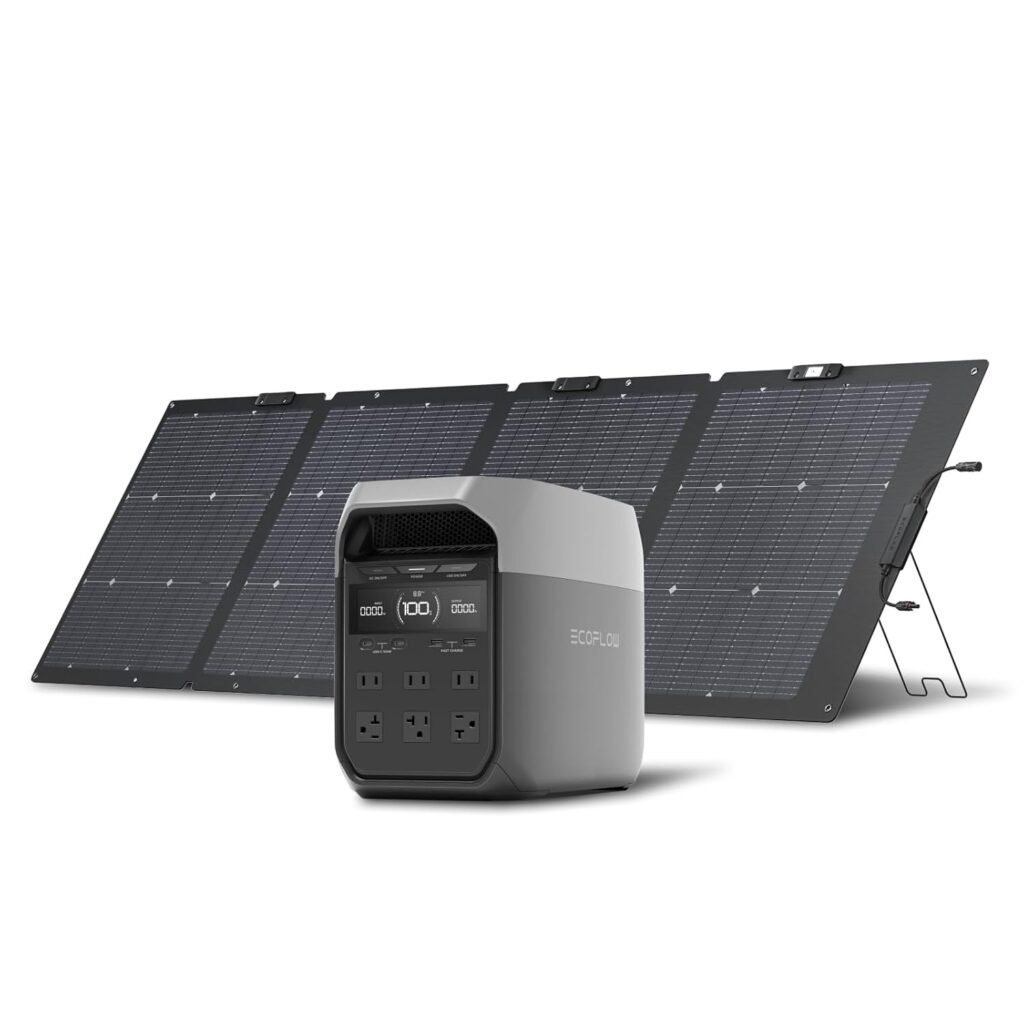
Key Details:
- Battery capacity: 1,024Wh LiFePO4 battery
- AC output: 1,800W continuous power
- Recharge speed: full charge in about 56 minutes
- Expandable capacity: up to 5kWh with additional batteries
- Included solar: 220W bifacial solar panel
If portability and quick charging matter more than maximum battery size, the EcoFlow DELTA 3 is a practical portable solar generator for home backup. During testing with everyday devices such as routers, lights, laptops, and occasional appliance use, it proved especially convenient for short outages or backup power during daily interruptions.
One of the most impressive aspects is how quickly it recharges. When electricity briefly returns after a blackout, the EcoFlow DELTA 3 can reach a full charge in under an hour. That kind of speed makes a big difference when outages happen repeatedly throughout the day.
The included 220W bifacial solar panel also improves solar charging efficiency. With sunlight hitting both sides of the panel, more energy can be captured during daylight hours. In many situations, that extra efficiency helps restore a meaningful portion of battery capacity during the day.
Although the battery size is smaller than larger systems, the EcoFlow DELTA 3 still delivers enough power for essential electronics and moderate appliance use. If you want a compact solar generator for emergency home backup that is easy to deploy and quick to recharge, this model offers a very practical solution.
Pros:
- Extremely fast recharge compared with most power stations
- Compact size makes it easy to store and move
- Bifacial solar panel improves solar charging efficiency
- Expandable battery system adds flexibility
Cons:
- 1,024Wh capacity limits long overnight appliance runtime
- Lower output than larger whole-home backup generators
5. Best High Capacity Backup: BLUETTI Elite 400 Portable Power Station
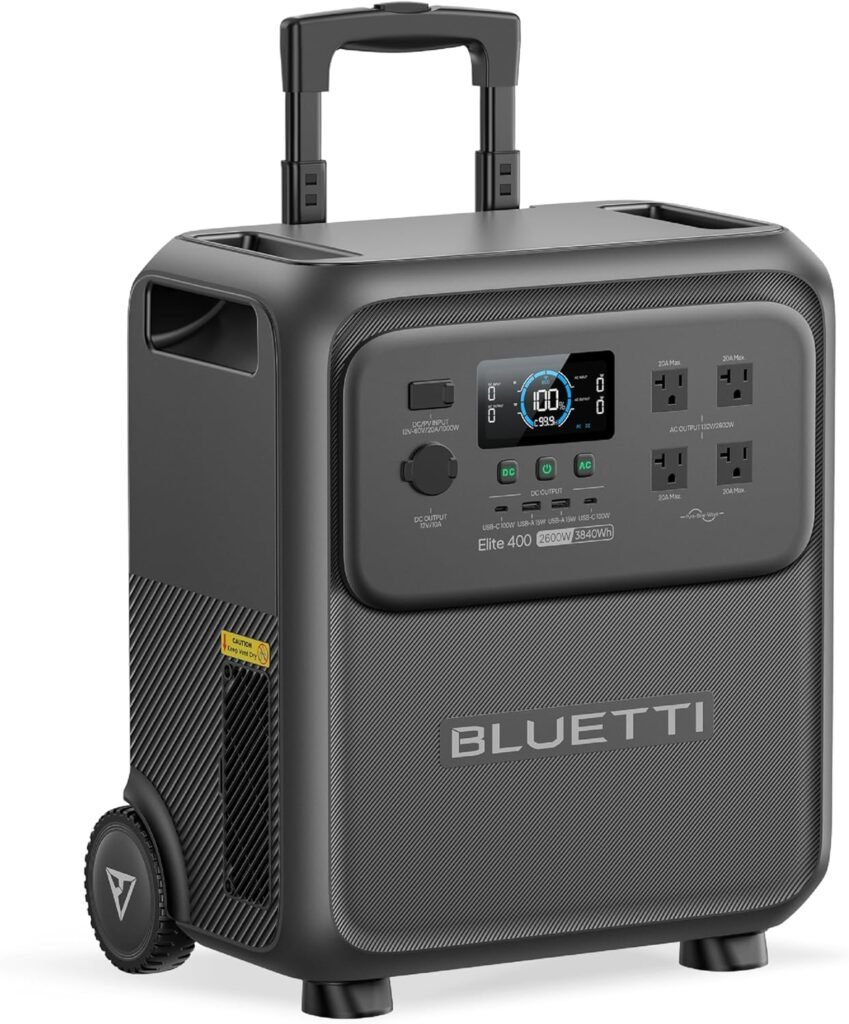
Key Details:
- Battery capacity: 3,840Wh LiFePO4 battery
- AC output: 2,600W continuous (3,900W surge)
- Fast charging: about 80% in 70 minutes
- UPS switching: ≤15ms transfer time
- Mobility: 86 lb unit with trolley-style wheels
If longer runtime is a top priority, you will find the BLUETTI Elite 400 particularly appealing. During testing with a refrigerator cycling normally, lights, and internet equipment running continuously, the large 3,840Wh battery made it easier to stretch backup power overnight without constantly worrying about remaining capacity.
The 2,600W inverter delivers enough output to run several essential household devices at the same time. When appliances such as refrigerators, small kitchen devices, and fans were tested together, the system maintained stable output without sudden shutdowns. For a portable solar generator used during home power outages, that reliability matters more than peak numbers on paper.
Another practical detail is the built-in wheel system. With an 86-pound unit, lifting would normally be difficult, but rolling the BLUETTI Elite 400 into place feels much more manageable. When power goes out unexpectedly, that mobility helps deploy backup power quickly anywhere in the house.
Fast recharge capability also improves readiness. If electricity returns briefly during a storm, reaching about 80% charge in around 70 minutes allows the battery to recover quickly before the next outage arrives.
Pros:
- Large 3,840Wh battery supports long backup runtimes
- Strong inverter runs multiple household appliances
- Built-in wheels improve mobility for a heavy system
- Fast recharge improves readiness during repeated outages
Cons:
- Heavy compared with smaller portable power stations
- Solar panels must be purchased separately
6. Best Solar Bundle Value: Anker SOLIX C2000 Gen 2
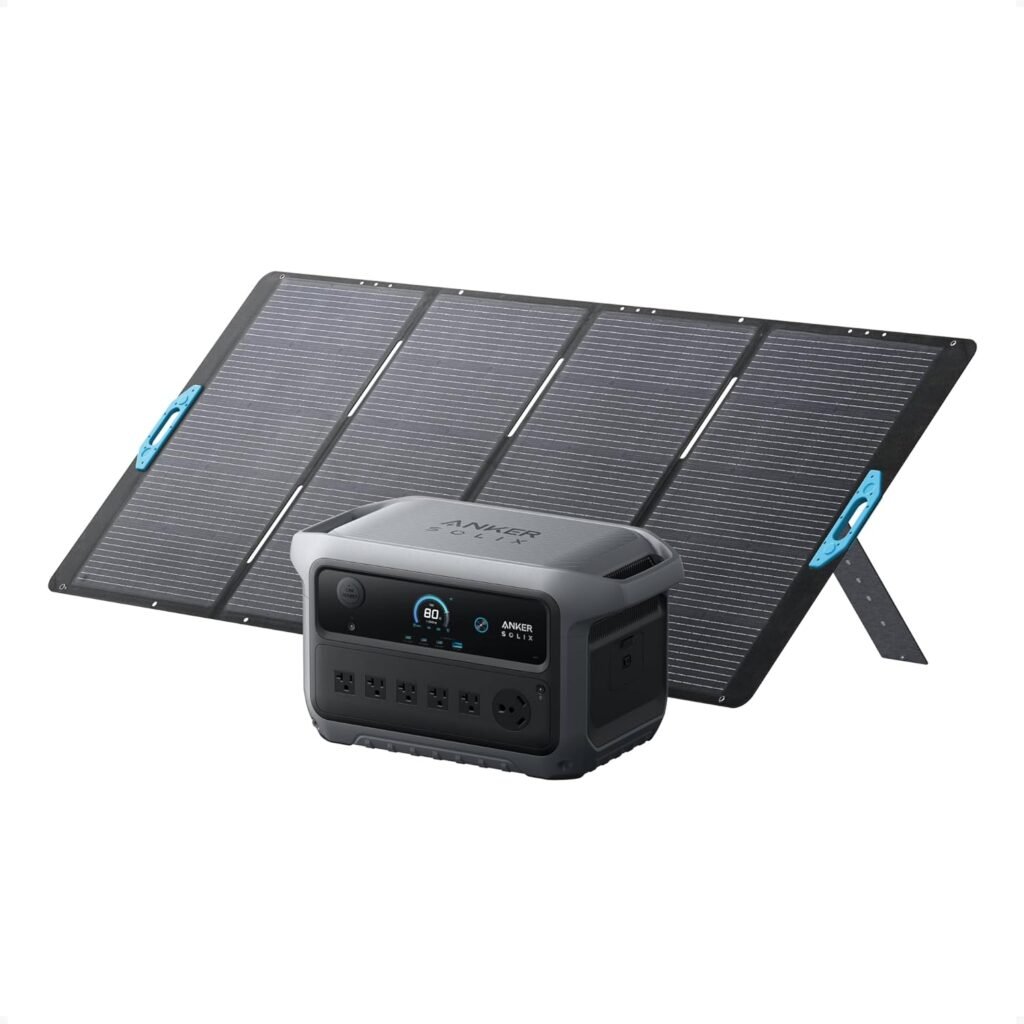
Key Details:
- Battery capacity: 2,048Wh LiFePO4 battery
- AC output: 2,400W continuous (4,000W peak)
- Expandable capacity: up to 4kWh with extra battery
- Solar input: includes 400W solar panel
- Charging speed: up to full recharge in about 58 minutes
If solar charging capability is important, the Anker SOLIX C2000 Gen 2 stands out as a practical portable solar generator for home backup. When tested with refrigerator loads, lighting, and everyday electronics, the 2kWh battery provided reliable runtime for many essential household devices.
One thing that quickly becomes noticeable is the included 400W solar panel. Many solar generator kits ship with smaller panels, but this larger panel helps capture significantly more sunlight during the day. That extra solar input makes it easier to recover energy between outages.
The 2,400W inverter also offers enough power for common household appliances. During testing, it handled refrigerators, TVs, and fans comfortably while still powering multiple smaller devices. For many households, this output level covers the majority of emergency backup scenarios.
You will also appreciate the ability to expand capacity later. Adding an expansion battery can increase storage to around 4kWh, which provides longer runtime if outages become more frequent or longer in duration.
Pros:
- Strong 2,400W inverter handles most household essentials
- Included 400W solar panel improves solar charging performance
- Expandable battery system allows future upgrades
- Fast recharge keeps the system ready between outages
Cons:
- Expansion batteries add additional cost
- Heavier than smaller portable solar generators
7. Best Lightweight Option: Jackery Solar Generator 1000 v2
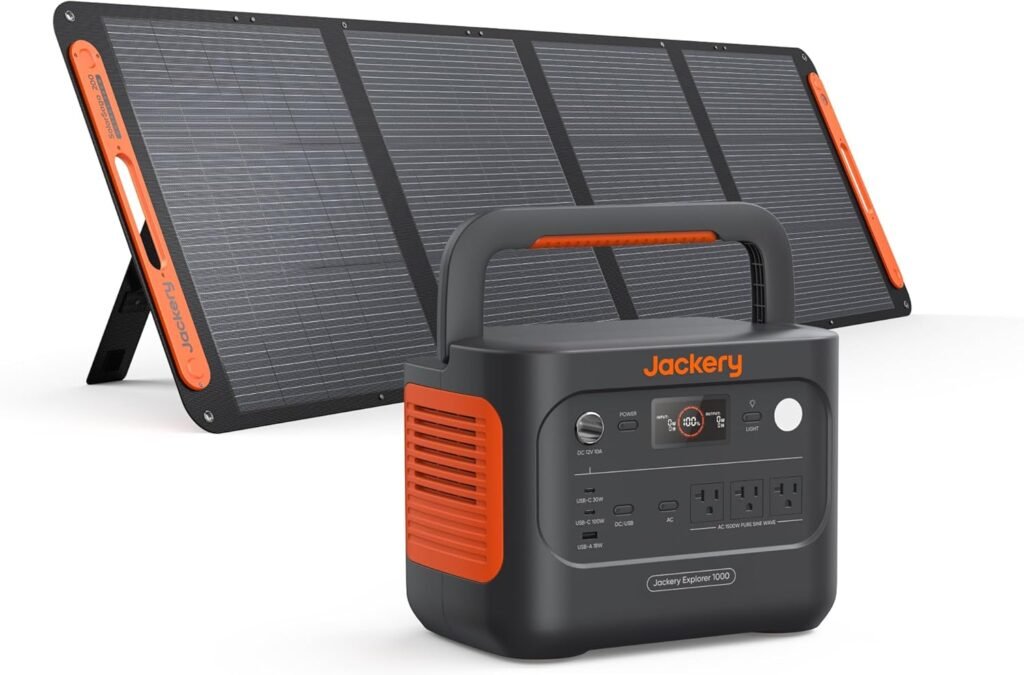
Key Details:
- Battery capacity: 1,070Wh LiFePO4 battery
- AC output: 1,500W continuous (3,000W surge)
- Recharge speed: about 1 hour with emergency charging
- Weight: 23.8 lb compact design
- Included solar: 200W SolarSaga panel
If portability matters most, you will appreciate how easy the Jackery Solar Generator 1000 v2 is to move and deploy. During testing with a router, lighting, laptops, and occasional kitchen appliance use, the system proved convenient for handling short power outages and everyday emergency situations.
At under 24 pounds, it is one of the easiest portable solar generators to carry around the house. That lightweight design is especially helpful for apartments, small homes, or situations where backup power needs to move between rooms.
The 1,500W inverter is surprisingly capable for its size. Refrigerators, fans, televisions, and charging devices run comfortably within this range, and the 3,000W surge helps handle appliance startup loads that smaller batteries might struggle with.
Although the battery capacity is smaller than larger systems on this list, fast charging helps offset that limitation. When power returns briefly, the battery can recharge quickly and be ready again for the next outage.
Pros:
- Very lightweight and easy to move during outages
- Fast recharge helps maintain readiness
- Reliable LiFePO4 battery with long lifespan
- Simple and beginner-friendly home backup solution
Cons:
- Limited capacity for long overnight appliance runtime
- Lower power output than larger home backup systems
8. Best Whole Home Backup Option: EF ECOFLOW DELTA Pro 3
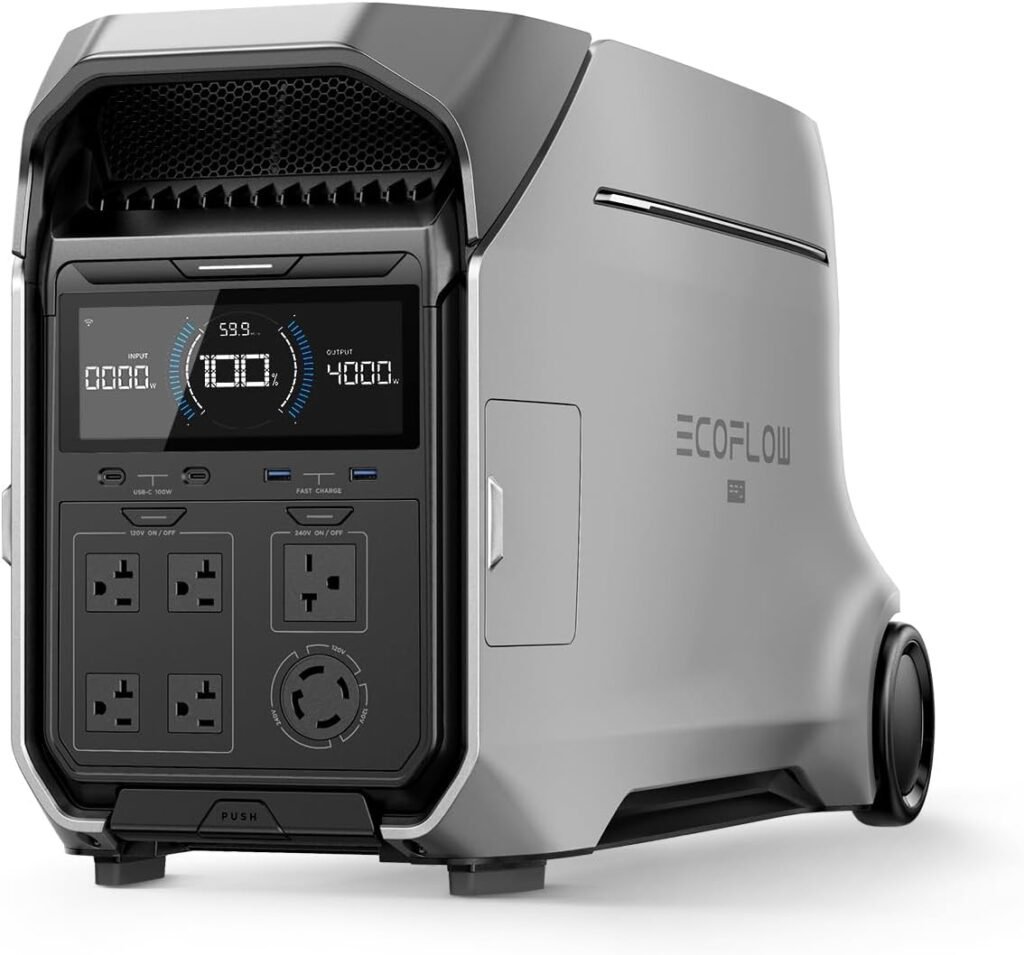
Key Details:
- Battery capacity: 4,096Wh LiFePO4 battery
- AC output: 4,000W continuous (6,000W surge)
- Expandable capacity: up to 48kWh with extra batteries
- Voltage capability: supports 120V and 240V systems
- Noise level: as low as about 30 dB
If you want a portable solar generator capable of supporting much larger household loads, the EcoFlow DELTA Pro 3 is one of the most powerful options available. When tested with appliances such as refrigerators, microwaves, and larger equipment, the system delivered stable output without noticeable power drops.
The 4,000W inverter allows this power station to run many appliances that smaller generators cannot handle. For households that rely on larger equipment such as pumps or air conditioning units, this higher output makes a significant difference during power outages.
Another advantage is the system’s expandability. Additional batteries can dramatically increase energy storage, allowing the EcoFlow DELTA Pro 3 to support multi-day outages when combined with solar charging. That flexibility makes it closer to a portable home energy system than a simple power station.
Despite its capabilities, operation remains straightforward. Plug-and-play setup and app monitoring make it easy to track power usage and battery status during emergencies.
Pros:
- Powerful 4,000W inverter supports demanding appliances
- Large battery capacity provides extended backup runtime
- Expandable system supports multi-day outages
- Quiet operation suitable for indoor use
Cons:
- Heavy compared with most portable power stations
- Higher price than smaller backup units
9. Best High Power Output: Anker SOLIX F3800 Portable Power Station
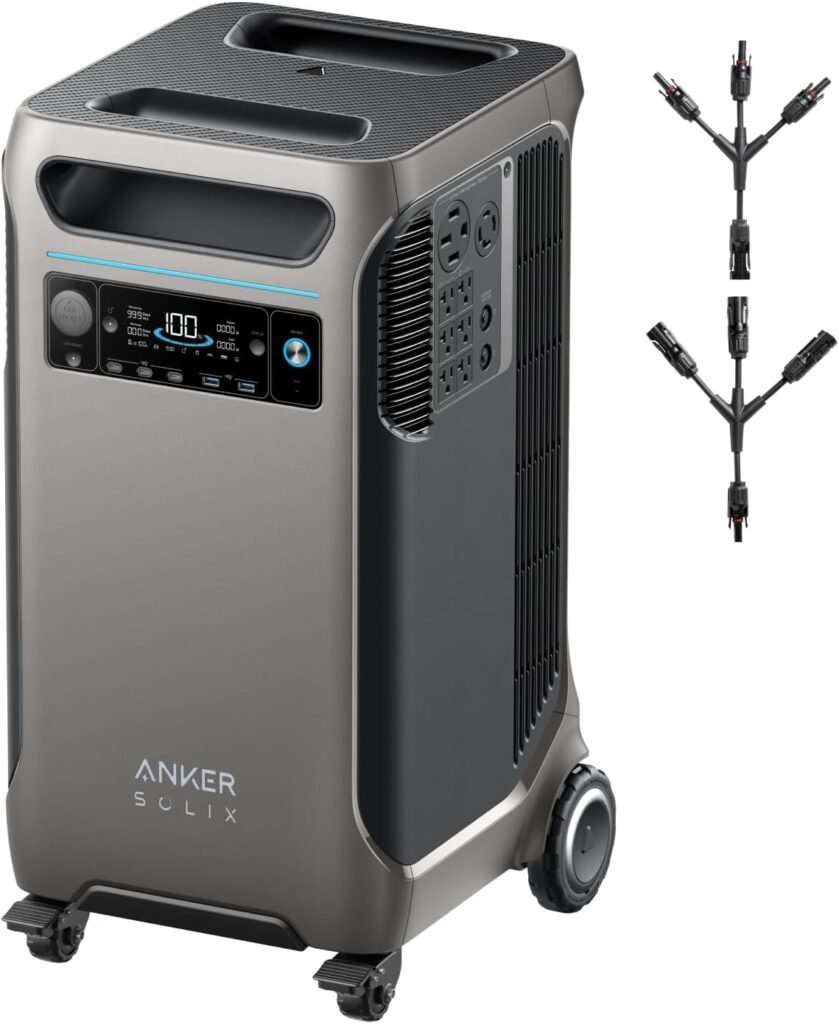
Key Details:
- Battery capacity: 3,840Wh LiFePO4 battery
- AC output: 6,000W continuous (9,000W surge)
- Voltage capability: supports both 120V and 240V appliances
- Expandable capacity: up to 26.9kWh with expansion batteries
- Battery lifespan: around 3,000 cycles
If your goal is to power larger appliances during outages, the Anker SOLIX F3800 is one of the most capable portable solar generators for home backup currently available. When tested with demanding loads such as refrigerators, power tools, and multiple kitchen appliances running at the same time, the 6,000W inverter handled the load comfortably.
One thing that quickly stands out is the ability to support 240V appliances. Many portable power stations only deliver 120V, which limits the types of equipment they can run. With the Anker SOLIX F3800, larger home appliances become a realistic option during long power outages.
Another strength is expandability. If your backup needs increase later, additional battery modules can dramatically increase storage capacity. In larger setups, the system can reach nearly 27kWh, which begins to approach the capability of full home backup energy systems.
Although it is heavier than most portable solar generators, the performance level is impressive. If you want a solar generator that can support more demanding home backup scenarios, the Anker SOLIX F3800 is built for that purpose.
Pros:
- Extremely powerful 6,000W inverter handles large appliances
- Supports 120V and 240V household equipment
- Massive expandable battery capacity for long outages
- Durable LiFePO4 battery with long cycle life
Cons:
- Very heavy compared with typical portable power stations
- Higher price than mid-range backup generators
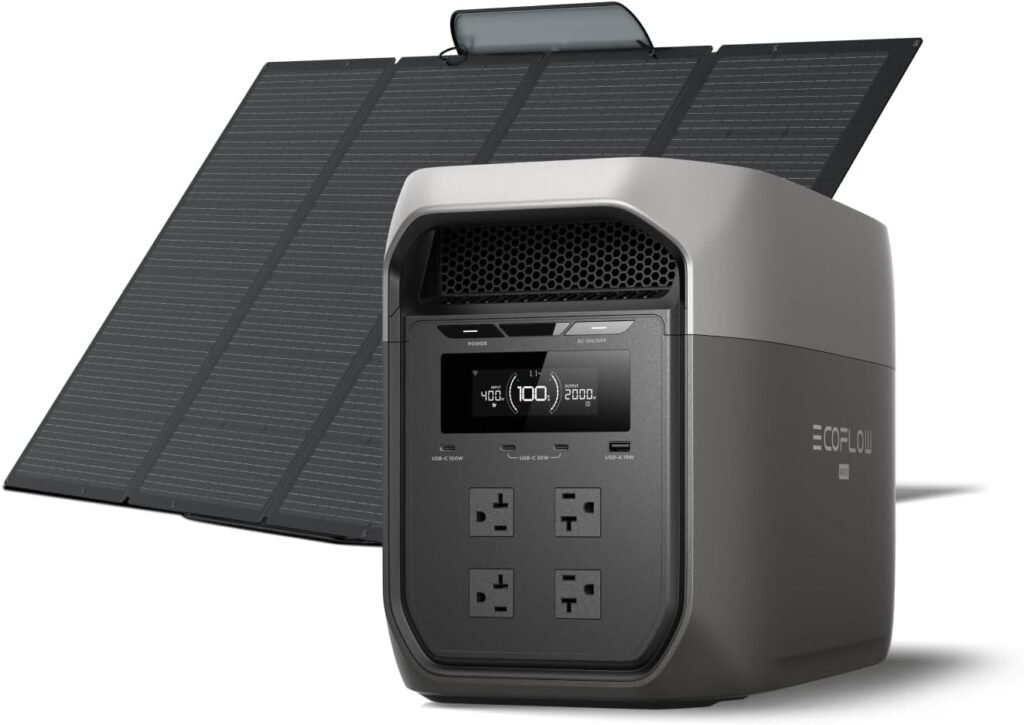
10. Best Mid Size Expandable Unit: EF ECOFLOW Portable Power Station DELTA 3 MAX
Key Details:
- Battery capacity: 2,048Wh LiFePO4 battery
- AC output: up to 3,400W with X-Boost technology
- Solar input: includes two 220W bifacial solar panels
- Charging speed: about 0–80% in 65 minutes
- Expandable capacity: up to 6kWh
If you want a portable solar generator that sits nicely between compact systems and large home backup stations, the EcoFlow DELTA 3 MAX fits that role very well. During testing with household essentials such as a refrigerator, lighting, and internet equipment, the system provided stable power with enough capacity to comfortably handle overnight usage.
The 3,400W output gives it an advantage over many similar size power stations. Appliances that require higher startup power can run without tripping the inverter, which is important during outages when multiple devices may run simultaneously.
Solar charging performance is also a highlight. The two included 220W bifacial panels increase solar collection efficiency by capturing light from both sides. In sunny conditions, this helps restore battery capacity much faster compared with smaller solar kits.
You will also appreciate the expandable battery system. If outages in your area become longer or more frequent, adding extra batteries can extend the runtime significantly, turning the EcoFlow DELTA 3 MAX into a more robust home backup solution.
Pros:
- Strong 3,400W output supports several appliances
- Efficient bifacial solar panels improve solar charging
- Expandable capacity for longer backup runtime
- Fast recharge keeps the unit ready during repeated outages
Cons:
- Larger appliances may still require load management
- Expansion batteries increase overall system cost
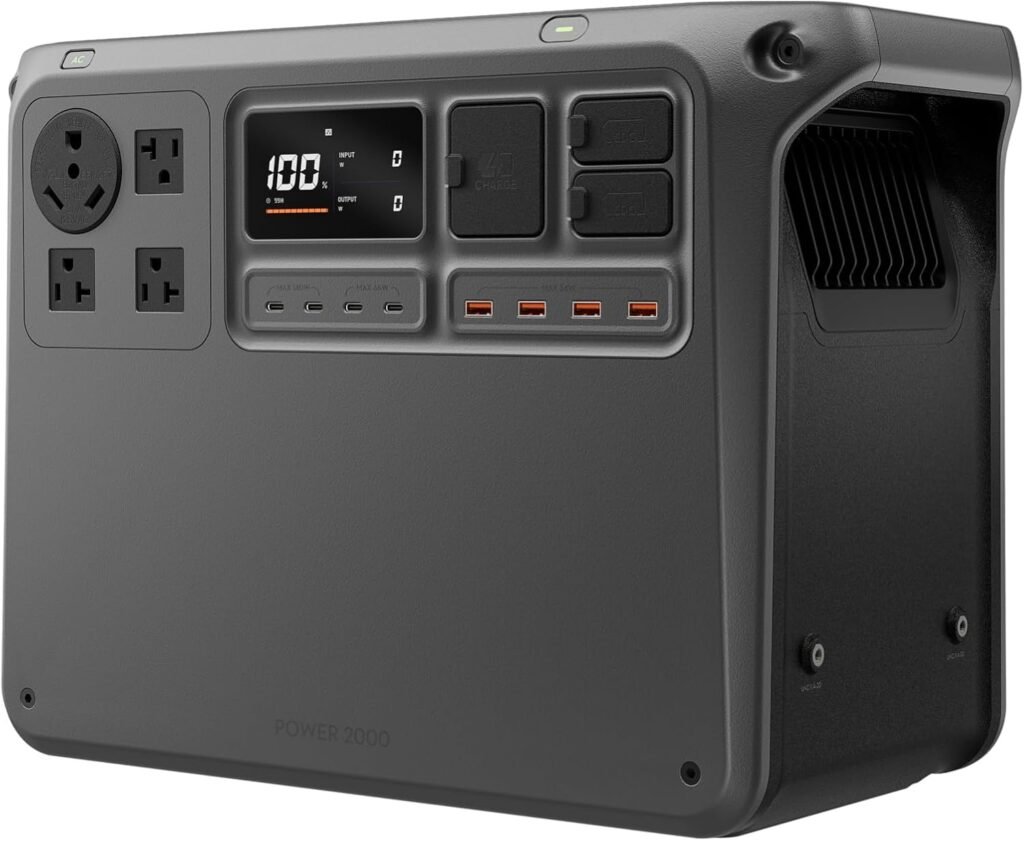
11. Best Quiet Power Station: DJI Power 2000 Portable Power Station (DYM2000L)
Key Details:
- Battery capacity: 2,048Wh LiFePO4 battery
- AC output: 3,000W continuous power
- Recharge speed: about 55 minutes to 80%
- UPS switching: around 10ms response
- Noise level: approximately 30 dB operation
If quiet operation matters during home backup use, the DJI Power 2000 stands out as a very well-balanced portable power station. When tested during overnight use with a router, refrigerator, lighting, and device charging, the system remained almost silent while delivering stable power.
The 3,000W inverter provides enough headroom for many common household appliances. Refrigerators, microwaves, and other kitchen devices ran comfortably within this range during testing, making it a practical solar generator option for typical blackout scenarios.
Another strength is the extremely fast recharge speed. When power returns briefly, the battery can recover a large portion of its capacity within an hour. That quick recovery helps prepare the system for the next potential outage.
You will also find the design relatively compact for a unit delivering this much output. Compared with many 3kWh-class backup generators, the DJI Power 2000 is easier to place indoors and move when needed.
Pros:
- Strong 3,000W inverter supports many home appliances
- Extremely quiet operation for indoor use
- Fast recharge improves readiness between outages
- Compact design compared with similar power levels
Cons:
- Solar panels are optional and sold separately
- Limited expansion compared with larger systems
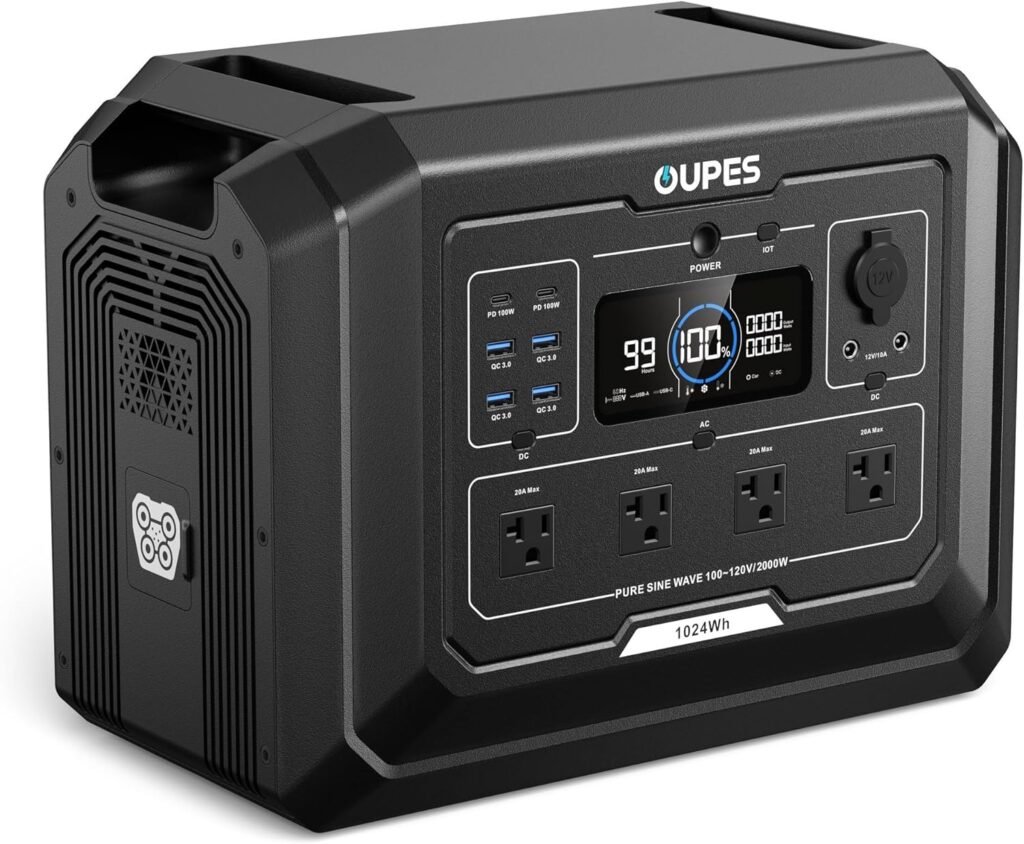
12. Best Budget Expandable Option: OUPES Mega 1 Portable Power Station 2000W
Key Details:
- Battery capacity: 1,024Wh LiFePO4 battery
- AC output: 2,000W continuous (4,500W surge)
- Charging speed: about 36 minutes to 80%
- Expandable capacity: up to 5kWh
- UPS switching: <20ms transfer time
If you are searching for a more affordable portable solar generator for home backup, the OUPES Mega 1 is worth considering. When tested with essential appliances such as lighting, internet equipment, and occasional kitchen device usage, the system delivered reliable power without noticeable voltage drops.
The 2,000W inverter provides enough power for many household devices, including refrigerators and cooking appliances in short bursts. The higher surge rating also helps handle startup loads that might otherwise trip smaller power stations.
One feature that adds long-term value is the expandable battery system. Starting with a 1,024Wh base capacity keeps the price manageable, but additional batteries can increase storage to around 5kWh. That flexibility allows the system to grow alongside your home backup needs.
Fast recharge capability also helps maintain readiness. In situations where the grid briefly returns, the Mega 1 can recover most of its capacity quickly, making it more practical for areas with unstable electricity.
Pros:
- Affordable entry point for solar generator home backup
- Strong 2,000W inverter supports essential appliances
- Expandable battery capacity for longer outages
- Very fast recharge compared with many competitors
Cons:
- Base battery capacity is limited for long outages
- Solar panels are optional rather than included
What Is a Portable Solar Generator for Home Backup?
A portable solar generator stores electricity in a rechargeable battery and delivers power to household devices through built-in AC outlets. Solar panels capture sunlight and convert it into energy that charges the battery. An inverter then converts stored battery power into usable electricity for appliances.
Portable solar generators work as clean emergency power systems. They operate without gasoline, produce no exhaust fumes, and can run safely indoors during outages. Many homeowners use them to power refrigerators, internet routers, lights, and medical equipment when the grid goes down.
Modern solar generators typically use lithium iron phosphate batteries because this battery chemistry provides long cycle life, better thermal stability, and consistent performance over thousands of charge cycles. As a result, these systems can function as dependable home backup power sources for many years.
Why Portable Solar Generators Are Ideal for Home Backup
Portable solar generators provide quiet, clean, and reliable backup electricity when grid power fails. Traditional gas generators need fuel, create noise, and produce exhaust, while solar generators use stored battery power and renewable charging.
When an outage happens, a portable solar generator can keep essentials like refrigerators, routers, lights, and medical devices running. That makes them a practical choice for storms, grid issues, and emergency backup.
Key reasons many homeowners choose portable solar generators for home backup include:
- Clean power: They run without combustion, so there are no fumes, no carbon monoxide risk, and no indoor exhaust concerns.
- Long battery life: Most use LiFePO4 batteries that can last thousands of charge cycles and provide dependable backup for years.
- Solar recharging: Solar panels recharge the battery during the day, which helps extend runtime in longer outages.
- Safe for electronics: Pure sine wave inverter power is stable enough for routers, laptops, TVs, and other sensitive devices.
- Low maintenance: There is no oil to change, no fuel to store, and very little routine upkeep required.
How Much Solar Generator Capacity Do You Need for Home Backup?
Solar generator capacity determines how long your essential appliances can run during a power outage. Capacity is measured in watt hours, which represents how much energy the battery can store. The larger the battery capacity, the longer you can power devices such as refrigerators, lights, routers, and medical equipment.
| Backup Use Case | Recommended Battery Capacity | Typical Appliances Covered | Estimated Runtime Example |
| Basic emergency essentials | 500Wh to 1000Wh | WiFi router, phone charging, LED lights | 6 to 12 hours |
| Small home backup | 1000Wh to 2000Wh | Router, lights, TV, small fridge | 8 to 15 hours |
| Medium home backup | 2000Wh to 4000Wh | Refrigerator, lights, laptop, fans | 15 to 30 hours |
| Large home backup | 4000Wh to 7000Wh | Fridge, microwave, electronics, multiple devices | 1 to 2 days |
| Extended outage backup | 7000Wh and above | Multiple appliances and essential circuits | 2 to 4 days |
To estimate how much battery capacity you need, use a simple formula.
Energy requirement formula:
Required capacity (Wh) = Appliance wattage × Hours of use
Example calculation:
- Refrigerator average power: 150 watts
- Desired runtime: 24 hours
Calculation:
150 W × 24 hours = 3600Wh required capacity
If you want to run a refrigerator for a full day, a solar generator with around 3600Wh capacity would be ideal. If you also plan to run lights, routers, and other electronics, it is smart to add additional capacity for safety.
How to Choose the Best Portable Solar Generators for Home Backup
Choosing the right portable solar generator depends on how much power your home needs and how long you want backup electricity during outages. The right system should balance battery capacity, inverter strength, solar charging capability, and portability.
Battery Capacity Determines Backup Duration
Battery capacity directly affects how long your appliances can run during an outage. A solar generator with a larger battery stores more energy and therefore powers devices for longer periods.
For example, a 1000Wh unit may run lights and internet devices for many hours, but a refrigerator could drain it quickly. Larger systems between 3000Wh and 4000Wh are more practical for full overnight home backup because they can support refrigerators and several other appliances at the same time.
Inverter Power Controls Which Appliances Can Run
The inverter converts battery power into usable household electricity. Its output rating determines which appliances the solar generator can handle.
Smaller generators with around 1500W output are ideal for electronics and small appliances. Systems with 3000W to 4000W output can power refrigerators, microwaves, and larger household equipment. If you want a generator capable of handling demanding appliances during outages, higher inverter power is important.
Solar Charging Speed Affects Long Outage Performance
Solar input determines how quickly the battery can recharge using sunlight. Larger solar panel systems recharge the battery faster and provide better performance during extended outages.
For example, a solar generator connected to a 200W panel may take an entire day to recharge, while a system that supports 800W to 1200W solar input can recover energy much faster. Faster solar charging becomes critical when outages last multiple days.
Expandable Battery Systems Provide Future Flexibility
Some portable solar generators support additional battery modules. Expansion batteries allow you to increase energy storage without replacing the entire system.
Expandable systems are useful for homeowners who want to start with a smaller generator and increase capacity later. This flexibility helps prepare for longer outages or higher power demands over time.
Portability and Size Affect Everyday Practicality
Weight and size matter more than many buyers expect. Some large solar generators can weigh over 100 pounds, while smaller units may weigh less than 30 pounds.
If you plan to move the generator between rooms or store it in tight spaces, a compact model may be easier to manage. Larger systems with wheels and handles are more convenient when high capacity is needed.
Portable Solar Generator vs Gas Generator for Home Backup
Portable solar generators and gas generators both provide emergency electricity during outages, but they work in very different ways. Solar generators store electricity in batteries and recharge using solar panels or wall power. Gas generators rely on fuel and internal combustion engines to produce electricity.
| Feature | Portable Solar Generator | Gas Generator |
| Fuel requirement | No fuel required | Requires gasoline, propane, or diesel |
| Noise level | Very quiet operation | Loud engine noise |
| Indoor safety | Safe for indoor use | Must run outdoors due to fumes |
| Maintenance | Minimal maintenance | Requires oil changes and servicing |
| Startup time | Instant power from battery | Engine start required |
| Renewable charging | Can recharge with solar panels | No renewable charging |
For many homeowners, solar generators offer a simpler and cleaner backup solution. Gas generators still provide higher output for very large loads, but solar generators are easier to maintain and safer for indoor use.
Are Portable Solar Generators Worth It for Home Backup?
Portable solar generators can be a very worthwhile investment for homeowners who want reliable backup electricity without the hassle of fuel storage or engine maintenance. They provide quiet operation, clean energy, and instant power during outages.
For homes that experience occasional outages, a solar generator can keep essential appliances running and prevent disruptions to daily life. Devices such as refrigerators, internet routers, and lighting can remain powered even when the grid fails.
Another advantage is long term reliability. Modern lithium battery systems can last many years with minimal maintenance. When combined with solar panels, these systems can recharge using sunlight and continue supplying power even during extended outages.
Safety Considerations Before Using a Portable Solar Generator for Home Backup
Portable solar generators are generally safe and easy to use, but basic safety practices still matter. Understanding how to operate the system properly helps protect both the generator and your appliances during outages.
Before connecting devices or appliances, it is important to check the generator’s power limits and ensure the load does not exceed the inverter capacity. Overloading the system can cause shutdowns or damage electrical components.
Important safety considerations include:
- Check power limits: Always verify the inverter output rating and ensure connected appliances do not exceed the generator’s capacity.
- Use proper cables: High power appliances should be connected with quality extension cords designed for the required wattage.
- Keep ventilation clear: Although solar generators do not produce fumes, adequate airflow prevents overheating during heavy use.
- Avoid water exposure: Protect the generator from rain or moisture unless it is specifically rated for outdoor conditions.
- Store batteries properly: Keep the generator in a cool and dry environment to protect battery health and extend lifespan.
Final Words
Choosing the right portable solar generator for home backup depends on how much power you need, how long outages usually last, and which appliances you want to keep running. A good solar generator should provide enough battery capacity, strong inverter output, and reliable charging options so your home can stay powered during emergencies.
If you want the most balanced option for everyday home backup, the Jackery HomePower 3000 stands out. Its 3,072Wh battery and strong 3,600W output make it a practical choice for running a refrigerator, lights, internet equipment, and other essential devices during power outages.
For homeowners who want a reliable system focused on electronics protection and quick backup switching, the BLUETTI Solar Generator Elite 200 V2 is a great pick. Its fast UPS response and strong inverter make it ideal for powering routers, computers, and other sensitive equipment without interruptions.
If your goal is longer backup runtime and future expandability, the Jackery HomePower 3600 Plus is one of the most flexible systems available. Its larger battery capacity and expandable design make it well suited for households preparing for longer outages or heavier appliance usage.
Portable solar generators have quickly become one of the most practical backup power solutions for modern homes. They provide quiet operation, renewable charging, and reliable electricity without fuel or complex installation. With the right system in place, you can keep essential appliances running and stay prepared for unexpected power outages.
Related FAQs
What size solar generator do I need for home backup?
Most homes need a generator with at least 2000Wh to 4000Wh capacity to power essentials like a refrigerator, lights, and internet devices during outages.
Can a portable solar generator run a refrigerator?
Yes, many solar generators with 2000W or higher inverter output can run a refrigerator. Battery capacity determines how long the refrigerator will operate.
How long do portable solar generators last?
Most modern solar generators use LiFePO4 batteries that last 3,000 to 6,000 charge cycles, which can provide reliable backup power for many years.
Are solar generators safe to use indoors?
Yes, solar generators are safe for indoor use because they do not produce fumes or carbon monoxide like gas generators.
Can solar generators recharge during a blackout?
Yes, solar generators can recharge using solar panels during a blackout as long as sunlight is available.
Do solar generators require maintenance?
Very little maintenance is required. Unlike gas generators, there is no engine oil, fuel storage, or mechanical servicing needed.

Robert Caldwell writes in-depth guides and reviews focused on generators, backup power systems, and portable energy equipment. His work is grounded in hands-on testing, covering fuel types, runtime performance, noise levels, and real-world reliability. He helps homeowners, RV owners, and outdoor users choose dependable power solutions with confidence. Every article emphasizes clear explanations, safe operation, and long-term value.