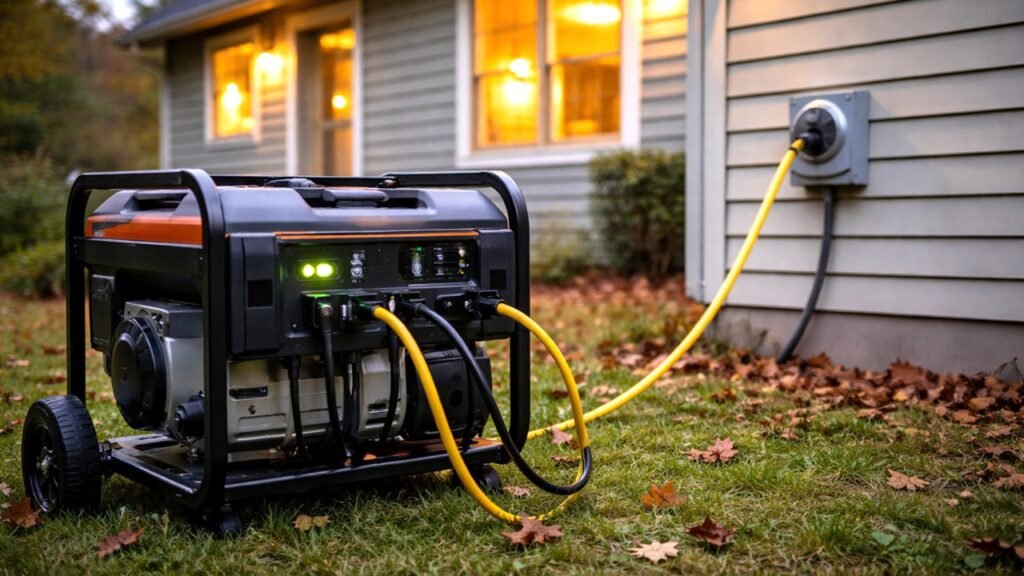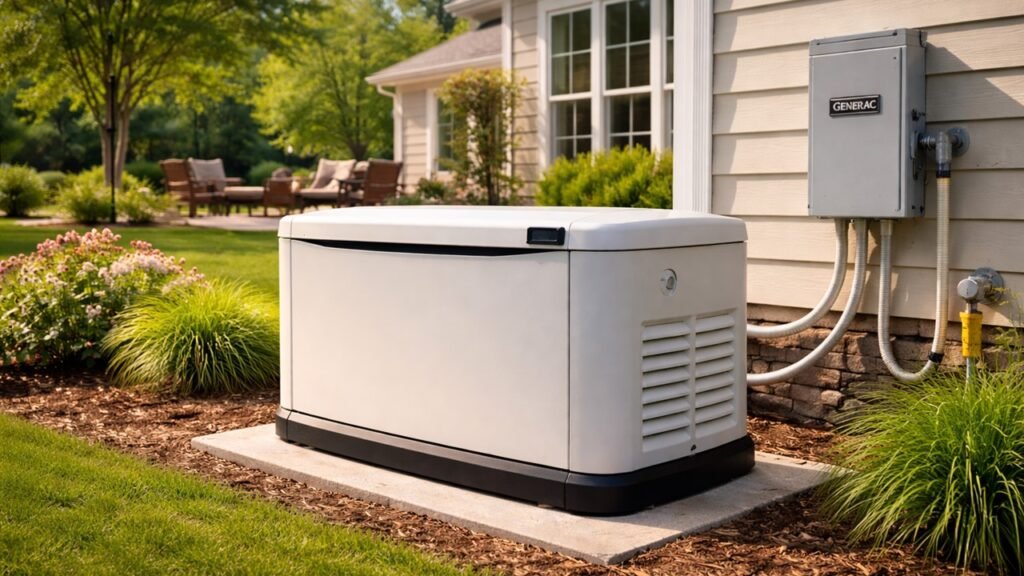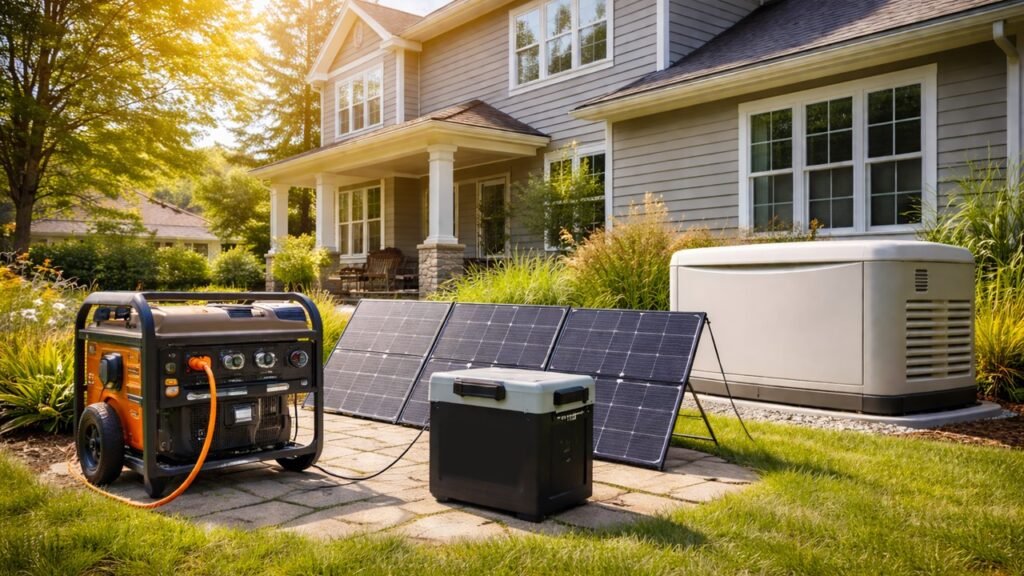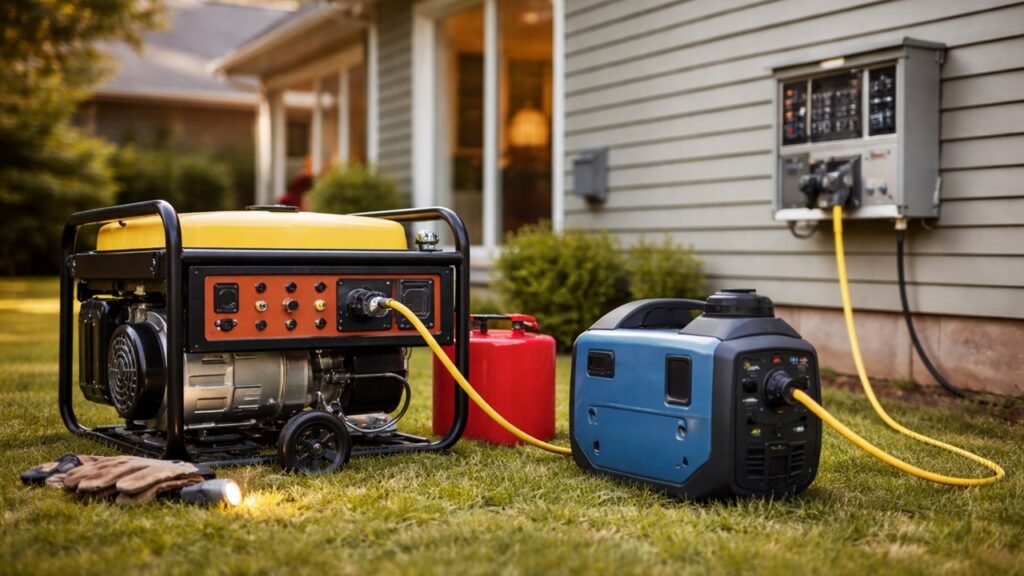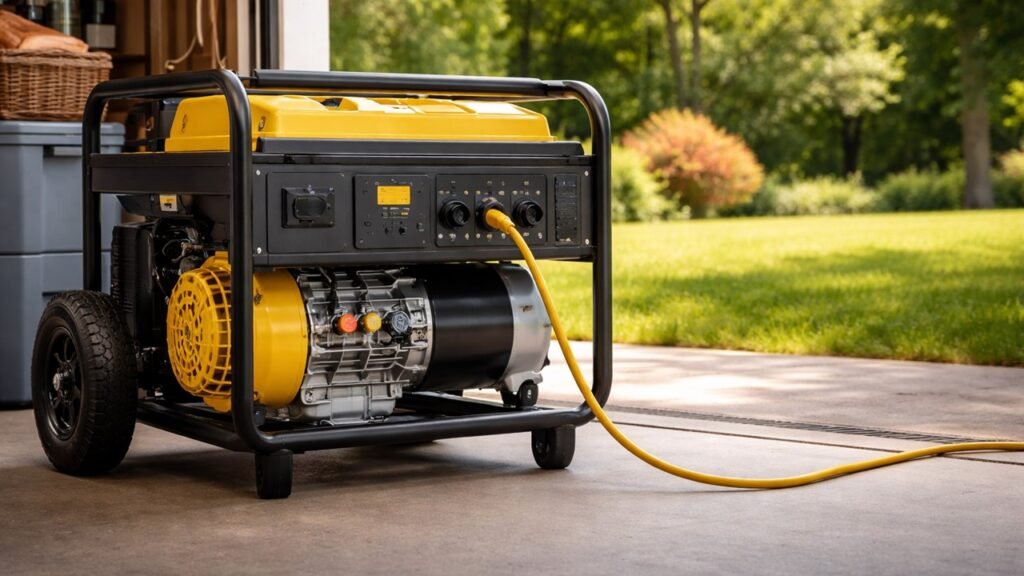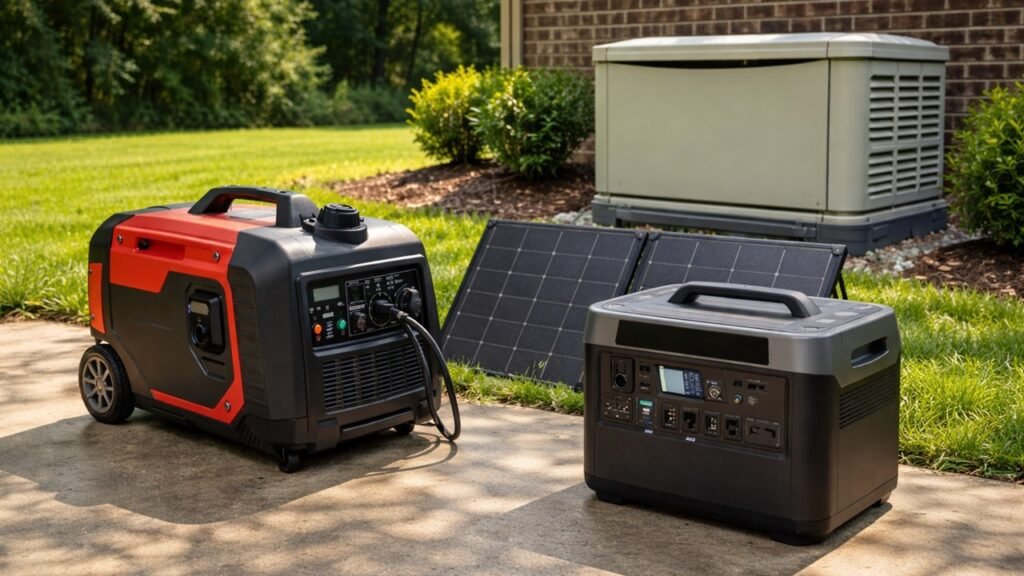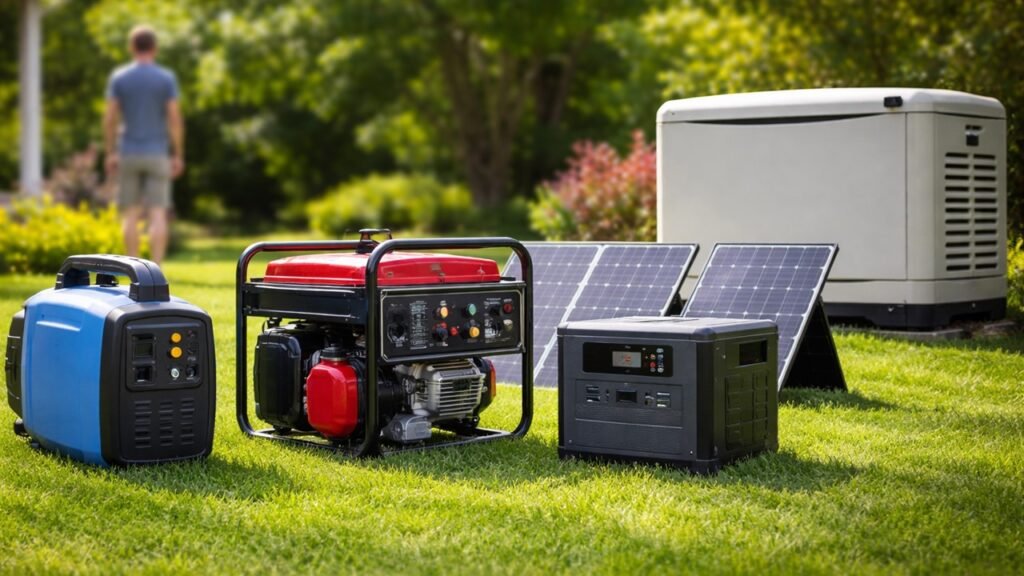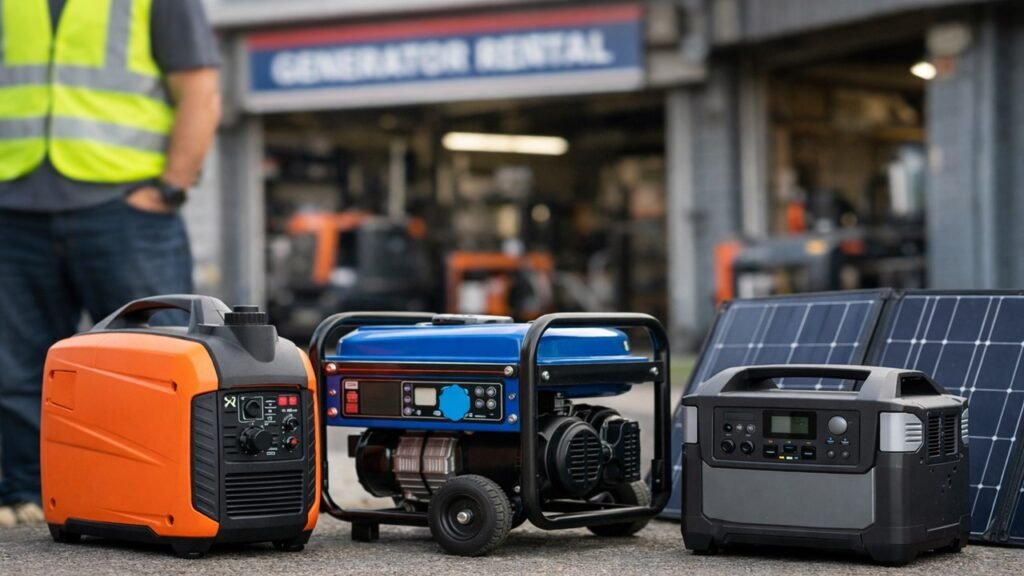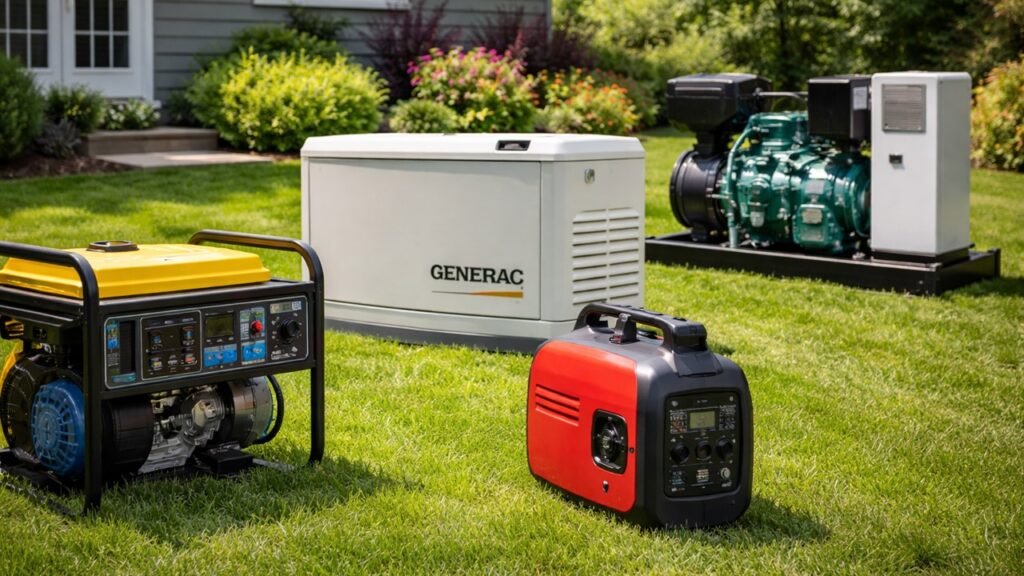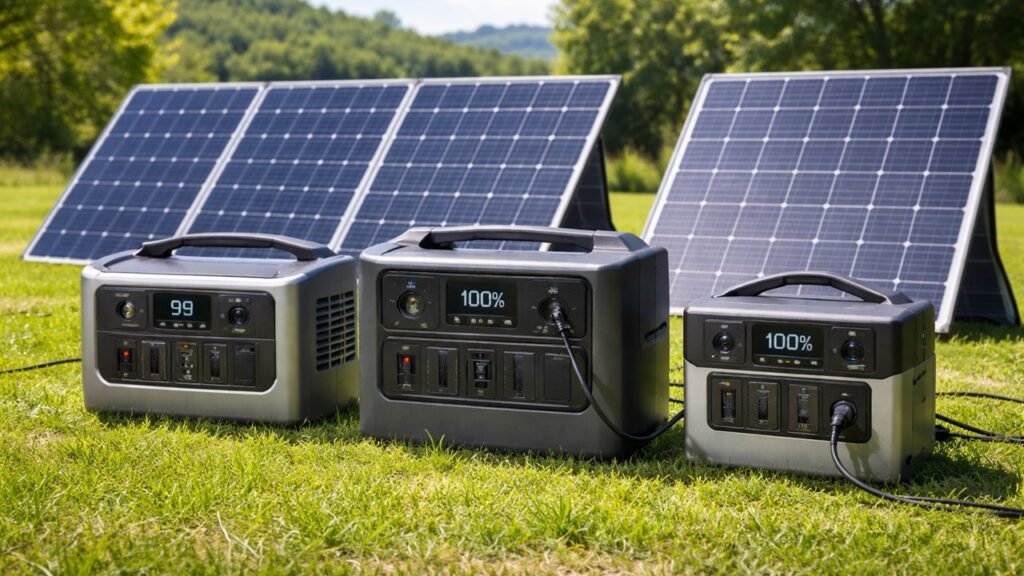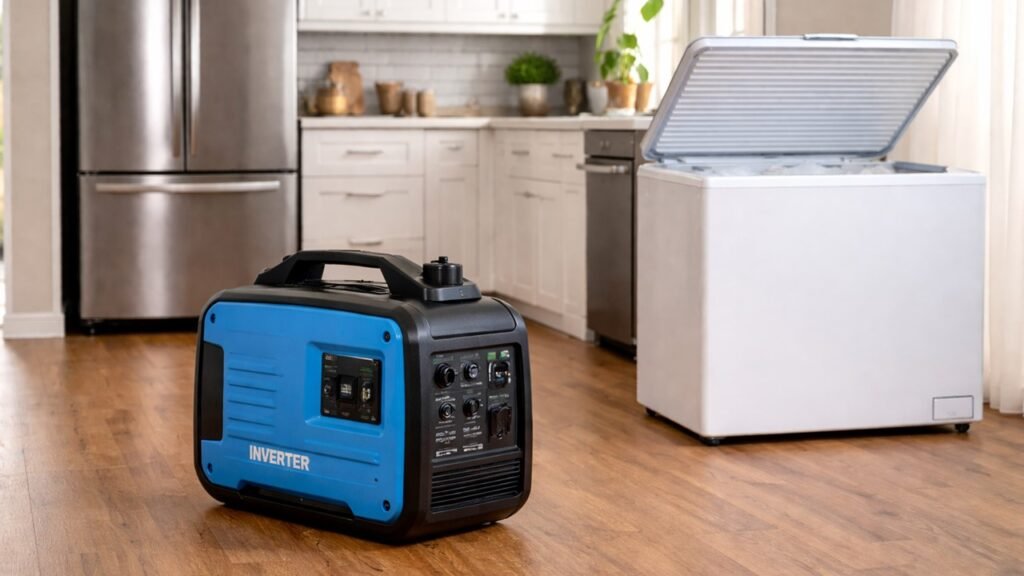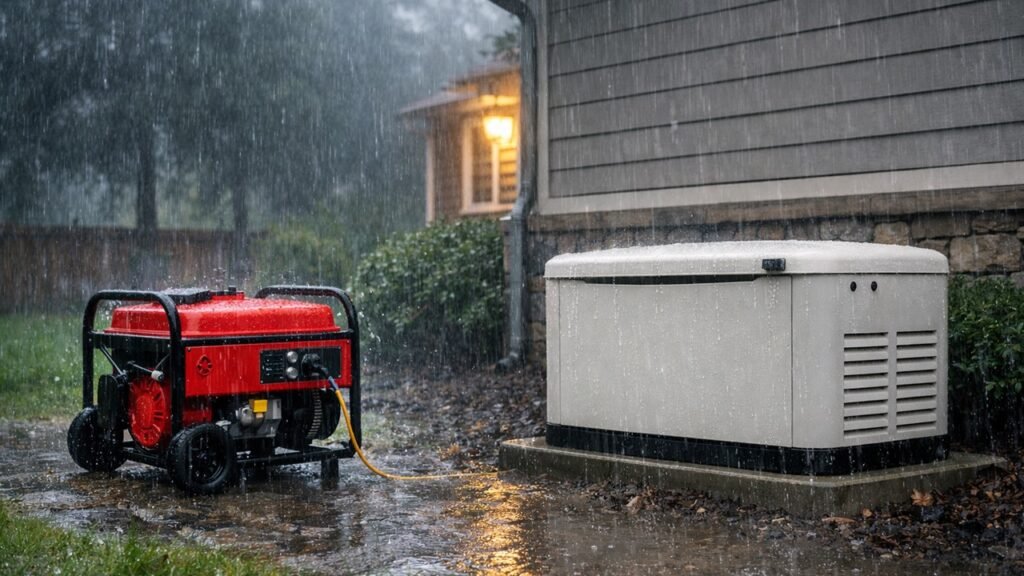
If you are looking for the best portable generators for home backup, RV trips, or emergency outages, this guide will help you find the right one quickly. A portable generator provides backup electricity when the grid goes down. A good generator keeps essential appliances running and protects electronics during outages.
For example, the Westinghouse 8200 Peak Watt Tri-Fuel works well for home backup power because it offers tri fuel flexibility and inverter level clean electricity. The WEN Quiet and Lightweight 3600-Watt is a quiet dual fuel option that fits RV trips and light emergency use. The Honda EU2200ITAN 2200-Watt is known for ultra quiet operation and compact portability. The Generac 5,200-Watt Dual-Fuel delivers mid range inverter power for both camping and residential backup. Meanwhile, the Champion Power Equipment 4000-Watt works well for lightweight RV power and small home essentials.
After testing the top portable generators for home backup, RV travel, and emergency power outages, this guide breaks down the models that deliver reliable performance. You will see which generator fits different situations, how much power you actually need, and what features matter when choosing a portable backup generator.
We’re reader-supported. When you buy through links on our site, we may earn an affiliate commission. As an Amazon Associate, we earn from qualifying purchases at no extra cost to you.
Best Generators for Home: Our Top Picks
- Best Overall: Westinghouse 8200 Peak Watt Tri-Fuel (iGen8200TFc)
- Best Quiet Lightweight: WEN Quiet and Lightweight 3600-Watt (DF360iX)
- Best Compact Inverter Option: Honda EU2200ITAN 2200-Watt
- Best Mid Power Option: Generac 5,200-Watt Dual-Fuel (iQ5200 DF)
- Best Lightweight RV Ready: Champion Power Equipment 4000-Watt
- Best Battery Powered Option: Jackery Solar Generator 1000 v2
- Best High Watt Tri Fuel Backup: WEN 14500-Watt 120V/240V Tri-Fuel (TF1450)
- Best Heavy Duty Dual Fuel: DuroMax XP13000EH 13,000-Watt Dual Fuel
- Best Budget Dual Fuel Inverter: PowerSmart 3800-Watt Portable Inverter Generator
- Best Low THD Budget Pick: Aceup Energy 4000 Watt Inverter Generator (AI4000s)
- Best Ultra Light RV Generator: Pulsar GD400BN 4000W
- Best Fuel Efficient Long Runtime: ERAYAK 4500W Portable Inverter Generator (4500PD)
1. Best Overall: Westinghouse 8200 Peak Watt Tri-Fuel (iGen8200TFc)
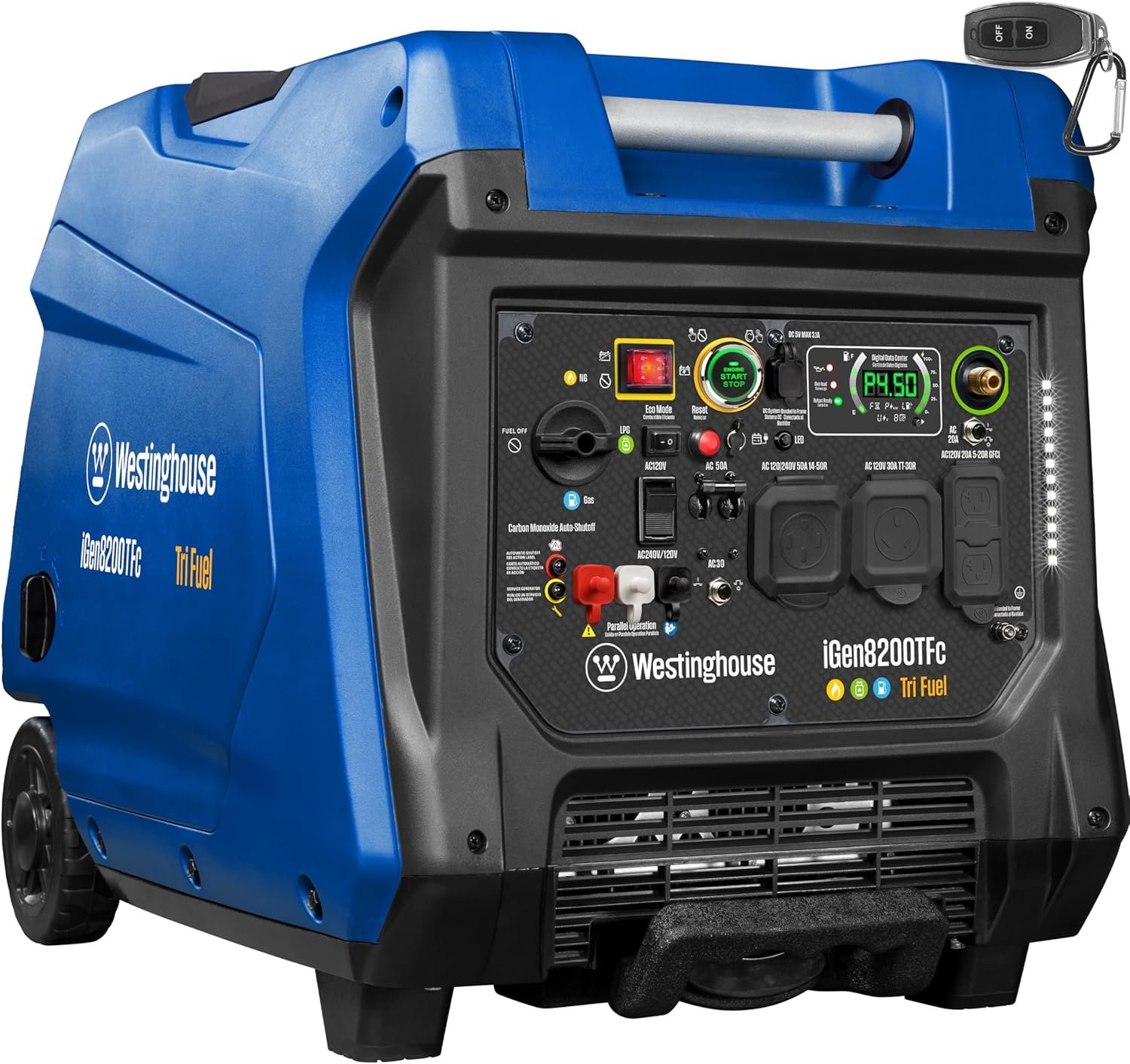
Key Details:
- 8,200 peak watts and 6,600 running watts on gasoline (tri-fuel also supports propane and natural gas).
- Up to 17 hours runtime on a 3.9-gallon fuel tank at 25% load.
- Low THD under 3% which keeps power safe for electronics.
- 120/240V output with 50A 14-50R outlet plus TT-30R RV outlet.
- Remote electric start, CO sensor, enclosed inverter design.
If you are looking for a portable generator that can realistically support home backup and outdoor use, the Westinghouse iGen8200TFc checks a lot of important boxes. Right away you will notice that it combines inverter technology with real backup power capability. In our experience, that mix is what many homeowners want when searching for a reliable generator for power outages.
When outages hit, fuel flexibility suddenly becomes very valuable. You will find the tri-fuel design extremely practical because gasoline provides the highest output, propane stores well for long periods, and natural gas can keep the generator running if your house already has a gas line. That kind of flexibility makes emergency planning much easier.
We like the fact that this generator still stays relatively quiet for its power level. Around 60 dBA at lighter loads means it is far less disruptive than many open-frame models. When tested with typical essentials like refrigerators, lights, routers, and charging devices, this size class provides enough headroom to run multiple appliances comfortably.
Another detail that stands out is the low THD rating under 3%. That means the Westinghouse iGen8200TFc delivers clean inverter power that is much safer for laptops, TVs, and other sensitive electronics. Add the remote start, 50-amp outlet, and transfer switch compatibility, and it becomes a very capable solution for serious backup use.
Pros:
- Tri-fuel flexibility improves emergency preparedness.
- Clean inverter power under 3% THD protects electronics.
- 50A outlet and 240V support work well with transfer switches.
- Remote start and CO sensor add convenience and safety.
Cons:
- Heavier than smaller inverter generators.
- Premium inverter tri-fuel models cost more than basic units.
2. Best Quiet Lightweight: WEN Quiet and Lightweight 3600-Watt (DF360iX)
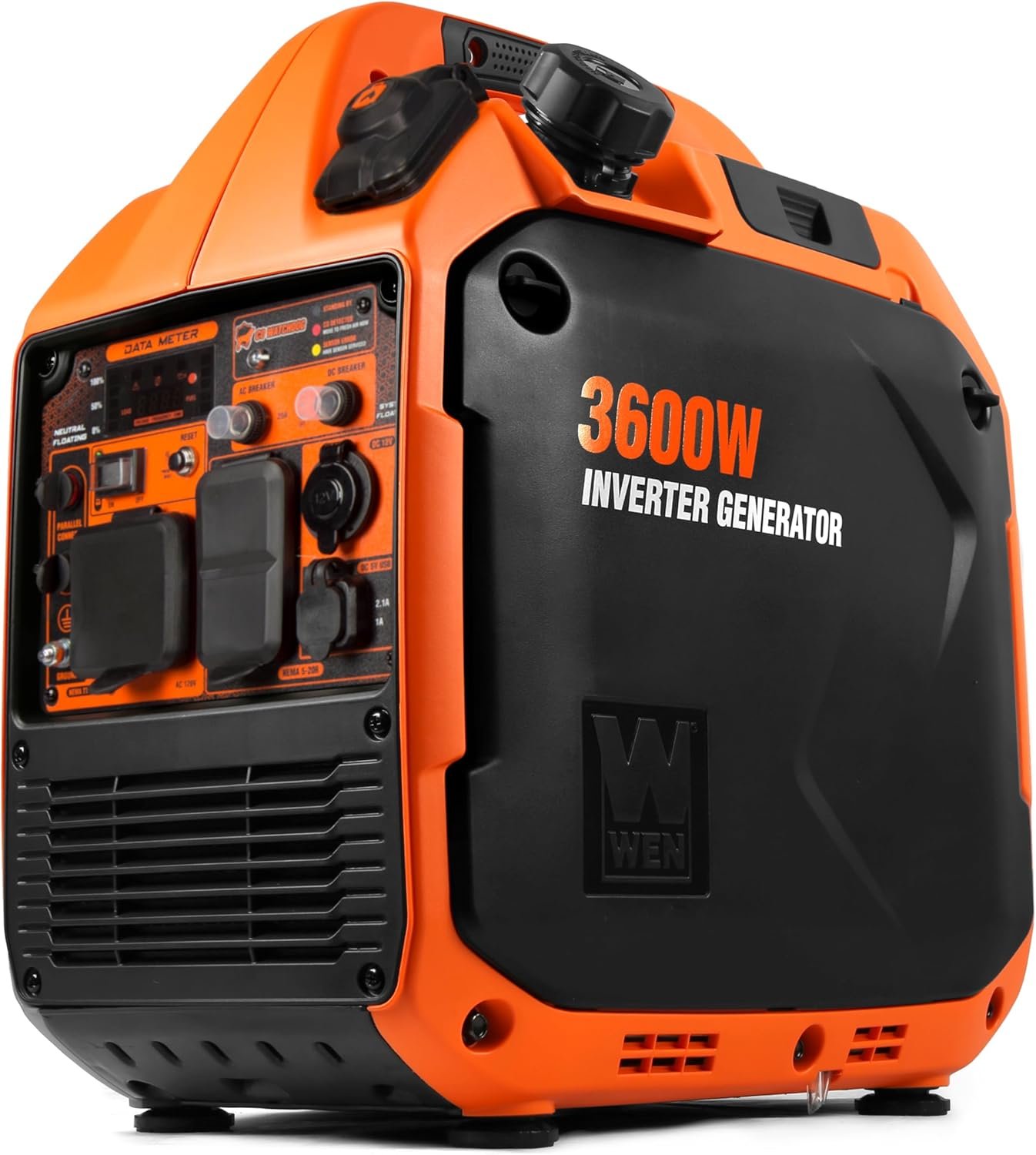
Key Details:
- 3,600 surge watts and 2,900 rated watts on gasoline.
- 3,500 surge watts and 2,600 rated watts on propane.
- Lightweight design at about 49 pounds.
- RV-ready TT-30R outlet plus USB ports and DC output.
- CO Watchdog safety system with fuel shut-off feature.
For RV trips, tailgating, and light emergency backup, the WEN DF360iX is the kind of generator that many people actually end up using regularly. If you value portability, you will immediately notice how manageable this unit feels compared with larger open-frame generators.
When tested in situations like camping setups or short power outages, generators in the 3,000-watt range often hit the sweet spot. You will find they can run essentials like a refrigerator, fans, lighting, and device chargers while staying quiet and efficient.
We like the dual-fuel capability because it adds flexibility without complicating the generator. Propane is easier to store long-term, while gasoline is quick to refill during travel. For RV users especially, the TT-30R outlet makes connecting directly to the RV power system simple.
Another thoughtful detail is the fuel shut-off system. When generators sit unused for months, stale fuel can cause starting problems. The WEN DF360iX helps reduce that risk, which makes ownership much less frustrating over time.
Pros:
- Dual-fuel flexibility supports propane and gasoline.
- Lightweight design makes transport easy.
- Quiet inverter operation suits RV parks and neighborhoods.
- RV-ready outlet simplifies camping power setups.
Cons:
- Output is limited for larger home appliances.
- Shorter runtime under heavy loads.
3. Best Compact Inverter Option: Honda EU2200ITAN 2200-Watt
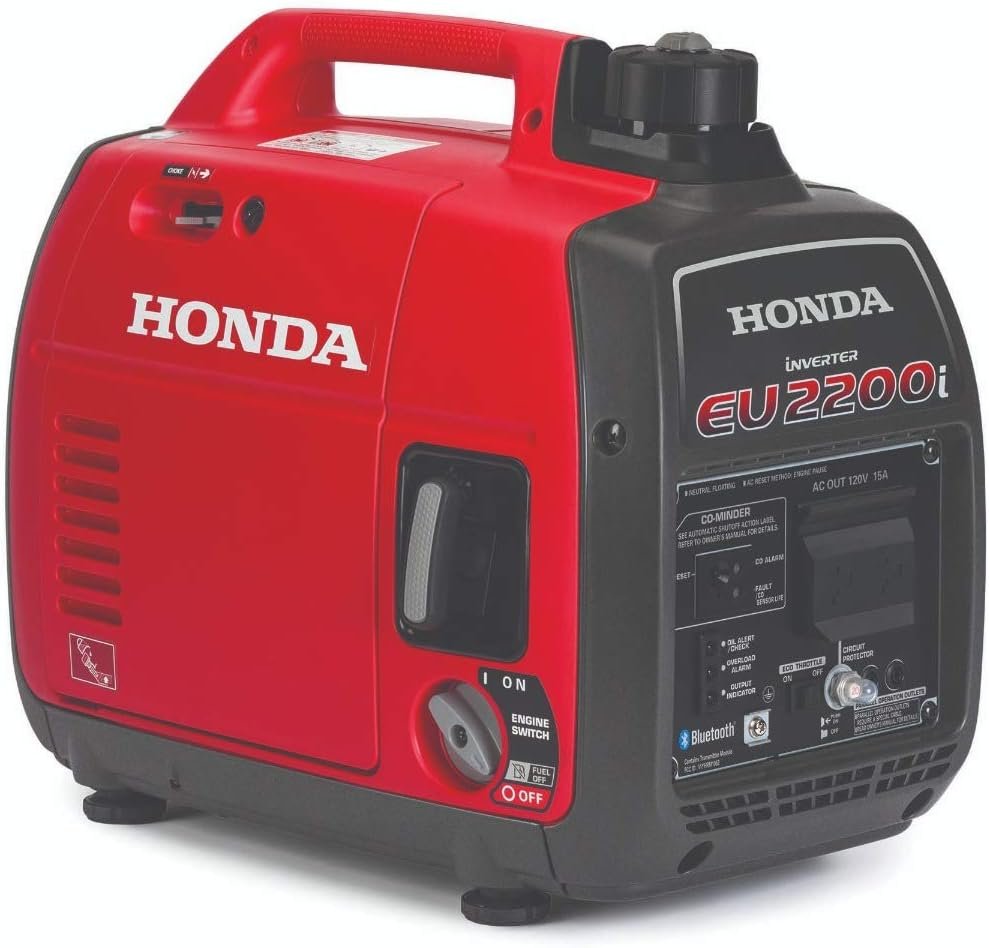
Key Details:
- 2,200 watts of inverter power in a compact design.
- Up to 8 hours runtime on a 1-gallon fuel tank.
- Lightweight build around 51 pounds.
- CO-Minder carbon monoxide shutdown protection.
- Clean inverter power for electronics.
When reliability and quiet operation matter most, the Honda EU2200i often ends up on the shortlist. If you prefer a compact portable generator that is easy to move and extremely dependable, this model continues to be one of the most trusted options.
You will find that generators in this size class work well for essential electronics, lighting, routers, and small appliances. During testing scenarios like camping trips or short outages, this level of power often covers the basics without unnecessary noise.
What many users appreciate is how smooth the generator runs. In our experience, the sound profile is not just quiet but also consistent, which makes a difference when the generator is running overnight at a campsite or near a home.
The Honda EU2200i is not designed to power an entire house, so it is important to plan loads carefully. But if your goal is dependable portable electricity for camping, emergency essentials, and sensitive electronics, this compact inverter generator performs extremely well.
Pros:
- Highly reliable engine design.
- Quiet operation suitable for camping and residential areas.
- Compact size improves portability.
- Clean inverter output protects electronics.
Cons:
- Lower wattage limits larger appliances.
- Gasoline-only fuel option reduces flexibility.
4. Best Mid Power Option: Generac 5,200-Watt Dual-Fuel (iQ5200 DF)
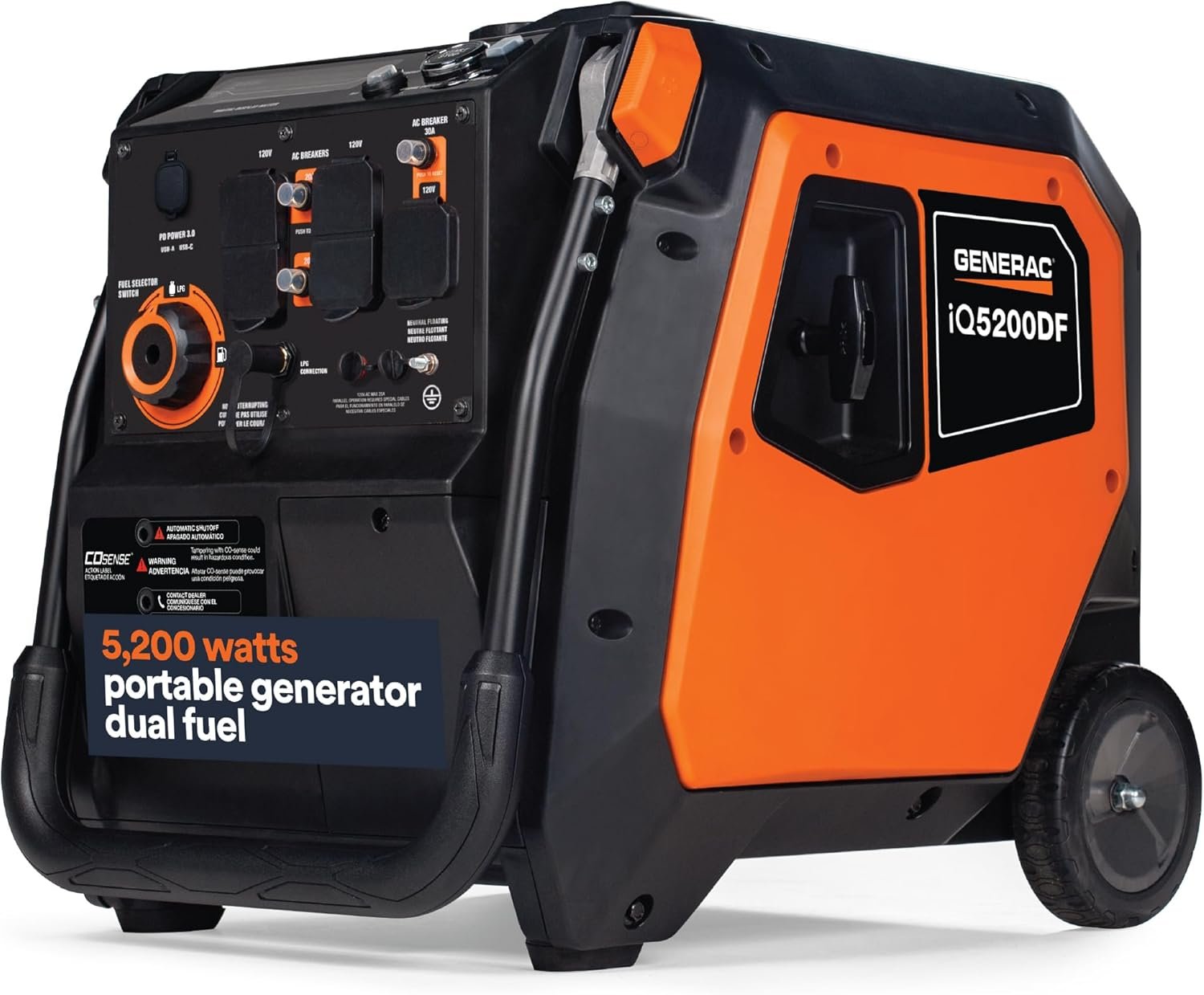
Key Details:
- 5,200 starting watts and 3,900 running watts.
- Dual-fuel capability using gasoline or propane.
- Electric start with enclosed quiet design.
- COsense carbon monoxide detection and shutdown.
- Parallel-ready inverter generator.
If you want a generator that offers more power than smaller camping units but still stays quieter than conventional models, the Generac iQ5200 DF fits nicely in that middle category. When you look at portable generator options for home backup, this power range tends to cover many essential circuits comfortably.
One thing you will quickly appreciate is the dual-fuel system. Propane makes long-term storage easier, while gasoline provides strong performance when the generator is used more frequently. That combination is especially helpful during storms or emergency outages.
We like the fully enclosed design because it helps keep noise lower than typical open-frame generators. During testing with appliances like refrigerators, lighting, and charging equipment, generators in this range often provide a comfortable balance between portability and usable power.
The Generac iQ5200 DF also includes electric start, which is something many owners appreciate during stressful situations. Instead of struggling with pull cords in bad weather, starting the generator becomes much easier and faster.
Pros:
- Balanced power level for many home essentials.
- Dual-fuel flexibility improves fuel options.
- Enclosed design helps reduce noise.
- Electric start adds convenience.
Cons:
- Not powerful enough for whole-house loads.
- Heavier than smaller portable inverter models.
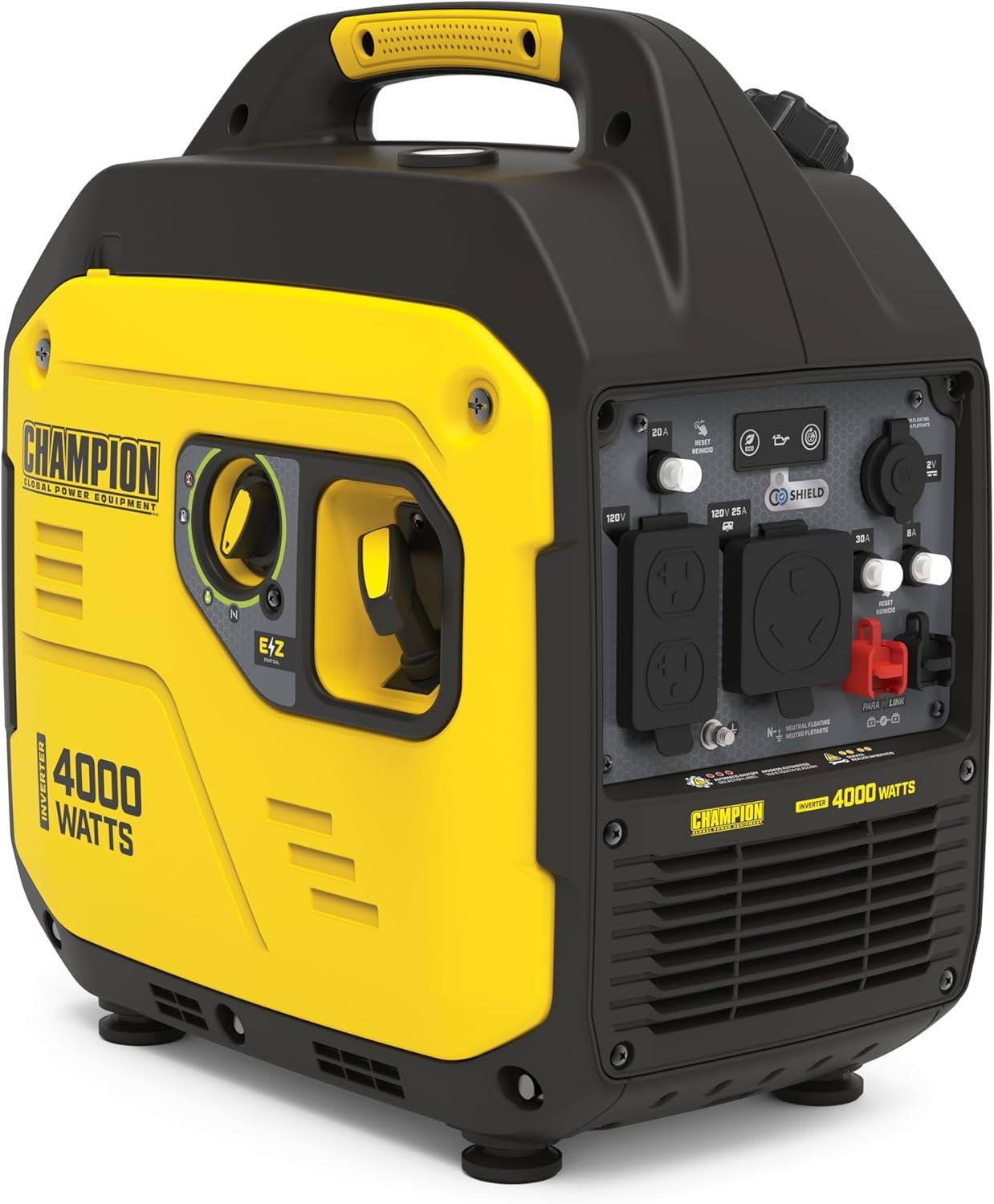
5. Best Lightweight RV Ready: Champion Power Equipment 4000-Watt
Key Details:
- 4,000 starting watts and 3,000 running watts.
- Up to 10 hours runtime on a 1.54-gallon fuel tank.
- Quiet operation around 64 dBA at 23 feet.
- RV-ready TT-30R outlet plus household outlets and 12V outlet.
- Clean inverter power under 3% THD with CO Shield safety shutdown.
If portability and simplicity are priorities, the Champion 4000-Watt RV Ready Portable Inverter Generator is a model many RV owners end up appreciating. When you first lift it, the weight immediately stands out. At under 50 pounds, it is much easier to move than most generators in the 4,000-watt category.
You will find this power level fits a lot of real situations. During testing with basic loads like a refrigerator, lighting, chargers, and small appliances, generators in this class often cover the essentials comfortably. For RV travel, the TT-30 outlet also means fewer adapters and a much easier connection to the camper.
We like that Champion designed this unit around quiet inverter technology. Running around the mid-60 dBA range makes it much more campground-friendly than traditional open-frame generators. If you have ever tried sleeping near a loud generator, that difference becomes very noticeable.
Another advantage is expandability. When more power is needed, the Champion 4000-Watt RV Ready Portable Inverter Generator can run in parallel with another compatible unit. That flexibility makes it easier to upgrade power later without replacing the generator entirely.
Pros:
- Very portable weight for a 4,000-watt class generator.
- RV-ready outlet simplifies camper power setups.
- Clean inverter electricity is safe for electronics.
- Parallel capability allows future power expansion.
Cons:
- Gasoline-only fuel option limits flexibility.
- Running watts may be tight for multiple large appliances.
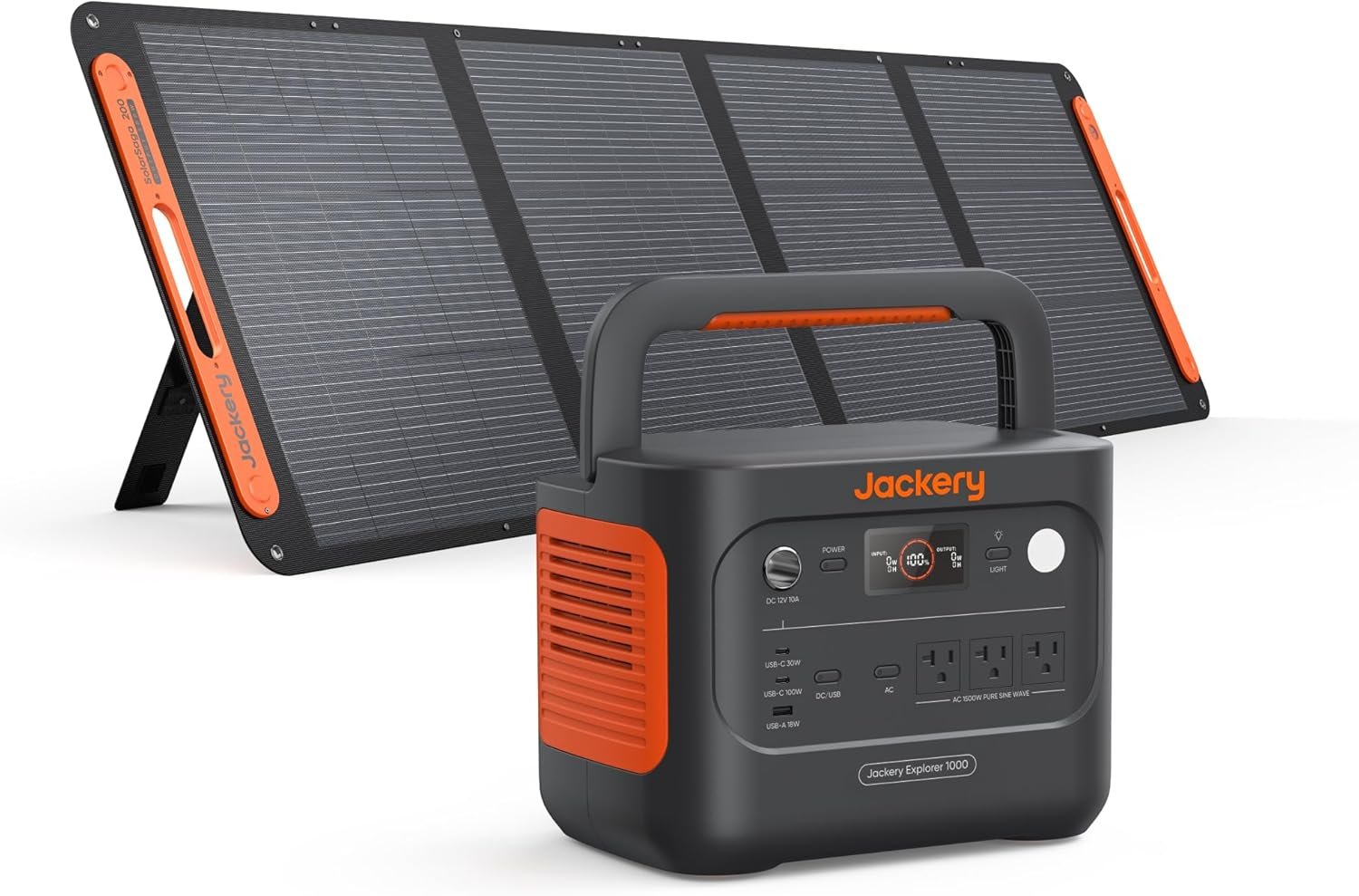
6. Best Battery Powered Option: Jackery Solar Generator 1000 v2
Key Details:
- 1,070Wh battery capacity with 1,500W AC output.
- 3,000W surge peak for starting appliances.
- Fast charging from 0–100% in about 1 hour (emergency mode).
- LiFePO4 battery rated for about 4,000 cycles.
- Includes 200W solar panel for off-grid charging.
If fuel, noise, and exhaust are concerns, a battery-powered solution like the Jackery Solar Generator 1000 v2 can be a very convenient alternative. You will find it works especially well for apartments, RV trips, and short outages where quiet operation is a major advantage.
When tested during indoor backup scenarios, portable power stations like this are incredibly easy to use. There is no pull start or fuel management. Plug devices in, press the power button, and electricity is ready immediately. That simplicity is one reason many homeowners now keep a battery generator alongside a traditional fuel unit.
We like the balance between capacity and portability here. At just under 24 pounds, it is easy to carry around the house or load into a vehicle. The included solar panel also adds another layer of flexibility, allowing the Jackery Solar Generator 1000 v2 to recharge during daylight if the grid stays down.
One thing to keep in mind is that battery generators are best suited for electronics and moderate appliances. High-demand equipment can drain the battery faster than a gasoline generator would. Still, for quiet emergency power and camping use, this option is extremely practical.
Pros:
- Silent operation and zero exhaust fumes.
- Very lightweight and easy to transport.
- Fast charging capability compared to many power stations.
- Solar charging support improves off-grid usability.
Cons:
- Limited total energy compared with fuel generators.
- High-power appliances can drain the battery quickly.
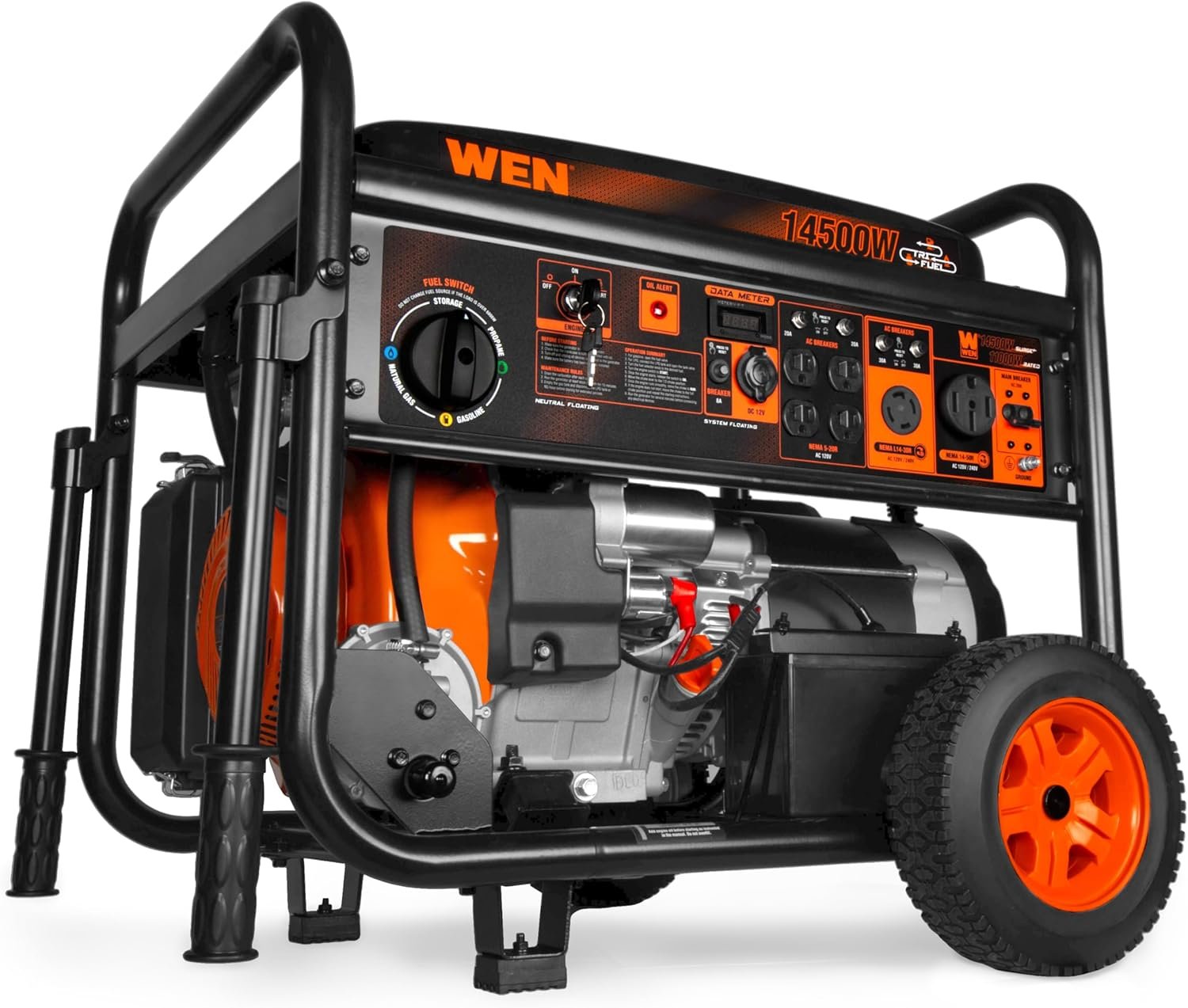
7. Best High Watt Tri Fuel Backup: WEN 14500-Watt 120V/240V Tri-Fuel (TF1450)
Key Details:
- 14,500 peak watts and 11,500 running watts on gasoline.
- Supports gasoline, propane, and natural gas.
- 120/240V output with transfer-switch-ready outlets.
- Large 8.2-gallon fuel tank with up to 12 hours runtime.
- Electric start with heavy-duty 500cc engine.
For homeowners who need serious backup capacity, the WEN TF1450 14500-Watt Tri-Fuel Generator moves into a much higher power class than most portable units. When larger appliances and multiple circuits need to run together, this level of output makes a noticeable difference.
If your goal is powering items like well pumps, refrigerators, sump pumps, and other essential equipment during an outage, generators in this range often provide the headroom required. You will find that connecting through a transfer switch or interlock allows this generator to support several household circuits at once.
We like the tri-fuel capability because it improves reliability during emergencies. Gasoline offers maximum power, propane stores well for long periods, and natural gas can run continuously if the home has a gas line connection. That flexibility helps avoid the stress of running out of fuel during a storm.
Of course, this much power comes with extra size and weight. The WEN TF1450 14500-Watt Tri-Fuel Generator is designed more for stationary home backup than constant moving. For users prioritizing output and fuel options over portability, it becomes a very capable emergency solution.
Pros:
- Extremely high output for a portable generator.
- Tri-fuel capability improves fuel availability during outages.
- Transfer-switch-ready outlets support safe home connection.
- Large fuel tank reduces frequent refueling.
Cons:
- Heavy and bulky compared with smaller generators.
- Conventional generator power may be rougher for sensitive electronics.
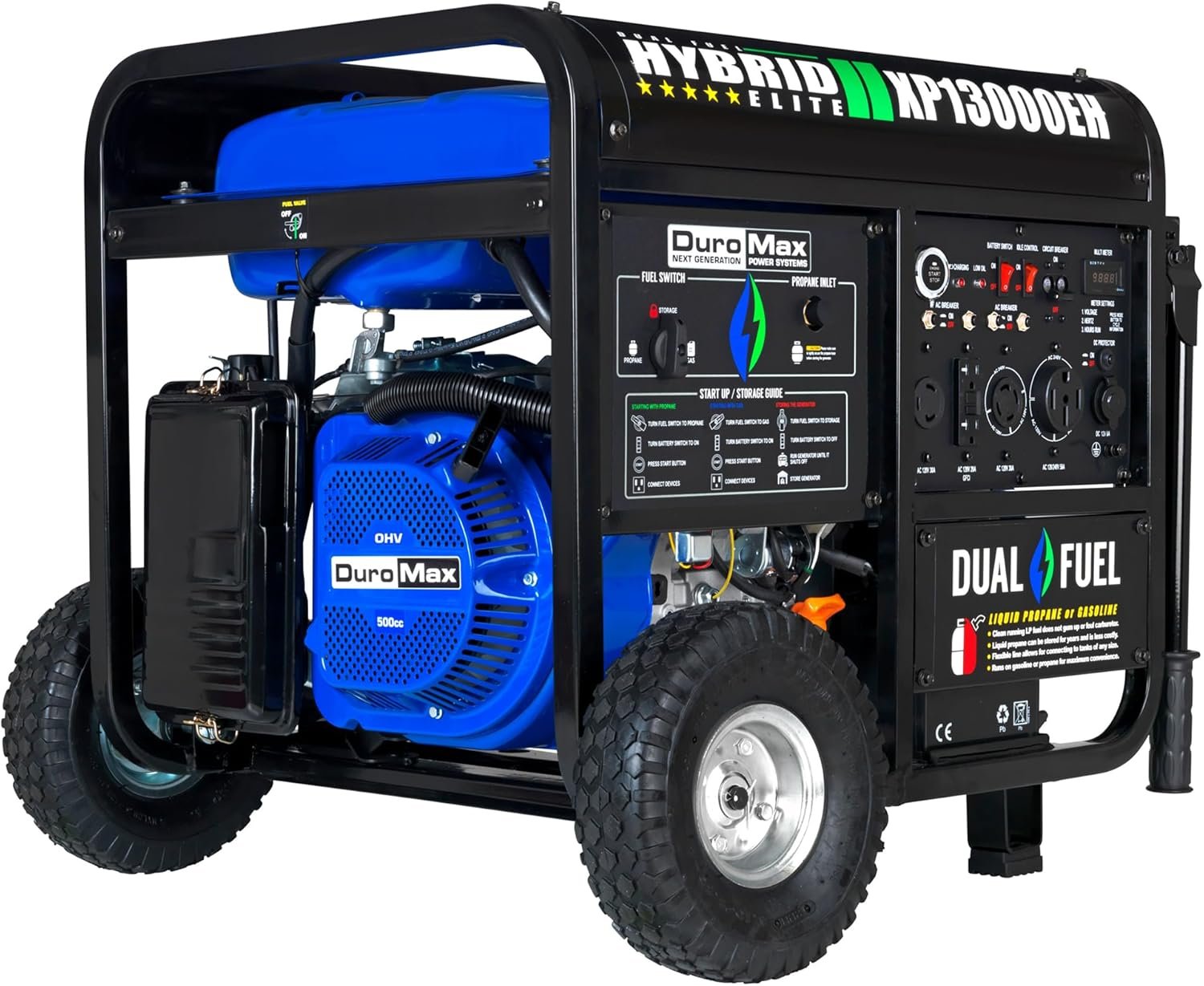
8. Best Heavy Duty Dual Fuel: DuroMax XP13000EH 13,000-Watt Dual Fuel
Key Details:
- 13,000 peak watts and 10,500 running watts.
- Dual-fuel capability using gasoline or propane.
- 120/240V output with transfer-switch-ready 50A outlet.
- Electric push-button start.
- Heavy-duty steel frame with wheel kit.
If large backup capacity is the goal, the DuroMax XP13000EH is built for that job. You will notice right away that this generator focuses on raw output and durability rather than compact size.
When tested for outage scenarios, generators in this power range can keep several major appliances operating simultaneously. Refrigerators, lights, fans, and even certain HVAC equipment can run together if the load is managed correctly.
We like the dual-fuel flexibility here because propane storage makes emergency preparation easier. At the same time, gasoline provides full performance when the highest output is required. The DuroMax XP13000EH also includes a 50-amp outlet, which many homeowners need for transfer switch setups.
The tradeoff is weight and noise. Large open-frame generators naturally produce more sound than smaller inverter models. Still, for people looking for dependable backup power capable of running many household circuits, this generator delivers serious capability.
Pros:
- High output supports multiple household appliances.
- Dual-fuel system improves emergency fuel flexibility.
- 50-amp outlet works well with home transfer switches.
- Strong steel frame designed for heavy-duty use.
Cons:
- Much heavier than compact inverter generators.
- Louder operation compared with enclosed inverter models.
9. Best Budget Dual Fuel Inverter: PowerSmart 3800-Watt Portable Inverter Generator
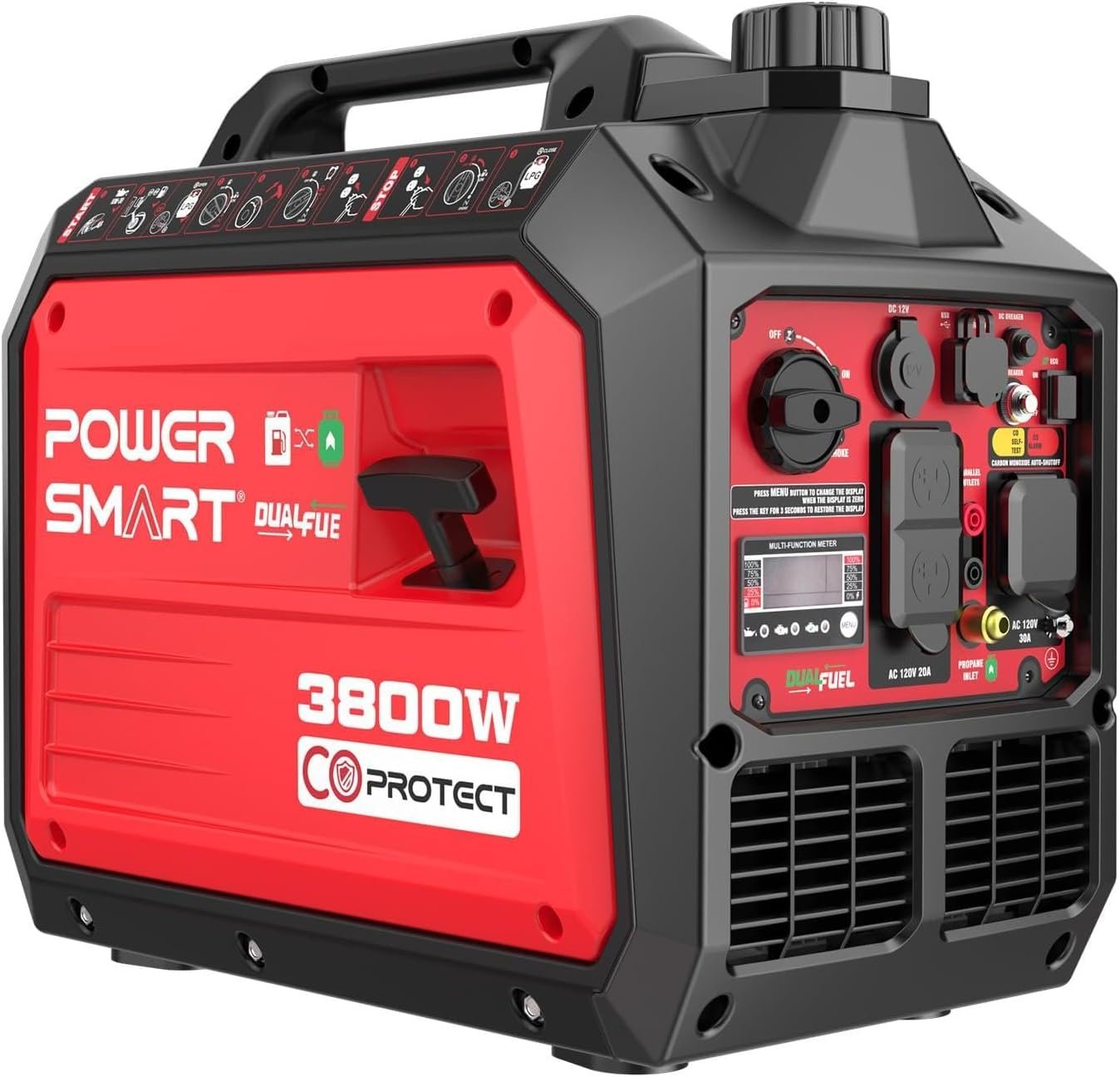
Key Details:
- 3,800 starting watts and 3,100 running watts on gasoline.
- Dual-fuel capability using gasoline or propane.
- Quiet operation around 59 dBA at 25% load.
- 30A RV outlet plus AC outlets, USB ports, and 12V DC outlet.
- CO auto-shutdown, Eco Mode, and overload reset protection.
If affordability is a major factor, the PowerSmart 3800 Dual Fuel Portable Inverter Generator gives you useful features without pushing the price into premium territory. When looking for a practical portable generator for RV trips or occasional outages, this model delivers enough power for many everyday situations.
You will find that generators around the 3,000 running watt range usually handle basic appliances well. During testing scenarios like powering a refrigerator, lights, routers, and charging devices, this level of output tends to work reliably as long as larger appliances are managed carefully.
We like the dual-fuel option here because propane can be easier to store long term, especially for emergency planning. Gasoline remains convenient for quick refueling during travel or outdoor use. The PowerSmart 3800 Dual Fuel Portable Inverter Generator gives buyers that flexibility without adding complexity.
Noise is another area where this model performs well. Around 59 dBA at lighter loads keeps operation reasonable in residential areas or campgrounds, which makes it a comfortable generator to run for extended periods.
Pros:
- Dual-fuel capability improves flexibility for travel and outages.
- Budget-friendly price compared with many inverter generators.
- Quiet operation helps in residential or camping environments.
- RV-ready 30A outlet simplifies camper power connections.
Cons:
- Power output limits simultaneous use of large appliances.
- Build quality may not feel as heavy-duty as premium brands.
10. Best Low THD Budget Pick: Aceup Energy 4000 Watt Inverter Generator (AI4000s)
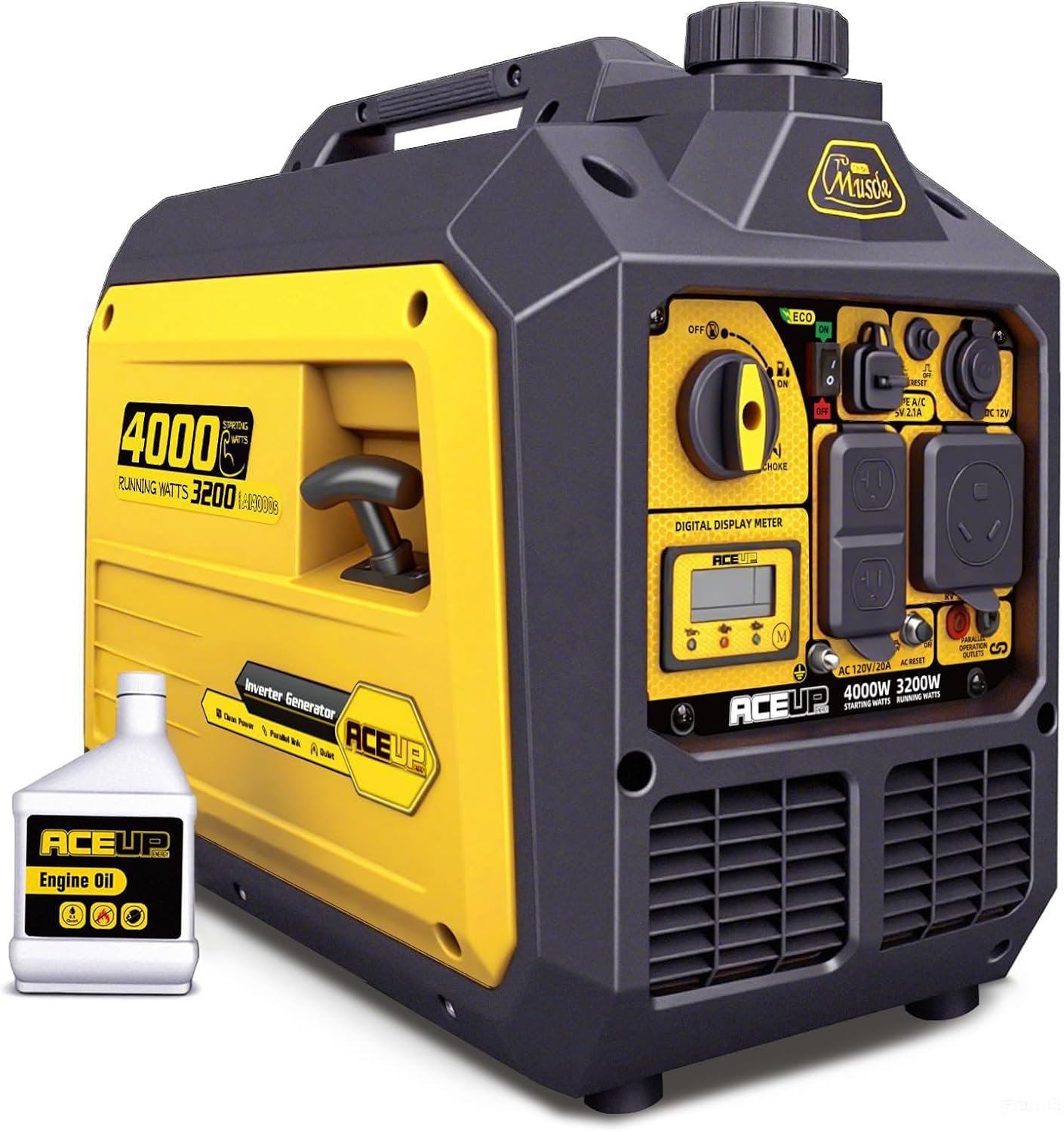
Key Details:
- 4,000 peak watts and 3,200 running watts.
- Low THD under 1.5% for clean electricity.
- Quiet operation around 60 dBA in Eco Mode.
- RV-ready outlet plus AC outlets and DC charging port.
- Parallel-ready capability for increased power.
For buyers who want cleaner electricity without paying premium prices, the Aceup Energy AI4000s stands out with its extremely low THD rating. When sensitive electronics are involved, power quality becomes just as important as wattage.
You will find that this wattage range offers a comfortable balance between portability and capability. In testing situations like running a refrigerator, lighting, and charging devices, generators around 3,200 running watts often provide enough capacity for basic home backup needs.
We like the Eco Mode because it allows the engine speed to adjust based on demand. That feature helps reduce noise and fuel use during lighter loads, which is useful when the generator runs overnight powering only a few essential devices.
Another useful feature is the parallel capability. If additional power is needed later, pairing another Aceup Energy AI4000s can effectively double available output without replacing the entire generator.
Pros:
- Very low THD output protects sensitive electronics.
- Parallel-ready design allows future power expansion.
- Quiet inverter operation for camping or home use.
- Good balance of output and portability.
Cons:
- Recoil start only without electric start convenience.
- Smaller fuel tank limits extended runtime.
11. Best Ultra Light RV Generator: Pulsar GD400BN 4000W
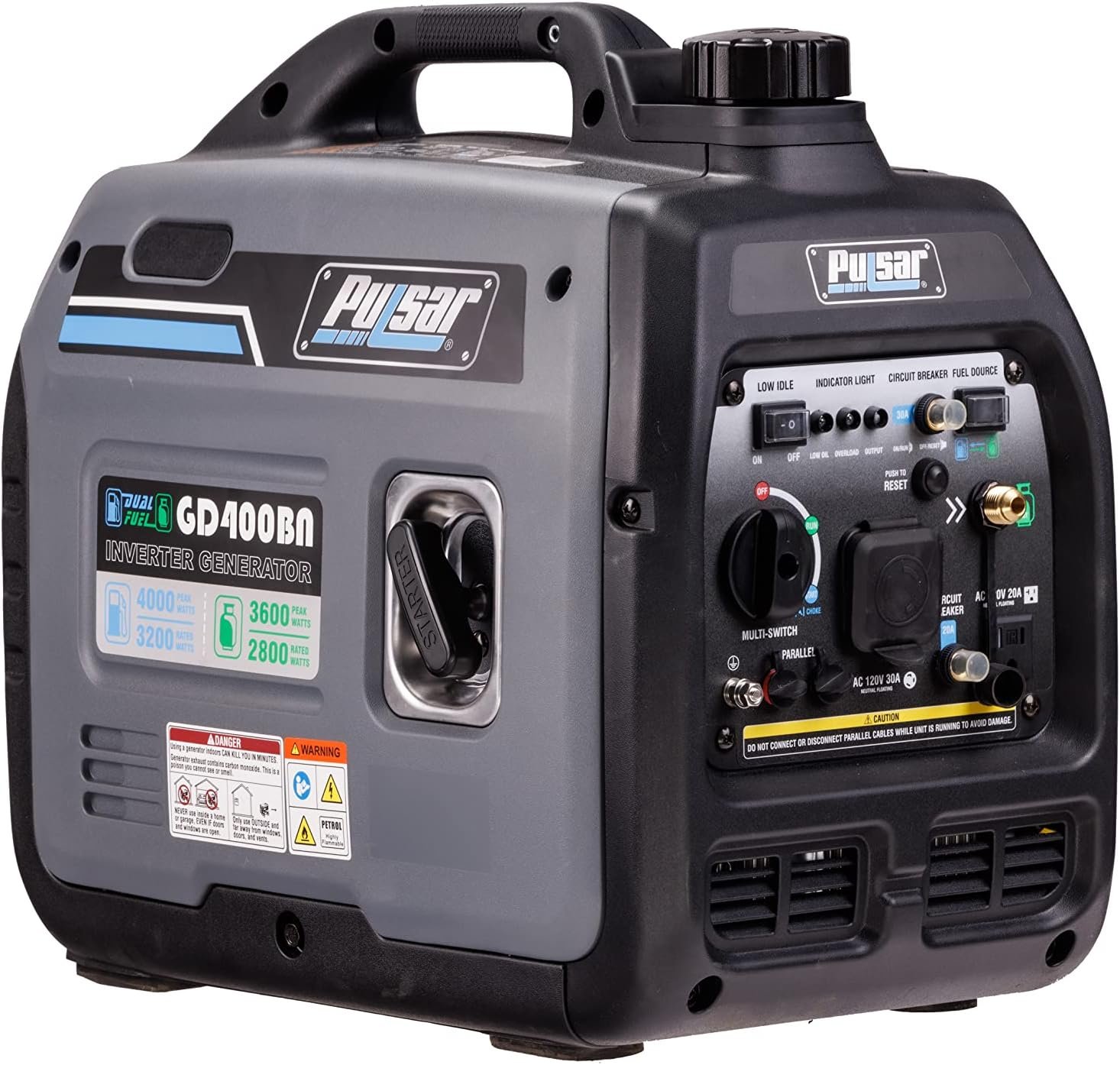
Key Details:
- 4,000 peak watts and 3,200 running watts on gasoline.
- Dual-fuel capability using gasoline or propane.
- Ultra-lightweight design at about 47.3 pounds.
- Quiet operation around 59 dBA at half load.
- Parallel capable inverter generator.
If portability is one of your top priorities, the Pulsar GD400BN becomes an appealing option right away. When lifting it for the first time, you will notice how much easier it feels compared with many generators in the same power class.
For RV owners and campers, that lighter weight can make a real difference. You will find that generators under 50 pounds are much easier to load into vehicles, move around campsites, and store when not in use.
We like the dual-fuel capability because it adds flexibility during travel or emergencies. Propane works well for camping setups, while gasoline remains easy to find when refueling on the road.
Another benefit is the quiet inverter design. When operating around 59 dBA at partial load, the Pulsar GD400BN stays comfortable for campground use or residential backup situations where excessive noise would be a problem.
Pros:
- Extremely lightweight for a generator in this power range.
- Dual-fuel flexibility supports propane or gasoline.
- Quiet operation improves campground and neighborhood comfort.
- Parallel capability allows additional power when needed.
Cons:
- Smaller fuel tank reduces continuous runtime.
- Recoil start may be less convenient than electric start models.
12. Best Fuel Efficient Long Runtime: ERAYAK 4500W Portable Inverter Generator (4500PD)
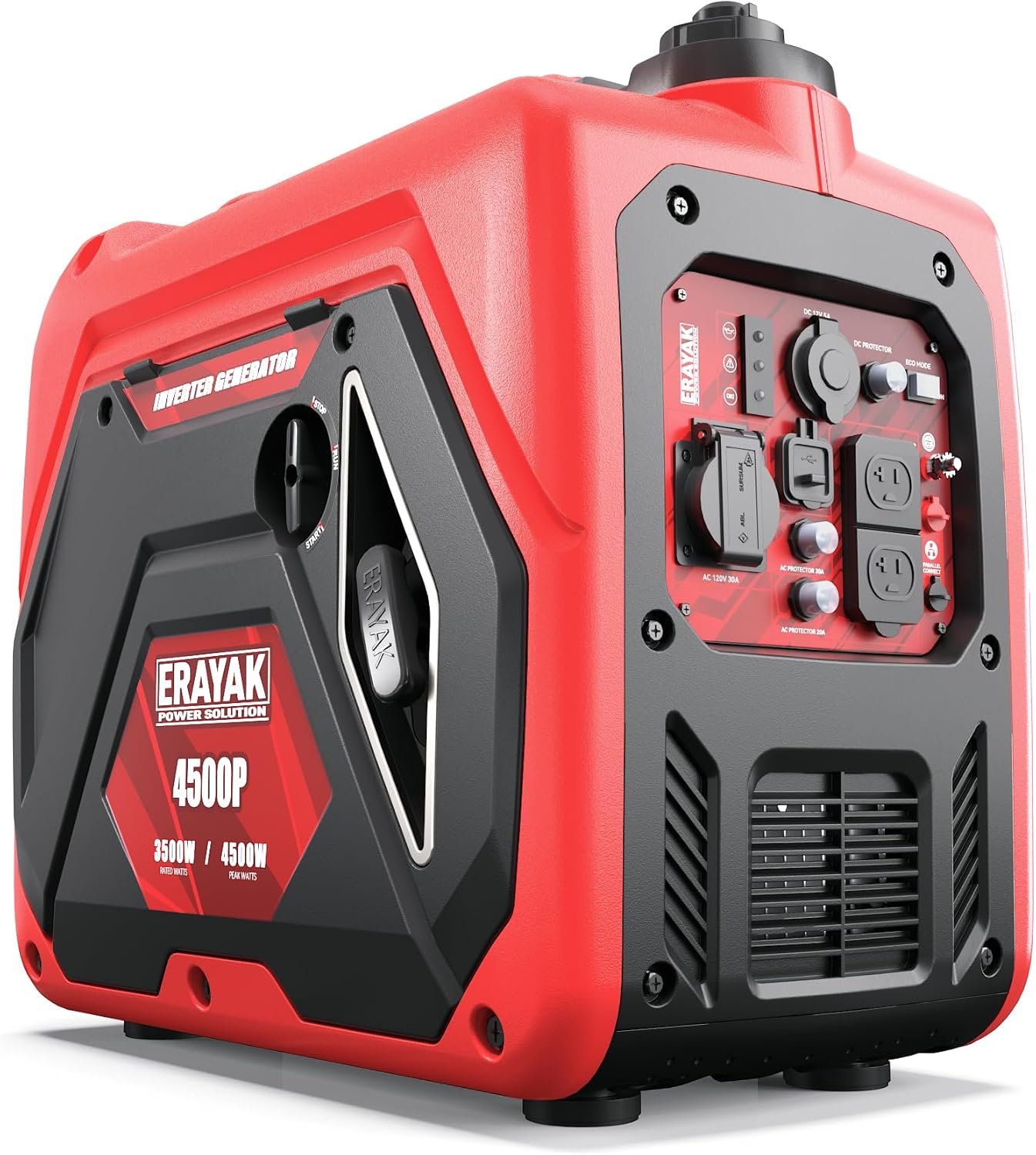
Key Details:
- 4,500 peak watts and 3,500 running watts.
- Runtime up to 16 hours at lighter loads (claimed).
- Very low THD between 0.2% and 1.2%.
- Parallel-ready capability with potential 7,000W output when paired.
- RV outlet plus AC outlets and USB charging ports.
For buyers who prioritize efficiency and long runtime, the ERAYAK 4500P Portable Inverter Generator is designed to stretch fuel as far as possible. During outages that last many hours, runtime can matter just as much as power output.
You will find that the 3,500 running watt range supports many typical backup loads such as refrigerators, lighting, routers, and charging equipment. That makes it a practical choice for households wanting reliable power for essential circuits.
We like the very low THD rating here because it indicates extremely clean electricity. That makes the ERAYAK 4500P Portable Inverter Generator well suited for electronics like computers, TVs, gaming systems, and other sensitive devices.
Another helpful feature is parallel capability. When additional capacity is needed, connecting two compatible units can significantly increase available power without moving to a much larger generator.
Pros:
- Long runtime helps during extended outages.
- Very low THD provides clean power for electronics.
- Parallel-ready system allows expansion of power.
- Good balance between portability and usable output.
Cons:
- Gasoline-only fuel option limits flexibility.
- Brand recognition is newer compared with established generator manufacturers.
What Is Considered a Portable Generator?
A portable generator produces electricity using a small engine and an alternator. The engine burns fuel and converts mechanical energy into electrical power. This power runs appliances, tools, and electronics during power outages or off grid situations.
Portable generators are designed to be movable and easy to store. Most units include wheels, handles, and compact frames so users can transport them to campsites, job sites, or emergency locations.
Portable generators provide temporary electricity when utility power is unavailable. Homeowners use portable generators for outage backup. RV owners use portable generators for off grid travel. Contractors use portable generators for power tools on remote job sites.
Who Should Consider Buying a Portable Generator?
A portable generator becomes valuable when reliable electricity is not guaranteed. If you deal with frequent outages, travel off grid, or need backup power in more than one place, a portable generator gives you flexibility that a fixed standby unit cannot.
Many buyers choose portable generators because they cost less than whole-house standby systems and can be used for different situations. When you want emergency power that can also go to an RV site, campsite, workshop, or outdoor project, this type of generator usually makes the most sense.
People who benefit most from portable generators include:
- Homeowners in storm-prone areas: Portable generators keep refrigerators, lights, fans, routers, and other essentials running during outages.
- RV owners and campers: Portable generators supply power for RV appliances, chargers, and in some cases air conditioners when hookups are not available.
- People preparing for emergencies: Portable generators support communication devices, medical equipment, lights, and food preservation during blackouts.
- Contractors and outdoor workers: Portable generators run power tools and equipment on job sites where utility access is not available.
- Off-grid homeowners and travelers: Portable generators help supplement solar setups and provide backup electricity when battery storage runs low or sunlight is limited.
Choosing the right generator depends on how much power you need, how long you need it to run, and which fuel type fits your setup best.
How to Choose the Best Portable Generator
Choosing the right portable generator comes down to a few core things: power, fuel type, runtime, portability, and safety. If you match those to how you actually plan to use the generator, it becomes much easier to choose one that feels reliable during outages, RV trips, or emergency use.
Know How Much Power You Need
Power output is the first thing to check. Portable generators are rated by running watts and starting watts. Running watts support continuous use, while starting watts cover the extra surge needed when appliances like refrigerators or pumps turn on.
A simple way to think about it is:
- 2,000 to 3,500 watts: Good for camping, tailgating, and very light backup.
- 3,500 to 5,000 watts: A practical range for RV use and small home essentials.
- 5,000 to 8,000 watts: Better for heavier home backup needs.
- 8,000 watts and up: More suitable for larger home loads and transfer switch setups.
If you are unsure, list the appliances you want to run and add up their wattage. That usually tells you quickly what size generator makes sense.
Choose Between Inverter and Conventional Models
Not all generators deliver power the same way. Inverter generators are usually quieter, more fuel-efficient, and safer for electronics like laptops, TVs, routers, and phones. Conventional generators usually give you more wattage for the money, but they are often louder and less refined.
A quick comparison:
- Inverter generator: Quieter, cleaner power, better for electronics.
- Conventional generator: Higher output, lower cost per watt, often louder.
If you plan to power sensitive electronics or want a quieter backup option, inverter generators are usually the better fit.
Pick the Right Fuel Type
Fuel type affects convenience, storage, and long-term usability. Gasoline is easy to find and often gives the highest output, but it is harder to store long term. Propane stores longer and burns cleaner. Natural gas works well for homes with an existing gas line. Battery-powered units are quiet and easy to use, but runtime is more limited.
Many buyers prefer flexible fuel options because they help during emergencies:
- Gasoline: Strong output and widely available.
- Propane: Cleaner storage and good for preparedness.
- Natural gas: Helpful for home setups with gas service.
- Dual fuel or tri-fuel: More flexibility when fuel access is uncertain.
Look at Runtime and Portability
Runtime matters during long outages. A generator that can run longer on one tank means fewer refueling stops and less hassle overnight. Most portable generators are rated for runtime at lighter loads, so actual runtime drops when you use more power.
Portability matters too. Some models are easy to carry, while others are only portable because they have wheels.
- Under 50 pounds: Easier for RV and camping use.
- 50 to 100 pounds: Manageable, but less convenient to lift often.
- 100+ pounds: Better for home backup, but harder to move around.
If the generator will travel with you, weight and size matter a lot more.
Check Noise and Safety Features
Noise can make a big difference, especially for camping, RV use, or neighborhood outages. Inverter generators are usually quieter, often in the 50 to 65 dBA range, while larger conventional models are often louder.
It is also smart to look for features that make the generator safer and easier to use:
- CO shutdown sensor
- Low oil shutdown
- Electric start
- Fuel gauge
- Digital display
- Parallel capability
The right portable generator is not always the biggest one. It is the one that matches your real power needs, your fuel preference, and the way you plan to use it.
30 Amp vs 50 Amp Portable Generator: Which One Do You Need?
The difference between a 30 amp and a 50 amp generator mainly comes down to how much power your home needs and how the generator connects to your electrical system. If you plan to run only essential appliances, a 30 amp generator is often enough. If you want to power larger circuits or multiple appliances simultaneously, a 50 amp generator may be necessary.
| Feature | 30 Amp Generator | 50 Amp Generator |
| Maximum Power Output | Around 3,000 to 7,500 watts | Around 7,500 to 15,000 watts |
| Voltage | Usually 120V or 120/240V | 120/240V |
| Typical Use | RV power or essential home circuits | Whole home backup or large appliances |
| Common Outlet | L14-30R or TT-30R | 14-50R |
| Appliances Supported | Refrigerator, lights, fans, electronics | HVAC systems, well pumps, multiple appliances |
| Portability | Usually lighter and easier to move | Larger and heavier generators |
| Best For | Small homes, RV users, emergency essentials | Large homes and higher power demand |
How to Store a Portable Generator for Long Periods
Proper storage protects a generator from damage and ensures it starts easily when needed. If a generator sits unused for months without preparation, fuel degradation and engine problems can occur.
Before storing a generator, it is important to clean the unit and prepare the engine so it remains in good condition during long storage periods.
To store a generator safely for extended periods, follow these practices:
- Drain or stabilize fuel before long-term storage to prevent carburetor clogging.
- Run the generator briefly after adding fuel stabilizer to circulate treated fuel through the system.
- Change engine oil before storing to remove contaminants.
- Store the generator in a dry, well-ventilated location away from moisture.
- Cover the generator with a breathable cover to protect it from dust.
- Disconnect the battery on electric-start generators to prevent discharge.
- Run the generator periodically every few months to keep engine components lubricated.
Safety Considerations While Using a Portable Generator
Portable generators produce electricity safely when used correctly, but improper operation can lead to serious hazards such as carbon monoxide poisoning, fire, or electrical shock.
Understanding basic generator safety helps protect both people and property during emergency power situations.
To operate a portable generator safely, follow these guidelines:
- Always run generators outdoors and at least 20 feet away from buildings.
- Never operate generators inside garages, basements, or enclosed spaces.
- Use carbon monoxide detectors inside the home when generators are running.
- Connect generators to homes using transfer switches or interlock kits to prevent backfeeding.
- Use heavy-duty extension cords rated for outdoor generator use.
- Keep generators dry and protect them from rain using generator tents or covers.
- Allow the engine to cool before refueling to prevent fire hazards.
- Keep children and pets away from operating generators.
Final Verdict
Choosing the right portable generator depends on your power needs, budget, and how you plan to use it during outages or outdoor activities. A good generator should provide reliable electricity, safe power output for electronics, and enough runtime to keep essential appliances running when the grid goes down.
If you want a powerful home backup option with excellent flexibility, the Westinghouse 8200 Peak Watt Tri-Fuel (iGen8200TFc) stands out. It supports gasoline, propane, and natural gas, and the inverter technology delivers clean power that is safe for modern electronics. This makes it a strong choice for homeowners preparing for serious power outages.
When portability and quiet operation matter more, the WEN Quiet and Lightweight 3600-Watt (DF360iX) is a practical pick. It works well for RV trips, camping, and light emergency backup. The compact size and dual-fuel capability make it easy to move and convenient to operate.
If reliability and quiet performance are your top priorities, the Honda EU2200ITAN 2200-Watt remains one of the most trusted compact inverter generators. It is ideal for camping, tailgating, and powering essential electronics during short outages.
In the end, the best portable generator is the one that fits your specific situation. By understanding wattage needs, fuel options, and runtime requirements, you can choose a generator that keeps your home powered and your family prepared when electricity is unavailable.
Related FAQs
How many watts do I need in a portable generator for home backup?
Most homes need between 3,000 and 7,000 running watts to power essentials like refrigerators, lights, and internet equipment during an outage.
Can a portable generator run a refrigerator?
Yes. Most refrigerators require about 600 to 800 running watts and up to 1,200 starting watts, which many portable generators can handle.
Are inverter generators better for electronics?
Yes. Inverter generators produce cleaner electricity with low harmonic distortion, which makes them safer for laptops, TVs, and other sensitive devices.
How long can a portable generator run continuously?
Most portable generators can run between 8 and 12 hours on a full tank at moderate load before refueling is required.
Is propane or gasoline better for portable generators?
Gasoline usually produces more power, while propane stores longer and burns cleaner, making it a good option for emergency preparedness.
Can a portable generator power an entire house?
Some large portable generators can power essential circuits through a transfer switch, but full whole-house power typically requires a standby generator.

Robert Caldwell writes in-depth guides and reviews focused on generators, backup power systems, and portable energy equipment. His work is grounded in hands-on testing, covering fuel types, runtime performance, noise levels, and real-world reliability. He helps homeowners, RV owners, and outdoor users choose dependable power solutions with confidence. Every article emphasizes clear explanations, safe operation, and long-term value.