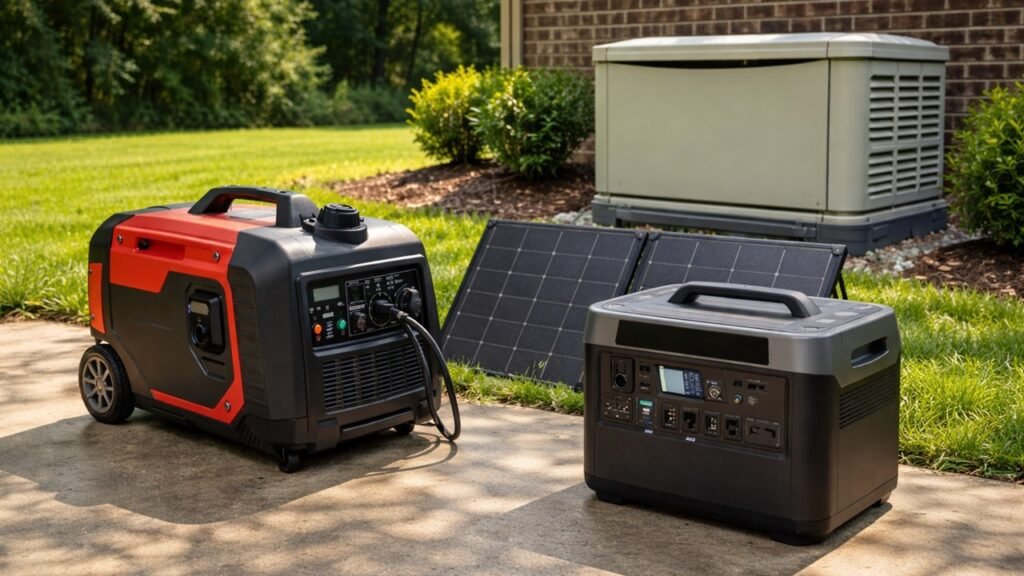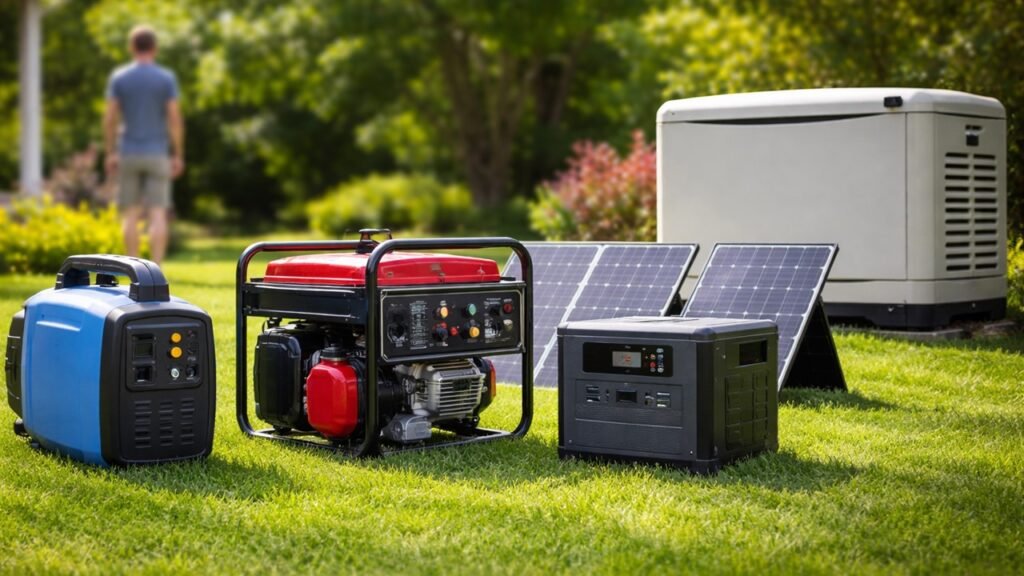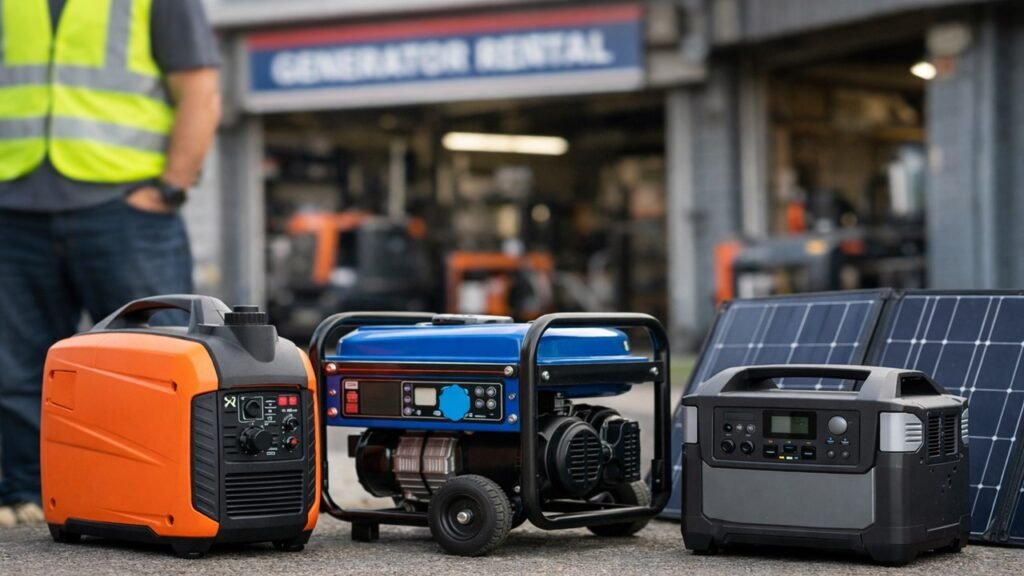
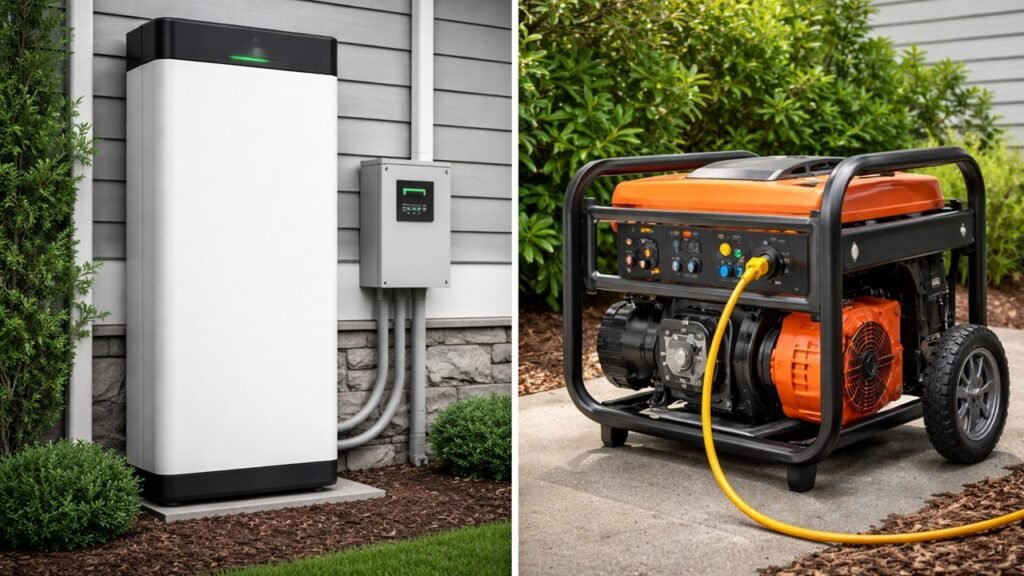
If you are comparing battery backup vs generator, the difference is simple. A battery backup stores electricity and uses it when the power goes out. A generator makes electricity on demand by burning fuel.
So the real question is not which one is “better.” The real question is what kind of outages you deal with and what you absolutely need running. Short outages and essential devices feel very different from multi day blackouts where you want the whole house operating normally. That is where the decision becomes clear.
Key Summary:
- Battery backup systems store electricity and provide instant, silent power during outages.
- Generators produce electricity by burning fuel and can run as long as fuel is available.
- Battery runtime depends on kilowatt hour capacity and total load demand.
- Generator capability depends on kilowatt output and fuel supply.
- Battery systems reduce maintenance and operating costs, while generators handle longer outages and heavy starting loads more easily.
Battery Backup vs Generator Quick Comparison
A battery backup is quiet, automatic, and low maintenance. A generator is louder, fuel powered, and built for longer outages. Batteries are limited by stored energy. Generators are limited by fuel supply.
Here is a simple side by side view.
| Category | Battery Backup | Generator |
| Power source | Stored electricity | Gas, propane, natural gas, or diesel |
| Runtime | Limited by battery capacity | Runs as long as fuel is available |
| Startup speed | Instant | Usually 10 to 30 seconds |
| Noise | Silent | Noticeable engine noise |
| Maintenance | Very little | Regular servicing required |
| Indoor safety | Installed indoors safely | Must run outdoors only |
| Best for | Short outages, essentials | Long outages, heavy appliances |
Battery Backup System (Home Battery) Basics
A home battery stores electricity ahead of time. When the grid fails, it switches on almost instantly and powers the circuits you selected during installation. Most systems include battery modules, an inverter, and a transfer device that safely disconnects your home from the grid.
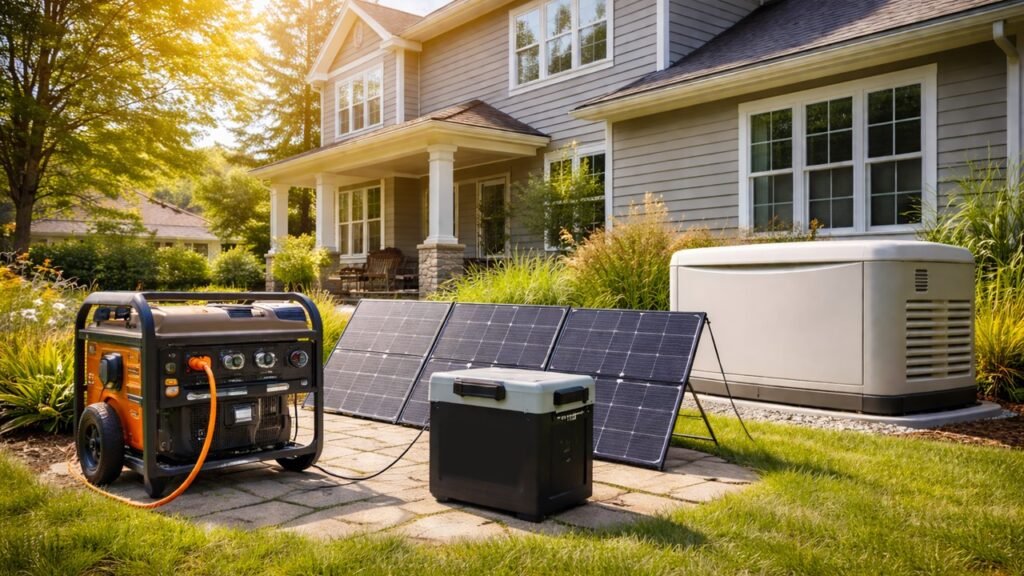
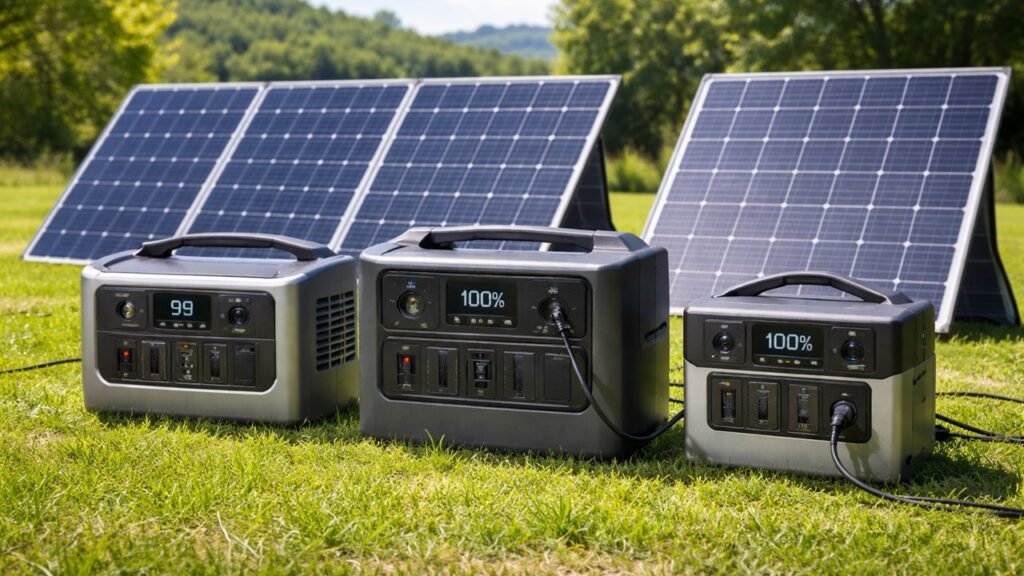
Many homeowners pair batteries with solar panels. Solar charges the battery during the day. The battery runs your home at night or during a blackout. Even without solar, batteries can charge from the grid and sit ready for the next outage.
Battery systems are comfortable to live with. They are quiet. They require almost no routine maintenance. You do not have to store fuel or listen to an engine running outside.
Battery backup usually makes sense when:
- Your outages typically last a few hours.
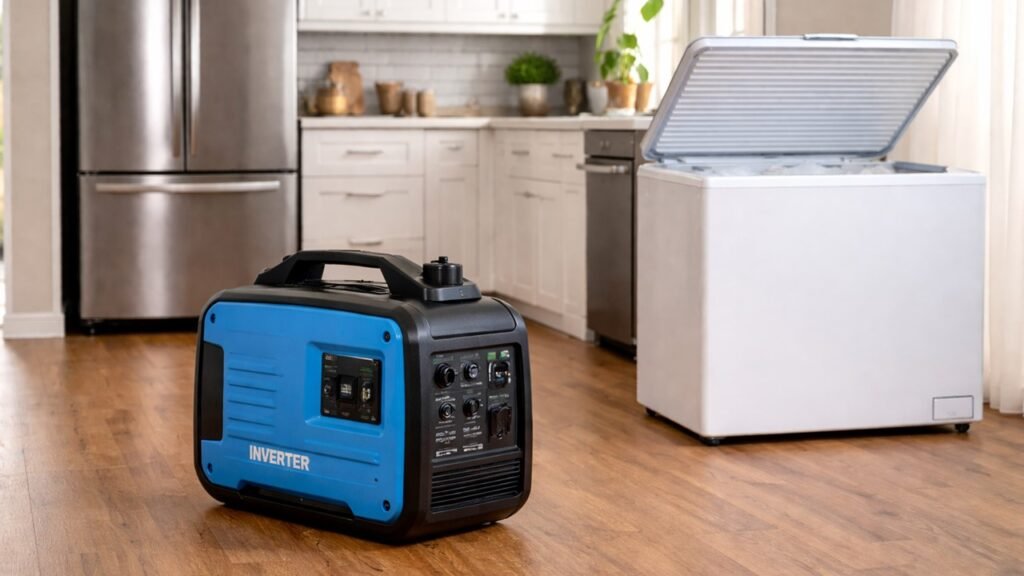
- You mainly want to keep the fridge, lights, internet, and a few outlets running.
- You live in a neighborhood where noise matters.
- You already have solar or plan to install it.
- You prefer a cleaner, lower maintenance solution.
But batteries do have limits:
- Runtime depends on how many kilowatt hours you installed.
- Large appliances drain storage quickly.
- Whole home backup usually requires multiple units.
- The upfront cost is higher than many portable generators.
Generator Basics (Standby and Portable)
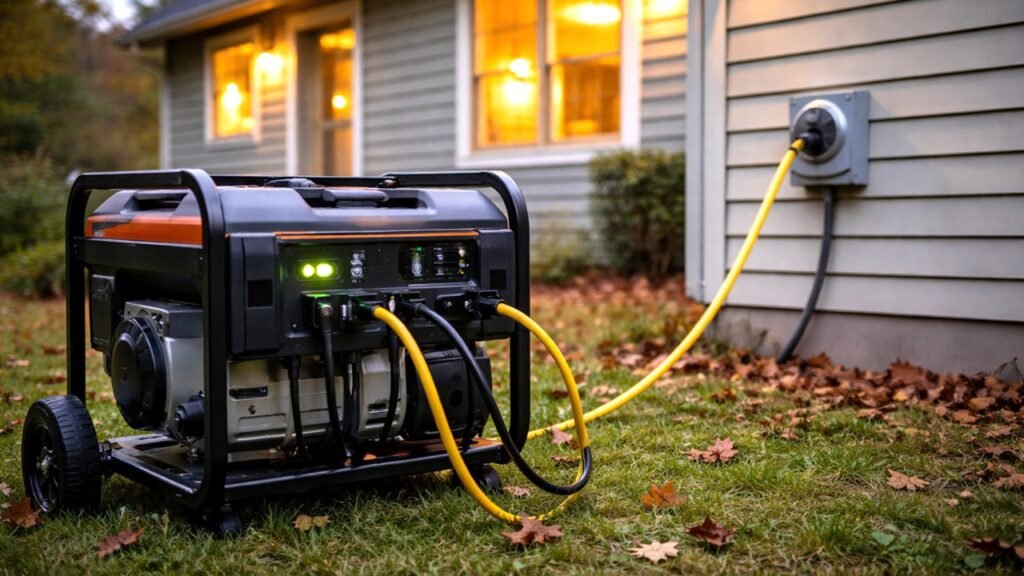
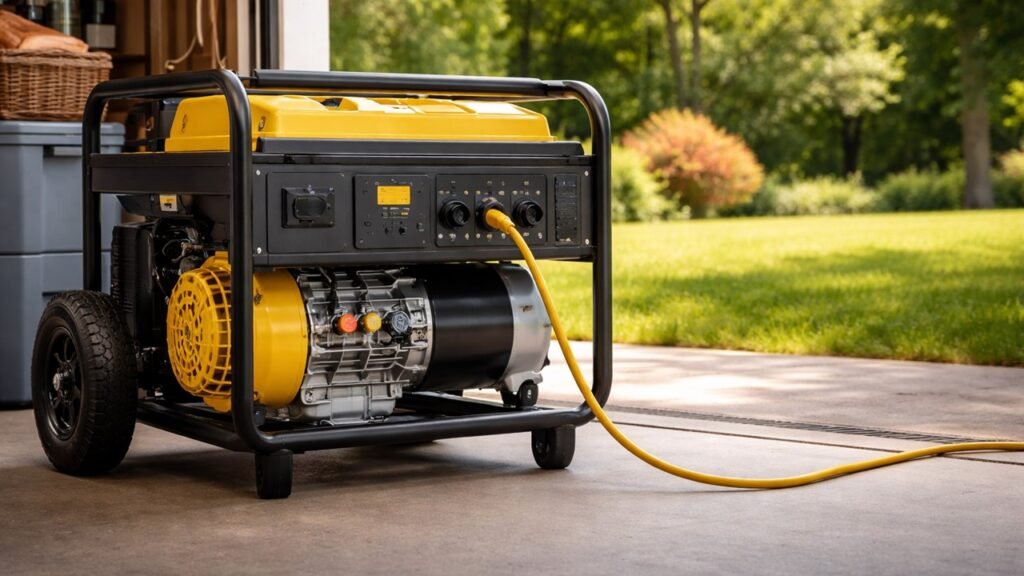
A generator works differently. Instead of storing electricity, it creates electricity by burning fuel. The engine spins, the alternator produces power, and that power flows into your panel through a transfer switch.
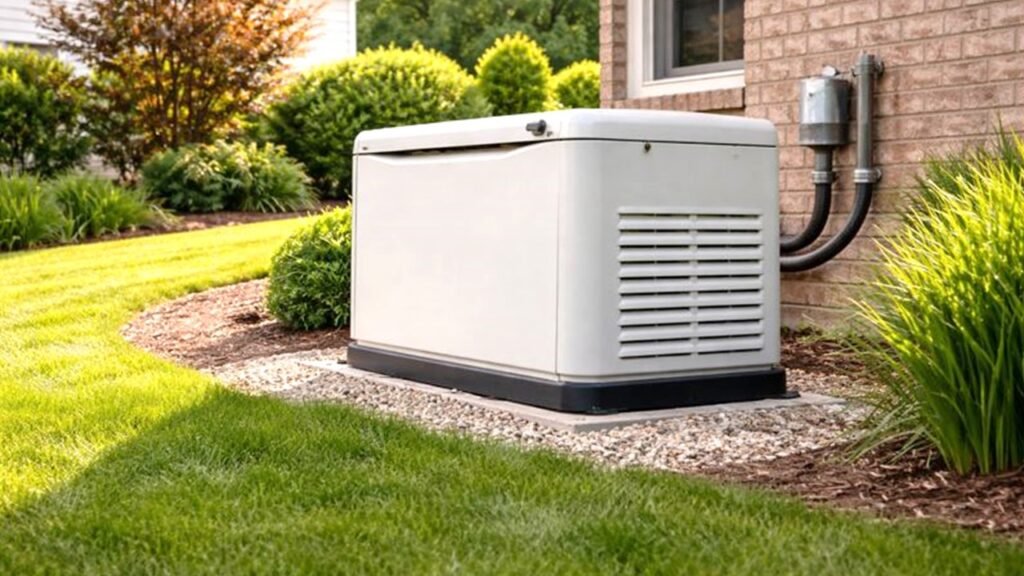
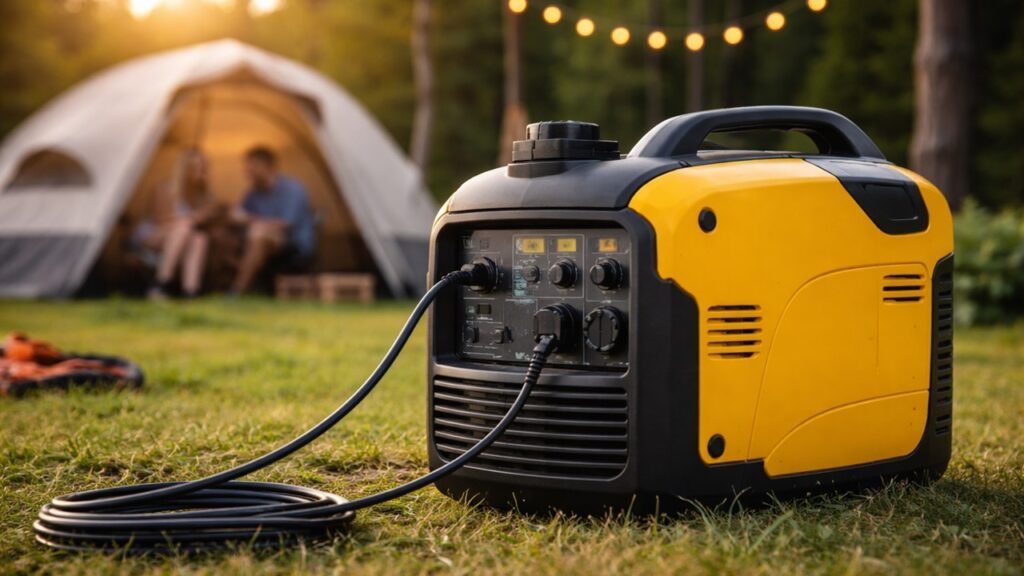
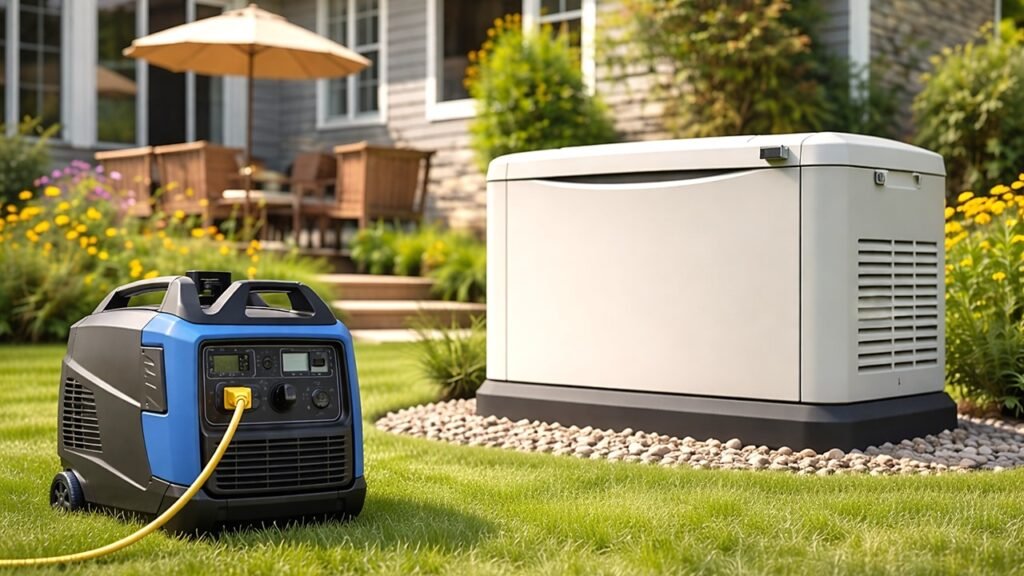
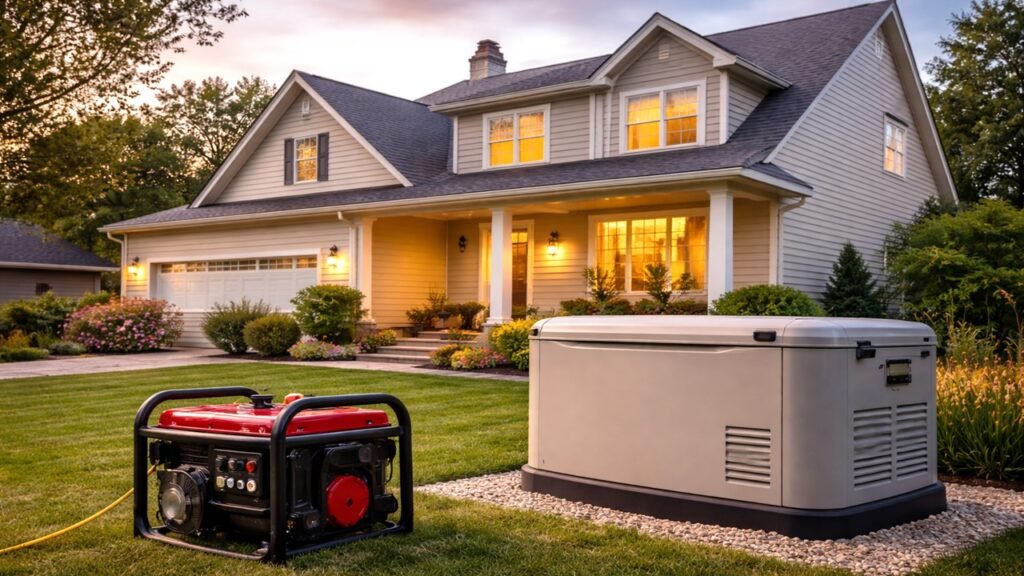
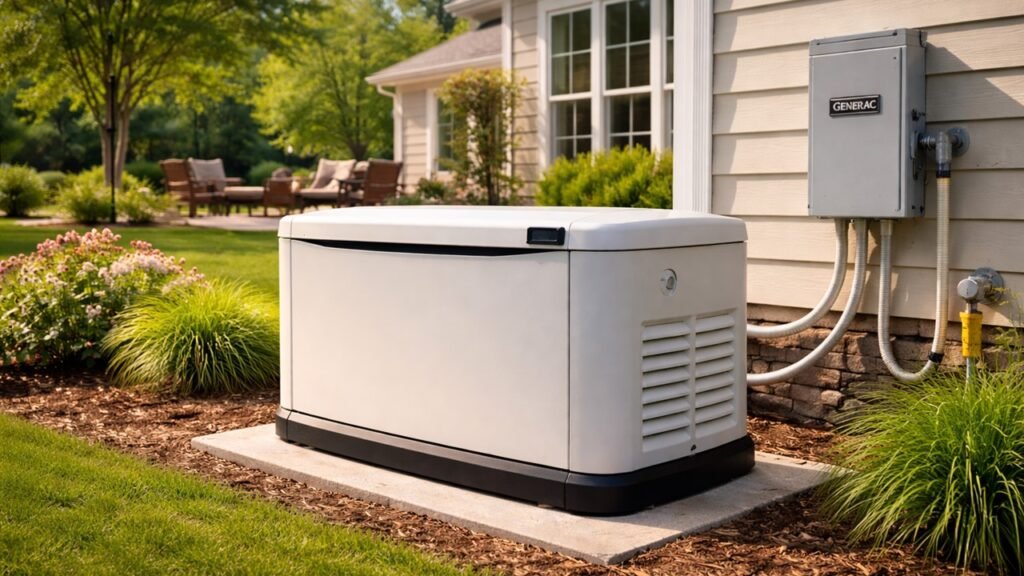
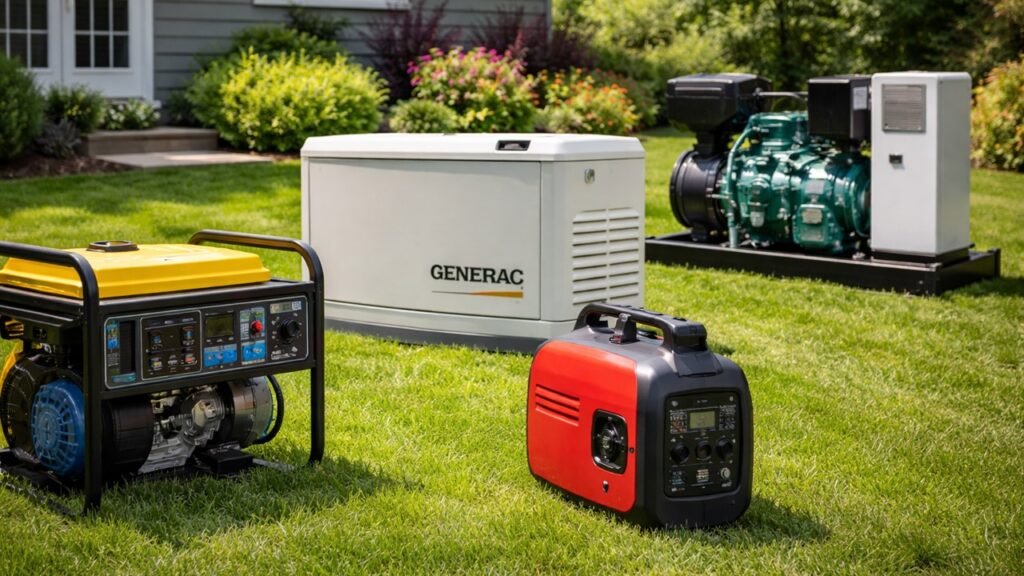
There are two main types. Standby generators are permanently installed and start automatically when the power goes out. Portable generators are smaller units you roll out and start manually.
Generators are built for endurance. As long as fuel is available, they can keep running. That makes them attractive in areas where outages regularly last multiple days.
Generators are usually the right choice when:
- You deal with long blackouts.
- You need to run heavy loads like central air, well pumps, or sump pumps.
- You want the house to feel mostly normal during an outage.
- Fuel supply is reliable in your area.
The tradeoffs are important:
- They are noisy compared to batteries.
- They require regular oil changes and service.
- You must plan for fuel storage or supply.
- They produce exhaust and must always operate outdoors.
kW vs kWh (The Only Sizing Concept Most People Miss)
This is where many homeowners get confused.
kW tells you how much power you can run at one time.
kWh tells you how long you can run it.
A battery system is mainly limited by kWh. That is your runtime. A generator is mainly limited by kW and fuel. That is your ability to run big appliances.
For example, if you install a 10 kWh battery and your home is drawing 1 kW, you might get roughly 10 hours of runtime. If you turn on a 5 kW load, that runtime drops quickly.
Here are some common household power numbers to give you perspective:
| Appliance | Running Watts | Surge Watts |
| Refrigerator | 150 to 300 W | 600 to 1200 W |
| Sump Pump | 800 to 1500 W | 2000 to 3000 W |
| Well Pump | 1000 to 2000 W | 3000 to 5000 W |
| Microwave | 800 to 1200 W | Low surge |
| Space Heater | 1500 W | None |
| Window AC | 1000 to 1500 W | 2000 to 3000 W |
A few key takeaways:
- Batteries are great for essentials and moderate loads.
- Generators handle high starting watts more easily.
- Whole home backup is possible with either option, but cost rises fast.
- Sizing your must run appliances first keeps your budget under control.
Costs That Matter (Upfront vs Ongoing)
Cost is not just what you pay on day one. It is what you pay over time.
Batteries usually cost more upfront. Installation, electrical work, and storage capacity all add up. But after that, ongoing costs are very low. There is no fuel and very little maintenance.
Generators often cost less at the start, especially portable models. But they come with fuel costs and annual service. Over many years, that adds up.
When comparing costs, think about:
- Battery systems: higher initial investment, low annual expense.
- Generators: lower entry cost in many cases, ongoing fuel and maintenance.
- Solar pairing can improve the long term value of a battery system.
- Long outages increase generator fuel spending.
- Incentives for storage or solar may reduce net battery cost depending on location.
Safety and Installation (Don’t Skip This)
Backup power is not a DIY shortcut project. Both batteries and generators must be installed properly.
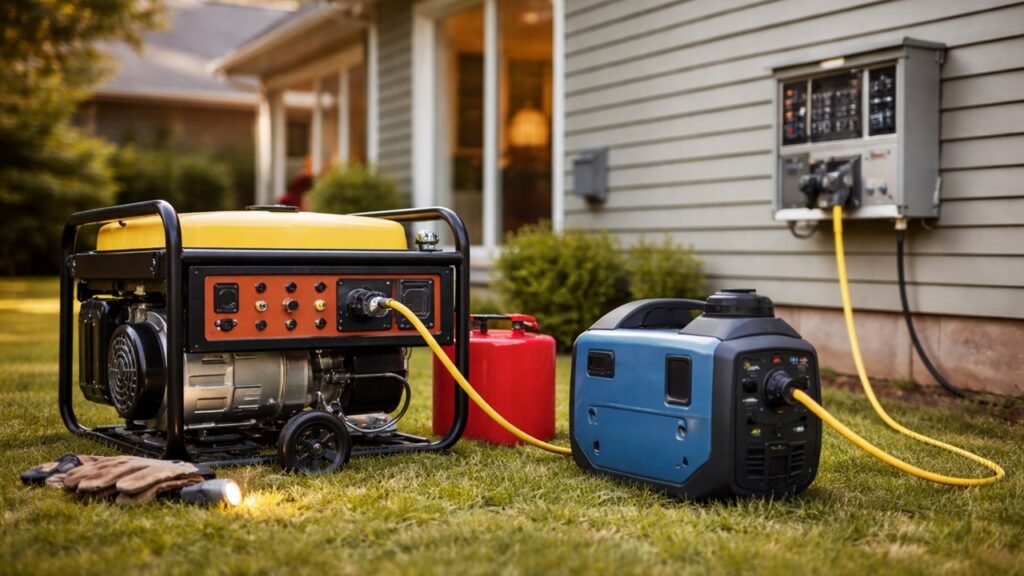
A transfer switch or approved interlock is essential. It prevents electricity from flowing back into utility lines, which can injure line workers and damage equipment.
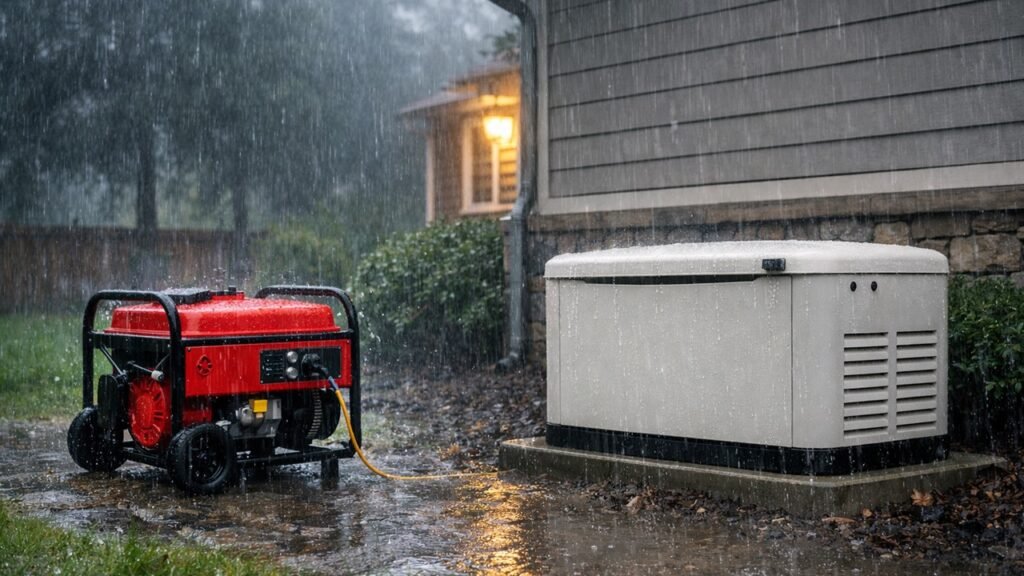
Generators must always run outdoors. Carbon monoxide from generators is deadly. It cannot be seen or smelled reliably, and it can build up quickly in enclosed spaces.
Here are the basics every homeowner should follow:
- Use a licensed electrician for panel connections.
- Install generators well away from doors and windows.
- Never run a generator inside a garage or near an open door.
- Install carbon monoxide detectors in your home.
- Make sure battery systems meet local electrical code.
- Obtain permits and inspections when required.
At the end of the day, battery backup vs generator is not about hype. It is about outage length, must run appliances, and how hands on you want to be. Start with what you truly need powered, and the right solution becomes much easier to see.
Which One Should You Choose?
If your outages are usually short and you mainly care about keeping the fridge, lights, WiFi, and a few outlets running, a battery backup is often the better fit. It is quiet, automatic, and requires almost no maintenance. It also pairs well with solar if you want long term energy flexibility.
If you deal with multi day outages or you must run heavy equipment like central AC, a well pump, or a sump pump, a generator usually makes more sense. It is built for endurance and high starting loads, as long as you can manage fuel safely.
To make the decision clearer, think through these points:
- Choose a battery backup if outages are typically hours, not days.
- Choose a generator if you need to power large appliances continuously.
- Choose a battery if noise and indoor comfort matter to you.
- Choose a generator if long runtime is your top priority.
- Consider a hybrid setup if you want quiet instant power plus extended coverage.
Final Verdict
Battery backup vs generator is not about which technology is better. It is about matching the system to your outage pattern and your must run loads. Batteries are cleaner, quieter, and easier to live with day to day.
Generators are tougher during extended blackouts and better at handling heavy starting loads. If your home depends on pumps or HVAC, that extra capacity can make a real difference.
The smartest move is to list your essential appliances, estimate your power needs, and size the system around that. Once you focus on outage length and load size, the right choice becomes much clearer.
Related FAQs
Can a battery backup run a whole house?
It can, but only if it is sized large enough. Most single batteries power essential circuits. Whole home coverage usually requires multiple units.
How long does a battery backup last during an outage?
Runtime depends on battery capacity and your total load. Many systems power essentials for several hours to a full day.
Is a generator better for long outages?
Yes. A generator can run for days as long as fuel is available and maintenance is handled properly.
Are battery backups safer than generators?
Battery systems do not produce exhaust, so they avoid carbon monoxide risks. Generators must always run outdoors for safety.
What is cheaper, battery backup or generator?
Generators usually cost less upfront. Batteries often cost more initially but have lower ongoing expenses.
Can you combine a battery and a generator?
Yes. A hybrid setup lets the battery handle short outages quietly while the generator supports longer events.

Robert Caldwell writes in-depth guides and reviews focused on generators, backup power systems, and portable energy equipment. His work is grounded in hands-on testing, covering fuel types, runtime performance, noise levels, and real-world reliability. He helps homeowners, RV owners, and outdoor users choose dependable power solutions with confidence. Every article emphasizes clear explanations, safe operation, and long-term value.