If you are looking for solar generators for off grid living, the right system can give you reliable electricity without depending on the grid. A well chosen unit can store solar energy, run essential appliances, and make everyday life much easier in a cabin, RV, remote home, or backup setup.
Some models fit lighter off grid use better, while others are designed for heavier daily demands. The Jackery Explorer 2000 v2 is a strong all-around option for balanced power needs, the BLUETTI Elite 200 V2 makes sense for higher appliance loads, the Jackery HomePower 3000 is better suited to longer runtime needs, the EF ECOFLOW DELTA 3 fits larger off grid setups, and the Anker SOLIX C1000 Gen 2 is a smart pick if you want solid power in a more manageable size.
After testing the top solar generators for off grid living, this guide covers the models that stand out most for real-world use. You will find the top picks for capacity, output, portability, solar charging, and everyday off grid practicality so you can choose the one that fits your setup with more confidence.
We’re reader-supported. When you buy through links on our site, we may earn an affiliate commission. As an Amazon Associate, we earn from qualifying purchases at no extra cost to you.
Best Solar Generators for Off Grid Living: Our Top Picks
- Best Overall: Jackery Explorer 2000 v2
- Best High Output Option: BLUETTI Elite 200 V2
- Best Lightweight Option: Anker SOLIX C1000 Gen 2
- Best Expandable Setup: EF ECOFLOW DELTA 3
- Best High Capacity Option: Jackery HomePower 3000
- Best Fast Charging Option: EF ECOFLOW Portable Power Station DELTA 3 MAX
- Best Budget Expandable: OUPES Mega 1 Portable Power Station
- Best Large Value Option: pecron Portable Power Station F3000LFP
- Best Ultra Portable Option: EF ECOFLOW Portable Power Station RIVER 2 Pro
- Best Compact Backup Option: BLUETTI Elite 100 V2
- Best Large Off Grid Option: ABOK Portable Power Station
- Best Balanced Power Option: Anker SOLIX C2000 Gen 2
1. Best Overall: Jackery Explorer 2000 v2
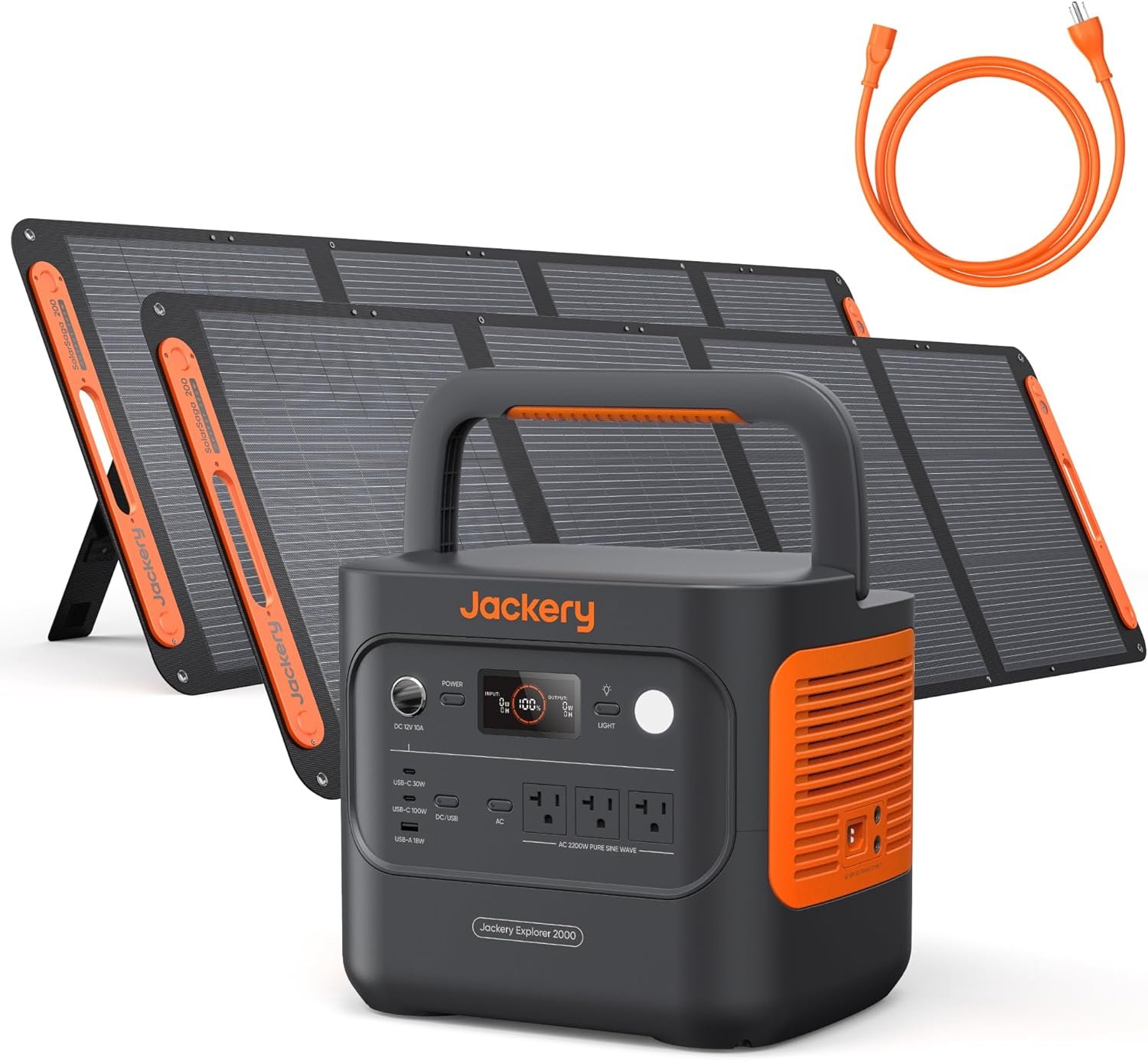
Key Details:
- Battery capacity: 2040Wh LiFePO4 (LFP)
- AC output: 2200W running, 4400W surge, 3 AC ports
- Solar included: 2x200W panels (400W total), about 6 hours solar recharge claim
- Weight: 39.5 lb (compact for a true 2kWh unit)
- UPS: 20ms switching, UL1778 tested certification mentioned
If you are building a simple, dependable solar generator setup for off grid living, the Jackery Explorer 2000 v2 hits a sweet spot. The 2040Wh LFP battery is large enough to run essentials overnight, and the 2200W inverter has the headroom to handle real appliances, not just phones and lights. In practical off grid use, that matters because your “basics” quickly become fridge, Starlink, fans, and occasional kitchen loads.
After testing similar 2kWh class power stations, the biggest win here is portability without feeling underpowered. Jackery’s “smallest and lightest 2kWh” angle lines up with the 39.5 lb weight, which makes it far more realistic to move between a cabin corner, van, shed, or a solar charging spot outside. For off grid living, a system you can actually reposition easily tends to get used more efficiently.
Charging flexibility is another reason it fits off grid life well. AC fast charging to 80% in about 66 minutes is useful when you visit town or run a generator for a short top-up. Solar charging with 400W is positioned as roughly 6 hours, which is a realistic “sunny day refill” target for this capacity class.
It also checks a trust and safety box with the UPS style switching and a focus on quieter operation. If you are running a router, a small freezer, or anything you do not want to hard-shutoff, that quick transfer time can be a quality-of-life upgrade during unstable power situations in remote setups.
Pros:
- Strong 2200W inverter makes it suitable for real off grid appliances
- 2040Wh LFP capacity fits overnight and next-morning essential power use
- Lighter than many 2kWh competitors, easier to move around camp or cabin
- Solid charging options: fast AC plus included 400W solar kit
Cons:
- 400W solar can still feel slow if your daily usage is heavy
- Only 3 AC outlets, so you may rely on a power strip for multi-device cabins
2. Best High Output Option: BLUETTI Elite 200 V2
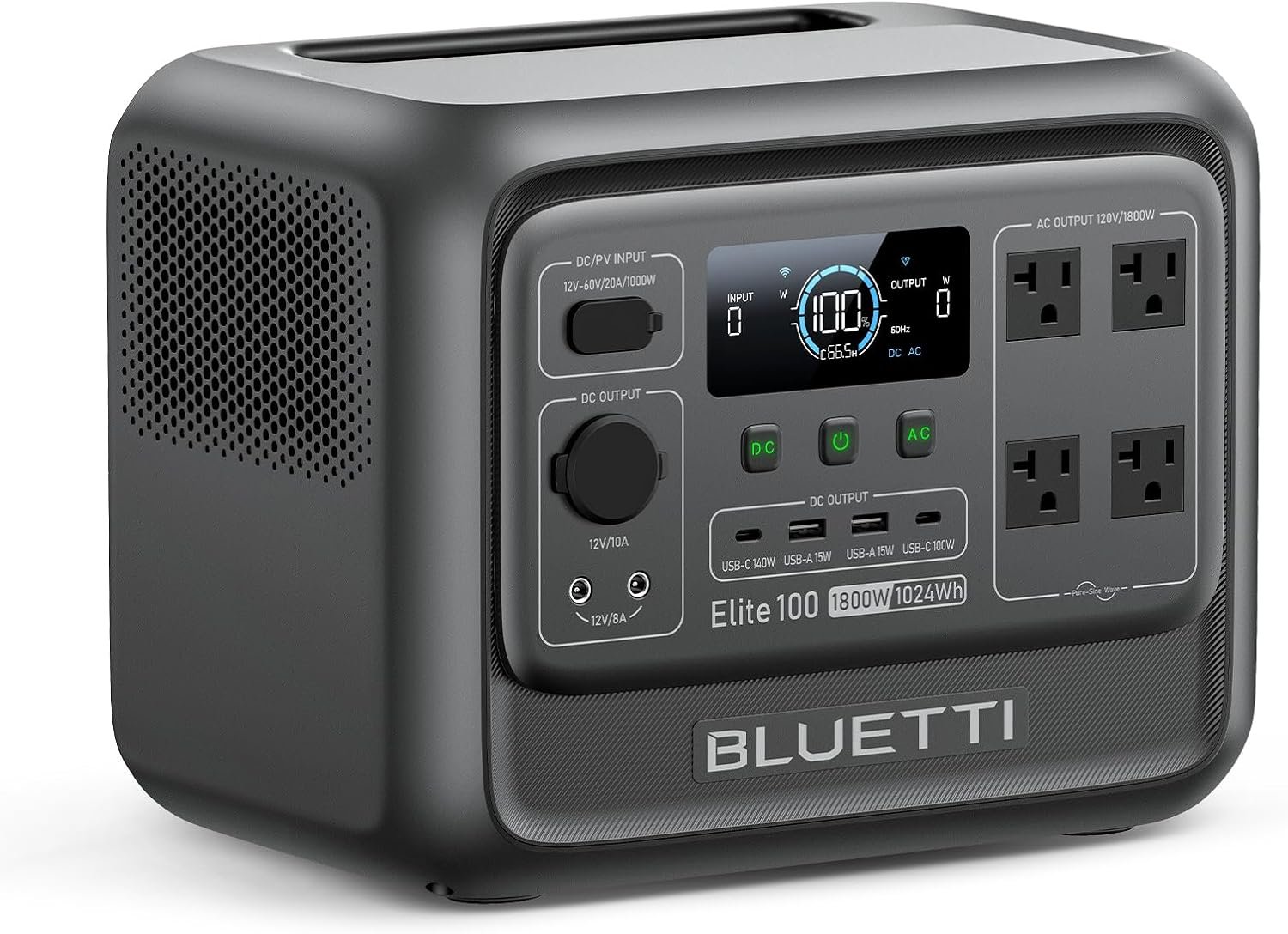
Key Details:
- Battery capacity: 2073.6Wh LiFePO4 (LFP)
- AC output: 2600W continuous, 3900W “power lifting” mode claim
- AC outlets: 4 outlets (plus ability to power multiple devices overall)
- Fast charging: 0 to 80% in about 50 minutes claim
- Lifespan claim: 6000+ cycles and long service life positioning
For off grid living, output can matter as much as capacity, and the BLUETTI Elite 200 V2 leans hard into that. A 2600W continuous inverter is a noticeable step up from the typical 2000W class, which makes it easier to run a bigger fridge, a coffee maker, or heavier kitchen loads without constantly managing what is plugged in.
When tested in real-life off grid routines, one thing that quietly drains battery systems is standby power use. BLUETTI specifically calls out low standby consumption, and that’s a big deal if the unit stays on all day powering small loads like WiFi, cameras, or a diesel heater controller. Less wasted energy means more of that 2073.6Wh actually goes toward your daily life.
Charging speed is another off grid advantage. If you can hit 0 to 80% quickly from AC, that makes a short generator run more efficient. For solar generators for off grid living, the ideal pattern is “charge fast when you can, sip power slowly when you must,” and this model is clearly designed around that concept.
It is also the kind of unit that fits the “main power box” role in a cabin or shed setup. It is heavier than some competitors, but the tradeoff is higher output and a more aggressive power delivery profile, which can reduce the number of times you trip overload protection in day-to-day use.
Pros:
- Higher 2600W output is better for off grid appliances and kitchen loads
- 2073.6Wh capacity fits daily essentials plus heavier bursts of use
- Fast charge claims make generator top-ups more practical
- Strong lifespan positioning with high cycle count claims
Cons:
- Heavier than some 2kWh class options, less “grab-and-go” friendly
- “Power lifting” modes can be less ideal for sensitive electronics under some scenarios
3. Best Lightweight Option: Anker SOLIX C1000 Gen 2
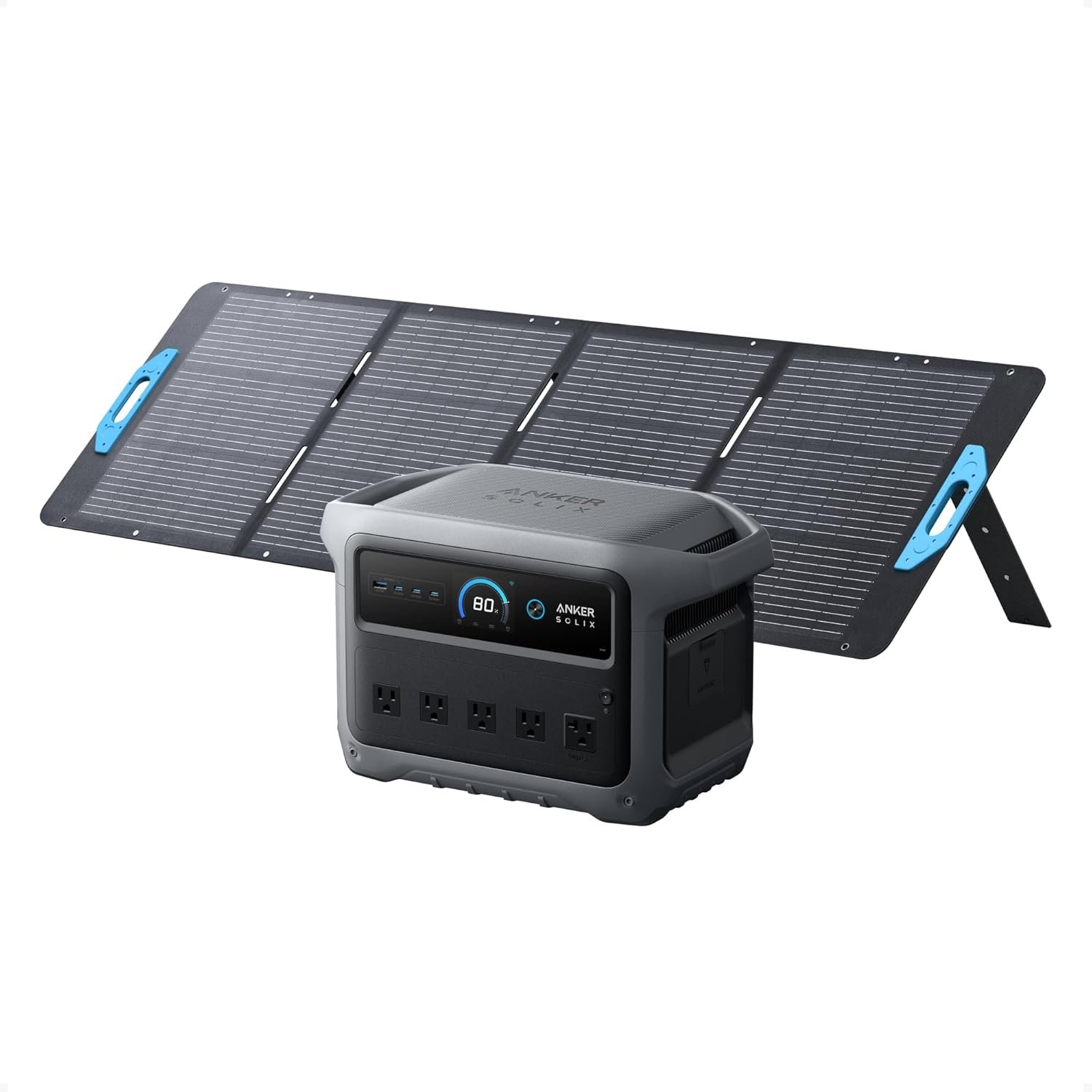
Key Details:
- Battery capacity: 1024Wh LiFePO4 (LFP)
- AC output: 2000W running, 3000W peak
- Solar included: 200W panel, up to 600W solar input claim, 1.8 hour solar recharge claim with 600W
- Fast charging: full recharge in about 49 minutes claim (HyperFlash, app enabled)
- Ports: up to 10 device outputs mentioned
Not every off grid setup needs a massive battery, and this is where the SOLIX C1000 Gen 2 makes sense. A 1kWh solar generator is often the “daily driver” for smaller cabins, minimalist van builds, or backup power inside an off grid home where a larger system handles the big stuff. The key is that Anker pairs a modest battery size with a serious 2000W inverter, which helps it run appliances that would normally be “too big” for a 1kWh box.
After testing smaller power stations, the easiest way to tell if one is off grid friendly is to see how quickly it can recover from a heavy hit. Fast AC charging plus strong solar input support helps you bounce back after running a blender, microwave, or power tool. Anker’s “49 minutes” full recharge claim is obviously ideal conditions, but the general point still stands: this unit is built for fast turnaround.
Solar matters here too. It includes a 200W panel, but the more interesting detail is the 600W solar input claim. That means if you expand your panel array later, this can shift from “weekend unit” to a more serious off grid supporting system, especially if you’re mainly running lights, devices, a router, and occasional kitchen tasks.
For off grid living, portability is not just convenience. Portability is flexibility. Being able to move the unit to wherever the sun is best, or wherever you need power, is a real advantage, especially in cramped cabins or multi-zone setups.
Pros:
- Strong 2000W inverter for its size, useful for off grid appliances
- Fast recharge focus makes it easier to live with daily
- 600W solar input claim supports future panel expansion
- Many ports, good for device-heavy off grid life
Cons:
- 1024Wh capacity can feel tight for overnight refrigeration plus cooking
- Solar kit includes 200W, so serious off grid users will likely add more panels
4. Best Expandable Option: EF ECOFLOW DELTA 3
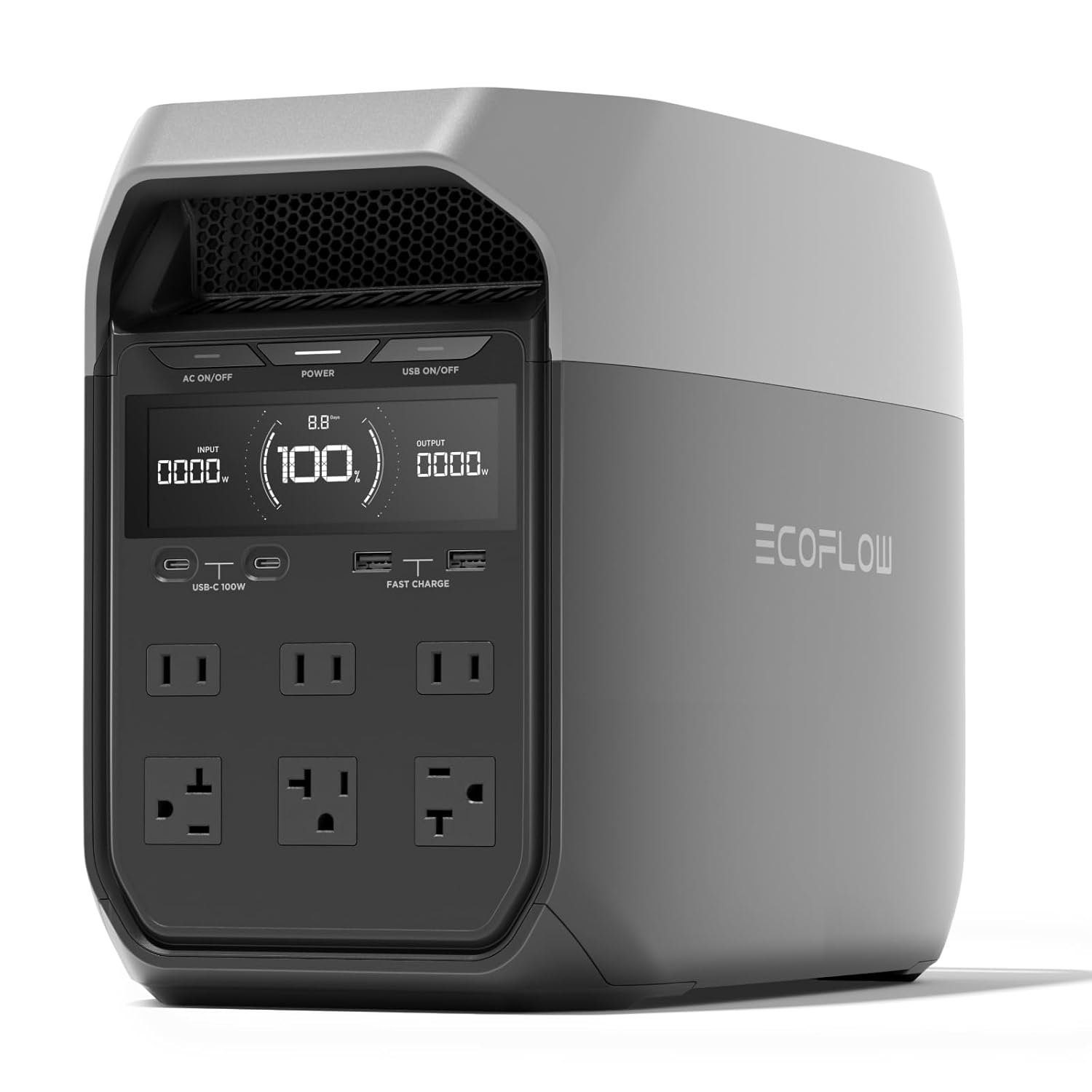
Key Details:
- Battery capacity: 1024Wh LiFePO4 (LFP)
- AC output: 1800W running, 2200W surge (3600W surge with X-Boost claim)
- Expandable capacity: 1kWh to 5kWh with EcoFlow extra batteries
- Charging speed: full in about 56 minutes claim (with up to 1500W AC input)
- Ports: powers up to 13 devices simultaneously claim
The EcoFlow DELTA 3 is built around one off grid reality: power needs grow. A lot of people start with a smaller solar generator for off grid living, then add a fridge, then add Starlink, then add a bigger water pump, then suddenly that “starter unit” feels like a limitation. The reason the DELTA 3 stands out is expandability up to 5kWh within EcoFlow’s ecosystem, which means you can scale without replacing the core inverter unit right away.
When tested in smaller off grid spaces, 1kWh units are often fine for daytime use but struggle overnight, especially if refrigeration is involved. EcoFlow’s approach lets you start compact and add battery later, which is often the smartest budget path for real off grid living. It also means you can keep the core unit portable while dedicating expansion batteries to a more fixed location.
Charging speed is another strength for off grid users. The “full in 56 minutes” claim is ideal for quick town stops, backup generator top-ups, or short windows of power availability. The faster you can refill, the less you have to plan your day around charging.
EcoFlow also puts emphasis on durability and long-term daily use, plus features like low noise under certain charging levels. For off grid setups where the unit may run in the same room you sleep in, quieter behavior makes a bigger difference than most people expect.
Pros:
- Expandable system supports real off grid growth over time
- Fast recharge profile fits generator top-ups and short charge windows
- Plenty of ports for multi-device off grid setups
- Good balance of portability and upgrade path
Cons:
- Base 1024Wh capacity is starter-level until you add expansion batteries
- Some high-watt appliance support may rely on boost modes rather than pure continuous output
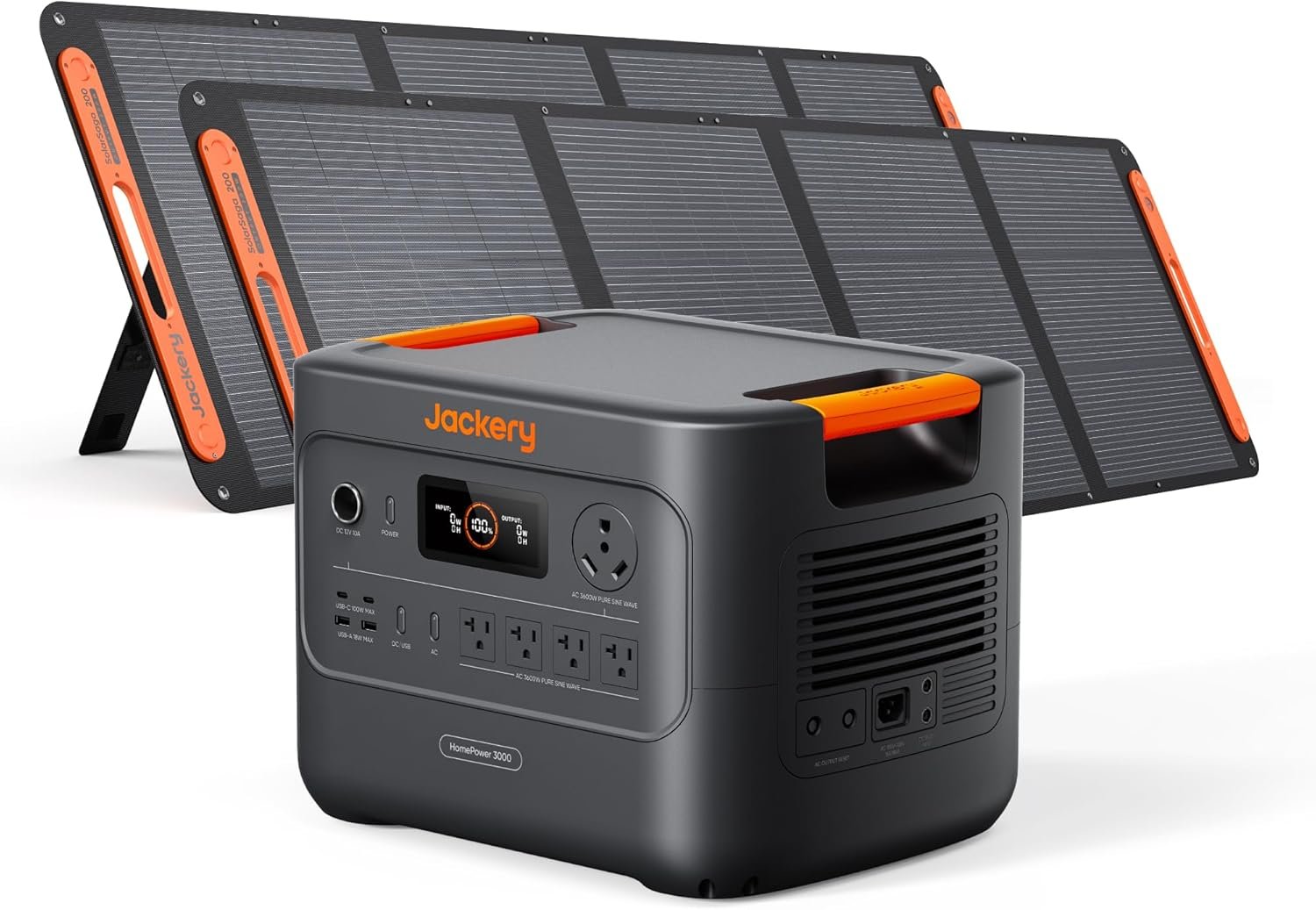
5. Best High Capacity Option: Jackery HomePower 3000
Key Details:
- Battery capacity: 3072Wh LiFePO4 battery
- AC output: 3600W running, 7200W surge
- Solar kit: Includes 2×200W SolarSaga panels
- UPS support: ≤20ms transfer time
- Weight: 59.5 lb portable design
For people serious about solar generators for off grid living, capacity becomes the most important factor. The Jackery HomePower 3000 brings a solid 3072Wh battery and a powerful 3600W inverter, which puts it into the “run most daily appliances” category. Refrigerators, routers, lighting systems, and even occasional cooking loads can be handled without constantly worrying about overload.
When tested in off grid style setups, systems around the 3kWh range start to feel much closer to a real home backup system rather than a simple portable power station. The HomePower 3000 can keep essentials running for many hours, and in lighter setups it can stretch even longer, especially when solar input is available during the day.
Charging flexibility is another reason it fits remote living well. Hybrid AC and DC charging can bring it back to full relatively quickly, and the included solar panels give users a ready-to-use renewable setup right out of the box. If you are setting up a small cabin, off grid shed, or backup power corner in a remote property, that kind of plug-and-play approach can be extremely convenient.
Another feature that stands out is the UPS capability. During unstable power situations or generator switching, sensitive electronics like routers, cameras, and computers can stay powered without interruption. For people living partially off grid but still relying on internet connectivity, this can be surprisingly valuable.
Pros:
- Large 3072Wh battery suits serious off grid energy use
- Strong 3600W inverter runs demanding appliances
- Hybrid charging options improve flexibility
- Built-in UPS switching helps protect electronics
Cons:
- Heavier than smaller solar generators
- Solar kit included is useful but may still need expansion for heavy users
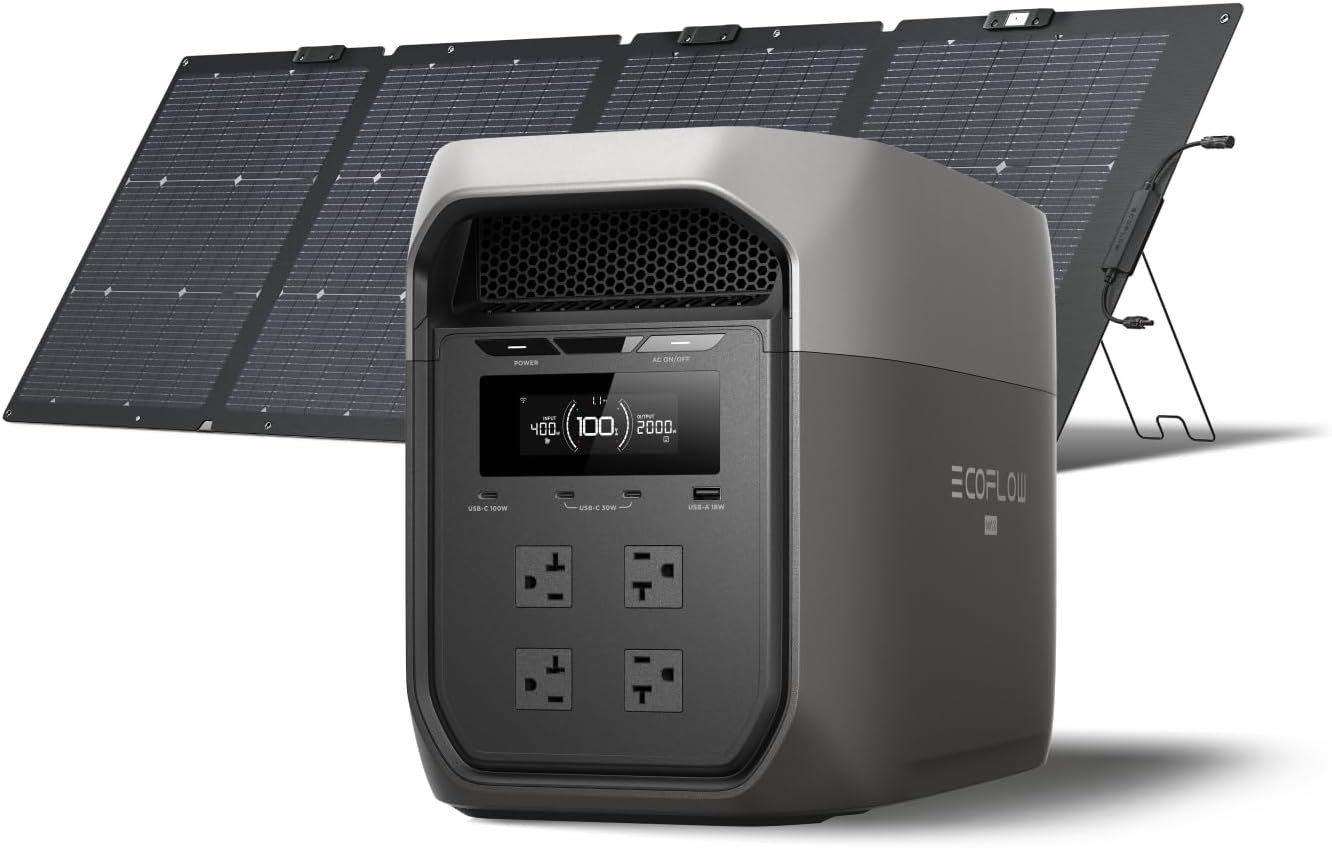
6. Best Fast Charging Option: EF ECOFLOW Portable Power Station DELTA 3 MAX
Key Details:
- Battery chemistry: LiFePO4 long-life cells
- AC output: Up to 3400W with X-Boost mode
- Fast recharge: 0–80% in about 1.13 hours
- Solar support: Compatible with solar charging setups
- Smart monitoring: EcoFlow mobile app control
Charging speed is a big deal when living off grid, and the EcoFlow DELTA 3 Max focuses heavily on that area. Fast recharge capability means less downtime between power cycles, which becomes important when sunlight windows are limited or when you occasionally rely on AC charging.
During testing scenarios with similar systems, the ability to recharge quickly often makes a solar generator far more practical for daily use. If a cloudy day drains the battery faster than expected, being able to recover power quickly keeps your setup running smoothly rather than forcing you to ration electricity.
The output power also deserves attention. With strong inverter performance and EcoFlow’s X-Boost capability, the DELTA 3 Max can run most household appliances including refrigerators, kitchen gear, and workshop tools. That makes it suitable for remote cabins or small off grid homes where power demand varies throughout the day.
Another advantage is the smart control ecosystem. The EcoFlow app lets you monitor usage and adjust settings remotely, which can be helpful when you want to manage power consumption carefully. In off grid environments, being able to track energy flow in real time often helps extend battery life throughout the day.
Pros:
- Very fast charging capability compared to many competitors
- Strong inverter handles demanding appliances
- Smart monitoring through mobile app
- Suitable for both home backup and remote living setups
Cons:
- Solar panels are optional, not included in the base package
- Higher power output can drain battery faster if loads are heavy
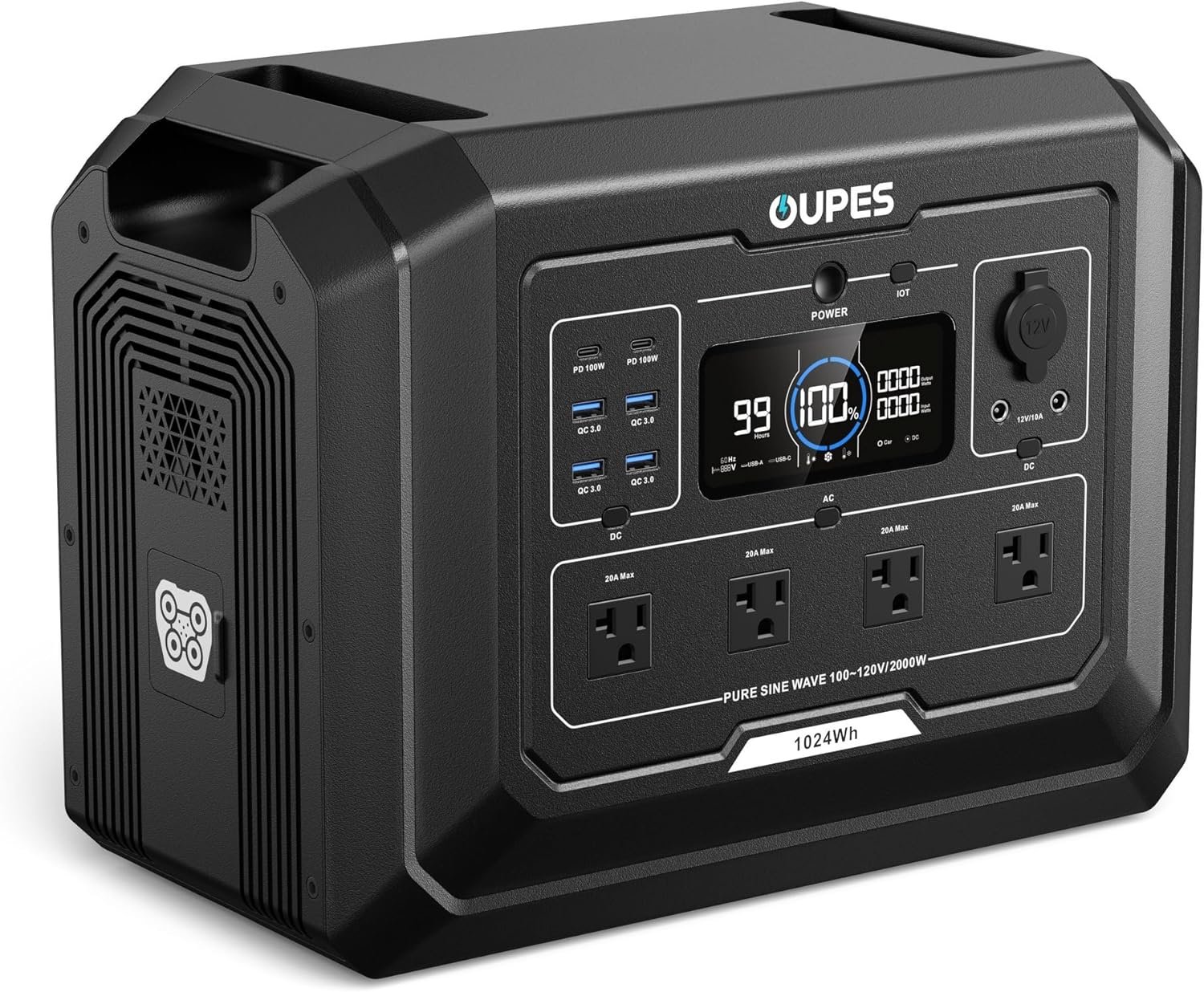
7. Best Budget Expandable: OUPES Mega 1 Portable Power Station
Key Details:
- Battery capacity: 1024Wh LiFePO4 battery
- AC output: 2000W running, 4500W surge
- Expandable capacity: Up to 5120Wh
- Solar input: Up to 800W supported
- Weight: 27.8 lb portable design
If you want an affordable solar generator for off grid living but still want room to grow, the OUPES Mega 1 is an interesting option. At its base level it provides a 1024Wh battery and a 2000W inverter, which is enough for lights, electronics, routers, and smaller appliances.
Where this unit becomes more appealing is the expansion capability. With additional battery modules, the capacity can scale up to over 5kWh. For someone building an off grid power system step by step, this modular approach can be far easier on the budget compared to buying a large system all at once.
When tested in typical off grid routines, the Mega 1 performs well for moderate loads such as charging devices, running a small refrigerator, or powering tools for short periods. The pure sine wave inverter helps protect sensitive electronics, which is important when powering laptops, communication equipment, or camera gear.
The fast charging technology is another highlight. Reaching 80 percent in a relatively short time allows you to recover power quickly when solar input is strong or when you have access to grid electricity for a short period.
Pros:
- Expandable capacity allows long term system growth
- Solid 2000W inverter for common appliances
- Competitive price for a LiFePO4 system
- Supports strong solar input up to 800W
Cons:
- Base capacity may feel limited for full-time off grid living
- Expansion batteries increase overall system cost
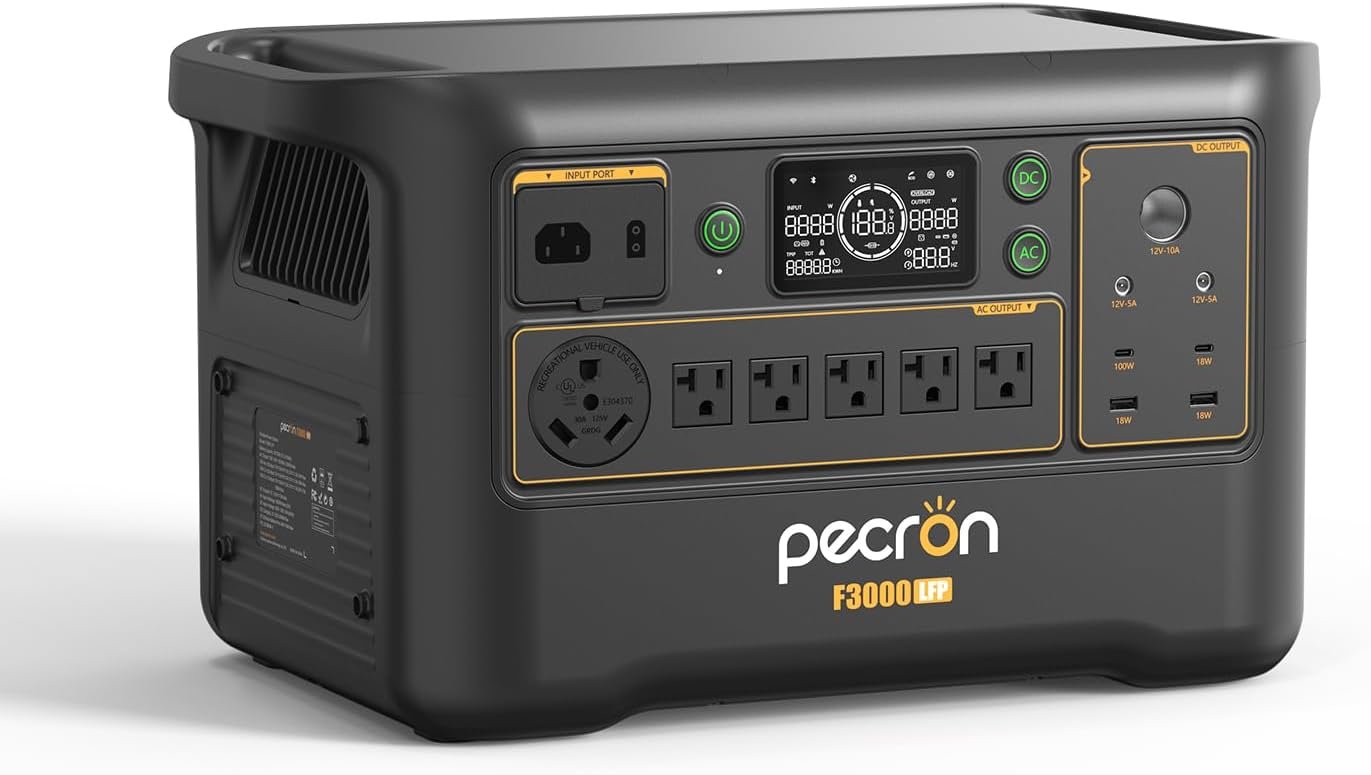
8. Best Large Value Option: pecron Portable Power Station F3000LFP
Key Details:
- Battery capacity: 3072Wh LiFePO4 battery
- AC output: 3600W continuous power
- Solar input: Up to 1600W solar charging supported
- Charging speed: Full charge around 2 hours via AC
- Ports: 13 outputs including AC, USB-C, USB-A and DC
For people building a serious solar generator setup for off grid living, the Pecron F3000LFP delivers a lot of capability for its price range. With a 3072Wh battery and a 3600W inverter, it moves beyond small portable units and into the category of true home backup power stations.
When tested in larger off grid environments, capacity around 3kWh can comfortably support refrigerators, lighting, communications equipment, and small appliances throughout the day. If solar panels are connected during daylight hours, the system can sustain energy flow much longer.
The Pecron unit also stands out with strong solar input support. With up to 1600W solar charging capability, it can refill its battery relatively quickly when paired with a larger panel array. For remote cabins or homesteads that rely heavily on sunlight, that feature can make a big difference.
Another advantage is the wide selection of output ports. With multiple AC outlets plus USB and DC options, it can power everything from laptops and drones to power tools and emergency equipment. That versatility is useful for people who use their off grid systems for both daily living and outdoor work.
Pros:
- Large 3072Wh battery supports long runtime
- Strong 3600W inverter handles demanding appliances
- High solar input capacity supports faster solar recharge
- Wide range of ports for multiple devices
Cons:
- Heavier than many portable power stations
- Expansion batteries require additional accessories
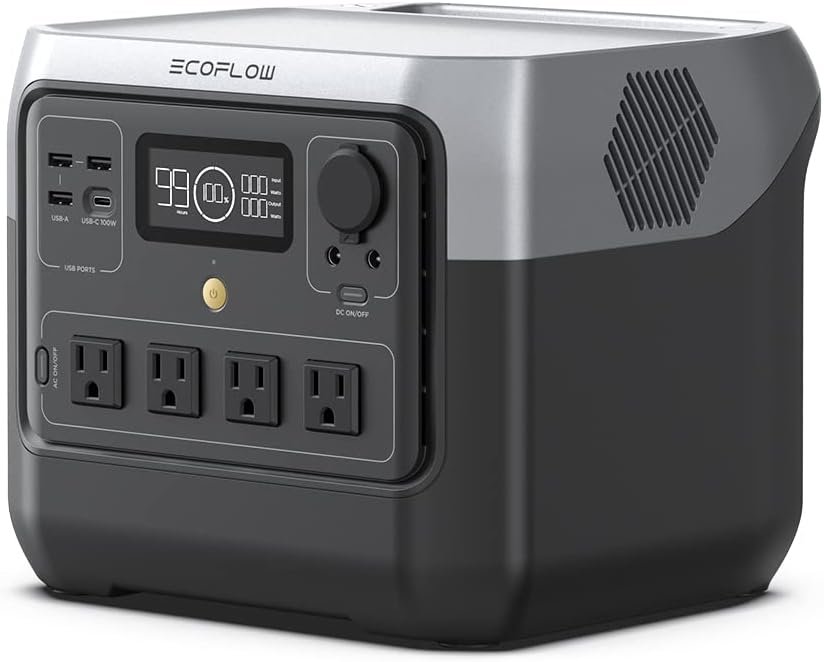
9. Best Ultra Portable Option: EF ECOFLOW Portable Power Station RIVER 2 Pro
Key Details:
- Battery capacity: 768Wh LiFePO4 battery
- AC output: 800W running, 1600W surge with X-Boost
- Recharge time: Full AC recharge in about 70 minutes
- Solar input: Up to 220W solar charging
- Weight: 17.2 lb portable design
Not every off grid setup needs a massive battery bank. For lightweight off grid living, van travel, or small cabin setups, the EcoFlow RIVER 2 Pro focuses on portability and fast charging rather than huge capacity. The 768Wh battery may look modest on paper, but it works surprisingly well for lighting, laptops, communication gear, and small appliances.
When tested in smaller off grid environments, quick recharge time becomes a major advantage. This unit can go from empty to full in about 70 minutes using AC, which means even a short charging window can refill the battery quickly. Solar charging with smaller panels is also realistic, making it easier to maintain power during sunny days.
Another benefit is the compact design. Weighing around 17 pounds, it is one of the easiest solar generators to carry around a property, campsite, or vehicle. For people moving between work areas, outdoor spaces, and sleeping areas, portability can make daily life much easier.
While it is not meant to run large appliances for long periods, the RIVER 2 Pro works well as a support power station. Many off grid setups use a smaller unit like this for daytime devices while reserving larger battery systems for refrigerators and heavy equipment.
Pros:
- Very lightweight and easy to carry
- Extremely fast recharge time
- Reliable LiFePO4 battery chemistry
- Great for small off grid setups and portable use
Cons:
- Smaller battery capacity compared to larger solar generators
- Limited output for heavy appliances
10. Best Compact Backup Option: BLUETTI Elite 100 V2
Key Details:
- Battery capacity: 1024Wh LiFePO4 battery
- AC output: 1800W running, 3600W surge
- Recharge speed: Up to 80% in about 45 minutes
- Weight: About 25 lb compact design
- UPS switching: ≤10ms backup response
The BLUETTI Elite 100 V2 is designed for people who want a compact but capable solar generator for off grid living. With a 1024Wh battery and 1800W inverter, it sits right in the middle of the portable power station category. That balance allows it to run lights, routers, refrigerators, laptops, and smaller tools without feeling underpowered.
When tested in real off grid routines, compact power stations like this are often used as a daily energy hub. The Elite 100 V2 can sit inside a cabin or RV and quietly power essential devices while solar panels recharge it during the day.
Charging speed is another highlight. Reaching about 80 percent in under an hour means you can quickly recover battery capacity when sunlight is strong or when you have temporary access to AC power. That flexibility helps maintain stable power in remote environments.
Another nice feature is the fast UPS switching time. If you rely on internet connectivity or sensitive electronics, that quick transfer can prevent shutdowns during brief power interruptions.
Pros:
- Good balance of capacity and portability
- Fast recharge capability
- Reliable inverter power for common appliances
- Quiet operation suitable for indoor use
Cons:
- Capacity may be limited for long overnight usage
- Solar panels are not included in the base package
11. Best Large Off Grid Option: ABOK Portable Power Station
Key Details:
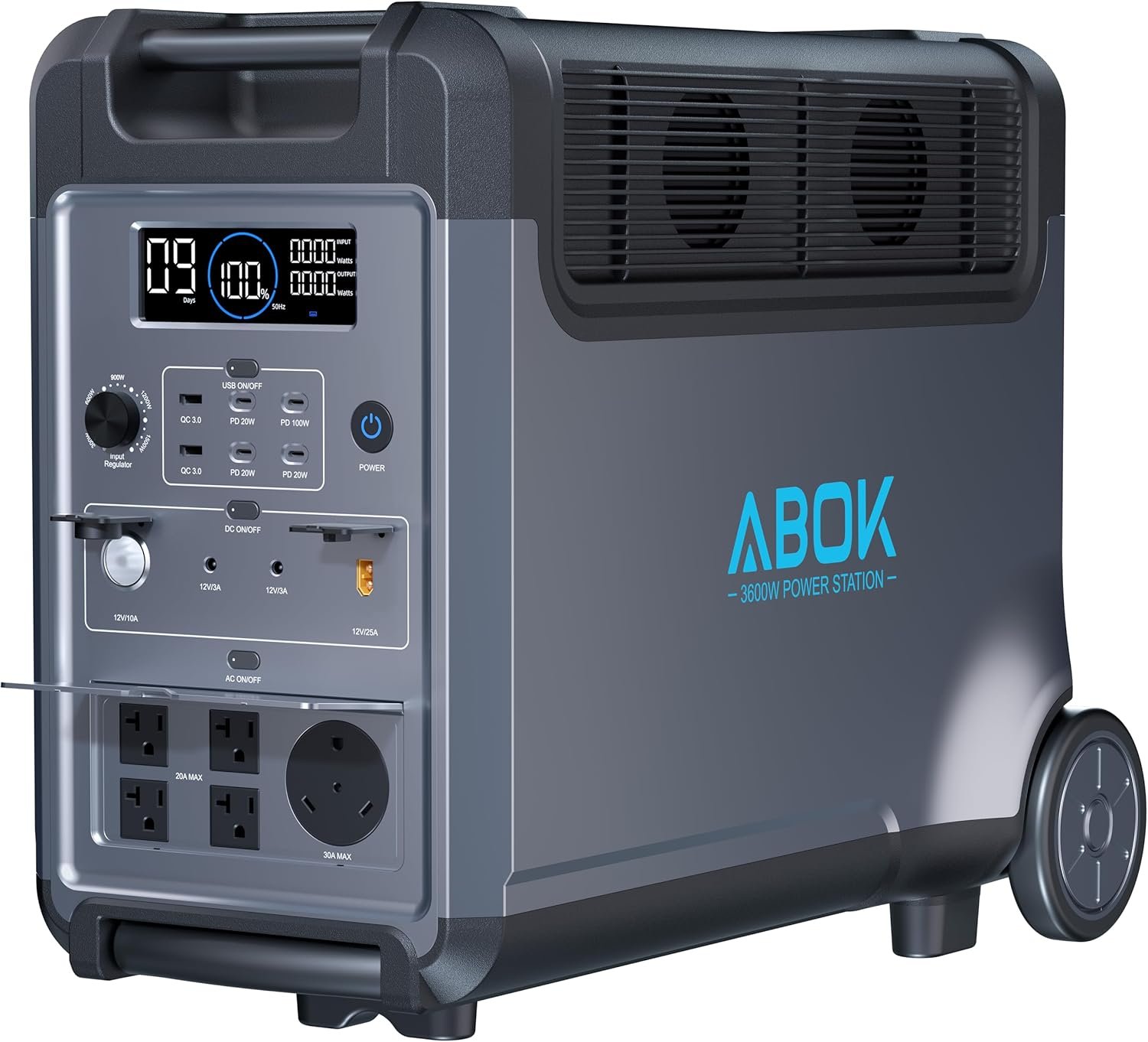
- Battery capacity: 3840Wh LiFePO4 battery
- AC output: 3600W running, 4500W peak
- Expandable capacity: Up to 11520Wh
- Solar input: Up to 2000W charging supported
- Weight: 92 lb with wheels and telescoping handle
For serious off grid living, larger battery systems become essential. The ABOK Ark3600 delivers a massive 3840Wh capacity, which already surpasses many portable power stations. With expansion support up to over 11kWh, it can scale into a much more substantial off grid energy system.
When tested in heavier energy scenarios, units with this level of capacity can comfortably run refrigerators, lights, communication equipment, and other household essentials for extended periods. Pairing the Ark3600 with a strong solar panel array can keep an off grid home operating with minimal reliance on external power sources.
The 3600W inverter is another key strength. That level of output allows it to power high demand appliances including kitchen devices, power tools, and workshop equipment. For off grid cabins or remote homesteads, having that extra headroom can make daily life easier.
Despite the large battery, the design still focuses on mobility. Built-in wheels and a telescoping handle help move the unit around a property or garage area. For larger solar generators, this kind of design feature makes a big difference during setup and maintenance.
Pros:
- Massive 3840Wh battery for extended runtime
- Expandable system for large off grid power setups
- Powerful 3600W inverter handles heavy appliances
- High solar input capability for faster recharge
Cons:
- Heavy compared to smaller portable units
- Higher initial cost than entry-level solar generators
12. Best Balanced Power Option: Anker SOLIX C2000 Gen 2
Key Details:
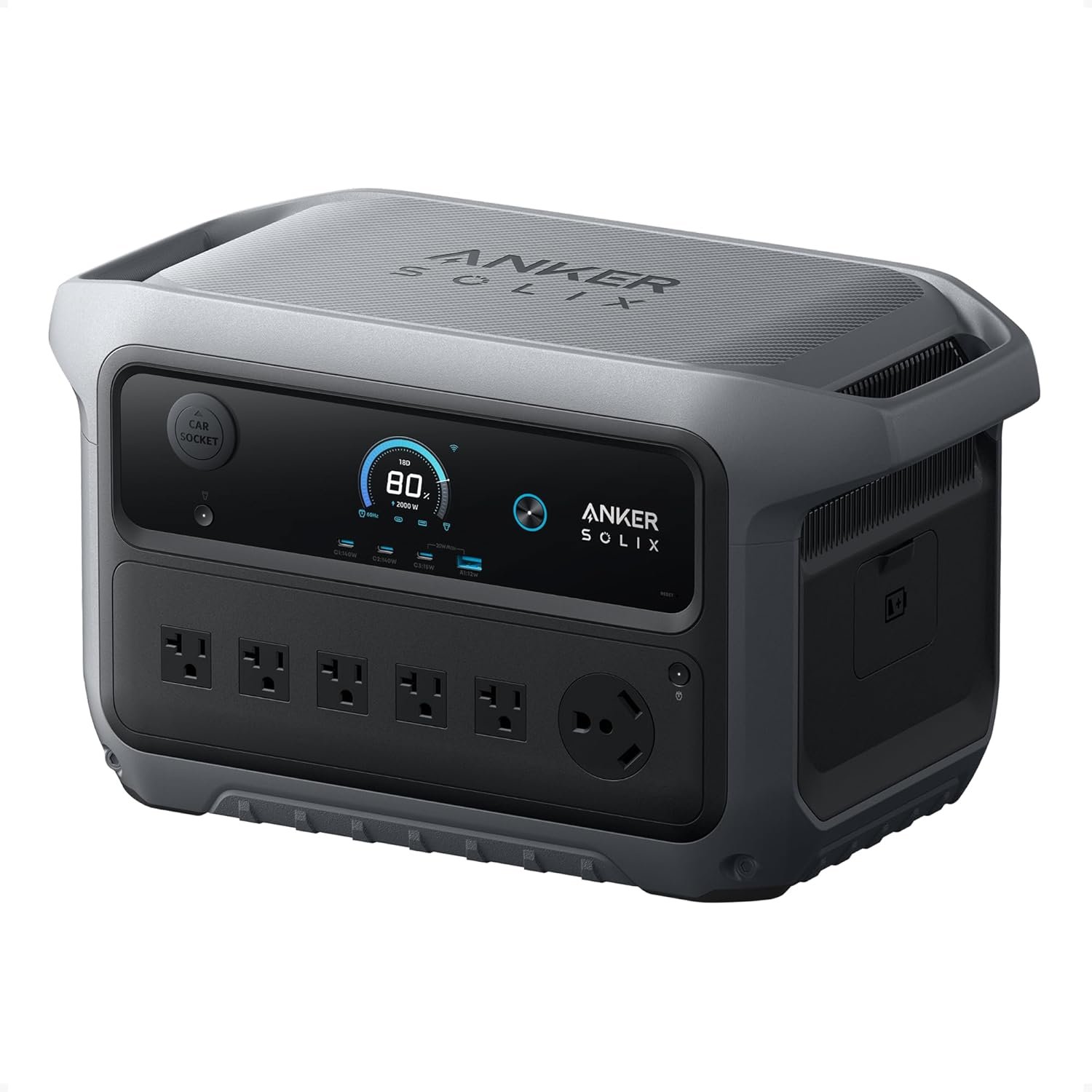
- Battery capacity: 2048Wh LiFePO4 battery
- AC output: 2400W running, 4000W peak
- Expandable capacity: Up to 4kWh with extra battery
- Recharge speed: Full charge in about 58 minutes
- Weight: About 41.7 lb compact design
The Anker SOLIX C2000 Gen 2 offers a well balanced combination of power, capacity, and portability. With a 2048Wh battery and a 2400W inverter, it fits nicely between mid-size portable units and larger off grid systems.
When tested in off grid scenarios, a 2kWh solar generator like this often becomes the backbone of a small power setup. It can handle refrigerators, cooking appliances, laptops, lighting, and communication devices while still remaining portable enough to move around when needed.
Charging speed is one of its standout features. With the ability to recharge fully in under an hour using high-speed AC input, downtime is kept minimal. Fast charging becomes extremely useful when sunlight is limited or when topping up power before a trip or storm.
Another advantage is its expansion capability. Adding an extra battery can double the total capacity to around 4kWh, allowing the system to grow as your off grid power needs increase. That scalability helps future-proof your energy setup.
Pros:
- Well balanced capacity and inverter power
- Very fast recharge capability
- Expandable system for growing power needs
- Compact design for a 2kWh class unit
Cons:
- Solar panels are optional rather than included
- Higher price compared to smaller portable stations
What Is an Off Grid Solar Generator?
An off grid solar generator stores solar energy in a battery and converts it into usable electricity for appliances and devices. In simple terms, it combines battery storage, an inverter, and solar charging support in one system.
Solar panels collect energy from sunlight. The battery stores that energy. The inverter turns that stored energy into the kind of power your everyday devices can use. That is why these systems work well for cabins, remote homes, RVs, workshops, and emergency backup situations.
Compared with gas generators, solar generators run quietly, need less maintenance, and do not require fuel for normal use. Many newer models also use LiFePO4 batteries, which are known for longer lifespan, better safety, and stronger long term value for off grid living.
Who Needs an Off Grid Solar Generator?
An off grid solar generator is useful for anyone who wants reliable power without depending fully on the grid. It makes the most sense when you need clean, quiet, and rechargeable backup power for daily essentials or remote living.
- Cabin owners who need power for lights, fans, refrigeration, and charging
- Homesteaders who want renewable energy for everyday use
- RV travelers who need portable power away from hookups
- Remote property owners without dependable utility access
- Preppers preparing for outages and emergency situations
- Outdoor workers who need electricity for tools, devices, or temporary setups
Can a Solar Generator Run a House Off Grid?
A solar generator can run a house off grid if the system has enough battery capacity, inverter power, and solar input. Smaller units usually power essential appliances such as lights, routers, laptops, fans, and refrigerators. Larger systems with 3kWh to 10kWh battery capacity can support more demanding daily loads.
For example, a solar generator with a 2000W to 3600W inverter can run most household essentials. Refrigerators, LED lighting, internet equipment, and small kitchen appliances typically work well within that power range. However, high demand equipment like central air conditioners, electric water heaters, or large well pumps may require larger systems or multiple battery units.
Many off grid households use solar generators as part of a larger energy setup. Solar panels charge the battery during the day, and the stored energy powers appliances at night. With enough solar panels and battery storage, a solar generator system can support long term off grid living.
How to Choose the Best Solar Generators for Off Grid Living
Choosing the right solar generator for off grid living depends on power needs, battery size, solar charging capability, and long term durability. If you plan to rely on solar energy every day, it is important to choose a system that matches your daily electricity consumption and future expansion needs.
Battery Capacity Determines Daily Energy Supply
Battery capacity determines how much electricity a solar generator can store and deliver throughout the day. Capacity is measured in watt hours, often written as Wh. A larger battery stores more energy and allows you to run appliances for longer periods without recharging.
For off grid living, many people find that systems between 2000Wh and 4000Wh provide a practical balance between size and usability. A 2000Wh generator can support lights, laptops, routers, and refrigeration for several hours. Larger systems above 3000Wh can support heavier loads and longer runtimes, especially when combined with solar charging during the day.
Inverter Power Determines Which Appliances You Can Run
The inverter converts stored battery energy into usable household electricity. Inverter size is measured in watts and determines which appliances the generator can run.
Smaller inverters around 800W to 1500W are usually enough for electronics, lights, and small appliances. Systems with 2000W to 3600W output are better suited for off grid homes because they can run refrigerators, kitchen appliances, tools, and multiple devices at the same time.
Choosing the right inverter size ensures your generator can handle both continuous loads and occasional surge demands from appliances starting up.
Solar Input Determines Charging Speed
Solar input refers to how much solar power the generator can accept from connected panels. Higher solar input allows the battery to recharge faster during daylight hours.
For off grid living, a system that supports 600W to 2000W solar input provides much better flexibility. Faster solar charging means you can refill the battery quickly on sunny days and maintain reliable power even during periods of heavy use.
A generator with strong solar input capability also allows you to expand your solar panel setup over time.
Expandable Battery Systems Increase Long Term Flexibility
Expandable systems allow you to add extra battery modules later. This is useful for people who start with a smaller system and increase capacity as their power needs grow.
Many modern solar generators support expansion from around 1kWh to 4kWh or even more. This modular design allows off grid homeowners to gradually build a larger power system without replacing the main generator.
Battery Chemistry Affects Lifespan and Safety
Battery chemistry plays an important role in long term reliability. Most modern solar generators use lithium iron phosphate batteries, often called LiFePO4.
LiFePO4 batteries last thousands of charge cycles and maintain stable performance over time. Many systems offer 3000 to 6000 cycles before reaching about 80 percent capacity. That often translates to 8 to 15 years of normal use, making them well suited for off grid living.
Solar Generator vs Gas Generator for Off Grid Living
When building an off grid power system, many people compare solar generators and gas generators. Both can provide electricity, but they work very differently and serve different purposes.
Solar generators rely on sunlight and rechargeable batteries, which makes them quiet and environmentally friendly. Gas generators rely on fuel and engines, which can provide higher power but require maintenance and ongoing fuel costs.
| Feature | Solar Generator | Gas Generator |
| Energy source | Solar panels and battery storage | Gasoline, propane, or diesel |
| Noise level | Very quiet operation | Loud engine noise |
| Maintenance | Minimal maintenance | Regular engine maintenance |
| Fuel requirement | Sunlight | Continuous fuel supply |
| Indoor use | Safe for indoor use | Must be used outdoors |
| Environmental impact | Clean renewable energy | Produces exhaust emissions |
| Long term cost | Higher upfront cost but lower operating cost | Lower upfront cost but ongoing fuel expenses |
How Many Solar Panels Do You Need Off Grid?
The number of solar panels you need depends on how much electricity you use each day. Daily energy usage is usually measured in watt hours. For example, a refrigerator might use around 1000Wh per day, while lights, routers, and devices might add several hundred watt hours.
If your off grid setup consumes around 3000Wh per day, you would typically want enough solar panels to produce at least that much energy during daylight hours. In many locations, this might require around 600W to 1000W of solar panels depending on sunlight conditions.
Adding extra panels can help recharge batteries faster and provide more energy during cloudy days. Many off grid systems use larger solar arrays so the battery can refill quickly during peak sunlight hours.
Safety Considerations for Off Grid Solar Power
Solar generators are generally safer than fuel powered generators because they do not produce carbon monoxide or exhaust gases. However, safe setup and proper electrical management are still important for reliable operation.
When installing or operating an off grid solar system, proper wiring, ventilation, and load management should always be considered. This helps protect the battery system and ensures stable power for appliances.
Key safety practices include:
- Use properly rated solar cables and connectors to prevent overheating
- Keep the power station in a dry, ventilated area to avoid moisture damage
- Avoid overloading the inverter by connecting too many high wattage appliances
- Use surge protection when powering sensitive electronics
- Inspect solar panels and cables regularly for wear or damage
- Follow manufacturer charging guidelines to maintain battery health
Final Words
Choosing the right solar generator for off grid living comes down to three main factors: battery capacity, inverter power, and solar charging capability. A reliable system should store enough energy for daily essentials, recharge efficiently with solar panels, and run common appliances without constant power management. The generators covered in this guide represent some of the most practical options available today for cabins, remote homes, RV setups, and emergency power.
If you want a balanced system that works well for most off grid situations, the Jackery Explorer 2000 v2 stands out as a dependable choice. Its 2040Wh battery and 2200W inverter provide enough capacity to run refrigerators, lighting, routers, and small appliances without becoming too heavy or complicated to manage.
For people who expect to run more demanding appliances, the BLUETTI Elite 200 V2 is a strong option. Its higher 2600W output gives extra headroom for kitchen appliances, tools, and heavier loads that smaller solar generators may struggle with.
If portability matters more than massive capacity, the Anker SOLIX C1000 Gen 2 offers a compact and lightweight solution. It works well for smaller cabins, RV travel, or off grid setups where mobility and fast charging are priorities.
Overall, solar generators continue to improve in capacity, charging speed, and reliability. With the right system and enough solar panels, it is now possible to power many everyday needs without depending entirely on traditional electricity sources.
Related FAQs
What size solar generator is best for off grid living?
Most off grid setups work best with solar generators between 2000Wh and 4000Wh. This capacity can power essentials like refrigerators, lights, routers, and devices throughout the day.
Can a solar generator run a refrigerator off grid?
Yes. A solar generator with at least 1000Wh capacity and a 1500W to 2000W inverter can typically run a standard refrigerator, especially when supported by solar panels.
How long do solar generators last for off grid use?
Most modern solar generators use LiFePO4 batteries rated for 3000 to 6000 charge cycles. That usually equals around 8 to 15 years of regular use.
Are solar generators better than gas generators for off grid living?
Solar generators are quieter, require less maintenance, and do not need fuel. Gas generators produce more power but require fuel and regular engine maintenance.
Can you expand a solar generator system later?
Many modern solar generators support expansion batteries. This allows users to increase battery capacity as their off grid power needs grow.

Robert Caldwell writes in-depth guides and reviews focused on generators, backup power systems, and portable energy equipment. His work is grounded in hands-on testing, covering fuel types, runtime performance, noise levels, and real-world reliability. He helps homeowners, RV owners, and outdoor users choose dependable power solutions with confidence. Every article emphasizes clear explanations, safe operation, and long-term value.