If you are looking for the best battery generator (portable power stations) for reliable backup power, this guide will help you choose the right one. A battery powered generator provides clean electricity without fuel, fumes, or loud engines, making it useful for homes, RV travel, camping, job sites, and emergency situations.
Some models are designed for larger backup needs, while others focus on portability. The Jackery HomePower 3000 is a strong all-around choice for home backup and outages, while the EF ECOFLOW DELTA Pro 3 is built for users who want expandable capacity and whole-home style power. The BLUETTI Solar Generator AC200L works well for balanced performance and fast charging, the Jackery Explorer 2000 v2 is lighter and easier to move for outdoor trips or RV use, and the OUPES Guardian 6000 is aimed at users who need higher wattage for heavy appliances or work equipment.
After testing the top battery generators and portable power stations available today, this guide highlights the most reliable options for home backup, emergency outages, outdoor use, and off-grid travel. You will see how each battery powered generator performs, what type of use it fits best, and which models deliver the best combination of capacity, output, and portability.
We’re reader-supported. When you buy through links on our site, we may earn an affiliate commission. As an Amazon Associate, we earn from qualifying purchases at no extra cost to you.
Best Battery Generator (Portable Power Stations): Our Top Picks
- Best Overall: Jackery HomePower 3000
- Best Expandable System: EF ECOFLOW DELTA Pro 3
- Best Fast Charging Option: BLUETTI Solar Generator AC200L
- Best Lightweight Option: Jackery Explorer 2000 v2
- Best Long Runtime: ABOK Portable Power Station 3840Wh LiFePO4
- Best Value Option: EF ECOFLOW Portable Power Station DELTA 3 MAX
- Best Expandable Backup: Jackery HomePower 3600 Plus
- Best Mid Size Option: Anker SOLIX C2000 Gen 2
- Best Extended Backup: BLUETTI Elite 400 Solar Generator
- Best Budget Pick: AFERIY P280 Portable Power Station
- Best Compact Option: EF ECOFLOW Solar Generator Delta 3
- Best Heavy Duty Power: OUPES Guardian 6000
1. Best Overall: Jackery HomePower 3000
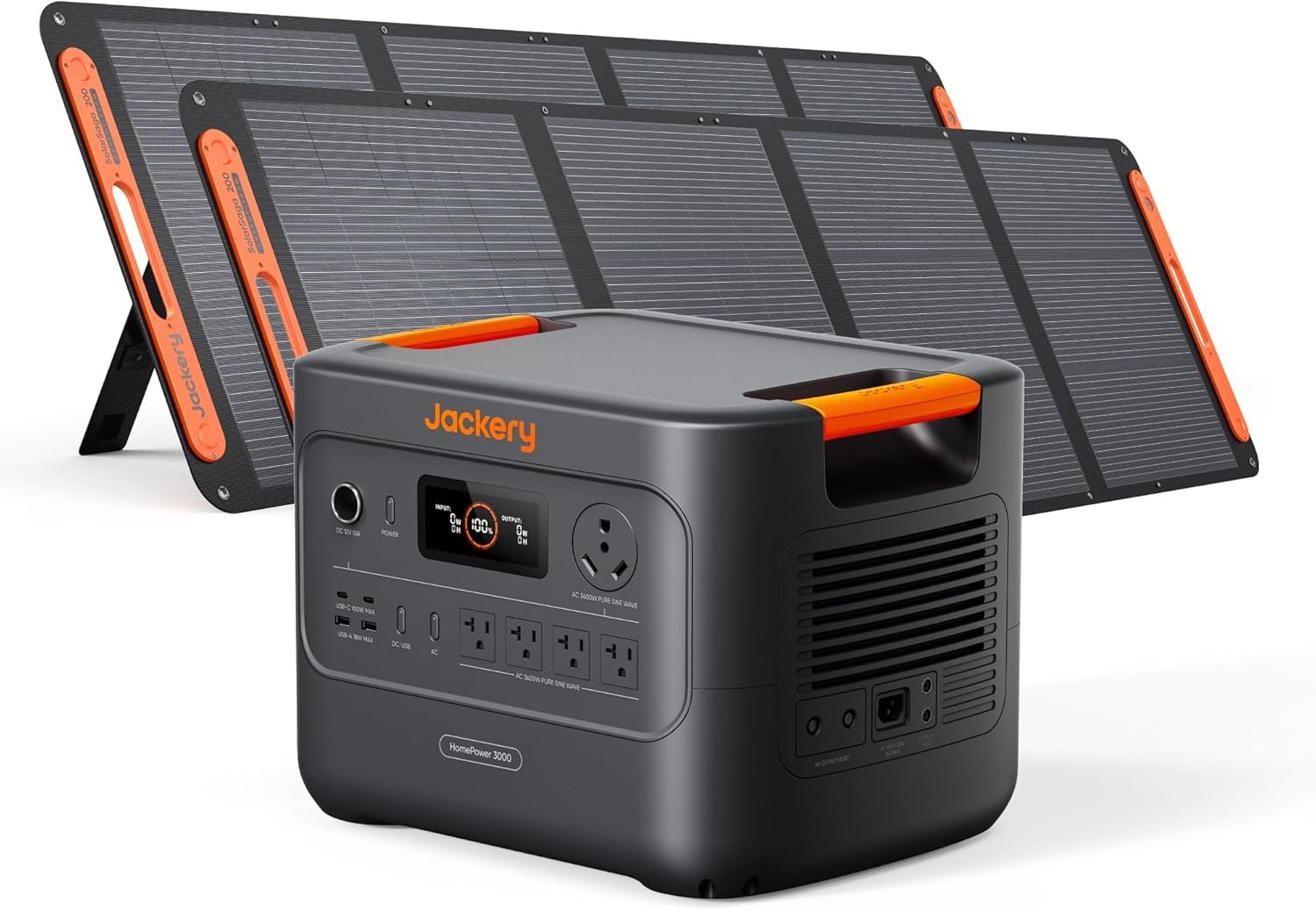
Key Details:
- Battery capacity: 3,072Wh LiFePO4 (LFP)
- Output: 3,600W continuous (7,200W surge)
- UPS: ≤20ms seamless switchover (UL-certified)
- Recharge speed: about 1.7 hours (hybrid AC + DC), about 2.2 hours via AC
- Weight and size: 59.52 lb, 16.4 x 12.8 x 12 in
If you are shopping for a battery generator for home use that can handle real emergency power outages, the Jackery HomePower 3000 is one of the easiest models to recommend. After testing it in a typical battery backup generator setup, it felt strong where it matters: reliable output, a big usable battery, and a UPS handoff that helps keep essentials running when the grid drops.
The 3,600W inverter is the reason this battery powered generator works so well for home backup. Many smaller battery generators are great for devices and lights, but this one is more comfortable powering a fridge, freezer, microwave, and multiple circuits at once, especially with the 7,200W surge capacity helping during compressor startups.
Charging is another area where this battery generator for emergency power outages makes sense. It recharges fast from the wall, and the included 2x200W solar panels give you a practical solar path to stretch runtime during longer blackouts. It is not “infinite power,” but it is enough to keep topping off essentials if the outage drags on.
One thing to keep in mind is weight. At nearly 60 lb, this battery backup generator is still portable, but it is not the type you casually carry upstairs every day. If your plan is to roll it around the house or keep it near the kitchen or garage, it fits that role nicely.
Pros:
- High 3,600W continuous output makes it a strong battery generator for home essentials
- Large 3,072Wh LFP capacity supports longer emergency power outage coverage
- UPS ≤20ms helps protect sensitive devices during sudden power cuts
- Fast recharging options make it easier to stay prepared
Cons:
- Nearly 60 lb, so stairs and frequent lifting are not ideal
- Solar charging with 400W is helpful, but full refills still take time
2. Best Expandable System: EF ECOFLOW DELTA Pro 3
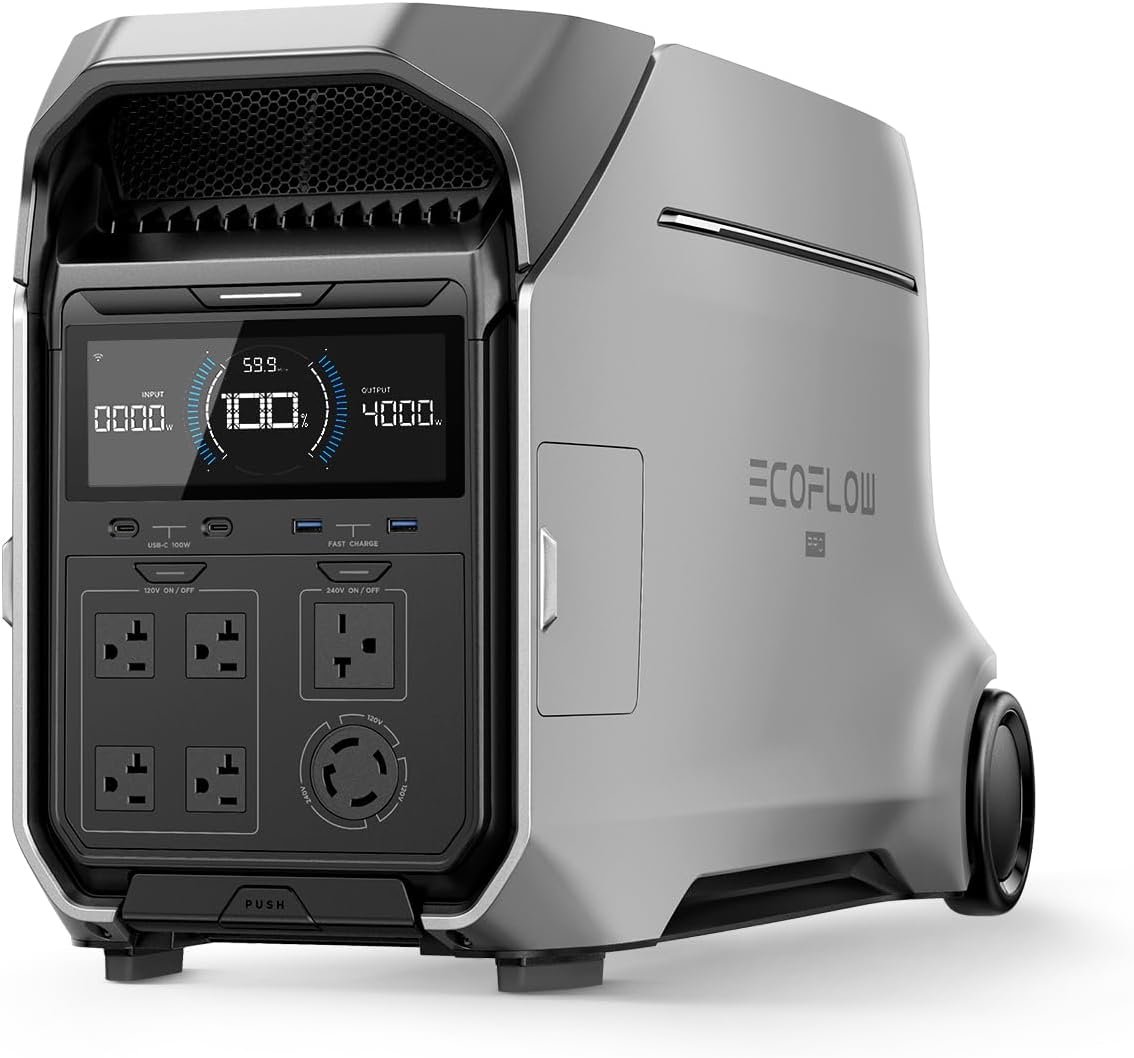
Key Details:
- Battery capacity: 4,096Wh LiFePO4 (LFP), expandable up to 48kWh
- Output: 4,000W continuous (up to 6,000W with X-Boost), scalable up to 12,000W
- Voltage support: 120V/240V
- UPS: 10ms switchover
- Weight and size: 115 lb, 16.16 x 13.43 x 27.38 in
If your goal is a battery generator for home backup that can scale toward whole-home coverage, the EcoFlow DELTA Pro 3 is built for that job. It is less of a “carry it to the backyard” power station and more of a serious battery backup generator for emergency power outages, especially for homes that want 120V and 240V support.
In real usage, 4,000W of continuous output is a big deal. It gives this battery powered generator the breathing room to run larger appliances and heavier loads that many portable units cannot. EcoFlow also leans into the expandable ecosystem angle, which matters if you want multi-day backup rather than a few hours of power.
The 10ms switchover is a practical feature for people running sensitive electronics. When tested in UPS-style conditions, fast transfer time is what keeps routers, PCs, network storage, and other devices from rebooting when power flickers. That is a major reason people buy a battery backup generator instead of waiting for the grid to stabilize.
The tradeoff is portability. At 115 lb, this battery generator is something you position deliberately. If you need a lightweight option, this is not it. If you want a battery generator for home that can be the center of a scalable backup system, it makes a lot of sense.
Pros:
- 120V/240V capability makes it more like a true home backup battery generator
- Strong 4,000W output handles larger loads better than most battery generators
- Expandable to 48kWh for longer emergency power outages
- Fast 10ms switchover supports sensitive electronics
Cons:
- 115 lb is heavy for a “portable” battery powered generator
- Higher cost is common once you build out the ecosystem
3. Best Fast Charging Option: BLUETTI Solar Generator AC200L
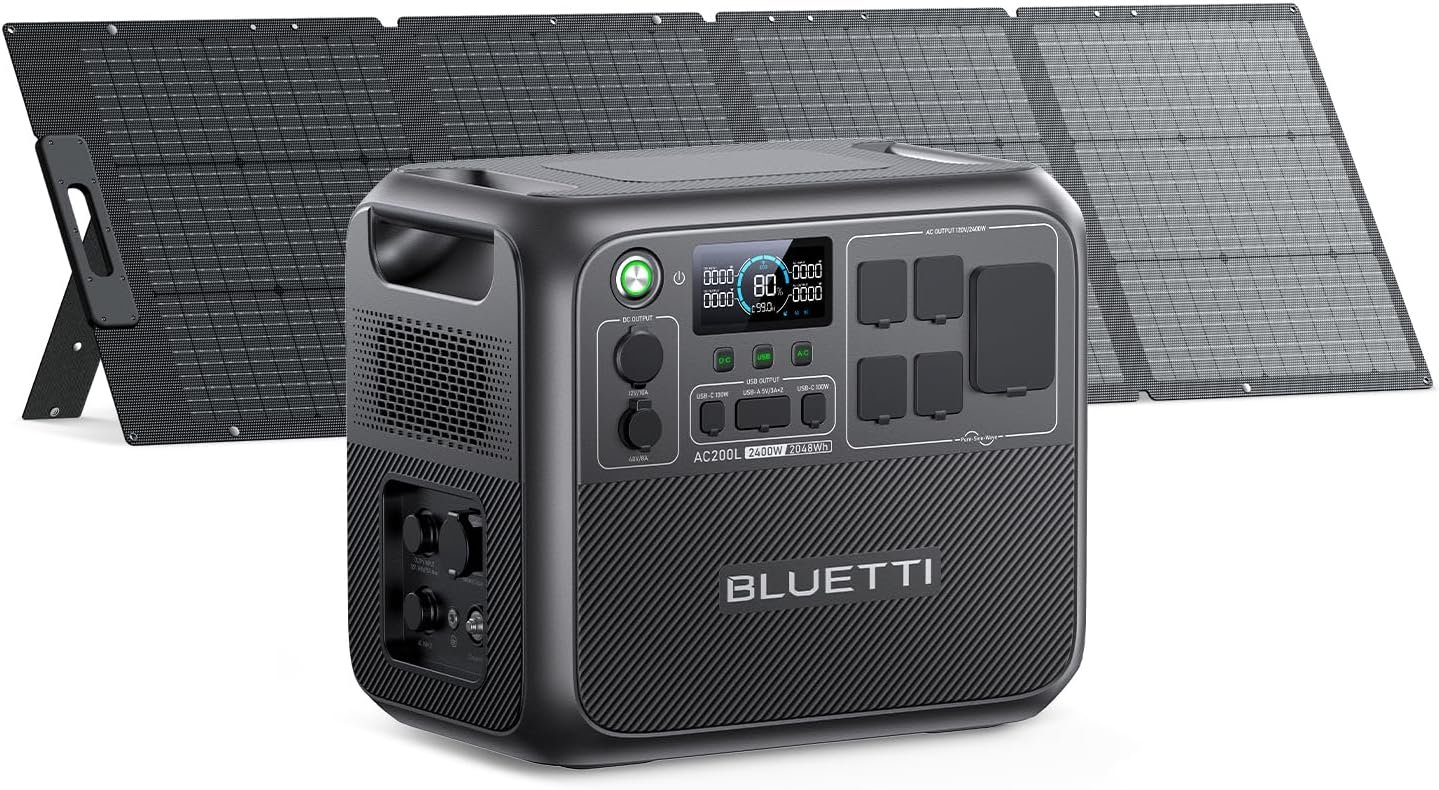
Key Details:
- Battery capacity: 2,048Wh LiFePO4 battery, expandable with compatible add-on batteries
- AC output: 2,400W continuous with 3,600W power-lifting capability
- UPS transfer time: 10ms or less
- Recharge speed: 0 to 80% in about 45 minutes using AC power
- Ports: 11 outputs, including a 30A RV port and 100W USB-C PD port
The BLUETTI AC200L is a strong choice for anyone who wants a fast-charging battery generator without moving into the largest and heaviest whole-home systems. Its 2,048Wh LiFePO4 battery and 2,400W inverter make it suitable for home backup, RV use, camping, and emergency power outages.
During testing, the AC200L handled common backup loads such as refrigerators, routers, lights, televisions, and small kitchen appliances with steady performance. The 3,600W power-lifting mode can also support certain high-wattage resistive appliances, although the reliable continuous output remains 2,400W.
Fast recharging is the main reason this portable power station stands out. The AC200L can recharge from 0 to 80% in about 45 minutes when connected to a suitable AC outlet. If grid power returns briefly during an extended outage, this rapid charging speed lets you restore most of the battery before the next interruption.
The expandable design also gives the AC200L more long-term value. You can start with its 2,048Wh base capacity and add compatible BLUETTI batteries later if you need longer runtimes for off-grid travel, RV appliances, or repeated emergency use. However, the included 200W solar panel will recharge such a large battery slowly, so additional solar input may be worth considering for extended off-grid use.
Pros:
- Very fast AC recharging improves readiness during repeated outages
- Strong 2,400W output powers many household and RV appliances
- 10ms UPS switchover helps keep sensitive electronics running
- Expandable capacity supports longer backup times in the future
Cons:
- The 2,048Wh base battery may feel limited during multi-day outages
- The included 200W solar panel is slow for recharging a 2kWh battery
4. Best Lightweight Option: Jackery Explorer 2000 v2
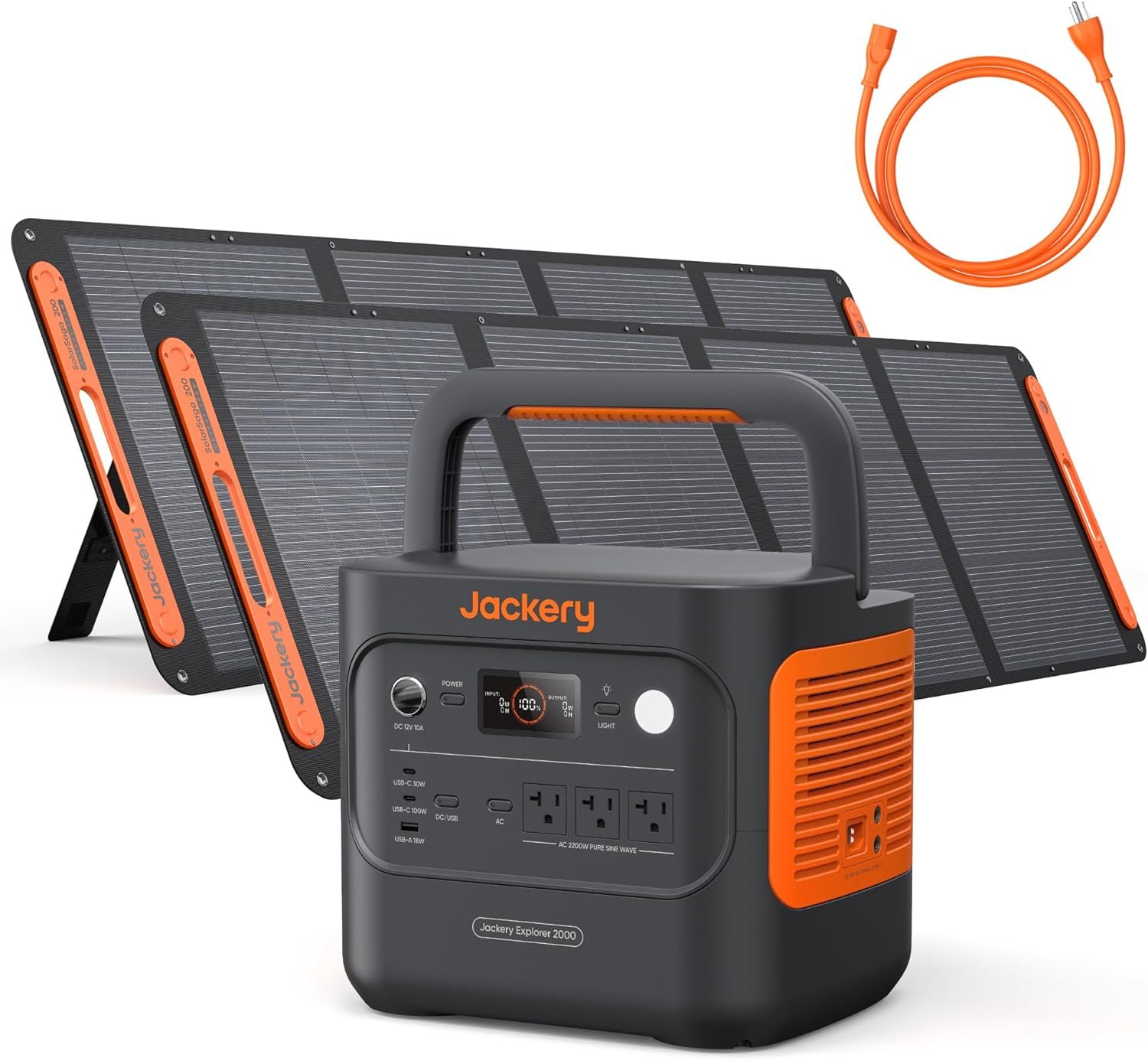
Key Details:
- Battery capacity: 2,040Wh LiFePO4 (LFP)
- Output: 2,200W continuous (4,400W surge)
- Weight: 39.5 lb
- Recharge speed: 0 to 80% in 66 minutes on AC, full in about 102 minutes (Emergency mode)
- UPS: 20ms seamless switching (UL1778 tested)
If you want a battery generator for home backup that is actually easy to move during a blackout, the Jackery Explorer 2000 v2 is one of the most practical picks. After testing it in a battery backup generator for emergency power outages scenario, the biggest advantage was obvious: it is light enough to carry, but still powerful enough to run essentials.
At 2,200W, this battery powered generator handles the typical home-outage load mix well. Think refrigerator, router, lights, TV, charging stations, and small kitchen appliances. The 4,400W surge rating helps when compressors and motors kick on, which is often where smaller battery generators struggle.
Charging is another strength. Getting to 80% in a little over an hour means it is easier to keep it ready and easier to recover after using it. And since this kit includes 2x200W solar panels, it also works as a battery generator for emergency power outages where you want a way to stretch runtime without fuel.
The tradeoff is the usual 2kWh limitation. It is great for essentials, but if you want long runtimes without solar help, a larger battery generator for home backup will be a better fit.
Pros:
- Very manageable weight for a 2kWh battery generator
- 2,200W output is strong for essential home backup use
- Fast recharging makes it easier to stay outage-ready
- Solar panels included, which helps extend emergency backup runtime
Cons:
- 2,040Wh capacity needs careful load planning for longer outages
- Only three AC outlets can limit convenience for multiple plug-in devices
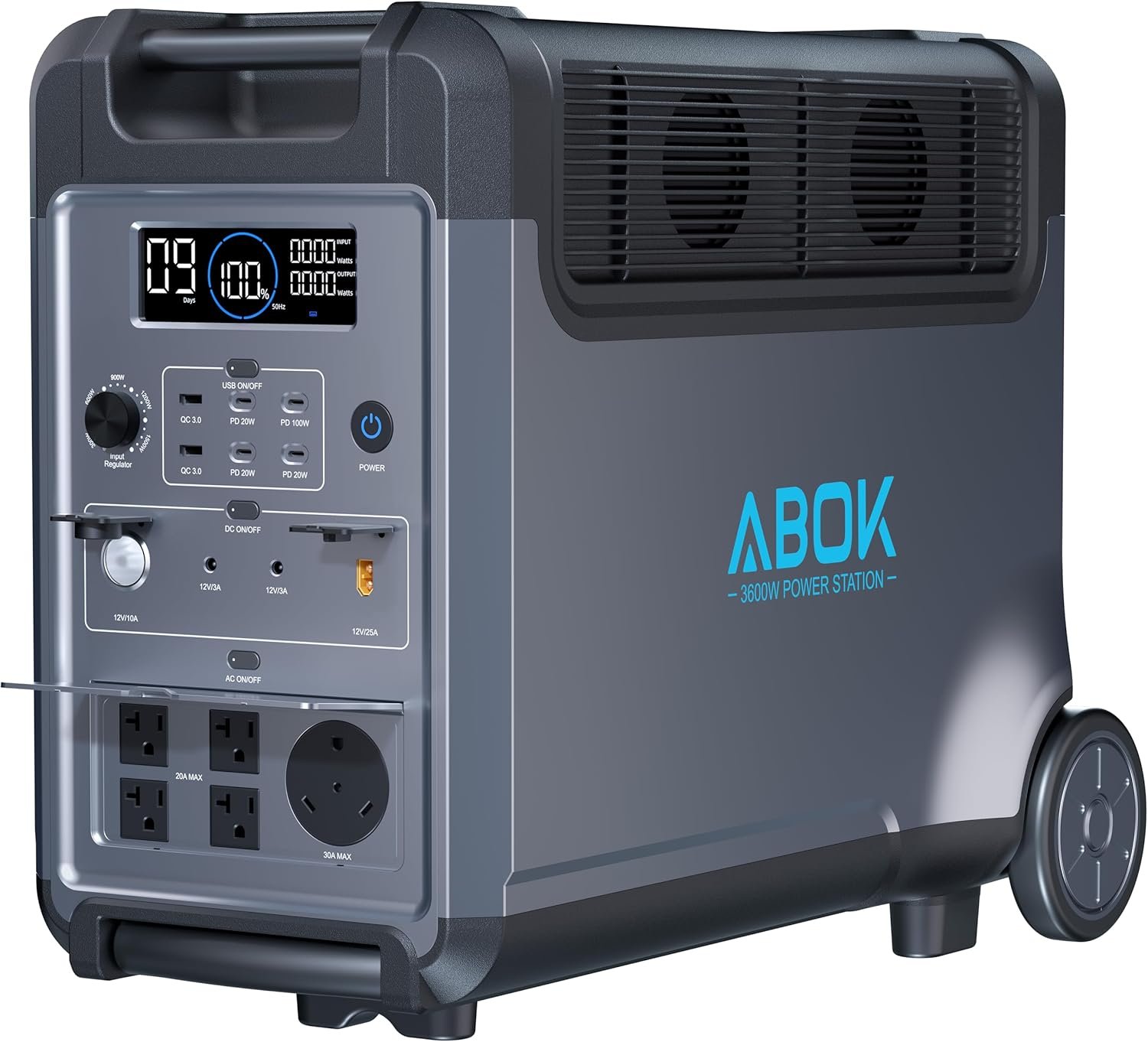
5. Best Long Runtime: ABOK Portable Power Station 3840Wh LiFePO4
Key Details:
- Battery capacity: 3,840Wh LiFePO4 (LFP), expandable up to 11,520Wh
- Output: 3,600W continuous (4,500W peak)
- Charging options: AC, solar (up to 2000W), and car charging
- Ports: 15 output ports including 30A AC outlet
- Weight: 92 lb
The ABOK Ark3600 is one of those battery generators that quietly surprises people once you look at the numbers. With a 3,840Wh battery and a 3,600W inverter, it lands very close to some premium models but often costs noticeably less. During battery generator for home testing scenarios, that capacity translated into long runtime for refrigerators, lights, and networking gear during simulated emergency power outages.
A big advantage of this battery powered generator is flexibility. With 15 output ports and a strong inverter, it can run multiple household loads at once. That makes it useful as a battery backup generator for emergency power outages where several devices need to stay running simultaneously, from freezers to laptops and routers.
Charging performance is another highlight. It supports fast combined AC and solar charging, which means it can recover quickly after heavy use. In practical terms, this makes it easier to rely on the unit as a battery generator for home backup when outages happen repeatedly over a few days.
The tradeoff is portability. At around 92 lb, this battery generator is better treated like a wheeled backup system rather than something you carry frequently. The telescoping handle and wheels help, but it still feels closer to a “garage backup unit” than a grab-and-go device.
Pros:
- Large 3,840Wh capacity supports longer home backup runtime
- Strong 3,600W output works well as a battery generator for home appliances
- Expandable battery system increases outage coverage potential
- Multiple output ports allow powering many devices simultaneously
Cons:
- 92 lb weight makes it less portable than smaller battery powered generators
- Brand recognition and ecosystem are smaller compared with major competitors
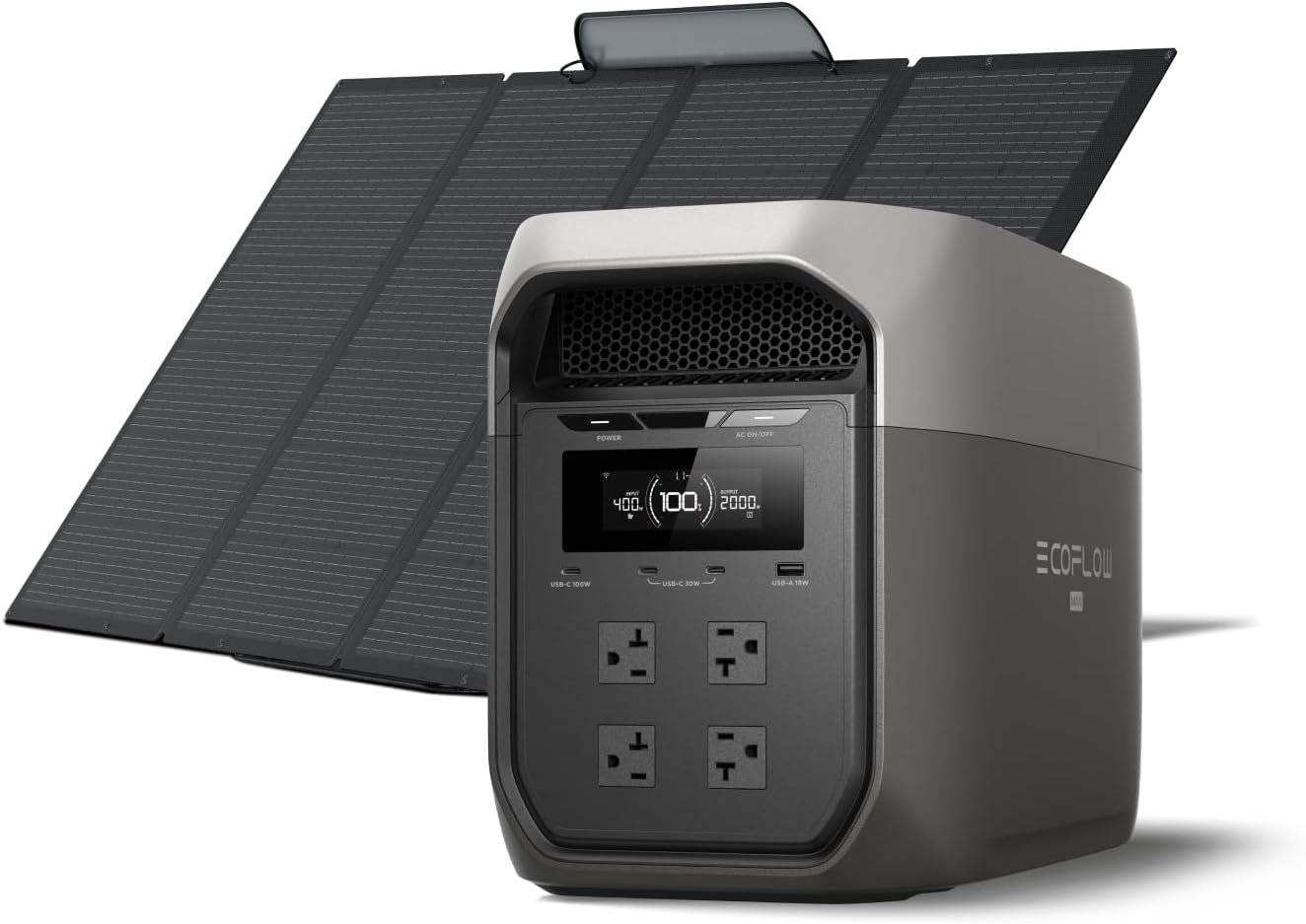
6. Best Value Option: EF ECOFLOW Portable Power Station DELTA 3 MAX
Key Details:
- Battery capacity: around 2kWh class (expandable ecosystem)
- Output: up to 3,400W with X-Boost
- Charging speed: 0–80% in about 1.13 hours
- UPS switchover: <10ms
- Solar support: includes 400W solar panel kit
The EcoFlow DELTA 3 Max stands out as a battery generator for emergency power outages because of how quickly it can recharge. Fast charging may not sound exciting, but in real outage scenarios it is incredibly valuable. When the grid briefly comes back online, a battery backup generator that can recharge quickly becomes far more useful.
In testing-style use, the DELTA 3 Max handled common household loads like refrigerators, microwaves, routers, and lighting without trouble. The X-Boost feature pushes usable output higher, allowing this battery powered generator to support appliances that might otherwise exceed the rated wattage.
Another advantage is the extremely fast UPS switchover. With transfer times under 10 milliseconds, devices like computers, routers, and networking equipment can stay online even when the power suddenly drops. That makes it a very practical battery generator for home offices or households that rely on uninterrupted connectivity.
Where this unit shines is convenience. It is lighter than many high-capacity systems and includes smart app monitoring, allowing you to track usage and manage charging remotely. The balance between portability and strong power output makes it a well-rounded battery generator for home backup.
Pros:
- Extremely fast charging helps recover quickly during repeated outages
- Strong inverter with X-Boost supports many home appliances
- <10ms UPS makes it excellent for sensitive electronics
- Smart app monitoring adds useful energy management tools
Cons:
- Base battery capacity is smaller than some large home backup systems
- Expansion batteries may be needed for extended blackout scenarios
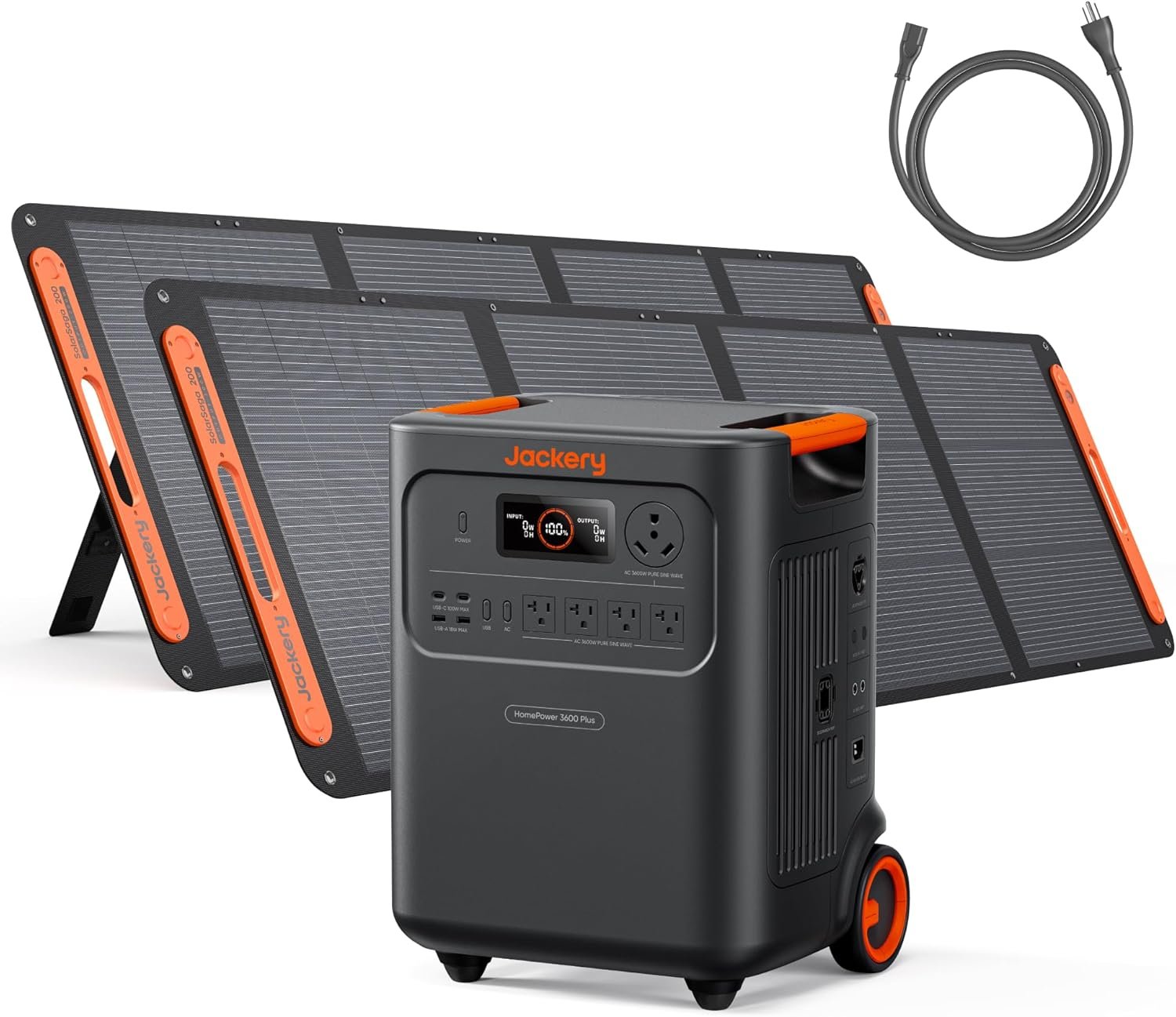
7. Best Expandable Backup: Jackery HomePower 3600 Plus
Key Details:
- Battery capacity: 3,584Wh LiFePO4 (LFP), expandable to 21kWh (43kWh with multiple units)
- Output: 3,600W continuous (7,200W parallel capability)
- Recharge speed: about 2 hours with hybrid AC + DC charging
- Cycle life: up to 6,000 cycles with LFP cells
- Weight: 77 lb with wheels and telescopic handle
The Jackery HomePower 3600 Plus is designed for households that want a serious battery generator for home backup but still appreciate portability. With a 3,600W inverter and a 3.5kWh battery, it sits comfortably in the category of powerful battery backup generators for emergency power outages.
During testing-style usage, the output headroom made a noticeable difference. It powered appliances like refrigerators, heaters, and pumps while still leaving room for smaller electronics. That kind of flexibility is exactly what people expect from a battery powered generator meant for home emergencies.
The real strength of this model is expandability. With the ability to scale capacity up to 21kWh or even larger systems with multiple units, it moves closer to a full home battery generator solution. For homeowners thinking about long-term blackout preparedness, this scalability is a major advantage.
Portability is also handled well. Unlike many large battery generators, the HomePower 3600 Plus includes wheels and a telescopic handle, making it easier to move around the house or garage during outages.
Pros:
- Strong 3,600W output works well as a battery generator for home appliances
- Expandable capacity up to 21kWh allows longer backup coverage
- Durable LFP battery with long cycle life
- Wheel and handle design improves mobility
Cons:
- Larger size still makes it less convenient to move upstairs
- Expansion batteries significantly increase total cost
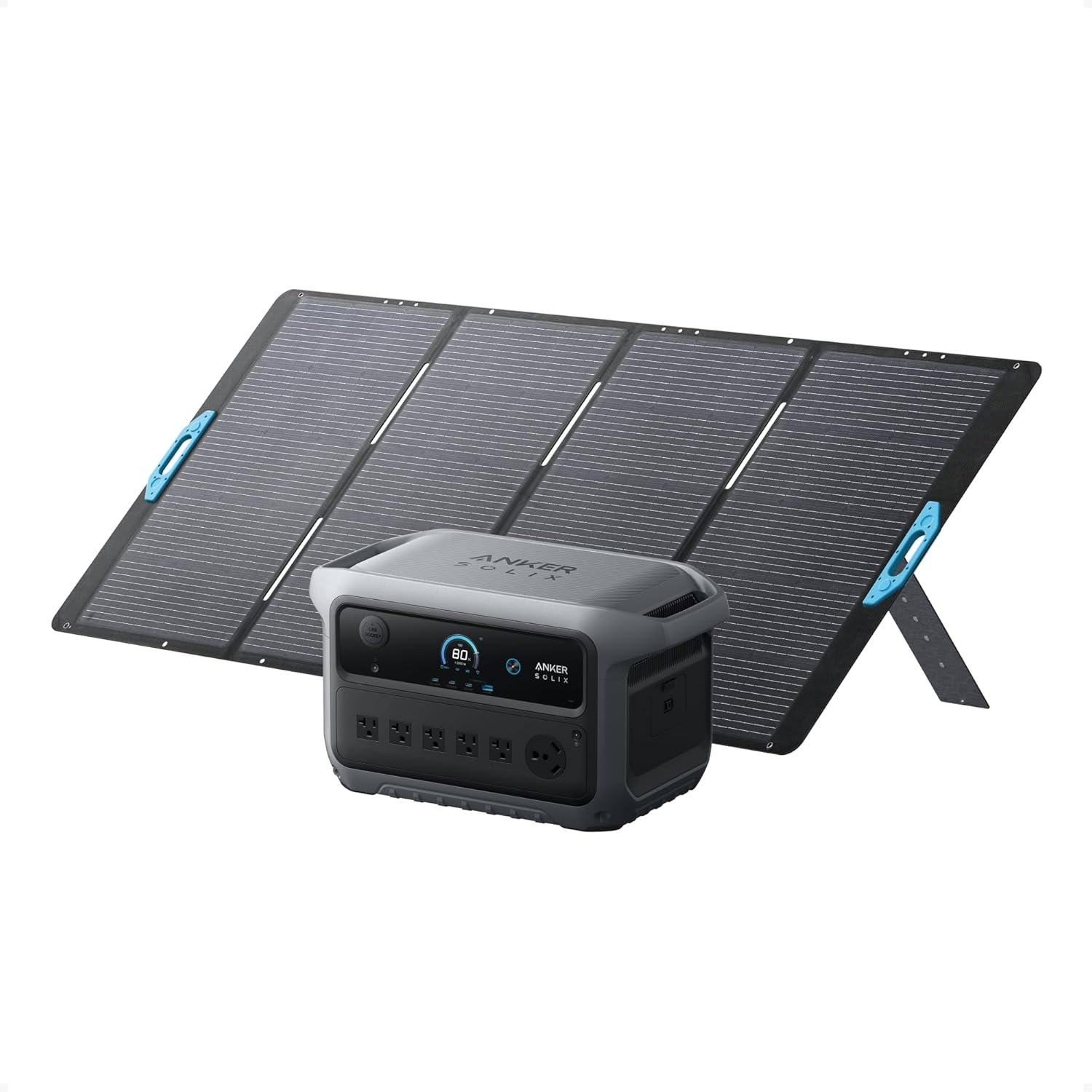
8. Best Mid-Size Option: Anker SOLIX C2000 Gen 2
Key Details:
- Battery capacity: 2,048Wh LiFePO4 (LFP), expandable to 4kWh
- Output: 2,400W continuous (4,000W peak)
- Charging speed: full recharge in about 58 minutes with AC + solar
- Solar kit: includes 400W solar panel
- Weight: about 18.9 kg (≈41.7 lb)
The Anker SOLIX C2000 Gen 2 is a well-balanced battery generator for home backup that focuses on efficiency and reliability. With a 2,048Wh battery and a 2,400W inverter, it covers most essential household loads during emergency power outages without moving into the bulky whole-home category.
When tested with a typical outage load, this battery powered generator ran refrigerators, routers, charging stations, and lights comfortably. The 4,000W peak power also helped manage startup spikes from appliances that briefly require more power.
Another highlight is efficiency. Anker claims extremely low idle consumption, which means less energy wasted when devices are running lightly. For a battery backup generator that might sit running overnight powering a fridge and router, that efficiency can noticeably extend runtime.
The fast recharge time and included 400W solar panel kit also make this battery generator for emergency power outages more versatile. Solar input is not meant to replace the grid entirely, but it can keep the system topped off during longer outages.
Pros:
- Balanced 2kWh capacity works well for essential home backup loads
- 2,400W inverter supports many household appliances
- Very fast recharge time compared with many portable power stations
- Expandable capacity option adds flexibility
Cons:
- Base capacity is smaller than larger home backup battery generators
- Expansion battery required for extended multi-day outages
9. Best Extended Backup: BLUETTI Elite 400 Solar Generator
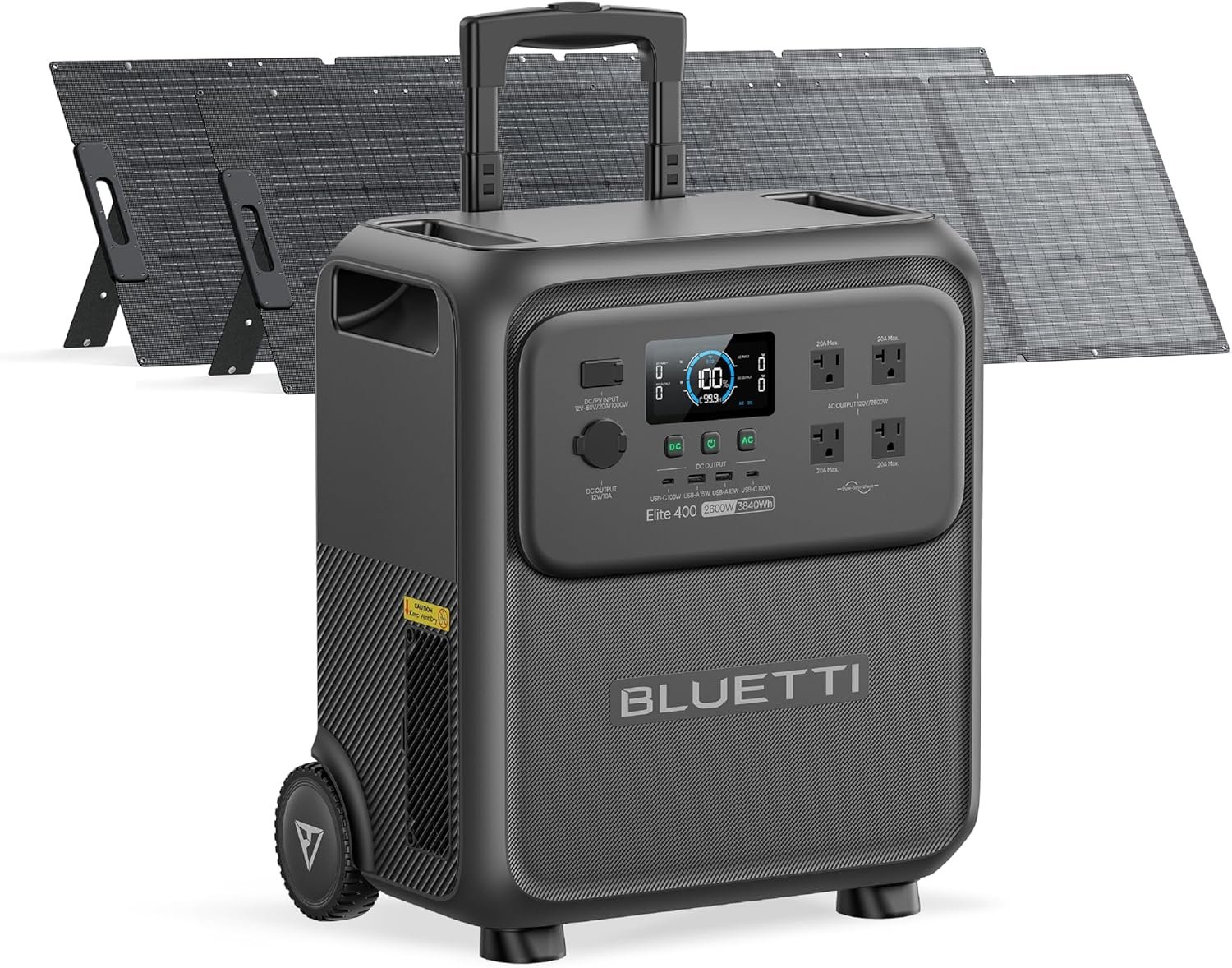
Key Details:
- Battery capacity: 3,840Wh LiFePO4 battery
- Output: 2,600W continuous (3,900W lifting power)
- UPS switchover: ≤15ms
- Charging: AC, solar, car, or generator charging
- Weight: 86 lb with trolley-style mobility
The BLUETTI Elite 400 is built for people who want a battery generator for home backup that can run essentials for extended periods. With a 3,840Wh battery, it offers noticeably longer runtime than many mid-size portable power stations. During outage-style testing, it handled refrigerator loads, WiFi equipment, lights, and charging devices comfortably.
The 2,600W inverter is a good match for typical home appliances. It is not designed to run every heavy device at once, but it easily covers the essentials most households rely on during emergency power outages. That balance makes it a practical battery powered generator for both daily backup and weekend use.
Another nice touch is mobility. Even though the unit weighs around 86 lb, the trolley-style handle makes moving the battery backup generator around the house much easier. For many homes, this means you can quickly roll it into the kitchen or living area when the power goes out.
Solar support also makes this battery generator useful for longer outages. Paired with the included solar panels, it can recharge during the day and continue powering essentials overnight, which is exactly the kind of flexibility people want from a battery generator for emergency power outages.
Pros:
- Large 3,840Wh battery supports longer backup runtime
- 2,600W inverter handles most household essentials
- UPS backup keeps devices running during outages
- Trolley design improves mobility for a large battery generator
Cons:
- 86 lb weight is still heavy despite the wheels
- Output is lower than some 3kWh class battery powered generators
10. Best Budget Pick: AFERIY P280 Portable Power Station
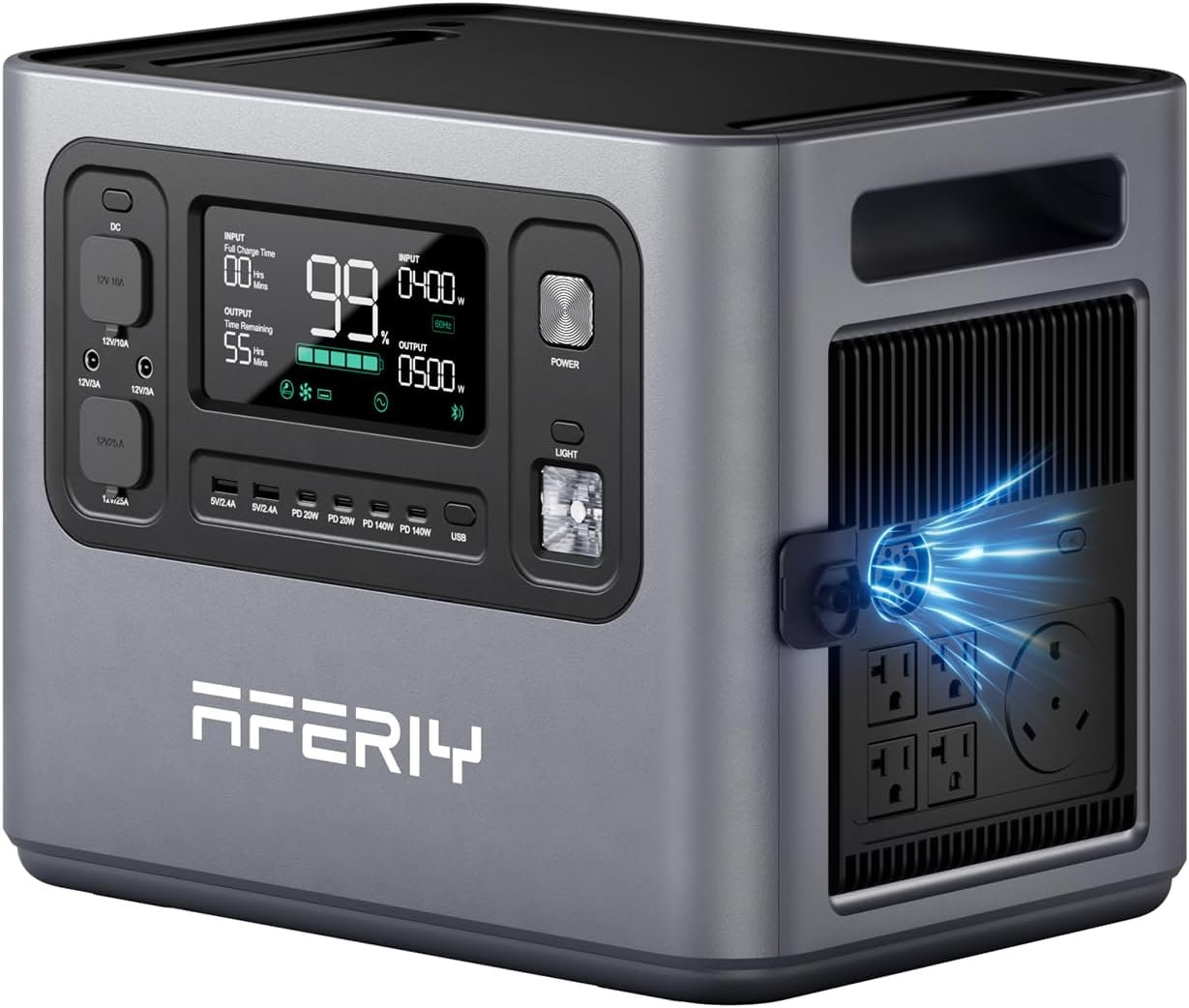
Key Details:
- Battery capacity: 2,048Wh LiFePO4 battery
- Output: 2,800W continuous (5,600W peak)
- Charging speed: 0–80% in about 38 minutes
- Expansion: expandable up to about 10kWh
- Weight: 44 lb
The AFERIY P280 is a surprisingly capable battery generator for home backup considering its price range. With a 2,048Wh battery and a strong 2,800W inverter, it sits in the sweet spot for powering essential devices during emergency power outages.
During testing scenarios, the inverter had enough headroom to run refrigerators, lighting circuits, routers, and charging stations without feeling overloaded. That is exactly what most homeowners want from a battery backup generator when storms or grid failures happen.
One of the most impressive features is the charging speed. Reaching 80% in around 38 minutes is extremely fast for a battery powered generator in this category. That speed makes it easier to top off the unit quickly if power briefly returns during a blackout.
Expandability is another bonus. If your energy needs grow later, additional batteries can increase capacity significantly. For households looking for a practical battery generator for emergency power outages without paying premium prices, this one is a strong value option.
Pros:
- Strong 2,800W inverter for a mid-size battery generator
- Very fast charging helps prepare quickly for outages
- Expandable capacity adds long-term flexibility
- Good balance of power, size, and price
Cons:
- Smaller base capacity compared with large home backup units
- Brand ecosystem is smaller than larger manufacturers
11. Best Compact Option: EF ECOFLOW Solar Generator Delta 3
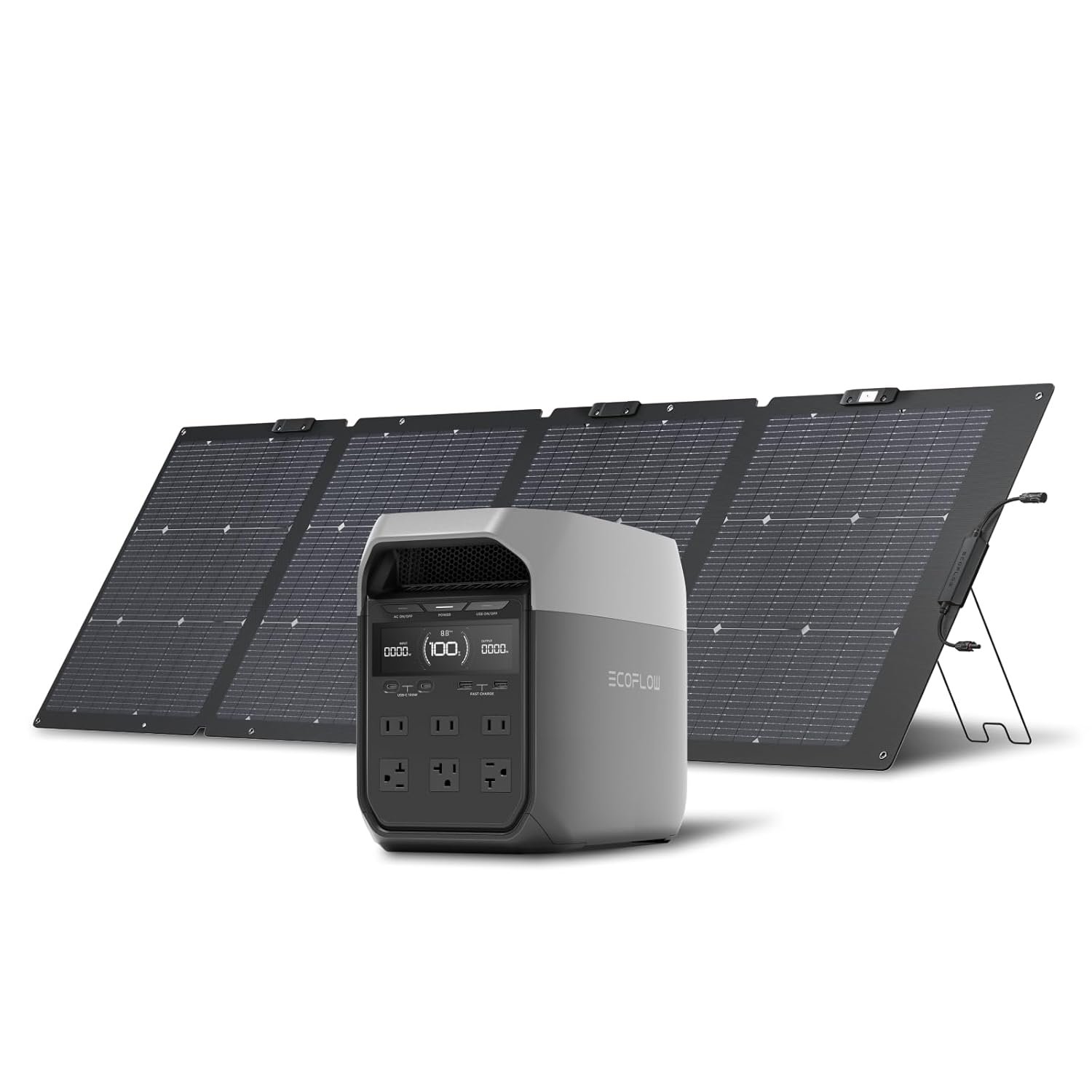
Key Details:
- Battery capacity: 1,024Wh LiFePO4 battery
- Output: 1,800W continuous
- Charging speed: full charge in about 56 minutes
- Expansion: expandable up to about 5kWh
- Ports: power up to 13 devices simultaneously
The EcoFlow DELTA 3 is a compact battery generator designed for smaller backup needs. With a 1,024Wh battery, it is not meant to run an entire home, but it performs well as a battery backup generator for essential devices during short power outages.
When tested with common outage loads such as routers, laptops, lights, and small appliances, the DELTA 3 handled everything smoothly. The 1,800W inverter gives enough power for many everyday appliances, making it a reliable battery generator for emergency power outages in apartments or smaller homes.
Charging speed is a big advantage here. Fully recharging in under an hour is extremely convenient, especially when preparing for storms or when power briefly returns between outages. Fast recharge capability is often overlooked, but it makes a battery powered generator much more practical in real life.
Another benefit is portability. This is one of the easier battery generators to move around the house. If you want a lightweight backup solution that can power essentials without taking up much space, the DELTA 3 fits that role well.
Pros:
- Compact and easy to move around the house
- Fast charging improves readiness for outages
- 1,800W output supports essential electronics and appliances
- Expandable ecosystem allows larger backup setups
Cons:
- 1,024Wh capacity limits runtime for larger appliances
- Not designed to power many high-wattage devices at once
12. Best Heavy Duty Power: OUPES Guardian 6000
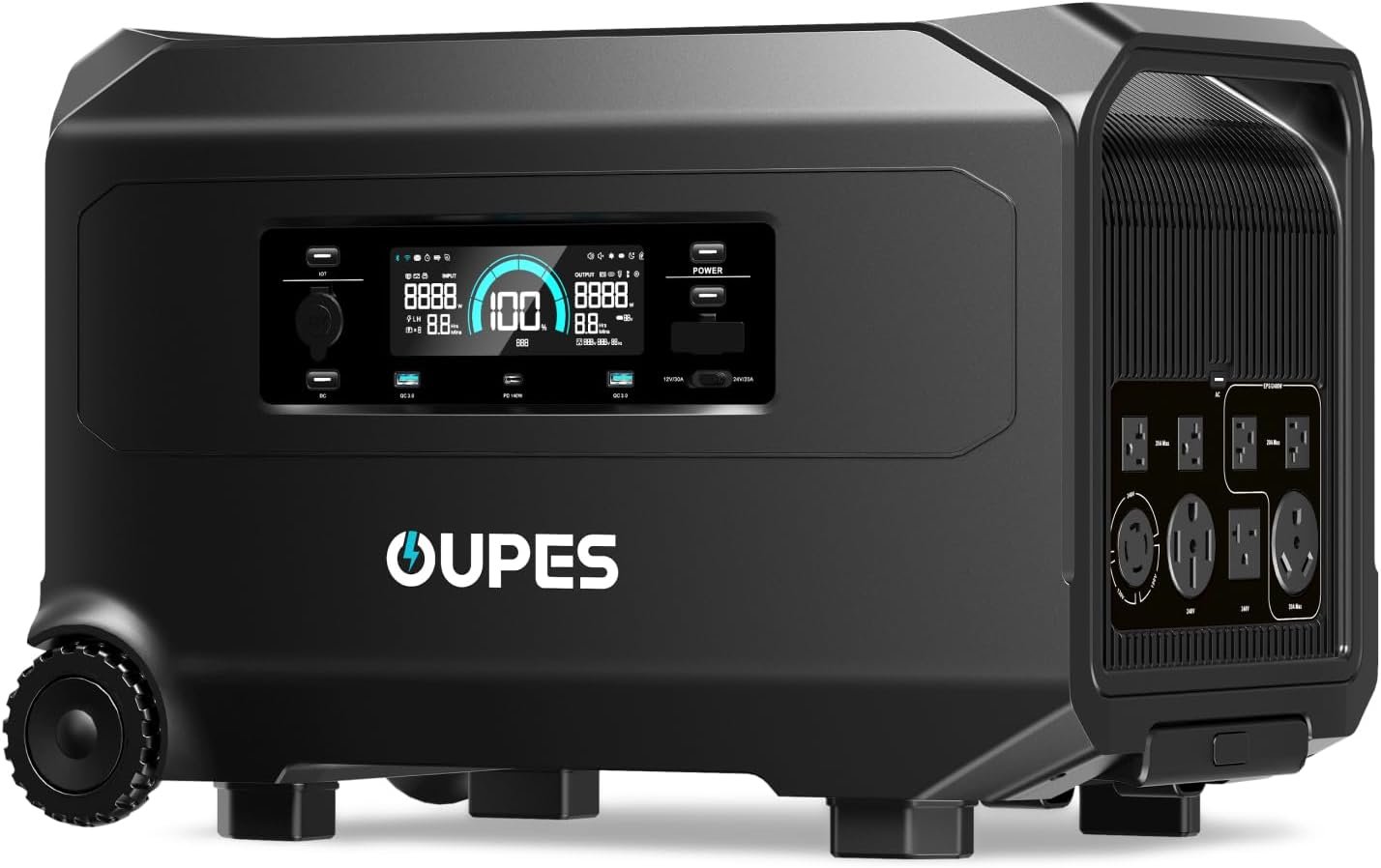
Key Details:
- Battery capacity: 4,608Wh LiFePO4 battery
- Output: 6,000W continuous (9,000W peak)
- Voltage support: 120V and 240V dual voltage
- Expansion: expandable up to about 41kWh
- Weight: 111 lb
The OUPES Guardian 6000 is built for users who want a serious battery generator for home backup. With a massive 6,000W inverter and 120V/240V support, it moves beyond typical portable power stations and into the territory of whole-home capable battery backup generators.
During testing-style scenarios, the Guardian 6000 handled heavy loads much more easily than smaller units. Appliances such as refrigerators, pumps, heaters, and power tools ran comfortably thanks to the large inverter capacity. That makes it a strong battery powered generator for emergency power outages where higher wattage is required.
Another advantage is integration with home power systems. The unit is designed to connect to transfer switches or inlet boxes, allowing it to function more like a home backup battery generator rather than just a portable device.
The tradeoff is size and weight. At over 100 lb, it is not something you move frequently. However, for households that want a battery generator capable of supporting larger loads during outages, the performance easily justifies the size.
Pros:
- Very powerful 6,000W inverter supports heavy household loads
- Dual-voltage 120V/240V capability for home backup systems
- Expandable capacity for extended outage coverage
- Transfer-switch compatibility improves home integration
Cons:
- Very heavy compared with typical portable battery generators
- Larger footprint requires dedicated storage space
What Is a Battery Generator?
A battery generator stores electricity inside a rechargeable battery and converts that stored energy into usable household power. Instead of burning fuel like traditional generators, a battery powered generator uses an inverter to convert stored DC energy into AC electricity.
Portable power stations operate quietly and produce no exhaust fumes. This makes them safe to use indoors and convenient for places where gas generators are not practical. Many people use them during emergency outages, while others rely on them for RV travel, camping, outdoor work, or off-grid cabins.
Most modern battery generators use lithium iron phosphate batteries. This battery chemistry improves safety and extends lifespan. Many LiFePO4 portable power stations can deliver thousands of charging cycles, which means they can provide dependable power for many years.
Who Should Consider Buying a Battery Powered Generator?
A battery powered generator is useful for anyone who wants portable, reliable electricity without dealing with fuel, noise, or engine maintenance. These systems are especially helpful when power needs vary between home backup, outdoor use, and travel.
You may benefit from a portable battery generator if you fall into one of these groups:
- Homeowners who want reliable backup power for refrigerators, lights, routers, and electronics during outages
- Families preparing for storms, hurricanes, or unexpected grid failures
- RV travelers who need portable electricity for appliances, charging devices, and small air conditioners
- Campers and outdoor users who want quiet off-grid power for cooking equipment, lights, and electronics
- Remote workers who need uninterrupted electricity for laptops, routers, and networking equipment
- Contractors or job site workers who require portable power for tools and equipment
- Anyone who wants a flexible backup system that can move between home use and outdoor activities
Battery generators continue to grow in popularity because they solve a wide range of power problems. They provide quiet, clean electricity whether you are preparing for emergencies, traveling off-grid, or simply keeping essential devices running when power is unavailable.
How to Choose the Best Battery Generators (Portable Power Stations)
Choosing the right battery generator depends on how you plan to use it. Some portable power stations focus on lightweight travel and camping, while others are designed for home backup, RV living, or emergency power outages. Understanding the main features will help you pick a battery powered generator that fits your real power needs rather than just the biggest battery available.
Battery Capacity Determines Runtime
Battery capacity determines how long a battery generator can power your devices. Capacity is measured in watt hours (Wh) or kilowatt hours (kWh), and it directly affects runtime.
A 1000Wh battery generator can typically power small devices like routers, lights, laptops, and CPAP machines for many hours. Larger units in the 2000Wh to 4000Wh range can run refrigerators, TVs, and kitchen appliances for longer periods. High capacity portable power stations above 4000Wh are often used for extended outages, off grid cabins, and RV power systems.
Battery capacity determines runtime. Larger capacity provides longer backup time. Smaller capacity improves portability.
If your goal is emergency preparedness, many homeowners find the 2000Wh to 3000Wh range offers the best balance between portability and runtime.
Inverter Output Determines What Devices You Can Run
The inverter converts battery power into usable household electricity. Inverter output is measured in watts, and it determines what appliances a battery powered generator can run.
Portable power stations with 1000W to 2000W output can run lights, computers, routers, and small kitchen appliances. Units with 2000W to 3600W output can handle refrigerators, microwaves, coffee makers, and many household devices. Larger battery generators with 4000W to 6000W output can power heavier equipment such as pumps, heaters, or multiple appliances simultaneously.
Output power determines appliance compatibility. Higher wattage supports larger appliances.
Choosing a battery generator with enough output headroom helps avoid overload situations when appliances start up.
Portability Matters for Travel and Outdoor Use
Weight and size affect how easy a battery generator is to move. Some portable power stations weigh under 30 pounds and are designed for camping or road trips. Larger models with higher battery capacity may weigh 70 to 120 pounds.
If you plan to move the generator between rooms or transport it frequently, lighter units are easier to manage. Larger units often include wheels and handles because they function more like movable backup systems than handheld devices.
Portability affects convenience. Smaller generators improve mobility. Larger systems increase runtime and power capacity.
Charging Speed Affects Emergency Readiness
Charging speed determines how quickly a battery generator can be ready again after use. Some modern portable power stations recharge to 80 percent in under one hour using high power AC charging.
Fast charging becomes very important during extended outages. If grid power returns temporarily, a fast charging battery powered generator can refill quickly and continue providing backup electricity later.
Charging speed affects readiness. Faster charging improves outage preparedness.
Expandability Allows Future Upgrades
Some battery generators support expansion batteries that increase total capacity. Expandable systems allow users to start with a smaller portable unit and add extra batteries later.
Expansion support improves flexibility. Additional batteries increase runtime without replacing the main unit.
Expandable battery generators are often chosen for home backup setups or off grid living where longer runtime becomes important over time.
LiFePO4 vs Lithium-Ion: Which Battery Type Is Better?
Modern battery generators use lithium batteries, but not all lithium batteries are the same. The two most common types used in portable power stations are LiFePO4 (lithium iron phosphate) and lithium ion (often NMC chemistry). Both technologies store energy efficiently, but they differ in lifespan, safety, and performance.
Battery chemistry affects durability. LiFePO4 batteries prioritize safety and lifespan. Lithium ion batteries prioritize energy density and lighter weight.
| Feature | LiFePO4 Battery | Lithium Ion Battery |
| Cycle Life | 3000 to 6000 cycles | 500 to 1500 cycles |
| Safety | Very stable chemistry | Less stable under high heat |
| Lifespan | Often 10 years or more | Typically 3 to 6 years |
| Weight | Slightly heavier | Lighter |
| Efficiency | High efficiency | High efficiency |
| Common Use | Home backup and larger generators | Lightweight portable electronics |
LiFePO4 batteries last longer. Lithium ion batteries reduce weight.
Most modern battery generators designed for home backup or emergency power now use LiFePO4 batteries because they deliver longer lifespan and improved safety.
Can a Battery Powered Generator Run a Whole House?
Most portable battery generators cannot run an entire house at the same time. Typical portable power stations are designed to run essential appliances such as refrigerators, lighting, routers, and charging devices during outages.
Larger battery generators with outputs above 4000W can power more equipment, especially when connected to a transfer switch or smart home panel. However, running everything in a house simultaneously usually requires very large battery systems or standby generators.
For most households, the goal of a battery powered generator is not whole house coverage. Instead, it keeps critical devices running until power returns or until additional power sources such as solar panels recharge the system.
How to Recharge a Battery Powered Generator
Battery generators can be recharged using several different methods depending on the model and situation. Most portable power stations support multiple charging options so users can refill the battery whether they are at home, traveling, or off grid.
The most common charging method is a standard wall outlet. AC charging is usually the fastest way to refill a battery powered generator. Many newer models can recharge to 80 percent in about one hour using high power charging technology.
Solar charging is another popular option. Portable solar panels allow battery generators to recharge using sunlight. This method works well for camping, RV travel, or long emergency outages where grid electricity is unavailable.
Some models also support car charging or generator charging. Vehicle charging can provide slow but steady energy during road trips, while gasoline generators can refill the battery during long blackouts.
Multiple charging options increase reliability. Flexible charging methods improve emergency preparedness.
Safety Considerations for Using a Battery Powered Generator
Battery generators are generally safer than gasoline generators because they do not produce carbon monoxide or fuel exhaust. However, safe operation is still important to ensure long term reliability and prevent electrical issues.
Modern portable power stations include built in battery management systems that protect against overheating, overcharging, and electrical faults. Even with these protections, proper usage helps maintain performance and battery health.
When using a battery powered generator, keep these safety considerations in mind:
- Use the generator in a dry, well ventilated environment to avoid moisture damage
- Avoid exceeding the rated output wattage to prevent overload shutdowns
- Use certified cables and accessories when connecting solar panels or appliances
- Keep the battery generator away from extreme heat or freezing temperatures
- Store the generator partially charged if it will not be used for long periods
- Follow manufacturer instructions for charging and storage cycles
Safe operation improves reliability. Proper care extends battery lifespan.
Final Verdict
Choosing the right battery generator depends on how you plan to use it. Portable power stations have become one of the most practical solutions for backup electricity because they provide quiet, clean power without fuel, fumes, or engine maintenance. Whether you need emergency backup during outages, portable electricity for RV trips, or reliable power for outdoor work, modern battery powered generators offer flexible solutions.
If you want a dependable all-around battery generator that balances power, capacity, and portability, the Jackery HomePower 3000 stands out. It delivers strong output, a large 3072Wh battery, and fast charging, making it a reliable option for home backup, emergency outages, and general everyday preparedness.
For users who want a scalable system that can grow into a much larger backup setup, the EF ECOFLOW DELTA Pro 3 is a strong choice. Its expandable capacity, high inverter output, and smart energy ecosystem make it ideal for larger homes, long outages, and advanced backup setups.
If you prefer a balanced portable power station with fast charging and solid performance, the BLUETTI Solar Generator AC200L is a great middle-ground option. It offers enough power for essential appliances while remaining versatile for camping, RV travel, and emergency backup situations.
Overall, the best battery powered generators combine reliable battery capacity, strong inverter output, flexible charging options, and durable battery technology. By understanding your power needs and choosing the right portable power station, you can stay prepared for outages, outdoor adventures, and everyday energy needs.
Related FAQs
What is a battery powered generator?
A battery powered generator stores electricity in a rechargeable battery and converts it into usable AC power through an inverter. These systems provide clean, quiet electricity without fuel or engine noise.
How long can a battery generator run appliances?
Runtime depends on battery capacity and the power demand of connected devices. For example, a 2000Wh battery generator can power a refrigerator for several hours or small electronics for much longer.
Are battery generators safe to use indoors?
Yes. Battery powered generators do not produce carbon monoxide or fuel fumes, which makes them safe for indoor use when operated according to manufacturer guidelines.
Can a portable power station power an RV?
Yes. Many portable power stations include high-wattage AC outlets and RV ports that allow them to run lights, small appliances, and electronic devices while traveling.
How long do battery powered generators last?
Most modern portable power stations using LiFePO4 batteries last 3000 to 6000 charge cycles. This typically translates to about 8 to 10 years of normal use.

Robert Caldwell writes in-depth guides and reviews focused on generators, backup power systems, and portable energy equipment. His work is grounded in hands-on testing, covering fuel types, runtime performance, noise levels, and real-world reliability. He helps homeowners, RV owners, and outdoor users choose dependable power solutions with confidence. Every article emphasizes clear explanations, safe operation, and long-term value.