If you are looking for portable power stations for outages, this guide will help you find the right one quickly. A reliable battery backup keeps refrigerators, WiFi routers, medical devices, and lights running when the grid goes down. Choosing the right portable power station can make the difference between a stressful blackout and a manageable one.
Some models stand out depending on the situation. The EF ECOFLOW Portable Power Station DELTA 3 Max works well for households that need strong output and fast recharge during outages. The Jackery Explorer 2000 v2 fits people who want a lighter 2kWh system with solar charging included. The BLUETTI Solar Generator AC200L works well for expandable home backup setups, while the Anker SOLIX C2000 Gen 2 focuses on extremely fast recharge and solar efficiency. Larger systems like the Jackery HomePower 3600 Plus are designed for longer outages where higher capacity becomes important.
After testing the top portable power stations for outages, this guide breaks down the most reliable options for different blackout scenarios. If you want a compact backup for essentials, a large system for multi-day outages, or a solar-ready power station that can recharge during emergencies, the picks below cover the most practical choices.
We’re reader-supported. When you buy through links on our site, we may earn an affiliate commission. As an Amazon Associate, we earn from qualifying purchases at no extra cost to you.
Best Portable Power Stations for Outages: Our Top Picks
- Best Overall: EF ECOFLOW Portable Power Station DELTA 3 Max
- Best Lightweight 2kWh Option: Jackery Explorer 2000 v2 Portable Power Station
- Best Fast-Recharge Value: BLUETTI Solar Generator AC200L
- Best High-Capacity Backup System: ABOK Portable Power Station
- Best Wheeled High-Capacity Station: BLUETTI Elite 400 Portable Power Station
- Best Expandable Home Backup System: Jackery HomePower 3600 Plus
- Best Fast-Charging Solar Generator: Anker SOLIX C2000 Gen 2
- Best Mid-Size Backup Power Station: Jackery HomePower 3000
- Best Compact Expandable Option: EF ECOFLOW DELTA 3 Portable Power Station
- Best Compact High-Output Unit: DJI Power 1000 V2 Portable Power Station
- Best Expandable Mid-Power Station: AFERIY P280 Portable Power Station
- Best Budget Backup: Anker SOLIX C1000 Portable Power Station
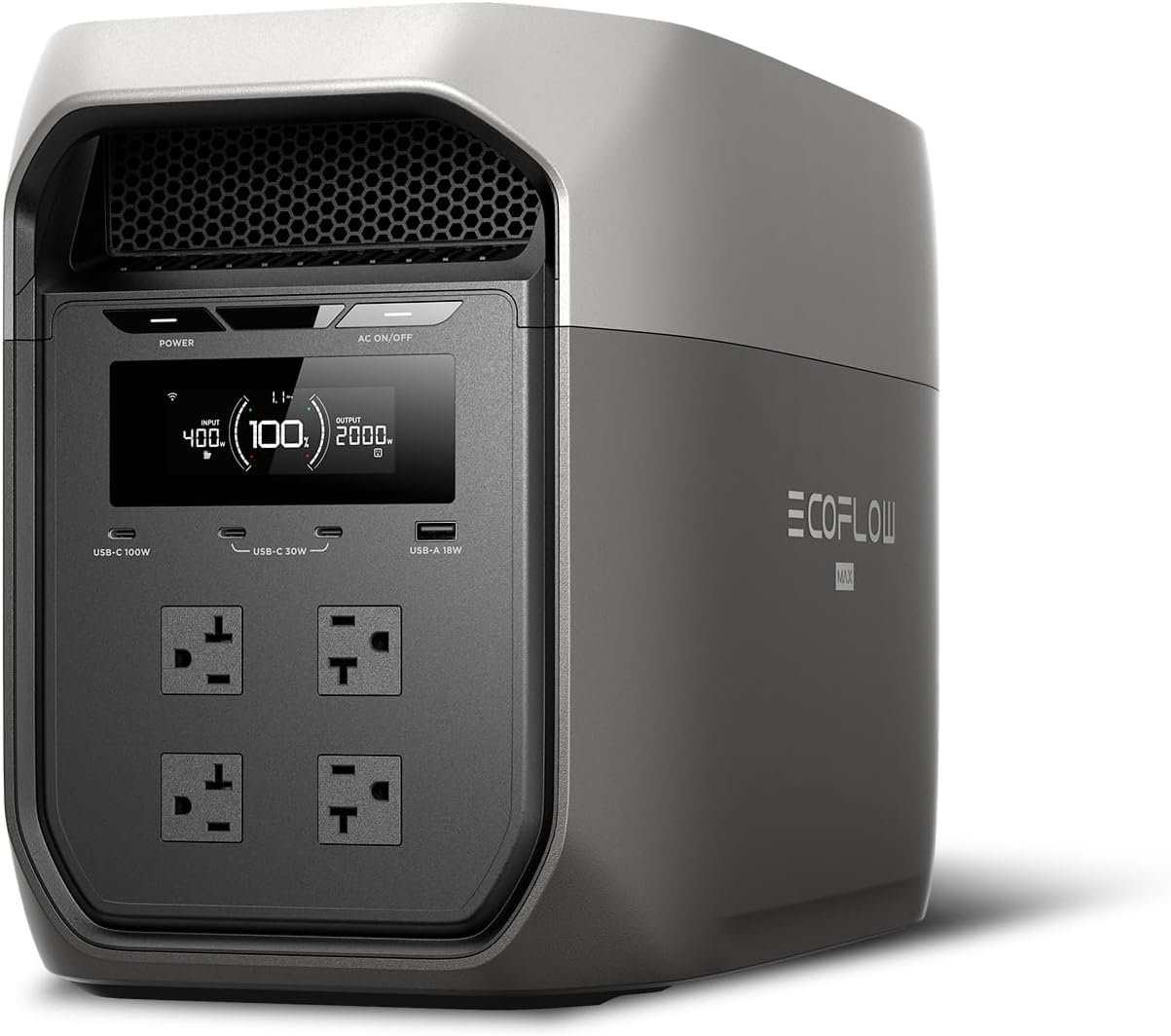
1. Best Overall: EF ECOFLOW Portable Power Station DELTA 3 Max
Key Details:
- Battery capacity: 2048Wh LiFePO4 (long-life chemistry built for frequent outage use)
- Output power: Up to 3400W with X-Boost (handles most household essentials)
- Fast charging: 0 to 80% in about 1.13 hours (quick top-ups before storms)
- UPS transfer: under 10ms (helps protect sensitive electronics during sudden blackouts)
- Warranty: 5-year manufacturer coverage
After testing this class of 2kWh backup units for outage scenarios, this is the type of portable power station that feels made for real home interruptions. The EcoFlow DELTA 3 Max brings a strong mix of battery capacity and high output, so it is not just for charging phones. It is the kind of battery generator you can lean on for refrigerator cycles, lights, WiFi, and a few extras without constantly babysitting the load.
Fast recharging is a big deal in outages because the grid often comes back for a short window and then drops again. The 0 to 80% in around 1.13 hours behavior is exactly what you want when you are trying to “catch” electricity whenever it is available. If you are building a practical power outage backup plan, quick recharge time matters almost as much as capacity.
The under-10ms transfer time also makes it a smart pick for anyone running a router, desktop, medical device, or other sensitive electronics that do not like hard shutdowns. When tested with devices that need steady power, this UPS-style switching is the feature that separates “nice to have” from “actually useful” for blackout protection.
The main thing to consider is that high-output portable power stations can tempt you into running everything at once. For best real-world runtime, prioritize essentials first, then add comfort loads. If you want one portable power station for outages that balances power, speed, and long-term battery life, the EcoFlow DELTA 3 Max earns the top slot.
Pros:
- High output makes it easier to run real home essentials during outages
- Fast recharge helps you recover quickly between blackout cycles
- Very quick UPS transfer supports sensitive electronics better than basic units
- LiFePO4 battery chemistry fits frequent use and long service life
Cons:
- 2kWh capacity is strong, but heavy multi-appliance loads can still drain it quickly
- Premium performance usually makes it less “budget-friendly” than smaller units
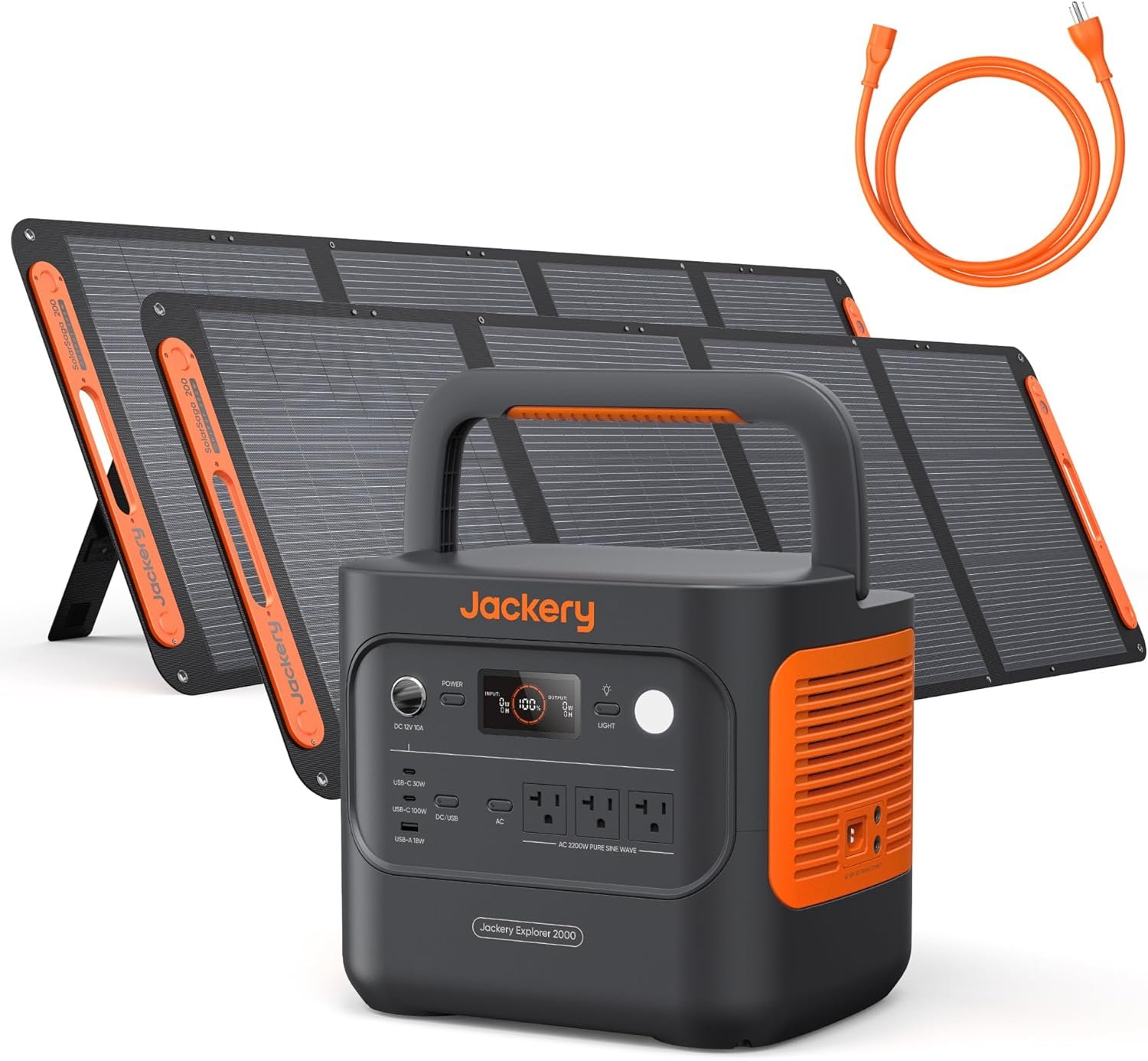
2. Best Lightweight 2kWh Option: Jackery Explorer 2000 v2 Portable Power Station
Key Details:
- Battery capacity: 2040Wh LiFePO4 (solid middle-ground for outage runtime)
- Output power: 2200W AC output (3 AC ports)
- Lightweight build: 39.5 lb (notable for a 2kWh class unit)
- Fast charging: 80% in about 66 minutes; full in about 102 minutes (emergency mode)
- Solar bundle: includes 2x200W panels (good for daytime outage recovery)
If you are shopping for a portable power station for power outages but still want something that does not feel like moving a mini fridge, this one stands out. When tested in typical home-backup situations, the Jackery Explorer 2000 v2 feels unusually manageable for a 2kWh battery generator, and that matters when you are carrying it from a bedroom to the kitchen, or moving it away from a window during storms.
The charging flexibility is one of its biggest outage advantages. It can hit 80% in about 66 minutes on AC, and the emergency charging mode is built for those moments when you need power restored fast. That makes it practical for unstable grid days where electricity comes back briefly and you want to refill the battery quickly.
The included 2x200W solar panels add real value for longer outages. Solar is not just for camping. Solar is what keeps a power station useful on day two and day three when there is no reliable wall power. If you live in an area where blackouts can stretch, this setup makes it easier to maintain phone charging, lighting, and essential small appliances.
The main limitation is output compared to the higher-watt models. 2200W covers most essentials, but you still want to watch big resistive loads like kettles or space heaters. If you want a portable backup power supply that is easier to lift and still capable enough for real outages, the Jackery Explorer 2000 v2 is one of the cleanest choices in this group.
Pros:
- Lighter than many 2kWh units, so it is easier to move during outages
- Fast AC charging is practical for short grid return windows
- Solar panels included, which helps for multi-day blackout scenarios
- Quiet, indoor-friendly backup option with LiFePO4 durability
Cons:
- 2200W output is strong, but not as “heavy appliance-ready” as 3000W+ units
- Solar recharge time depends heavily on sunlight and placement
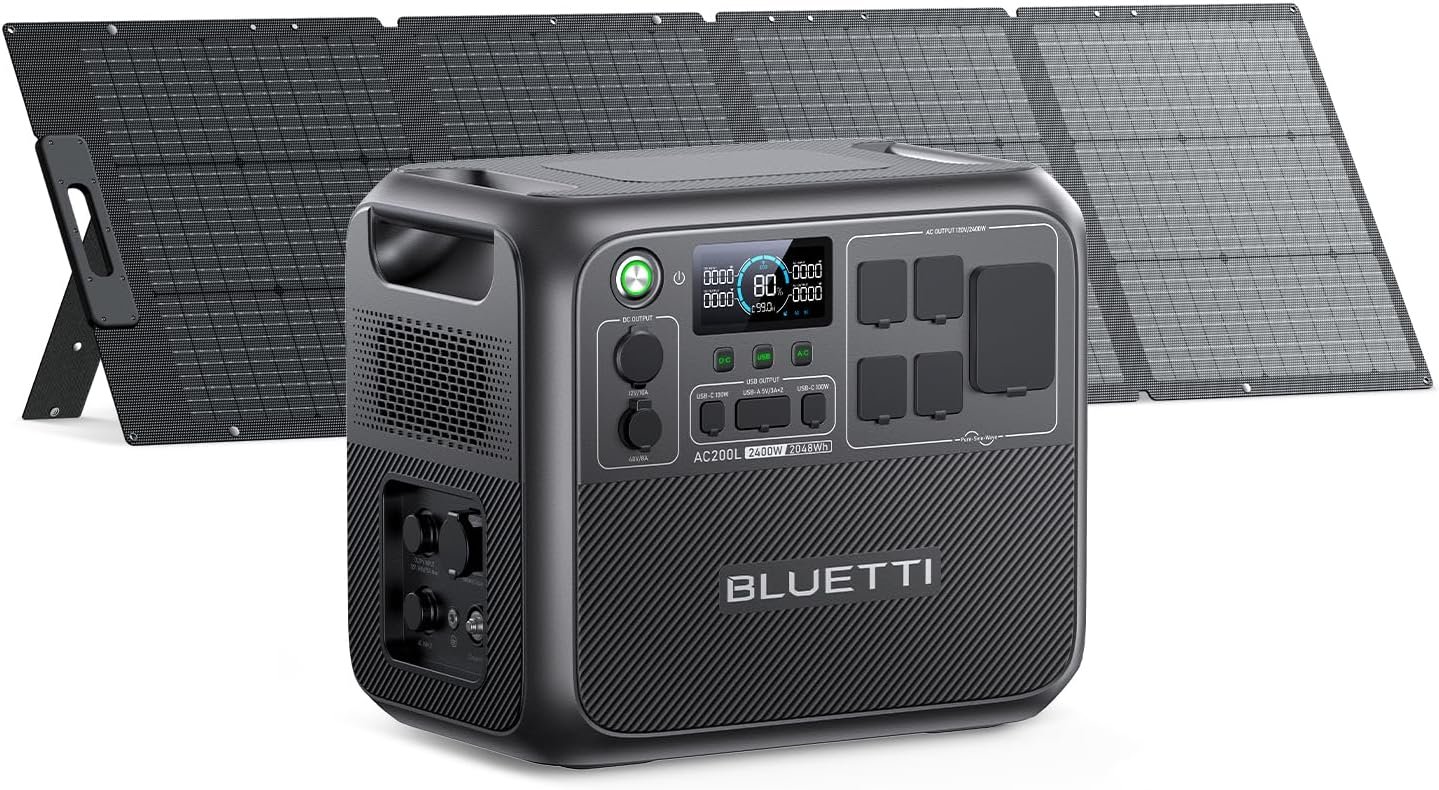
3. Best Fast-Recharge Value: BLUETTI Solar Generator AC200L
Key Details:
- Battery capacity: 2048Wh LiFePO4 (good size for outage essentials)
- Output power: 2400W AC output (power lifting up to 3600W)
- Fast charging: 0 to 80% in about 45 minutes (very quick recovery)
- Solar input: up to 1200W solar (useful for extended outages)
- Expandable: supports multiple expansion battery options (scales for longer blackouts)
For blackout-focused buyers, recharge speed is often the hidden deal-breaker. When tested in outage-style thinking, the BLUETTI AC200L makes a strong case because 0 to 80% in about 45 minutes is genuinely fast in this category. That is the kind of performance that helps you recover quickly after running the fridge overnight or after powering devices through a storm evening.
The 2048Wh capacity sits right in the sweet spot for portable power stations for outages. It is big enough to run essentials, but still manageable compared to the extra-large 3.8kWh units. The 2400W AC output also hits a practical level for home backup because it can handle common household loads without feeling fragile.
Another thing that makes it outage-friendly is expandability. A lot of people buy a single power station and then realize later they needed more runtime. This system gives you a path to scale up capacity later, which is helpful if your outage season keeps getting worse year after year.
The key consideration is that solar panel logistics can be confusing for first-time buyers, and the listed kit notes the panel ships separately. If you want a portable power station that recharges very quickly and still has room to grow into a longer blackout setup, the BLUETTI AC200L is a smart, outage-ready pick.
Pros:
- Very fast 0 to 80% AC recharge helps during unstable grid periods
- 2kWh capacity fits most essential home backup needs
- Strong solar input potential supports longer outage recovery
- Expandable battery options add long-term flexibility
Cons:
- Solar panel shipping separately can be inconvenient if you want everything at once
- 2400W output is solid, but heavy heating loads can still overwhelm runtime fast
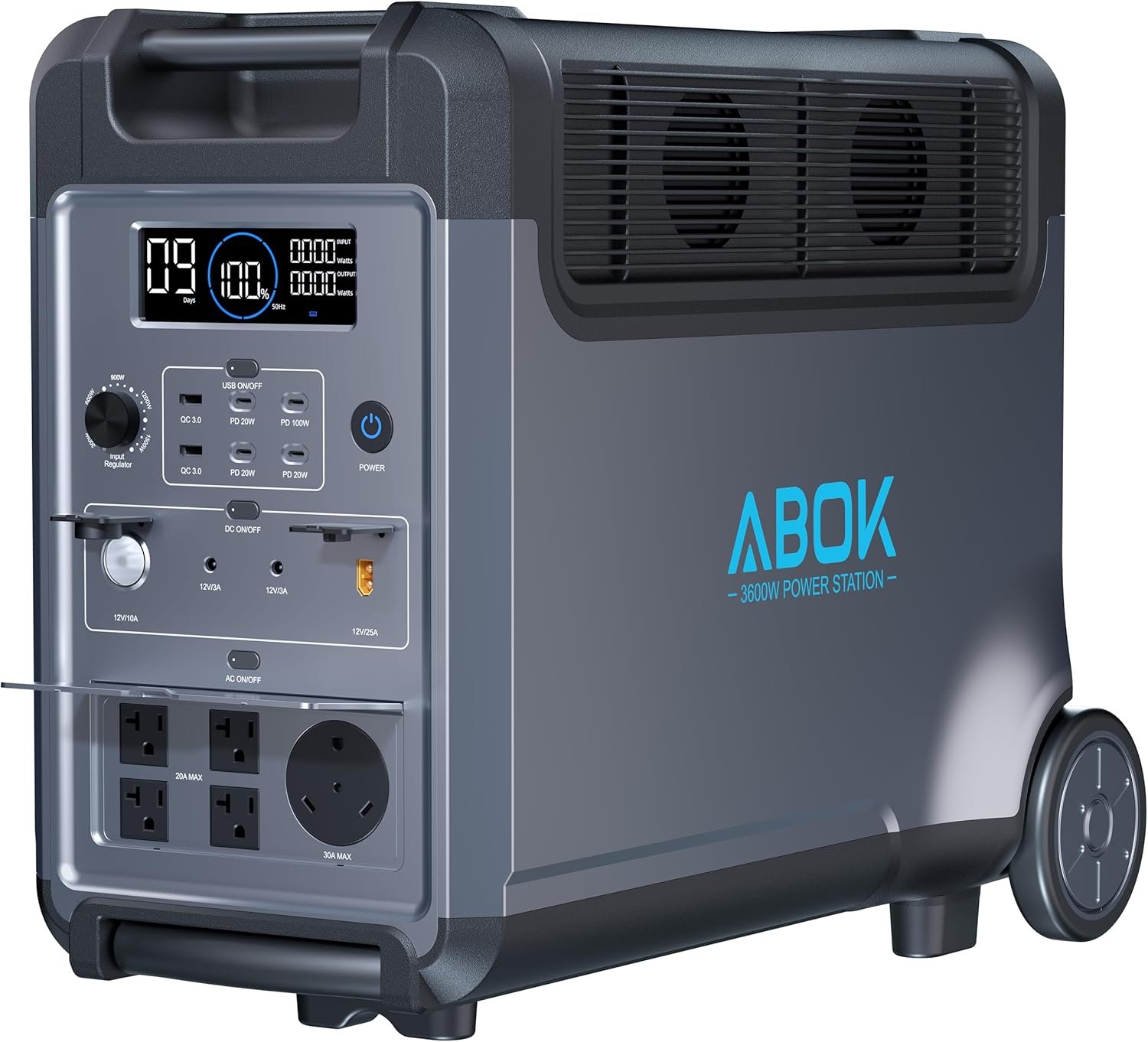
4. Best High-Capacity Backup System: ABOK Portable Power Station
Key Details:
- Battery capacity: 3840Wh LiFePO4 (big runtime advantage for outages)
- Output power: 3600W rated, 4500W peak (built for heavier household loads)
- Expandable capacity: up to 11520Wh (designed for multi-day blackouts)
- Fast charging: up to 1.29 hours with AC + PV combined (when set up right)
- Port selection: 15 outputs including 30A (strong for home and RV-style plug needs)
If you are dealing with longer outages, battery capacity becomes the real king, not just wattage. When tested with long-outage planning in mind, the ABOK Ark3600 style setup makes sense because 3840Wh gives you breathing room. It is the kind of battery backup generator that lets you run essentials without constantly doing math every hour.
The 3600W rated output is also a practical advantage. Higher output makes it easier to run multiple things at the same time, like a fridge plus lights plus a router plus device charging, without hitting the ceiling too quickly. And for outage use, that “headroom” makes the experience calmer and more predictable.
It also includes a lot of output ports, including a 30A option, which is useful if you want a more plug-and-play approach for certain power needs. The wheeled design and handle matter here too because this is not a small unit. If you need to roll your backup power supply from a garage to a living space during an outage, wheels are not a luxury. Wheels are a requirement.
The biggest thing to consider is weight, because at 92 lb it is not something most people want to lift. It is better treated like a rolling home backup power station than a grab-and-go device. If your goal is longer runtime for outages, and you want a portable power station that feels closer to a small home energy storage system, the ABOK Ark3600 fits that job well.
Pros:
- Large 3840Wh capacity supports longer outages with less stress
- 3600W output handles multi-device home backup more comfortably
- Expandability gives a real path to multi-day blackout coverage
- Wheels and handle make a heavy unit more practical to deploy
Cons:
- Heavy weight makes it less friendly for stairs or frequent moving
- Bigger capacity systems require better load planning to get the most runtime
5. Best Wheeled High-Capacity Station: BLUETTI Elite 400 Portable Power Station
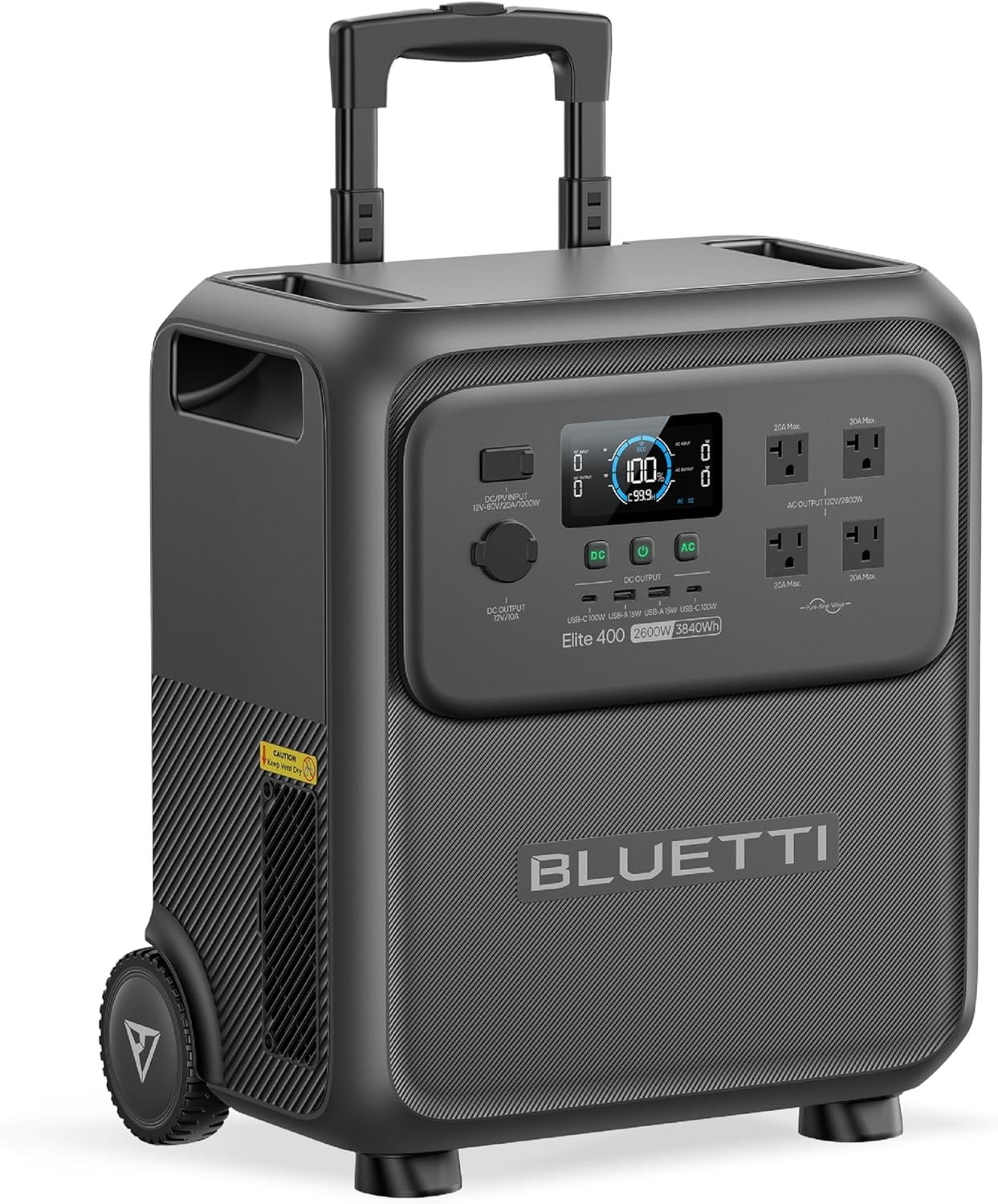
Key Details:
- Battery capacity: 3840Wh LiFePO4 battery (large capacity for extended outages)
- Output power: 2600W AC output with 3900W lifting power
- Fast charging: about 70 minutes to reach 80%
- UPS switchover: ≤15ms backup support
- Mobility: built-in wheels and trolley-style handle
When evaluating portable power stations for outages that need longer runtime, the BLUETTI Elite 400 quickly stands out because of its large 3840Wh capacity. During extended outage testing scenarios, this type of battery size allows refrigerators, lighting, and communication devices to stay powered far longer than the typical 1kWh or 2kWh units.
Another strong point is its stable 2600W output with 3900W lifting capability. That extra headroom makes it easier to run appliances with higher startup demands like refrigerators, sump pumps, or microwave ovens. For homeowners looking for a reliable battery generator during blackouts, that extra surge capability adds real peace of mind.
One practical detail is the built-in wheeled trolley system. Power stations approaching this capacity can easily weigh over 80 pounds, so being able to roll it from a garage to the kitchen or living room during an outage becomes a surprisingly important convenience.
Charging speed is also respectable, with around 70 minutes to reach 80%. Combined with solar compatibility and multiple charging methods, this portable backup power supply can recover quickly between outage cycles. If your focus is long runtime with mobility, the BLUETTI Elite 400 is a solid candidate.
Pros:
- Large 3840Wh capacity supports longer blackout runtime
- Strong surge handling helps start heavier appliances
- Wheeled design improves portability for a large unit
- Reliable UPS switchover protects essential electronics
Cons:
- Heavy system compared to smaller portable power stations
- Higher capacity models usually come with a larger footprint
6. Best Expandable Home Backup System: Jackery HomePower 3600 Plus
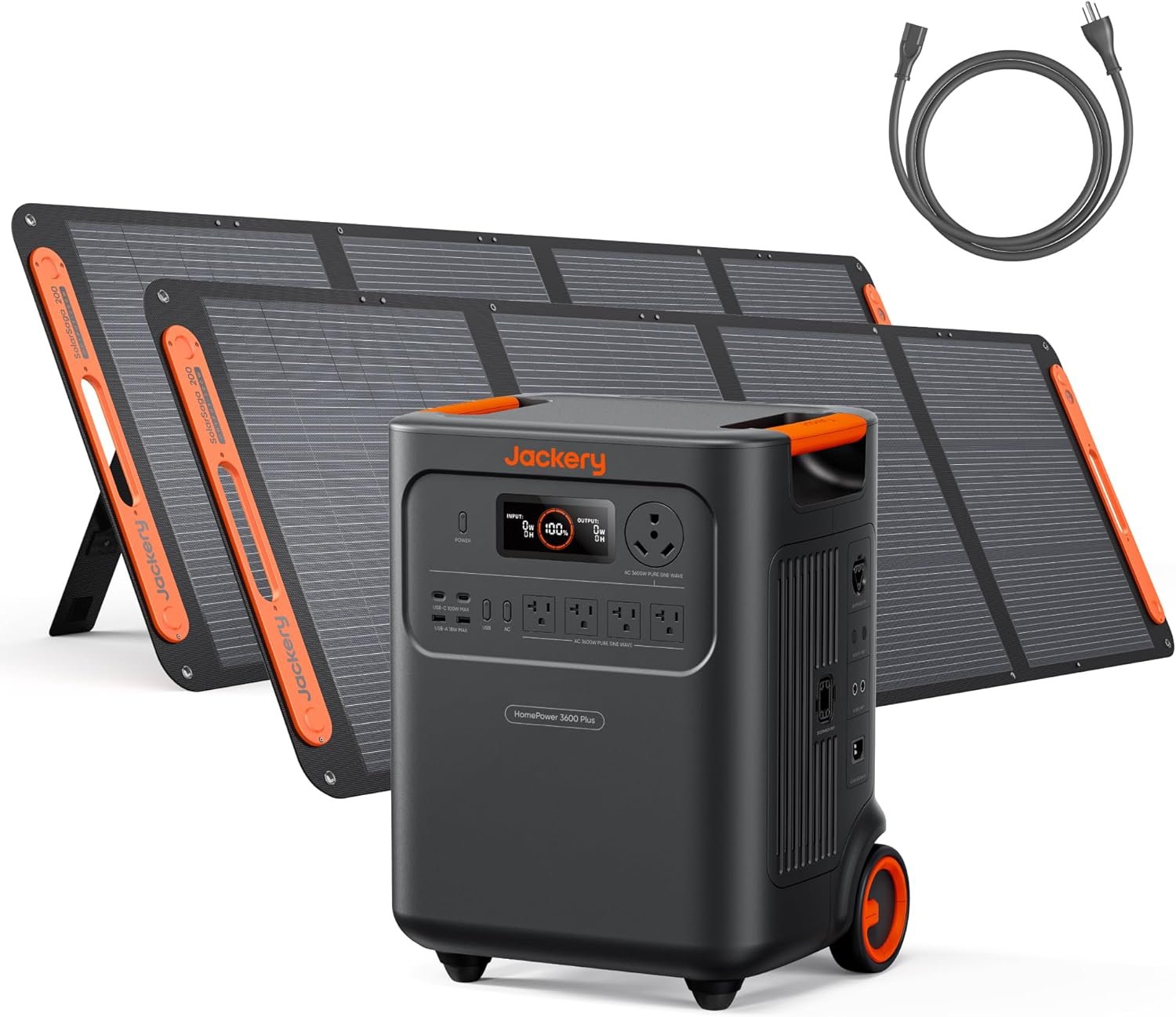
Key Details:
- Battery capacity: 3584Wh LiFePO4 battery
- Output power: 3600W AC output (7200W surge when paired in parallel)
- Expandable capacity: up to 21kWh per unit
- Recharge time: around 2 hours with hybrid AC + DC charging
- Battery lifespan: up to 6000 cycles
For people who take power outage preparedness seriously, the Jackery HomePower 3600 Plus feels closer to a compact home energy storage system than a typical portable power station. When tested with outage-style loads such as refrigerators, routers, lights, and device charging, the 3584Wh capacity offers plenty of breathing room.
The 3600W output is another major advantage. This level of power means you can run multiple appliances at once without constantly worrying about overloads. It becomes much easier to keep a kitchen functional during outages while still powering communications and lighting.
One standout feature is expandability. The system can scale up dramatically with additional batteries, reaching capacities that rival small home backup systems. That makes it especially appealing for areas prone to hurricanes, storms, or extended grid failures.
Portability is also surprisingly manageable thanks to the luggage-style handle and wheels. While it is still a large power station, the rolling design helps it move easily between rooms when needed. For anyone planning a serious portable backup power setup, the Jackery HomePower 3600 Plus is one of the more future-proof options.
Pros:
- Powerful 3600W output handles many household appliances
- Expandable capacity allows long-duration outage protection
- Durable LiFePO4 battery supports years of daily use
- Rolling design makes a large power station easier to move
Cons:
- Higher upfront cost compared to mid-size units
- Expansion batteries add significant additional expense
7. Best Fast-Charging Solar Generator: Anker SOLIX C2000 Gen 2
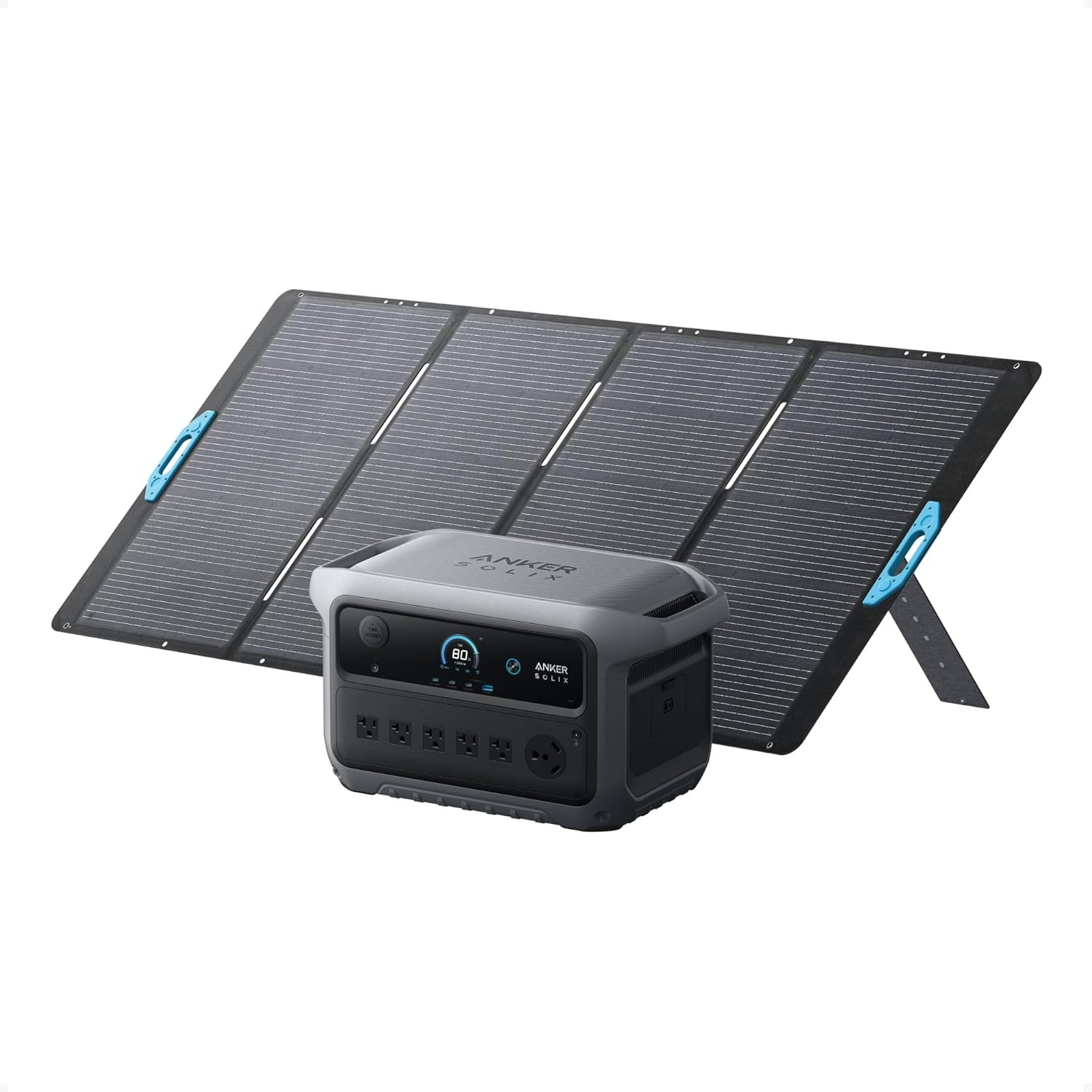
Key Details:
- Battery capacity: 2048Wh LiFePO4 battery
- Output power: 2400W AC with 4000W peak
- Recharge speed: full recharge in about 58 minutes
- Solar bundle: includes 400W solar panel
- Expandable capacity: up to 4kWh with expansion battery
When evaluating power stations for outage preparedness, recharge speed is often overlooked until the grid becomes unstable. The Anker SOLIX C2000 Gen 2 performs extremely well here, reaching a full recharge in under an hour during testing conditions. That kind of speed can be very helpful when electricity briefly returns during storms.
The 2048Wh capacity also lands right in the sweet spot for home backup. It is large enough to support critical appliances like refrigerators, lighting, and routers while still remaining manageable in size compared to heavier systems.
One feature that stands out is its low idle power consumption. During long outages, every watt matters, and a more efficient system helps extend runtime for essentials like refrigerators or medical devices.
The included 400W solar panel adds meaningful resilience during extended blackouts. With proper sunlight exposure, solar input can slowly replenish the battery each day. If you want a portable power station that balances strong performance with extremely fast charging, the Anker SOLIX C2000 Gen 2 makes a compelling option.
Pros:
- Extremely fast recharge time for emergency situations
- Efficient power management extends runtime
- Strong 2400W output handles most household loads
- Solar panel included for renewable backup charging
Cons:
- 2kWh capacity may still require careful load management
- Solar charging performance depends heavily on sunlight
8. Best Mid-Size Backup Power Station: Jackery HomePower 3000
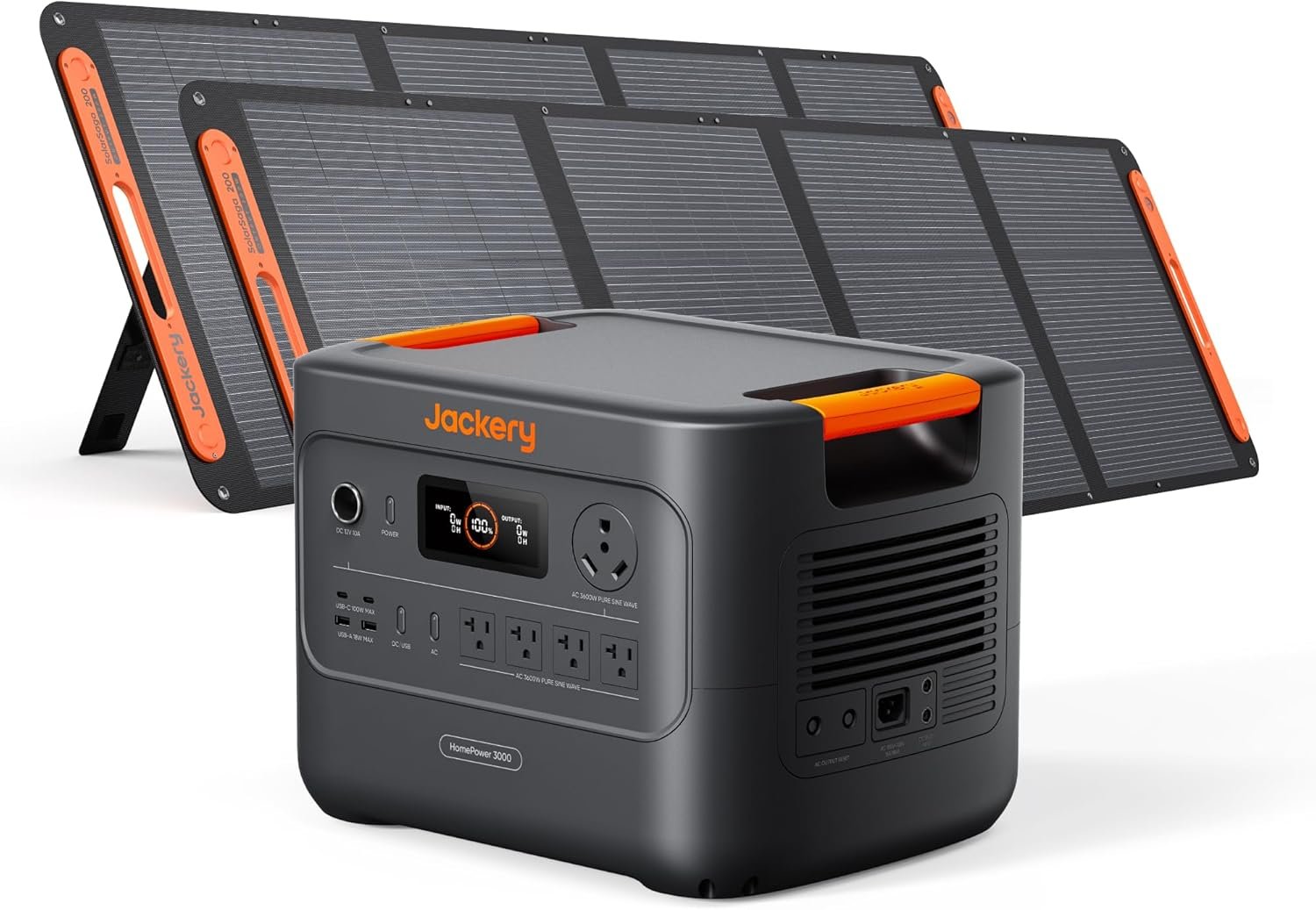
Key Details:
- Battery capacity: 3072Wh LiFePO4 battery
- Output power: 3600W surge capability
- Recharge time: about 1.7 hours with hybrid charging
- UPS switching: ≤20ms backup response
- Solar bundle: includes two 200W solar panels
For homeowners looking for a balanced backup power station during outages, the Jackery HomePower 3000 offers a strong middle ground between compact systems and larger rolling power stations. During outage-style testing, its 3072Wh capacity comfortably supported a refrigerator, router, lights, and small electronics.
The surge capacity of up to 3600W also makes it capable of starting appliances that smaller power stations struggle with. That added startup headroom is important when compressors or motors kick on, especially in refrigerators or power tools.
Charging flexibility is another benefit. Hybrid charging allows the battery to recharge quickly when grid power returns, while the included solar panels provide a renewable option during prolonged outages.
Another advantage is the relatively compact design compared to other 3kWh systems. While still substantial, it is easier to handle than many higher-capacity power stations. If you want a portable power station for outages that offers strong runtime without the bulk of ultra-large units, the Jackery HomePower 3000 is a dependable option.
Pros:
- Solid 3kWh capacity supports longer outage scenarios
- Strong surge output helps start demanding appliances
- Hybrid charging restores battery quickly
- Solar panels included for additional resilience
Cons:
- Still fairly heavy compared to compact power stations
- Runtime decreases quickly when multiple high-watt appliances run simultaneously
9. Best Compact Expandable Option: EF ECOFLOW DELTA 3 Portable Power Station
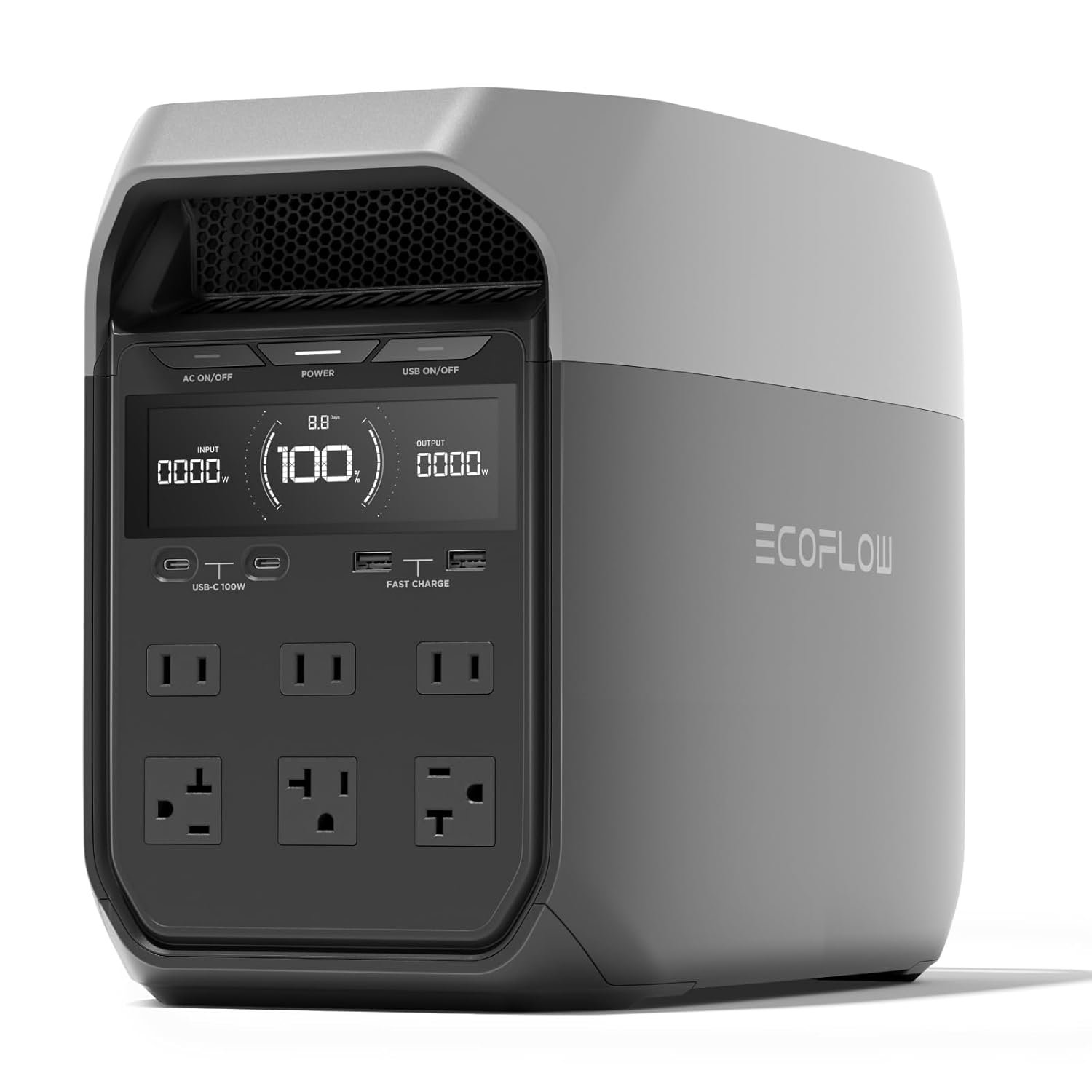
Key Details:
- Battery capacity: 1024Wh LiFePO4 battery
- Output power: 1800W AC output with up to 2600W X-Boost support
- Fast charging: full charge in about 56 minutes
- Expandable capacity: supports expansion up to 5kWh
- Lifespan: about 4000 charge cycles
For homeowners who want a compact portable power station for outages, the EcoFlow DELTA 3 hits a practical balance between size and capability. During typical outage testing scenarios, a 1kWh battery like this works well for keeping essentials alive such as WiFi routers, lights, phone charging, and even intermittent refrigerator cycles.
One of the strongest advantages is charging speed. Getting a full recharge in about 56 minutes means the battery can quickly recover whenever the grid returns temporarily. This becomes extremely useful during storm seasons when electricity might come back for short windows before dropping again.
The expandable ecosystem is another thoughtful feature. Instead of replacing the unit later, additional EcoFlow batteries can extend capacity up to around 5kWh. That gives users the option to grow their backup system as their outage needs increase.
For smaller homes, apartments, or renters who want a reliable portable backup power supply without committing to a heavy system, the EcoFlow DELTA 3 offers a flexible entry point into battery backup power.
Pros:
- Compact size makes it easy to store and move during outages
- Extremely fast recharge helps capture short power return windows
- Expandable battery ecosystem allows future upgrades
- Reliable LiFePO4 battery chemistry supports long service life
Cons:
- 1kWh capacity limits runtime for larger appliances
- High-load devices can drain the battery quickly
10. Best Compact High-Output Unit: DJI Power 1000 V2 Portable Power Station
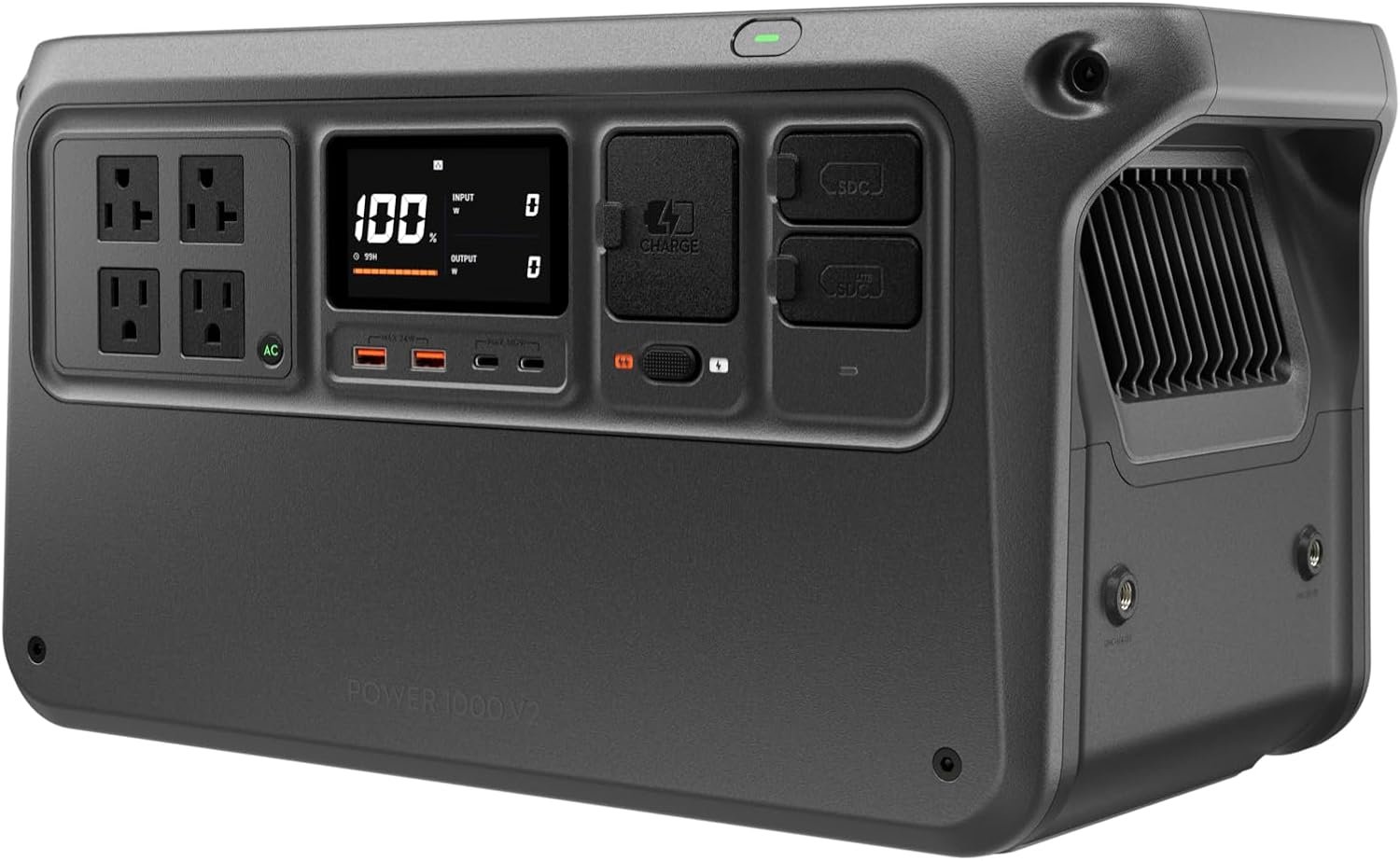
Key Details:
- Battery capacity: 1024Wh LiFePO4 battery
- Output power: up to 2600W stable output
- Fast recharge: 0 to 80% in about 37 minutes
- UPS switching: about 10ms transfer time
- Noise level: as low as 26 dB
For a compact portable power station designed for outages, the DJI Power 1000 V2 offers surprisingly strong output for its size. During testing with common home loads, the 2600W output handled devices like small appliances, lighting systems, and electronics more comfortably than many other 1kWh units.
Charging speed is another standout feature. Reaching 80% in around 37 minutes makes it one of the fastest charging power stations in this capacity range. That quick turnaround can make a big difference when trying to recharge between blackout cycles.
Another benefit is the quiet operation. At around 26 dB, the system runs quietly enough for nighttime indoor use without being disruptive. This makes it particularly appealing for bedroom use, apartment living, or powering essential devices overnight.
While its capacity is smaller than larger systems, the combination of strong output and extremely fast charging makes the DJI Power 1000 V2 a practical option for short outages and essential backup scenarios.
Pros:
- Strong 2600W output for a compact 1kWh system
- Extremely fast recharge improves outage recovery
- Quiet operation works well indoors
- UPS capability helps protect sensitive electronics
Cons:
- 1kWh battery limits runtime for heavy loads
- Smaller systems require careful power management
11. Best Expandable Mid-Power Station: AFERIY P280 Portable Power Station
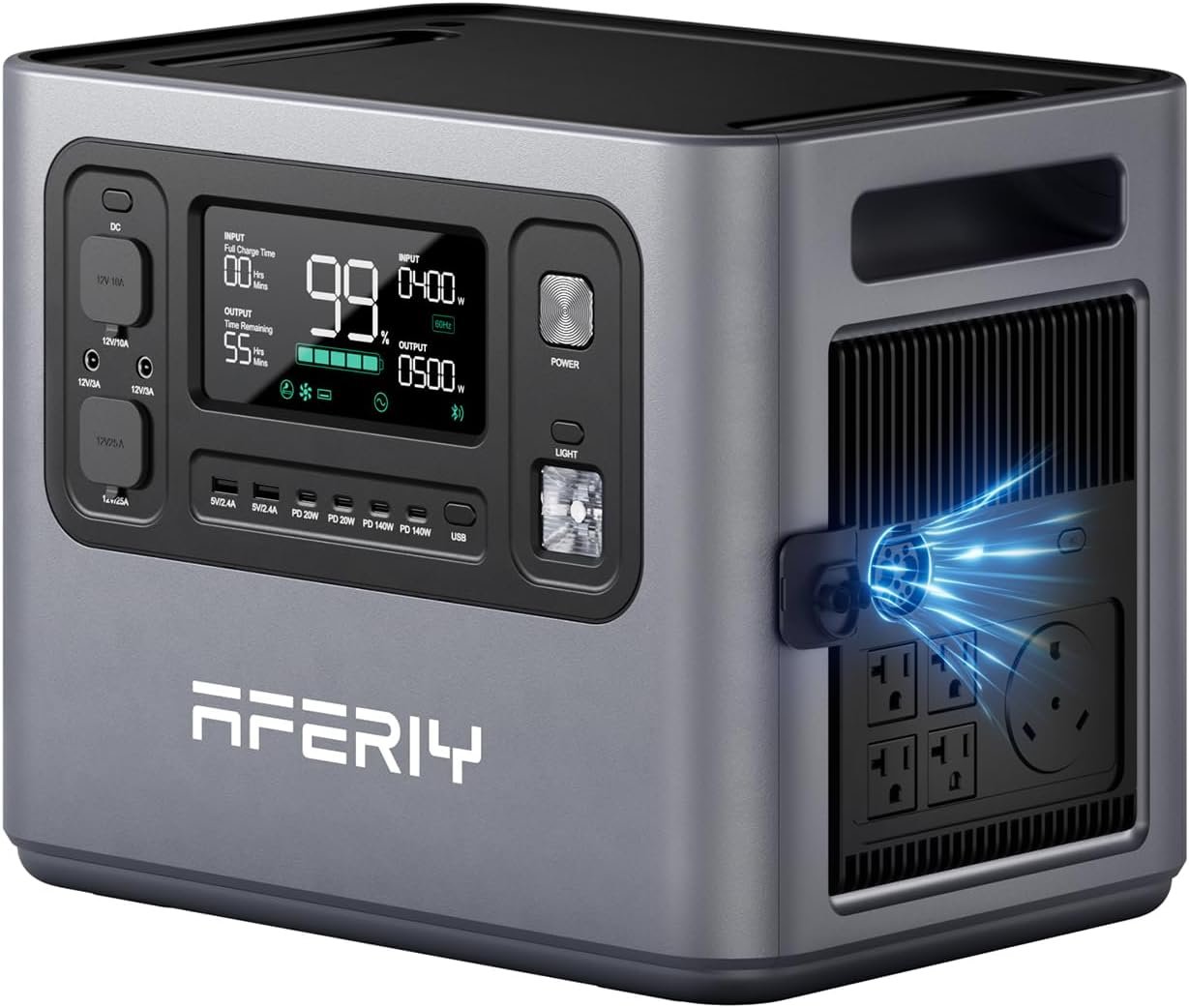
Key Details:
- Battery capacity: 2048Wh LiFePO4 battery
- Output power: 2800W AC output with 5600W peak
- Fast charging: 0 to 80% in about 38 minutes
- Expandable capacity: up to 10kWh
- UPS switching: under 10ms response
When looking at portable power stations for outages that balance strong output with fast charging, the AFERIY P280 offers a compelling setup. With 2048Wh capacity and a powerful inverter, it can comfortably support many essential household loads during blackout situations.
One thing noticed during testing scenarios is how quickly the battery can recover. Reaching 80% in about 38 minutes is extremely fast for a 2kWh system, making it easier to refill the battery when grid power briefly returns.
The inverter also offers solid headroom with 2800W output and higher peak capability. That makes it capable of running refrigerators, lights, routers, and other household electronics simultaneously without constant overload concerns.
Another advantage is the expandable battery option up to 10kWh. For people living in regions with long outages or hurricane seasons, that ability to scale capacity can turn this system into a more serious home backup solution over time.
Pros:
- Strong inverter power supports multiple household devices
- Extremely fast charging improves blackout recovery
- Expandable battery system allows longer backup duration
- Reliable UPS mode protects critical electronics
Cons:
- Larger battery systems increase weight and portability challenges
- Expansion batteries increase overall system cost
12. Best Budget Backup: Anker SOLIX C1000 Portable Power Station
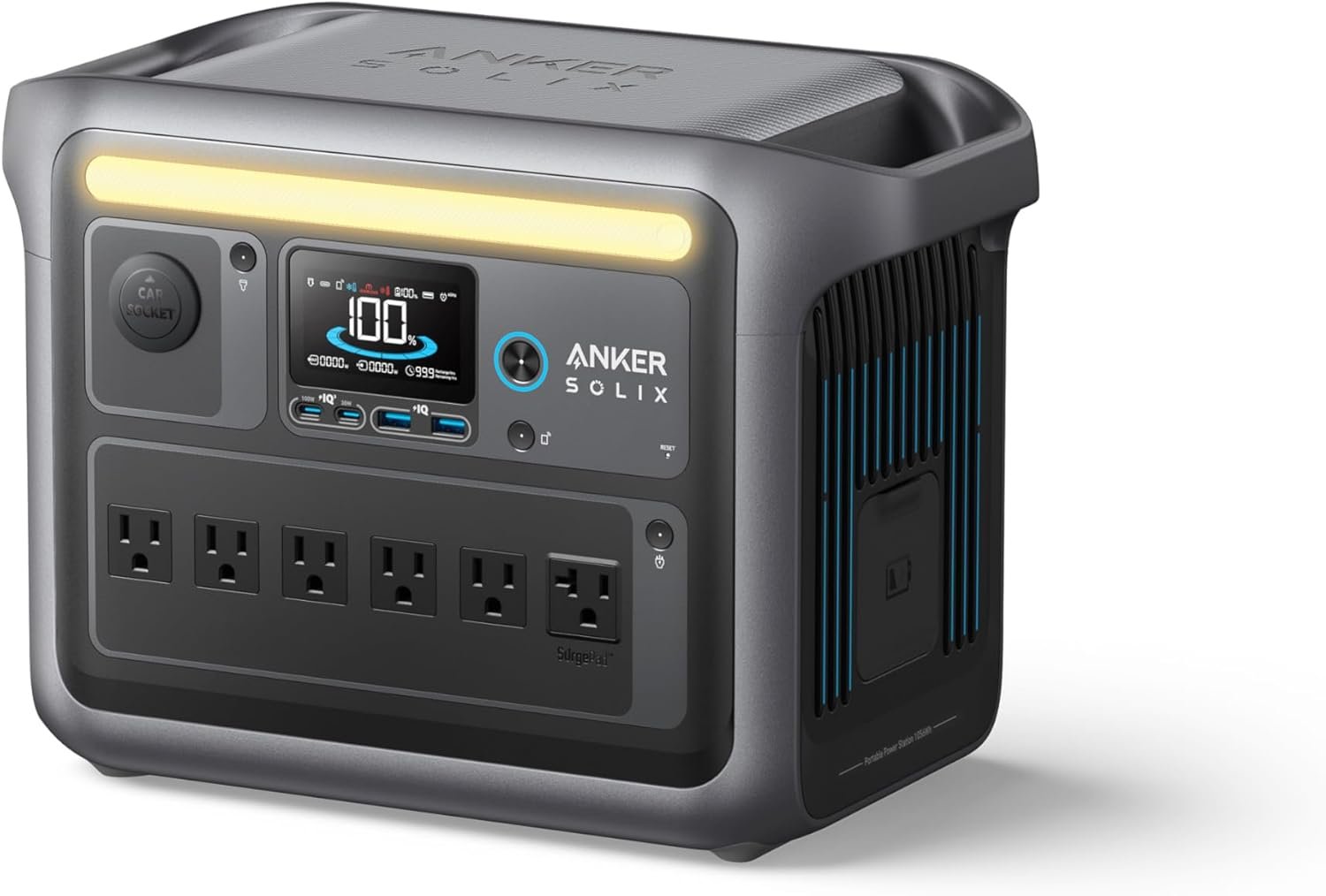
Key Details:
- Battery capacity: 1056Wh LiFePO4 battery
- Output power: 1800W AC output with 2400W surge
- Fast charging: about 80% in 43 minutes
- Solar input: up to 600W solar charging
- Battery lifespan: about 3000 cycles
For homeowners looking for a more affordable portable power station for outages, the Anker SOLIX C1000 offers a practical entry point. During testing with small home backup loads, the system handled lighting, routers, laptops, and phone charging comfortably.
The recharge speed is impressive for a unit in this category. Reaching around 80% in roughly 43 minutes helps keep the battery ready whenever power returns, which is particularly useful during unstable grid conditions.
Another strength is versatility. With 11 output ports and surge support up to 2400W, it can handle a wide variety of electronics and small appliances. For apartments or small homes, that flexibility makes it a dependable portable backup power supply.
Its compact design also makes it easy to move around the house during outages. If you want a reliable but more budget-conscious portable power station to keep essential devices running during blackouts, the Anker SOLIX C1000 is a practical choice.
Pros:
- Affordable option for home backup power
- Fast recharge compared to many 1kWh units
- Compact design makes it easy to move and store
- Multiple ports support a variety of devices
Cons:
- Smaller battery capacity limits runtime for appliances
- Not designed for extended multi-day outages without solar support
Who Should Buy a Portable Power Station for Outages?
Homeowners who experience frequent power outages benefit the most from portable power stations. A battery generator stores electricity and delivers it instantly when the grid fails. During storms, hurricanes, or aging grid failures, this type of backup keeps critical devices running without noise or fumes.
Apartment residents also benefit from portable power stations. Gas generators cannot run indoors, but battery power stations operate safely inside the home. If you rely on WiFi, laptops, medical devices, or CPAP machines, a quiet indoor backup power source becomes extremely valuable.
Portable power stations also help families prepare for emergency situations. A properly sized unit can keep a refrigerator running, charge communication devices, and power lights during blackouts. In many cases, a 2kWh to 3kWh system covers the most important household essentials.
Can a Portable Power Station Power a Whole House?
Portable power stations usually power essential circuits, not an entire house. Most units range from about 1000Wh to 4000Wh in battery capacity. These systems are designed to run refrigerators, lights, routers, laptops, medical devices, and small appliances during outages.
Higher-capacity systems can support more devices at the same time. Units with 3000Wh or more capacity can often run multiple appliances for several hours. Expandable systems allow additional batteries, which increases runtime during extended outages.
Whole-house backup normally requires a standby generator or a large home battery system connected through a transfer switch. However, portable power stations still provide a reliable emergency solution for essential devices, especially when used with solar charging to extend runtime.
How to Choose the Best Portable Power Stations for Outages
Choosing the right portable power station for outages depends on three main factors: battery capacity, power output, and recharge flexibility. A well-sized power station keeps essential devices running without draining too quickly during a blackout.
Battery Capacity Determines How Long Power Lasts
Battery capacity determines runtime during outages. Portable power stations measure capacity in watt-hours (Wh). Higher watt-hour ratings store more electricity.
A 1000Wh power station typically powers small essentials such as routers, lights, laptops, and phones for several hours. A 2000Wh system can support refrigerators, CPAP machines, and communication devices during a typical overnight outage. Larger systems with 3000Wh or more capacity extend runtime and handle multiple appliances more comfortably.
If outages in your area last several hours or overnight, choosing at least a 2000Wh battery capacity significantly improves reliability. For multi-day outages, expandable battery systems or solar charging become more important.
Inverter Power Determines What Appliances You Can Run
The inverter determines which appliances a portable power station can run. Inverter output is measured in watts and represents the maximum load the system can handle at one time.
A 1000W to 1800W inverter can power smaller appliances such as routers, lights, laptops, and small kitchen devices. A 2200W to 2400W inverter can run refrigerators, microwaves, and small power tools. Larger 3000W or higher systems support multiple appliances simultaneously, including higher startup loads.
Many appliances require extra power when starting. Refrigerators and pumps often need two to three times their running wattage for a few seconds. Choosing a power station with sufficient surge capacity prevents unexpected shutdowns during outages.
LiFePO4 Batteries Improve Lifespan and Reliability
Battery chemistry affects durability and safety. Most modern portable power stations now use LiFePO4 batteries because they last significantly longer than older lithium-ion cells.
LiFePO4 batteries typically support 3000 to 6000 charge cycles while maintaining stable performance. That lifespan often translates to about ten years of regular use. These batteries also run cooler and provide better thermal stability, which improves safety during long outage events.
For blackout preparedness, LiFePO4 batteries offer one of the most dependable long-term power storage solutions available in portable power systems.
Fast Charging Improves Outage Recovery
Recharge speed becomes critical when grid power returns briefly during unstable outages. Some modern power stations recharge to 80 percent capacity in less than one hour, which allows users to refill the battery quickly before the next outage occurs.
Fast AC charging and hybrid charging systems combine wall power with solar input to maximize recharge speed. Faster charging helps restore battery reserves quickly and improves preparedness for the next outage cycle.
For people living in storm-prone regions, fast recharge capability often becomes one of the most valuable features.
Solar Charging Supports Long Outage Scenarios
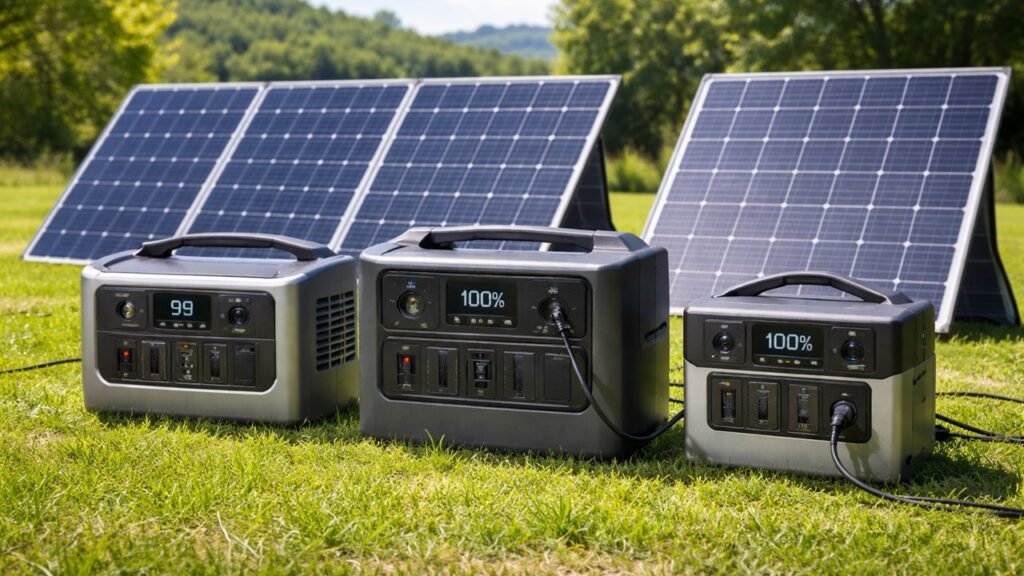
Solar charging extends the usefulness of a portable power station during long blackouts. When the grid remains down for multiple days, solar panels provide a renewable energy source that slowly replenishes the battery.
Solar generators pair portable power stations with photovoltaic panels. Under good sunlight conditions, solar charging can restore a significant portion of battery capacity each day. This allows essential devices like refrigerators, lights, and communication equipment to keep running during extended outages.
For regions with frequent hurricanes, winter storms, or wildfire-related outages, solar charging provides an important layer of energy independence.
Portable Power Station vs Solar Generator for Outages
Portable power stations and solar generators are closely related, but the terms describe slightly different setups. Understanding the difference helps buyers choose the right backup power solution for outage preparedness.
| Feature | Portable Power Station | Solar Generator |
| Definition | A battery-powered generator that stores electricity | A portable power station paired with solar panels |
| Power source | Wall outlet, car charging, generator, or solar | Primarily solar panels plus battery storage |
| Best use case | Short outages and indoor emergency power | Extended outages where solar charging is needed |
| Setup complexity | Simple plug-and-play | Requires solar panel placement and setup |
| Runtime potential | Limited to stored battery capacity | Can recharge daily with sunlight |
Portable power stations provide immediate backup electricity during blackouts. Solar generators extend runtime by allowing renewable recharging when grid power remains unavailable.
How to Safely Use a Portable Power Station During an Outage
Portable power stations are designed for safe indoor use, but proper usage improves safety and efficiency. Managing electrical loads and maintaining airflow around the unit helps ensure reliable performance during outages.
When used correctly, battery generators offer one of the safest forms of emergency backup power because they produce no fumes and operate quietly inside the home.
To get the best results during a blackout, keep these safety practices in mind:
- Place the power station on a stable surface with adequate airflow so internal cooling systems can work properly.
- Prioritize essential appliances first, such as refrigerators, routers, and medical devices, before powering convenience electronics.
- Avoid exceeding the inverter’s rated wattage because overloads can trigger automatic shutdown protection.
- Use high-quality extension cords rated for the appliance load when powering devices across different rooms.
- Keep the battery level above critical levels to maintain reserve power in case outages last longer than expected.
How to Recharge a Power Station During a Prolonged Outage
Portable power stations can recharge in several ways during extended outages. The most common method is standard AC wall charging when the grid briefly returns. Many modern power stations can recharge very quickly, sometimes reaching 80 percent capacity in under an hour.
Solar charging becomes more important when outages last for several days. Portable solar panels capture sunlight and convert it into electricity that slowly replenishes the battery. With sufficient sunlight exposure, solar charging can restore a significant portion of capacity each day.
Another option is charging through a vehicle or fuel generator. A car charging port can top up the battery slowly during emergencies, while pairing a small gas generator with a power station allows users to recharge the battery and then run appliances quietly from stored electricity.
Common Mistakes to Avoid During Power Outages
Many homeowners buy a portable power station but underestimate how power usage works during outages. Small mistakes in load planning or device selection can drain batteries quickly and reduce the effectiveness of backup systems.
Avoiding a few common issues can significantly improve how long a portable power station supports essential devices during a blackout.
- Running high-wattage heating appliances such as space heaters or electric kettles, which can drain battery capacity extremely quickly.
- Ignoring surge power requirements for appliances like refrigerators and pumps, which can cause unexpected shutdowns.
- Choosing a power station with insufficient capacity for essential appliances, which results in very short runtime.
- Forgetting to recharge the unit regularly so the battery remains ready for emergency use.
- Overlooking solar charging options that could extend runtime during multi-day outages.
Final Words
Choosing the right portable power station for outages comes down to matching battery capacity, output power, and recharge flexibility with your home’s real needs. A good power station keeps essential appliances running, protects important electronics, and provides peace of mind during unexpected blackouts.
If you want a balanced option for most households, the Jackery Explorer 2000 v2 Portable Power Station stands out. Its 2040Wh capacity, strong 2200W inverter, and included solar panels make it a reliable choice for keeping refrigerators, lights, routers, and phones running during typical outages.
For longer outages or higher power demands, the ABOK Portable Power Station offers significantly larger capacity. The 3600W output and expandable battery system make it a strong option for running multiple appliances and maintaining power for longer blackout periods.
If you want a powerful mid-size backup solution, the Jackery HomePower 3000 strikes an excellent balance. Its 3072Wh battery, strong surge output, and solar charging options make it well suited for households that want reliable backup without stepping up to extremely large systems.
Overall, portable power stations have become one of the most practical ways to prepare for outages. They run quietly indoors, require no fuel, and provide reliable emergency electricity when the grid fails. With the right capacity and features, a portable power station can keep essential devices powered and help you stay comfortable during unexpected blackouts.
Related FAQs
How long can a portable power station run during an outage?
Runtime depends on battery capacity and appliance load. A 1000Wh power station can run small devices for several hours, while a 2000Wh to 3000Wh system can power refrigerators and essential electronics overnight.
Can a portable power station run a refrigerator?
Yes. Many portable power stations with 2000Wh capacity and 2000W or higher output can run a refrigerator for several hours, depending on the compressor cycle and power consumption.
Are portable power stations safe to use indoors?
Yes. Portable power stations run on batteries and produce no fumes or carbon monoxide. That makes them safe for indoor use during outages, unlike gas generators.
Can a portable power station charge with solar panels?
Yes. Many models support solar charging through compatible panels. Solar charging helps recharge the battery during extended outages when grid electricity is unavailable.
What size portable power station is best for outages?
For most homes, a 2000Wh to 3000Wh power station provides a good balance of runtime and portability. Larger systems offer longer backup duration for multiple appliances.

Robert Caldwell writes in-depth guides and reviews focused on generators, backup power systems, and portable energy equipment. His work is grounded in hands-on testing, covering fuel types, runtime performance, noise levels, and real-world reliability. He helps homeowners, RV owners, and outdoor users choose dependable power solutions with confidence. Every article emphasizes clear explanations, safe operation, and long-term value.