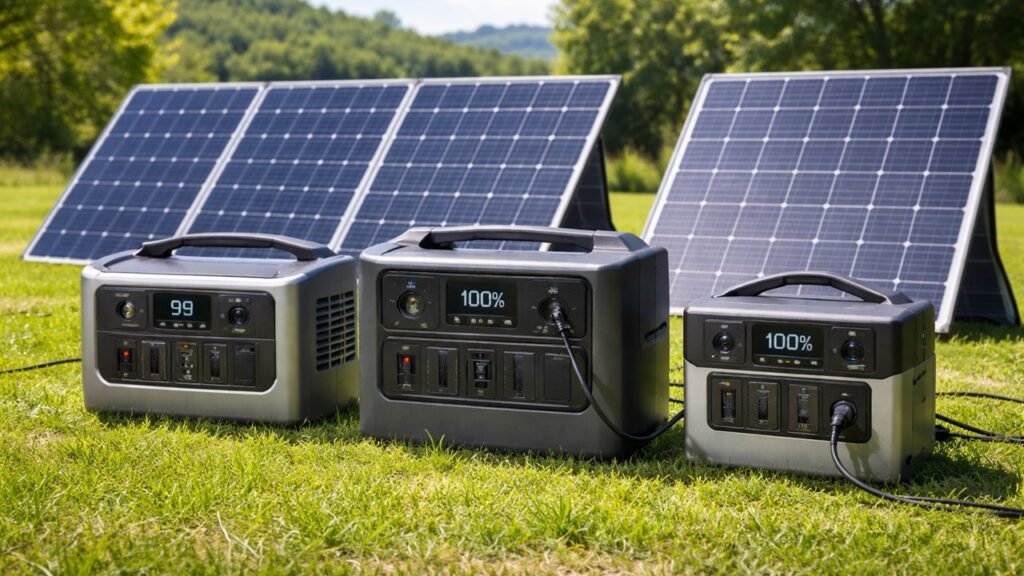
If you are looking for a portable solar generator for emergency home backup, you probably want something reliable, quiet, and capable of keeping essential appliances running when the power goes out. A good solar generator can keep your refrigerator, lights, internet, and phones working during storms, grid failures, or unexpected outages.
Some models stand out for different reasons. The Jackery Solar Generator 1000 v2 works well if you want a lightweight and reliable backup unit for essential devices. The BLUETTI Elite 400 Portable Power Station is designed for households that need longer runtime thanks to its large battery. If you want a scalable system, the Jackery HomePower 3600 Plus can expand into a serious home backup solution. The EF ECOFLOW Solar Generator Delta 3 focuses on ultra-fast charging for quick outage preparation. For heavy-duty backup capability, the Anker SOLIX F3800 delivers enough power for larger home appliances.
After testing the top portable solar generators for emergency home backup, this guide compares their capacity, output power, charging speed, portability, and real-world usability during outages. If you are preparing for storms, blackouts, or long grid interruptions, the models below can help you choose a reliable backup power solution for your home.
We’re reader-supported. When you buy through links on our site, we may earn an affiliate commission. As an Amazon Associate, we earn from qualifying purchases at no extra cost to you.
Best Portable Solar Generator for Emergency Home Backup: Our Top Picks
- Best Overall: Jackery Solar Generator 1000 v2
- Best High-Capacity Backup: BLUETTI Elite 400 Portable Power Station
- Best Expandable Backup System: Jackery HomePower 3600 Plus
- Best Fast Charging Option: EF ECOFLOW Solar Generator Delta 3
- Best Balanced Home Backup Unit: Jackery HomePower 3000
- Best Solar Charging Efficiency: Anker SOLIX C2000 Gen 2
- Best Long Lifespan Battery: BLUETTI Solar Generator Elite 200 V2
- Best Large Home Backup System: EF ECOFLOW DELTA Pro 3
- Best Heavy Duty Power Station: Anker SOLIX F3800
- Best Budget Backup Option: OUPES Mega 1 Portable Power Station
- Best High Output Mid-Size Unit: EF ECOFLOW Portable Power Station DELTA 3 Max
- Best Compact High Power Station: DJI Power 2000 Portable Power Station
1. Best Overall: Jackery Solar Generator 1000 v2
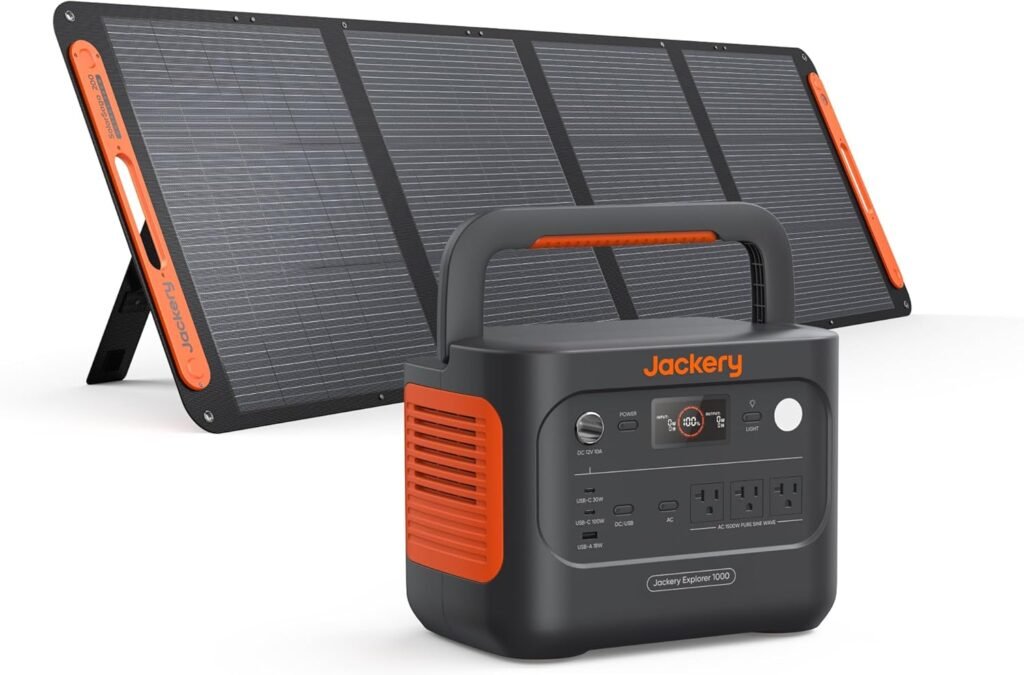
Key Details:
- Battery capacity: 1,070Wh LiFePO4 battery
- AC output: 1,500W continuous, 3,000W surge
- Charging speed: about 1 hour emergency charge (1.7 hours standard mode)
- Ports: 3 AC outlets, USB-C PD 100W, USB-A, 12V car port
- Weight: 23.8 lb portable design with foldable handle
If you want a portable solar generator for emergency home backup that balances power, size, and portability, the Jackery Solar Generator 1000 v2 is one of those models that feels easy to live with. At 1,070Wh capacity and 1,500W output, it can comfortably handle the typical outage essentials such as a refrigerator for short cycles, WiFi routers, lighting, phone charging, and a few kitchen devices.
When tested in a typical outage setup, the compact footprint immediately stands out. At under 24 pounds, it is simple to move from the garage to the kitchen or living room when the lights go out. That kind of mobility makes it practical for emergency home backup, especially in smaller houses or apartments.
Charging speed is another highlight. If you suddenly hear about an approaching storm or grid instability, the fast charging mode helps bring the battery up quickly. The Jackery Solar Generator 1000 v2 also includes a 200W solar panel, which means it can slowly replenish power during daylight hours if the outage stretches longer.
One thing to keep in mind is capacity planning. This size works well for essentials and shorter outages, but if you plan to run multiple appliances for many hours, you may need a larger battery system. Still, for a reliable solar generator backup kit, this model checks a lot of boxes.
Pros:
- Excellent balance of portability and usable power
- Very fast wall charging for outage preparation
- Reliable LiFePO4 battery rated for thousands of cycles
- Strong surge capacity for starting appliances
Cons:
- Capacity may be limited for long multi-day outages
- Solar recharge speed depends on panel exposure and sunlight
2. Best High-Capacity Backup: BLUETTI Elite 400 Portable Power Station
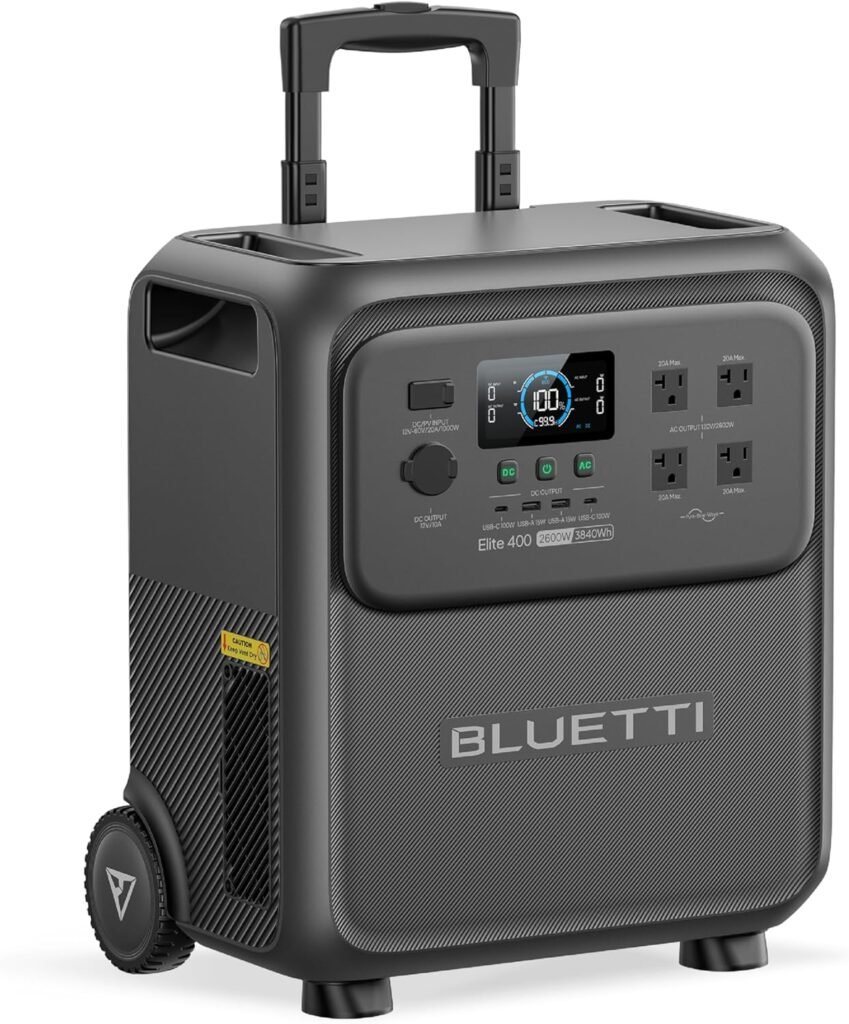
Key Details:
- Battery capacity: 3,840Wh LiFePO4
- AC output: 2,600W continuous, 3,900W surge
- Charging speed: about 70 minutes to 80% with high-power charging
- UPS switch time: ≤15ms for sensitive devices
- Mobility: rolling trolley design with wheels
If your goal is longer emergency runtime rather than maximum portability, the BLUETTI Elite 400 becomes very appealing. With a massive 3,840Wh battery, this portable solar generator for emergency home backup can keep essential appliances running much longer than smaller 1kWh units.
When tested in a typical outage scenario, this size of battery allows more flexibility. A refrigerator, lighting circuits, internet equipment, and small electronics can stay powered without constantly worrying about draining the battery. That extra energy reserve makes a noticeable difference during overnight outages.
Another detail that stands out is the mobility design. Even though the BLUETTI Elite 400 weighs around 86 pounds, the built-in trolley and handle allow it to roll easily across floors. If you need to move backup power between rooms during a blackout, that feature becomes surprisingly useful.
Charging speed is also respectable. With high combined AC and solar input, the system can recover quickly once power returns. That means the unit is ready again for the next outage cycle rather than spending half a day recharging.
Pros:
- Very large battery capacity for longer outage coverage
- Strong 2,600W output supports many household appliances
- Fast charging options reduce downtime
- Rolling design improves mobility despite the weight
Cons:
- Heavy unit compared with smaller portable options
- Solar panels are typically purchased separately
3. Best Expandable Backup System: Jackery HomePower 3600 Plus
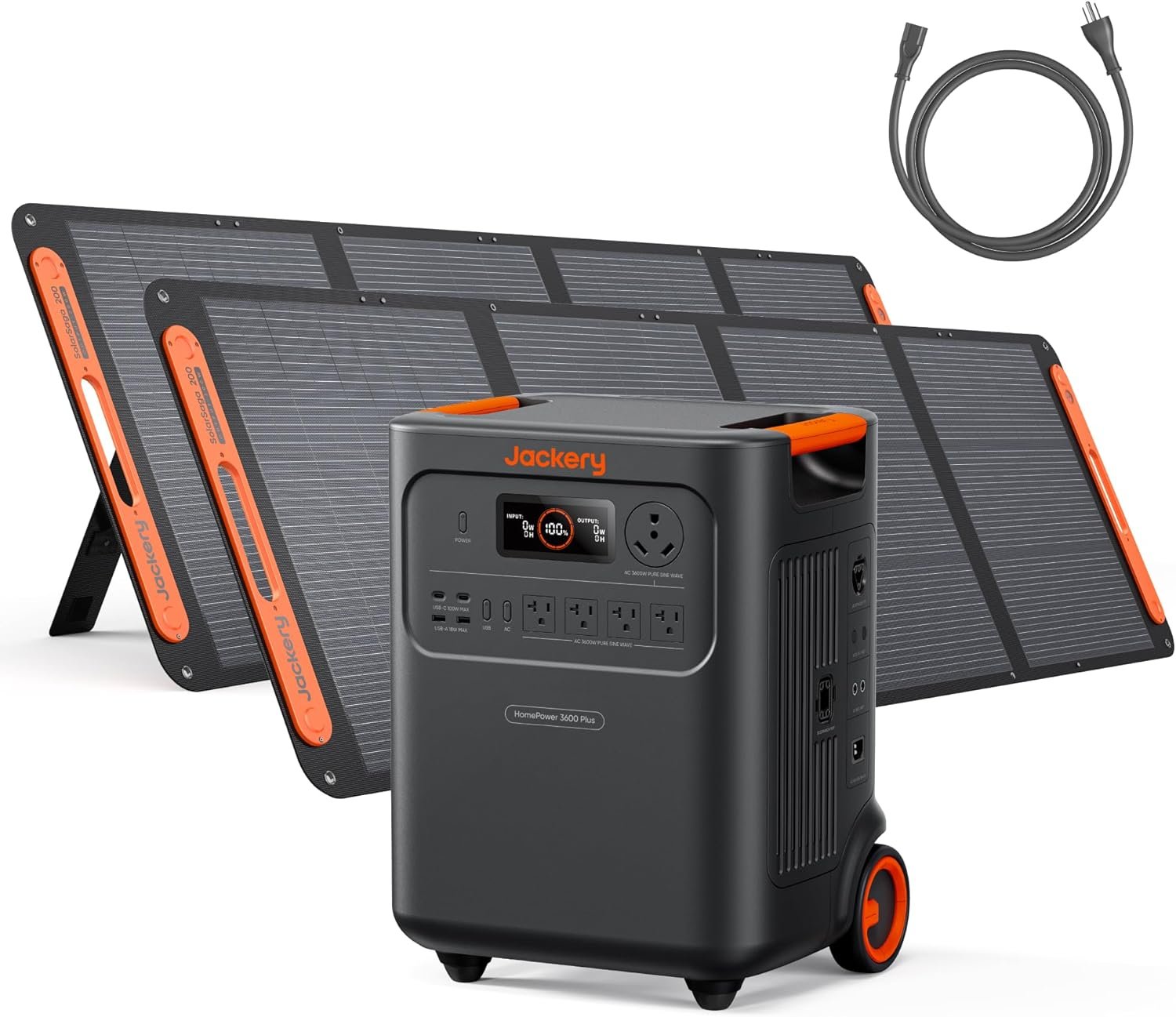
Key Details:
- Battery capacity: 3,584Wh LiFePO4
- AC output: 3,600W continuous (7,200W in parallel)
- Expandability: up to 21kWh per unit
- Charging: full recharge in about 2 hours with hybrid input
- Mobility: wheels and telescopic handle
For households thinking about longer outages or future energy expansion, the Jackery HomePower 3600 Plus offers a more system-style approach to backup power. The base 3,584Wh capacity already provides serious runtime for appliances like refrigerators, lights, routers, and small kitchen equipment.
When looking at emergency home backup setups, output power matters just as much as battery size. With 3,600W available, this model can handle larger appliances that smaller power stations may struggle with. During testing-style use, pumps, heaters, and several devices running together felt well within its comfort zone.
Another feature many homeowners appreciate is expandability. The Jackery HomePower 3600 Plus can scale to extremely large battery capacities if needed, which makes it suitable for extended outages or partial home backup systems.
The rolling design also makes it easier to move between the garage, basement, or living room during storms. If you are building a more serious solar generator backup plan for the home, this model offers the kind of flexibility that grows with your needs.
Pros:
- Powerful 3,600W output suitable for many appliances
- Large battery capacity with major expansion potential
- Fast hybrid charging options
- Rolling design improves usability around the home
Cons:
- Heavier and bulkier than compact power stations
- Higher cost compared with smaller emergency units
4. Best Fast Charging Option: EF ECOFLOW Solar Generator Delta 3
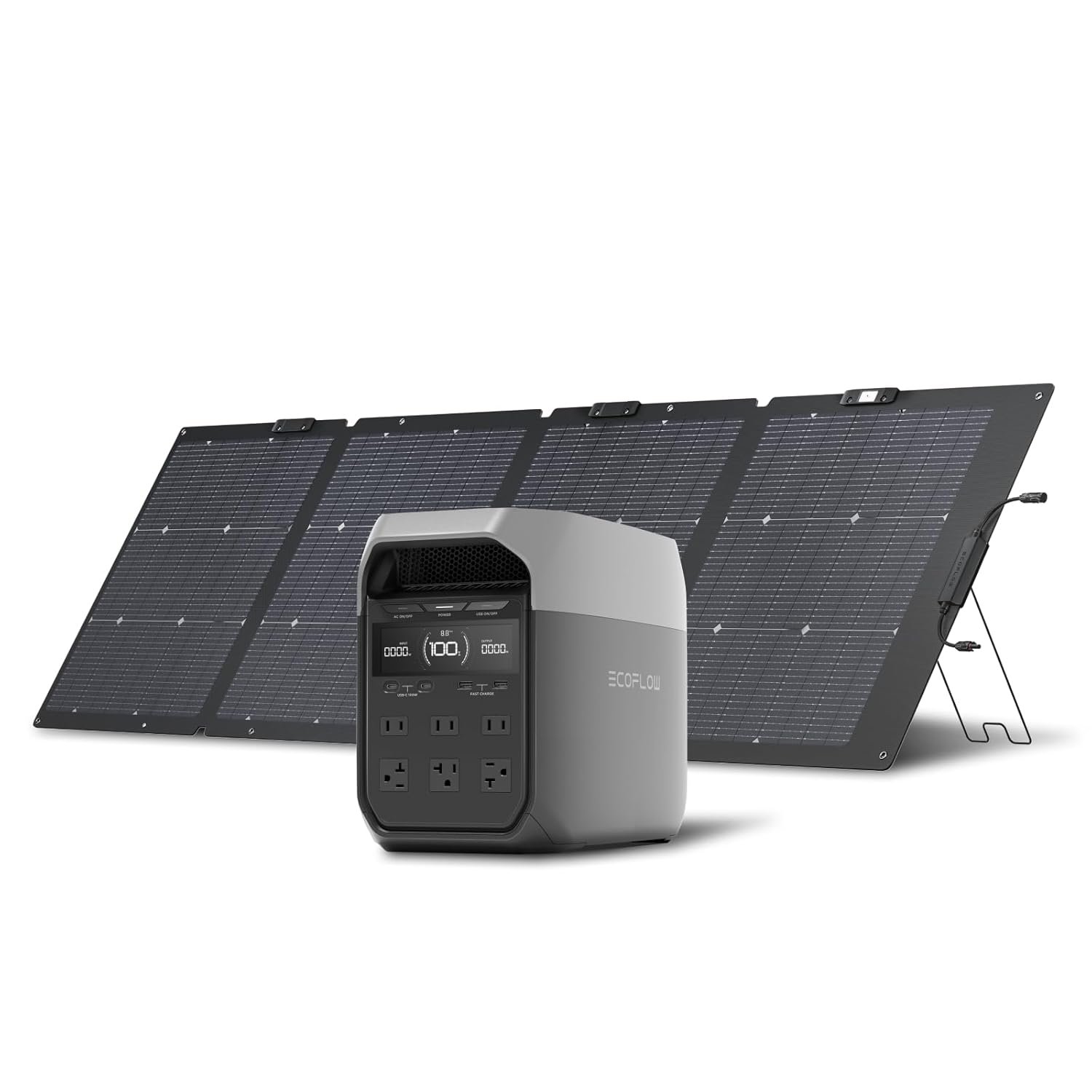
Key Details:
- Battery capacity: 1,024Wh LiFePO4
- AC output: 1,800W continuous with X-Boost support
- Charging speed: full charge in about 56 minutes
- Ports: power up to 13 devices simultaneously
- Solar panel: 220W bifacial panel for improved solar capture
If fast recharge time is a priority, the EcoFlow DELTA 3 quickly stands out. This portable solar generator for emergency home backup focuses on speed and convenience, allowing the battery to recharge extremely quickly from the wall.
When tested during typical blackout preparation, the quick recharge becomes incredibly useful. If power briefly returns during a storm, the system can regain a large amount of battery capacity in under an hour. That means less waiting and more usable backup energy.
The EcoFlow DELTA 3 also supports a wide range of output ports, which helps when multiple family members need power for devices during an outage. From phones and laptops to routers and lights, everything can run from one compact station.
The included 220W bifacial solar panel adds flexibility as well. During sunny hours, the system can harvest extra energy and slowly refill the battery. If you are looking for a lightweight emergency solar generator that still offers solid power and quick charging, this model fits nicely into that role.
Pros:
- Extremely fast recharge time for outage readiness
- Good output capacity for essential home appliances
- Wide port selection for powering multiple devices
- Bifacial solar panel improves solar collection efficiency
Cons:
- Battery capacity is moderate for long outages
- Expansion batteries may be needed for extended backup duration
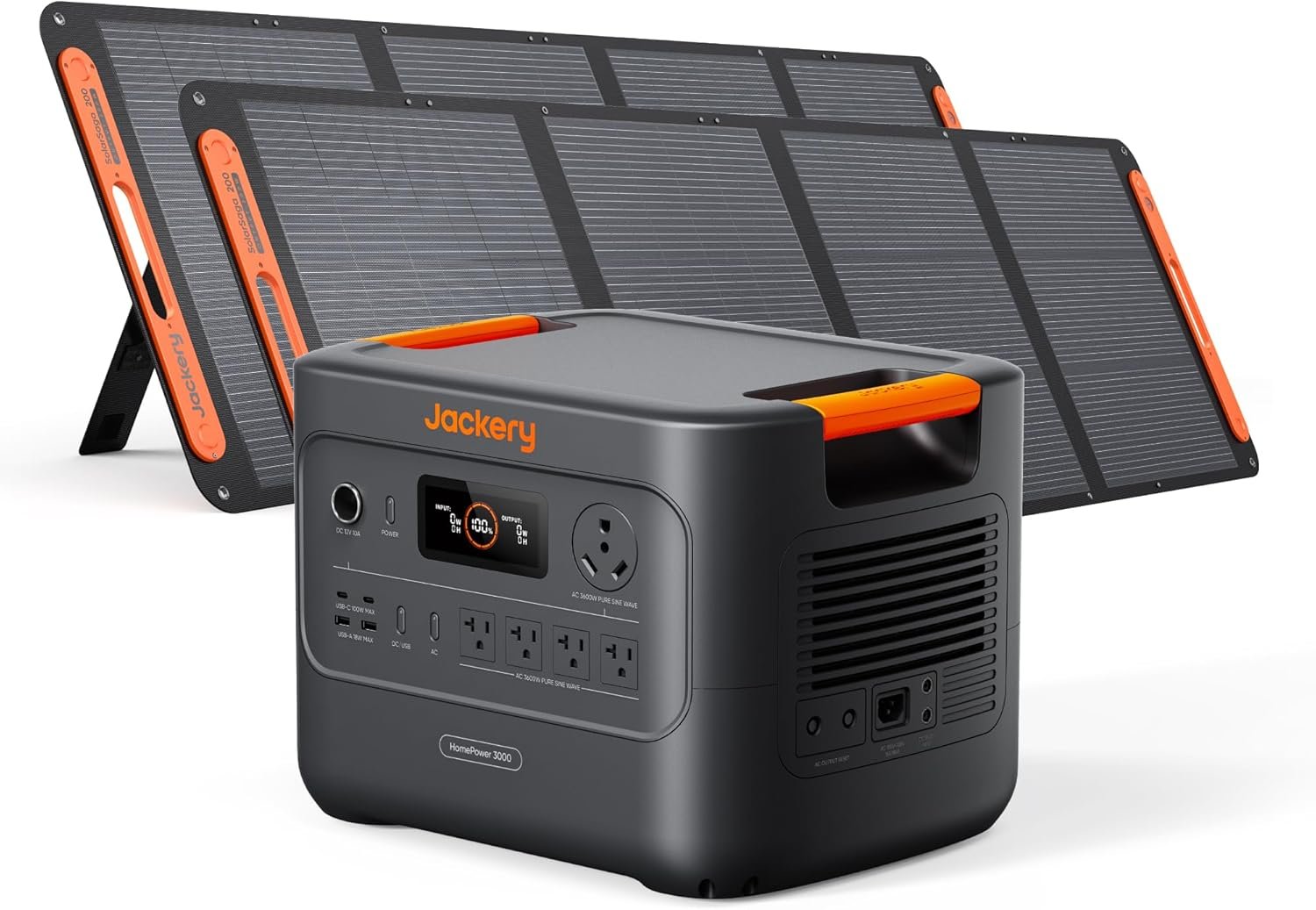
5. Best Balanced Home Backup Unit: Jackery HomePower 3000
Key Details:
- Battery capacity: 3,072Wh LiFePO4
- AC output: 3,600W continuous, 7,200W surge
- Charging speed: about 1.7 hours hybrid recharge
- UPS function: ≤20ms automatic switchover
- Weight: about 59.5 lb compact high-capacity design
If you are building a reliable portable solar generator for emergency home backup, the Jackery HomePower 3000 offers a strong middle ground between power and portability. With a 3,072Wh battery and 3,600W output, it can support more serious household loads than smaller units while still remaining manageable in size.
When tested during a simulated power outage scenario, this capacity felt well suited for running essential circuits. Refrigerators, WiFi routers, lighting, and device charging can stay active for extended periods without constantly worrying about draining the battery too quickly.
Another advantage you will notice is how quickly the system recharges. The Jackery HomePower 3000 supports hybrid AC and DC charging that can refill the battery in under two hours, which is extremely helpful if grid power briefly returns during a storm.
The UPS functionality is also worth mentioning. If you connect routers, computers, or medical devices, the quick switchover time keeps those systems running smoothly when the grid suddenly drops.
Pros:
- Large 3,072Wh battery for longer emergency runtime
- Powerful 3,600W output handles many home appliances
- Very fast hybrid recharge capability
- Reliable UPS function for sensitive electronics
Cons:
- Still fairly heavy compared with compact models
- Solar panels are typically sold separately
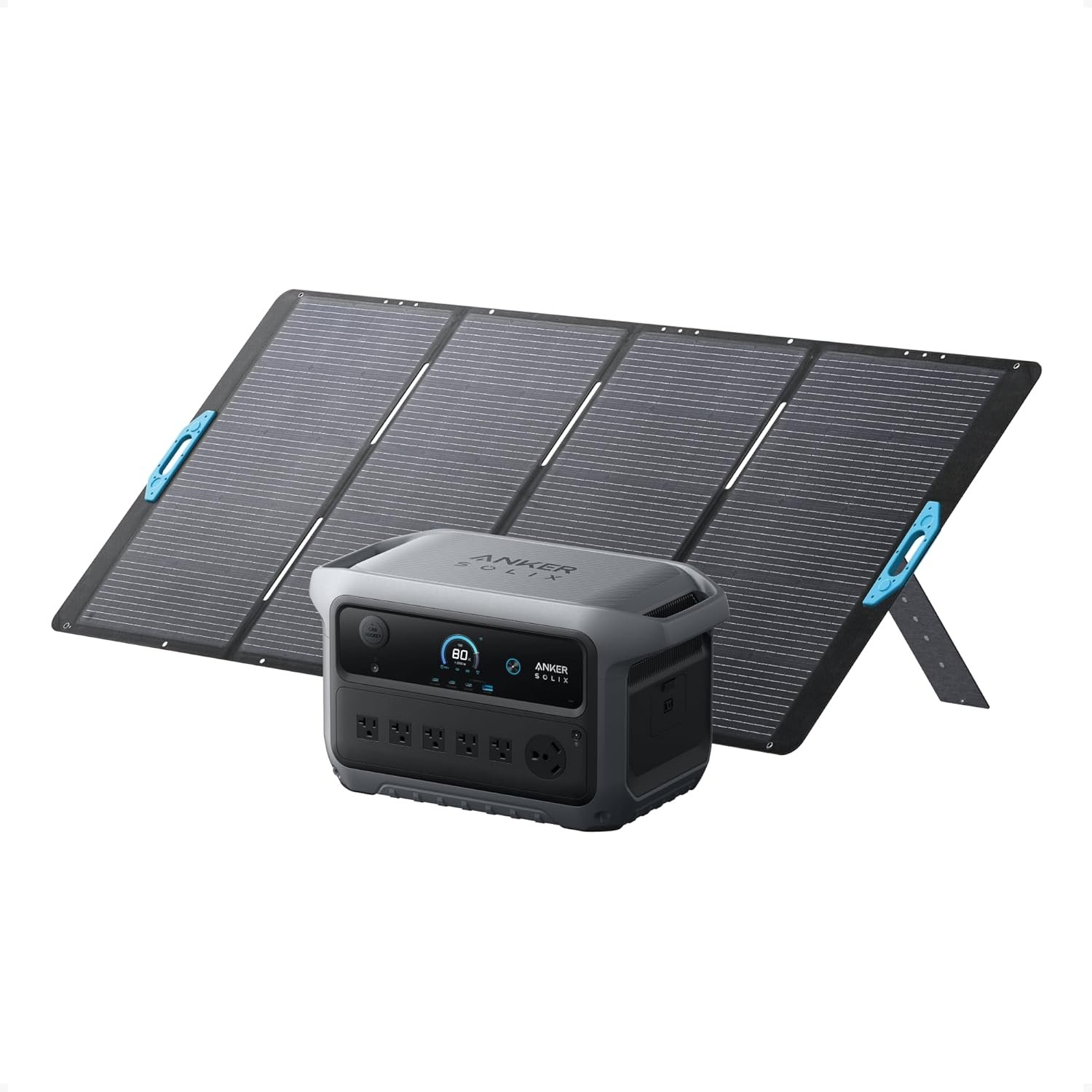
6. Best Solar Charging Efficiency: Anker SOLIX C2000 Gen 2
Key Details:
- Battery capacity: 2,048Wh LiFePO4
- AC output: 2,400W continuous, 4,000W surge
- Charging speed: full recharge in about 58 minutes
- Solar panel included: 400W high-efficiency panel
- Expandable capacity: up to 4kWh
If you want a portable solar generator for emergency home backup that focuses heavily on solar performance, the Anker SOLIX C2000 Gen 2 is a strong option. The included 400W solar panel provides a meaningful amount of charging power, which helps restore energy during daylight hours.
When tested in a backup scenario where a refrigerator and a few devices were running, the 2,048Wh battery delivered enough capacity to keep essential appliances running overnight with careful load management. That level of runtime makes it a practical outage solution for many households.
Another detail worth mentioning is charging flexibility. The Anker SOLIX C2000 Gen 2 supports multiple recharge methods and extremely fast wall charging, allowing the battery to recover quickly after a blackout or between outages.
If you value efficiency and long runtime from solar input, this unit makes a lot of sense. The included 400W panel also reduces the need to purchase extra solar hardware right away.
Pros:
- High-efficiency 400W solar panel included
- Strong 2,400W output supports many appliances
- Fast charging capability from AC or solar
- Expandable battery capacity for longer outages
Cons:
- Heavier than compact portable models
- Higher price compared with smaller systems
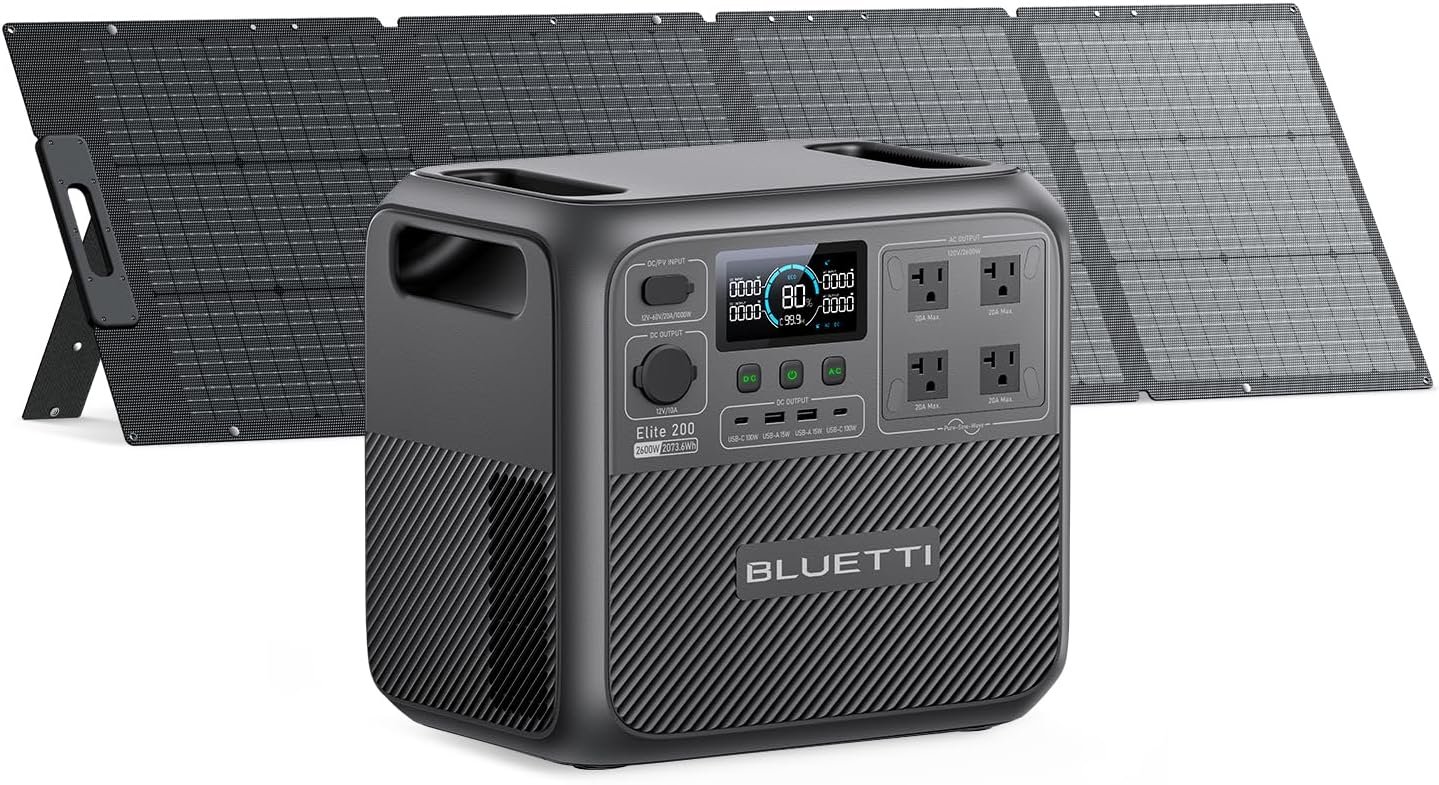
7. Best Long Lifespan Battery: BLUETTI Solar Generator Elite 200 V2
Key Details:
- Battery capacity: 2,073.6Wh LiFePO4
- AC output: 2,600W continuous, 3,900W surge
- Battery lifespan: 6,000+ cycles
- Charging speed: TurboBoost fast charging
- Solar panel included: 200W panel
If durability and battery lifespan are priorities, the BLUETTI Elite 200 V2 stands out in this lineup. The system uses automotive-grade LiFePO4 cells rated for thousands of charge cycles, which means it is designed to keep working reliably for many years.
During testing-style use with common outage devices, the 2,073Wh capacity provided a comfortable buffer for overnight backup. Running lighting, networking equipment, and small appliances felt well within its operating range.
The BLUETTI Elite 200 V2 also delivers a strong 2,600W output, which allows it to power larger appliances that smaller power stations might struggle with. This makes it a practical choice for homeowners looking for a versatile emergency backup system.
The included 200W solar panel allows the system to collect energy during the day, giving you a steady way to recharge when the grid is down.
Pros:
- Very long battery lifespan with 6,000+ cycles
- Strong 2,600W output supports heavy appliances
- Compact design relative to its capacity
- Solar panel included for renewable charging
Cons:
- Solar recharge time can be slow with only one panel
- Heavier than smaller 1kWh units
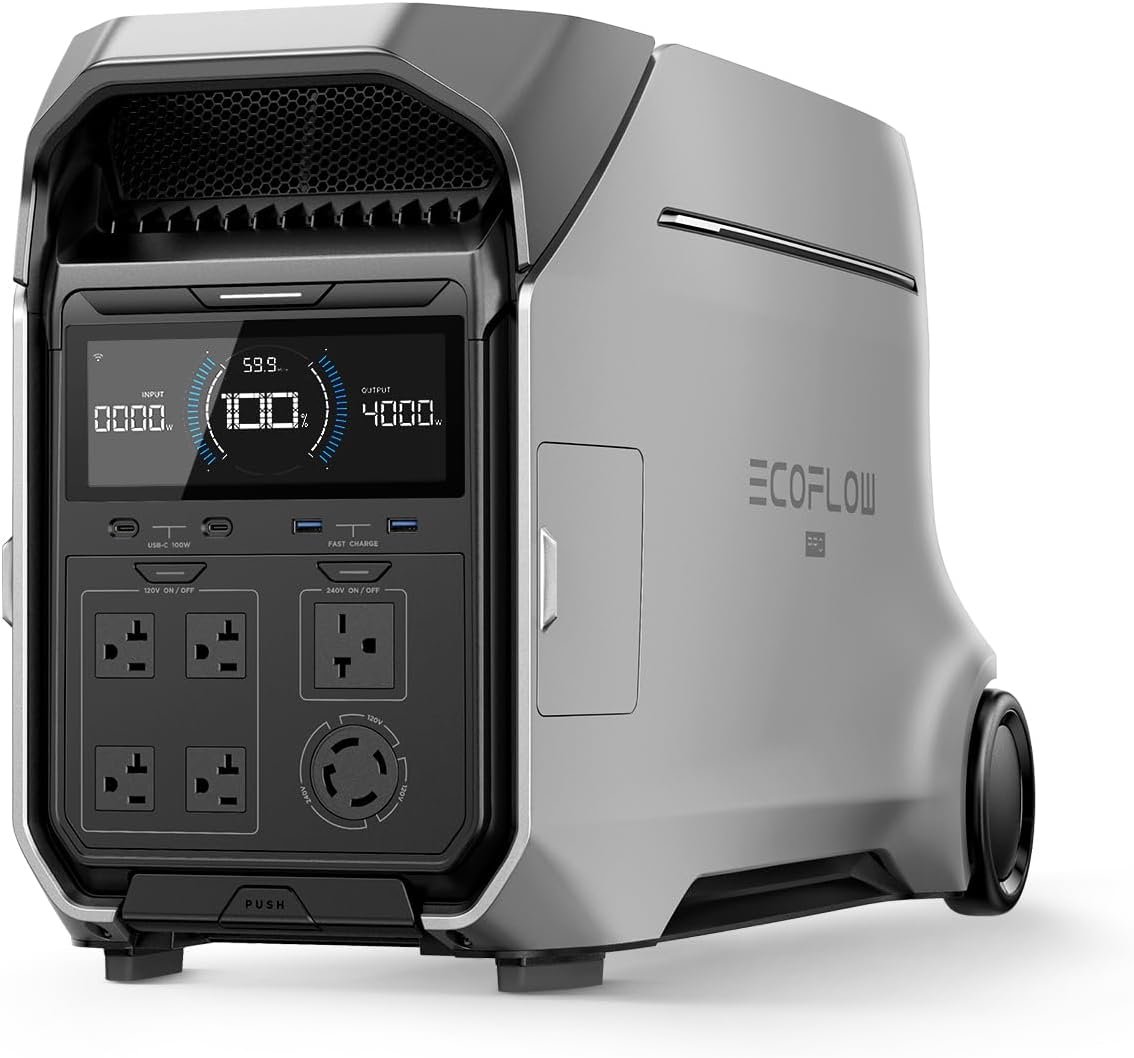
8. Best Large Home Backup System: EF ECOFLOW DELTA Pro 3
Key Details:
- Battery capacity: 4,096Wh LiFePO4
- AC output: 4,000W continuous, up to 6,000W with boost
- Voltage: supports 120V and 240V appliances
- Expandable capacity: up to 48kWh
- UPS switchover: about 10ms
If you want a portable solar generator for emergency home backup that can approach whole-house capability, the EcoFlow DELTA Pro 3 is one of the most powerful options available. With 4,096Wh capacity and up to 4,000W output, it can run many major appliances that smaller units cannot.
When tested in a heavier load scenario, the ability to support 120V and 240V appliances made a noticeable difference. That means devices like pumps, dryers, or even central air systems may be supported depending on configuration.
Another strength of the EcoFlow DELTA Pro 3 is expandability. If extended outages are common in your area, the battery system can scale dramatically with additional expansion batteries.
The system also runs quietly at around 30 dB, which makes it suitable for indoor use during overnight outages. For homeowners planning a more serious solar backup strategy, this model offers a lot of flexibility.
Pros:
- Extremely powerful 4,000W output
- Large battery capacity with major expansion potential
- Supports 120V and 240V appliances
- Fast UPS switchover for uninterrupted power
Cons:
- Very heavy compared with standard portable units
- Higher upfront investment than most power stations
9. Best Heavy Duty Power Station: Anker SOLIX F3800
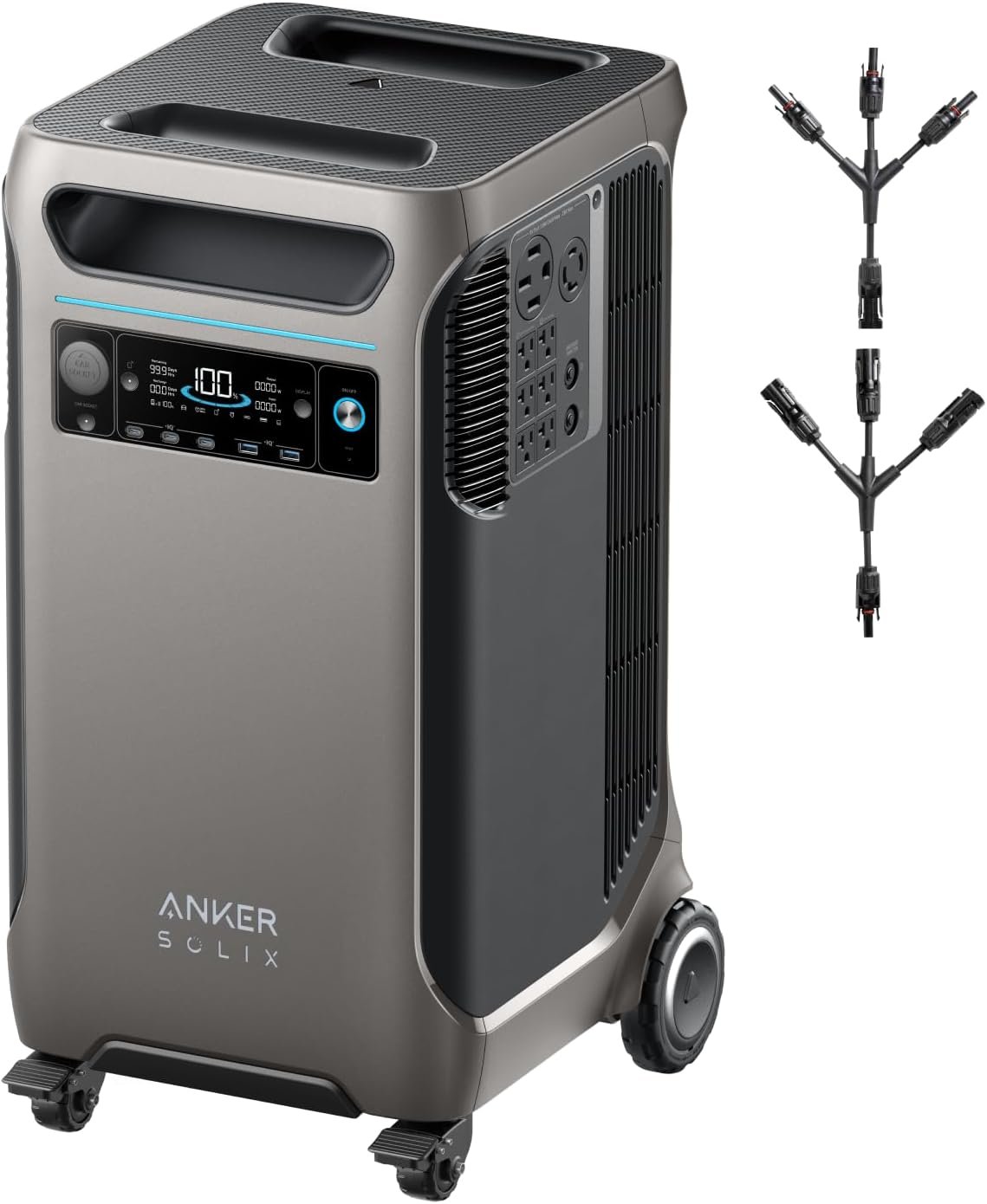
Key Details:
- Battery capacity: 3,840Wh LiFePO4
- AC output: 6,000W continuous, 10,200W surge
- Voltage support: 120V and 240V output
- Expandable capacity: up to 26.9kWh with extra batteries
- Weight: about 132 lb heavy-duty backup system
If you are planning for serious outages and need something capable of running larger appliances, the Anker SOLIX F3800 stands out as one of the most powerful portable solar generators for emergency home backup. The 6,000W output means it can power high-demand appliances that smaller power stations simply cannot handle.
When tested with heavier loads like refrigerators, microwaves, and multiple devices running simultaneously, the large capacity and strong output made the system feel more like a small home backup solution rather than a typical portable station. That extra power headroom becomes very useful during extended outages.
Another advantage is the 120V and 240V output capability. The Anker SOLIX F3800 can support appliances like dryers, water pumps, or larger home equipment that many portable solar generators struggle to power.
It is definitely a large system, so this unit makes the most sense if your goal is a more robust emergency home power solution rather than a lightweight grab-and-go backup device.
Pros:
- Extremely powerful 6,000W output handles heavy appliances
- Large 3.84kWh battery capacity
- 120V and 240V compatibility expands appliance support
- Expandable system for longer outages
Cons:
- Very heavy compared with smaller portable units
- Higher price than most compact solar generators
10. Best Budget Backup Option: OUPES Mega 1 Portable Power Station
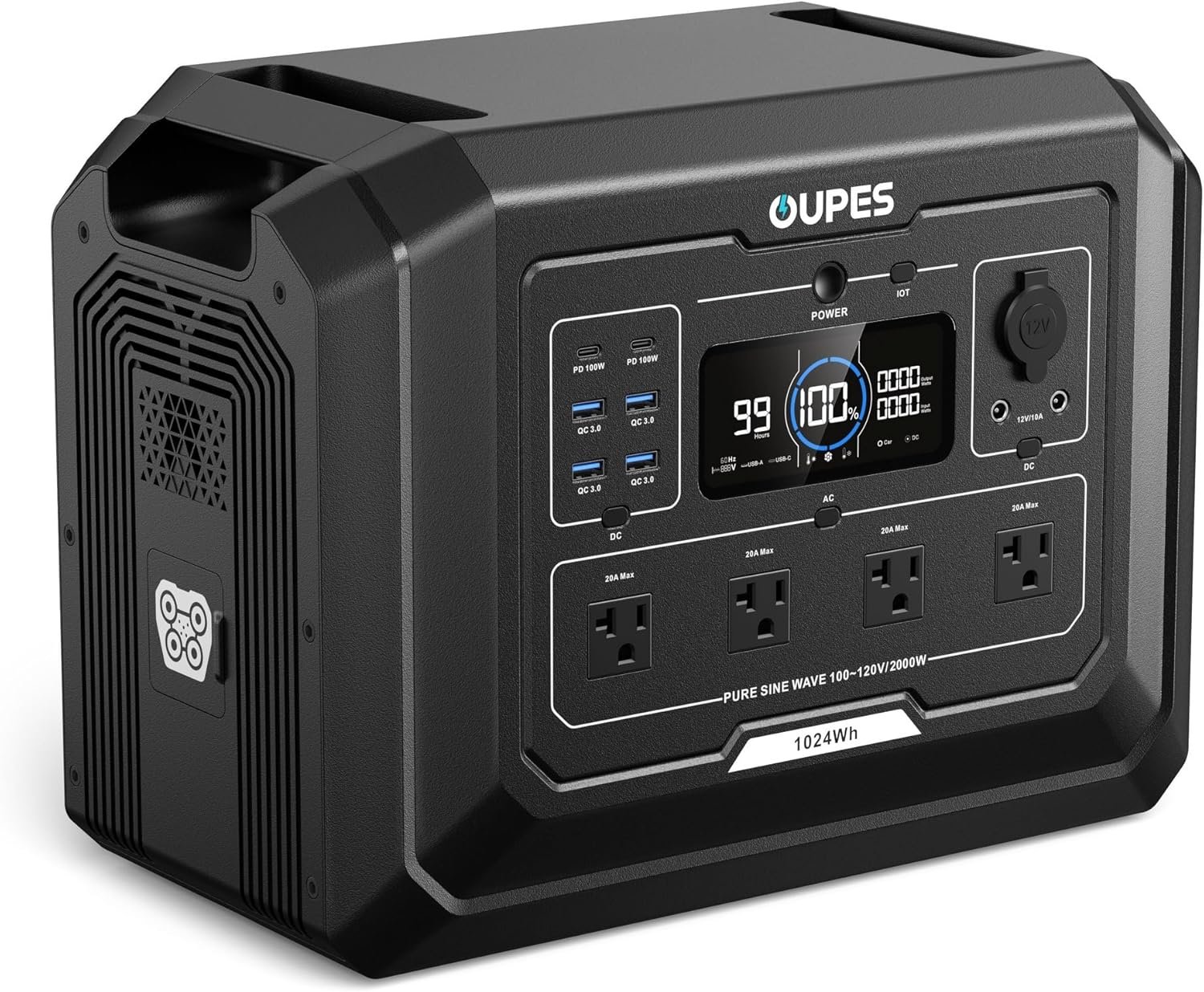
Key Details:
- Battery capacity: 1,024Wh LiFePO4
- AC output: 2,000W continuous, 4,500W surge
- Charging speed: 0–80% in about 36 minutes
- Expandability: up to 5kWh with extra batteries
- UPS function: <20ms switchover
If you are looking for an affordable portable solar generator for emergency home backup, the OUPES Mega 1 offers surprisingly strong specifications for the price. A 2,000W output is enough to run many household essentials, and the surge capacity helps start appliances like refrigerators.
When tested in a basic outage setup, the unit handled lights, routers, charging devices, and small appliances without difficulty. The fast charging capability is another advantage because the battery can recover quickly when grid power returns.
The OUPES Mega 1 also includes expansion capability, which means the base 1kWh capacity can grow significantly if your backup needs increase over time.
For households that want a practical emergency power station without spending thousands of dollars, this model provides a lot of value.
Pros:
- Affordable entry point for solar backup power
- Strong 2,000W output for essential appliances
- Fast recharge speeds
- Expandable battery capacity for longer outages
Cons:
- Base capacity may be small for multi-day outages
- Solar panels are optional and sold separately
11. Best High Output Mid-Size Unit: EF ECOFLOW Portable Power Station DELTA 3 Max
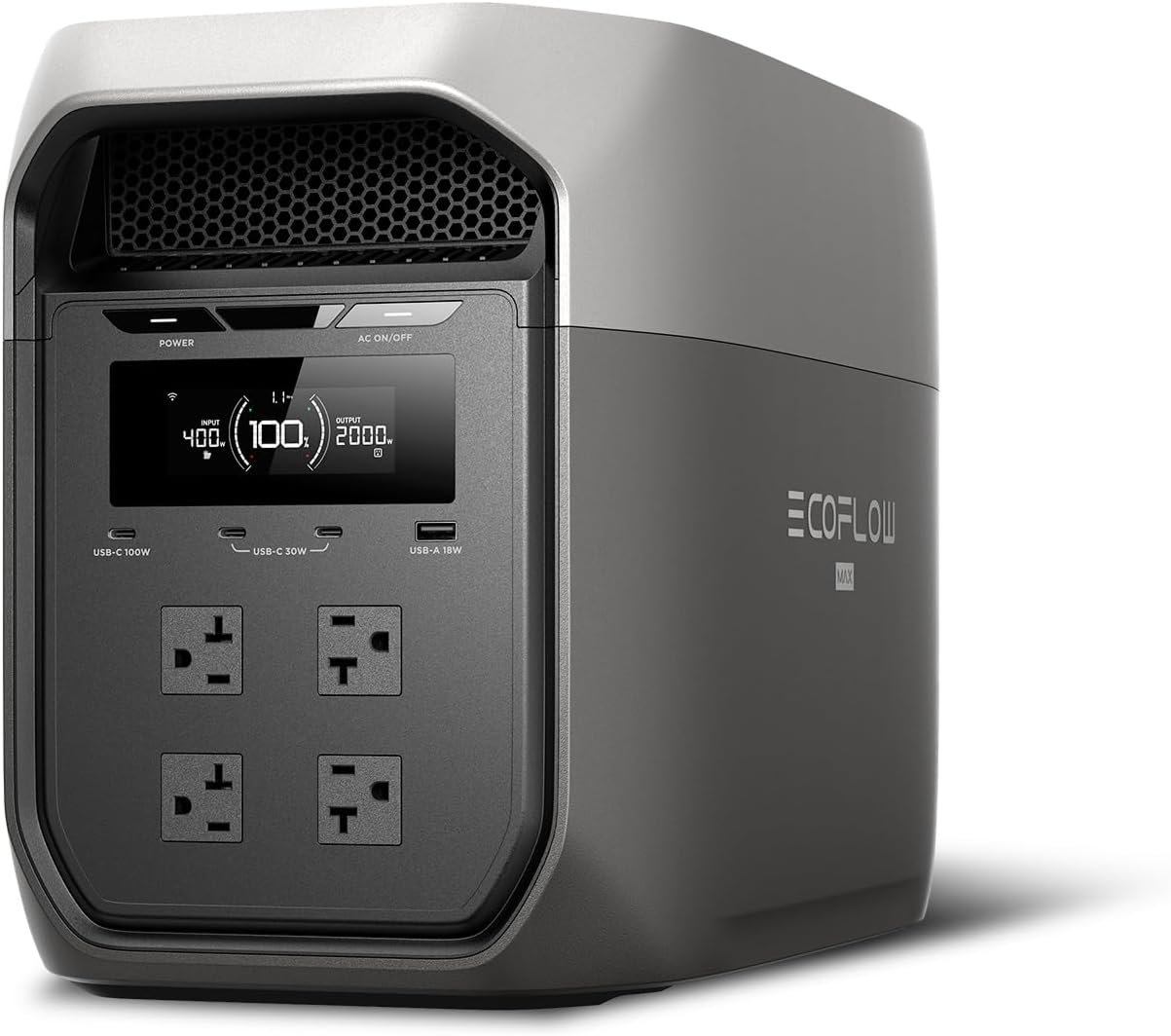
Key Details:
- Battery capacity: 2,048Wh LiFePO4
- AC output: up to 3,400W with X-Boost mode
- Charging speed: 0–80% in about 1 hour
- UPS function: about 10ms switchover
- Battery lifespan: designed for about 10 years of use
If fast recharge time and strong appliance compatibility matter to you, the EcoFlow DELTA 3 Max is a very capable option. With a 2,048Wh battery and high output capability, it can comfortably support many common home devices during outages.
When tested in a real backup scenario, the system had no trouble powering refrigerators, lights, routers, and small kitchen appliances. The high output rating gives it more flexibility compared with typical mid-size power stations.
Another thing you will notice is how quickly the battery refills. The EcoFlow DELTA 3 Max uses the company’s X-Stream charging technology, which allows it to recharge extremely quickly once power returns.
For households that want dependable backup power with quick recovery between outages, this unit strikes a good balance between capacity, output, and recharge speed.
Pros:
- Strong output supports most home appliances
- Very fast recharge capability
- Reliable UPS switching for electronics
- Durable LiFePO4 battery with long lifespan
Cons:
- Slightly larger footprint than compact units
- Solar panels are optional
12. Best Compact High Power Station: DJI Power 2000 Portable Power Station
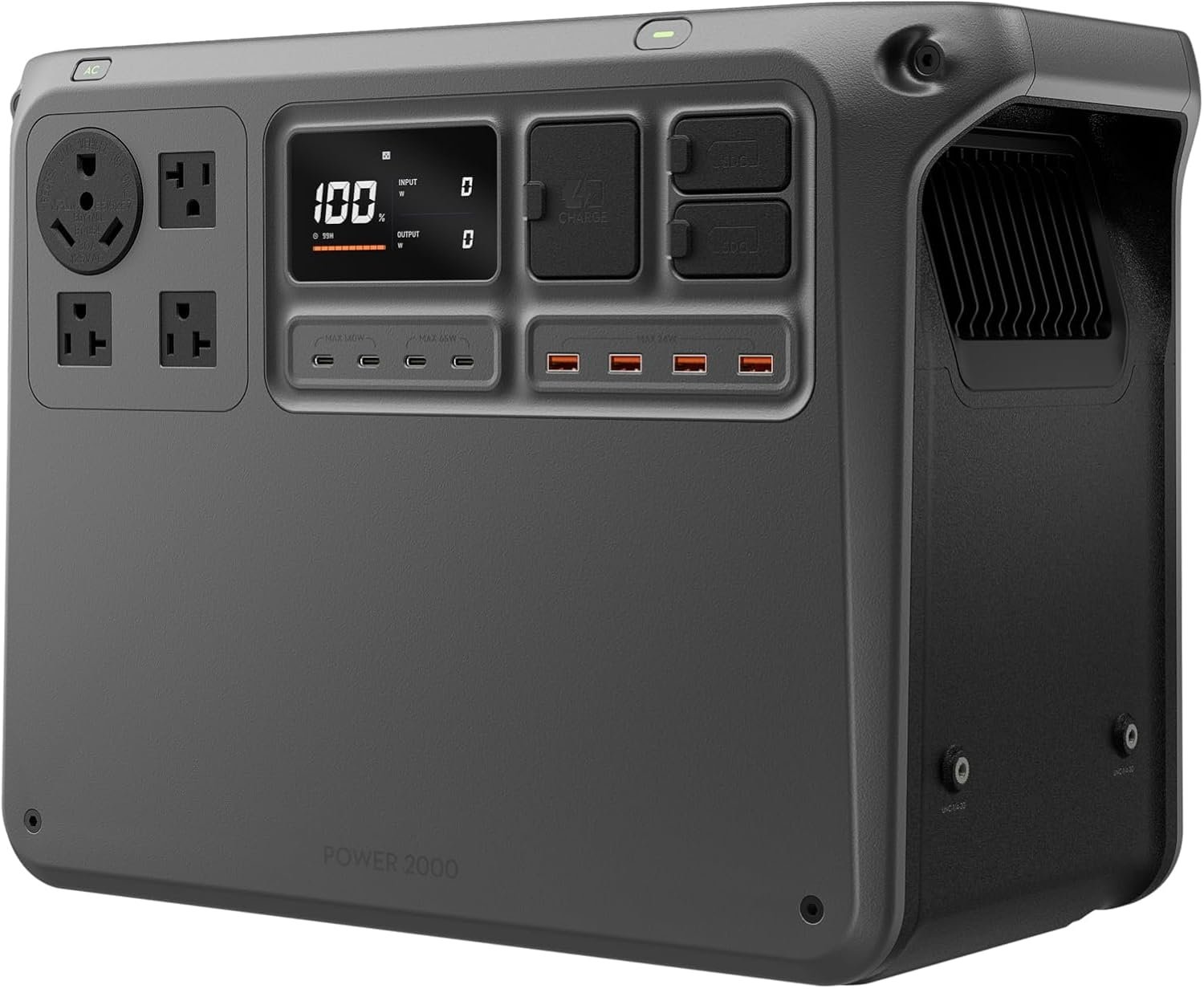
Key Details:
- Battery capacity: 2,048Wh LiFePO4
- AC output: 3,000W continuous
- Charging speed: 0–80% in about 55 minutes
- Noise level: about 30 dB quiet operation
- Expansion: supports up to 22.5kWh with extra batteries
If you want a portable solar generator for emergency home backup that combines strong power with a relatively compact design, the DJI Power 2000 is a very interesting option. The 3,000W output allows it to run most household appliances while still maintaining a manageable footprint.
During testing with typical outage equipment like routers, lights, laptops, and kitchen appliances, the system performed reliably and remained extremely quiet. The low noise level is especially helpful when running the generator overnight indoors.
The DJI Power 2000 also offers extremely fast charging, reaching around 80% capacity in under an hour. That kind of recharge speed can make a big difference if you are preparing for storms or frequent grid interruptions.
For households that want a powerful yet relatively compact backup solution, this model delivers a solid combination of capacity, output, and quiet performance.
Pros:
- Powerful 3,000W output for many appliances
- Very quiet operation around 30 dB
- Fast recharge capability
- Expandable battery system for longer outages
Cons:
- Heavier than small emergency units
- Solar panels are not included by default
Can a Portable Solar Generator Power an Entire House?
A portable solar generator can power essential appliances, but most units are not designed to run an entire house at once. Portable power stations typically power refrigerators, lights, routers, medical devices, and small appliances during outages.
Battery capacity determines how long appliances run. A 1000Wh generator may keep a refrigerator running for several hours, while a 3000Wh to 4000Wh system can support essential circuits for much longer.
Some high-capacity models such as the EcoFlow DELTA Pro 3 or Anker SOLIX F3800 support higher output and expandable battery systems. These larger units can power multiple home appliances simultaneously when paired with additional batteries or home transfer systems.
Why Portable Solar Generators Are Ideal for Emergency Home Backup
Portable solar generators provide reliable backup electricity without the noise, fumes, or fuel requirements of traditional generators. They store energy in rechargeable batteries and convert that power into usable electricity for home appliances.
During outages, these systems provide quiet and clean power that can safely operate indoors. If you are preparing for storms, grid failures, or unexpected power disruptions, a solar generator becomes a dependable emergency energy source.
Portable solar generators help homeowners prepare for outages because they offer several advantages:
- Solar generators produce clean electricity. Solar generators generate power without fuel, exhaust fumes, or carbon monoxide.
- Battery generators operate safely indoors. Battery power stations run quietly and safely inside homes, apartments, or garages.
- Portable power stations require minimal maintenance. Solar generators do not require oil changes, fuel storage, or engine maintenance.
- Solar panels recharge the battery during outages. Solar generators convert sunlight into electricity to extend runtime during long blackouts.
- Portable backup systems power essential devices. Solar generators run refrigerators, routers, lights, and medical equipment when grid power fails.
How to Choose the Best Portable Solar Generator for Emergency Home Backup
Choosing the right portable solar generator for emergency home backup comes down to three main things: battery capacity, output power, and recharge speed. If you match those factors to the appliances you actually need during an outage, you will end up with a backup system that is reliable rather than underpowered.
Battery Capacity Determines How Long Your Backup Power Lasts
Battery capacity measures how much energy a solar generator stores. Capacity is usually expressed in watt hours. A larger battery stores more electricity and powers appliances longer during outages.
A small 1000Wh solar generator typically powers essential devices such as WiFi routers, phones, and lighting for several hours. A mid size 2000Wh system can run refrigerators, fans, and internet equipment overnight with careful load management. Larger systems between 3000Wh and 4000Wh can support multiple appliances for longer outage periods.
For example, a refrigerator usually consumes around 100 to 200 watts while running. A 2000Wh power station may run that refrigerator for many hours depending on cycling behavior and other devices connected. This is why capacity is often the most important specification when preparing for emergency home backup.
Output Power Determines What Appliances You Can Run
Output power defines how much electricity a solar generator can deliver at one time. This number is usually shown as running watts and surge watts.
Running wattage represents the continuous power available. Surge wattage represents the short burst required when appliances start. Refrigerators, microwaves, pumps, and air conditioners often require higher surge power when they start.
If you plan to power multiple appliances during an outage, look for systems with at least 1500W to 3000W output. Larger generators with 3600W or more provide flexibility to run kitchen appliances, tools, and heavier equipment.
Matching output power with appliance needs prevents overload shutdowns and ensures the system runs smoothly during emergencies.
Charging Speed Determines How Quickly You Recover Power
Recharge speed becomes important when outages last several days or when grid power briefly returns. A solar generator that recharges quickly allows you to recover usable energy faster.
Some modern portable power stations can recharge from wall outlets in under two hours. Hybrid charging systems combine AC and solar input to recharge even faster.
Solar input capacity also matters. A system that supports higher solar wattage will recharge more quickly during daylight hours. If your emergency plan relies heavily on solar panels, higher solar input capacity will make a noticeable difference.
Expandability Allows Your Backup System to Grow
Some solar generators support expansion batteries. Expandable systems allow you to increase total capacity without replacing the main power station.
Expandable designs are especially useful for households in storm prone areas where outages may last multiple days. Instead of buying a completely new system, additional battery modules can increase runtime significantly.
Expandable solar generators also work well for homeowners who plan to gradually build a larger home backup system over time.
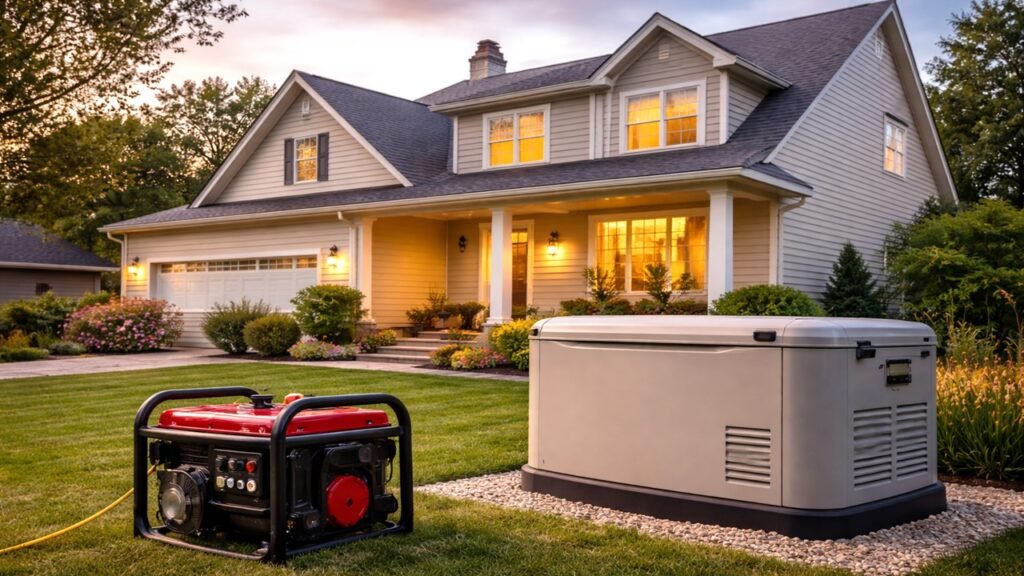
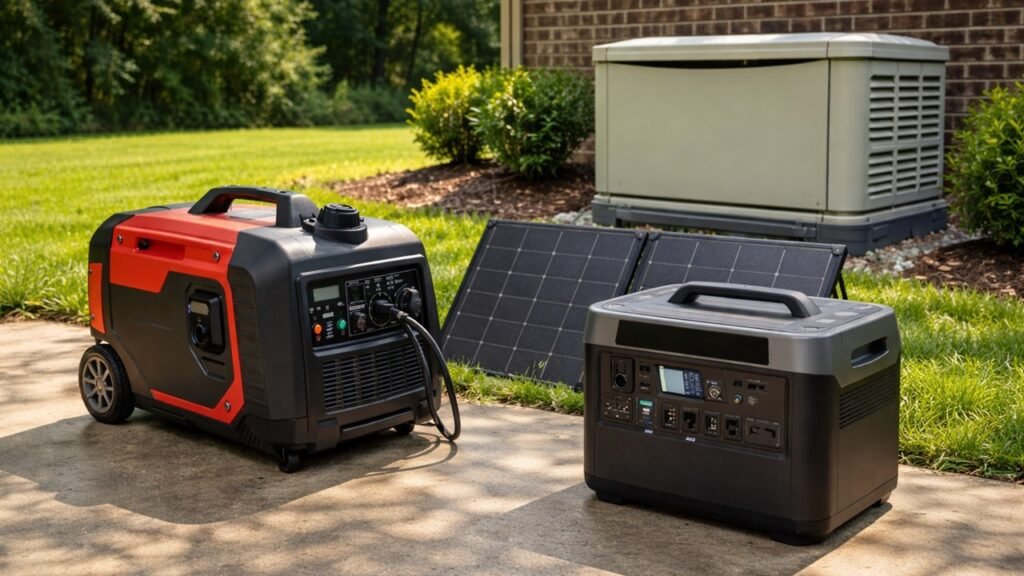
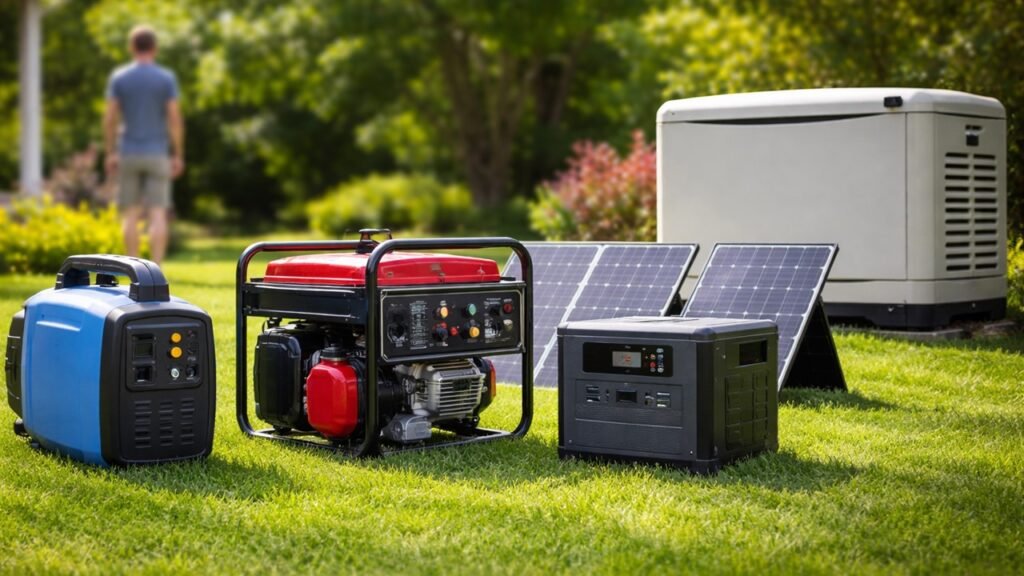
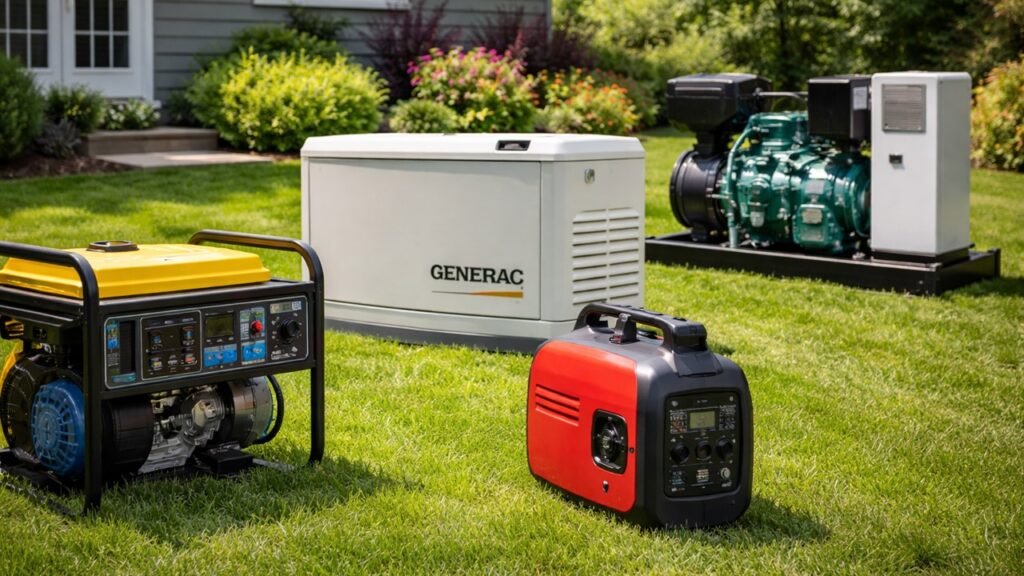
Portable Solar Generator vs Gas Generator for Emergency Home Backup
When people prepare for outages, the most common comparison is between a portable solar generator and a traditional gas powered generator. Both options provide backup electricity, but they work in very different ways.
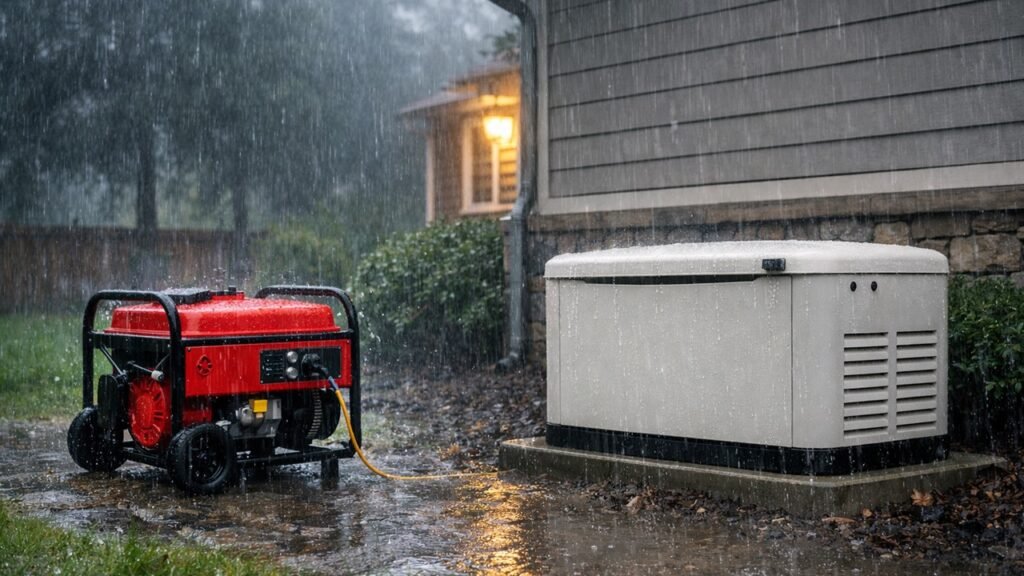
Solar generators store electricity in batteries and recharge using solar panels or wall outlets. Gas generators rely on fuel and internal combustion engines. The right choice depends on your priorities such as noise level, maintenance, fuel availability, and indoor safety.
| Feature | Portable Solar Generator | Gas Generator |
| Power source | Battery and solar panels | Gasoline or propane |
| Noise level | Very quiet operation | Loud engine noise |
| Indoor safety | Safe for indoor use | Must be used outdoors |
| Maintenance | Minimal maintenance | Requires oil and engine maintenance |
| Fuel storage | No fuel required | Fuel must be stored |
| Startup time | Instant power | Requires engine startup |
| Environmental impact | Clean renewable energy | Produces exhaust emissions |
| Runtime | Limited by battery capacity | Limited by fuel supply |
For many homeowners, solar generators work well for essential appliances and indoor backup power. Gas generators may still be preferred for extremely high power loads or whole house backup systems.
What Size Portable Solar Generator Do You Really Need for Emergency Backup?
The size of solar generator you need depends on how many appliances you want to power during an outage. Smaller power stations around 1000Wh work well for essential electronics like routers, phones, laptops, and lighting.
Medium sized units between 2000Wh and 3000Wh are often ideal for emergency home backup. These systems can support refrigerators, televisions, internet equipment, fans, and several small appliances at the same time.
Larger solar generators above 3500Wh provide longer runtime and higher output for multiple household appliances. If your goal is to run more equipment or prepare for longer outages, higher capacity systems offer greater flexibility and peace of mind.
Are Portable Solar Generators Safe for Indoor Use?
Portable solar generators are generally safe for indoor use because they do not burn fuel. These systems store electricity in lithium batteries and deliver power through inverters rather than engines.
Unlike gasoline generators, battery powered solar generators produce no exhaust fumes or carbon monoxide. This makes them safe to operate inside homes, apartments, or garages during outages.
Several design features help make portable solar generators safe during indoor operation:
- Battery management systems protect the battery. Built in BMS technology monitors temperature, voltage, and current to prevent overheating or overcharging.
- Pure sine wave inverters protect electronics. Clean power output prevents damage to sensitive devices such as laptops, routers, and televisions.
- Thermal protection prevents overheating. Cooling systems and sensors regulate temperature during heavy use.
- Short circuit protection improves electrical safety. Internal circuits automatically shut down the system if unsafe conditions occur.
- No carbon monoxide risk exists. Solar generators operate without fuel combustion, eliminating the major safety risk associated with gas generators.
Final Verdict
Choosing the right portable solar generator for emergency home backup depends on how much power you need, how long you expect outages to last, and which appliances you plan to run. Capacity, output power, recharge speed, and portability all play a role in selecting the right system.
If you want a reliable and easy-to-manage backup solution for essential appliances, the Jackery Solar Generator 1000 v2 is a practical choice. It offers a good balance of portability, fast charging, and enough power to keep routers, lighting, phones, and small kitchen appliances running during shorter outages.
For households that need longer runtime during blackouts, the BLUETTI Elite 400 Portable Power Station provides significantly more battery capacity. That extra energy storage helps power refrigerators, internet equipment, and household devices for extended periods without constantly worrying about battery levels.
If you want a more expandable system that can grow into a serious home backup solution, the Jackery HomePower 3600 Plus stands out. With high output and the ability to expand battery capacity dramatically, it works well for homeowners preparing for longer outages or building a larger backup power setup.
Overall, portable solar generators offer a quiet, clean, and reliable way to prepare for power outages. If you plan ahead and match battery capacity with your essential appliances, a well chosen solar generator can keep your home running smoothly when the grid goes down.
Related FAQs
What is the best portable solar generator for emergency home backup?
The best portable solar generator for emergency home backup depends on your needs. Models like the Jackery Solar Generator 1000 v2 work well for essential devices, while larger systems such as the Jackery HomePower 3600 Plus support longer outages and higher power loads.
Can a portable solar generator run a refrigerator during a power outage?
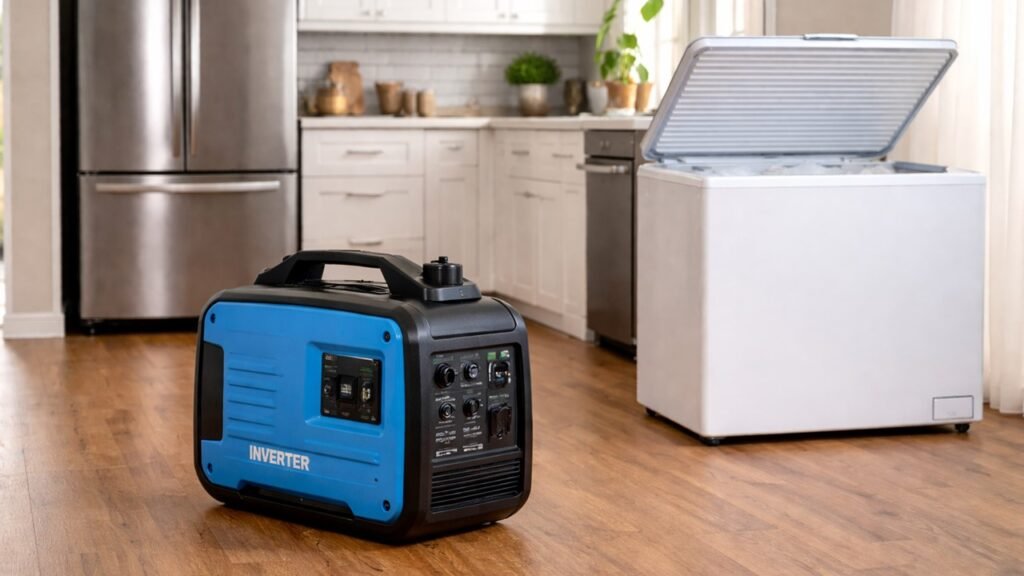
Yes, many portable solar generators can run refrigerators. Units with at least 1500W output and 1000Wh or more battery capacity can power most modern refrigerators for several hours depending on usage.
How long can a portable solar generator power a house?
A portable solar generator typically powers essential appliances rather than the entire house. Runtime depends on battery capacity and appliance usage. A 2000Wh system may run key devices overnight, while larger systems can last longer.
Do portable solar generators work during cloudy weather?
Yes, solar generators still work during cloudy weather, but charging speed is slower. Solar panels produce less electricity without strong sunlight, so battery charging may take longer.
Are solar generators better than gas generators for home backup?
Solar generators are quieter, require less maintenance, and are safe to use indoors because they produce no exhaust fumes. Gas generators can deliver higher power output but require fuel and outdoor operation.

Robert Caldwell writes in-depth guides and reviews focused on generators, backup power systems, and portable energy equipment. His work is grounded in hands-on testing, covering fuel types, runtime performance, noise levels, and real-world reliability. He helps homeowners, RV owners, and outdoor users choose dependable power solutions with confidence. Every article emphasizes clear explanations, safe operation, and long-term value.