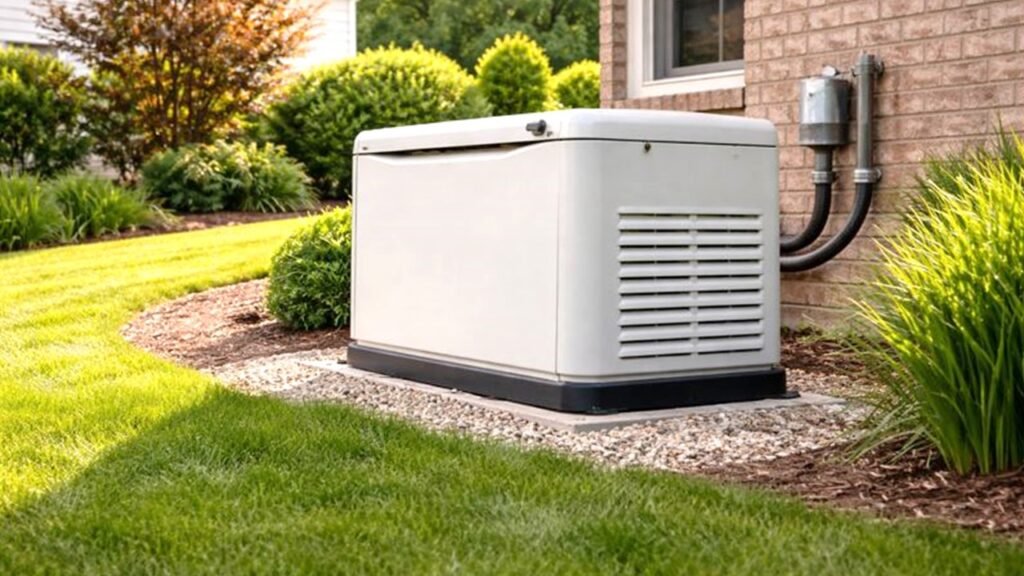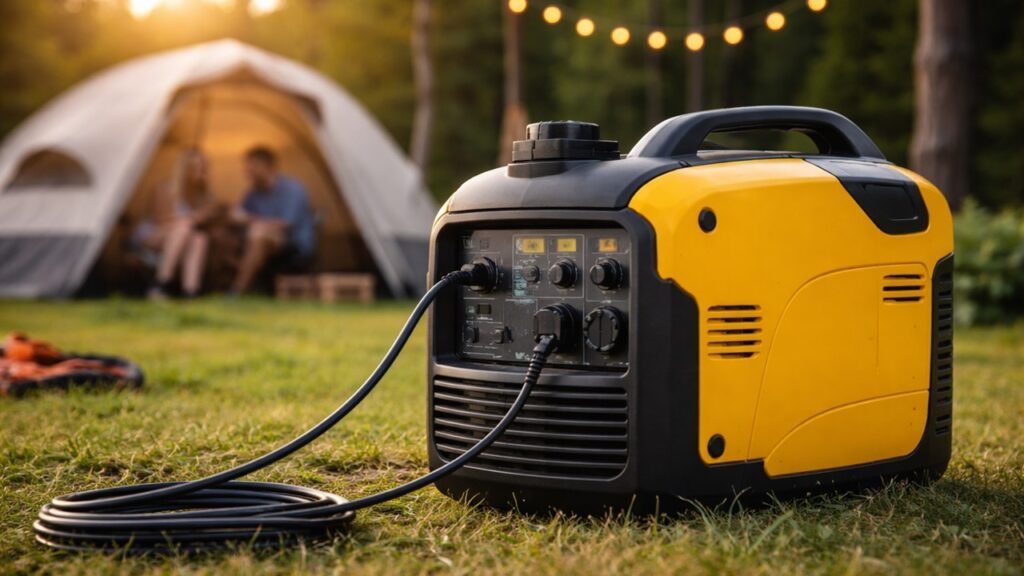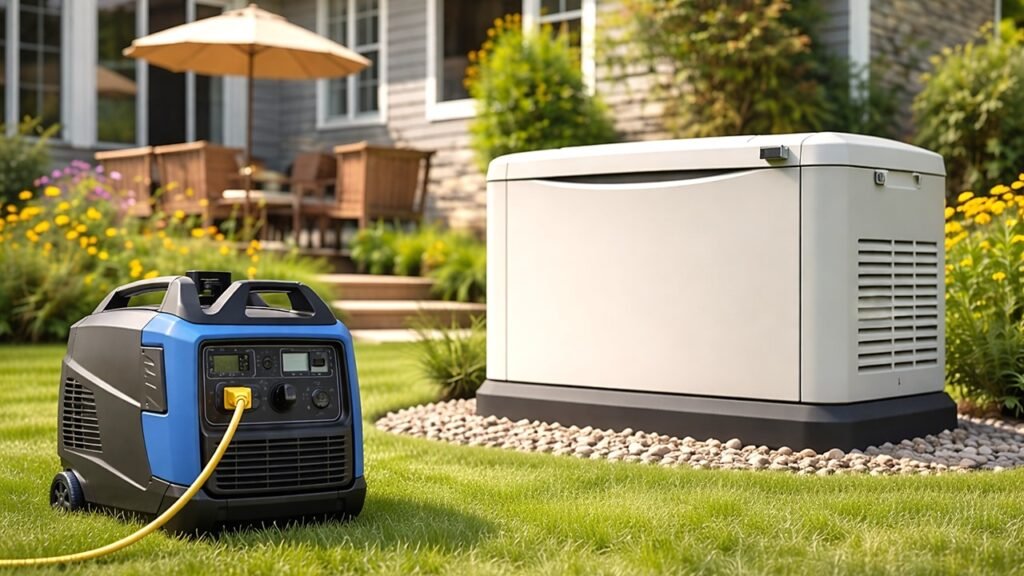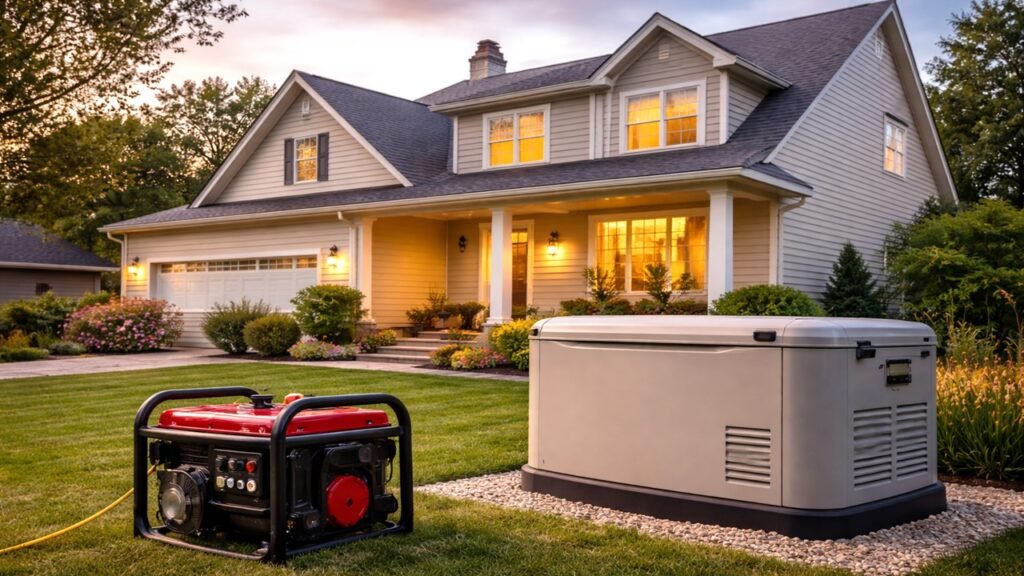
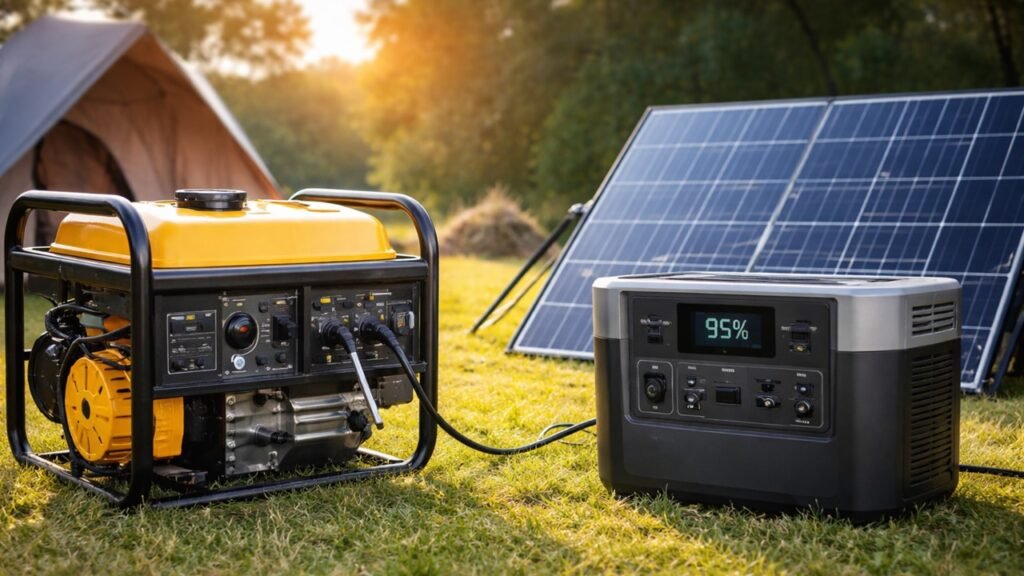
When comparing a generator vs portable power station, the real difference comes down to how they make and deliver electricity. A generator creates power on the spot by burning fuel. A portable power station stores electricity in a battery and releases it when you need it. If you are trying to decide what makes sense for home backup, camping, or emergency outages, the right choice depends on how much power you need, how long you need it, and where you plan to use it.
Key Summary:
- A generator produces electricity by burning fuel and delivers high continuous wattage for heavy appliances and long outages.
- A portable power station stores electricity in lithium batteries and provides quiet, emission-free power for indoor and short-term use.
- Generators support unlimited runtime as long as fuel is available, while power stations are limited by battery capacity and recharge time.
- Generators require regular maintenance such as oil changes and fuel management, whereas power stations require minimal upkeep.
What Is a Generator?
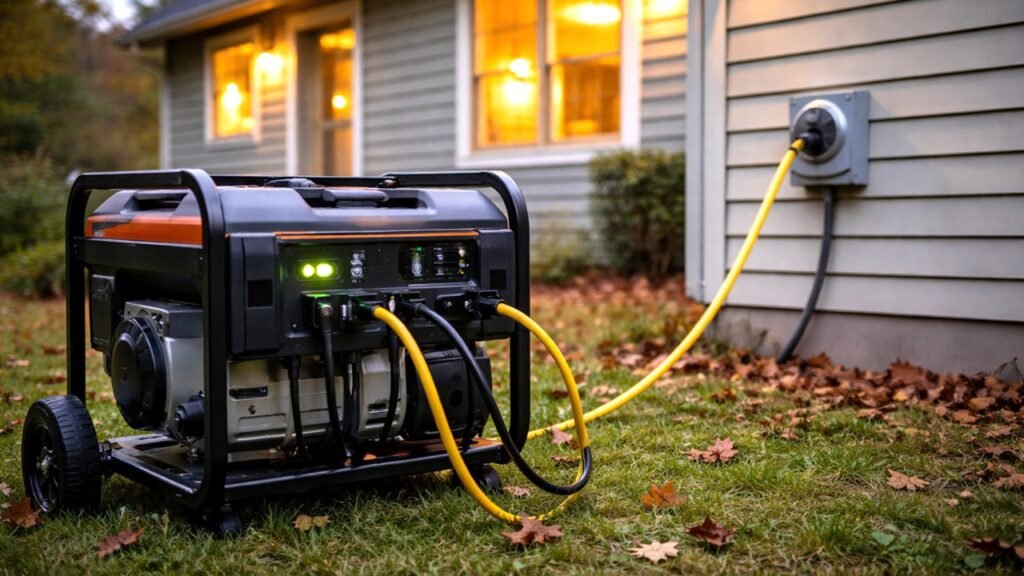
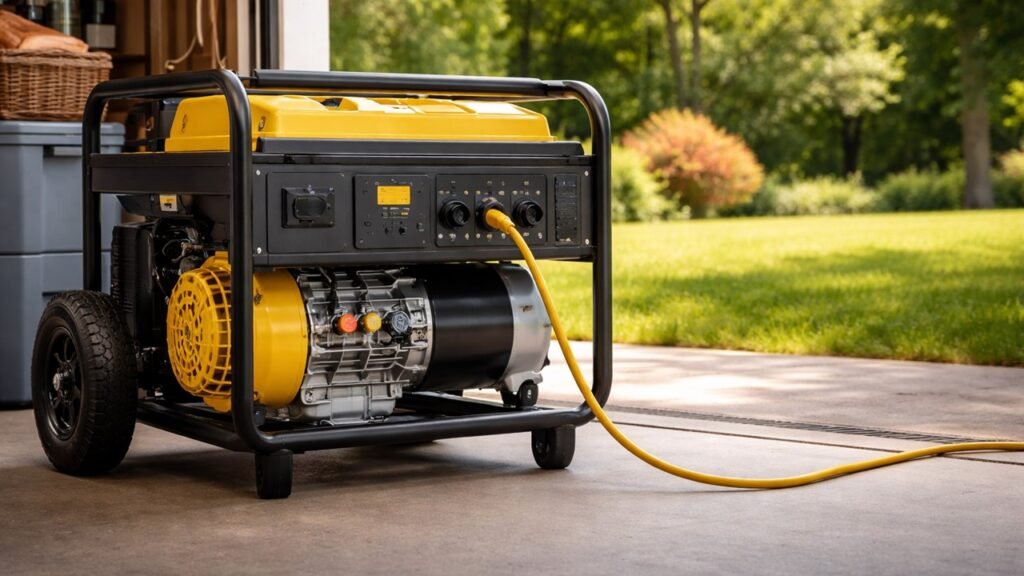
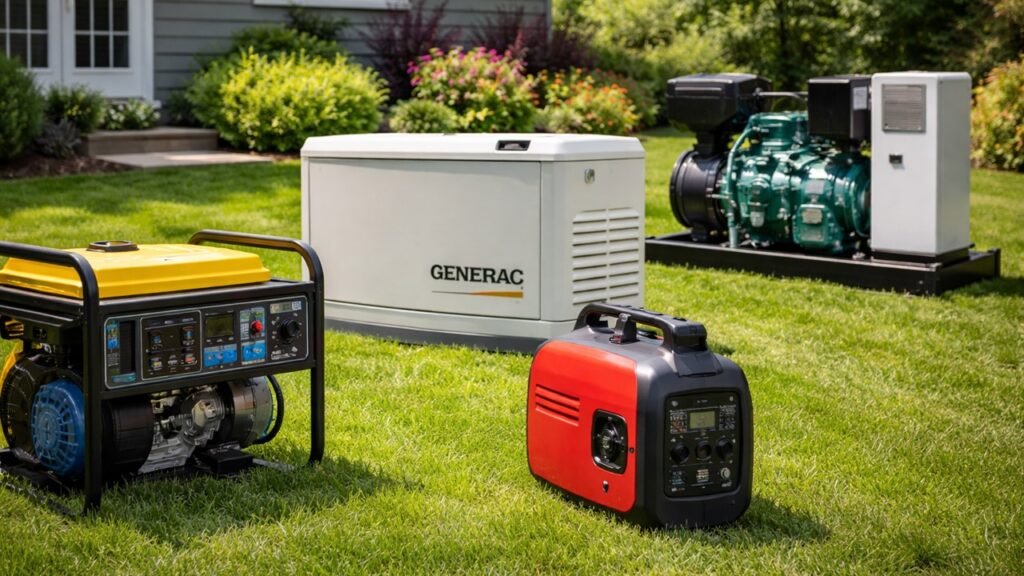
A generator is a machine that produces electricity in real time. It uses an engine that runs on gasoline, propane, diesel, or natural gas. That engine spins an alternator, which turns mechanical energy into electrical power you can use for appliances and tools.
Because it creates electricity continuously, a generator can run as long as you keep supplying fuel. That is why generators are commonly used during extended power outages, on construction sites, or in places where reliable grid power is not available.
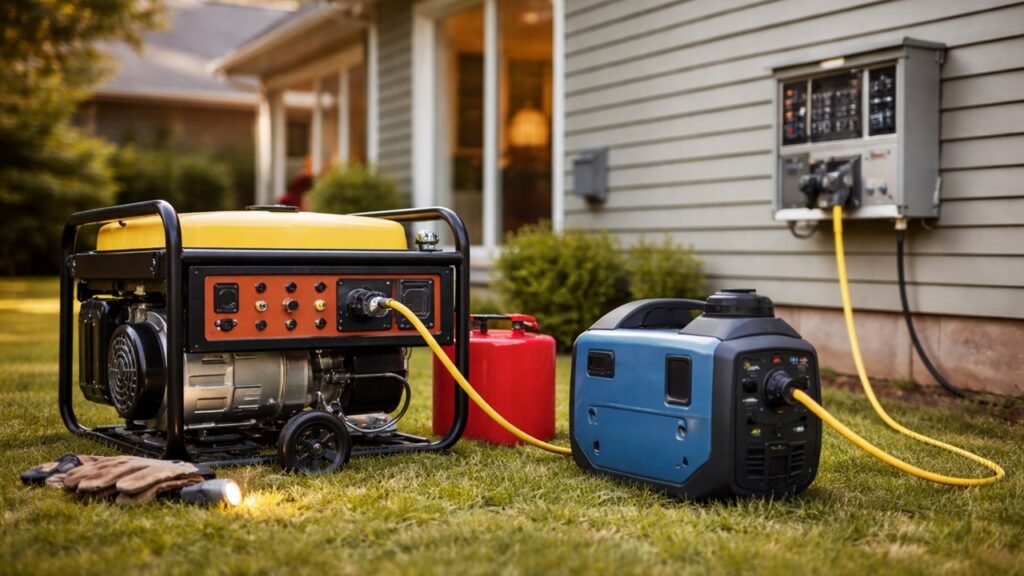
Most portable generators produce between 2,000 and 10,000 watts, and some go even higher. That level of output allows them to power heavy appliances like air conditioners, sump pumps, refrigerators, and power tools.
What Is a Portable Power Station?
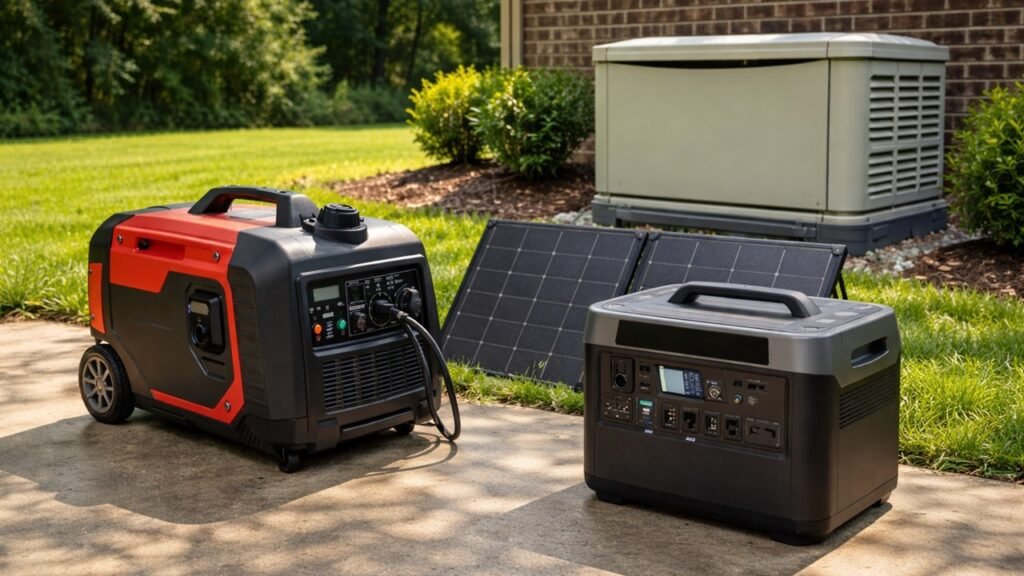
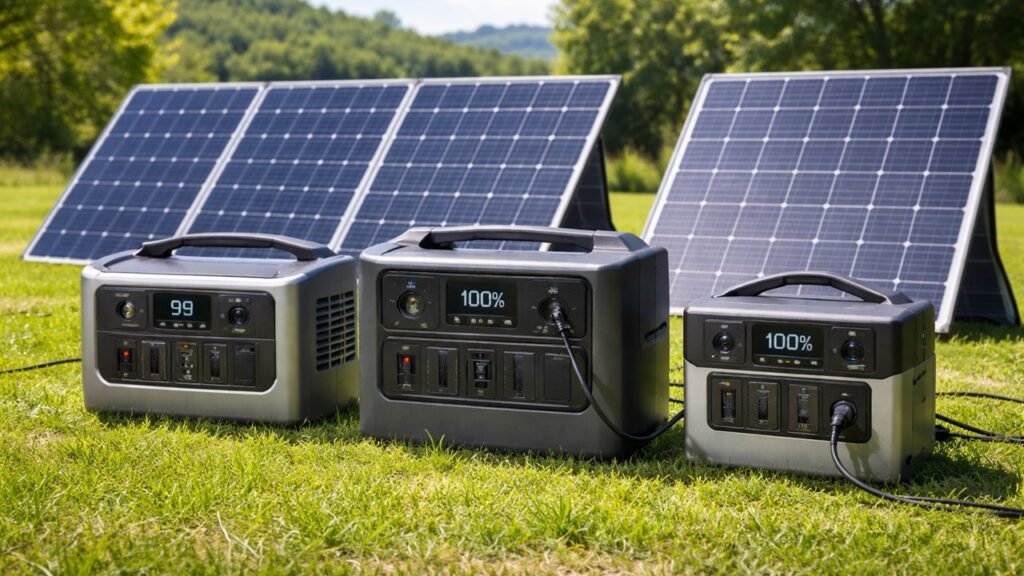
A portable power station is essentially a large rechargeable battery with built-in outlets. Instead of creating electricity by burning fuel, it stores electricity inside lithium-ion or LiFePO4 batteries. When you plug something into it, the internal inverter converts that stored energy into usable AC power.
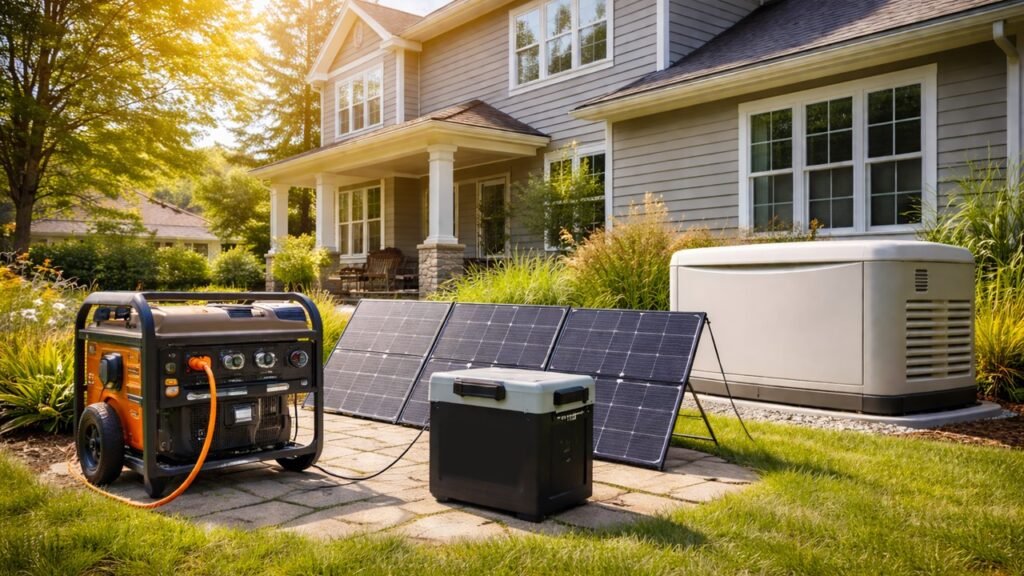
You recharge a power station from a wall outlet, a car charger, or solar panels. Once charged, it runs silently and produces no fumes, which makes it safe to use indoors.
Portable power stations usually provide between 300 and 3,500 watts of output, depending on the model. They are ideal for charging electronics, running small appliances, powering medical devices, or handling short power outages without noise or maintenance.
Recommended reading:
- Best Portable Power Stations for Home Backup
- Best Portable Power Stations for Outages
- Best Battery Generators
- Best Portable Solar Generators for Home Backup
Generator vs Portable Power Station: Key Differences
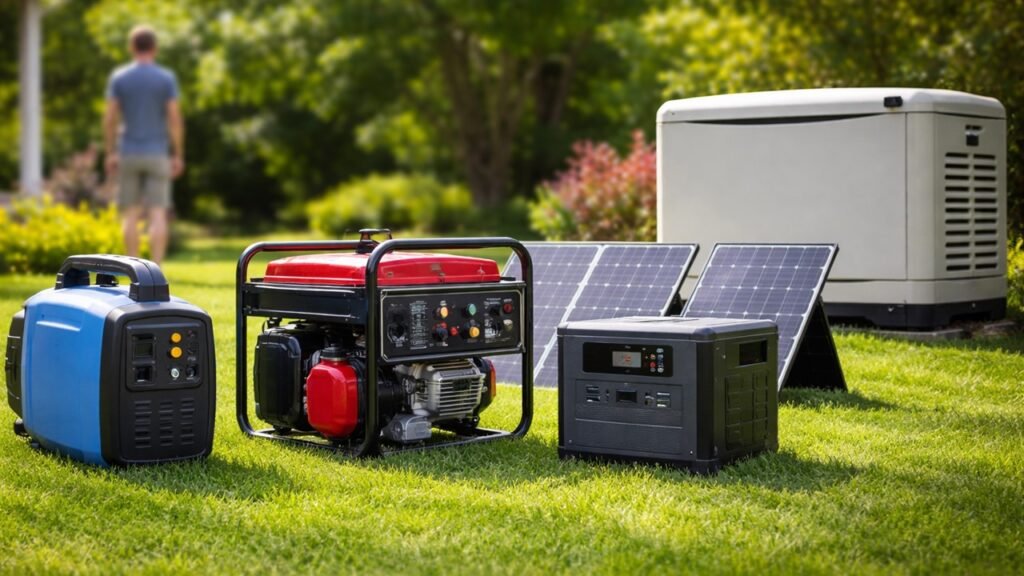
The biggest difference is simple. A generator makes electricity as long as fuel is available. A portable power station delivers electricity only until its battery runs out. Generators are built for longer runtimes and heavier loads. Moreover, power stations are built for convenience, safety, and quiet operation.
| Feature | Generator | Portable Power Station |
| Energy Source | Gasoline, propane, diesel, natural gas | Rechargeable lithium battery |
| Power Output | 2,000W to 10,000W+ | 300W to 3,500W |
| Runtime | Continuous with fuel | Limited by battery capacity |
| Indoor Use | Not safe indoors | Safe indoors |
| Noise Level | Loud to moderate | Near silent |
| Emissions | Produces exhaust gases | No emissions |
| Maintenance | Regular engine maintenance | Minimal upkeep |
Power Output and Capacity Explained
Power output and energy capacity are often confused, but they are not the same thing. Generators are rated in watts, which tell you how much power they can deliver at one time. Portable power stations are rated in watt-hours, which tell you how much energy they can store.
If you want to run large appliances like an air conditioner or a well pump, you need higher wattage. That is where generators usually have the advantage. They are built to handle surge loads and continuous heavy demand.
With power stations, capacity matters just as much as output. For example, a 2,000 watt-hour power station running a 200 watt appliance could last around 10 hours under ideal conditions. In real life, efficiency losses and inverter use reduce that slightly, but the math gives you a rough estimate of runtime.
Runtime: Fuel Refilling vs Battery Recharging
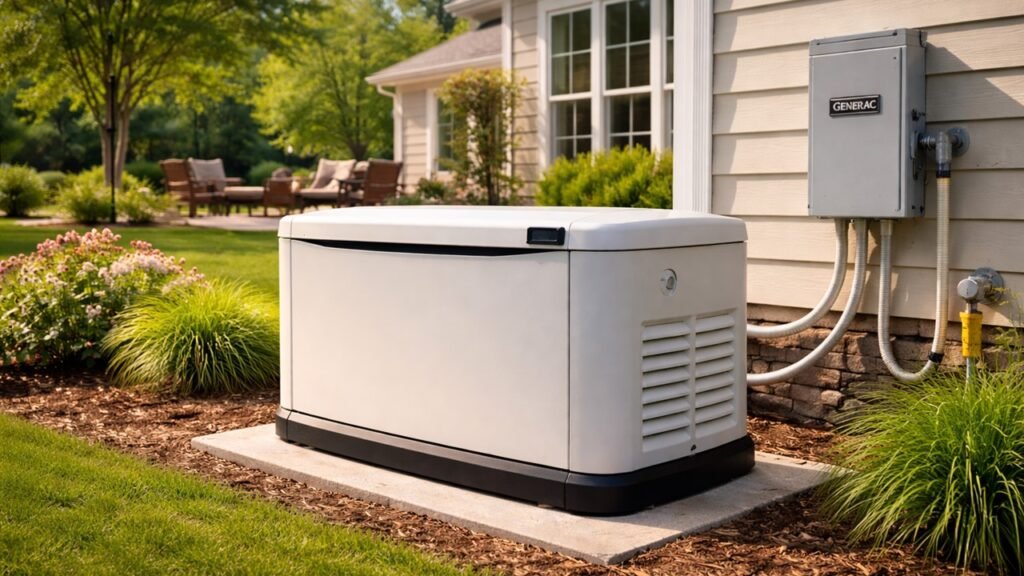
A generator can keep running as long as you refill it with fuel. That makes it a strong option for long blackouts. If you have access to natural gas, some models can run for extended periods without manual refueling.
A portable power station, on the other hand, must be recharged once the battery is empty. Smaller models may recharge in about an hour from a wall outlet, while larger systems can take several hours. Solar charging takes even longer, depending on panel size and sunlight conditions.
If your main concern is uninterrupted power for days, a generator usually makes more sense. If you want something quiet, clean, and simple for shorter use, a portable power station is often the better fit.
Related reading:
- Can A Solar Generator Power A House
- What Is A Solar Generator?
- How Many Watt Generator To Run A House
Noise, Emissions, and Indoor Safety
Generators are louder and produce exhaust fumes, while portable power stations are quiet and safe for indoor use. If safety and noise matter most, a power station has a clear advantage. If high output matters more than sound or fumes, a generator may still be the better choice.
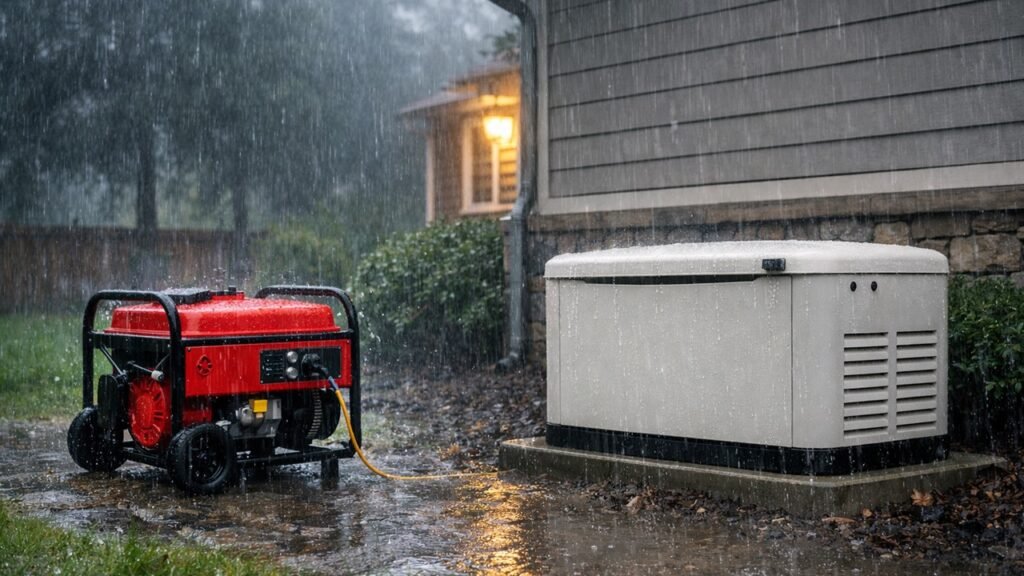
- Generators produce carbon monoxide, which is dangerous and can be fatal in enclosed spaces. They must be used outdoors and placed at least 20 feet away from doors and windows.
- Portable power stations produce zero emissions, making them safe for indoor use during outages.
- Traditional generators typically operate between 65 and 100 decibels, which can sound as loud as a lawn mower.
- Portable power stations usually operate between 20 and 50 decibels, similar to a quiet room or soft conversation.
- Some inverter generators are quieter than standard models, but they are still louder than battery-based systems.
Maintenance and Long-Term Costs
Generators require ongoing maintenance and fuel management, while portable power stations require very little upkeep. Over time, maintenance and fuel expenses can significantly increase the total cost of owning a generator.
Generator Maintenance
Generators rely on engines, and engines require regular care.
- Oil changes must be performed at scheduled intervals.
- Air filters and spark plugs need periodic replacement.
- Fuel must be stored safely and stabilized if unused for long periods.
- Mechanical parts can wear down over time and may require repairs.
These recurring tasks add both cost and responsibility, especially if the generator is used frequently.
Portable Power Station Maintenance
Portable power stations are far simpler to manage.
- Batteries should be kept charged and stored properly.
- Some models receive firmware updates through companion apps.
- Battery replacement may be necessary after several years, depending on usage and battery chemistry.
LiFePO4 batteries, which are common in modern models, often last 3,000 to 4,000 charge cycles, which can translate to many years of normal use.
Cost Comparison: Upfront vs Long-Term
Generators typically cost less upfront per watt of power, but they come with ongoing fuel and maintenance expenses. Portable power stations usually cost more at purchase but have lower operating costs over time.
| Cost Factor | Generator | Portable Power Station |
| Initial Purchase Price | Lower per watt | Higher per watt |
| Fuel Cost | Ongoing expense | None |
| Maintenance Cost | Regular oil and parts | Minimal |
| Long-Term Ownership Cost | Can increase over time | More predictable |
| Resale Value | Moderate | Often strong for premium brands |
If you expect frequent, long-term use, fuel costs can add up quickly. If you only need occasional backup power, the higher upfront cost of a power station may balance out over time.
You may also like:
Best Use Cases for Each Option
Generators are best for high-demand and long-duration power needs. Portable power stations are best for quiet, indoor-safe, and short-term power needs.
| Use Case | Better Option | Why |
| Extended power outages | Generator | Unlimited runtime with fuel |
| Whole-home backup | Generator | Handles heavy loads |
| Camping and RV trips | Portable Power Station | Quiet and easy to transport |
| Apartment backup | Portable Power Station | Safe for indoor use |
| Medical device backup | Portable Power Station | No fumes, stable power |
| Construction sites | Generator | High output for tools |
Generator vs Portable Power Station for Common Scenarios
Your situation often determines the better choice. The right option depends on duration, load size, and environment.
| Scenario | Recommended Option | Reason |
| Short blackout lasting a few hours | Portable Power Station | Quick, quiet solution |
| Multi-day storm outage | Generator | Continuous runtime |
| Outdoor event or tailgating | Portable Power Station | Portable and silent |
| Running air conditioning | Generator | High starting wattage |
| Living in an apartment | Portable Power Station | Indoor safe |
| Remote job site | Generator | Handles heavy equipment |
Pros and Cons of Generator Vs Power Station
Generators provide strong, long-lasting power but require maintenance and safe outdoor operation. Portable power stations offer quiet, clean power but are limited by battery capacity.
Generator Pros and Cons
Pros
- High power output
- Continuous runtime with fuel
- Suitable for heavy appliances
Cons
- Loud operation
- Produces exhaust fumes
- Requires maintenance and fuel storage
Portable Power Station Pros and Cons
Pros
- Silent or near silent
- Safe for indoor use
- Low maintenance
Cons
- Limited runtime
- Higher upfront cost
- Recharge time required
Which One Should You Choose?
If you need to power large appliances for days during an extended outage, a generator is usually the better choice. It delivers higher wattage and can run continuously as long as fuel is available.
If you live in an apartment, need indoor-safe backup, or want quiet power for camping and short outages, a portable power station is often the smarter option. It is simple to use, requires little maintenance, and produces no fumes.
Think about how often you will use it, how long outages typically last in your area, and what devices you absolutely need to keep running. Your real-world usage matters more than maximum wattage on paper.
Final Verdict
Generators and portable power stations are built for different priorities. Generators focus on power output and long runtime. Portable power stations focus on convenience, safety, and quiet operation.
If your main concern is running heavy appliances during extended outages, a generator offers the performance you need. If your main concern is indoor safety, ease of use, and low maintenance, a portable power station is the better fit.
In many cases, the best solution depends on your lifestyle. For some households, a generator provides peace of mind during long blackouts. For others, a portable power station delivers enough backup power without the noise, fuel, and maintenance of a traditional generator.
Related FAQs
Is a generator more powerful than a power station?
Yes. A generator typically delivers higher wattage, often 4,000 to 10,000 watts or more. A power station usually maxes out around 2,000 to 3,500 watts, depending on the model.
Can a power station run a refrigerator?
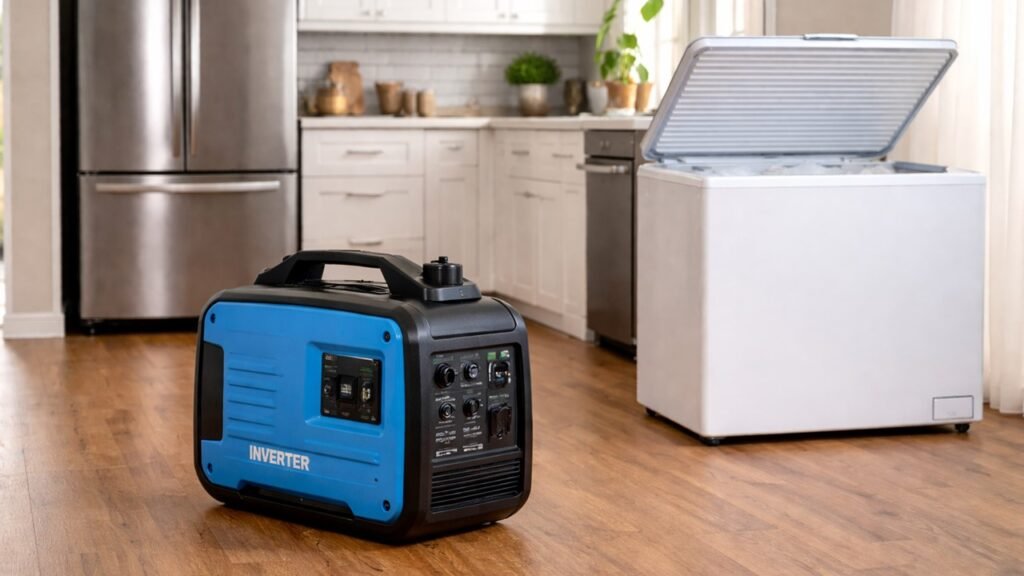
Yes, most mid-size power stations can run a refrigerator for several hours. Runtime depends on the battery capacity and the fridge’s wattage draw.
Is a generator safe to use indoors?
No. Generators produce carbon monoxide and must always be used outdoors, at a safe distance from buildings. Power stations are safe for indoor use.
Which is better for long power outages?
A generator is better for long outages because it can run continuously as long as fuel is available. A power station is limited by battery capacity.
Are power stations cheaper than generators?
Power stations usually cost more upfront per watt. However, they have lower operating costs because they do not require fuel or frequent maintenance.
Do power stations need maintenance?
Very little. Most only require proper charging and storage. Generators need oil changes, fuel management, and regular engine maintenance.

Robert Caldwell writes in-depth guides and reviews focused on generators, backup power systems, and portable energy equipment. His work is grounded in hands-on testing, covering fuel types, runtime performance, noise levels, and real-world reliability. He helps homeowners, RV owners, and outdoor users choose dependable power solutions with confidence. Every article emphasizes clear explanations, safe operation, and long-term value.