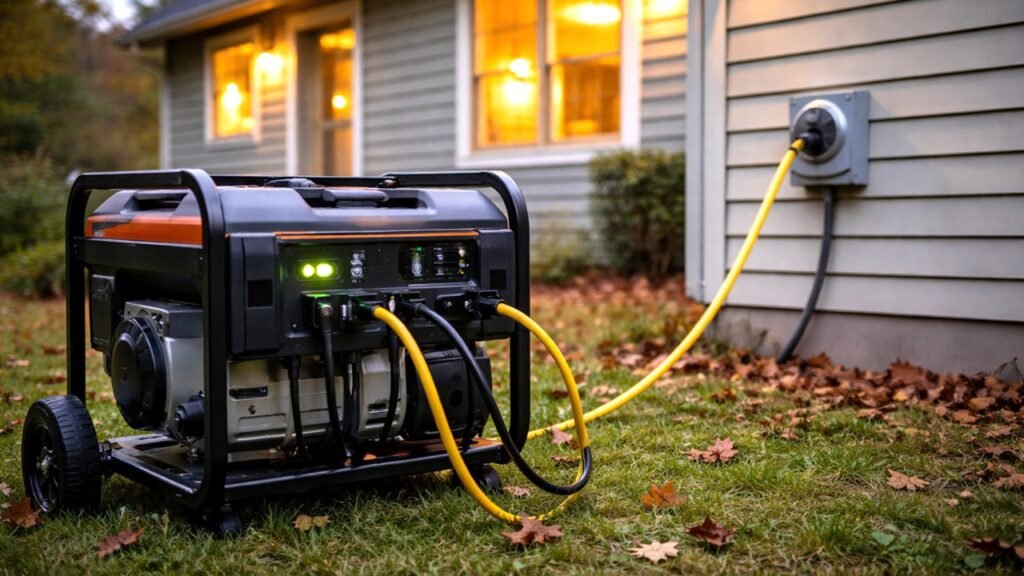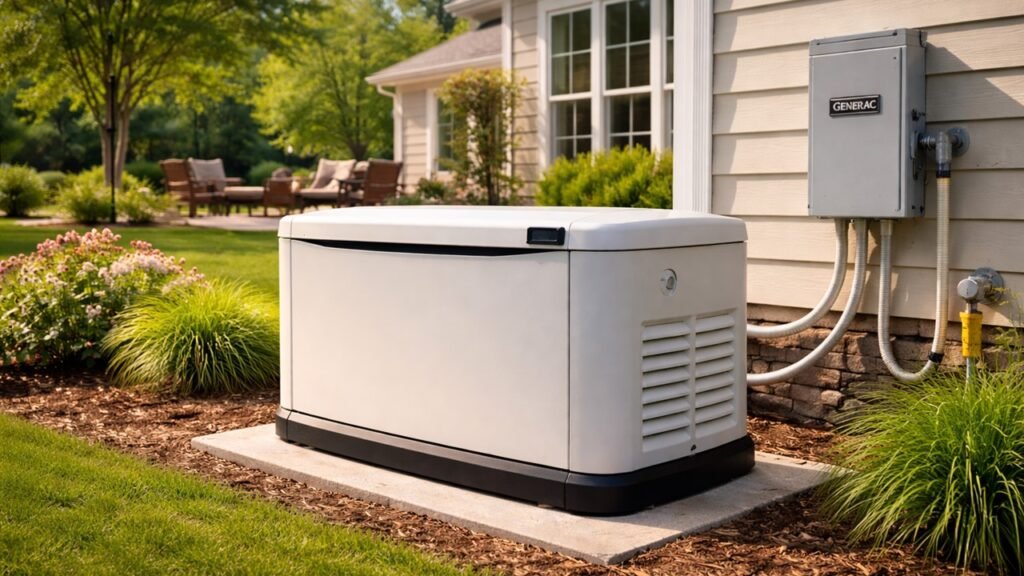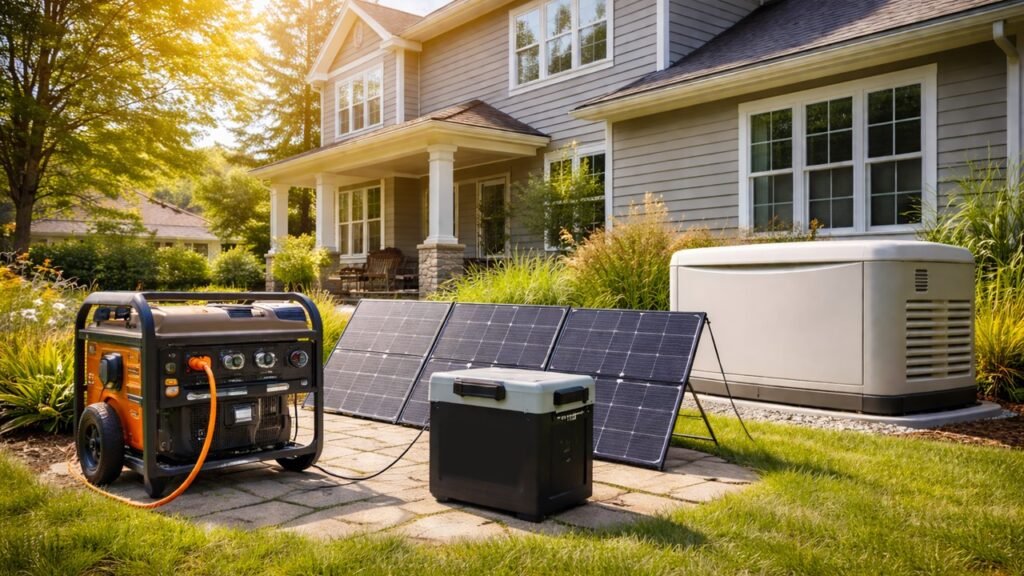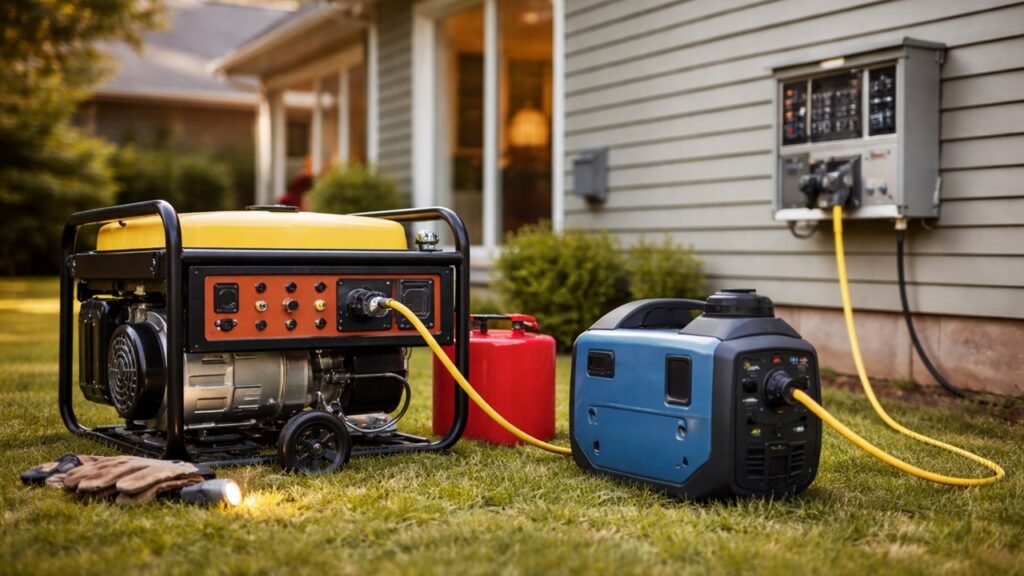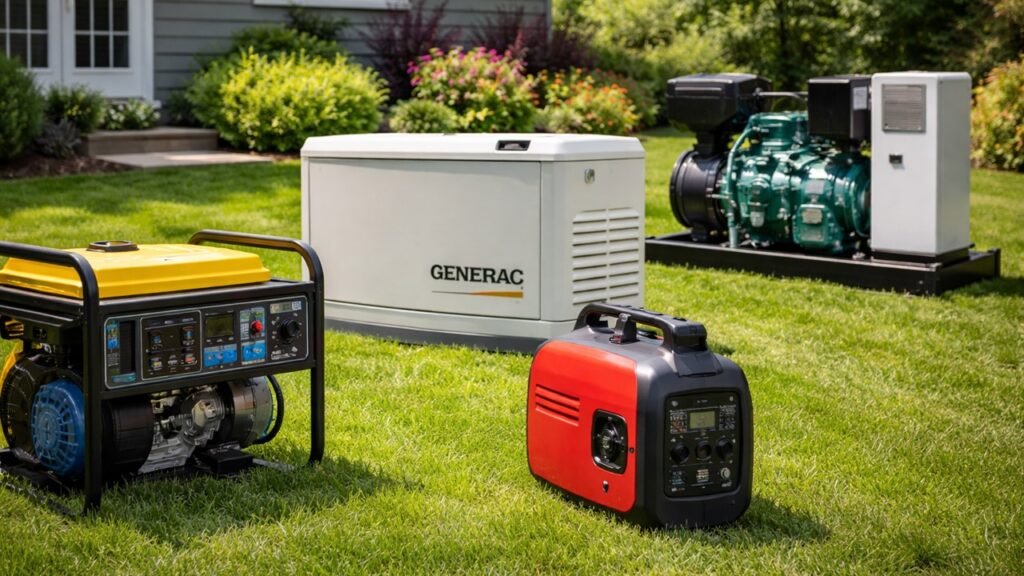
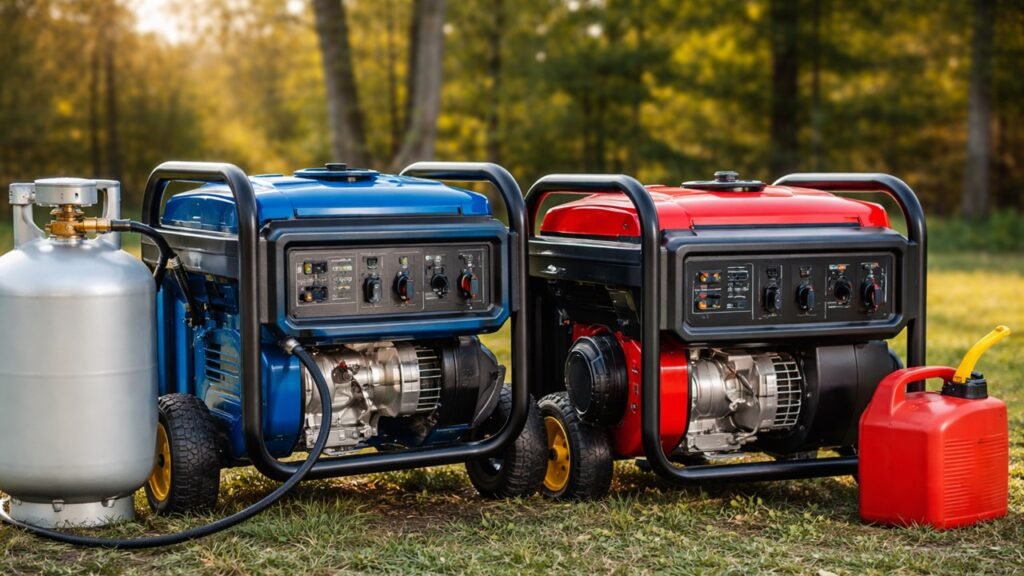
If you are comparing a propane vs gas generator, the real difference comes down to three things: power output, fuel storage, and long term reliability. Both can keep your lights on during an outage. Both can power tools, RVs, and essential home appliances. But they behave differently once you start looking at fuel stability and performance under load.
A propane generator is often chosen for emergency backup because the fuel does not go bad. A gas generator is often chosen for higher peak power and easier refueling. The right choice depends on how you plan to use it.
Key Summary:
If you are deciding between a propane vs gas generator, here are the most important takeaways in simple, clear terms:
- Gasoline generators deliver higher peak power because gasoline contains about 114,000 BTU per gallon, which increases surge capacity.
- Propane generators offer indefinite fuel shelf life because propane does not degrade or form gum deposits during storage.
- Propane burns cleaner than gasoline which reduces carbon buildup inside the engine and may lower maintenance issues over time.
- Gasoline generators are easier to refuel quickly because fuel is widely available at most stations during normal conditions.
- Propane generators are better suited for long term emergency standby use because stored propane remains stable for years without treatment.
Propane vs Gas Generator at a Glance
If you just want a quick comparison before diving deeper, this table covers the main differences most buyers care about.
| Feature | Propane Generator | Gas Generator |
| Energy Content | ~91,500 BTU per gallon | ~114,000 BTU per gallon |
| Power Output | Slightly lower peak wattage | Higher surge and peak watts |
| Fuel Shelf Life | Indefinite | 3 to 12 months |
| Maintenance | Cleaner burn, fewer deposits | More carbon buildup |
| Cold Weather Starts | Reliable in extreme cold | Harder starting below freezing |
| Best For | Emergency standby use | Frequent portable use |
Gasoline contains more energy per gallon than propane, which is why gas generators usually advertise slightly higher wattage. Propane, on the other hand, wins when it comes to storage and engine cleanliness.
Main Difference Between Propane and Gas Generators
The biggest difference between propane and gas generators is how the fuel behaves over time. Gasoline delivers more energy per gallon, which translates into stronger surge power. That matters if you are running equipment with heavy startup loads, like air conditioners or large compressors.
Propane contains less energy per gallon, so peak output is usually a bit lower. In most cases, the difference is around 10 to 15 percent. For basic home backup loads like refrigerators, lights, and small appliances, that difference often does not matter.
Where propane really stands out is storage. Gasoline starts breaking down within months, especially if it sits untreated. That breakdown can gum up carburetors and cause hard starting. Propane does not degrade. You can store it for years without worrying about fuel quality.
Further reading:
Power Output and Performance Comparison
If raw power is your priority, gasoline usually has the edge. Because it has higher energy density, gas generators tend to deliver stronger surge wattage. That makes them better suited for heavy equipment, job sites, and high starting loads.
Propane generators still perform well, but you may notice a slight drop in maximum output compared to the same model running on gasoline. For many homeowners, that difference is small enough that it does not affect real world use.
Here is how performance typically compares in practical terms:
- Gasoline generators usually produce higher starting and peak watts
- Propane generators tend to run a bit cleaner and smoother
- Gas models are often preferred for construction tools and heavy motor loads
- Propane models are often chosen for steady home backup use
In everyday situations, the generator’s overall design and size matter just as much as the fuel type.
Fuel Storage and Shelf Life
Fuel storage is where propane clearly pulls ahead. Gasoline does not last forever. Even with fuel stabilizers, it can start degrading within a year. Over time, old gas can clog fuel systems and make engines difficult to start.
Propane does not have that problem. It does not break down, oxidize, or leave sticky residue inside the engine. If you are buying a generator mainly for emergency backup and expect it to sit unused for long stretches, propane is much easier to manage.
From a practical standpoint:
- Propane can be stored long term without losing quality
- Gasoline requires rotation and stabilizers for longer storage
- Old gasoline can cause starting problems
- Propane reduces the risk of fuel related engine issues
If you plan to use your generator often, gasoline is convenient and easy to refill. If you want something that can sit ready for years without worrying about bad fuel, propane makes that simpler.
Runtime and Fuel Efficiency
Gasoline usually delivers slightly longer runtime per gallon, but propane offers flexible runtime based on tank size. Fuel efficiency depends on engine design, load percentage, and tank capacity more than fuel type alone.
Gasoline contains more energy per gallon, which can translate into longer run time on a small built-in tank. Propane systems often connect to larger external tanks, which can extend total runtime significantly even if per-gallon efficiency is lower.
| Factor | Propane Generator | Gas Generator |
| Energy per Gallon | ~91,500 BTU | ~114,000 BTU |
| Runtime on Small Tank | Slightly shorter | Slightly longer |
| Extended Runtime | Easy with large propane tank | Limited by built-in tank size |
| Fuel Efficiency at Partial Load | Stable | Stable |
| Best For | Long duration standby | Portable short-term use |
In real-world use, running at 50 percent load typically delivers the most efficient fuel consumption for both types.
Related reading:
Cold Weather Performance
Cold weather is where propane often has an advantage. Propane remains vaporized under very low temperatures and can start reliably in extreme cold when gasoline engines may struggle.
Gasoline can thicken in freezing temperatures, which makes vaporization harder. That can lead to harder starts, especially if the engine has been sitting unused. Carburetors are particularly sensitive in cold climates.
For homeowners in colder regions, propane generators tend to start more consistently during winter outages. However, proper maintenance and fresh fuel can reduce most cold-start issues with gasoline models as well.
Maintenance and Engine Longevity
Propane burns cleaner, while gasoline produces more carbon deposits over time. Maintenance frequency and operating conditions ultimately determine engine lifespan more than fuel choice alone.
Propane combustion leaves fewer residues inside the engine. Gasoline combustion creates more carbon buildup, especially if fuel sits in the carburetor between uses.
| Factor | Propane Generator | Gas Generator |
| Carbon Deposits | Low | Higher |
| Carburetor Issues | Rare | More common |
| Oil Change Frequency | Standard | Standard |
| Engine Wear | Slightly hotter burn | Normal combustion temps |
| Long-Term Reliability | Strong with proper care | Strong with proper care |
Some experts note that propane burns slightly hotter, which may increase valve wear over many years. In most residential applications, proper maintenance matters more than fuel differences.
Noise Level and User Comfort
Noise levels vary more by generator design than fuel type. That said, propane generators are often slightly quieter because of smoother combustion characteristics.
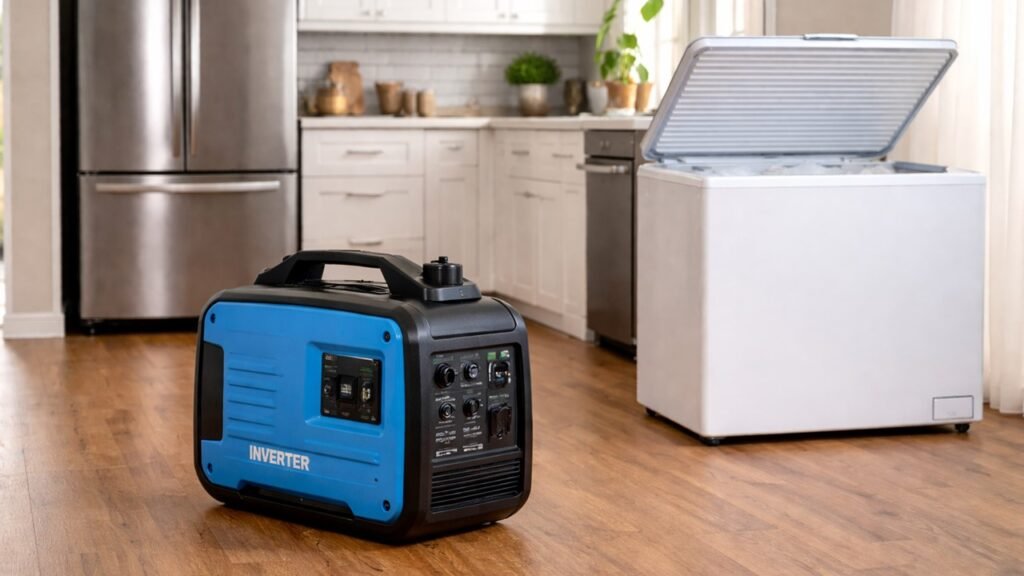
Gasoline generators, especially conventional open-frame models, tend to run louder. Inverter generators, regardless of fuel, are usually much quieter because they adjust engine speed to match load.
For home backup in residential neighborhoods, inverter models are typically the better choice for comfort. For job sites or outdoor use, noise may be less of a concern.
Cost Comparison Over Time
Gas generators usually cost less upfront, while propane can reduce long-term fuel waste and maintenance costs. Total ownership cost depends on how often you use the generator and how you store fuel.
Gasoline prices can fluctuate based on supply and demand. Propane prices tend to be more stable but vary by region.
| Cost Factor | Propane Generator | Gas Generator |
| Purchase Price | Higher | Lower |
| Fuel Price Stability | More stable | More volatile |
| Fuel Waste Risk | Very low | Higher if fuel degrades |
| Maintenance Cost | Often lower | Often higher |
| Long-Term Storage Cost | Minimal | Requires stabilizers and rotation |
If you use your generator frequently, gasoline may be economical. If it sits unused most of the year, propane may save money by avoiding bad fuel issues.
Safety and Environmental Impact
Propane burns cleaner and produces fewer harmful emissions than gasoline, but both fuels must be used safely outdoors.
Here are the key safety and environmental considerations:
- Propane produces lower carbon monoxide emissions compared to gasoline
- Gasoline vapors are highly flammable and can spill easily
- Propane tanks reduce liquid fuel spill risk
- Gasoline storage increases fire hazard in enclosed spaces
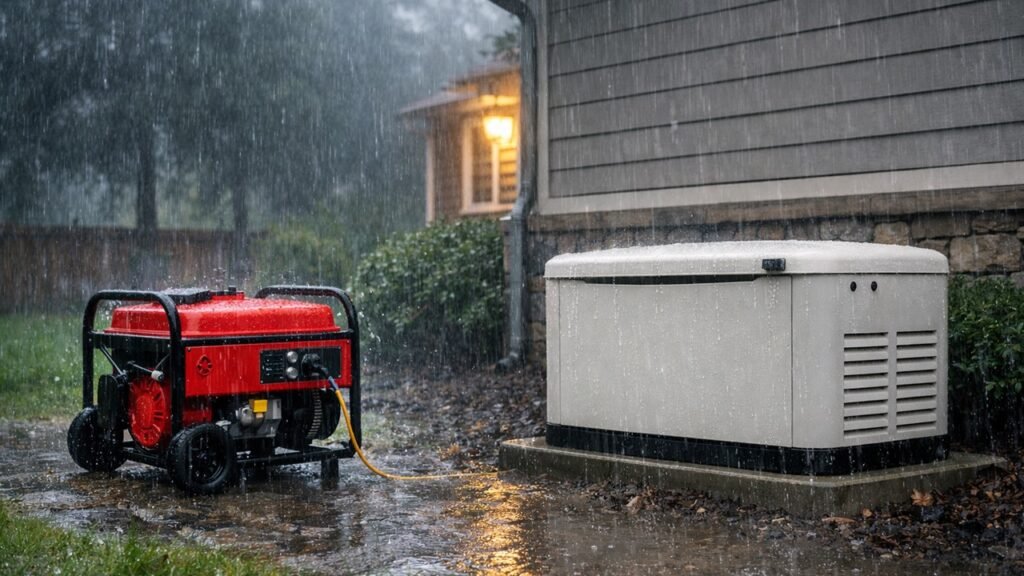
- Both generator types must never be operated indoors
- Carbon monoxide exposure remains dangerous regardless of fuel
From an environmental perspective, propane typically produces fewer carbon deposits and lower overall emissions per hour of operation. However, both remain fossil fuels and produce carbon dioxide when burned.
Best Use Case Scenarios
The right choice depends on how and where you plan to use your generator. Propane and gas generators both work well, but certain situations clearly favor one over the other.
Here is how they typically compare in real-world use:
- Home emergency backup: Propane is often better because the fuel does not degrade during long storage periods.
- Long power outages: Propane works well with large external tanks, allowing extended runtime without refueling.
- RV trips and camping: Gasoline is convenient because it is easy to find and refill at stations.
- Construction sites and heavy tools: Gasoline is usually preferred due to stronger surge power for motor-driven equipment.
- Cold climates: Propane generally starts more reliably in freezing temperatures.
- Frequent short-term use: Gasoline is practical when the generator runs often and fuel rotation is not an issue.
If you are buying mainly for rare emergencies, propane offers peace of mind. If you plan to use your generator regularly, gasoline may feel more convenient.
Is a Dual Fuel Generator a Better Option?
A dual fuel generator offers flexibility by allowing you to switch between propane and gasoline. For many buyers, this provides the best of both worlds.
Instead of choosing one fuel permanently, you can adjust based on availability and power needs.
Here is why dual fuel models are popular:
- You can store propane long term for emergencies.
- You can switch to gasoline when you need higher peak output.
- If one fuel becomes unavailable, you have a backup option.
- It reduces the risk of being stuck without power during widespread outages.
- It gives you more control over operating costs depending on fuel prices.
Dual fuel units are especially useful in uncertain conditions, such as storm seasons or rural areas where fuel supply can be unpredictable.
You may also like:
Propane vs Gas Generator Pros and Cons
Both propane and gas generators have clear strengths and trade-offs. The best choice depends on your priorities: storage stability, power output, maintenance, or convenience.
Propane Generator Pros
Propane generators are often chosen for standby reliability and cleaner operation.
- Fuel does not degrade over time.
- Cleaner combustion leads to fewer engine deposits.
- Lower risk of carburetor clogs after storage.
- Safer long-term storage compared to liquid gasoline.
Propane Generator Cons
Despite their advantages, propane generators have limitations.
- Slightly lower peak and surge wattage.
- Higher upfront cost in many cases.
- Requires propane tank storage and handling.
Gas Generator Pros
Gasoline generators remain the most common portable option.
- Higher peak power and surge capability.
- Easy refueling at most fuel stations.
- Generally lower purchase price.
- Widely available in many sizes and models.
Gas Generator Cons
Gasoline also comes with some drawbacks.
- Fuel degrades within months.
- Higher risk of carburetor and fuel system issues.
- Louder operation in many conventional models.
- Greater fire risk due to liquid fuel storage.
Conclusion
When comparing propane vs gas generator options, the decision ultimately comes down to how you plan to use it. Gasoline generators typically offer stronger peak performance and easier refueling for frequent use. Propane generators offer long-term fuel stability and cleaner engine operation for standby situations.
If your generator will sit unused most of the year, propane often makes more sense because the fuel does not go bad. If you need maximum power for tools, RVs, or regular use, gasoline may be the more practical choice.
There is no universal winner. The right generator is the one that matches your power needs, storage setup, and usage pattern.
Related FAQs
Is propane or gas better for a generator?
Propane is better for long term storage and emergency backup. Gasoline is better for higher peak power and frequent use. The better option depends on how often you run the generator.
Which generator lasts longer, propane or gas?
Propane generators often experience less carbon buildup because the fuel burns cleaner. However, overall lifespan depends more on maintenance and load than fuel type alone.
Is propane cheaper than gasoline for generators?
Propane prices are usually more stable, while gasoline prices fluctuate more. Long term cost depends on local fuel prices and how often you use the generator.
Do propane generators produce less power than gas?
Yes, propane generators typically produce about 10 to 15 percent less peak power compared to the same model running on gasoline.
Can I convert a gas generator to propane?
Some generators can be converted using a conversion kit, but not all models support it. Dual fuel generators are a simpler option if flexibility is important.
Which is safer, propane or gasoline generators?
Propane is generally safer to store because it is contained in sealed tanks and reduces spill risk. Both must always be operated outdoors to prevent carbon monoxide poisoning.

Robert Caldwell writes in-depth guides and reviews focused on generators, backup power systems, and portable energy equipment. His work is grounded in hands-on testing, covering fuel types, runtime performance, noise levels, and real-world reliability. He helps homeowners, RV owners, and outdoor users choose dependable power solutions with confidence. Every article emphasizes clear explanations, safe operation, and long-term value.