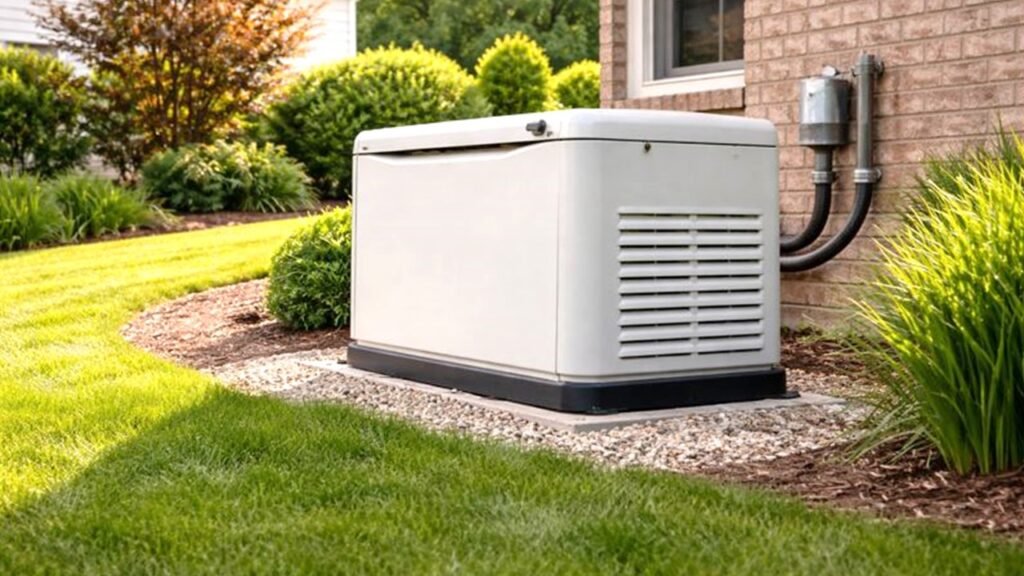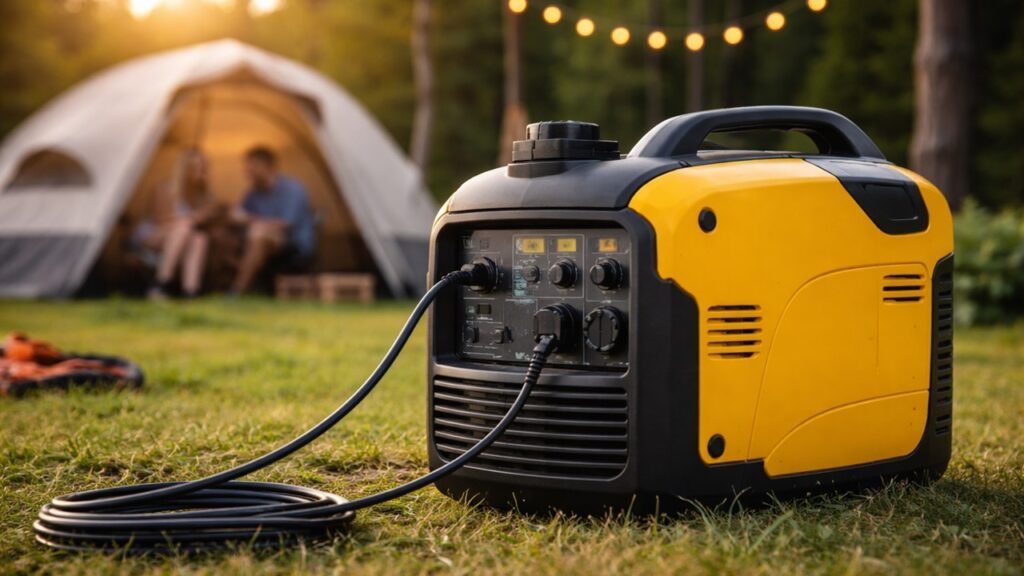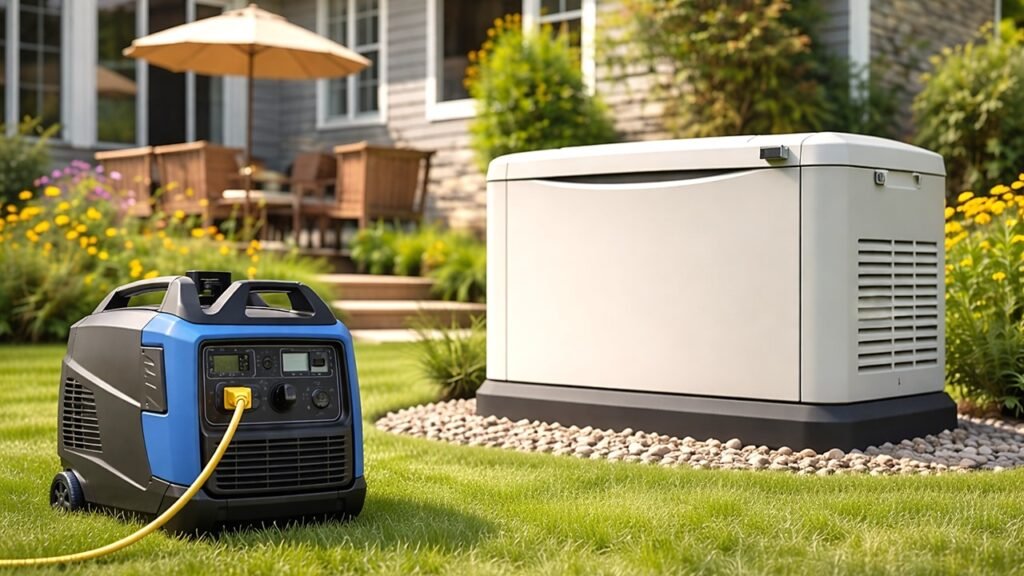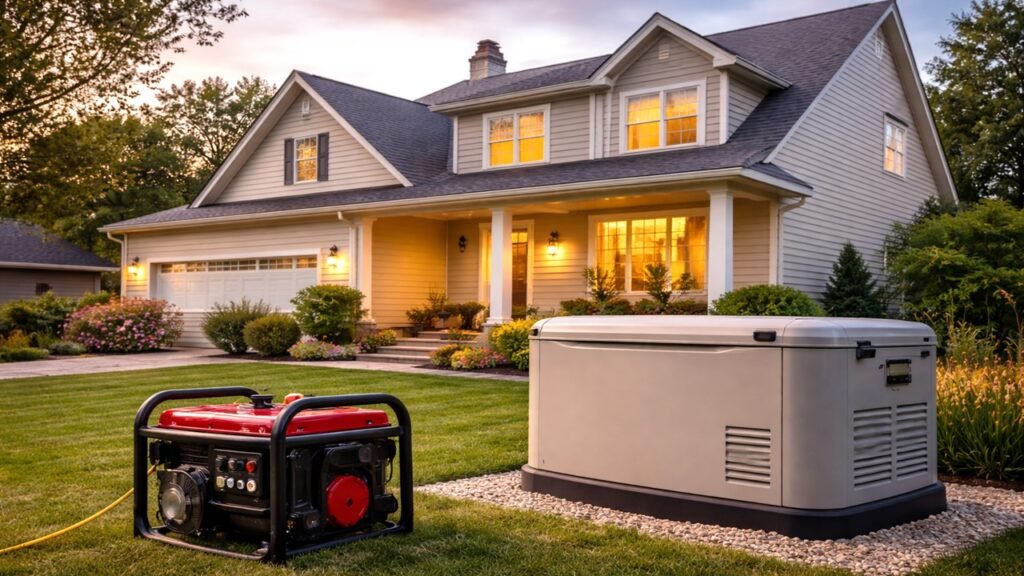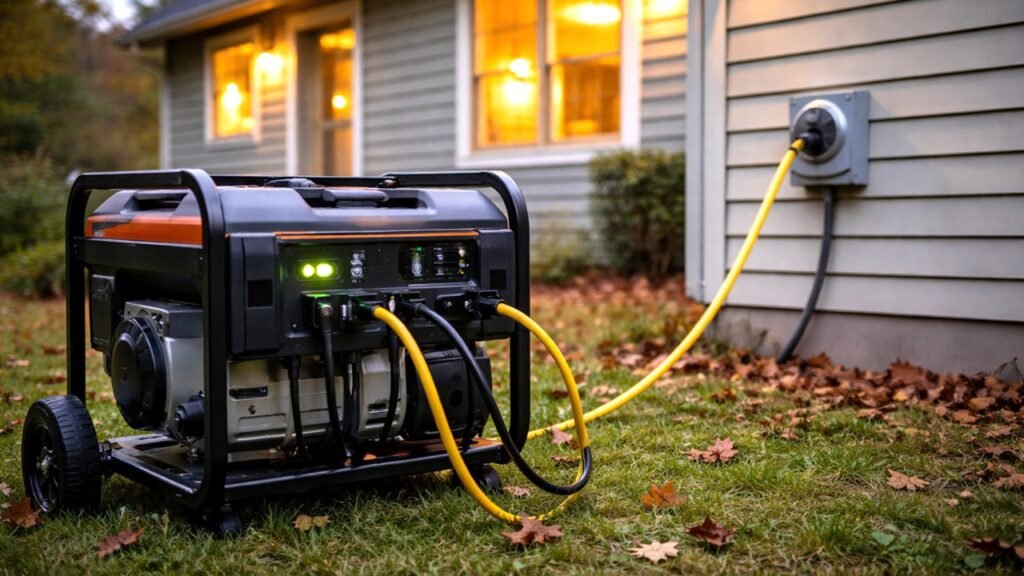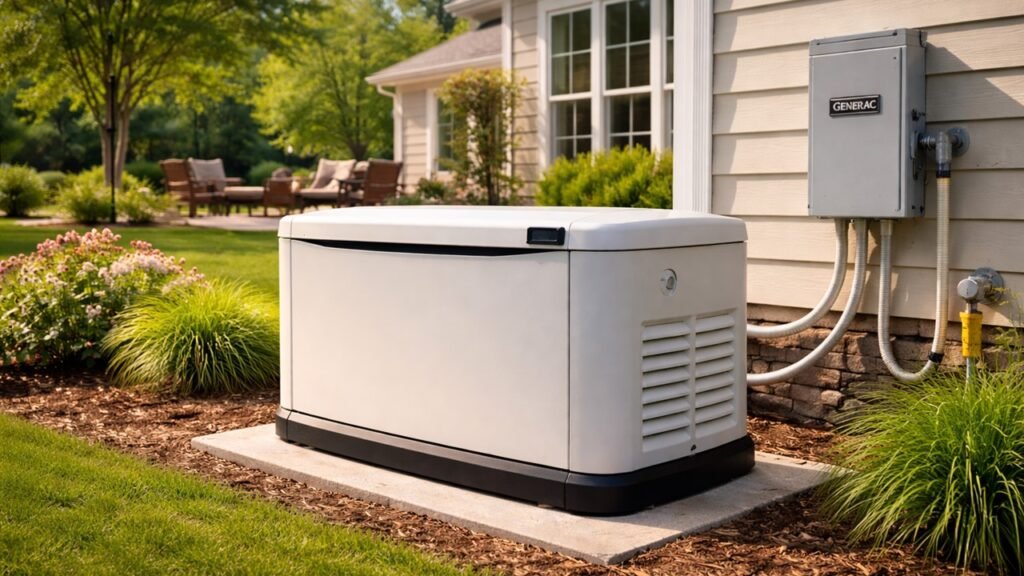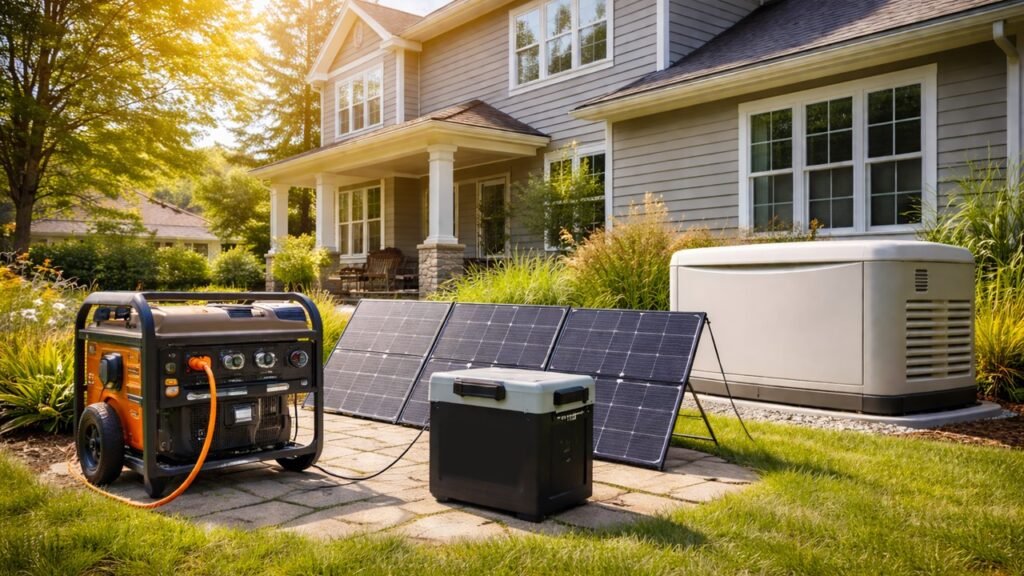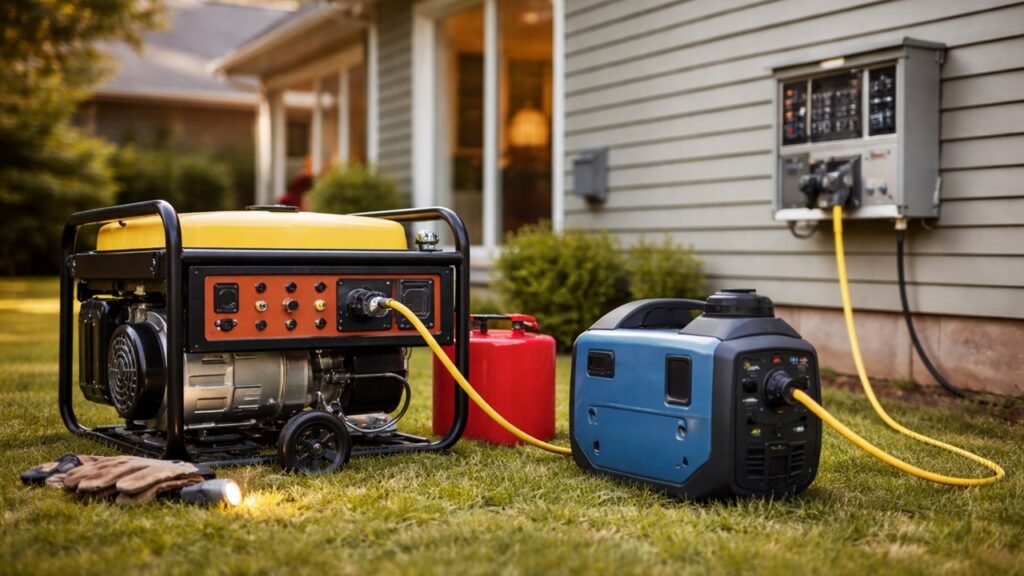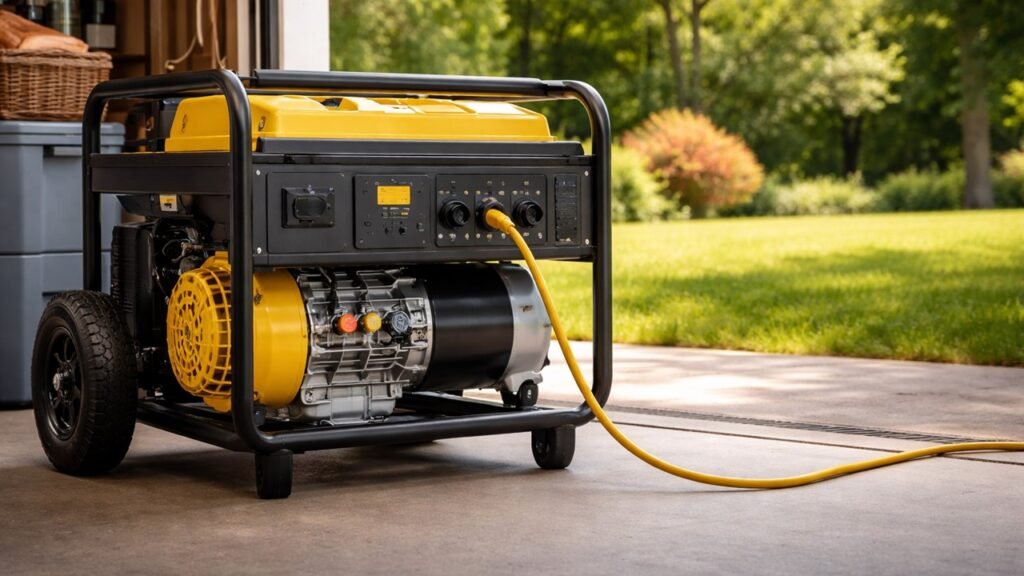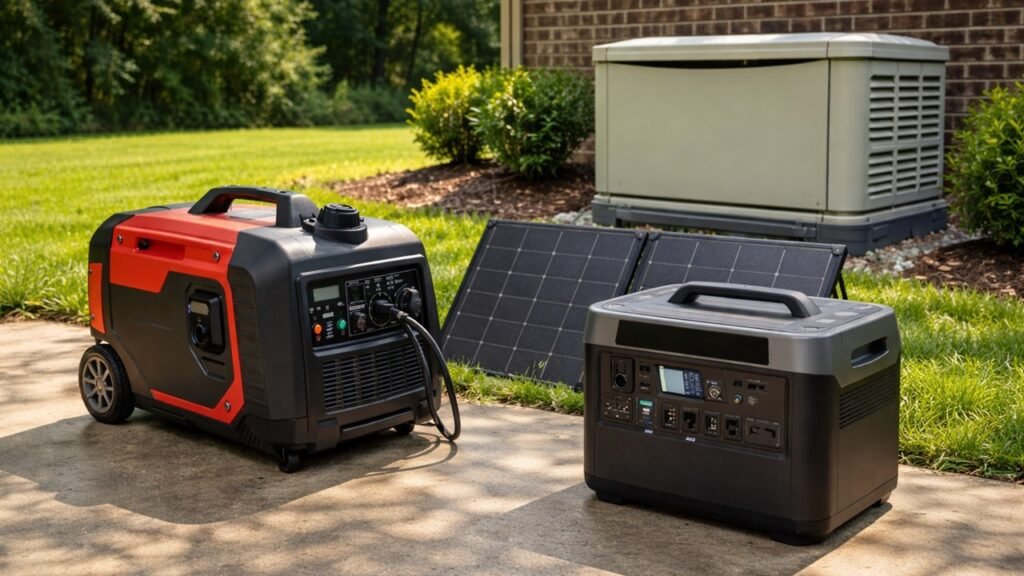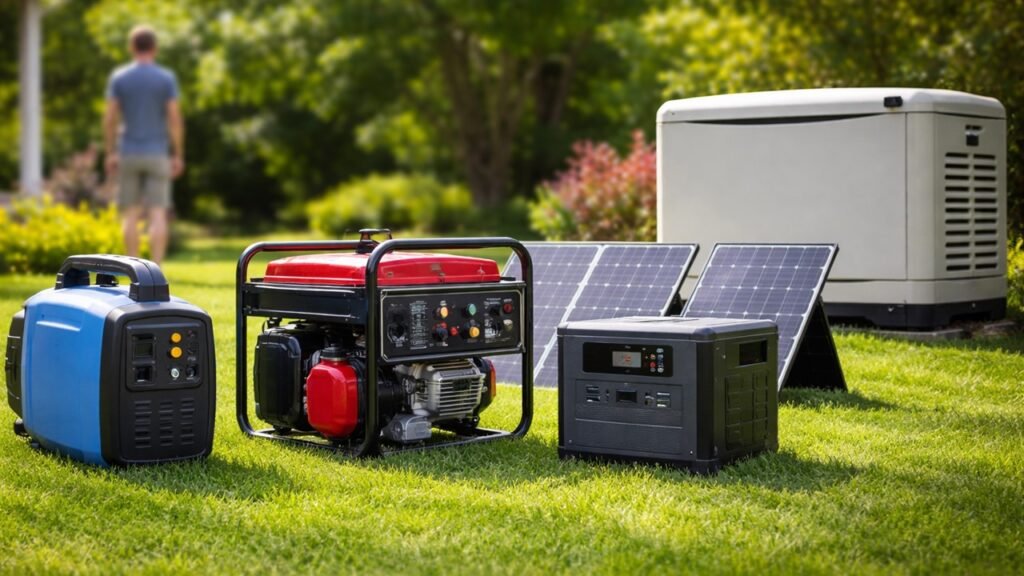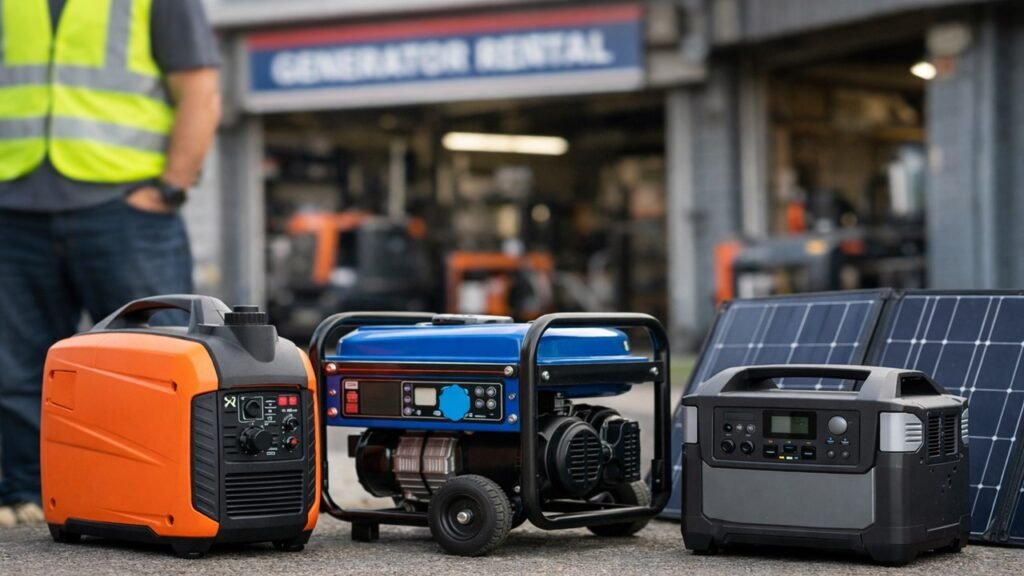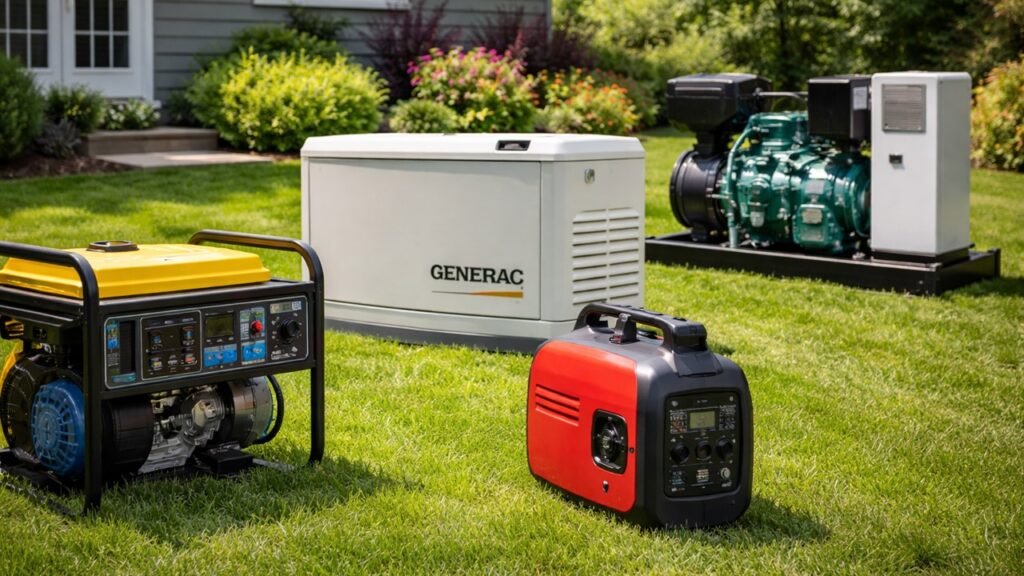
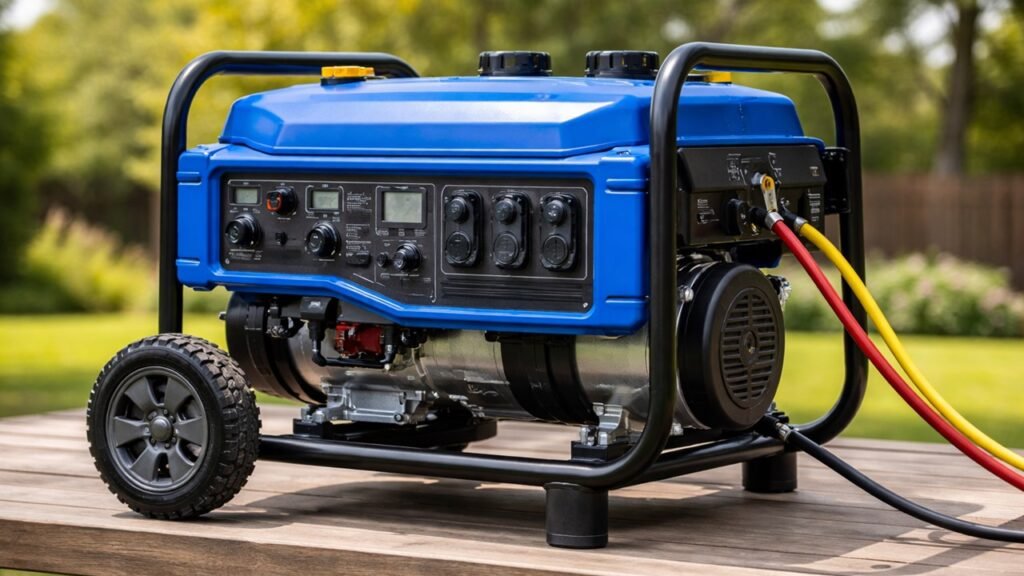
A tri-fuel generator is a backup power system that can run on gasoline, propane, or natural gas. That simple flexibility is the main reason people search for it. If you want a generator that is not dependent on just one fuel during an outage, a tri-fuel generator gives you options when fuel supplies get tight.
Key Summary:
- A tri fuel generator runs on gasoline, propane, and natural gas.
- Fuel flexibility increases emergency reliability during power outages.
- Gasoline delivers full rated wattage on most tri fuel generators.
- Propane and natural gas reduce power output by about 10 to 25 percent.
- Natural gas connection allows extended runtime without refueling.
What Is a Tri-Fuel Generator?
A tri-fuel generator is a generator that runs on three different fuels: gasoline, propane, and natural gas. You select one fuel at a time using a built-in selector switch. The engine does not burn all three together. It runs on whichever fuel you choose.
The main benefit is flexibility. Fuel flexibility reduces risk during emergencies. If gas stations run out of fuel after a storm, you can switch to propane. If you have a natural gas line at home, you can connect directly and avoid refueling altogether.
Most portable tri-fuel generators fall between 8,000 and 15,000 watts. On gasoline, they produce their full rated power. On propane or natural gas, output drops slightly because those fuels contain less energy per unit. Manufacturers like DuroMax Power Equipment and Champion Power Equipment publish separate wattage ratings for each fuel type, which is important to check before buying.
Further reading:
What Fuels Can a Tri-Fuel Generator Run On?
A tri-fuel generator runs on gasoline, propane, and natural gas. It uses one fuel at a time, and each fuel changes how the generator performs, how long it can run, and how easy it is to store.
Gasoline
Gasoline gives you the highest power output. It contains more energy per gallon than propane or natural gas, so the generator produces its full rated wattage on this fuel.
Gasoline is easy to find under normal conditions. However, it does not store well. Untreated gasoline can start degrading within a few months, according to the U.S. Department of Energy. Old fuel can cause hard starting and carburetor problems.
Gasoline delivers maximum wattage. Gasoline requires careful storage. Moreover, gasoline may be difficult to access during major outages.
Propane
Propane burns cleaner than gasoline. Cleaner combustion means fewer carbon deposits inside the engine. That can reduce maintenance over time.
Propane stores extremely well. The Propane Education and Research Council explains that propane does not degrade when stored properly, which makes it reliable for long-term emergency planning.
Propane usually reduces output by about 10 to 15 percent compared to gasoline. Propane requires tanks and proper regulators.
Natural Gas
Natural gas offers convenience. If your home already has a utility gas line, you can connect the generator and run it without refueling. That makes it ideal for longer outages.
Natural gas produces slightly less power than propane and noticeably less than gasoline. Expect around 15 to 25 percent lower output compared to gasoline.
Natural gas requires professional installation for safety. Natural gas allows extended runtime as long as the gas supply remains active.
How Does a Tri-Fuel Generator Work?
A tri-fuel generator works by using one engine with multiple fuel delivery paths. The fuel selector valve directs gasoline, propane, or natural gas into the carburetor or fuel system. The engine burns the selected fuel to spin the alternator, and the alternator produces electricity.
You can only use one fuel at a time. The selector switch changes which fuel regulator feeds the engine. Gasoline flows from the tank. Propane flows from a pressurized tank through a regulator. Natural gas flows from a home gas line at low pressure.
The core system remains the same. The engine creates mechanical energy. The alternator converts mechanical energy into electrical power. The fuel source changes the energy density, which affects power output and runtime.
Tri-Fuel vs Dual-Fuel vs Gasoline Generators
A tri-fuel generator offers maximum fuel flexibility. A dual-fuel generator offers two fuel options. A gasoline generator runs on one fuel only. The main difference is flexibility, cost, and emergency readiness.
| Feature | Tri-Fuel Generator | Dual-Fuel Generator | Gasoline Generator |
| Fuel Options | Gasoline, Propane, Natural Gas | Gasoline, Propane | Gasoline Only |
| Flexibility | Highest | Moderate | Lowest |
| Power Output | Slight loss on propane and natural gas | Slight loss on propane | Full rated output |
| Emergency Readiness | Excellent | Good | Limited |
| Upfront Cost | Highest | Mid-range | Lowest |
| Installation Needs | May require gas line hookup | Usually portable only | Simple setup |
Tri-fuel models are best for long-term backup planning. Dual-fuel models balance flexibility and price. Gasoline-only units are simple but depend on one fuel supply.
Related reading:
- What Is A Dual Fuel Generator
- How Does A Dual Fuel Generator Work
- How Much Propane Does A Generator Use
Does a Tri-Fuel Generator Produce Less Power?
Yes, a tri-fuel generator produces slightly less power when running on propane or natural gas. Gasoline delivers full rated output because it has higher energy density.
Propane typically reduces output by around 10 to 15 percent. Natural gas usually reduces output by 15 to 25 percent. The exact number depends on the generator design and engine tuning. Manufacturers list separate wattage ratings for each fuel.
This power difference matters if you are running heavy loads like central air conditioning. If maximum wattage is critical, gasoline provides the strongest output. If runtime and fuel stability matter more, propane or natural gas may be the better choice.
Can a Tri-Fuel Generator Power a House?
Yes, a tri-fuel generator can power a house, but it depends on the generator size and your electrical load. Most portable tri-fuel units range from 8,000 to 15,000 watts. That is enough to run essential appliances like a refrigerator, lights, sump pump, and sometimes central air.
Whole-house backup usually requires proper load management. A transfer switch or interlock kit connects the generator safely to your home’s electrical panel. This prevents backfeeding and protects utility workers.
If your home has natural gas, a tri-fuel generator can run longer without refueling. However, you must calculate your total wattage needs first. A generator powers what it is sized for, not automatically the entire house.
Pros and Cons of Tri-Fuel Generators
Tri-fuel generators offer maximum fuel flexibility, but they also come with higher cost and slightly lower power on certain fuels. If you want long-term outage protection with multiple fuel options, they are one of the most versatile choices available.
Pros
- Fuel flexibility increases reliability during emergencies.
- Natural gas connection allows extended runtime without refueling.
- Propane stores long-term without degradation.
- Gasoline provides full rated wattage when maximum power is needed.
- Cleaner burning fuels reduce carbon buildup inside the engine.
Cons
- Higher upfront cost compared to dual-fuel or gasoline-only models.
- Lower wattage output on propane and natural gas.
- Louder operation compared to inverter generators or battery systems.
- Natural gas hookup often requires professional installation.
- More components mean slightly more system complexity.
Safety Considerations While Using a Tri-Fuel Generator
Tri-fuel generators produce carbon monoxide and must always be operated safely. Proper placement, fuel handling, and electrical connection are critical to prevent injury or property damage.
- Always operate the generator outdoors, never inside a home or garage.
- Keep the generator at least 20 feet away from doors, windows, and vents.
- Install carbon monoxide detectors inside the home.
- Use a transfer switch or interlock kit to prevent backfeeding into utility lines.
- Follow proper regulator setup when connecting propane or natural gas.
- Never switch fuel types while the generator is running unless the manual explicitly allows it.
- Allow the engine to cool before refueling with gasoline.
Safety determines reliability. A properly installed and maintained generator performs better and lasts longer.
Who Should Buy a Tri-Fuel Generator?
A tri-fuel generator is best for homeowners who want maximum backup flexibility. It makes sense if you want multiple fuel options instead of depending on one supply source.
- Homeowners with an existing natural gas line.
- Areas with frequent storms or extended outages.
- Users who want long runtime without constant refueling.
- RV owners or off-grid users who already store propane.
- Buyers who prioritize preparedness over lowest upfront cost.
If fuel flexibility matters more than simplicity, a tri-fuel generator is a strong choice.
You may also like:
Conclusion
A tri-fuel generator is a backup power system that runs on gasoline, propane, or natural gas. Fuel flexibility improves emergency readiness and reduces dependence on a single supply source.
Gasoline delivers maximum wattage. Propane offers long-term storage stability. Natural gas provides extended runtime without refueling. Each fuel changes performance slightly, which is important when sizing the generator for your home.
If you want reliable backup power with multiple fuel options, a tri-fuel generator offers one of the most adaptable solutions available. The key is choosing the right size and installing it safely.
Related FAQs
Can you switch fuels while a tri fuel generator is running?
Most tri fuel generators require you to turn the unit off before switching fuels. Switching while running can damage the fuel system unless the manual specifically allows it.
Is a tri fuel generator better than a dual fuel generator?
A tri fuel generator offers more flexibility because it runs on three fuels instead of two. It is better for long-term outage planning but usually costs more.
Does natural gas reduce generator power?
Yes, natural gas typically reduces output by 15 to 25 percent compared to gasoline. Lower energy density results in slightly lower wattage.
How long can a tri fuel generator run on natural gas?
A tri fuel generator can run continuously on natural gas as long as the utility supply remains active. Runtime depends mainly on maintenance and oil levels.
Are tri fuel generators louder than inverter generators?
Yes, most tri fuel generators are conventional open-frame units and produce more noise than inverter generators. Fuel type does not significantly change noise level.
Do tri fuel generators require professional installation?
They may require professional installation if you plan to connect to a home natural gas line or install a transfer switch. Portable gasoline or propane use does not usually require professional setup.

Robert Caldwell writes in-depth guides and reviews focused on generators, backup power systems, and portable energy equipment. His work is grounded in hands-on testing, covering fuel types, runtime performance, noise levels, and real-world reliability. He helps homeowners, RV owners, and outdoor users choose dependable power solutions with confidence. Every article emphasizes clear explanations, safe operation, and long-term value.