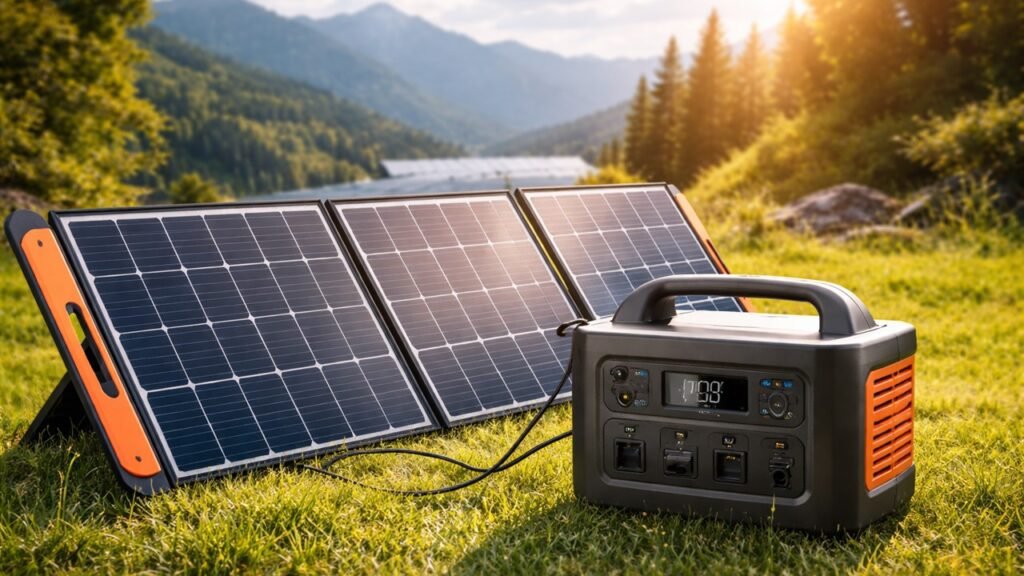
A solar generator works by capturing sunlight, storing that energy in a battery, and converting it into usable electricity for your devices. If you are searching for how does a solar generator work, the simple answer is this: it follows a four-step process called capture, regulate, store, and convert. Unlike gas generators, it does not burn fuel. Instead, it stores solar energy and delivers clean, quiet power when you need it.
Key Summary:
- A solar generator converts sunlight into electricity using photovoltaic panels that produce Direct Current power.
- A charge controller regulates voltage to protect the battery from overcharging and efficiency loss.
- A battery stores energy in watt-hours so power remains available at night or during outages.
- An inverter converts DC electricity into AC power so household appliances can run safely.
- Solar generators provide clean, emission-free backup power without fuel, noise, or carbon monoxide.
What Is a Solar Generator?
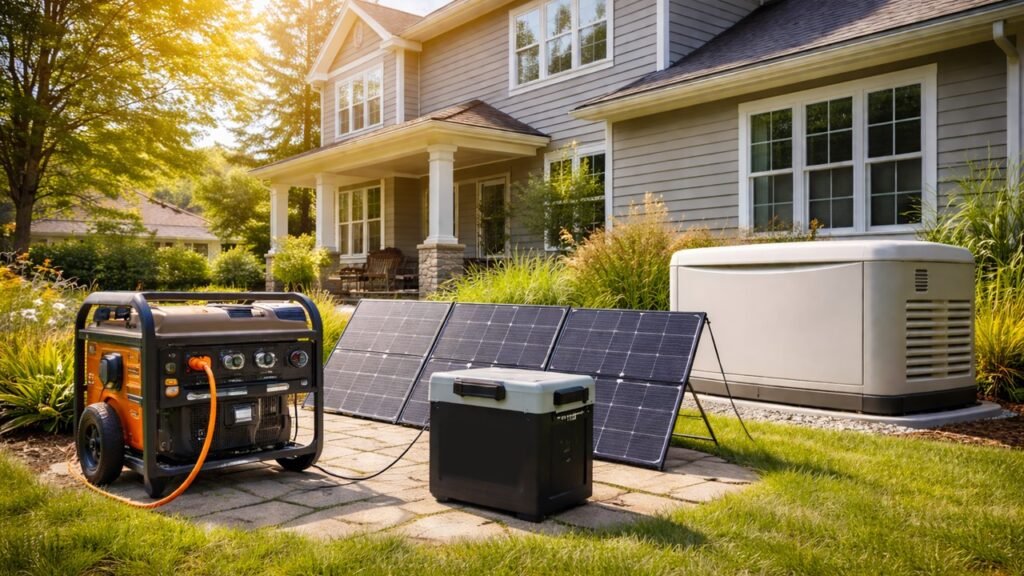
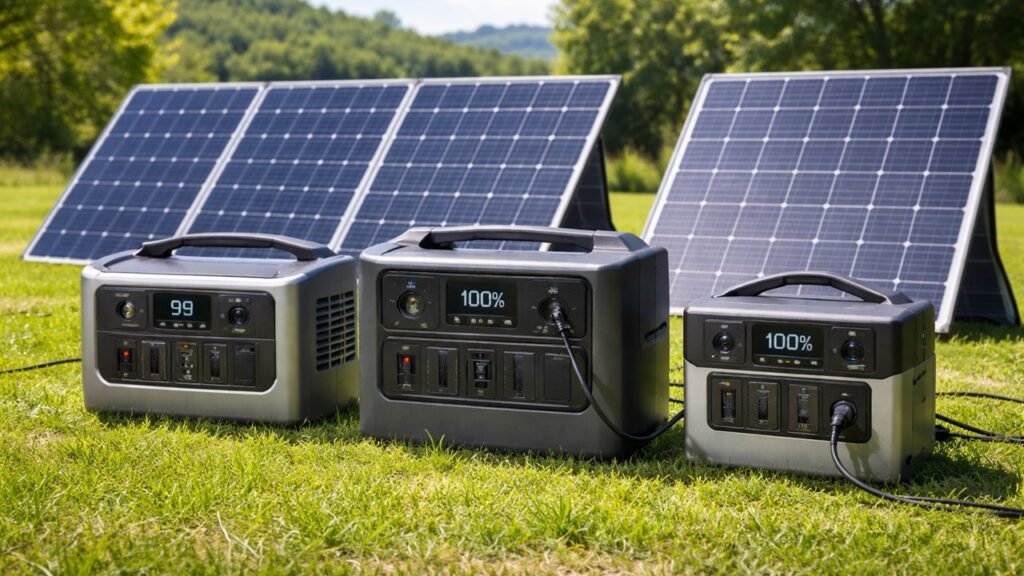
A solar generator is a portable power system that uses solar panels to collect energy from the sun and store it in a battery. A solar generator does not create electricity through combustion, and a solar generator stores electricity for later use.
Moreover, a solar generator typically includes solar panels, a charge controller, a battery, and an inverter. The battery stores energy as Direct Current, and the inverter converts it into Alternating Current so household appliances can use it. Most modern units use Lithium Iron Phosphate batteries because LiFePO4 batteries last 3,000 to 5,000 charge cycles and offer improved safety compared to older lithium-ion types.
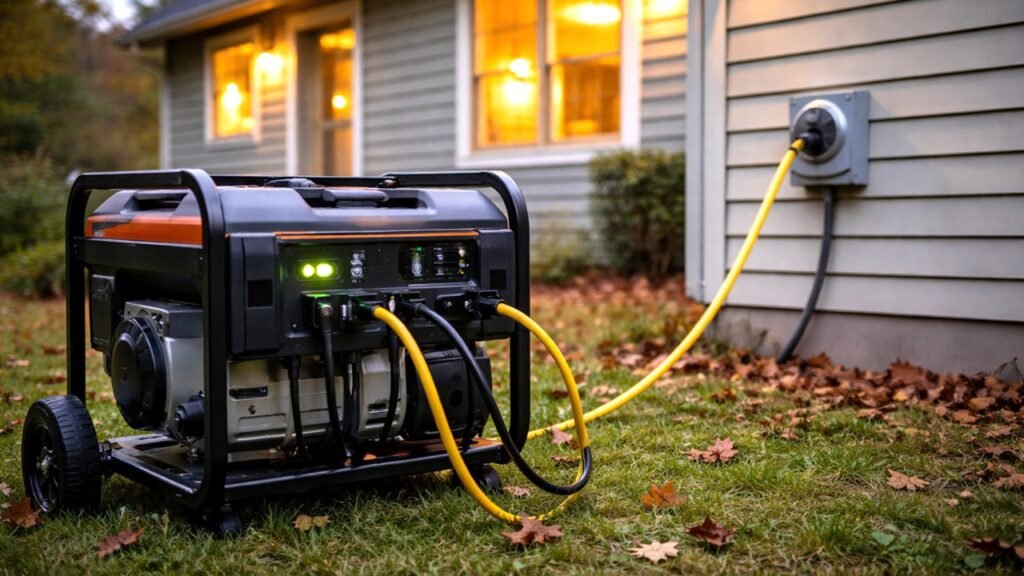
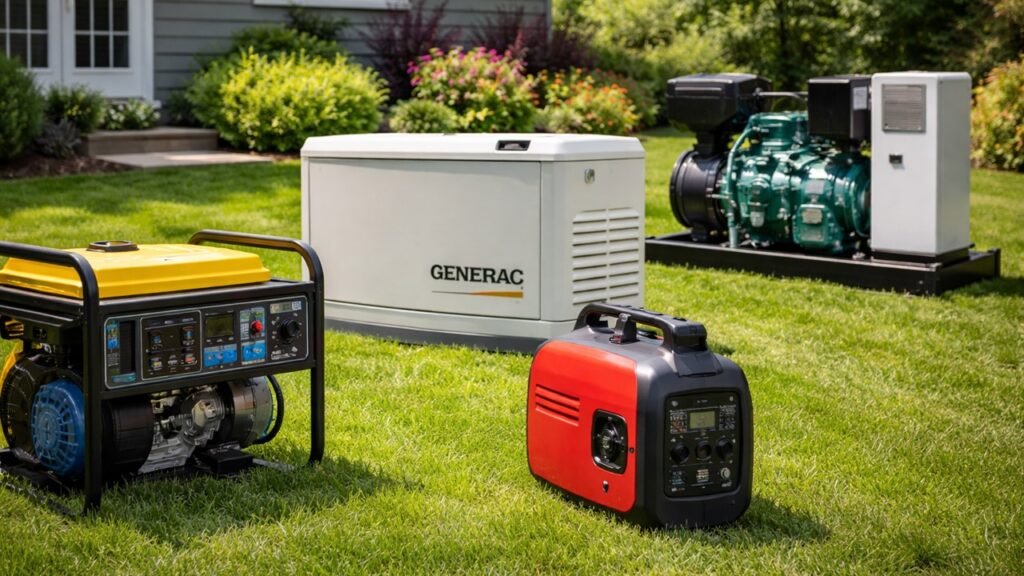
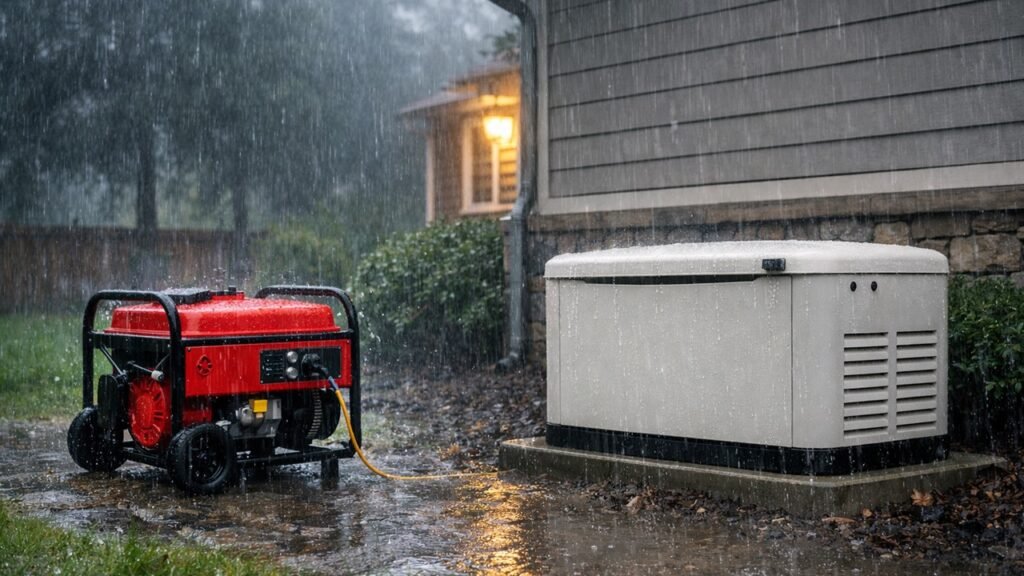
Solar generator reduces emissions. Gas generator produces carbon monoxide.
Further reading:
- Best Portable Solar Generator
- Best Portable Solar Generators for Home Backup
- Best Portable Power Stations for Home Backup
- Best Solar Generators for Off Grid Living
How Does a Solar Generator Work? (Step-by-Step)
A solar generator works through a simple energy conversion chain. Sunlight becomes electricity, electricity becomes stored energy, and stored energy becomes usable power.
Step 1: Solar Panels Convert Sunlight Into DC Electricity
Solar panels convert sunlight into Direct Current electricity through the photovoltaic effect. Photovoltaic cells are usually made of silicon. Silicon releases electrons when exposed to sunlight. Electron flow creates electrical current.
Solar panel converts light into DC power.
According to the U.S. Department of Energy, modern solar panels typically operate at 15 percent to 23 percent efficiency depending on design and material quality.
Step 2: Charge Controller Regulates Voltage and Protects the Battery
Charge controller regulates voltage between panels and battery. Charge controller prevents overcharging and battery damage.
There are two common types:
- PWM controllers regulate power at a basic level.
- MPPT controllers optimize panel output and increase efficiency by up to 30 percent compared to PWM systems.
MPPT controller increases solar charging efficiency.
Step 3: Battery Stores Energy for Later Use
Battery stores DC electricity as chemical energy. Battery capacity is measured in watt-hours.
Watt-hours measure total stored energy. Watts measure real-time power output.
For example, a 1,000Wh battery can power a 100W device for about 10 hours under ideal conditions.
LiFePO4 battery improves lifespan and safety. Lead-acid battery reduces lifespan and increases maintenance.
According to Battery University, LiFePO4 batteries can exceed 3,000 full cycles while maintaining 80 percent capacity.
Step 4: Inverter Converts DC to AC Power for Household Devices
Inverter converts Direct Current into Alternating Current. Household appliances require AC power.
Pure sine wave inverter produces stable electricity suitable for sensitive electronics such as laptops, refrigerators, and CPAP machines. Modified sine wave inverter may cause overheating or malfunction in certain devices.
Pure sine wave inverter protects electronics.
Step 5: Output Ports Deliver Power to Your Devices
Solar generator provides multiple output ports for flexibility:
- AC outlets for home appliances
- USB-A and USB-C ports for phones and laptops
- 12V DC car port for camping gear
- DC5521 ports for specialized devices
Output ports distribute stored energy safely.
Solar Generator Power Flow (Easy to Visualize)
A solar generator follows a clear and simple power path.
Solar generator follows energy flow sequence:
- Sunlight hits solar panels
- Solar panels generate DC electricity
- Charge controller regulates voltage
- Battery stores energy
- Inverter converts DC to AC
- Devices receive usable electricity
Sunlight becomes stored energy. Stored energy becomes usable power.
If you are looking for clean, quiet, and indoor-safe backup power, a solar generator works by combining solar panels, battery storage, and inverter technology into one integrated system.
Related reading:
What Can a Solar Generator Power?
A solar generator can power small electronics, essential home appliances, and even some larger devices depending on its battery capacity and inverter size. What a solar generator can run depends on two main factors: watt-hours for total energy storage and watts for real-time output. Smaller units handle phones and laptops easily, while larger models can run refrigerators, medical devices, and even power tools.
| Device | Typical Running Watts | Notes |
| Smartphone | 5 to 20W | Very low draw, runs for days on large units |
| Laptop | 50 to 100W | Easily supported by most models |
| WiFi router | 10 to 30W | Ideal during outages |
| LED lights | 5 to 15W per bulb | Extremely efficient |
| CPAP machine | 30 to 60W | Works well with mid-size units |
| TV | 80 to 200W | Depends on screen size |
| Mini fridge | 60 to 150W | Check surge rating |
| Full-size refrigerator | 100 to 250W running | Surge can reach 600 to 1,200W |
| Microwave | 1,000 to 1,500W | Requires large inverter capacity |
| Space heater | 1,200 to 1,500W | Drains battery quickly |
Battery capacity determines how long devices run. Inverter size determines what devices can start safely.
Key Specs That Matter (So You Buy the Right One)
If you are looking for the right solar generator, focus on the specs that actually affect performance. Marketing numbers can look impressive, but a few core details tell you everything you need to know.
Here are the specs that truly matter:
- Battery capacity in watt-hours: Watt-hours tell you how much energy the generator can store. A 1,000Wh unit can run a 100W device for about 10 hours in ideal conditions. More watt-hours means longer runtime.
- Inverter rating in watts: Running watts show what the generator can handle continuously. Surge watts show what it can handle briefly when a device starts. Refrigerators and pumps need strong surge capacity.
- Battery chemistry: LiFePO4 batteries last longer and are safer than standard lithium-ion. Many LiFePO4 systems offer 3,000 to 5,000 charge cycles.
- Solar input rating: This tells you how fast it can recharge from panels. A 500W solar input recharges much faster than a 200W limit.
- Recharge time: Check how long it takes to recharge from wall outlet and solar panels. Faster charging adds flexibility.
- Weight and portability: Larger capacity usually means more weight. Make sure it matches how you plan to use it.
- Output ports: Look for AC outlets, USB-C fast charging, 12V car ports, and any specialty ports you may need.
Capacity controls runtime. Inverter size controls compatibility. Battery chemistry controls lifespan.
You may also like:
Conclusion
A solar generator works by capturing sunlight, storing it in a battery, and converting it into usable electricity for your devices. The process is simple: panels collect energy, the charge controller regulates it, the battery stores it, and the inverter delivers power when you plug something in.
What it can power depends entirely on its size. Smaller units are perfect for phones, laptops, and lights. Larger systems can handle refrigerators, CPAP machines, and other essential appliances during an outage.
If you focus on battery capacity, inverter size, and solar input limits, choosing the right model becomes much easier. Solar generators are not magic boxes, but when you understand how they work, they become one of the most practical backup power solutions available today.
Related FAQs
Does a solar generator work at night?
Yes. A solar generator works at night by using the energy stored in its battery during the day. Solar panels stop producing power after sunset, but the battery continues supplying electricity.
Can you use a solar generator indoors?
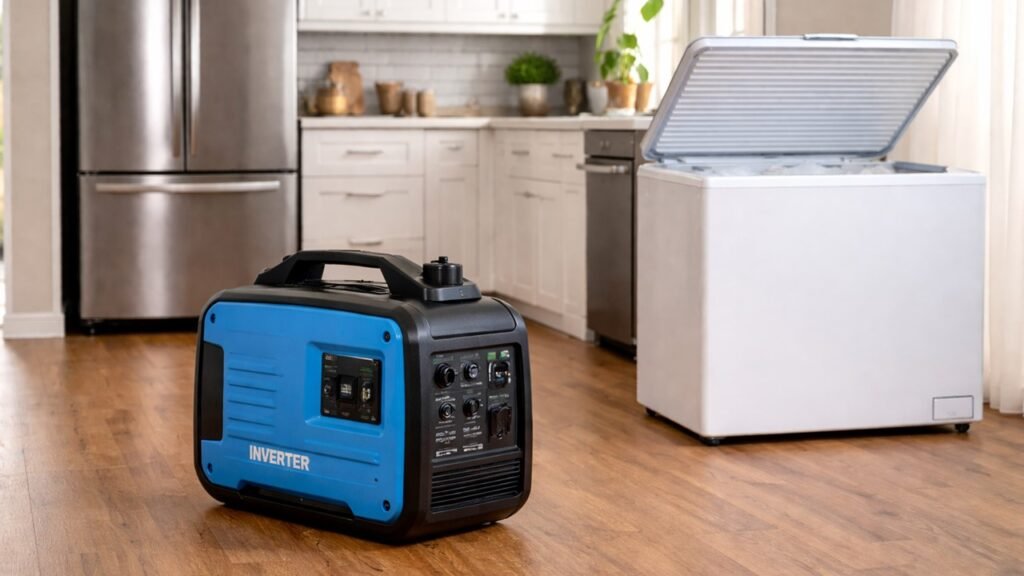
Yes. A solar generator is safe for indoor use because it produces no carbon monoxide and no exhaust fumes. Unlike gas generators, it does not burn fuel.
How long does a solar generator last?
A solar generator can last 5 to 15 years depending on battery type and usage. LiFePO4 batteries often last 3,000 to 5,000 charge cycles before capacity declines.
Can a solar generator power a refrigerator?
Yes, if the inverter is strong enough to handle the surge watts. Most mid-size and large solar generators can run a standard refrigerator during outages.
Do solar generators need direct sunlight?
Solar panels work best in direct sunlight, but they can still generate power in cloudy conditions. Output simply decreases when sunlight intensity drops.
Is a solar generator better than a gas generator?
A solar generator is quieter, cleaner, and safer for indoor use. A gas generator typically delivers higher continuous power but requires fuel and maintenance.

Robert Caldwell writes in-depth guides and reviews focused on generators, backup power systems, and portable energy equipment. His work is grounded in hands-on testing, covering fuel types, runtime performance, noise levels, and real-world reliability. He helps homeowners, RV owners, and outdoor users choose dependable power solutions with confidence. Every article emphasizes clear explanations, safe operation, and long-term value.