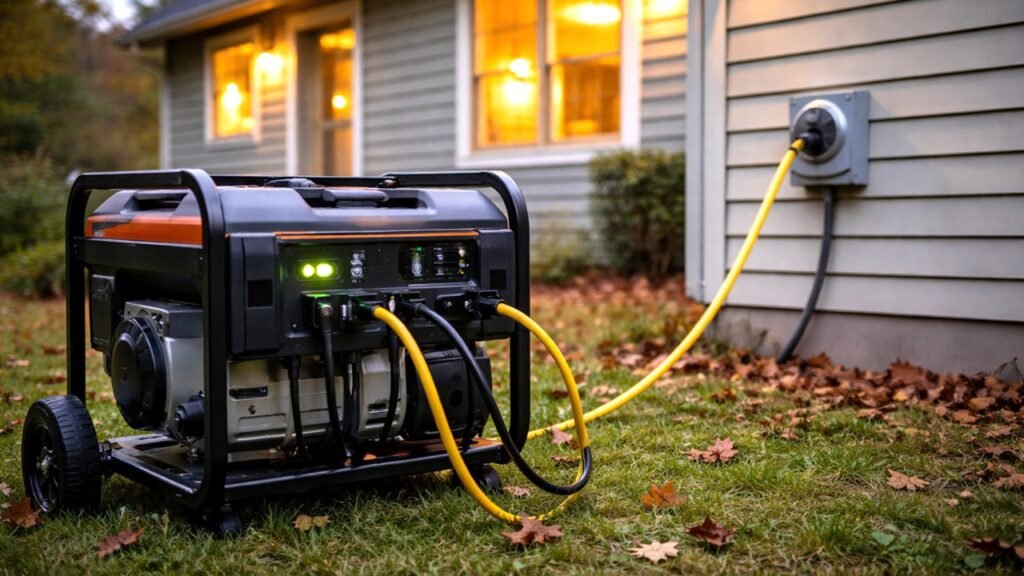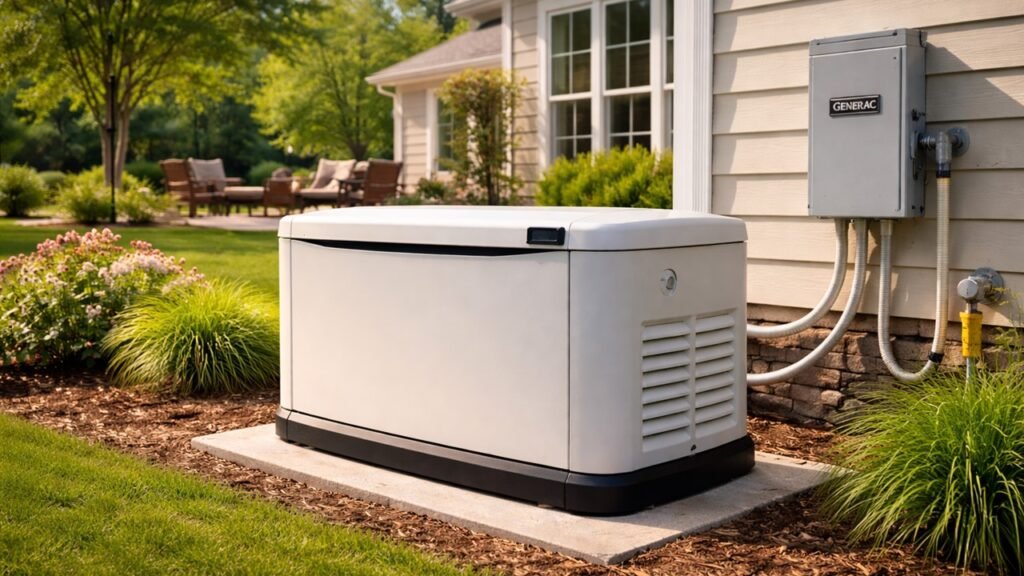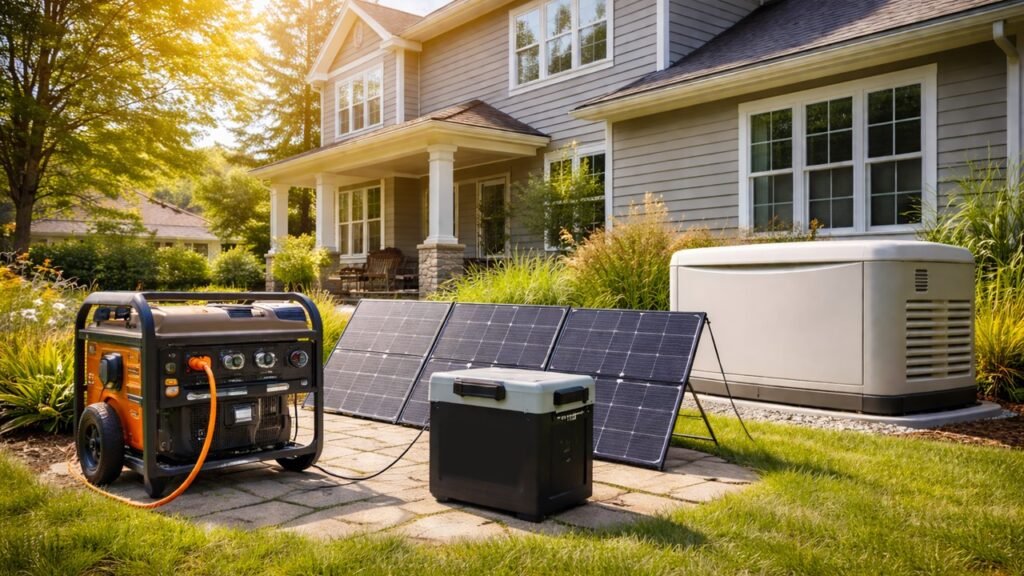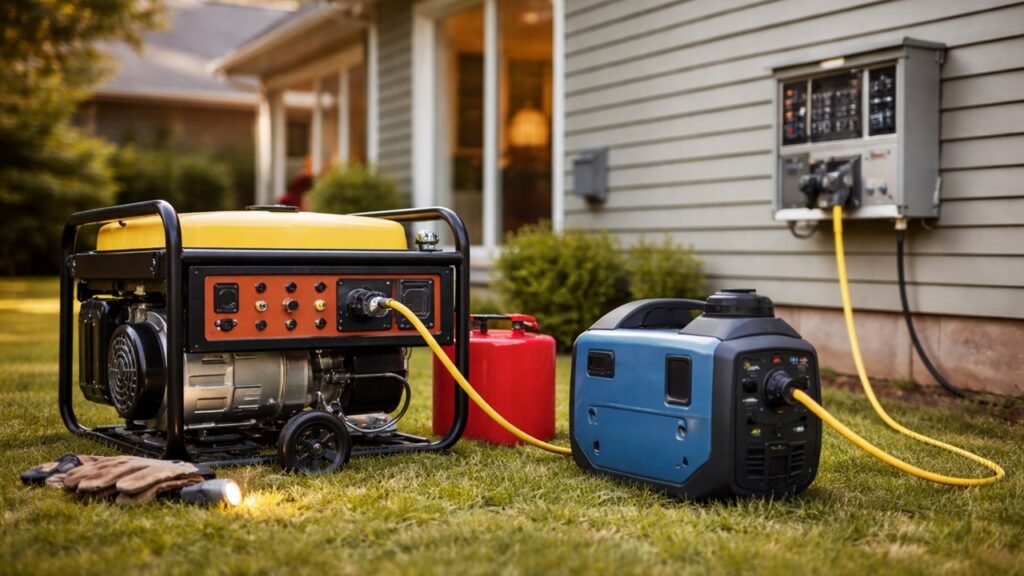
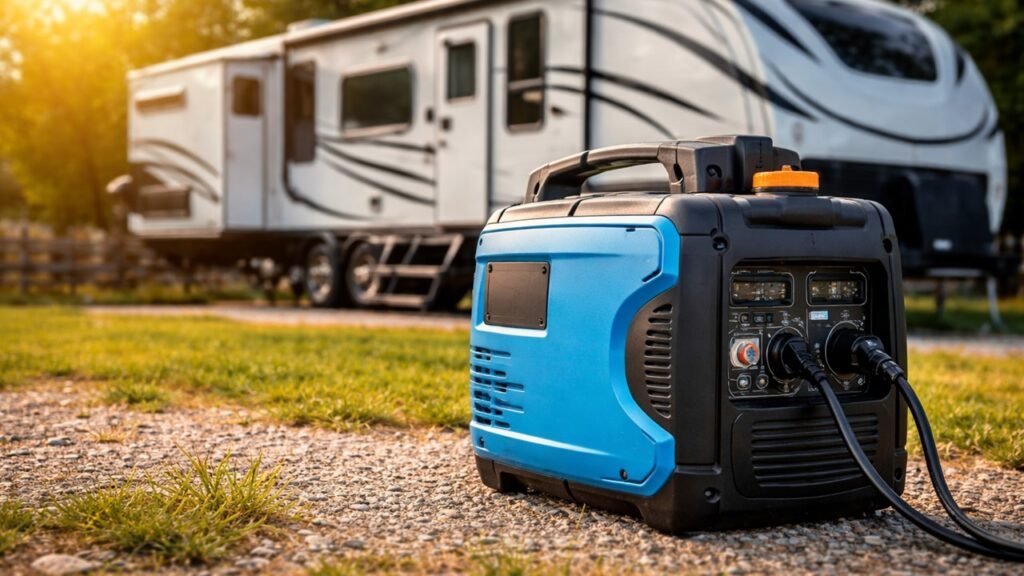
If you’re trying to figure out what size generator for a 50 amp RV, here’s the simple answer: most people need a generator in the 5,000 to 7,500 running watt range.
Yes, a 50 amp RV plug can technically handle up to 12,000 watts. But that does not mean you need a 12,000 watt generator. In real camping situations, most RVs never come close to that number. Your actual generator size depends mostly on how many air conditioners you plan to run and what other appliances will be on at the same time.
50 Amp RV Generator Size Chart
A 50 amp RV gives you more power capacity than a 30 amp setup, but generator sizing is about what you actually use, not the maximum rating printed on the plug. Use this chart as a quick reference.
| RV Setup | Typical Use | Recommended Running Watts | Recommended Surge Watts | Notes |
| Essentials only, no AC | Fridge, lights, charging devices | 2,000 to 3,000 W | 3,000 to 3,500 W | Good for mild weather |
| One 13.5k BTU AC | AC + fridge + lights | 4,000 to 5,000 W | 6,000 to 7,000 W | Most common setup |
| One 15k BTU AC | AC + microwave occasionally | 5,000 to 6,500 W | 7,000 to 8,000 W | Safer with headroom |
| Two ACs with soft starts | Dual AC + basics | 6,500 to 8,000 W | 8,500 to 9,500 W | Very common for larger rigs |
| Two ACs without soft starts | Dual AC heavy use | 8,000 to 10,000 W | 10,000+ W | High startup demand |
| Luxury loads | Two ACs + electric heat appliances | 9,000 to 12,000 W | 12,000+ W | Rare for typical camping |
For most 50 amp RV owners, the sweet spot lands somewhere between 5,500 and 7,500 watts.
Recommended reading:
- Best Portable Generators
- Best Portable Solar Generators for RV
- Best Portable Power Stations for Outages
How Many Watts Does a 50 Amp RV Actually Use?
A 50 amp RV can supply up to 12,000 watts, but most RVs usually run between 3,000 and 6,000 watts during normal use.
Now let’s break that down in plain English.
What 50 Amp Service Really Means
A 50 amp RV connection has two separate 120-volt power legs. When you do the math, that adds up to 12,000 watts of maximum available power.
But “maximum available” does not mean “always used.”
That 12,000 watt number is more like a ceiling. You only hit it if you are running nearly everything at once, including multiple air conditioners and high-draw appliances.
What You Actually Use While Camping
In real life, here’s what most people are running:
- One air conditioner using around 1,500 to 1,800 watts while running
- Refrigerator using 150 to 400 watts
- Lights, TV, WiFi, and charging devices using a few hundred watts
- Battery charging system pulling 500 to 1,000 watts
That usually puts you somewhere between 2,500 and 4,500 watts most of the time.
The biggest power spike happens when an air conditioner starts up. That startup surge is what really determines generator size.
Generator Sizing Formula for a 50 Amp RV
Add up your running watts, account for the largest startup surge, then give yourself a 15 to 25 percent safety cushion.
Here’s how to do it without overcomplicating things.
Step 1: Add Your Running Watts
Make a realistic list of what you will run at the same time.
Example:
- 15k BTU AC: 1,700 watts
- Refrigerator: 300 watts
- Lights and electronics: 300 watts
- Battery charger: 800 watts
That gives you about 3,100 watts of continuous load.
Step 2: Account for Startup Surge
Air conditioners need extra power for a few seconds when they start. A 15k BTU AC can spike up to 3,000 to 3,500 watts at startup.
Your generator needs to handle that surge without tripping.
If you install a soft start on your AC, that startup spike drops significantly. That often allows you to use a smaller generator safely.
Step 3: Add a Safety Buffer
You never want your generator running at 100 percent all the time. It runs hotter, louder, and wears out faster.
Add about 15 to 25 percent extra capacity.
If your real-world running load is around 3,100 watts, you would be much more comfortable with a 5,000 to 6,000 watt generator instead of something rated exactly at 3,500 watts.
Practical Takeaway
- One AC setup usually needs 5,000 to 6,500 running watts.
- Two AC setup usually needs 6,500 to 9,000 running watts.
- Very few RV owners truly need a 12,000 watt generator.
If you’re choosing today, focus on how many air conditioners you want to run. That single decision determines almost everything about your generator size.
Related reading:
- What Size Generator For 30 AMP RV
- How Many Watt Generator To Run A House
- What Is An Inverter Generator?
RV Appliance Wattage Table
Before you choose a generator, it helps to know what your RV appliances actually use. Air conditioners are usually the biggest load, but electric water heaters, space heaters, and battery chargers can add up fast. The numbers below are typical ranges. Always check your appliance label or manual for exact ratings.
| Appliance | Running Watts (Approx.) | Starting Watts (Approx.) | Notes |
| 13.5k BTU RV AC | 1,300 to 1,600 W | 2,800 to 3,500 W | Surge drops with soft start |
| 15k BTU RV AC | 1,500 to 1,800 W | 3,000 to 3,800 W | Most common in 50A rigs |
| RV Refrigerator (12V compressor) | 100 to 300 W | Minimal surge | Very efficient |
| Residential RV Refrigerator | 150 to 400 W | 600 to 1,200 W | Has compressor surge |
| Microwave | 900 to 1,500 W | Same as running | Short bursts |
| Converter / Battery Charger | 500 to 1,000 W | Minimal surge | Higher when batteries are low |
| Electric Water Heater Element | 1,200 to 1,500 W | Same as running | Often overlooked |
| Space Heater | 1,200 to 1,500 W | Same as running | Very high draw |
| Hair Dryer | 1,200 to 1,800 W | Same as running | Trips small generators easily |
| Induction Cooktop | 1,200 to 1,800 W | Same as running | Heavy continuous draw |
| TV + Electronics | 100 to 400 W | Minimal surge | Low impact |
In most cases, one air conditioner plus a few normal appliances keeps you well under 6,000 watts.
What Size Generator Runs a 50 Amp RV With One AC?
If your 50 amp RV has one air conditioner, you usually do not need a massive generator. Most setups with one 15k BTU AC run comfortably on a generator in the 5,000 to 6,500 running watt range.
Here’s what that typically looks like:
- One 13.5k or 15k BTU AC running
- Refrigerator on
- Lights and electronics
- Occasional microwave use
Recommended size:
- 5,000 to 6,000 running watts without a soft start
- 4,500 to 5,500 running watts with a soft start installed
If you want extra comfort and less strain on the generator, aim for at least 20 percent more running capacity than your estimated load.
What Size Generator Runs a 50 Amp RV With Two ACs?
Running two air conditioners is where generator size really matters. This is common in larger fifth wheels and Class A motorhomes, especially in hot climates.
If both AC units can start at the same time, the startup surge becomes the biggest challenge. Without soft starts, two 15k BTU units can demand well over 6,000 watts just during startup. In that case, you are usually looking at a generator in the 8,000 to 10,000 watt running range to avoid tripping breakers.
If you install soft starts on both AC units, the required surge drops significantly. Many RV owners successfully run dual AC systems on generators in the 6,500 to 8,000 running watt range. That setup provides enough headroom to keep things stable without overspending on unnecessary capacity.
Generator Types for 50 Amp RVs
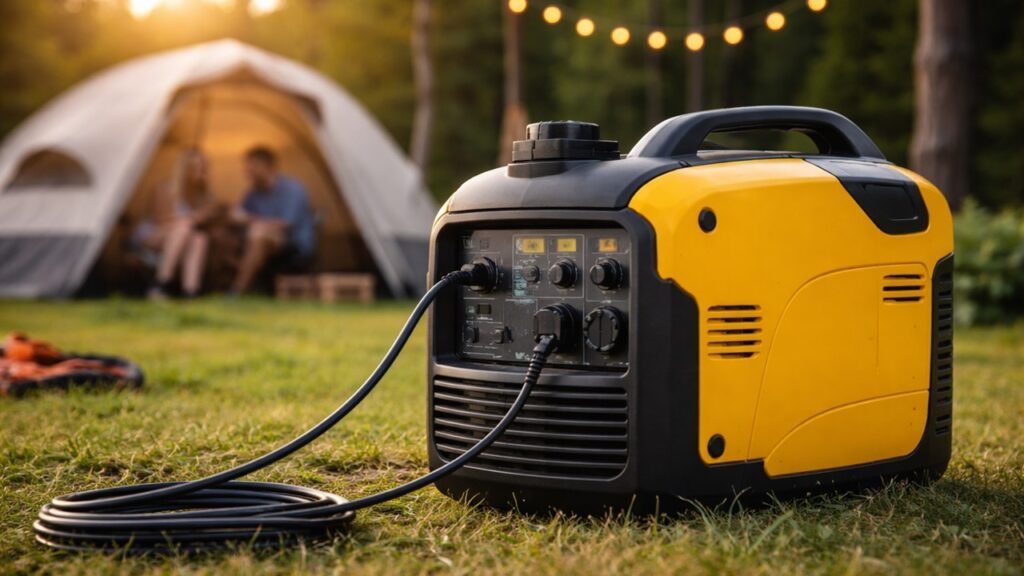
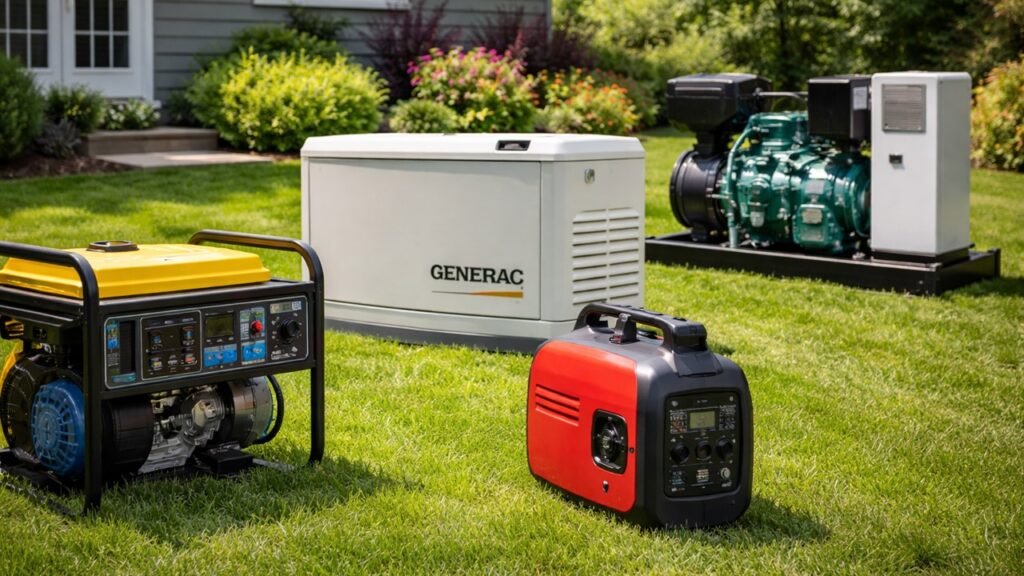
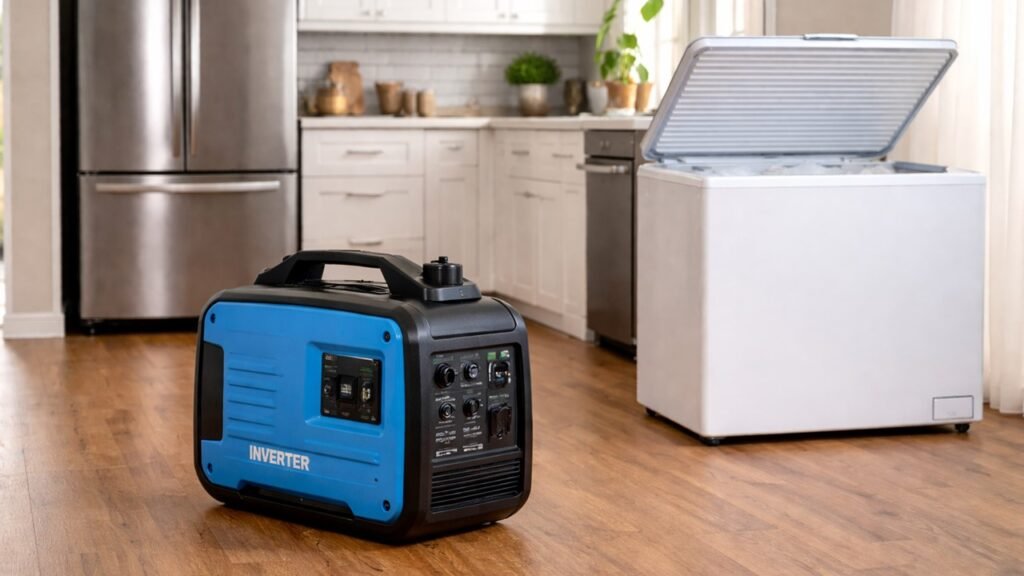
Inverter generators are usually the best choice for 50 amp RVs because they are quieter, more fuel efficient, and safer for electronics. Conventional open-frame generators offer more power for less money but are louder and less campground-friendly.
Now let’s look at the main options.
Inverter Generators
Inverter generators are the most popular choice for RV camping.
- Produce clean, stable power that is safe for electronics
- Run quieter, especially at partial load
- Adjust engine speed based on demand, saving fuel
- Ideal for campgrounds with noise limits
They cost more upfront, but most RV owners prefer them for comfort and reliability.
Open-Frame Conventional Generators
These are more common on job sites than in RV parks.
- Lower cost per watt
- Louder operation
- Constant engine speed
- Heavier and bulkier
They can work well for boondocking if noise is not an issue, but they are rarely the first choice for campground use.
Dual Fuel Generators
Dual fuel models run on gasoline or propane.
- Propane burns cleaner and stores longer
- Gasoline usually provides slightly more wattage
- Propane reduces rated power output by about 10 percent
They offer flexibility, which many RV owners appreciate during extended trips.
Must-Have Features for a 50 Amp RV Generator
The right generator should have enough running watts, strong surge capacity, RV-ready outlets, and safety features like CO shutoff.
Here are the features that truly matter:
- Running watt rating that comfortably exceeds your calculated load
- Surge capacity high enough for AC startup
- 120/240V capability if you want full 50 amp functionality
- 14-50R outlet or RV-ready connection options
- Electric start, and ideally remote start
- Built-in CO safety shutdown
- Fuel gauge and hour meter
- Wheels and sturdy handles for portability
- Low oil shutdown protection
These features improve safety, reliability, and ease of use over the long term.
Common Generator Sizing Mistakes to Avoid
Most people either oversize unnecessarily or underestimate air conditioner startup surge.
Here are the most common mistakes:
- Buying based only on peak watts instead of running watts
- Ignoring AC startup surge requirements
- Forgetting that propane reduces total wattage output
- Running the generator at 100 percent load continuously
- Assuming a 50 amp RV always needs a 12,000 watt generator
- Not accounting for battery charging loads when batteries are low
- Trying to run electric heat appliances with undersized generators
If you size your generator based on realistic loads and AC startup demand, you will avoid 90 percent of the common problems RV owners run into.
You may also like:
- Inverter Generator vs Generator
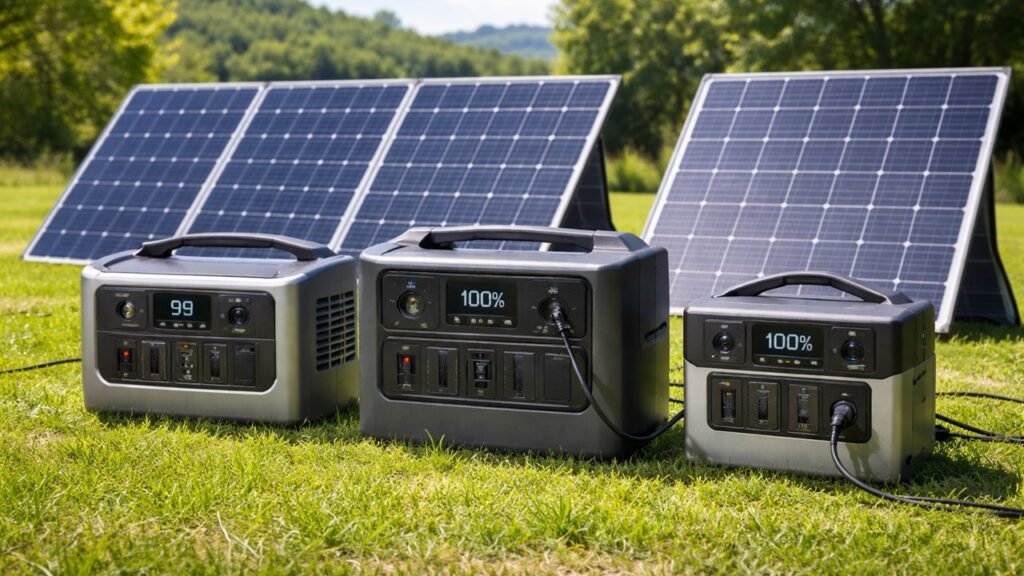
- Generator vs Portable Power Station
- What Size Generator To Run Refrigerator And Freezer?
Conclusion
Choosing the right size generator for a 50 amp RV is easier than it sounds. Even though a 50 amp hookup can supply up to 12,000 watts, most RV owners only need between 5,000 and 8,000 running watts depending on how many air conditioners they use.
If you run one AC, a 5,000 to 6,500 watt generator is usually more than enough. If you run two AC units, especially in hot weather, you will likely need 6,500 to 9,000 watts, with soft starts helping reduce the required surge capacity.
The key is simple: calculate your real running load, account for AC startup surge, and leave some breathing room. When sized correctly, your generator will run cooler, quieter, and more reliably for years.
Related FAQs
Can a 5,000 watt generator run a 50 amp RV?
Yes, if you are running one AC and managing loads carefully. It will not power everything at once.
Do I need a 12,000 watt generator for a 50 amp RV?
No. Most RV owners never use the full 12,000 watt capacity.
Will a 4,500 watt generator run a 15,000 BTU AC?
Sometimes, especially with a soft start installed. Without a soft start, it may struggle.
Can I run two AC units on a portable generator?
Yes, but you typically need at least 6,500 to 9,000 running watts, depending on surge demand.
Is an inverter generator better for a 50 amp RV?
Yes. Inverter generators are quieter, more fuel efficient, and safer for electronics.
Can I use a 30 amp generator with a 50 amp RV?
Yes, with an adapter, but you will be limited to 30 amp capacity and reduced appliance use.

Robert Caldwell writes in-depth guides and reviews focused on generators, backup power systems, and portable energy equipment. His work is grounded in hands-on testing, covering fuel types, runtime performance, noise levels, and real-world reliability. He helps homeowners, RV owners, and outdoor users choose dependable power solutions with confidence. Every article emphasizes clear explanations, safe operation, and long-term value.