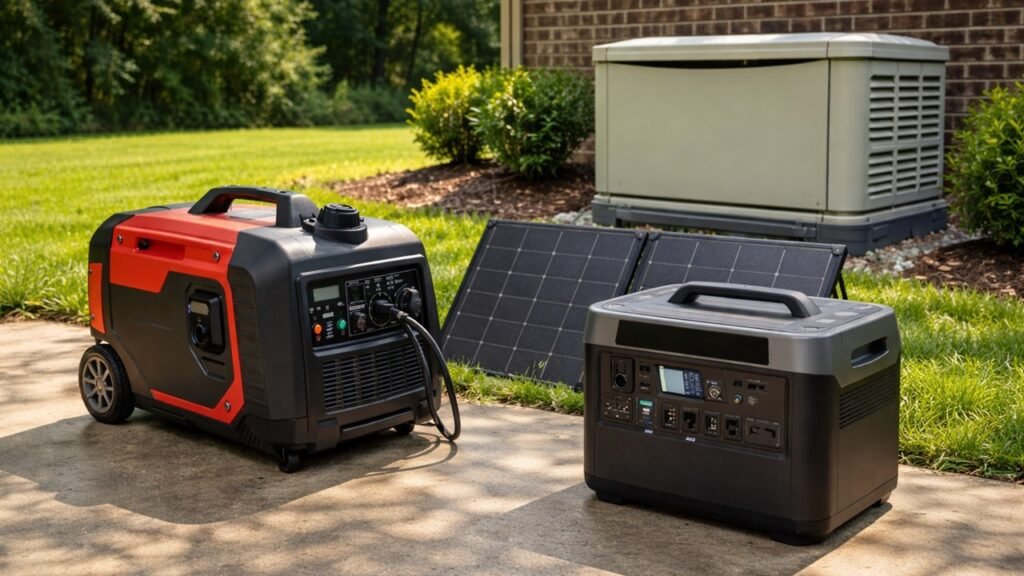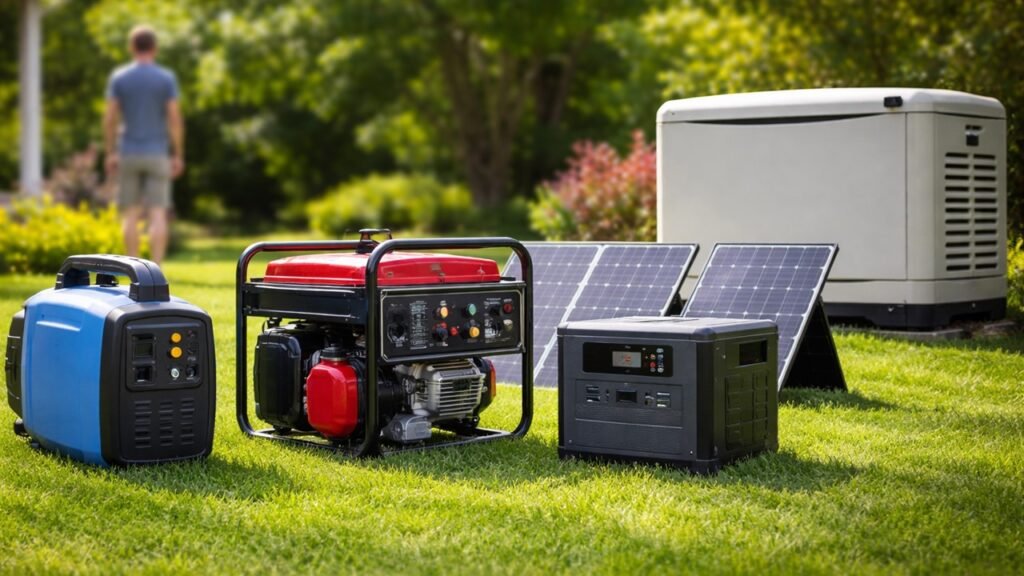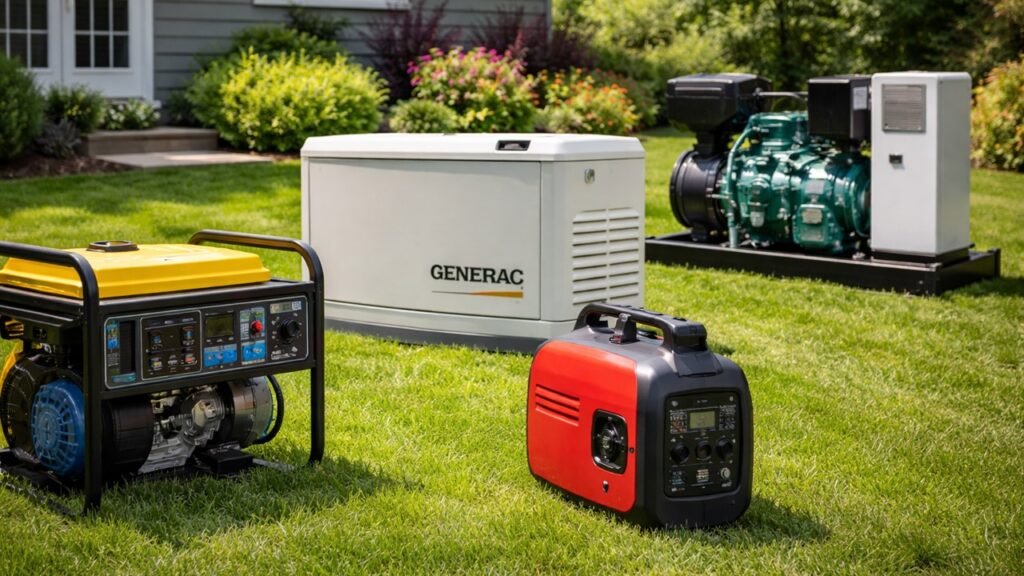
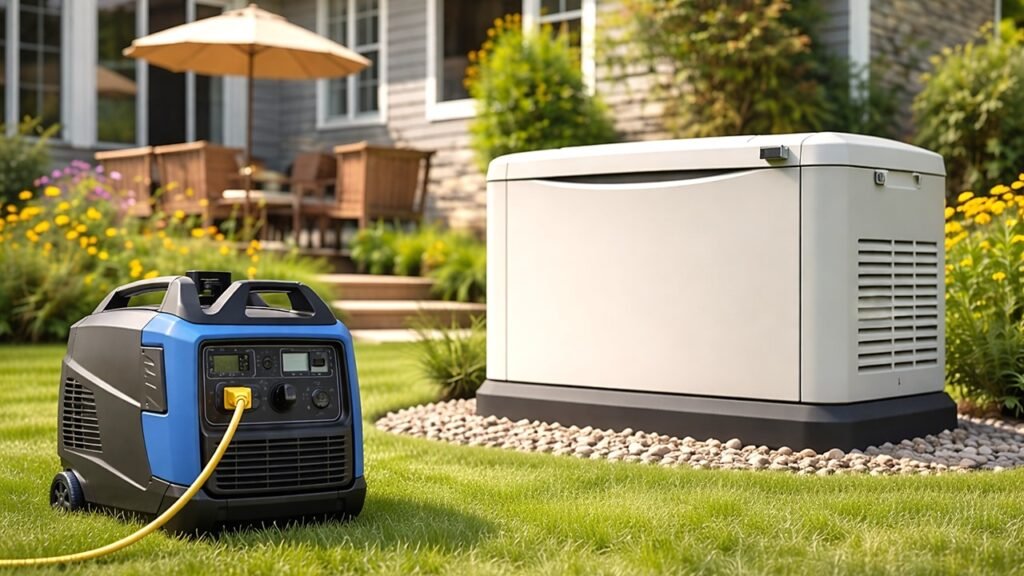
What size generator to run a house depends on how much electricity your home needs during a power outage. There is no single generator size that works for every household because power demand varies based on appliances, electrical systems, and usage habits.
Choosing the correct generator size ensures reliable power, prevents overload, protects appliances, and avoids wasting money on unnecessary capacity. The most accurate approach is to calculate real power needs instead of guessing based on home size alone.
Key Summary
- Generator size depends on the total wattage of appliances you need to run during a power outage.
- Running watts and starting watts determine how much power a generator must safely supply.
- Homes powering only essentials typically need 2,000 to 4,500 watts, while partial home backup requires 5,000 to 9,500 watts.
- Whole house backup with central air conditioning usually requires a generator rated between 12,000 and 25,000 watts or more.
- Proper generator sizing improves reliability, prevents overload, and protects both appliances and electrical systems.
Disclaimer: This guide provides general information to help estimate generator size for residential use. Actual power requirements vary by home, appliance type, and electrical setup. Always consult a licensed electrician or qualified professional before purchasing or installing a generator to ensure safety, accuracy, and compliance with local electrical codes.
Quick Answer: What Size Generator Do I Need for My House?
Most homes require anywhere from a small portable generator to a full standby system, depending on what they want to power during an outage.
- Basic essentials such as a refrigerator, lights, and internet typically require 2,000 to 4,500 watts
- Partial home backup without central air usually needs 5,000 to 9,500 watts
- Whole house backup with central air conditioning generally requires 12,000 to 25,000 watts or more
These ranges vary because appliance efficiency, startup surge, and simultaneous usage all affect total power demand.
Recommended reading:
- Best Generators for Home Use
- Best Portable Generators
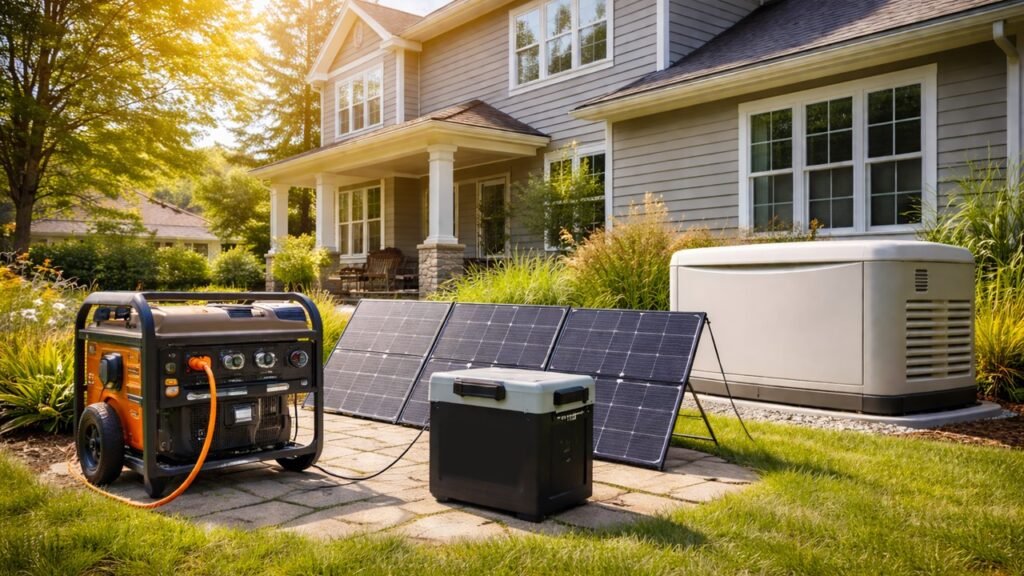
- Best Portable Solar Generators for Home Backup
What Actually Determines Generator Size?
Generator size is determined by electrical load, not by square footage. A smaller home with older or electric-heavy appliances can need more power than a larger home with modern energy-efficient systems.
The first factor is running power. Every appliance draws a steady amount of electricity while operating, and all running appliances must be supported at the same time without stressing the generator.
The second factor is startup surge. Appliances with motors such as refrigerators, pumps, and air conditioners require extra power for a short moment when they turn on. This surge can be two to three times higher than normal operating power.
The final and most impactful factor is central air conditioning. In many homes, the AC system alone determines whether a portable generator is sufficient or if a standby generator is required.
How to Calculate Generator Size for Your House
The most reliable way to size a generator is by calculating total running watts, adding the largest startup surge, and including a safety margin.
This method avoids undersizing, improves reliability, and ensures the generator can handle real-world conditions.
Step 1: List the Appliances You Want to Run
Start by listing only the appliances that must run at the same time during an outage.
Common examples include:
- Refrigerator or freezer
- Lights
- Internet modem and router
- Phone and laptop chargers
- Sump pump or well pump
- Furnace fan or air conditioner
Avoid listing appliances that will not operate simultaneously.
Step 2: Add Running Watts
Running watts represent the continuous power an appliance uses while operating normally.
Add together the running wattage of all appliances on your list.
Example formula written plainly:
Total running watts = Appliance A running watts + Appliance B running watts + Appliance C running watts
This total represents the minimum continuous power the generator must provide.
Step 3: Add the Largest Starting Watt Surge
Starting watts represent the brief surge of power required to start motor-driven appliances.
Only add the single highest startup surge, not all surges combined.
Example written plainly:
Required surge capacity = Highest starting watt value among listed appliances
This ensures the generator can start the most demanding appliance without shutting down.
Step 4: Add a Safety Buffer
A safety buffer prevents overloading and improves generator performance.
Add approximately 20 percent extra capacity to the combined running and surge load.
Plain calculation example:
Generator size needed = (Total running watts + Highest starting surge) × 1.2
This final number is the recommended generator capacity.
Simple Example Calculation
Assume the following:
Running watts total = 3,800 watts
Highest startup surge = 2,500 watts
Combined load = 6,300 watts
After adding a 20 percent buffer:
6,300 × 1.2 = 7,560 watts
In this case, a generator rated around 7,500 to 8,000 watts would be an appropriate choice.
Related generator guides:
- How Many Watt Generator To Run A House
- How Much Is A Generator For A 2000 Sq Ft House
- What Size Generator To Run Refrigerator And Freezer?
Common Household Appliance Wattage Table
If you are looking for an accurate generator size, knowing typical appliance wattage is essential. These values help estimate real-world power demand, especially when appliances start at the same time. Always check your appliance labels for exact numbers, as actual usage can vary.
| Appliance | Running Watts | Starting Watts |
| Refrigerator or Freezer | 600 to 800 | 2,000 to 2,400 |
| Sump Pump (1/2 HP) | 1,000 | 2,500 to 3,000 |
| Furnace Fan | 700 to 800 | 2,000 |
| Window AC (10,000 BTU) | 1,200 | 2,200 |
| Central AC (3 ton) | 3,500 | 6,000 to 10,000 |
| Microwave | 1,000 | Not applicable |
| Well Pump | 1,000 | 3,000 |
| Electric Water Heater | 4,500 | 4,500 |
| LED Light | 10 | Not applicable |
| Router and Modem | 50 to 100 | Not applicable |
Generator Size Recommendations by Home Setup
Generator size recommendations vary based on how much of the home you want to power during an outage. Some households only need to keep food cold and lights on, while others want uninterrupted comfort.
These estimates assume normal appliance efficiency and typical household usage. Your actual needs may be higher or lower depending on electrical demand.
Small Homes and Apartments
- Recommended size: 3,000 to 5,000 watts
- Powers refrigerator, lights, internet, and device charging
- Suitable for short outages and basic needs
Average Homes Without Central AC
- Recommended size: 5,000 to 9,500 watts
- Supports essentials plus furnace fan or well pump
- Common choice for portable generators with transfer switches
Whole House Backup With Central AC
- Recommended size: 12,000 to 25,000+ watts
- Powers central air, major appliances, and multiple circuits
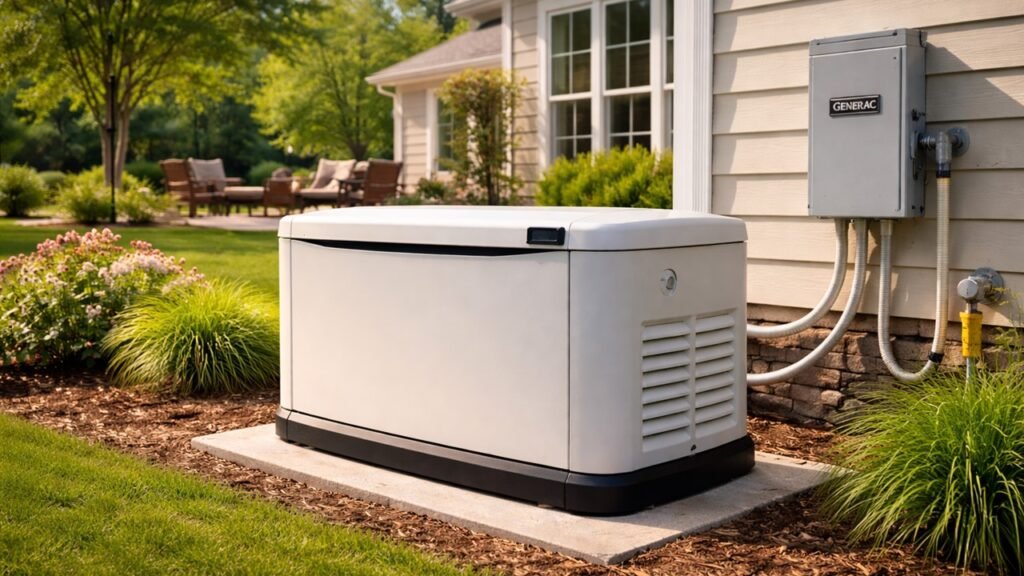
- Usually requires a standby generator system
Generator Size Needed for Central Air Conditioning
Central air conditioning significantly increases generator size requirements because of high startup surge. In many homes, the AC system alone determines whether a portable generator is sufficient.
- 2 ton AC typically requires around 12 kW
- 3 ton AC usually needs 14 to 18 kW
- 4 ton AC often requires 17 to 22 kW
- 5 ton AC may need 20 to 25+ kW
A soft start device can reduce startup surge and may allow a smaller generator, but load calculations are still necessary.
Portable vs Standby Generators
Portable and standby generators differ in size, convenience, and coverage. Choosing the right type depends on how much of your home you want powered and how often outages occur.
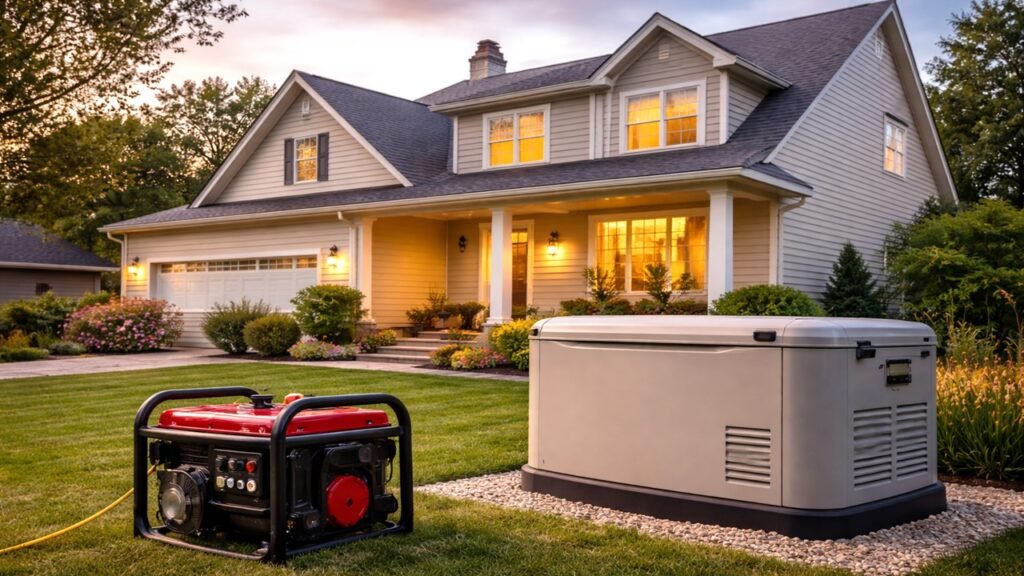
| Generator Type | Typical Size Range | Best Use Case |
| Portable Generator | 2,000 to 12,000 watts | Essentials or partial home backup |
| Standby Generator | 12,000 to 30,000+ watts | Whole house automatic backup |
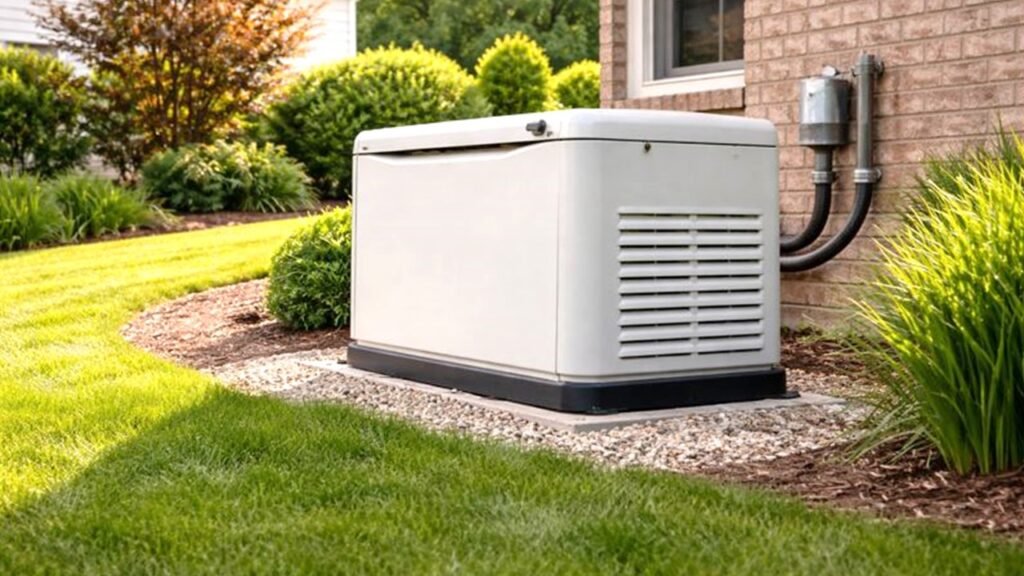
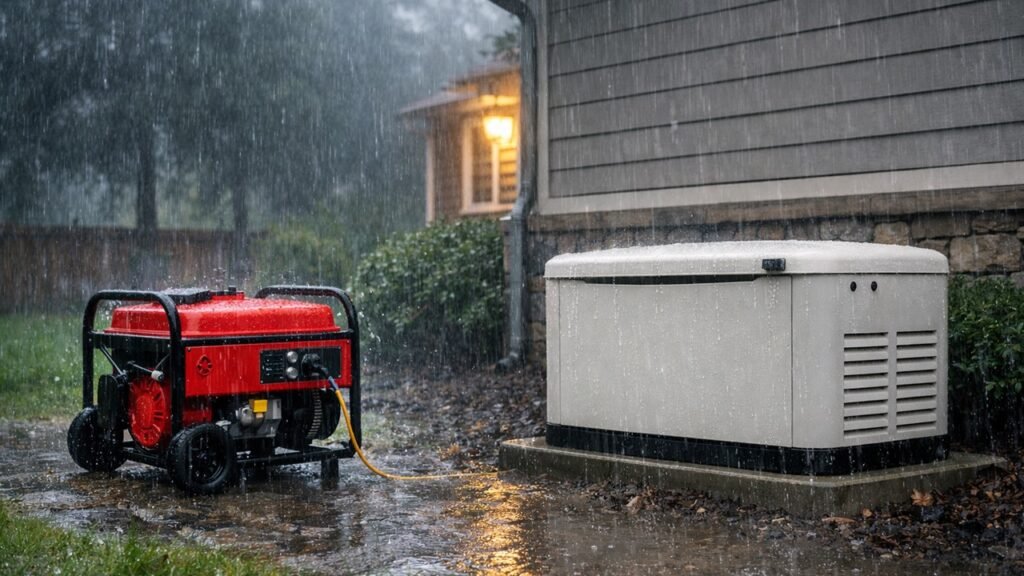
Portable generators require manual operation and refueling, while standby generators turn on automatically and run from a continuous fuel source.
Can a Portable Generator Run a Whole House?
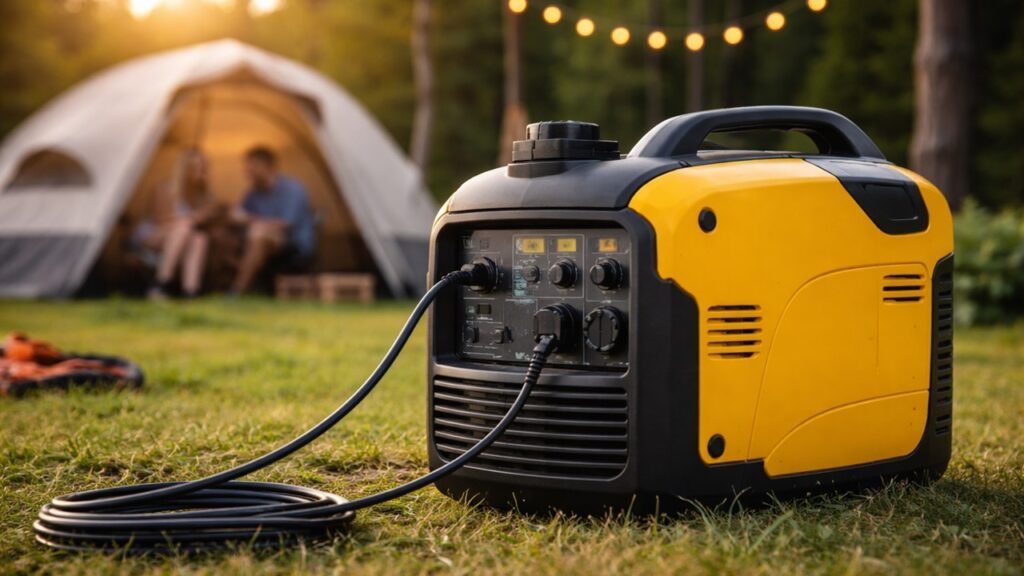
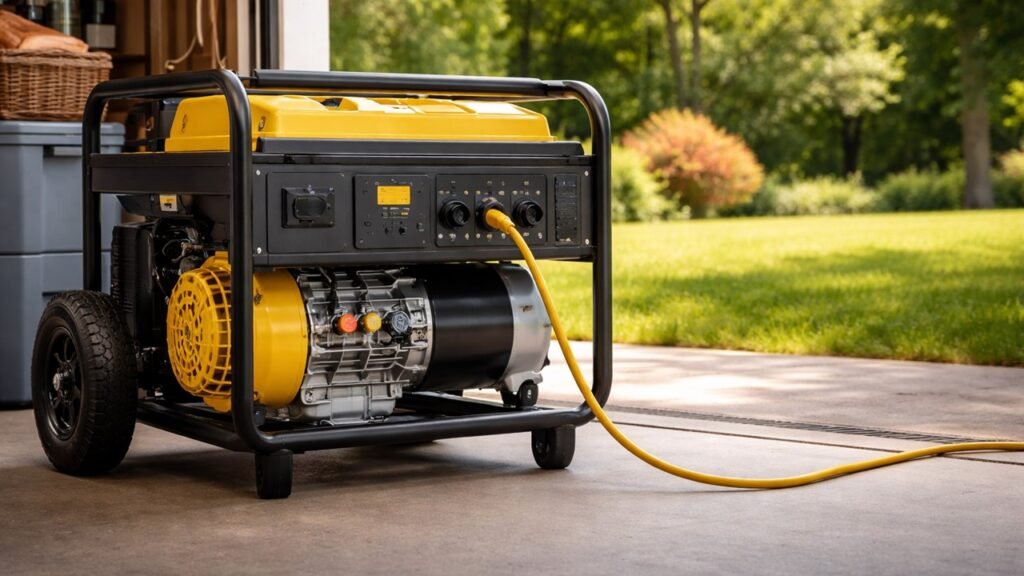
A portable generator can run part of a house, but running an entire home is rarely practical. Most portable units cannot handle central air conditioning, electric water heaters, and multiple large appliances at the same time.
Fuel limitations are another factor. Portable generators rely on gasoline or propane, which limits runtime during extended outages. Load management becomes necessary to avoid overload.
A properly sized portable generator with a manual transfer switch can safely power essential circuits, but full home coverage usually requires a standby generator.
You may also like:
- How Much Does A Whole House Generator Cost
- Can A Solar Generator Power A House
- Battery Backup Vs Generator
Transfer Switch and Safety Requirements
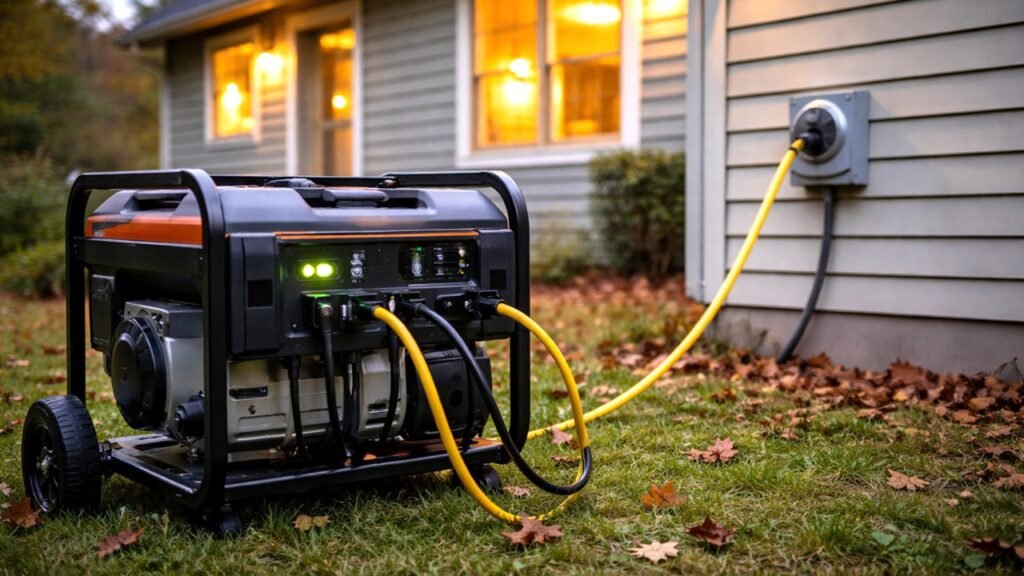
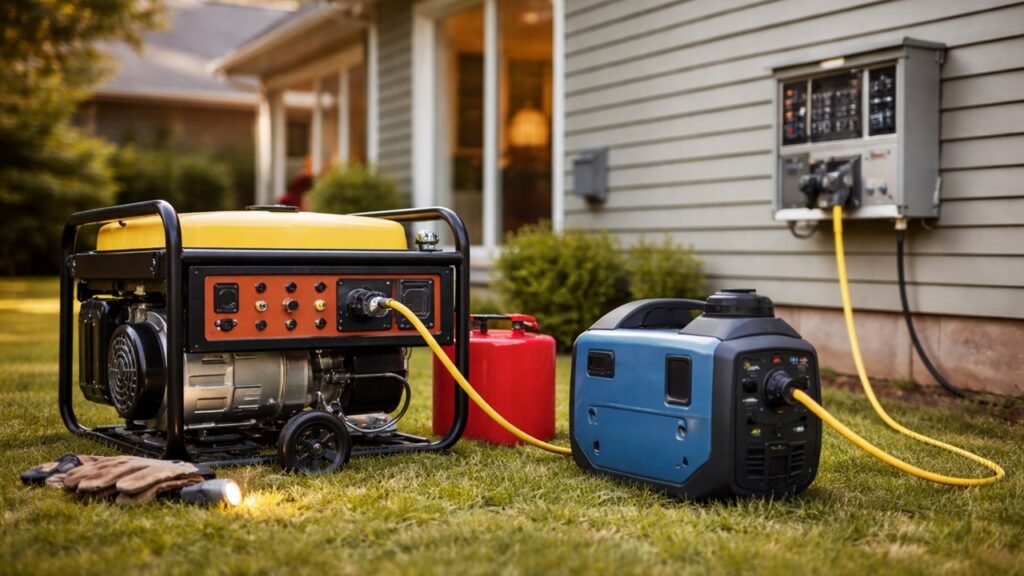
A transfer switch is required to safely connect a generator to a home’s electrical system. It prevents backfeeding, which can damage equipment and endanger utility workers.
Manual transfer switches are used with portable generators and require user operation. Automatic transfer switches are paired with standby generators and handle power switching without intervention.
Generators must always be operated outdoors, far from doors and windows. Carbon monoxide detectors should be installed in the home, and generators should never be connected through wall outlets.
Conclusion
Choosing what size generator to run a house comes down to understanding your actual power needs, not guessing based on home size. Appliances, startup surge, and whether you need central air all play a direct role in sizing.
By calculating running watts, accounting for the highest startup surge, and adding a safety buffer, you can select a generator that runs reliably without overload or wasted capacity.
Whether you choose a portable or standby generator, proper sizing and a transfer switch are essential for safe, dependable backup power during outages.
Related FAQs
What size generator do I need to run a house?
Most homes need between 2,000 and 25,000 watts, depending on how many appliances and systems you want to run.
Can a 5,000 watt generator run a house?
A 5,000 watt generator can run basic essentials like a refrigerator, lights, and internet, but not a whole house.
What size generator is needed for central AC?
Homes with central air usually need at least 12,000 watts, with larger systems requiring 20,000 watts or more.
Is a portable generator enough for whole house power?
Portable generators are best for partial backup, while whole house power typically requires a standby generator.

Robert Caldwell writes in-depth guides and reviews focused on generators, backup power systems, and portable energy equipment. His work is grounded in hands-on testing, covering fuel types, runtime performance, noise levels, and real-world reliability. He helps homeowners, RV owners, and outdoor users choose dependable power solutions with confidence. Every article emphasizes clear explanations, safe operation, and long-term value.